DoD Establishes UAP Task Force on August 4, 2020 to Improve Understanding of Unidentified Aerial Phenomena
Learn why DoD established the UAP Task Force on August 4, 2020, its mission, 2021 report, replacement by AARO, and legacy.


On August 4, 2020, the Department of Defense took a consequential administrative step: Deputy Secretary of Defense David L. Norquist established the Unidentified Aerial Phenomena Task Force, or UAPTF. The action did not endorse an explanation for reported sightings. It created a formal defense-and-intelligence mechanism to improve how the government collected, analyzed, and reported incidents involving objects or phenomena that had not yet been identified.
The date matters because it is often blurred with August 14, when the Pentagon publicly announced the task force. August 4 marks the internal establishment decision; August 14 marks its public rollout. That distinction helps place the UAPTF in the modern institutional history of the issue: it was designed as a focused coordinating effort, not as a finding that any particular class of reports represented foreign technology, extraordinary craft, or anything else.
Its record would later inform the June 2021 intelligence assessment to Congress, whose unresolved cases underscored the limits of incomplete and uneven reporting. The task force was subsequently superseded as the government moved through newer organizational arrangements, culminating in the All-domain Anomaly Resolution Office. Its lasting significance lies in making disciplined UAP reporting and analysis an explicit government responsibility, not in settling what every report meant.
What the DoD Did on August 4, 2020
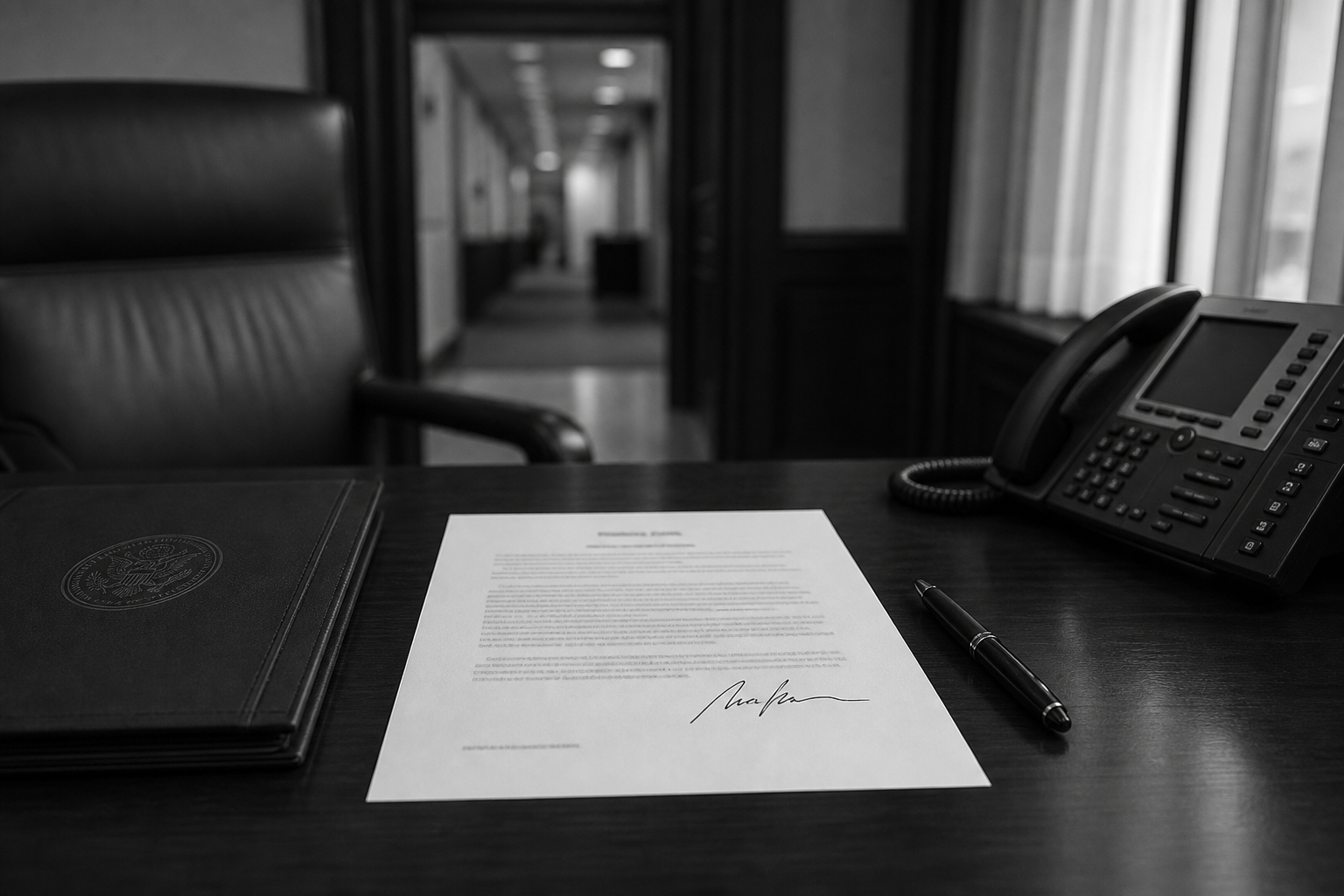
Norquist’s signature on the August 4 memorandum was the operative checkpoint: it formally created a named body inside the Department of Defense to handle unidentified aerial phenomena. That matters more than a label alone. A Deputy Secretary of Defense memorandum is an internal direction that assigns an organizational responsibility; it is not a public finding about the nature of the reports under review.
“Unidentified aerial phenomena” described observations not yet resolved through available information. The term did not establish an origin, confirm that every report involved a physical object, or determine that any report concerned extraterrestrial technology or non-human intelligence. Creating the UAP Task Force changed the government’s mechanism for pursuing answers, by concentrating attention and responsibility, rather than supplying those answers.
August 4 is therefore the institutional starting point for this phase of the modern federal UAP timeline. The later August 14 announcement made the decision public, but the memorandum was the action that placed the subject in a defined defense-and-intelligence framework and set the basis for more structured reporting and analysis.
Why the Pentagon Created a Dedicated UAP Office
Reporting gaps were the operational problem. An aircrew that encounters an unknown object may need to protect the immediate flight, preserve sensor data, and alert the appropriate command; a report that remains isolated is harder to compare with other encounters or assess for a wider pattern. A dedicated office offered a route to bring those steps together rather than leaving each event in separate operational, intelligence, and safety channels.
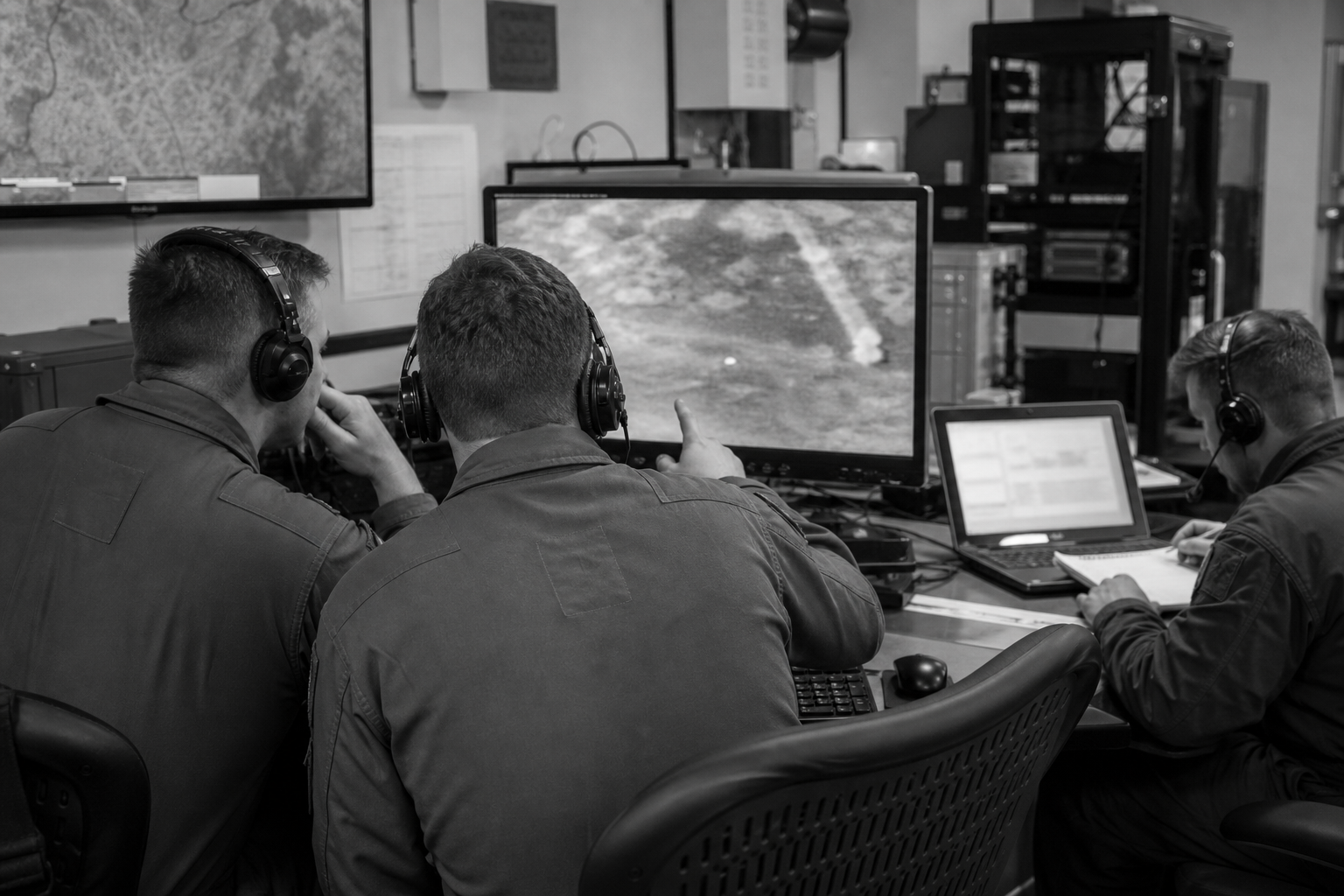
The Navy’s 2019 move to clarify reporting for unidentified aircraft or objects illustrated that need. The point was not to label every observation as extraordinary, but to reduce the stigma and ambiguity that can discourage reporting of encounters relevant to flight safety or national security. Consistent reports can capture basic details, location, time, aircraft systems involved, observed behavior, and available imagery or radar data, so analysts can distinguish a poorly documented sighting from a case with multiple, comparable data streams.
Public attention to Navy encounters and growing congressional interest in UAP reporting and assessment added pressure for a more coherent government response. Objects reported near military training areas or restricted U.S. airspace could warrant investigation for ordinary reasons, including drones, balloons, sensor effects, or foreign collection activity. The UAP Task Force was meant to improve the collection, standardization, analysis, and reporting needed to sort among such possibilities.
That framework also sets an essential evidentiary boundary. “Unresolved” can mean that the available information is too limited, inconsistent, or technically difficult to identify with confidence. It is not a finding that an alien craft was present. Meaningful UAP disclosure, in this context, concerns a clearer institutional record of what was reported and how it was assessed, not confirmation of a speculative explanation.
The UAPTF’s Mission, Leadership, and Authority
Organizational placement gave the new body a defined chain of responsibility. The August 4 memorandum placed the UAPTF under the Under Secretary of Defense for Intelligence and Security, the senior civilian office responsible for overseeing defense-intelligence matters. That placement connected the effort to the department’s intelligence structure rather than creating a freestanding public-investigations office.
The Department of the Navy led the task force through the Office of Naval Intelligence. In practical terms, Navy leadership supplied an established intelligence organization to coordinate the work, while the Under Secretary’s office provided departmental oversight. The arrangement also signaled that the task force was intended to draw on information across defense and intelligence channels, not solely on reports from one military service.
The Unidentified Aerial Phenomena Task Force was assigned to detect, analyze, and catalog UAP that could potentially pose a threat to U.S. national security. “Detect” concerned identifying relevant reports and available sensor information; “analyze” meant assessing the data for patterns and possible explanations; and “catalog” meant retaining cases in a form that could support comparison over time. Those functions made the UAPTF an analytic and coordination mechanism, not a finding that any particular report represented advanced foreign technology or something nonhuman.
The public descriptions of its creation did not establish a separately disclosed budget, independent operational command, or unlimited access to every classified program. Its documented authority was narrower but consequential: it made responsibility for organizing and evaluating potentially significant UAP reports explicit within the defense-intelligence system.
August 4 Establishment vs. August 14 Public Announcement
The two August dates describe different stages of the same decision. August 4, 2020, is the establishment date: Deputy Secretary David L. Norquist’s memorandum formally created the task force within the Department of Defense. August 14 is the disclosure date: the Pentagon issued a public news release announcing that the task force had been established.
That distinction matters because the records serve different purposes. The August 4 memorandum is the internal organizational instrument. It documents the departmental action, assigns institutional responsibility, and makes the task force an official part of the defense-intelligence structure. It is the stronger date for a timeline asking when the UAPTF came into being.
The August 14 release is instead the Pentagon’s public explanation of what had already occurred. It described the task force’s purpose as improving the Department’s understanding of, and insight into, UAP that could potentially threaten U.S. national security. It also identified the Department of the Navy, under the Office of Naval Intelligence, as the organization leading the effort.
News accounts can reasonably use August 14 when describing when the Pentagon told the public about the initiative. But describing that release as the creation of the Pentagon UAP Task Force collapses an administrative act and its announcement into one event. A precise UAP news timeline should record August 4 for establishment and August 14 for public confirmation, an important distinction when tracing how an internal defense program entered public view.
What the UAPTF Produced, and What Its Reporting Did Not Establish
The task force’s clearest public-facing product arrived on June 25, 2021, when the Office of the Director of National Intelligence issued its preliminary assessment of 144 military UAP reports to Congress. Drawing on UAPTF work, it reviewed 144 reports from U.S. government sources, largely involving military personnel, from 2004 through 2021.
The result was deliberately limited. Officials could initially identify one reported object as a large, deflating balloon; the remaining 143 reports lacked sufficient information for firm characterization. That does not mean those reports described a single unexplained thing. It means the available observations, sensor records, and contextual data did not support a confident conclusion in most individual cases.
The assessment used five possible explanatory categories: airborne clutter, natural atmospheric phenomena, U.S. government or industry developmental programs, foreign adversary systems, and an “other” category for cases that could not fit the first four. These were analytic sorting tools, not findings that every category had been demonstrated in the reported incidents.
Its central operational conclusion concerned data quality. Inconsistent reporting, limited sensor coverage, and incomplete information made analysis difficult; improved collection and standardized reporting were intended to narrow that gap. A report supported by multiple sensors and usable contextual data is a stronger investigative lead than a brief, isolated observation, even when neither immediately yields an identification.
The June 2021 preliminary assessment did not verify alien spacecraft, confirm non-human intelligence, or establish a government UFO cover-up. It documented uncertainty and a need for better evidence, an important distinction between formal UAP reporting and claims of alien disclosure.
Why the UAPTF Mattered Despite Its Narrow Limits
A single office could turn scattered sightings into a record that could be compared across units and reported upward. The August 4, 2020 memorandum assigned that work to a named task force, led by the Department of the Navy through the Office of Naval Intelligence, rather than leaving each encounter solely with the command that first observed it. The June 25, 2021 ODNI assessment showed the value of that channel: it assembled 144 reports from 2004 through 2021 for Congress while identifying inconsistent reporting and incomplete data as central analytic obstacles.
Congress consequently had a clearer route to receive both an assessment and an accounting of uncertainty. Public reporting can describe broad findings and evidentiary limits; classified reporting can protect sensor performance, collection methods, operational details, and intelligence sources. That distinction explains why public accounts may leave substantial questions open. It does not show that the classified record contains a concealed final answer. Consistent collection matters because preserved sensor data and operational context permit a more rigorous assessment than an isolated observation.
The distinction also limits claims of a government UFO cover-up. Secrecy around military capabilities and intelligence sources is an ordinary feature of classified work, not evidence that officials have verified extraterrestrial craft or a hidden program. The task force was short-lived, its public record reflected uneven information, and its 2021 assessment did not resolve the origin of all reported phenomena. Its lasting significance was procedural: it established an expectation that UAP incidents would be collected, analyzed, and reported through accountable official channels and oversight processes.
What Replaced the UAPTF: From AOIMSG to AARO
The next organizational change came in November 2021, when the Department of Defense announced the Airborne Object Identification and Management Synchronization Group, or AOIMSG. The group was intended to synchronize identification and management of objects of interest in special-use airspace and to coordinate activity across the department and other federal agencies. That model displaced the Navy-led task-force arrangement rather than preserving the UAPTF as a permanent standalone office.
Congress then required a broader office in the FY2022 National Defense Authorization Act. The statutory direction expanded the work beyond aerial incidents: the new organization was to coordinate collection, reporting, analysis, and identification across air, space, and maritime domains, including transmedium objects that may move between domains. The practical change was scope. The UAPTF concentrated on potentially significant aerial phenomena; the successor framework treated anomalous reports as a cross-domain defense and intelligence problem.
In July 2022, DoD established the All-domain Anomaly Resolution Office (AARO), replacing AOIMSG and absorbing the UAPTF’s remaining functions. AARO’s more formalized role includes synchronizing reporting and analytic efforts across DoD and the intelligence community, while its remit covers unidentified anomalous phenomena in multiple operational environments. Broadening the office did not convert unresolved reports into conclusions about their origin; it created a more durable mechanism for receiving and assessing them.
Later reports should therefore be evaluated through the reporting structures in force at the time. Searches for “UFO sightings 2025” or “UFO sightings 2026” do not describe activity attributable to the 2020 task force. The UAPTF’s legacy is institutional: it helped establish the reporting-and-analysis foundation that its successors formalized and expanded.
A Short-Lived Office That Changed the UAP Reporting Framework
The lasting change was not a determination about any particular object; it was a clearer pathway for turning scattered encounters into comparable government records. The August 4, 2020 memorandum was the act that established the UAP Task Force, while the August 14 Pentagon release made that already-existing decision public. Its assigned work, collection, standardization, analysis, and reporting, addressed the quality and consistency of the underlying information rather than supplying an answer in advance.
That distinction frames the task force’s limited public record. The June 2021 preliminary assessment preserved many cases as unresolved because available reporting could lack sufficient sensor coverage, contextual information, or consistent data. “Unidentified” therefore described an evidentiary status, not a confirmed origin, capability, or threat.
The office itself was temporary, but the reporting framework endured. AOIMSG moved the work toward wider departmental synchronization, and AARO inherited and broadened it across operational domains. The 2020 action consequently matters as an institutional starting point: it made systematic handling of anomalous reports a continuing defense-and-intelligence responsibility without resolving what every report represented.
Frequently Asked Questions
-
When was the Pentagon’s UAP Task Force established?
Deputy Secretary of Defense David L. Norquist formally established the Unidentified Aerial Phenomena Task Force on August 4, 2020. The Pentagon publicly announced the already-created task force on August 14, 2020.
-
What was the mission of the Pentagon’s UAP Task Force?
The UAPTF was assigned to detect, analyze, and catalog unidentified aerial phenomena that could potentially threaten U.S. national security. Its mission focused on improving collection, standardized reporting, and analysis of available sensor and operational data.
-
Who led the UAP Task Force?
The Department of the Navy led the UAPTF through the Office of Naval Intelligence. The task force operated under oversight from the Under Secretary of Defense for Intelligence and Security.
-
What did the UAP Task Force conclude about UFOs in the 2021 report?
The June 25, 2021 ODNI preliminary assessment reviewed 144 military UAP reports from 2004 through 2021. It identified one object as a large, deflating balloon, while the other 143 reports lacked enough information for firm characterization and did not verify alien spacecraft or non-human intelligence.
-
Was the UAPTF the same as AARO, and what replaced it?
No. The Navy-led UAPTF was replaced by the Airborne Object Identification and Management Synchronization Group in November 2021, and DoD established the All-domain Anomaly Resolution Office in July 2022. AARO expanded the work beyond aerial reports to include anomalous activity across air, space, maritime, and transmedium domains.