Cape Girardeau UFO Legend: 1941 Claim of Reverend Huffman Administering Last Rites to Saucer Crew
Examine the Cape Girardeau UFO incident, the 1941 Reverend Huffman claim, its sources, evidence gaps, and why the legend endures.
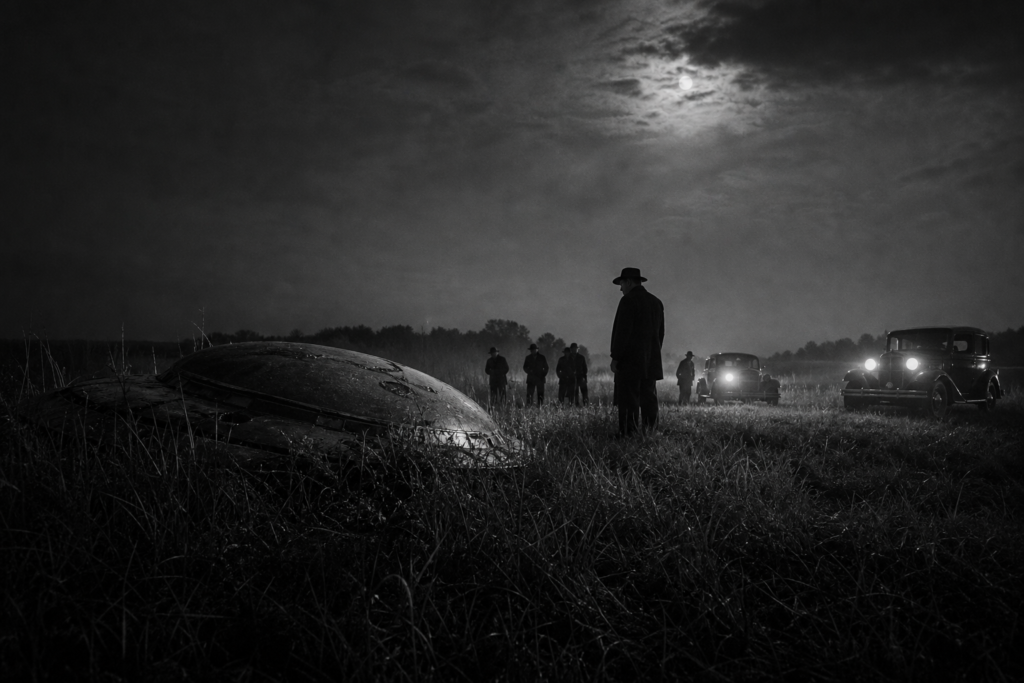
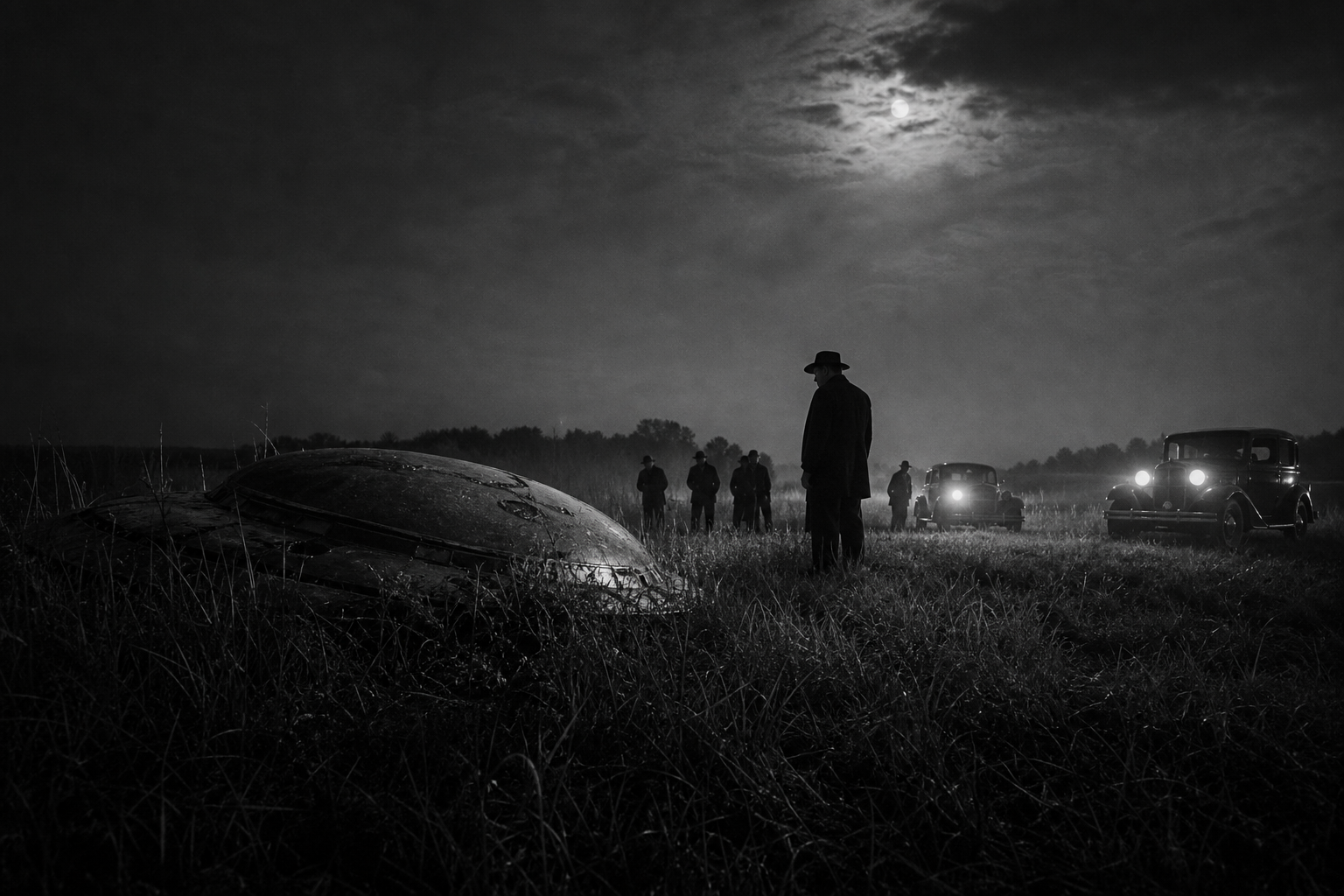
The Cape Girardeau UFO incident begins with an extraordinary allegation: in 1941, a Missouri minister, Reverend William Huffman, was supposedly summoned to a crash scene outside Cape Girardeau and asked to administer last rites to the occupants of a wrecked saucer. It is a vivid story, religious ritual, alleged bodies, military personnel, and secrecy, but it is not an established historical event.
The crucial distinction is chronological as well as evidentiary. The crash is alleged to have occurred in 1941; the account entered public circulation through recollections and retellings many years later. Later testimony can preserve meaningful personal memory, but it does not carry the same weight as a contemporaneous newspaper report, church record, official file, photograph with a secure provenance, or a firsthand statement recorded near the claimed event.
This article follows that divide closely. It reconstructs what the legend says Huffman saw and did, traces how the claim moved from family memory into UFO literature, and separates identifiable sources from unsupported repetition. It also examines the conspicuous gaps: the limited contemporaneous corroboration for a crash, a military recovery, or the reported rites. The story endures because its details are unusually specific and because its alleged date places it before Roswell; neither quality, however, turns a compelling legend into confirmation.
What the Cape Girardeau UFO Story Claims, and What It Does Not Establish
The central checkpoint is that the reported rites belong to a later retelling, not to a contemporaneous 1941 record. In that account, Reverend William Huffman allegedly traveled to a rural site near Cape Girardeau, encountered a damaged disc-shaped craft and small purportedly non-human bodies, and performed last rites. The sequence is a claim, not a documented finding that a craft crashed or that a sacrament was administered to extraterrestrials.
The story therefore has two timelines. One is the alleged occurrence in 1941. The other is its public history: recollections attributed to Huffman’s relatives, later interviews and UFO-writing accounts, and subsequent retellings that sometimes add details without identifying where they originated. The former is what must be established; the latter shows how the narrative was preserved and changed.
Later family recollections provide the legend’s strongest personal connection to Huffman, but they are not contemporaneous testimony from the minister himself. They may show that relatives remembered him sharing an unusual story; they cannot independently establish every feature later attached to it, including an exact location, military actions, photographs, or coordinated concealment.
The account will be examined in layers: the reported summons and rites, the people said to have passed the story along, the earliest traceable publication for each detail, and additions circulating without a clear source chain. That approach neither rejects memory automatically nor allows repetition to turn an unverified 1941 Cape Girardeau UFO claim into historical fact.
The Alleged 1941 Crash: Huffman’s Reported Summons, the Scene, and Last Rites
The reported summons is where versions first diverge. In the usual sequence, Huffman was allegedly contacted at home and asked to go to an emergency outside Cape Girardeau; retellings differ on who called and whether he was told people were injured or an aircraft had gone down. The request for a minister is central, but neither caller nor exact wording is consistently preserved.
He was then said to have driven to a rural site, broadly placed near Cape Girardeau rather than at a documented location. The Reverend Huffman UFO story puts uniformed personnel there, controlling access. Within the legend, that purported cordon explains why other witnesses could not get close; it remains a later-recollection detail, not an independently established feature.
At the site, Huffman was purportedly shown a damaged disc-like craft and several small humanoid bodies. Versions commonly mention large eyes, slight bodies, and unfamiliar clothing. The number of beings varies, as does whether one was alive. That difference matters: the relatively stable assertion is an encounter with bodies, while precise counts, condition, and appearance are less secure parts of the alleged Cape Girardeau UFO crash of 1941.
The defining episode follows from his clerical role. He was allegedly asked to administer last rites to the purported occupants. In Christian usage, “last rites” ordinarily denotes pastoral prayers and, depending on denomination and circumstance, sacramental ministration for a dying person; it is more specific than simply offering a prayer. Some tellings say he performed the rite despite not knowing what the beings were, while others say only that he prayed over them. That distinction changes the claim’s scope: one version alleges a specified pastoral act, another a general religious response.
Photographs, warnings to remain silent, and detailed recovery scenes circulate as well, but do not have the same stable place in the basic sequence. They should be separated from the core narrative unless a retelling identifies who remembered them, when, and that person’s connection to the alleged scene.
When the Story Became Public: Family Recollection, Retellings, and Source Provenance
The year “1941” labels the alleged occurrence, not the point at which the account can be placed in public circulation. The research record supplied for this article identifies no dated statement by Reverend William Huffman: no recorded interview, sermon text, diary, letter, newspaper report, or official report tied to his alleged trip outside Cape Girardeau. It also does not identify a named earliest publication, interviewer, or publication date for the story. That gap does not disprove an event, but it prevents historians from anchoring the reported crash to a document created at or near the alleged time.
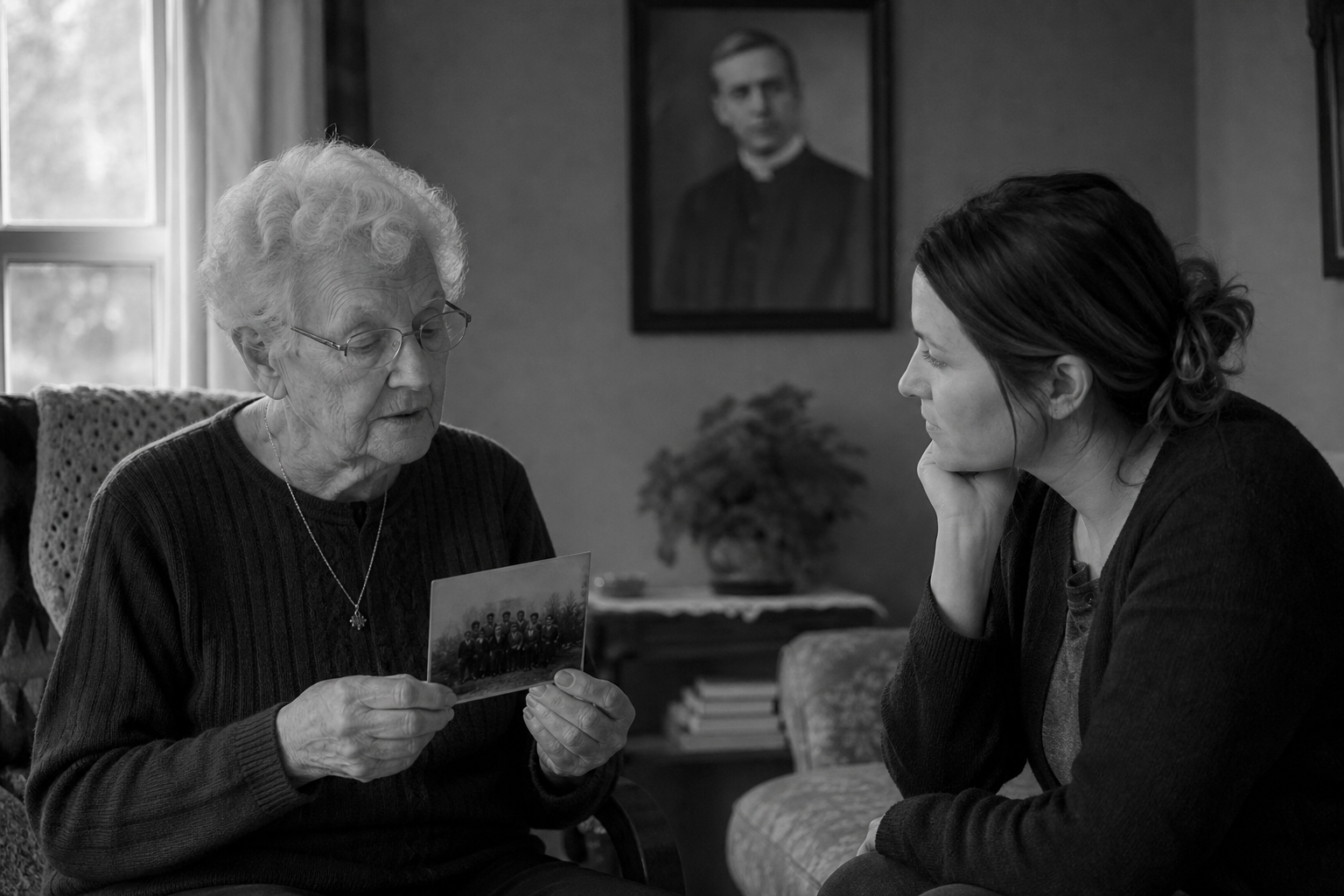
The William Huffman Cape Girardeau UFO narrative therefore rests on family recollection: relatives are said to have remembered Huffman describing an emergency call, a rural scene, and prayers or last rites after returning home. The supplied material does not provide a traceable transcript, recording, or dated signed statement from a particular relative. A relative who heard Huffman tell the story would be firsthand only to that later conversation, not to the reported craft, bodies, personnel, or rite in 1941.
A usable provenance timeline must keep four separate dates from collapsing into one:
- the claimed 1941 incident;
- the unknown date on which Huffman allegedly told a family member;
- the date, if any, when that relative’s recollection was interviewed, written down, or published; and
- the later circulation dates for UFO books, websites, videos, and social-media posts.
Those stages carry different evidentiary weight. A dated oral-history interview identifies the narrator, the narrator’s relationship to Huffman, the interview date, and the words actually recorded. A book or web page that repeats the account without supplying that interview is derivative: it expands readership but does not create another witness. Thus, multiple posts repeating a photograph, a military warning, or a recovery detail may all reflect one unrecorded family account rather than independent corroboration.
The key distinction is traceability. A contemporaneous Huffman letter would preserve his own words; a named relative’s taped interview would preserve family oral history; an unattributed narrative preserves neither speaker nor transmission date. Relatives may sincerely have repeated what they believed Huffman told them, and later writers may have reported that memory in good faith. Sincerity can establish that a memory was held, but it cannot fill the missing documentary link between the alleged 1941 event and the later Cape Girardeau UFO incident retellings.
What Evidence Exists, and What Is Missing
The evidentiary hierarchy begins with records created at or near the time of the alleged event. A 1941 newspaper report, sheriff’s log, police report, coroner’s inquest, ambulance record, military message, or dated church note would not by itself establish an extraterrestrial crash, but it could independently place an emergency, deaths, an unusual recovery operation, or Huffman’s presence at a specific time and place. The absence of such contemporary records does not disprove every element of the story; it does mean the central sequence cannot be confirmed through the strongest category of historical evidence.

Direct testimony would carry substantial weight if a dated letter, diary, sermon manuscript, interview, or recording preserved Huffman’s own words. Such material could show what he claimed to have witnessed, distinguish his observations from later embellishment, and establish when he first spoke of it. No later narrator can fully substitute for that missing firsthand record. A relative’s recollection is useful principally as evidence that a family tradition existed, not as direct proof of what occurred at the reported site.
Local reporting and historical collections offer a separate test of independence. A named reporter, neighbor, emergency worker, or resident who made an on-record statement without deriving it from the Huffman family would provide corroboration. By contrast, several websites or books repeating the same family-origin account are multiple publications, not multiple witnesses. The key question is whether each account has its own identifiable route to the alleged 1941 event.
Church archives could potentially establish Huffman’s appointment, whereabouts, pastoral duties, correspondence, or funeral activity; official records could potentially document a reported accident, recovery, or military involvement. Their value lies in being created for ordinary administrative purposes rather than to support a later UFO narrative. Missing records remain ambiguous: files may never have existed, may be incomplete, or may not be publicly accessible. They nonetheless leave extraordinary details, especially the craft, bodies, military cordon, and last rites, without independent confirmation.
Purported photographs or documents require an equally strict provenance test: an identifiable original, a date, a known photographer or author, and a chain of custody showing where the item has been since creation. An undated copy or image circulated online may illustrate a claim, but it cannot authenticate the Cape Girardeau UFO incident. On the available evidentiary structure, the legend rests most heavily on later family recollection and lacks the converging contemporaneous and independent corroboration needed to treat its most dramatic details as established history.
Roswell, Government Cover-Up Claims, and the Limits of UFO-Disclosure Context
Roswell supplies the obvious comparison because its familiar narrative also combines a reported crashed object, military involvement, and later claims about non-human bodies. The resemblance is structural, not evidentiary: both stories are used to illustrate an alleged recovery followed by official secrecy, but the Cape Girardeau account is dated six years earlier and emerged through a substantially different source path.
The 1947 Roswell episode generated an identifiable contemporary public record, including the Roswell Army Air Field’s July press release announcing recovery of a “flying disc” and the Army’s prompt statement that the material was a weather balloon. Those records do not establish later extraterrestrial interpretations of Roswell, but they do document that officials publicly addressed a recovery near Roswell in 1947. No equivalent contemporary public sequence has been identified for the alleged 1941 Missouri event: no known announcement, correction, incident report, or contemporaneous account places Huffman at such a recovery.
Project Blue Book is sometimes invoked as though it could supply a hidden federal file for every early crash claim. It cannot. The U.S. Air Force program operated from 1952 to 1969, after both the alleged Cape Girardeau event and the initial Roswell reports, and its stated work concerned reports of unidentified flying objects rather than serving as a retrospective archive proving earlier crash recoveries. Its existence demonstrates government interest in reported aerial phenomena; it does not create direct documentation for a 1941 claim.
Modern UAP disclosure debates likewise concern what government offices have collected, assessed, or released about unidentified reports. That context may explain renewed public interest in old cases, but it does not independently authenticate the Cape Girardeau narrative, Reverend Huffman’s reported last rites, or an alleged recovery operation. A general allegation of a government UFO cover-up is a proposed explanation for missing evidence, not case-specific evidence that the alleged event occurred or that a crash-retrieval program existed.
Bottom Line: A Lasting UFO Legend, Not a Confirmed 1941 Event
A claimed date before Roswell and the reported involvement of a named minister give this account an unusual place in American UFO folklore. Yet it remains an unverified retrospective crash legend: Reverend William Huffman’s purported journey to the scene and administration of last rites are preserved through later recollection, not through a confirmed record created in 1941.
That distinction does not require treating every family memory as fabrication. It means the strongest reported support is personal testimony relayed after the alleged event, a category that can retain meaningful detail but cannot independently establish the date, location, participants, or occurrence of a crash. Repetition in later UFO books and online retellings demonstrates circulation of the story, not independent confirmation.
The historical assessment would change materially if researchers found authenticated, dateable evidence tied to the claim: a church diary or correspondence in Huffman’s own hand; a verifiable original photograph with a documented chain of custody; separately recorded accounts from witnesses whose stories did not derive from the same family narrative; or reliable local, medical, police, military, or newspaper records placing an unusual emergency at a specific site.
Until such evidence emerges, the responsible conclusion is limited but clear: this is a lasting Cape Girardeau UFO legend, not a confirmed 1941 event. Further archival work may refine its provenance, but missing corroboration and the lack of verified extraterrestrial evidence are neither proof of a crash nor proof of a cover-up.
Why the Cape Girardeau Legend Endures
Stories endure when they attach the unknown to familiar human details. A rural emergency, a local clergyman, and a reported act of last rites give this legend emotional and narrative coherence that a bare claim of strange lights would lack. Its alleged 1941 setting also invites readers to place it before the better-known Roswell story, lending the account an air of overlooked history without supplying independent proof.
That appeal is worth preserving as part of Cape Girardeau’s UFO tradition, but preservation is not certification. Family recollection can transmit a meaningful account of what relatives believed Reverend William Huffman experienced; contemporaneous corroboration would instead help establish whether an emergency, a particular location, or Huffman’s presence can be historically fixed. Those are different evidentiary functions, and the latter remains absent or uncertain here.
Roswell parallels and broad claims of secrecy do not close that gap. They may explain why the 1941 UFO crash claim remains compelling, but they cannot authenticate its reported craft, bodies, military response, or sacramental rite. The responsible way to remember the Cape Girardeau story is as a vivid, unresolved local legend, one that merits careful archival attention without being presented as settled historical fact.
Frequently Asked Questions
-
What is the Cape Girardeau UFO incident?
The Cape Girardeau UFO incident is an unverified claim that Reverend William Huffman was summoned to a rural Missouri crash site in 1941. Later family recollections say he saw a damaged disc-shaped craft and small purportedly non-human bodies and was asked to pray or administer last rites.
-
Did Reverend William Huffman administer last rites to alien beings in 1941?
There is no confirmed record that Reverend Huffman administered last rites to alien beings in 1941. The claim comes from later family recollections and retellings, with no dated Huffman diary, letter, sermon, interview, or contemporaneous report documenting the rite.
-
What evidence exists for the 1941 Cape Girardeau UFO crash claim?
The main support is later family memory that Huffman described an emergency call, a rural scene, and prayers or last rites. No contemporaneous 1941 newspaper report, police log, military file, church record, photograph with secure provenance, or firsthand Huffman statement has been identified.
-
What should researchers look for to verify the Cape Girardeau UFO story?
Researchers should look for dateable, independent records such as Huffman’s church diary or correspondence, local newspaper coverage, police or medical records, military documents, and separately recorded witness accounts. Any photograph or document should have an identifiable original, creation date, known author or photographer, and documented chain of custody.
-
Is the Cape Girardeau UFO legend connected to Roswell or a government cover-up?
The story resembles Roswell because both narratives involve a reported crashed object, military personnel, and later secrecy claims, but Cape Girardeau is alleged to have occurred six years earlier in 1941. Roswell had identifiable public records in 1947, including an Army Air Field press release, while no equivalent contemporary record has been found for Cape Girardeau.