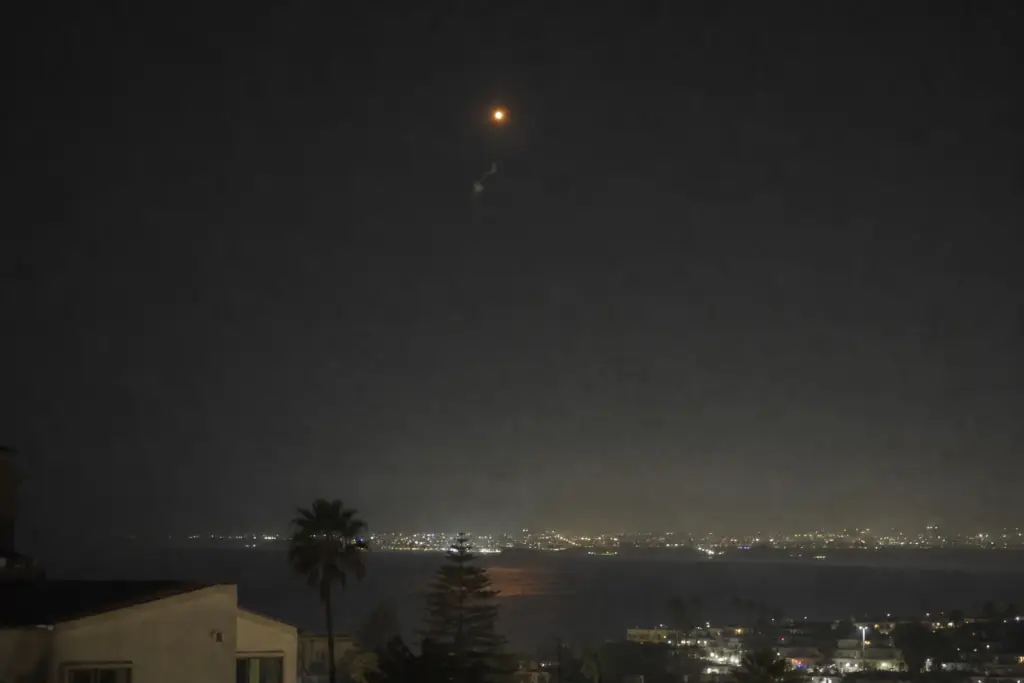
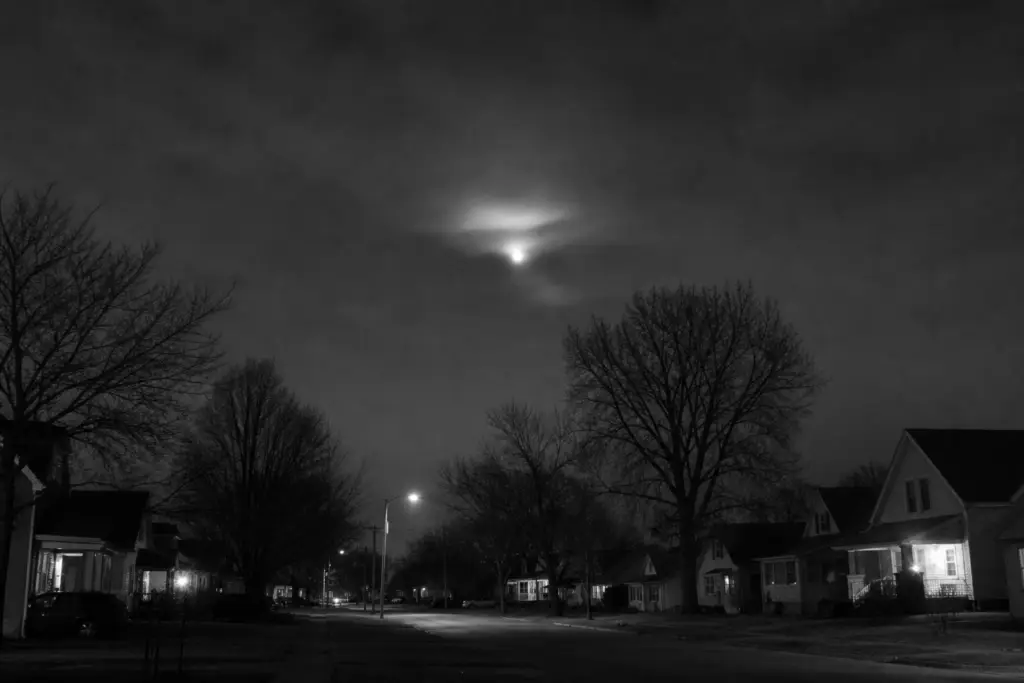
On January 7, 2020, a report from Evansville, Indiana described a white orb or light that appeared to disappear and then reappear. That unusual sequence is the reason the case merits a closer look, but it is still a reported observation, not an independently verified identification. “Unidentified” describes what the observer could not determine at the time; it does not establish an extraordinary origin.
This review treats the Evansville Indiana UFO sighting of January 7, 2020 as a small case file. It separates the account’s core description from conclusions drawn about it, then considers what would strengthen or weaken competing explanations: the provenance of any original post, image, or video; the time and direction of view; weather and visibility; and whether an aircraft, celestial light, cloud layer, or obstruction could produce an apparent disappearance.
A distant light can seem to blink out when thin cloud, a roofline, trees, haze, or a change in viewing angle blocks it, and seem to return when that interruption passes. Consumer cameras can add another layer of uncertainty, turning a bright point into a featureless white disk through focus changes, exposure limits, digital zoom, and motion. The question here is not what the light must have been, but what the surviving record can actually support, and what remains unresolved.
The Reported White Orb Over Evansville: What This Article Can and Cannot Establish
The starting point is provenance: the chain showing where an account began and how it reached later readers. An original witness post, unedited image, or full-length video can preserve details such as wording, sequence, time, and viewing direction. A database entry, repost, or later retelling may still be useful, but it is a secondary record and can omit context or add interpretation.
For that reason, this reported sighting is treated as a claim to reconstruct, not proof of a particular craft, technology, or cause. “White orb” describes appearance, while “disappeared and reappeared” describes perceived behavior; neither phrase establishes distance, size, speed, altitude, or identity. Those missing measurements materially limit what can be concluded from the description alone.
The analysis will first isolate the account’s fixed elements, Evansville, January 7, 2020, a white light, and the reported interruption, then assess the quality and completeness of any surviving material. It will compare that record against ordinary possibilities that can produce an intermittent light, including changing obstructions, atmospheric conditions, aircraft lighting, celestial objects, and camera effects. Any gap between the reported observation and a supported identification will remain a gap, rather than being filled with speculation.
Case File: The Date, Location, and Reported Disappearance-and-Reappearance
The surviving case description is too thin to support a minute-by-minute reconstruction. Its usable core can be separated from details that may have entered through later retelling:
- Date: January 7, 2020 is the date attached to the Evansville report. No original post, upload timestamp, or contemporaneous publication has been supplied here to establish whether it was the observation date, the reporting date, or both.
- Place: Evansville, Indiana is the stated locality. No neighborhood, street, observing position, or horizon reference is available, so the location is not precise enough to match the sightline against particular buildings, trees, flight paths, or local cloud cover.
- Appearance: The object is characterized as a “white orb” or white light. Those terms describe how it looked to an observer, not a measured shape or physical size. No original wording is available to determine whether “orb” was the witness’s term or a later label.
- Reported sequence: The white orb disappeared and reappeared. That is the central behavioral claim, but the record presently lacks the length of either interruption, the number of repetitions, and whether the light changed brightness, position, or apparent motion.
The distinctions matter. A light that vanishes behind a fixed obstruction and returns after the observer moves presents a different test from one that fades in thin cloud, switches off, or is intermittently lost by a camera. Without a stated viewing direction, time, duration, or original imagery, none of those patterns can be assigned to the white orb over Evansville, Indiana.
Equally absent are a weather description, a reported altitude, a speed estimate, corroborating witness accounts, and a traceable primary account preserving the full sequence. Secondary phrasing can preserve the broad claim that a white orb disappeared and reappeared over Evansville, but it cannot supply missing observational measurements. The case file therefore retains four fixed descriptors, Evansville, January 7, 2020, a white light, and an apparent disappearance followed by reappearance, while treating the surrounding particulars as unestablished.
What Evidence Is Available, and How Much Weight It Carries
The evidentiary gap is not merely a missing detail; it determines the strongest conclusion available. In the material assembled for this review, there is no link or archive of an earliest known post, no original upload, no original photo or video file, and no contemporaneous local-news item or public reporting-database record tied to the Evansville white orb sighting.

- Primary: An unedited witness video, photo, or post published near the event would carry the most weight. It could preserve the observer’s own wording and, where retained, a posting time, full clip length, surrounding landmarks, and file metadata. None is available here.
- Near-primary: A contemporaneous local report that identifies the witness and links to the material can preserve useful context, though it remains one step removed from the original file. No such item has been located in the record under review.
- Secondary: A later article, summary, or database entry can document that the account circulated. It cannot independently establish the light’s time, direction, duration, or behavior unless it preserves and attributes those details to earlier material.
- Unverified repost: A clipped social-media video or reposted caption has the least diagnostic value when its uploader, upload date, edit history, and original file are unknown. Compression, trimming, and replacement captions can remove precisely the context needed to interpret an apparent disappearance.
That source-provenance hierarchy does not decide whether an observer was correct or mistaken. It clarifies what can be tested. At present, the record supports only that a description of a white light over Evansville on January 7, 2020 circulated; it does not provide independently checkable observation details or imagery from which the object’s identity can be determined.
Conditions to Check: Weather, Sky Objects, and Air Traffic
A meaningful comparison begins with two missing coordinates: the observation time and the direction of view. Without them, records can describe the broader environment over Evansville on January 7, 2020, but cannot place a particular light against a specific patch of sky.
Historical weather records are most useful when they can be aligned to a narrow window. Cloud-layer observations distinguish a clear sky from broken or overcast conditions; visibility indicates whether haze, mist, or precipitation may have softened or interrupted a distant light; and wind direction and speed can help assess whether a drifting airborne object would fit the reported motion. A broad daily summary is a weak match for a sighting lasting minutes, while a nearby hourly airport observation is a stronger, though still imperfect, comparison.
Sunset and the stages of twilight matter because they determine whether bright astronomical objects, aircraft lights, or reflective objects would stand out against a fading or dark sky. Once a time, compass bearing, and approximate elevation are known, a sky-position reconstruction can test whether planets, bright stars, or satellites occupied that line of sight. Without that geometry, naming an astronomical object would be speculation rather than identification.
Public flight-history and ADS-B records can similarly test for aircraft near the relevant direction and time. They may show a tracked aircraft’s route, altitude, and changing heading, allowing comparison with an apparent light that vanishes behind cloud or turns away. Their limitation is important: coverage can be incomplete, historical access may be limited, and not every aircraft necessarily appears in a public track.
For this Indiana UFO sighting in January 2020, the surviving account supplies none of the time-and-direction detail needed to perform those comparisons. Viewing conditions and observer circumstances, weather records, astronomical objects, and air-traffic history remain useful avenues of inquiry, but they cannot responsibly be converted into a case-specific match on the record available.
Could a Light Seem to Vanish and Return? Plausible Conventional Explanations
The reported interruption is compatible with several ordinary mechanisms, but the surviving description does not contain the discriminating details needed to rank them.
- An astronomical object would be a stronger possibility if the light remained fixed relative to the horizon and returned in the same position after a short gap. Thin cloud can reduce a bright point below an observer’s threshold without creating an obvious dark patch, while a roofline, tree branch, or other foreground obstruction can hide it as the observer moves. Reported lateral travel, acceleration, or a substantial position change would weigh against this explanation.
- An aircraft can present a bright white landing or forward-facing light that appears intense from one direction and much dimmer after a turn. A cloud crossing can produce a similarly abrupt interruption. A repeating blink, paired colored lights, steady track across the sky, sound after a delay, or a flight path aligned with the viewing direction would strengthen that possibility; a light remaining motionless for an extended period would weaken it.
- A drone would be more consistent with short-range changes of direction, hovering, or distinct navigation-light patterns. Its plausibility would rise with reports of nearby sound, low apparent altitude, or rapid angular movement against buildings or trees. None of those details survives in the Evansville account.
- A balloon, especially one reflecting sunlight or carrying a light, would be expected to drift rather than make controlled turns. A reported direction and duration could be compared with wind conditions; without them, drift cannot be tested. A sudden change in brightness could also result from the balloon rotating or passing into shadow.
Changing line of sight is the common thread. The observer’s movement, intervening cloud, and a distant light’s changing angle can turn a continuous object into an apparent disappearance-and-return sequence. These are possible explanations for orb sightings, not retroactive identifications: the record does not preserve steadiness, color changes, blinking, direction, duration, or wind-relative motion needed to choose among them.
Why Cameras Often Turn Distant Lights Into Featureless Orbs
A camera records a bright distant point very differently from the eye. A glowing white disk in footage may be an image artifact rather than a resolved view of a sphere: camera autofocus can hunt for focus against a dark sky, making the light swell, soften, or briefly fade. Automatic exposure can clip the light’s brightest center into featureless white, while digital zoom enlarges a small group of pixels rather than revealing surface detail.
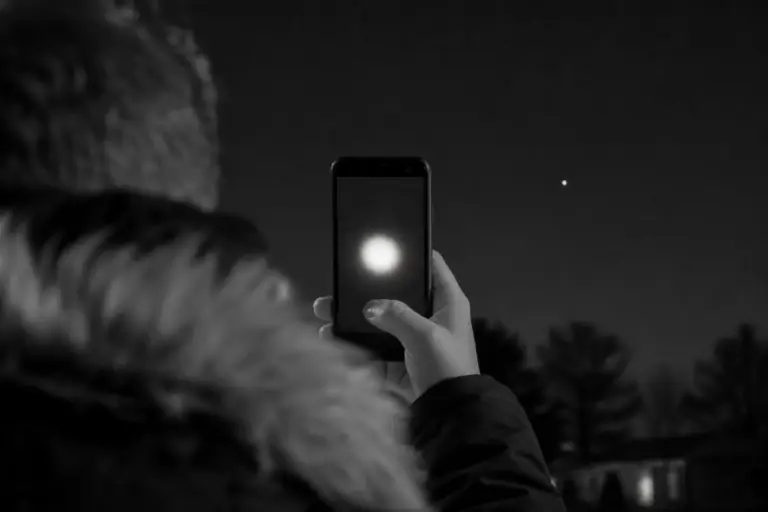
Other processing can alter the apparent sequence. Image stabilization shifts or crops the frame as the operator moves; panning can create motion blur; and a rolling shutter reads the image line by line, sometimes stretching or skewing a moving bright point. Compression can discard faint detail around the light or create flicker and blockiness. A lens flare, an internal reflection caused by a nearby bright lamp, the Moon, or another light just outside frame, can also produce a pale orb that shifts or vanishes as the camera angle changes.
These mechanisms can make a continuous light look rounder, larger, less steady, or briefly absent, underscoring the need for cautious interpretation of recorded aerial imagery. They cannot identify the light itself. Testing a recorded disappearance would require the original, unedited file, device and setting information, visible focus or exposure changes, camera movement, nearby light sources, and any record of whether the object looked the same to the observer’s unaided eye. None is preserved for this Evansville report.
Bottom Line: What the Evansville Report Supports, and What Remains Unresolved
The record establishes a reported Evansville observation on January 7, 2020: a white orb or light was described as disappearing and reappearing. It does not establish the light’s identity, physical size, distance, altitude, or origin.
Cloud or foreground obstruction, an aircraft light changing aspect, a bright sky object crossing an obstructed line of sight, and camera processing all remain plausible. Each could produce an interrupted appearance, but none is a confirmed explanation without a precise time, viewing direction, duration, and a traceable original account to compare against weather, sky, and flight records.
The most useful additions would be original media with metadata, a contemporaneous witness post, independent observations, and a location-specific timeline. Local newspaper archives, historical weather observations, aviation-track archives, and established reporting databases may help locate such material. Until that evidence emerges, this belongs among unresolved Indiana UFO reports: documented as a circulating claim, not corroborated as an identified event.
A Reported Light, Not a Confirmed Explanation
The decisive issue is not whether the account sounds unusual, but whether its details can be independently tested. Here, the fixed elements are limited to Evansville, January 7, 2020, a reported white orb or light, and an apparent disappearance and return. That is enough to preserve a sighting claim; it is not enough to determine what produced the light.
A firm identification would require evidence that distinguishes competing possibilities. A time-stamped, unedited recording could be matched to cloud movement, twilight conditions, bright objects in the relevant part of the sky, and aircraft activity. A stated viewing direction and observer location would turn those broad comparisons into a specific reconstruction. Multiple independent accounts made at the time could also show whether the interruption was seen by more than one person rather than created by one camera or line of sight.
Without those anchors, the Evansville Indiana UFO sighting of January 7, 2020 remains unresolved in the literal sense: its cause has not been established. “Unresolved” is not evidence for an extraordinary object, and it does not rule ordinary causes in or out. It marks the boundary between a reported experience and a conclusion the surviving record cannot support.
Frequently Asked Questions
What was the white orb reported over Evansville, Indiana, on January 7, 2020?
The report described a white orb or white light over Evansville that appeared to disappear and then reappear. The surviving record does not establish its size, distance, altitude, speed, or identity.
Was the Evansville white orb sighting ever officially identified?
No confirmed identification is available for the January 7, 2020 Evansville sighting. No traceable original post, unedited photo or video, contemporaneous local-news report, precise time, or viewing direction is preserved in the available record.
Can a star, planet, aircraft, drone, or balloon appear to disappear and reappear?
Yes. Thin cloud, haze, trees, rooflines, changing viewing angles, and an aircraft turning can make a continuous light appear to vanish and return. A balloon may also change brightness as it rotates or enters shadow, but the Evansville report lacks the direction and duration needed to distinguish these possibilities.
How can camera settings make a distant light look like a white orb?
Autofocus, automatic exposure, digital zoom, image stabilization, motion blur, compression, and lens flare can turn a bright point of light into a featureless white disk. Testing whether video caused the effect requires the original unedited file, device settings, metadata, and evidence of camera movement or nearby light sources.
What evidence should I look for when evaluating an unexplained light sighting in Indiana?
Look for an original time-stamped post or unedited recording, the observer’s exact location, viewing direction, duration, landmarks, and independent witness accounts. Compare those details with hourly weather observations, twilight and sky-object positions, and public aircraft tracking records to test ordinary explanations.