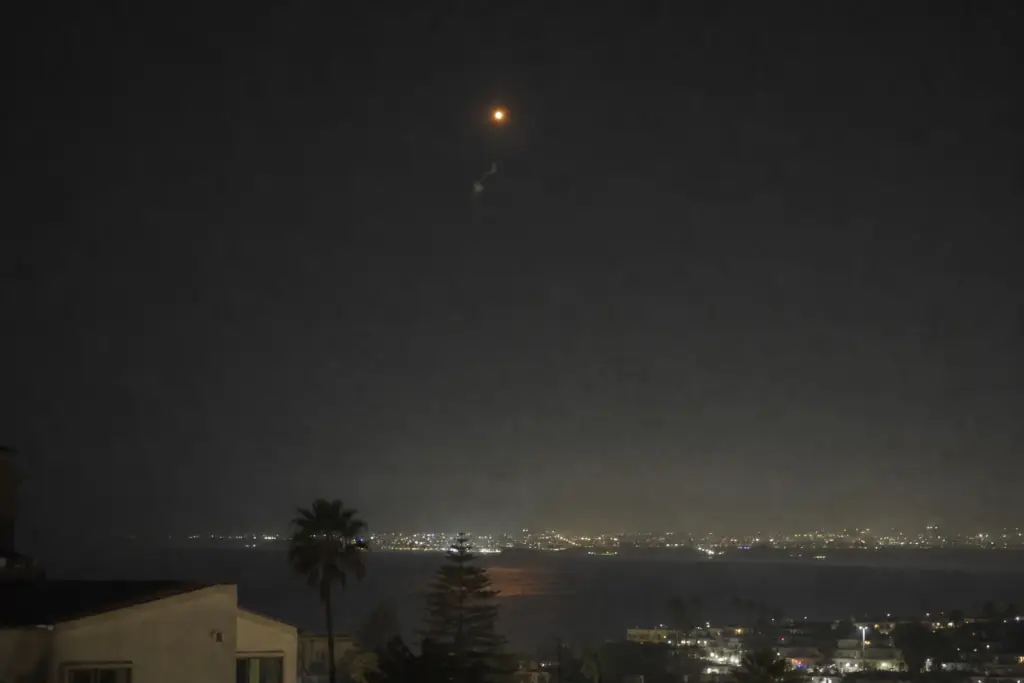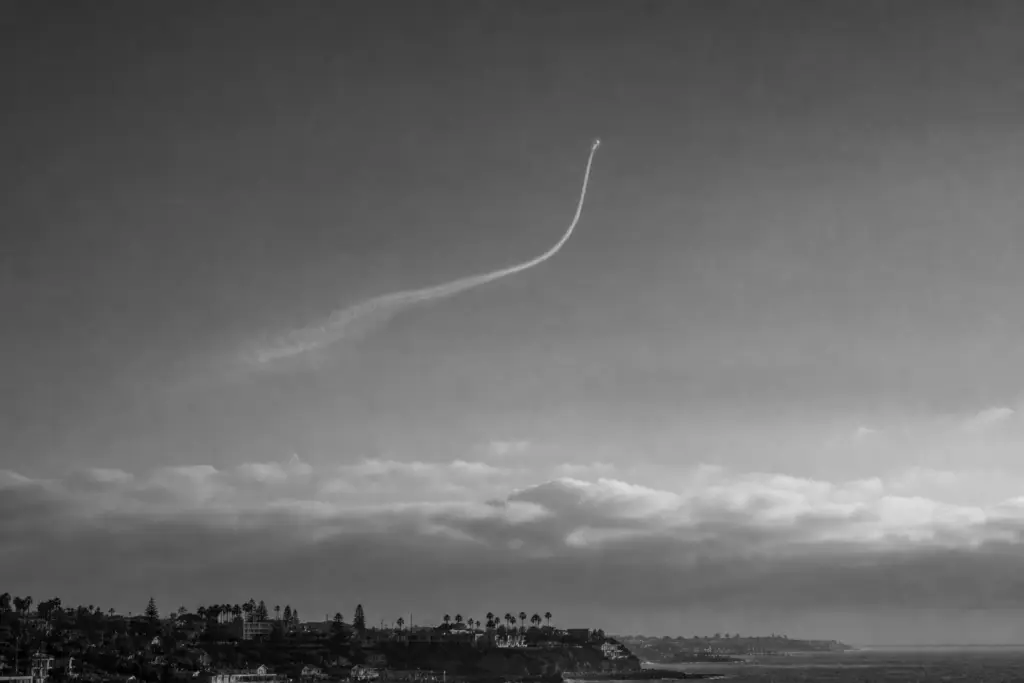

An entry attributes an unspecified object sighting to Youngstown, Ohio, on February 22, 2020. That is enough to justify a careful look, but not enough to establish what was in the sky. A reported observation is an account of what someone believed they saw; an identification requires details that can be independently compared with a known object or event. Those are different evidentiary standards, and this case must be judged by the latter rather than by the label “UFO.”
This review examines the Youngstown Ohio UFO sighting February 22 2020 as a limited historical record. It separates any traceable report details from later assumptions, then considers the information needed to test an explanation: observation time, viewing location, direction, duration, appearance, motion, weather, and independent corroboration. A precise time and direction, for example, can be compared with astronomical objects, aircraft activity, or satellite passes; without them, those comparisons may remain possible but cannot be decisive.
The central question is therefore narrow: what does the available record actually support? If public material does not preserve a named witness, original media, corroborating accounts, or enough observational detail to test ordinary causes, the responsible conclusion is not an extraordinary one. It is that the object remains unidentified from the surviving information.
What Was Reported in Youngstown on February 22, 2020?
The surviving public record associates an unspecified-object report with Youngstown, Ohio, and the date of February 22, 2020. That association establishes the narrow starting point for this review: a sighting was entered or preserved as having occurred in that place and on that date. It does not, by itself, establish the object’s physical nature, distance, altitude, or origin.
“Unspecified” is important here. It means the available case reference does not yet provide enough dependable information to assign the observation to a particular category, such as an aircraft, satellite, astronomical object, drone, balloon, or something else. It is a status of the record, not evidence for any extraordinary interpretation.
The fact that a Youngstown UFO sighting in 2020 was reported should also be kept separate from the accuracy of each possible element in the account. A report can preserve a claimed date and location while leaving unresolved whether the witness estimated the time correctly, whether the apparent motion reflected the object or the observer’s perspective, and whether the stated location identifies a precise viewing point. Those distinctions matter because even a small uncertainty in time, direction, or duration can prevent a meaningful comparison with ordinary sky activity.
The next step is therefore to identify exactly what the public entry retains, and, just as importantly, what it does not retain, before weighing explanations.
What the Available Report Actually Says
The material available for this review preserves no quoted narrative from the observer. It associates the report with Youngstown and February 22, 2020, but does not retain wording that describes the object’s shape, color, size, brightness, or other visible features.

Nor does the accessible record provide the observational details needed to reconstruct an event. There is no stated time of day or night; no duration; no direction of travel or compass bearing; and no account of whether the object appeared stationary, moved steadily, changed course, accelerated, blinked, or disappeared. The record also does not specify whether the observer saw one object or several.
Sound and lighting are likewise unrecorded. There is no surviving indication of engine noise, silence, flashing lights, a steady glow, a beam, reflected sunlight, or the object’s relation to clouds, stars, buildings, or the horizon. Without those distinctions, an apparent point of light and a structured object cannot be separated on the public information alone.
The February 22 2020 UFO report Youngstown entry also supplies no identifiable witness context in the material reviewed: no named observer, precise viewing location, stated occupation, group size, or independent second account. It does not include a photograph, video, sketch, or original submission text whose provenance could be assessed.
These are absences in the surviving public record, not findings that the witness saw nothing more. A fuller original witness report may once have contained some of these fields. But unless it is publicly available and traceable to this case, details such as altitude, speed, distance, and flight path should not be reconstructed from the city-and-date label alone.
What Can Be Verified, and What Cannot
Provenance determines how much weight this record can bear. The publicly accessible entry is best treated as a database-level preservation of a submitted claim tied to Youngstown and February 22, 2020. It does not identify a named witness, establish whether the submission was firsthand rather than relayed, or provide an original statement that can be examined for consistency.
No contemporaneous local-news report or documented public response by a police, aviation, emergency-management, or other government agency is available in the material reviewed for this case. That absence does not disprove that an observation occurred. It does mean there is no independently dated account showing how the event was described at the time, whether other residents reported it, or whether authorities treated it as an incident requiring inquiry.
Independent corroboration would mean separate observers providing accounts that can be compared without merely repeating one another. A reposted database entry, social-media retelling, or later article based on the same anonymous submission would not meet that standard. No such independently sourced witness account is preserved here.
There is also no photo or video linked to the report with provenance: no original file, capture time, location data, device information, or documented chain of custody from recorder to publication. Those details matter because they permit media to be placed at a particular time and viewpoint; without them, even genuine imagery may not be attributable to this Youngstown Ohio UAP sighting.
Likewise, the available record contains no official incident number, radar return, air-traffic record, or published follow-up investigation. Radar data could show that something was tracked in a defined airspace, but it would not by itself identify a visual object without matching time, position, and altitude. In this case, there is no public tracking evidence to compare against the claim.
The defensible finding is therefore limited: someone submitted or preserved a sighting report. The database listing is evidence of that submission, not independent evidence of a verified incident or identification. The case remains unresolved only in the evidentiary sense that the surviving record is too thin for a confident identification.
Weather, Sky Conditions, and Ordinary Objects to Check
A conventional identification requires a time-and-place match, not merely a familiar object that could have been present somewhere in the region. For this Youngstown report, the missing observation time, viewing direction, elevation above the horizon, duration, and description prevent a meaningful reconstruction of weather conditions at the moment of the sighting. Cloud cover, visibility, precipitation, wind, and the stage of twilight can each change what a distant light, reflective object, or low object appears to do.
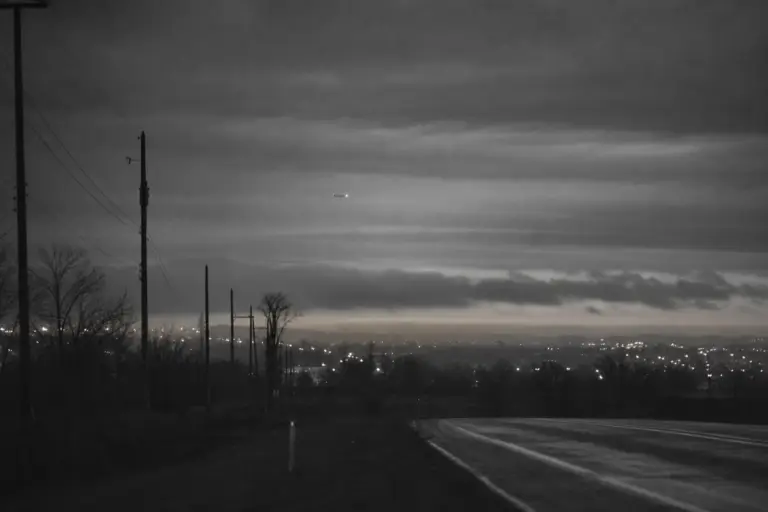
Bright astronomical objects are tested by their predicted position and whether they would appear fixed as the observer moved; a planet does not cross the sky in seconds, while a meteor is normally brief and fast. Satellite passes likewise require a match to the reported time, track, brightness, and direction. A solitary, steadily moving point may be consistent with a satellite, whereas several lights holding formation, changing course, or remaining visible at low altitude would call for different comparisons. Because none of those reported characteristics survives publicly here, neither an astronomical object nor a satellite pass can be assigned to the case.
Aircraft activity must be compared with flight paths, approach or departure routes, navigation-light patterns, sound, apparent speed, and duration. Drones can hover or maneuver at low altitude but may show small, localized lights; weather balloons tend to drift with wind and can reflect sunlight; and optical effects can arise when bright lights are viewed through haze, thin cloud, glass, or moisture. These are useful checks for Ohio UFO sightings, not ready-made answers. A candidate becomes persuasive only when its behavior and appearance fit the account alongside the local sky conditions; with those core observations unavailable, the ordinary possibilities remain untested rather than confirmed.
How Well Do Possible Explanations Fit This Case?
The first checkpoint is positive correspondence: a proposed explanation must match at least one preserved feature of the observation. Here, the public record supplies neither a feature that positively matches a known object nor a conflict that rules one out. The date alone cannot distinguish a distant aircraft from a satellite, balloon, drone, astronomical object, meteor, or optical effect.
- Aircraft: impossible to assess. A flight explanation would gain weight from a direction of travel, flashing navigation lights, engine sound, a long viewing interval, or a position near an approach or departure route. None is retained. It is a possible category, not a case-specific conclusion.
- Satellite or other orbital object: impossible to assess. A credible match requires an observation time and track across the sky. Without them, there is no way to compare a predicted pass with the reported event.
- Planet, star, or other bright celestial object: weakly supported. Such objects can be mistaken for unusual lights when viewed through haze or cloud, but the record does not say that the object was light-like, stationary, or observed near the horizon. Those missing traits prevent a stronger assessment.
- Meteor: weakly supported. A meteor would ordinarily be evaluated through its brief duration, rapid motion, and streak-like appearance. No corresponding description survives.
- Drone, balloon, or optical effect: plausible but unconfirmed. These possibilities can account for some ambiguous observations, but they require behavior or viewing conditions that this entry does not preserve.
“Unidentified” therefore describes an evidentiary gap rather than a demonstrated anomaly. A precise timestamp, observation point, viewing direction, duration, original media with metadata, or independent accounts could narrow the field. In their absence, ordinary explanations remain possible, but none fits this case well enough to move beyond hypothesis, as with other unresolved UAP cases.
Bottom Line: A Report Is Not an Identification
The durable conclusion is deliberately modest: the public record preserves a Youngstown report dated February 22, 2020, but not the observation data needed to identify its subject. No surviving public material establishes what the object was, where the observer stood, when the observation occurred, how it moved, or whether another witness independently saw the same thing. The report is real as a recorded claim; a particular aircraft, celestial object, drone, balloon, or other cause is not established by that claim.
That distinction also matters in broader UAP disclosure debates. Programs that collect, release, or review UAP reports can make records more available for scrutiny; they do not turn an unresolved local entry into evidence of non-human intelligence, nor do they demonstrate a government UFO cover-up. “Unresolved” can simply mean that essential identifying information was never recorded or no longer survives.
For future sighting claims, the strongest starting points are concrete and traceable:
- Original account: distinguish a witness’s dated statement from a later database summary or reposting.
- Time and place: record a precise timestamp, observation point, compass direction, and elevation in the sky; these details permit meaningful comparisons.
- Independent corroboration: give greater weight to separately collected accounts that agree on observable features.
- Media provenance: retain the original photo or video file, metadata, and an unedited copy rather than relying on a cropped upload.
- Conventional comparison: test the reported duration, motion, lighting, and direction against ordinary candidates before assigning an extraordinary meaning.
On the available record, this case remains unspecified, not identified, and not evidence for any broader claim.
What This Youngstown Report Can, and Cannot, Show
The value of this case lies in the boundary it draws between a preserved allegation and a demonstrated event. The Youngstown entry provides a historical marker: an unspecified object was reportedly associated with the city and the date of February 22, 2020. It does not provide the observational foundation needed to move from that marker to a reliable classification.
A strong identification would require features that discriminate among alternatives. For example, a precise time and direction could test whether a bright celestial object or satellite was in the relevant part of the sky; a duration, flight path, and lighting pattern could be compared with aircraft; and original, traceable imagery might permit closer assessment. None of those comparisons can produce a result when the underlying observation fields are absent.
That leaves conventional possibilities open without elevating any one of them into an answer. Aircraft, balloons, drones, astronomical objects, and atmospheric or perceptual effects remain possible because the record contains too little information to exclude them, not because the case positively matches them.
For readers searching the Youngstown Ohio UFO sighting of February 22, 2020, the responsible final assessment is narrow: the public record documents a report, but the surviving evidence cannot establish what was seen or support an extraordinary interpretation.
Frequently Asked Questions
What was reported over Youngstown, Ohio, on February 22, 2020?
A public database-level record associates an unspecified object sighting with Youngstown, Ohio, on February 22, 2020. It preserves the city and date but does not establish the object’s identity, altitude, distance, or origin.
Was the Youngstown UFO sighting identified?
No. The surviving public record lacks the time, viewing direction, duration, appearance, motion, and witness details needed to identify the object as an aircraft, satellite, drone, balloon, celestial object, or other cause.
Are there verified photos or videos from the Youngstown UFO report?
No verified photo or video is linked to the report. No original media file, capture time, location data, device information, or documented chain of custody is publicly available.
How can a Youngstown sighting be checked against weather, aircraft, and satellite records?
A useful comparison requires a precise timestamp, observation location, compass direction, elevation, duration, and description of movement and lights. Aircraft can be checked against flight paths and navigation lights, while satellites and celestial objects require a matching time and sky track.
Does an unexplained UAP report prove an extraterrestrial origin?
No. An unresolved report means the available evidence is insufficient for identification, not that it demonstrates non-human intelligence or an extraordinary cause. In the Youngstown case, conventional possibilities remain open because the core observation details were not preserved.