
Santa Claus, Indiana, is an attention-grabbing place name for a UFO report, but the Santa Claus Indiana UFO sighting January 3 2020 is not, on its face, proof that an extraordinary craft was present. A sighting report records that an observer, or someone submitting information on an observer’s behalf, described something unusual. A verified event requires more: traceable original testimony, enough detail to test the observation, and ideally independent corroboration such as imagery, additional witnesses, radar data, or a documented investigation.
This article treats the stated date and location as claims to be traced rather than conclusions to be assumed. It will identify the earliest available case record, distinguish the reporter’s description from facts independently established by records, and examine whether the reported circumstances can be compared with weather, astronomical, or aviation context. That approach leaves room for an unresolved observation while refusing to turn missing information into evidence of an exotic explanation.
The key question is therefore narrow: what does the surviving record actually support about an object reportedly seen near Santa Claus on January 3, 2020, and what remains unknown?
What Is Known About the January 3, 2020 Report
The present research file identifies a claimed Santa Claus, Indiana, sighting date, January 3, 2020, but supplies no underlying database entry, case number, original submission, or contemporaneous news account from which to establish the report’s provenance. That absence matters: a location-and-date association is not the same thing as a recoverable witness record.
An unidentified object report can be useful evidence that someone made an observation, provided the archive preserves when it was submitted, what the observer described, and whether the entry can be traced to an original account. It is much weaker when only a bare listing or later repetition remains. Without the originating record, this article cannot responsibly assign a time of day, viewing direction, duration, appearance, movement, sound, number of witnesses, or exact observation point to the January 3 claim.
The immediate task is therefore archival rather than interpretive: identify the earliest accessible record and separate its reported fields from independently checkable context. Until that record is located, there is no basis here to claim photographs, corroborating witnesses, radar data, an official inquiry, or a particular explanation. The report may remain unresolved, but the available material does not yet show what, specifically, was observed.
The Available Case Record: Date, Location, and Description
At present, there is no recoverable case form from which to transcribe a witness narrative. The available reference is limited to the claimed association of Santa Claus, Indiana, with January 3, 2020; it does not identify the reporting organization, provide a case or report number, preserve a submission date, or link to an archived original entry.
That leaves the case record with two unverified attribution fields, date and locality, but no documented observation fields. “Santa Claus” may refer to the town, a nearby address, or a broader area identified by a later index; the surviving material does not resolve that distinction. Nor does it identify the observer or establish whether the account came from a direct witness, a later submitter, or a compilation.
| Record field | Available information |
|---|---|
| Reported date | January 3, 2020, as claimed in the available reference |
| Reported location | Santa Claus, Indiana; no exact observation point preserved |
| Report source and identifier | Not supplied |
| Submission date | Not supplied |
| Time, duration, and direction | Not supplied |
| Shape, color, size, and motion | Not supplied |
| Sound, weather, and viewing conditions | Not supplied |
| Witness count, images, and corroboration | Not supplied |
These omissions matter because each field tests a different part of an observation. A time and direction can be compared with celestial objects or aircraft activity; duration and motion help distinguish a brief light from a traversing object; a preserved witness account allows readers to separate the observer’s words from later interpretation. None of those comparisons can yet be tied to this Santa Claus Indiana UFO report.
Accordingly, no shape, color, sound, trajectory, or behavior should be attributed to the reported object. The most accurate description is simply an unspecified-object listing associated with Santa Claus and the stated date, not a documented witness description of a particular craft or event.
How Strong Is the Evidence Behind the Listing?
The decisive issue is provenance: the available material does not identify a database, publisher, investigator, or original witness through which the Santa Claus entry can be independently traced. It therefore cannot presently be classified as a self-submitted public-database report, a local-news account, or an investigator’s case summary. Those categories carry different evidentiary weight. A preserved public submission can establish what a person reported and when it was filed; a news account may preserve contemporaneous interviews; an investigator summary can describe follow-up. None is available here.
Even the existence of a listing and the reality of the reported object are separate propositions. A recoverable, date-stamped entry would support the limited conclusion that someone submitted an account. It would not by itself establish the object’s identity, distance, altitude, or unusual nature. In this instance, the missing original means the weaker proposition, the provenance of the case record itself, cannot be independently tested from the materials at hand.
- Original media: no identifiable photograph, video, audio recording, or attachment is available for assessment.
- Independent witnesses: no witness names, witness count, or separate accounts are preserved, so corroboration cannot be measured.
- Contemporaneous coverage and follow-up: no traceable local-news report, official report, or investigator file accompanies the date-and-place reference.
- Instrumental records: no radar return, air-traffic record, or other sensor data is attached to the claimed sighting.
These are not merely missing supporting details; they prevent the usual tests of a UAP sightings claim. Independent accounts can reveal whether observers described the same event, while original imagery can be examined for timing and context. Here, there is no evidentiary chain connecting the stated locality and date to a particular observer or object. The listing should consequently be treated as an unverified archival lead, not as a corroborated incident.
Context Checks and Possible Ordinary Explanations
A context check begins by matching an observation to the sky and local conditions at the moment it occurred. That cannot be done for this entry because the surviving reference supplies no observation time, viewing direction, elevation above the horizon, duration, apparent motion, brightness, color, or weather description. Without those fields, there is no case-specific basis to compare the object with historical weather observations, sunset and twilight, the Moon, visible planets, satellite passes, or aircraft tracks for Santa Claus on January 3.
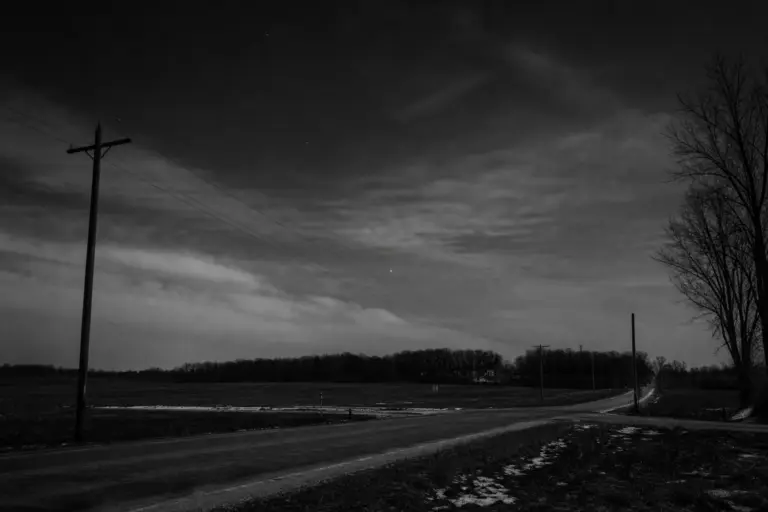
That limitation does not make ordinary explanations implausible; it means none can be responsibly selected. Bright astronomical objects, for example, tend to appear fixed relative to landmarks over a short observation, although changing cloud cover or an observer’s movement can create an impression of motion. An aircraft commonly shows steady forward movement and may display blinking navigation or landing lights. A satellite usually crosses the sky smoothly without audible engine noise, while re-entering debris is more likely to appear as a fast, conspicuous fragmentation event. Those distinctions matter only if the witness account preserves the relevant appearance and behavior.
- Aircraft activity: A flight-track comparison requires at least an approximate time and direction, because aircraft can be visible from the same town at different bearings and altitudes. No such geometry is available here.
- Drones: A nearby drone can hover, turn abruptly, or show several lights; distance is especially important because a small close object can be misjudged as a large distant one. The record contains neither distance cues nor a movement description.
- Atmospheric and nighttime effects: Clouds, haze, reflections, and isolated lights near the horizon can alter apparent brightness, color, and position. Weather data could provide context, but cannot identify an object on their own.
These are possible explanations for unidentified-object sightings, not retroactive identifications of this one. A meaningful match would require alignment between the reported time, line of sight, and observed behavior and a specific candidate event. In their absence, assigning the Santa Claus reference to a planet, aircraft, satellite, drone, re-entry, or atmospheric effect would add details the available record does not contain.
Assessment: Unresolved Does Not Mean Extraordinary
The appropriate conclusion is narrower than an “unresolved UAP” label suggests. The surviving material supports only an unverified association between Santa Claus, Indiana, and January 3, 2020; it does not preserve a traceable observation from which an object can be assessed.
An unidentified aerial phenomenon is an observation not yet assigned to a known cause after its recorded characteristics have been considered. “Unresolved” similarly implies that there is enough information to evaluate competing explanations but not enough to choose one. This reference falls short of both evidentiary thresholds: there is no recorded appearance, timing, line of sight, motion, duration, or witness account to analyze.
- Supportable: a claim exists that an unspecified object sighting was associated with the stated town and date.
- Not established: that a witness submitted an original report, that an aerial object was present, or that any particular physical object was observed.
- Not inferable: the object’s size, shape, altitude, speed, origin, or whether it was a conventional aircraft, astronomical object, drone, satellite, atmospheric effect, or anything else.
There is likewise no basis to connect the reference to non-human intelligence. Missing data do not become positive evidence for anomalous technology; they merely prevent a meaningful identification. A strong case would preserve independently testable details and, ideally, corroboration. This one cannot responsibly favor or rule out any explanation because the underlying event description is absent.
How to Verify Historical UFO and UAP Sighting Claims
A reliable historical inquiry starts by building a chain of records rather than collecting repeated retellings. Seek the earliest accessible entry for the Santa Claus claim: an original submission, database page, dated news item, police-log reference, or investigator file. Record its URL, access date, publication or submission date, author or organization, and every available case field. Save a screenshot and an archived-link capture; live database pages can be edited, moved, or removed.

- Separate originals from reposts. A repository preserves a submitted claim; it does not by itself show that an agency investigated or validated it. An official investigation would require a named agency, a traceable file, and some account of investigative action.
- Search the period around the stated date. Local newspapers, broadcast archives, community posts, and public emergency records may reveal whether others described the same event independently. Repeated copies of one anonymous listing are a weak signal; separate, dated accounts are stronger.
- Test recorded observation details. If a time and precise location emerge, compare them with historical weather, sunset and twilight, astronomical positions, satellite-pass data, and available aviation information. A match is useful only when it also fits the reported direction, duration, and motion.
Current UFO news and UAP records and document-collection context may help readers find broader policy reporting, but they add no evidence to this Indiana reference. The useful outcome is either a traceable report that can be tested or a clearly documented archival gap.
What the Santa Claus Report Ultimately Shows
The most durable conclusion is archival rather than extraordinary: the material presently available preserves a claim linking an unspecified object report to Santa Claus, Indiana, on January 3, 2020, but not the underlying observation. It cannot establish who observed anything, what was observed, or whether the date and locality were recorded accurately in the first place. No recoverable narrative supplies the basic details needed to distinguish an aircraft, astronomical object, satellite, drone, atmospheric effect, or another ordinary source from something genuinely unclassified.
That gap also prevents stronger claims about corroboration. There is no identified original image or video, independent witness account, radar record, named official inquiry, or investigator file tied to this reference. “Unresolved” in this instance describes an absence of usable case information, not evidence that a remarkable object defied explanation.
A better historical record would change the assessment only if it added traceable, contemporaneous material: for example, a dated original submission with a time and viewing direction, plus an independent account or media whose timing and location could be tested. Until such material emerges, the Santa Claus reference should remain an unverified reported association, not a verified UAP incident; broader official reporting volumes do not establish the nature of any particular sighting, nor do they provide evidence of an extraordinary craft.
Frequently Asked Questions
Was there a UFO sighting in Santa Claus, Indiana, on January 3, 2020?
A claim links an unspecified object report to Santa Claus, Indiana, on January 3, 2020. No recoverable original witness report, case number, database entry, or contemporaneous news account verifies that an aerial object was observed.
What was reported over Santa Claus, Indiana, in January 2020?
No description of the object survives in the available record. Its shape, color, size, motion, sound, duration, viewing direction, and exact observation point were not supplied.
Is the Santa Claus, Indiana UFO report verified?
No. The reference provides only an unverified date and locality association, with no identified reporting source, submission date, witness account, image, radar data, or independent corroboration.
What could explain an unidentified object sighting in Indiana?
Possible ordinary explanations include aircraft, drones, bright astronomical objects, satellites, re-entering debris, and atmospheric effects. Identifying a specific cause requires details such as observation time, direction, duration, motion, brightness, and weather conditions.
Where can historical UFO sighting reports be checked and what should you look for?
Check for the earliest original submission, database page, dated news report, police-log reference, or investigator file. Look for a traceable source, case identifier, submission date, precise time and location, witness narrative, media, and independent accounts that can be compared with weather, astronomy, and aviation records.