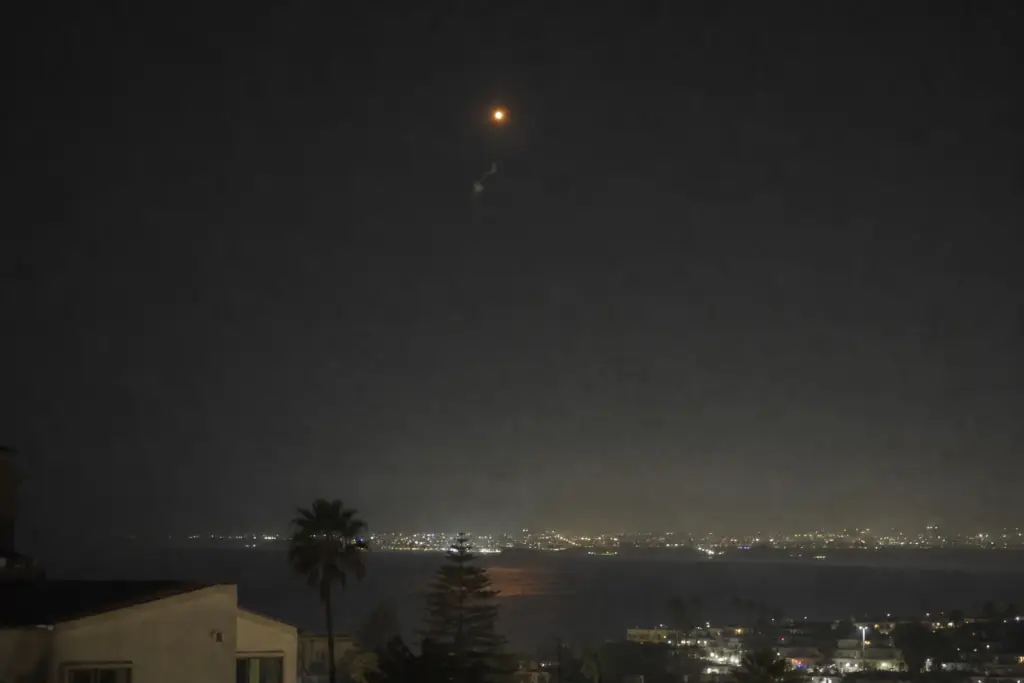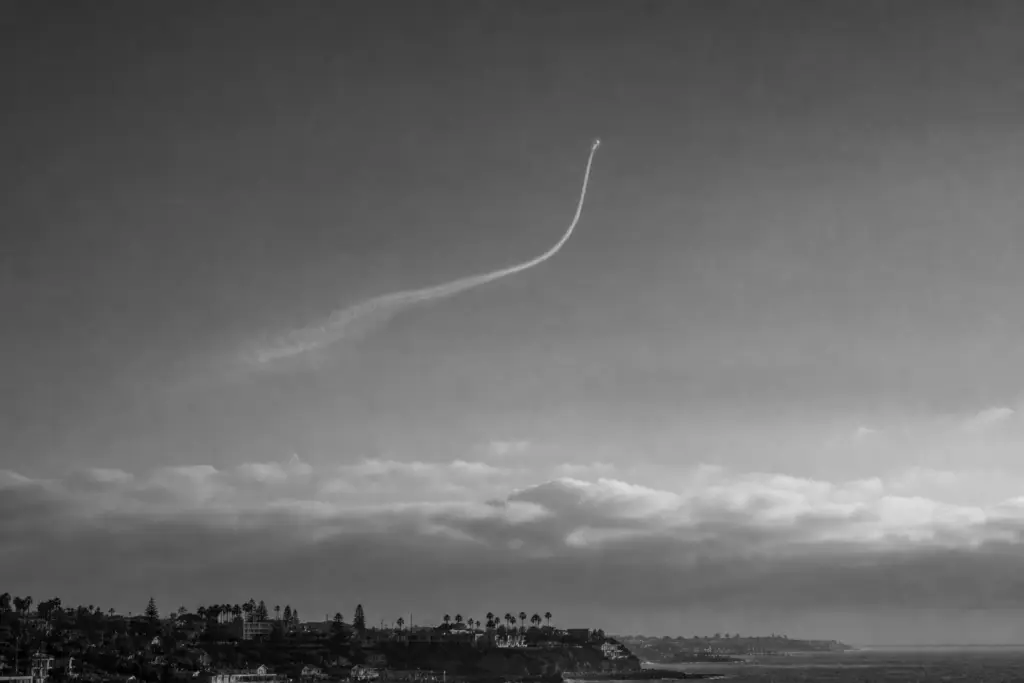
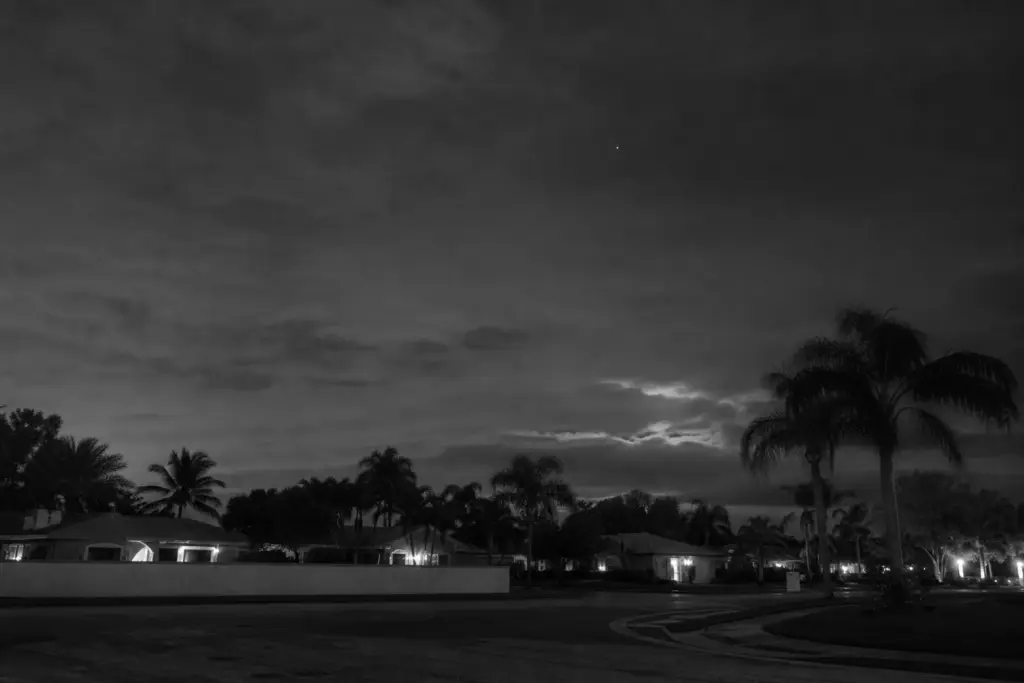
The Royal Palm Beach UFO sighting January 7 2020 is best approached as a historical report of an observation, not as a verified identification of what was seen. The available premise is narrow: an unspecified-object sighting was associated with Royal Palm Beach, Florida, and that date. It does not, by itself, establish an aircraft, a celestial object, a drone, a secret program, or an extraordinary craft.
“Unspecified object” is a record label for something not adequately identified in the information preserved with the report. It can reflect a short or incomplete description, missing time or direction, or a lack of material that permits comparison with ordinary aerial and astronomical possibilities. That differs from a confirmed unknown: the former describes the limits of the record; the latter would require enough reliable evidence to rule out identifiable alternatives.
This account follows an evidence-first path. It examines which database or archive entry can be traced to the report, whether its date denotes the observation rather than submission or publication, and how precisely “Royal Palm Beach” locates the witness or object. It also separates reported details from missing ones and asks whether independently reviewable material, such as imagery, additional witnesses, weather context, or flight information, is actually available. Where the record cannot support an inference, this article leaves the question open rather than filling the gap with speculation.
What Was Reported in Royal Palm Beach on January 7, 2020
The usable record is limited to a reported observation dated January 7, 2020 and associated with Royal Palm Beach, Florida. That is enough to describe an unspecified object sighting in Royal Palm Beach, FL, but not enough to identify an object’s origin, make, altitude, or purpose. The date and municipality are the only event fields presently established for this account.
No named original sighting-database entry, archived report page, case number, or publishable witness narrative has been supplied for review. Consequently, this article cannot attribute the report to a particular civilian database, establish whether January 7 was the observation date rather than a submission date, or reproduce the witness’s original wording. A sighting report records an observation rather than establishing a verified incident: a database listing may preserve only selected fields, while an original submission may contain timing, direction, duration, and descriptive detail needed to assess the observation.
- Documented in the working record: the reported event date, January 7, 2020, and the location label, Royal Palm Beach, Florida.
- Not presently available: an exact time; a street-level or viewing location; object shape, color, size, brightness, direction, motion, and duration; and any indication of weather or viewing conditions.
- Also unverified: photographs, video, radar data, additional witnesses, an official investigation, or contemporaneous local-news coverage. Their absence from the material available here does not show that none existed; it means they cannot be treated as evidence for this Royal Palm Beach UFO report in 2020.
Those limits matter because conventional explanations can only be weighed against actual observations. For example, a timed report with a travel direction and steady light might permit comparison with aircraft or astronomical conditions; a location-and-date entry alone does not. The responsible finding at this stage is therefore narrow: a sighting was reported under an unspecified-object description, while the details required for a more specific assessment remain unavailable.
Source Trail, Date Fields, and Location Accuracy
Provenance begins with a chain of records, not with a search-result summary. The strongest item would be the original witness submission: the form or message that preserves the reporter’s own date, time, location wording, description, and any attachments. A sighting-database transcription is one step removed; it may standardize fields, abbreviate narrative text, or assign a category without retaining every original detail.
An archive capture serves a different purpose. It can show that a particular URL displayed particular content on or before the archive’s capture date, but it does not establish when the witness submitted the report. Later retellings are weaker still: they can help trace how a claim circulated, yet they should not replace the underlying entry. For this Royal Palm Beach Florida UAP report, a usable source trail would identify the database or host, stable URL, report identifier, event date, submission or publication date, and any visible edit history. Without those fields, January 7, 2020 cannot safely be treated as anything more specific than the date attached to the available account.
Location labels require the same restraint. Royal Palm Beach is a distinct municipality in Palm Beach County; it should not be merged with Palm Beach, West Palm Beach, or Palm Beach Gardens in searches or retellings. Even a correctly transcribed city label identifies neither the witness’s exact viewing position nor the object’s position, distance, direction, or route. Those require separately recorded observational details.
What the Record Can, and Cannot, Tell Us
A useful evidence ledger separates fields that are actually preserved from fields that would be needed to test an identification.
| Documented in the material available here | Not established |
|---|---|
| Event date: January 7, 2020; location label: Royal Palm Beach, Florida. | Observation time, precise viewing position, and the object’s position or altitude. |
| An unspecified-object classification associated with the report. | A verbatim object description, including shape, size, surface detail, or sound. |
| No publishable narrative, attachment, case file, or original database entry has been provided for assessment. | Apparent motion, direction of travel, duration, brightness, color, and changes in appearance. |
| No independently reviewable media or corroborating material is available in the record set examined for this article. | Whether photographs, video, radar data, named independent witnesses, weather observations, official inquiry, or contemporaneous news coverage exist elsewhere. |
These unknowns change what can responsibly be compared. A report describing a steady light moving east for five minutes at a stated time could be tested against flight activity and sky conditions; an entry without time, direction, or apparent motion cannot support that kind of comparison. Likewise, brightness or color can be useful only when paired with viewing conditions and a description of whether the light was constant, flashing, or changing.
The absence of those details is an evidentiary limit, not a positive signal of an extraordinary object. It prevents a reliable ranking of ordinary possibilities and prevents a reliable exclusion of them. The record therefore supports a narrowly described reported observation, while leaving its visual characteristics, behavior, corroboration, and identification unresolved.
What “Unspecified Object” Means in a Sighting Record
A category label is a sorting tool, not an investigative conclusion. In a sighting record, “unspecified object” ordinarily indicates that the available information did not support placing the observation in a more descriptive category, for example, a light, disk, triangle, aircraft-like object, or another defined entry type.
That differs from an unclassified report, which may simply have received no final category at all. It also differs from a confirmed anomalous case: confirmation would require investigators to assess specific observation details and rule out identified alternatives to a stated standard. Neither status follows from an unspecified label.
The term should not be treated as an official UAP finding. “UAP” can be used broadly in public discussion of unidentified aerial phenomena, while official casework involves a defined reporting and review process. A local civilian entry is not thereby an AARO-reviewed case, and an unspecified designation does not demonstrate non-human intelligence.
Database taxonomies vary. One site may use “unspecified” for missing shape information; another may use it as a catch-all for reports that do not fit its menu. Here, no original database entry or published category key is available to establish which meaning applied. The useful checkpoint is the reporting system’s own definition, adjacent fields, and preserved narrative, not assumptions drawn from the category name alone.
How the Report Could Be Evaluated Without Overclaiming
An identification exercise starts by converting an observation into a time-and-sky geometry: a local clock time, viewing location, compass direction, elevation above the horizon, duration, apparent size, color or illumination, and whether the object seemed fixed, steady-moving, maneuvering, blinking, or changing brightness. Those fields allow comparisons to address the same slice of sky rather than merely producing a list of things that can appear overhead.
A precise time and direction could be matched against astronomical objects, including bright planets, stars, or other visible celestial targets, while elevation and apparent motion would help distinguish a fixed object from one crossing the sky. The same coordinates could be compared with historical aircraft tracking, recognizing that a track near the line of sight would be a lead rather than an identification: a reported light may be an aircraft seen head-on, but a match requires its timing, bearing, and light pattern to fit the account.
Other categories require equally specific tests. A satellite, launch, or re-entry should be assessed against its predicted path, timing, direction, and changing brightness. A drone may be relevant only where its low apparent altitude, local movement, and lighting description fit. Balloons depend heavily on wind direction and cloud conditions; local events such as fireworks or illuminated advertising likewise need a known place and time that corresponds to the observation.
Contemporaneous weather data would matter because cloud cover, haze, rain, wind, and visibility can obscure distant objects, alter perceived brightness, or affect whether a balloon-like object could travel in a stated direction. For this January 7 2020 UFO sighting in Florida, the presently described record does not preserve the necessary time, bearing, elevation, motion, or visual detail. Those missing inputs prevent meaningful elimination or ranking of these possibilities; they do not favor any one of them.
Why This Local Report Does Not Establish a Disclosure Narrative
Disclosure claims require a different kind of record from a local sighting entry. UFO disclosure or UAP disclosure would concern authenticated government information, official findings, or released materials with a traceable connection to the event. Alien disclosure would require still more: evidence that identifies a non-human origin. A date-and-place report with an incomplete object category supplies none of those links.
A public sighting database preserves a person’s report or a later transcription of it; it does not, merely by listing an incident, show that a government agency opened a case, collected sensor data, interviewed witnesses, or reached a conclusion. An official investigation, by contrast, would leave identifiable institutional material, such as a case reference, release, finding, or other record tying the agency to this specific observation. No such material has been provided for the Royal Palm Beach report.
AARO should not be inferred into the account. Unless a verifiable AARO record names the January 7, 2020 event, there is no basis to claim that the office reviewed or investigated it. Nor does the absence of a supplied official case record demonstrate a cover-up; it establishes only that this article cannot document an official investigation. Current UAP news and broader debates may concern separate incidents, evidence, and agencies, and cannot convert this historical local report into support for a disclosure narrative.
Bottom Line: A Reported Observation With Unresolved Limits
Traceability, rather than the confidence of a later retelling, is the decisive test. The material reviewed here supports a report dated January 7, 2020, with Royal Palm Beach as its location field and an unspecified-object label. It does not identify the object, establish its distance, behavior, or origin, or support an extraordinary explanation. No original report text, case file, media record, sensor evidence, or independently corroborating witness material was available for this article.
Future retellings of the Royal Palm Beach UFO sighting should be judged by a short chain of checkpoints:
- Find the earliest accessible record rather than relying on a repost or search-result snippet.
- Preserve the report’s exact wording: a database category and a witness description are different evidence.
- Separate the observation date from a submission, archive, or publication date.
- Keep the municipality distinct from other Palm Beach County locations.
- Seek independent, time-matched records, weather observations, aviation data, astronomical conditions, photographs, video, or additional witnesses, and state precisely what each can corroborate.
That standard leaves the report unresolved: neither validated as extraordinary nor dismissed as nonexistent.
What the Royal Palm Beach Report Supports, and What It Does Not
The practical distinction is between an entry that records a claim of observation and evidence that identifies what was observed. This sighting record supports the former: an unspecified-object observation was reported in Royal Palm Beach for January 7, 2020. It does not supply the descriptive and corroborating foundation needed for the latter. Without preserved time, precise viewing position, direction, duration, appearance, or independent material, no candidate explanation can be fairly tested against the observation.
A stronger account would begin with the earliest accessible report and retain each original field rather than relying on a later label. Location precision matters because a municipality name is not a viewing coordinate; likewise, an event date is not necessarily a submission or publication date. A useful next step would pair a reliably timed, located narrative with relevant ordinary context, such as weather, astronomical positions, or flight activity, only where those data address the stated direction and behavior.
For that reason, the Royal Palm Beach UFO sighting January 7 2020 remains a limited historical sighting record, not a confirmed object identity or a basis for wider claims. Responsible verification can sharpen that conclusion if new primary material emerges; until then, uncertainty is the accurate result.
Frequently Asked Questions
What was reported over Royal Palm Beach, Florida, on January 7, 2020?
A sighting of an unspecified object was reported with the date January 7, 2020, and the location label Royal Palm Beach, Florida. No verified description of the object’s appearance, behavior, altitude, or origin is available.
What does an unspecified object sighting mean?
An unspecified-object label means the preserved report did not contain enough information for a more detailed category or identification. It does not mean the object was confirmed as anomalous, extraterrestrial, or non-human.
Is there evidence that the Royal Palm Beach object was a UFO or UAP?
No independently reviewable evidence identifies the object as a UFO or UAP. The available record lacks an original witness narrative, photographs, video, radar data, named additional witnesses, and an official case file.
Did AARO investigate the Royal Palm Beach sighting?
No verifiable AARO record has been provided that names or links AARO to the January 7, 2020 Royal Palm Beach sighting. A civilian sighting entry does not establish that any government agency opened or investigated a case.
How can a historical UFO sighting report be verified?
Start with the earliest accessible original report and confirm the event date, submission date, database or host, stable URL, report identifier, and exact witness wording. Look for a precise time, viewing location, direction, elevation, duration, appearance, weather records, flight data, astronomical conditions, media, and independent witnesses that match the reported observation.