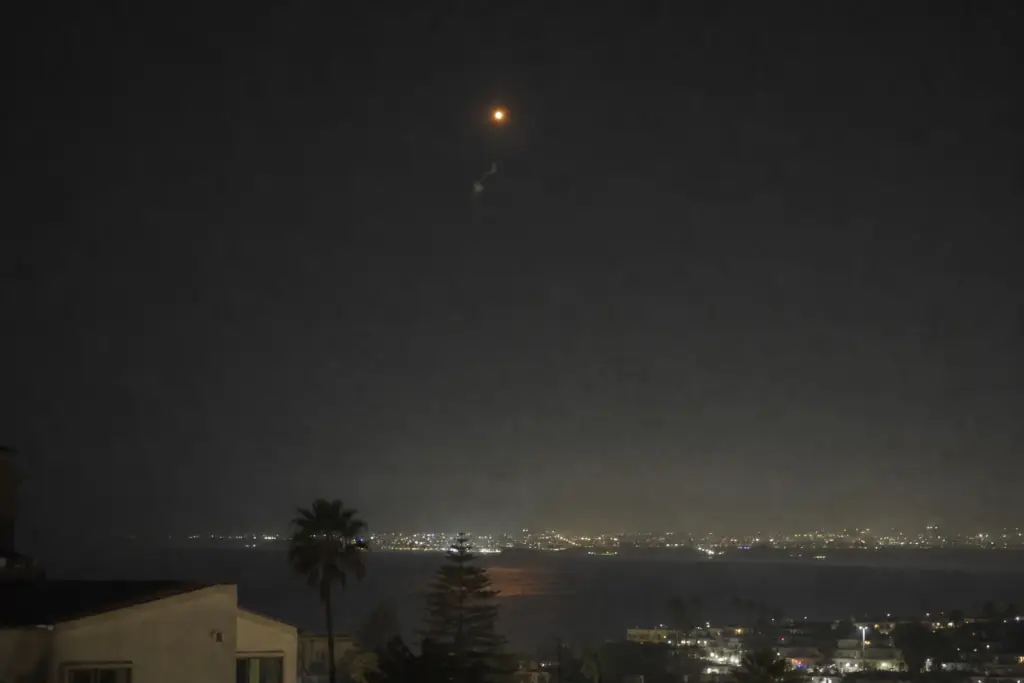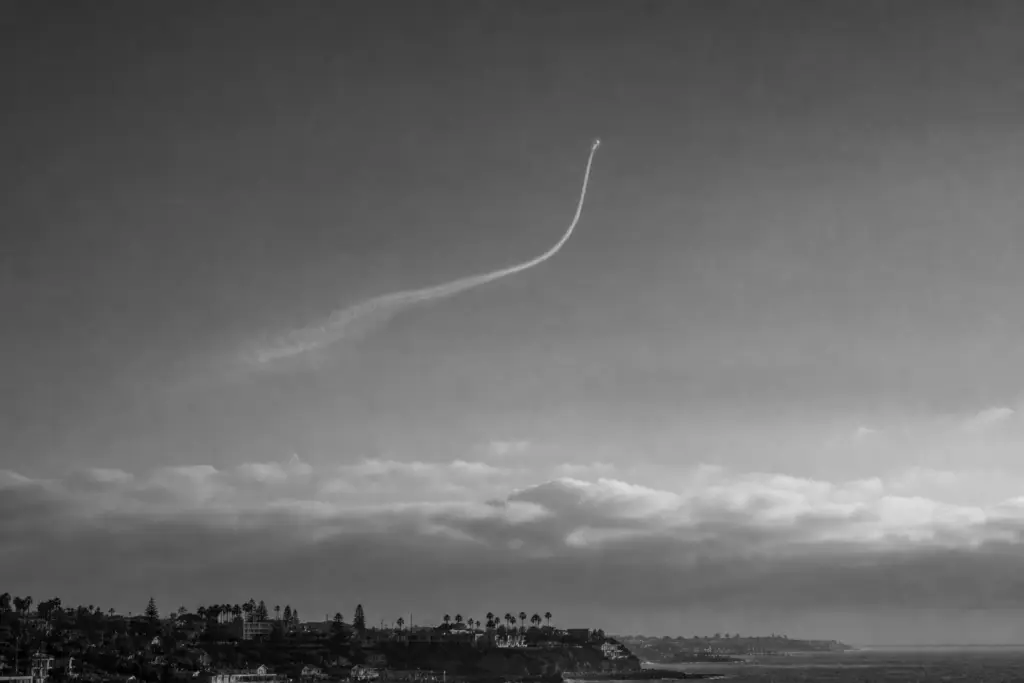
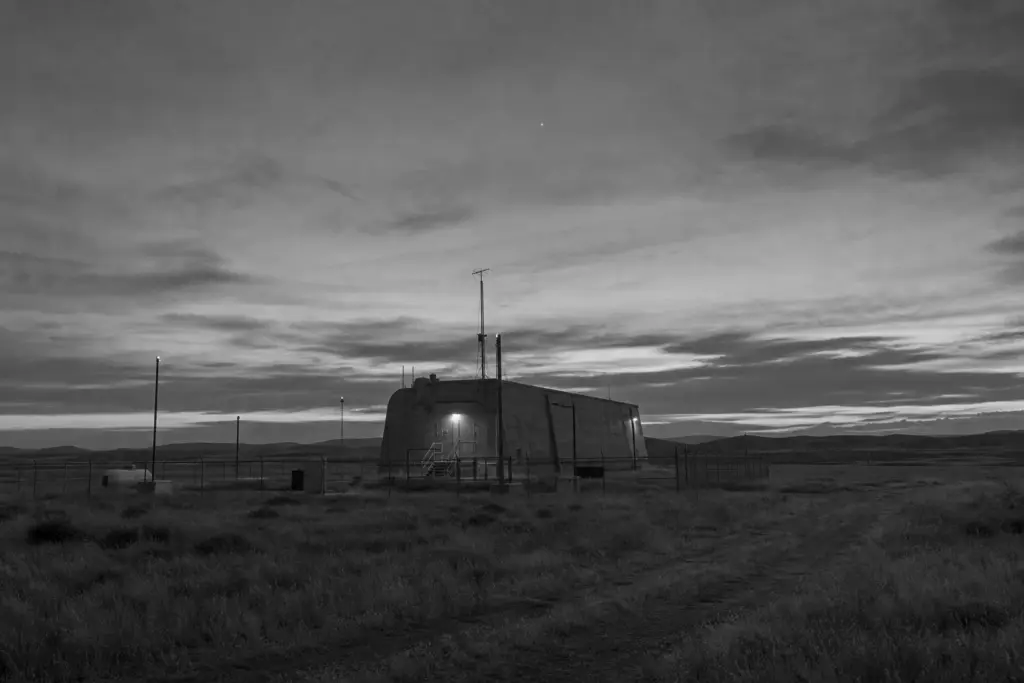
Reports of unusual aerial activity have repeatedly surfaced around missile fields, weapons-storage bases, and civilian nuclear facilities. The important question is not whether those reports prove a single extraordinary explanation. It is whether the surviving record shows a recurring, security-relevant context that deserves closer scrutiny.
This article uses documented pattern narrowly. It means identifiable reports in military files, declassified investigations, security accounts, civilian records, and later official reviews place unexplained or initially unidentified aerial observations near nuclear-related locations. That is stronger than an isolated anecdote, but weaker than a statistical finding of clustering: the available files do not provide a complete baseline for all sightings, all sites, or all ordinary air traffic.
Nor does a report establish origin, intent, or capability. A witness observation is an account; a security incident adds operational consequences or contemporaneous response records; radar data or multiple independent witnesses can corroborate aspects of an event. None automatically identifies an object as foreign, advanced, or nonhuman.
The sections ahead weigh those distinctions against representative historical cases, separate weapons infrastructure from civilian energy sites, and compare older records with the modern Pentagon and AARO framework. The result is a disciplined account of UAP near nuclear sites: a recurring subject in the record, not a verdict about what was seen.
What the Record Shows, and What It Does Not
The evidentiary value of any entry changes sharply with the kind of record behind it. A single observation records what a person believed they saw; it may be sincere and still leave altitude, distance, speed, and identity uncertain. An unresolved case means available information did not permit a reliable attribution, not that every possible explanation was eliminated. A confirmed attribution requires affirmative evidence linking the event to a known aircraft, atmospheric effect, balloon, drone, sensor artifact, or other identified cause.
The cases examined here therefore receive different weight. Contemporaneous military memoranda can show that personnel treated an event as an operational matter. Declassified investigative files preserve the questions and conclusions of the time. Radar, air-traffic, security, and multiple-witness material may independently corroborate location, timing, or response, while later testimony can add context without replacing the original record. Civilian reports near power facilities belong in the picture, but they are not interchangeable with incidents at nuclear-weapons infrastructure.
Proximity to a sensitive installation is consequential because an unidentified presence can prompt reporting, monitoring, or defensive concern. It does not establish that the object targeted the site, penetrated protected airspace, affected nuclear systems, or possessed unusual technology. That distinction is essential to the UFO disclosure and UAP disclosure debate: fuller records may clarify institutional handling and evidentiary limits, yet transparency alone cannot supply an origin or intent that the underlying evidence does not demonstrate.
How to Read Nuclear-Site UAP Evidence
Evidence should be read as a layered record rather than a stack of interchangeable “proof.” A contemporaneous command memorandum or security log is strongest for establishing that personnel reported an event, where it was thought to occur, and how the installation responded. It does not automatically establish the object’s identity. A declassified file can preserve that original institutional record, but declassification makes a document accessible; it does not validate every assertion recorded in it.
Independent corroboration narrows the room for error. Radar or air-traffic data may support time, track, or airspace activity; access-control logs may show a guard response; and accounts from observers who did not coordinate can strengthen the basic chronology. The key checkpoint is convergence: do the records place the event at the same facility, on the same date and time window, with compatible descriptions? A vivid recollection given decades later can be valuable context, but it carries less weight on those details than a record created during the incident.
Official investigations occupy a separate category. They show what an agency examined, what information it possessed, and whether it reached an attribution; an unresolved finding may instead reflect missing data, poor sensor quality, or competing explanations. Media accounts can help locate records and public testimony, but should not substitute for the underlying material.
For this article, a “documented pattern” means multiple traceable reports connected to nuclear-related settings across time, not a statistical measure of risk, a demonstrated causal link, or evidence of origin, intent, or technology. The analysis therefore asks whether each claimed connection rests on precise location, reliable timing, preserved chain of custody, and serious consideration of ordinary explanations before treating it as part of the pattern.
U.S. Missile Fields: The Malmstrom Record and Its Limits
In March 1967, Malmstrom Air Force Base in Montana recorded a disruption serious enough to remove a group of Minuteman intercontinental ballistic missiles from strategic alert. Unit histories and maintenance material describe ten missiles in Echo Flight entering a “No-Go” condition on March 16, meaning their launch-control system could not certify them ready for immediate launch. The missiles were not launched, damaged, or permanently lost; crews and technicians restored the affected systems after troubleshooting.
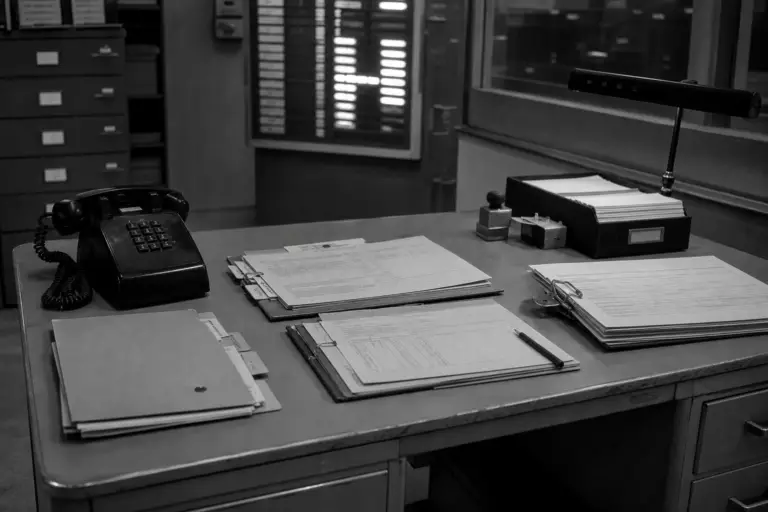
The surviving Air Force material makes the outage the firmest part of the case. It establishes a date, a missile-flight location, the number of affected weapons, and the operational consequence. It is less decisive on cause. Technical reviews addressed faults in the launch-control and guidance systems, but the record has not produced a publicly demonstrated mechanism connecting an external aerial object to the shutdown.
Aerial observations enter the account through a separate evidentiary track. Declassified Project Blue Book files and military reporting from the wider Malmstrom–Great Falls area preserve reports of unusual lights or objects during the period. Later recorded and sworn accounts by former launch-control personnel, notably Robert Salas, add the claim that guards reported a hovering object near an Oscar Flight launch facility shortly before missiles went offline. Those retrospective accounts are important because they identify alleged witnesses and a sequence of events, but they were given decades after the incidents and do not substitute for a contemporaneous sensor track, photograph, or command record establishing causation.
The distinction matters for claims about UAP and nuclear weapons. The evidence supports a real missile-system outage and preserves reports of unusual aerial activity in the surrounding missile-field context. It does not establish that a UAP shut down the missiles, that the reported object was at the relevant launch facility, or that either event reflected a particular origin or intent. Malmstrom remains a consequential unresolved historical file precisely because the operational failure is documented while the proposed link between the failure and the sightings remains disputed.
Weapons Storage Sites and Strategic-Security Incidents
Late in December 1980, U.S. Air Force security personnel at RAF Woodbridge, alongside RAF Bentwaters in Suffolk, reported unusual lights in Rendlesham Forest near the installation’s eastern boundary. Lieutenant Colonel Charles Halt’s 13 January 1981 memorandum records that patrols investigated on the nights of 26–28 December, making this a strategic-base security event documented in an official military communication rather than a later anecdote.
Halt’s memo describes witnesses reporting a glowing object in the woods, apparent lights over the area, and radiation-meter readings at locations the patrol examined. It also records the observation of three star-like lights to the south, one of which appeared to move. Those details establish what personnel reported and how a deputy base commander characterized the episode; they do not provide a radar track, a photograph capable of identification, or a contemporaneous finding that an object crossed the base perimeter or restricted airspace.
The Bentwaters/Woodbridge setting differs from Malmstrom’s documented missile outage. Its immediate significance was possible unauthorized activity near a guarded U.S. Air Force installation with a strategic mission, not a recorded failure of a weapons system. British Ministry of Defence files later released on the incident did not identify a defence threat, while the available record also does not demonstrate that any reported light was connected to nuclear assets. The case therefore supports a narrower comparison: reports near nuclear weapons facilities can trigger a serious security response without establishing an intrusion, an identified craft, or a purpose behind the observation.
Civilian Nuclear Facilities: Reports, Visibility, and Reporting Bias
Civilian energy sites create a different observational environment from weapons installations. Nuclear power plants are visually prominent, illuminated, and often situated near waterways, transmission corridors, and air traffic routes; each feature can make ordinary aircraft, drones, stars, reflections, or distant lights more noticeable to nearby residents. Public concern about the facilities can also lower the threshold for reporting an ambiguous observation to police, plant security, local officials, or aviation authorities.
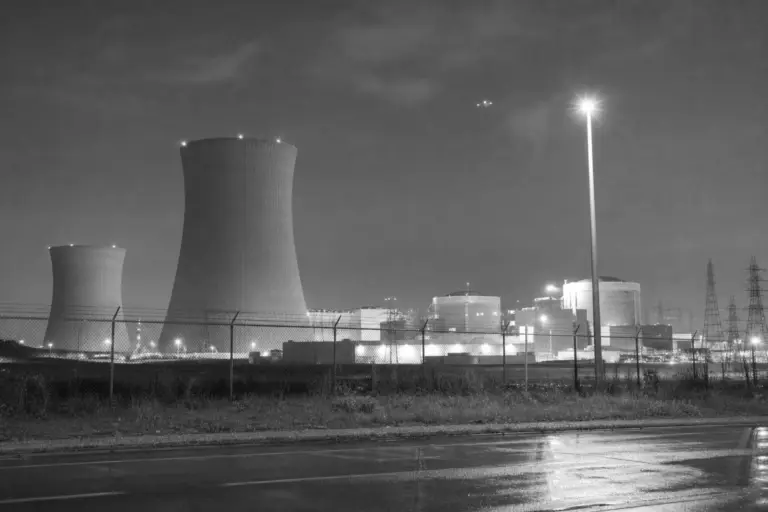
That reporting pathway matters. A call describing an object “near” a plant documents a witness report and perhaps an official response; it does not place an object inside protected airspace, identify it, or show an effect on operations. A stronger civilian-site record would fix the time and location through a security log, camera, radar, air-traffic record, or named responding agency, then distinguish the facility boundary from the witness’s estimated line of sight. Reports of UFOs at nuclear facilities should not be treated as evidence equivalent to a documented event at a weapons-storage area.
An apparent concentration of UAP nuclear facilities reports also needs a comparison set. Meaningful analysis would count reports against baseline rates in comparable non-nuclear areas, account for population and local reporting culture, and measure verified distance rather than map labels or broad regional association. Formal security procedures and sustained local attention can preserve more reports around conspicuous sites than around ordinary industrial locations. That makes civilian cases relevant to transparency and site-security review, but it also means the record alone cannot establish targeting, origin, intent, or unusual technology.
What Pentagon and AARO Reporting Actually Says About Sensitive Sites
AARO’s Fiscal Year 2024 Consolidated Annual Report puts modern reporting in an operational frame that is narrower than many headlines suggest. An observation can trigger a flight-safety concern when it may endanger aircraft, a counterintelligence concern when it could involve foreign collection, or a force-protection concern when it occurs near personnel or defended operations. Those categories explain why personnel report an event; they do not constitute a finding that it was hostile, penetrated restricted airspace, or was connected to a nuclear mission. The report does not create a nuclear-site reporting category or identify a nuclear-specific pattern.
The consequential distinction is between unresolved, insufficient information for attribution, and extraordinary, which would require affirmative evidence. AARO recorded 757 reports in its Fiscal Year 2024 reporting period and resolved 118 as ordinary objects, including balloons, birds, drones, satellites, and aircraft. Remaining cases can lack usable imagery, reliable range data, complete sensor coverage, or consistent witness accounts. AARO’s March 2024 Report on the Historical Record of U.S. Government Involvement with UAP, Volume I found no verifiable evidence that the U.S. government had confirmed extraterrestrial technology.
That framework places Malmstrom’s documented 1967 missile outage, the 1980 Rendlesham security reports, and civilian-site observations in their proper evidentiary lanes: each may warrant attention, but none is transformed by an unresolved label into proof of non-human technology or nuclear targeting. Official U.S. reporting on unresolved military UAP cases also has a built-in visibility limit. Sensor capabilities, collection methods, defensive postures, and some incident details at protected locations may be classified. The resulting public gap supports oversight and careful records access, not an inference that withheld material establishes a nuclear-specific campaign, intent, or causal link to nuclear infrastructure.
Why the Pattern Matters Without Settling the Explanation
The practical consequence is not a verdict on any object; it is a higher standard for preserving the evidence around a security event. Malmstrom’s documented missile outage, the witness-and-security record at a weapons-storage installation, and civilian-facility reports belong to different evidentiary categories. Together, they show recurring reporting in nuclear-related settings, not a demonstrated common mechanism or a measured rate of intrusion.
That distinction matters because sensitive infrastructure requires decision-makers to separate an observation from an assessed threat. The surviving record does not establish a shared origin, intent, operational control, exotic technology, alien involvement, reverse engineering, or a government UFO cover-up. Nor does it convert an unresolved report into proof that a facility was targeted.
Useful transparency begins with provenance-rich release: contemporaneous logs that identify who recorded an event and when; sensor metadata that preserves location, timing, settings, and limitations; and chain-of-custody records showing whether imagery or data were altered, copied, or withheld. A strong public analysis also explains its attribution method and the information gaps that constrain public assessment. A weak release offers only a conclusion or a decontextualized clip. For UAP near nuclear sites, uncertainty should be reported plainly, not concealed, but not filled with speculation.
A Pattern Worth Investigating, Not a Verdict
The decisive checkpoint is a traceable link between an observation and a measurable facility effect. At Malmstrom in March 1967, records of ten Echo Flight Minuteman missiles entering a No-Go condition are distinct from aerial accounts; their coexistence does not establish causation. At RAF Woodbridge in December 1980, patrol accounts describe a security response, not an established intrusion, system effect, origin, or intent.
Weight should follow the record. A contemporaneous operations entry establishes that personnel reported an event and that officials responded; later testimony can add detail but may not independently fix time, location, or identity. Civilian accounts around nuclear-energy facilities reach public channels under conditions different from military security incidents. AARO’s Fiscal Year 2024 report treats unresolved cases as insufficiently attributed information, not as a conclusion about technology. Each category answers a different question.
That is the value of investigating UAP near nuclear sites: retain the original observation, sensor metadata, response log, and attribution work so a possible security concern can be assessed against evidence. Transparent releases should distinguish recorded facts, including the March 1967 maintenance status and December 1980 patrol accounts, from what remains unknown. Sensitive facilities warrant sustained inquiry because uncertainty is not a verdict, and poor records make both mundane explanations and genuine security risks harder to evaluate.
Sources
Frequently Asked Questions
Are UFOs documented near nuclear weapons sites?
Yes. Military files, declassified investigations, security accounts, and civilian records document reports of unidentified or unusual aerial activity near missile fields, weapons-storage bases, and nuclear power facilities. These records show recurring reports in sensitive settings, not proof of a shared origin, intent, or technology.
Did UAP ever shut down nuclear missiles at Malmstrom?
On March 16, 1967, ten Minuteman missiles in Malmstrom Air Force Base’s Echo Flight entered a No-Go condition and were temporarily removed from strategic alert. The missile outage is documented, but no publicly demonstrated evidence proves that a UAP caused the shutdown.
What is the best-documented UAP incident at a nuclear base?
The Malmstrom Echo Flight incident is among the strongest operational records because unit histories and maintenance material document the date, location, and No-Go status of 10 Minuteman missiles. The associated reports of unusual aerial activity remain a separate evidentiary track from the documented system outage.
What do Pentagon and AARO reports say about UAP near sensitive military sites?
AARO says observations near defended operations can raise flight-safety, counterintelligence, or force-protection concerns, but those categories do not establish hostility or restricted-airspace penetration. Its Fiscal Year 2024 report logged 757 UAP reports and resolved 118 as ordinary objects, including balloons, birds, drones, satellites, and aircraft.
What should you look for when evaluating a UAP report near a nuclear facility?
Prioritize contemporaneous security or operations logs, sensor metadata, verified time and location, multiple independent witnesses, and documented chain of custody. A strong case distinguishes a witness report near a site from verified airspace activity, a facility response, or a measurable effect on operations.