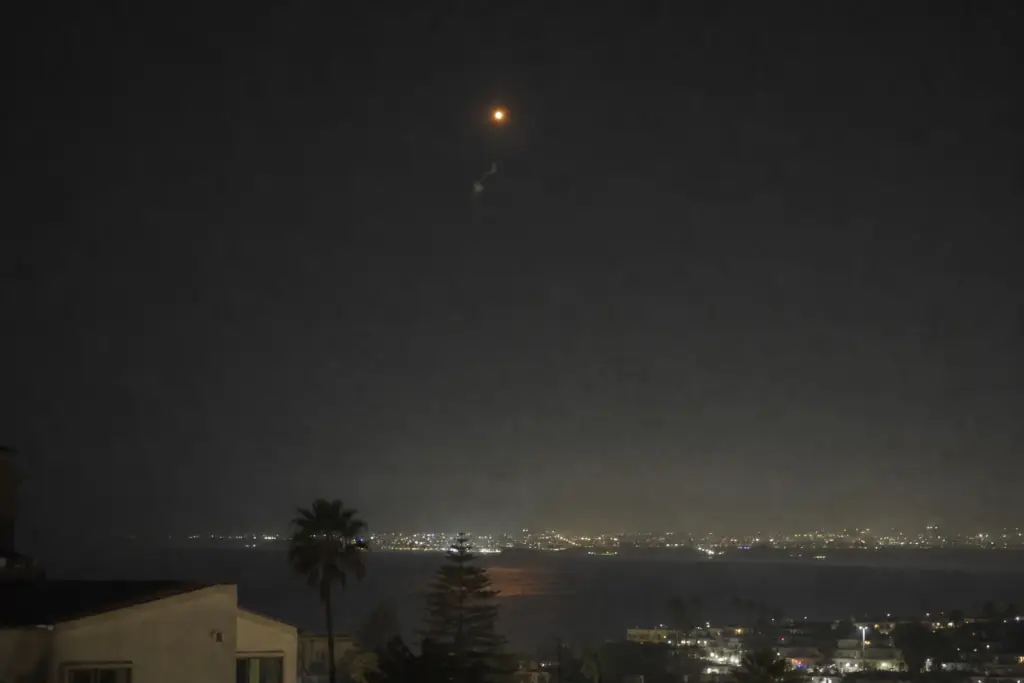
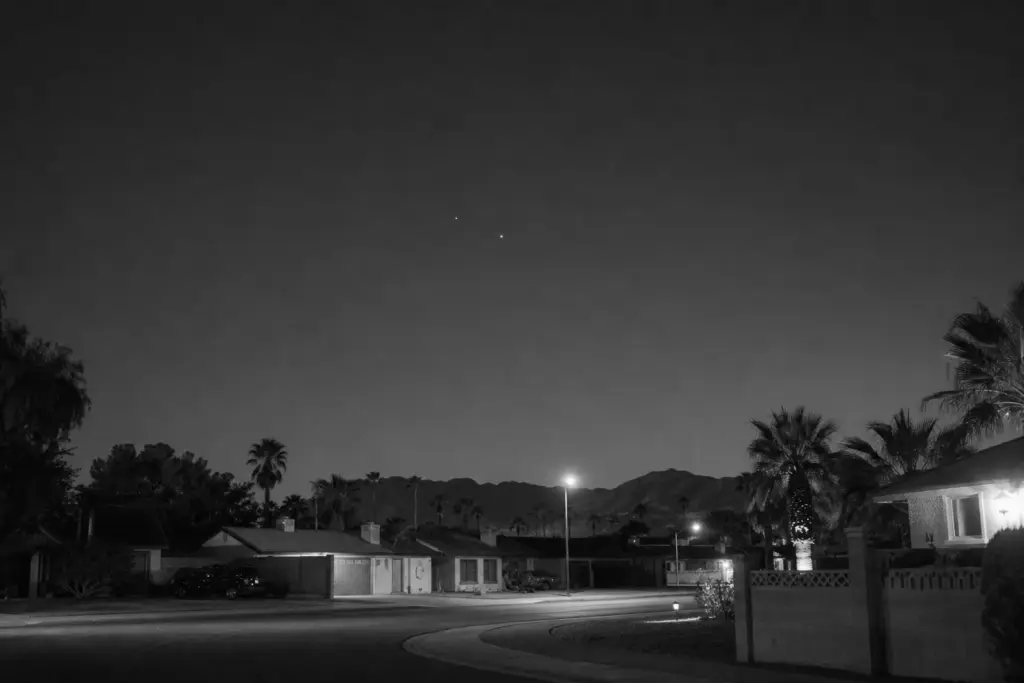
The account examined here is a reported Glendale, Arizona, sighting dated February 28, 2020: two blinking white lights were said to have appeared overhead. That specificity makes the claim worth treating carefully, but it does not by itself establish what the lights were, how far away they were, or whether they represented two physical objects rather than a viewing effect.
A sighting report preserves an observer’s description; a verified identification requires independent material capable of testing it, such as a precise time and direction, original imagery, weather observations, or aviation records. The materials available for this review do not include an original witness submission, a named archive entry, or a submission date, so the report’s provenance and fuller wording cannot yet be determined from the record alone.
This review therefore begins with the limited claim, two blinking white lights over Glendale AZ on February 28, 2020, and keeps testimony separate from inference. It will assess available local sky context and whether ordinary candidates, including aircraft lighting, drones, satellites, or astronomical objects, fit the reported features. An unresolved description is not evidence of an extraordinary origin; it is a reason to state the remaining uncertainty precisely.
What Was Reported Over Glendale on February 28, 2020
What can be fixed to the record is only an event label: Glendale, Arizona; February 28, 2020; and two white lights described as blinking. The available material does not include the underlying witness narrative, a named reporting database or archive, a submission or publication date, or original photo or video material. The label is therefore a reconstruction of the reported description, not an identification of objects in the sky.
Several details that would ordinarily shape an assessment are unavailable: observation time, the specific Glendale viewing location, duration, compass direction, elevation above the horizon, spacing between the lights, and whether they moved, hovered, changed brightness, or disappeared. The record also does not preserve the number of witnesses or their exact wording beyond the basic description.
The wording leaves important alternatives open. “Two” may refer to separate lights, two visible lamps on one distant aircraft, or a perspective-based visual impression; “blinking” records an observed pattern rather than its cause. No independent contemporaneous corroboration has been located in the material available for this review. It can be logged as a reported UFO sighting among Arizona UFO sightings, but its physical cause cannot be determined from the report alone.
What the Available Sighting Record Can, and Cannot, Establish
The key limitation is provenance: the surviving entry functions as a short event label, not a preserved firsthand account. It supports separating five reported elements, two visible lights, a white appearance, blinking behavior, an association with Glendale, and the date February 28, 2020, from conclusions that the lights were two objects, were directly above the city, or had an unusual origin.
- “Two” records a numerical impression, but not whether the observer saw two separate craft, two lamps on one object, or lights whose apparent spacing was altered by distance and viewing angle.
- “White” is an observed color description. Without an image, exposure settings, or surrounding-light information, it cannot establish the lights’ actual spectral color or source.
- “Blinking” records an apparent change in visibility or brightness. It does not preserve the flash rate, whether both lights blinked together, or whether intervening haze, motion, or an obstruction affected the view.
- “Glendale” identifies the reported place only at city level. It does not establish a street-level observing point, coordinates, viewing direction, or whether the lights were over Glendale proper rather than elsewhere in the wider Phoenix area.
- February 28, 2020 supplies an event date, but not an observation time or a submission date. Those are different pieces of metadata: the first anchors sky and traffic conditions, while the second helps establish how close a record was made to the event.
A witness observation is testimony about what someone perceived. A sighting database listing is a catalog entry that may preserve some of that testimony, but its value depends on whether it retains the original wording, reporter identity, timestamps, and submission history. Contemporaneous documentation, such as an original image, video file, time-stamped message, or independently created record, can be compared against external conditions. Independent verification goes further: a separate witness or record must match the relevant time, direction, and observed behavior rather than merely report lights somewhere in the region.
Here, no named witness, precise coordinates, original photo or video, follow-up interview, or corroborating report is available in the record reviewed. Nor does it identify a database, archive, submission date, or investigation that would allow its chain of custody to be assessed. Those absences do not show that the observer was mistaken; they mean the Glendale Arizona UFO sighting of February 28, 2020 cannot be tested beyond its minimal description. Later retellings should therefore be treated as summaries of that limited entry, not as added evidence.
Why Glendale and Phoenix-Area Sky Context Matters
Location changes the range of ordinary possibilities that should be considered, even when it cannot identify a light by itself. Glendale sits within the Phoenix metropolitan sky environment, a region also associated with the separate historical Phoenix Lights reports, where civil airport operations, helicopter activity, and traffic transiting the region may be visible from the ground. Luke Air Force Base is also part of the wider West Valley setting. Its presence makes military aviation a contextual possibility to assess when a sighting has a usable time, direction, altitude estimate, and flight behavior; it does not make a military explanation more than a possibility in this case.
Those missing particulars prevent a meaningful match to a specific flight. Airport and flight-tracking records are time-based: a record may show an aircraft in the broader area, but without a viewing position and compass direction there is no way to determine whether it occupied the witness’s line of sight. Conversely, the absence of a match cannot exclude aviation when the observation time is unknown or when a flight is not represented in a public tracking feed.
Atmospheric and viewing conditions matter as much as traffic context. Cloud layers can reflect or intermittently hide lights; haze can soften a source into a white glow; and a light seen near the horizon passes through more atmosphere than one viewed overhead. Moonlight and urban illumination can reduce contrast, making dim navigation or landing lights appear and disappear. A head-on aircraft may initially present one or two bright white lights with little apparent motion, while a change in heading can alter their spacing or brightness.
No reliable weather observation or aviation record can be tied to a precise Glendale location and observation time on February 28, 2020, because neither is preserved in the surviving entry. The blinking lights over Glendale, Arizona, in 2020 therefore remain too sparsely specified for local sky context to produce an identification, but that context cautions against treating the description as inherently unusual.
Could Aircraft, Drones, Satellites, or Astronomical Objects Fit the Description?
A useful explanation must account for the whole observed pattern, not merely the fact that lights were visible. An aircraft is a conditional fit if the blinking was regular and the apparent spacing between the two lights changed as it turned or approached. White anti-collision strobes can produce brief, repeating flashes, while white navigation or landing lights may appear as one or two steady points whose brightness varies with aircraft heading. A distant aircraft coming toward an observer can seem nearly stationary before its lateral motion becomes apparent.
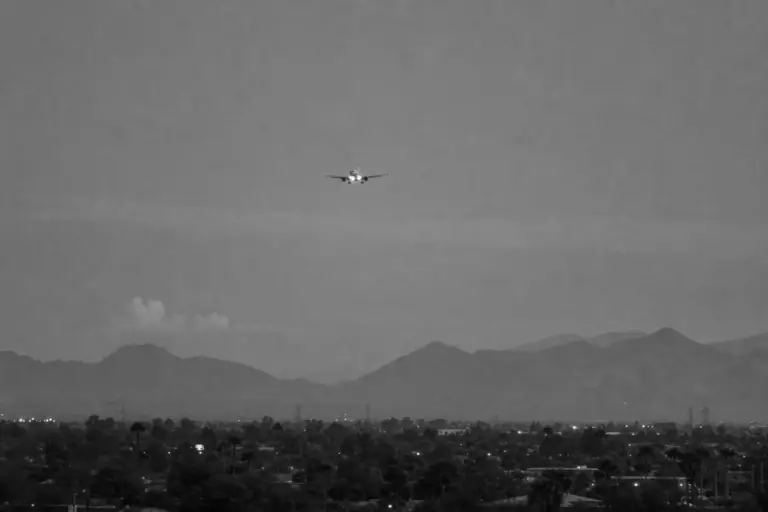
Aircraft landing lights are therefore a stronger candidate for lights that brightened, stayed paired, and later separated, dimmed, or moved across the sky. They are a weaker fit if the lights remained fixed in a rigid position for a long period or made abrupt directional changes. The surviving Glendale entry does not preserve motion, duration, direction, or flash rhythm, so neither comparison can be made here.
Drones can present multiple white lights and may hover, change direction, or hold a close formation when more than one aircraft is involved. They would be more compatible with a low, slowly moving or stationary display than with lights crossing a large portion of the sky at a consistent speed. But distance is especially difficult to judge from isolated lights at night, and the report provides no scale, sound description, or duration that would distinguish drones from more distant traffic.
Satellites ordinarily appear as steady points moving smoothly against the stars; perceived blinking can result from changing reflection, thin cloud, or intermittent viewing rather than a built-in flash. A satellite explanation would gain support if the lights crossed the sky in the same direction at a uniform pace. A pair of blinking lights does not automatically match Starlink: a date-specific pass, viewing time, direction, and illumination geometry would be needed, and two lights alone would not establish a Starlink sighting.
Bright planets and stars are better candidates for lights that stayed in the same place, though atmospheric turbulence can make them seem to flicker or shift in color near the horizon. They are poor matches for sustained coordinated travel or regular flash intervals. In this case, the label “unidentified lights in the sky” records too little behavior to rank these possibilities reliably. Each remains a conditional explanation, not an identification.
The Most Accurate Classification: Reported, Unidentified, or Explained?
The decisive checkpoint is whether the record permits an explanation to be tested against the same event. An unverified report is a claim preserved without enough underlying material to test it. That is the appropriate starting category here: the surviving Glendale label records a February 28, 2020 observation, but not a traceable firsthand narrative or independently usable observation details.
An unidentified observation is a narrower category. It applies when an observation is sufficiently documented, normally with a time, location, direction, duration, imagery, or corroborating records, yet its source still cannot be determined after comparison. The Glendale entry cannot reach that stronger classification because the missing particulars prevent a time-and-place-specific comparison. “Unidentified” does not mean extraordinary; it means the available evidence did not resolve a documented observation.
An identified event requires a specific explanation tied to the same occurrence, rather than a generally plausible candidate. For example, a flight record matching the viewing direction and minute, or original imagery that establishes an aircraft-light pattern, would outweigh the brief label because it could be independently tested. A later identification would deserve weight only if it matched the date, Glendale-area location, and reported behavior, not merely because aircraft, drones, satellites, or stars were possible that night.
The most accurate conclusion is therefore an unresolved, unverified Glendale-area report. It is not a confirmed UAP sighting, and the lack of a final identification is not evidence of non-human intelligence, alien disclosure, or a government UFO cover-up. The record supports uncertainty, not a claim about origin.
How a Glendale-Area Sighting Report Could Be Checked More Rigorously
A usable case record begins at the moment of observation. Record the exact local time and time zone, a street-level viewing location, compass bearing, elevation above the horizon, duration, direction of travel, changes in speed or spacing, and the blinking cadence, for example, a flash every second versus irregular pulses. Note cloud cover, haze, wind, and whether the lights were near the horizon; those conditions can change apparent brightness, color, and motion.
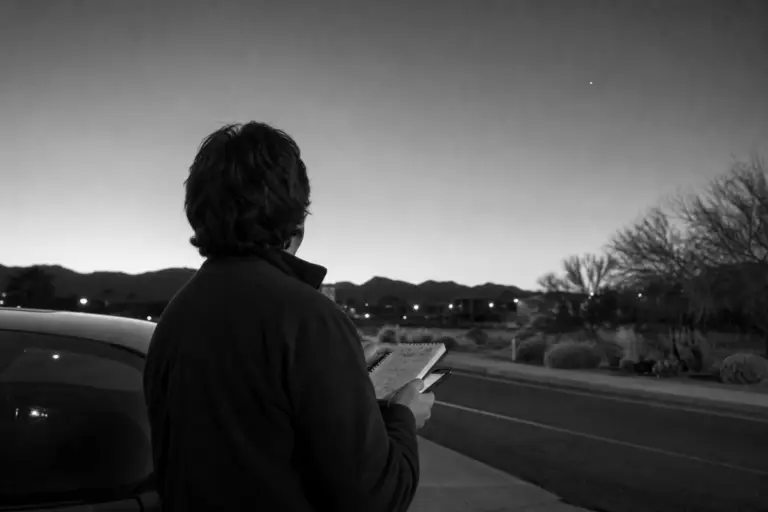
- Preserve original photo and video files, not only screenshots or reposted clips. The original file may retain capture time, location data, exposure settings, and frame-by-frame detail; reposting can remove that metadata and compress faint lights into misleading shapes.
- Separate observation from interpretation. “Two white flashes moving northwest for three minutes” is testable; “two objects behaving impossibly” is a conclusion that requires supporting measurements.
- Use the recorded time, place, bearing, and direction of travel to compare FAA-accessible aviation information and flight-tracking archives where coverage is available. A candidate flight must fit the same minute and sightline, not merely have been somewhere in the metropolitan area.
- Compare the same coordinates and interval with satellite-pass predictions and astronomical records. A steady object at a fixed bearing calls for a different comparison than regularly flashing lights crossing the sky.
- Seek independently submitted witness accounts with their own timestamps, locations, and descriptions. Matching reports are most useful when observers did not simply repeat one another’s wording.
Applied to the Glendale AZ UAP sighting in 2020, this framework for improving sighting reports cannot fill in details that were never retained. It can, however, turn a future report into an observation that can be tested against specific alternatives. A stronger record may still end without a final identification, but it makes the remaining uncertainty meaningful rather than merely incomplete.
What Can Be Said About the Glendale Lights
A time-and-sightline match is the missing checkpoint that prevents this report from moving beyond its broad description. The surviving label links a Glendale, Arizona, observation to February 28, 2020, but does not preserve a traceable witness account, submission date, original media, or identified reporting archive. No independent contemporaneous weather, aviation, astronomical, news, photographic, video, or official corroboration has been located in the material reviewed. The record therefore supports an unverified observation, not a confirmed anomalous event or a finding about origin.
White points that flash do not reliably distinguish among ordinary possibilities. Aircraft lighting can flash at regular intervals; distant aircraft can appear paired or change brightness as their angle changes; drones can display multiple lights; and atmospheric effects can alter the apparent steadiness of stars or planets. Each candidate predicts different motion and light behavior, but the available record retains none of the details needed for a fair comparison.
A supported identification would require the observation time, viewing location, bearing, duration, movement description, and original imagery, followed by comparisons with flight and astronomical data from that same interval and sightline. Until such evidence exists, the Glendale Arizona sighting is best described as unresolved and unverified: unidentified because the record is incomplete, not because it demonstrates an extraordinary cause.
Frequently Asked Questions
What was reported over Glendale, Arizona, on February 28, 2020?
The available record describes two white lights that appeared to blink over the Glendale area on February 28, 2020. It does not preserve the observation time, exact location, direction, duration, movement, or original witness narrative.
Were the two blinking white lights over Glendale identified?
No specific identification was established. The report is best classified as unresolved and unverified because it lacks traceable witness details, original media, and time-and-sightline data needed to test possible explanations.
Could aircraft or drones explain two blinking white lights in the Phoenix area?
Aircraft can show repeating white anti-collision strobes and paired landing lights that change brightness or spacing as the aircraft turns or approaches. Drones can also display multiple white lights and may hover or move slowly, but the Glendale report lacks the motion, duration, distance, and sound details needed to distinguish either possibility.
Was there an official investigation into the Glendale Arizona UFO report?
No official investigation, named reporting archive, original submission, or corroborating aviation, weather, photographic, video, or news record was available for this sighting. The surviving information is limited to Glendale, February 28, 2020, and two blinking white lights.
What details should I record to verify a UAP sighting?
Record the exact local time and time zone, street-level location, compass bearing, elevation, duration, travel direction, speed, spacing, and flash cadence. Preserve original photo or video files and compare the same time and sightline with flight records, satellite predictions, astronomical data, weather conditions, and independently submitted witness reports.