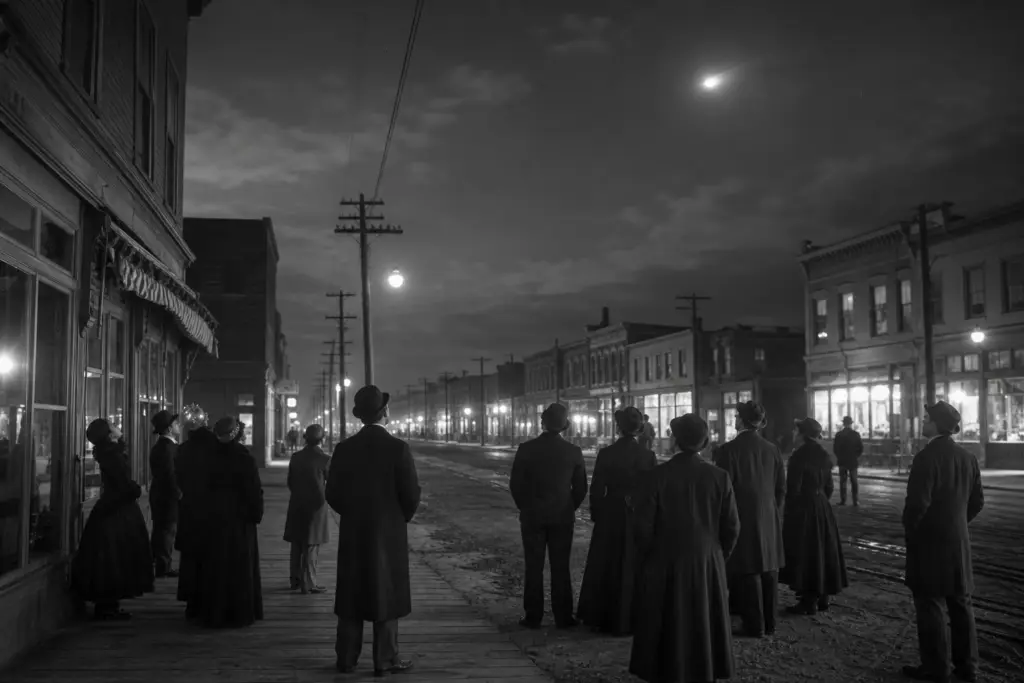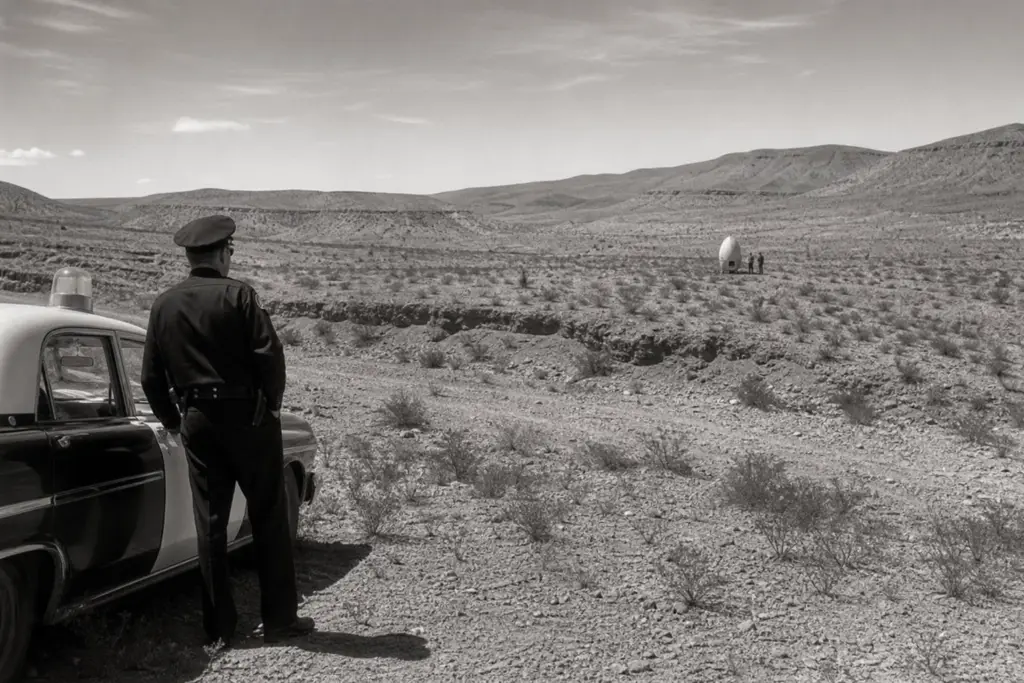
In November 1975, the reported disappearance of Arizona logger Travis Walton became a mystery with consequences far beyond a single night in the woods. The Travis Walton UFO encounter began, in the accounts offered by Walton and his coworkers, after their crew reported an unusual light near Turkey Springs and Walton was absent for five days. His return turned the episode into a widely discussed alleged alien-abduction claim.
Its notoriety rests on more than Walton’s later recollections. Several crew members described a broadly similar sighting, the disappearance attracted attention, and reported polygraph examinations became a prominent, though inconclusive, part of the argument. Polygraphs record physiological responses during questioning; they cannot independently demonstrate that an extraordinary event occurred.
This account separates the reported disappearance from witness testimony and from interpretations that invoke extraterrestrials. It follows the reported chronology, weighs the crew’s supporting accounts, examines skeptical objections involving perception, motive, and corroboration, and traces how headlines and screen portrayals made the 1975 Arizona UFO case an enduring part of popular culture. The competing accounts remain disputed rather than proven.
Why the Travis Walton Case Still Draws Debate
At the center of the controversy is a sharp difference between an investigated disappearance and an explanation for it. On November 5, 1975, near Turkey Springs outside Snowflake, Arizona, Walton’s coworkers reported an extraordinary encounter in the forest; Walton later described an alien abduction claim. The crew’s reports and the ensuing missing-person inquiry are historical events that can be examined as records. Their descriptions of a craft, a beam, and Walton’s disappearance are eyewitness testimony. Claims that non-human intelligence caused those events remain interpretation rather than established fact.
The Travis Walton UFO case drew national attention because it combined several features that are rarely present together: six coworkers who said they saw part of the episode, a five-day absence that intensified police scrutiny, reported polygraph results, and a vivid account from the man who returned. Those elements made the story compelling, but none resolves it alone. Polygraphs register physiological responses, not the reality of a reported event; witnesses can agree on a core experience while differ on details; and publicity can magnify both belief and suspicion. Skeptics have therefore focused on possible misperception, motive, and the absence of publicly verified physical evidence, while supporters emphasize the crew’s consistent central claim.
What the Logging Crew Reported on November 5, 1975
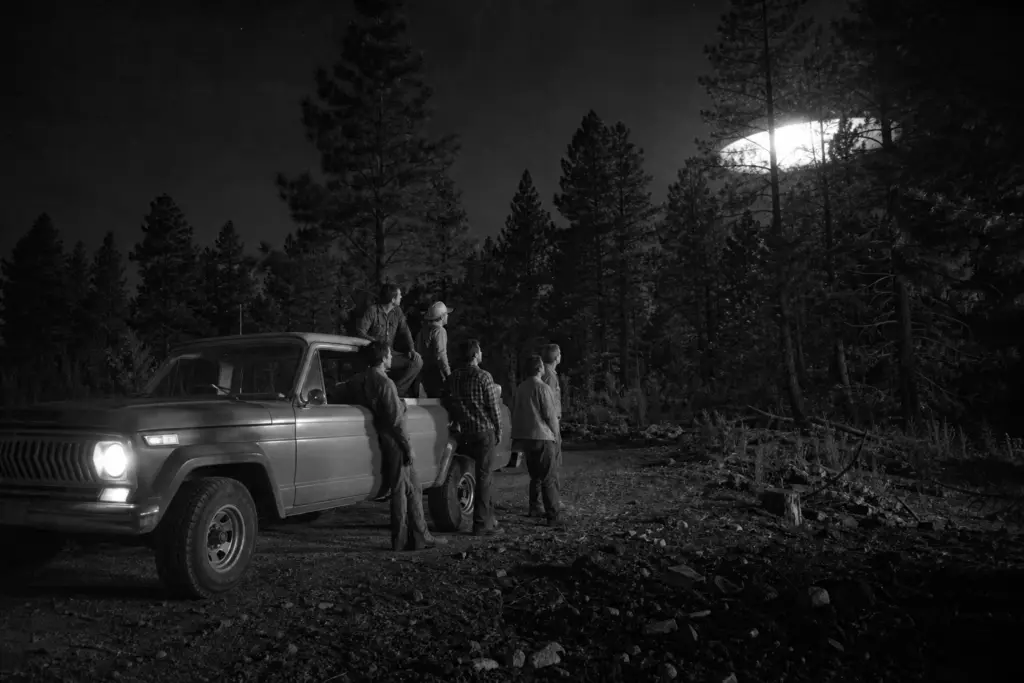
The account begins at the end of a logging shift. On the evening of November 5, 1975, Travis Walton was riding with a six-man crew led by Mike Rogers as they drove back from work through the Turkey Springs area outside Snowflake, Arizona. The men later said they were traveling in Rogers’s truck when they noticed an unusually bright, illuminated object among the trees ahead of them.
In their descriptions, the object was not a distant point of light: the crew said Rogers stopped the truck so they could look at it. Walton, by their account, got out and walked toward the light while the others remained in or near the vehicle. This is the decisive distinction in the 1975 Arizona UFO incident: several men reported seeing a lighted object and Walton approach it, but only their testimony establishes what the object was or what happened next.
The crew said a powerful beam or burst of light suddenly struck Walton, throwing him backward. Alarmed, Rogers and the other loggers said they drove away from the location. Their reported flight matters because it has fueled two competing readings of the episode: supporters view it as an immediate, frightened reaction to an apparent injury, while skeptics question why the men left before returning to look for their coworker.
Rogers and the crew later said they turned the truck around and went back to the spot. Walton was gone, they reported, and they could not find him in the surrounding forest. Their account then shifted from an extraordinary sighting report to a practical emergency: a missing member of the crew. The subsequent report to authorities created a dated, identifiable starting point for the Travis Walton disappearance, even though it did not independently establish the cause described by the witnesses.
That sequence is the core of the Walton UFO encounter Arizona narrative: a work crew’s drive from Turkey Springs, a reported illuminated object, Walton leaving the truck, a claimed flash of light, and a return to an empty location. The object, beam, and alleged impact remain witness accounts rather than independently verified observations; the crew’s report that Walton was missing set in motion the investigation that followed.
The Five-Day Disappearance and the Missing-Person Investigation
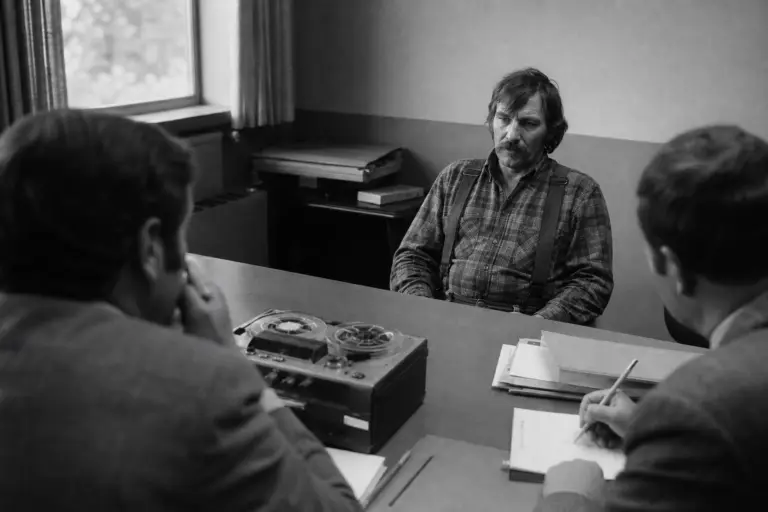
After the crew reported returning to an empty site on the night of November 5, 1975, the Navajo County Sheriff’s Office treated Walton’s absence as a missing-person investigation. Deputies organized searches and questioned the men who had been with him, since they were the last people known to have reported seeing him. Their unusual account did not remove ordinary possibilities investigators had to consider, including an injury, an accident, assault, or a concealed crime.
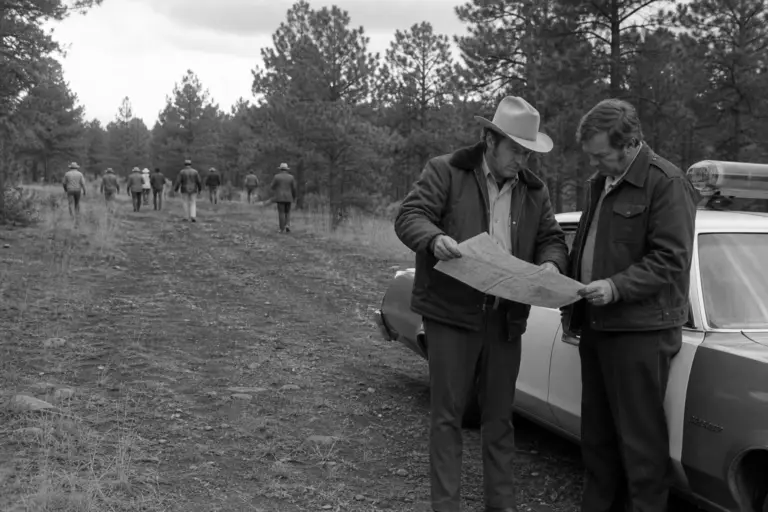
The concrete, consequential fact is that Walton was not located for roughly five days, from the evening of November 5 until November 10. Search activity, repeated questioning, and the crew’s status as the last reported witnesses gave the case immediate public stakes; it was not initially only a story about an unexplained light. A missing-person inquiry can establish reports, timelines, search efforts, and a later return, but it cannot by itself determine what caused the absence.
Walton reappeared near Heber, Arizona, on November 10. He later said that he woke disoriented, thirsty, and confused, then sought help after realizing he was no longer near the logging area. In his later account, he gradually recalled being aboard a craft and encountering beings he interpreted as nonhuman. Those recollections describe Walton’s claimed explanation for the interval, not events independently observed during the five days.
That division explains both the seriousness and the limit of the evidence. Walton’s absence, return near Heber, and the sheriff’s response made this a real missing-person episode with a fixed November 1975 chronology. The alleged extraterrestrial cause remained dependent on Walton’s testimony and the crew’s earlier account; no publicly verified physical evidence establishes that an extraterrestrial abduction occurred.
Witness Testimony and Polygraphs: Why Supporters Cite Them
The supporting case rests chiefly on converging personal accounts rather than on a material trace. Mike Rogers and the other crew members described the same essential sequence: an illuminated object in the forest, Walton leaving the truck, a sudden light or force, and the crew’s frightened departure. Walton’s later recollection addressed the period the others could not witness. That division matters in alleged abduction cases shaped by witness accounts and public debate: the crew can corroborate parts of the reported roadside event, but not the alleged experience during his absence.
Consistency is meaningful eyewitness testimony, especially where witnesses independently retain the same central details. It can make a wholly solitary invention less likely and can support the proposition that several people experienced, or believed they experienced, something alarming together. It does not establish the cause of that experience. Witnesses who work together may share information after an event, influence one another’s memory, or have overlapping personal and financial incentives. Differences at the margins are not automatically discrediting, but neither is agreement automatic proof of accuracy.
Supporters also point to reported polygraph examinations involving Walton and members of the crew. A Travis Walton polygraph test is often presented as evidence that a participant was being truthful when answering a specified set of questions. But a polygraph does not detect lies directly. It records physiological responses, such as changes in breathing, pulse, blood pressure, and perspiration, while an examiner compares reactions to relevant and control questions.
That distinction limits what any reported “passing” result can show. A result may be consistent with a subject’s sincerity under a particular examiner’s procedure and question wording; it cannot independently establish that every remembered detail occurred, much less identify an extraterrestrial explanation. The strength of a polygraph claim therefore depends on particulars that broad retellings often omit: who conducted it, what was asked, whether results were independently reviewed, and how competing interpretations were handled. Polygraphs add to the controversy, but they do not resolve it.
The Main Skeptical Explanations and Unresolved Questions
One skeptical line of inquiry treats the story as a possible staged disappearance rather than an encounter with an unknown craft. Philip J. Klass argued that investigators should weigh motive, access, and opportunity: the crew knew the forest roads, Walton was absent during the period no independent observer could account for him, and a dramatic account could bring publicity and potential financial reward. Skeptical accounts have also pointed to pressures surrounding the crew’s logging contract as a possible reason to examine whether the episode diverted attention from ordinary work problems. Those circumstances can justify suspicion; they do not, by themselves, demonstrate planning or identify where Walton was during the five days.
A different explanation concerns perception. A bright light seen at night in wooded terrain could have been misidentified as a conventional aircraft, vehicle, or another natural or human-made source, then interpreted through fear after Walton left the truck. This hypothesis addresses the reported light without requiring an extraordinary cause. Its weakness is equally clear: no proposed light source has been independently tied to the crew’s precise account, and it does not by itself explain the full reported sequence or Walton’s absence.
Memory is another central issue. Stress can narrow attention, disrupt time estimates, and leave people especially vulnerable to later suggestion; repeated interviews, hypnosis, books, and media appearances can further shape how an event is recalled. That does not mean a witness is consciously inventing a story. It means that a later, detailed narrative may contain sincere reconstructions alongside an original experience that was confusing or fragmentary. For a skeptical investigation, differences between early descriptions and later retellings matter most when they concern central features, such as timing, the object, or what happened after the reported flash, rather than ordinary peripheral variation. These abduction-narrative tropes can also affect how recurring details are interpreted.
The decisive limitation is evidentiary. No publicly verified physical trace establishes that Walton was taken by extraterrestrials, and no public account of a hoax has supplied demonstrable logistics that settle the disappearance. Questions about publicity, book and film income, and a possible government UFO cover-up likewise establish neither fraud nor alien contact. The Travis Walton UFO encounter remains disputed because each explanation accounts for part of the record while leaving other elements dependent on testimony rather than independently testable proof.
From National Headlines to Fire in the Sky, and What the Case Means Today
Publicity gave the episode a life far beyond the Arizona investigation. National Enquirer coverage carried the story to a mass audience, while Walton’s 1978 book, The Walton Experience, presented his extended recollection of the missing days. Later interviews, television appearances, and UFO conventions kept the participants’ accounts in circulation, but they also meant that many people encountered the case first as a retelling rather than through the original reports.
The 1993 film Fire in the Sky made the story still more recognizable, and less reliable as a guide to what Walton himself described. It was based on his claim, but substantially changed the crew’s circumstances and replaced Walton’s comparatively restrained published imagery with an elaborate horror sequence involving grotesque aliens, a cocoon-like setting, and invasive procedures. That distinction is essential for anyone asking whether Fire in the Sky is a true story: the film drew from the case’s premise, not from a scene-by-scene reconstruction of Walton’s account.
Modern UFO news and UAP disclosure discussions do not resolve this older dispute. “UAP” is an official label for reports that remain unidentified after available review; it does not itself mean extraterrestrial craft. The Walton case remains a prominent historical witness narrative involving a documented disappearance and contested testimony, rather than a contemporary government-reviewed sighting or evidence confirming non-human intelligence.
Why the Travis Walton Case Remains Unresolved
The crucial evidentiary gap is the interval from the crew’s report near Turkey Springs on November 5 to Walton’s reappearance near Heber on November 10, 1975. Mike Rogers and the other loggers overlapped in describing an illuminated object and their frightened departure, while Walton’s absence prompted a Navajo County missing-person investigation. Yet none of the crew witnessed the period in which Walton later placed his alleged abduction, leaving that central account dependent on his personal recollection.
Reported polygraph results add force as evidence of apparent sincerity, not independent confirmation. A polygraph records physiological responses to particular questions; it cannot identify the source of the reported light, establish Walton’s location during the five days, or distinguish a literal encounter from a strongly held but mistaken memory. Skeptics therefore continue to weigh a staged disappearance, a misidentified light, and recollections shaped by later interviews. None publicly explains every reported detail.
National Enquirer coverage, Walton’s 1978 book The Walton Experience, and the 1993 film Fire in the Sky sustained interest while moving many audiences further from the original accounts. The Travis Walton case is culturally influential and unusually documented in some respects, but its unresolved evidence does not establish an extraterrestrial abduction. Its defining claim remains unverified and open to interpretation.
Frequently Asked Questions
What happened to Travis Walton in 1975?
On November 5, 1975, Walton’s logging crew reported seeing an illuminated object near Turkey Springs outside Snowflake, Arizona. They said Walton approached it, was struck by a bright beam or burst of light, and disappeared before returning near Heber, Arizona, on November 10.
How long was Travis Walton missing?
Travis Walton was missing for roughly five days, from the evening of November 5 until November 10, 1975. His disappearance prompted a Navajo County Sheriff’s Office missing-person investigation and searches of the area.
Did the Travis Walton witnesses pass polygraph tests?
Walton and some crew members reportedly underwent polygraph examinations that supporters cite as evidence of sincerity. Polygraphs measure physiological responses such as pulse, breathing, blood pressure, and perspiration, but they cannot prove that an extraterrestrial event occurred.
Was Fire in the Sky based on a true story?
The 1993 film Fire in the Sky was based on Travis Walton’s claimed 1975 disappearance and alleged abduction. It substantially changed the events and added an elaborate horror-style alien sequence that differed from Walton’s published account.
What should you look for when evaluating the Travis Walton UFO encounter evidence?
Separate documented facts, including Walton’s five-day absence and the missing-person investigation, from witness interpretations of a craft and alien abduction. Consider the crew’s overlapping testimony, the limits of polygraphs, the lack of publicly verified physical evidence, and skeptical explanations involving misidentification, memory, motive, or a staged disappearance.