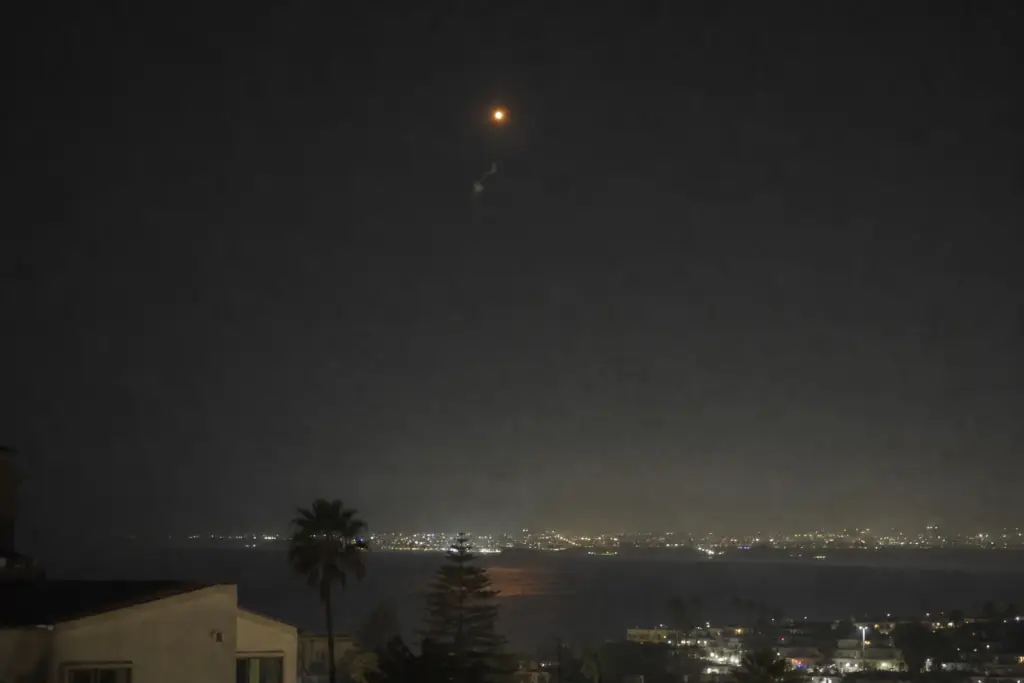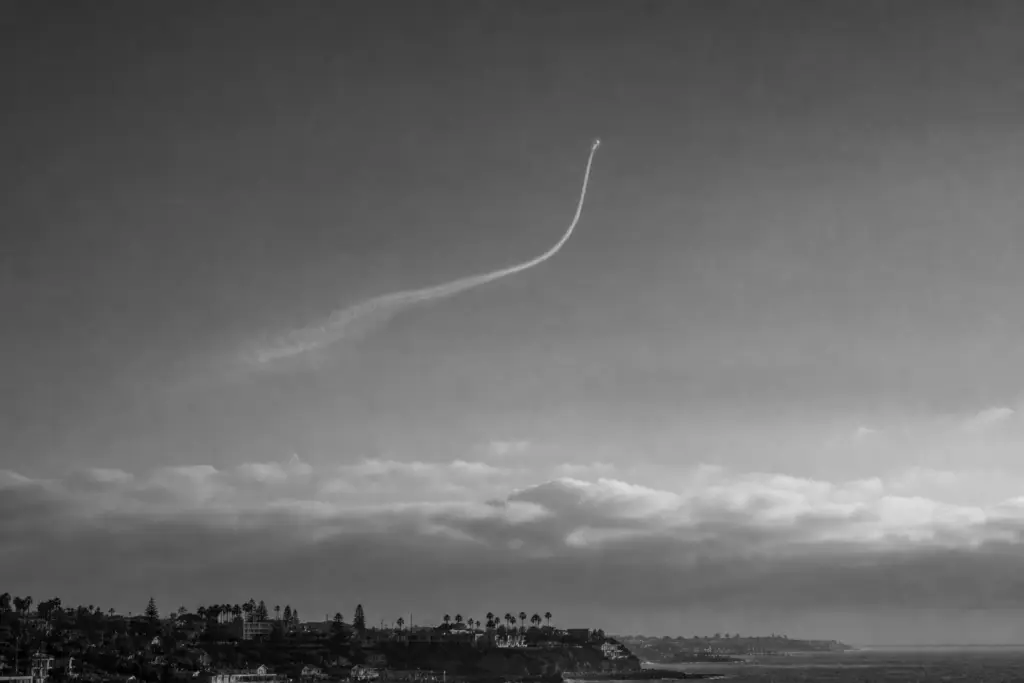
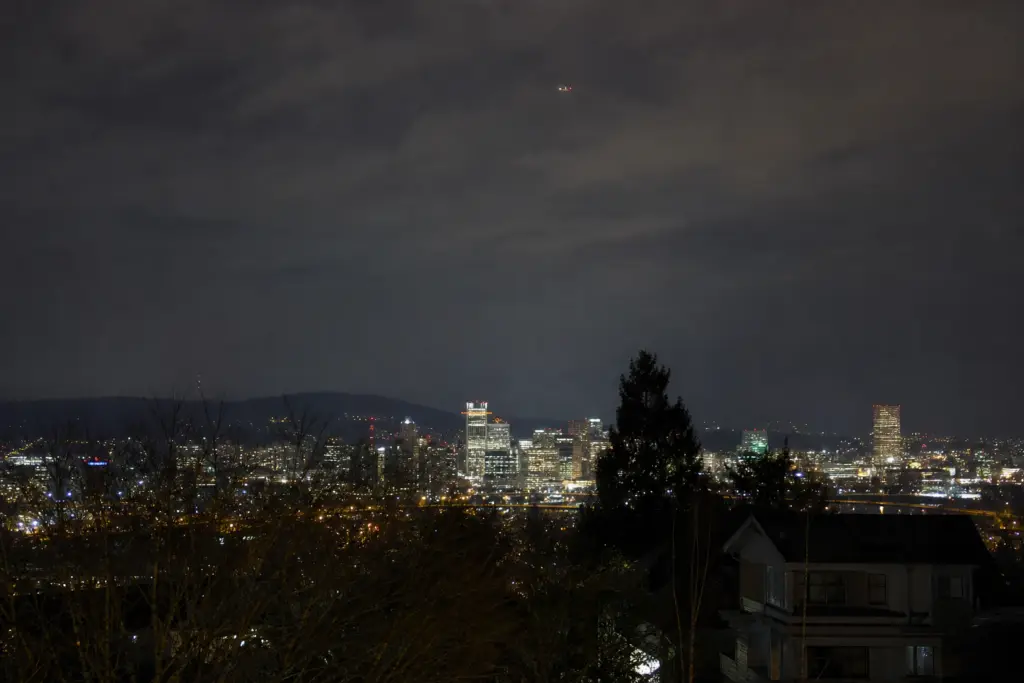
On February 16, 2020, a witness report placed an unusual aerial object over Portland, Oregon: it was described as oval and brown, with red and white lights that flashed. That description is the starting point for this Portland Oregon UFO sighting February 16 2020, not proof that an extraordinary craft was present. Apparent color, shape, and light patterns can change sharply with distance, darkness, viewing angle, motion, and the observer’s ability to judge scale.
This assessment treats the account as a historical UAP report that must be separated from independently established facts. It will reconstruct what the available report actually attributes to the observer, identify the details needed to test the claim, such as a precise time, viewing location, direction, image or video, and corroborating witnesses, and distinguish those details from later retellings. It will also weigh ordinary possibilities, including aircraft and other illuminated objects, against the reported appearance without assuming that flashing red and white lights identify any one category. Where the surviving record cannot support a conclusion, the finding will remain uncertainty rather than speculation.
What Was Reportedly Seen Over Portland on February 16, 2020
A useful first checkpoint is the difference between an observation and an identified object: the surviving claim is attributed to a witness, not to a documented flight track or physical artifact. It reports a brown-looking object with an apparently oval outline over Portland on February 16, 2020, accompanied by flashing lamps in two colors. The account can therefore be treated as a reported UFO or UAP sighting, an observation without a settled identification, not as confirmation of a craft’s size, altitude, route, or origin.
Its individual details describe appearance, rather than establish identity. “Oval” concerns the perceived outline, “brown” the color under the viewing conditions, and the flashes an observed lighting pattern. Those are useful points of comparison, but none independently identifies the source. A stronger case record would preserve the witness’s original wording together with a time, precise viewing position, direction, duration, elevation, movement, imagery, and independent witnesses. Without those particulars, possibilities such as an aircraft, helicopter, drone, balloon, or another ordinary visual source cannot be reliably matched or excluded.
The Portland account will therefore be reconstructed as a report before it is assessed as an event. The next sections separate details directly attributed to the observer from information that is absent or added later, then consider whether external records can meaningfully test competing explanations.
Reconstructing the Witness Account: Date, Place, Appearance, and Motion
A disciplined reconstruction keeps the report to a short set of attributed observations and treats every unrecorded detail as unknown.
- Claimed observation date: February 16, 2020. The available account identifies this as the date of the sighting; it does not establish when the witness submitted the report or whether the date was recorded contemporaneously.
- Place: Portland, Oregon. No neighborhood, street, viewing position, or distance from the object is preserved in the account available here. “Over Portland” is therefore a broad location label, not a plotted position.
- Appearance: The witness account describes an oval brown object with flashing red and white lights. “Oval” is an apparent outline rather than a measured shape, while “brown” is a perceived color rather than a material identification.
- Lighting: Red and white flashes are reported, but the account does not preserve the sequence, flash rate, number of lights, their placement, or whether any steady lights were visible.
- Motion: No usable account of heading, speed, hovering, acceleration, turns, ascent, descent, or change of direction is available. It cannot be assumed that the object hovered merely because no travel direction is recorded.
- End of sighting: The available description does not say whether it departed, faded, passed behind an obstruction, or simply left the witness’s view.
- Other missing observations: There is no stated duration, altitude, size estimate, sound description, weather context, photograph, video, or named corroborating witness.
For this Portland UFO sighting 2020 account, those absences are not negative findings; they are limits on reconstruction. Later assessment can compare explanations only against the compact description that survives, rather than supplying motion or performance details the witness account does not report.
What the Record Can Verify, and What It Cannot
Source provenance determines how much weight this account can bear. A primary witness submission preserves the observer’s own wording and, ideally, a submission date, report number, and identifiable author or contact route. A repost repeats that account elsewhere; it may improve discoverability but does not create another observation. A database listing is useful for indexing date and place, yet its value depends on whether it links back to the original entry rather than summarizing it. Independent corroboration requires a separately produced statement from another observer, not several pages copying one narrative.
The materials available for this assessment preserve only the compact, unattributed reported sighting account described above. They do not include a report number, named witness, submission timestamp, complete original narrative, or a chain showing when and where the wording first appeared. That makes it impossible to establish whether the February 16 date was entered at the time of observation or added later.
No contemporaneous Portland-area news report, community post traceable to an independent observer, photograph, video, file metadata, or second witness statement has been located in the record assembled here. Nor does it contain an official aviation record, airport-related incident record, or agency case file tied to this specific description. Those are research limitations, not evidence that such records were suppressed or never existed.
The Portland Oregon UAP sighting February 2020 therefore has a weak evidentiary foundation: one surviving reported description, without corroborating evidence that can fix its time, position, or object identity. Later retellings should be treated as derivatives unless they preserve a distinct witness account or independently verifiable original material.
How the Portland Sighting Could Be Checked Independently
A workable historical comparison starts by fixing the observation to a local clock time, time zone, and viewing point rather than to “Portland” generally. A location such as a neighborhood, street, or landmark establishes the observer’s horizon; an approximate direction of view and elevation above that horizon make it possible to compare the report with traffic or bright celestial objects. “Evening” is a weak signal because the visible sky and aircraft movements can differ substantially over a few hours.

Archived weather observations can then test the conditions under which the reported color, outline, and lights were perceived. A METAR is an airport weather observation that can supply cloud layers, visibility, wind, precipitation, and sometimes remarks relevant to local viewing. Those fields do not identify an object, but they can distinguish a clear, long-range viewing opportunity from a scene affected by low cloud, haze, rain, or wind-driven movement. Moon phase, illumination, position, and the positions of bright planets can likewise be calculated for a stated time and place; without those inputs, an astronomical comparison would be only a broad possibility.
Flight-history tools offer a more targeted test. ADS-B-based records can show participating aircraft positions, headings, and altitudes, allowing a researcher to ask whether commercial flight traffic or another visible aircraft crossed the relevant part of the sky. A close match in time, direction, and apparent path would be meaningful; an aircraft merely somewhere in the Portland area would not. Conversely, no displayed track is not a clean exclusion, because coverage can be incomplete and some low-level, military, or poorly equipped aircraft may not appear in a given archive.
Where public records permit, the same time window could be compared with Portland-area airport activity, known helicopter operations, and airspace notices. This systematic, evidence-based approach to investigating UAP reports could test conventional candidates for the Oregon UFO sighting February 16 2020, but it cannot recover the missing observation time, vantage point, duration, or trajectory. Those absent details prevent a definitive retrospective match.
Do Red and White Flashing Lights Fit an Aircraft, Helicopter, Drone, or Balloon?
The light description is too limited to operate as a fingerprint. The surviving account reports red and white flashes, but not their sequence, interval, position relative to one another, brightness, number, or whether either light remained steady between flashes. It also records no sound, duration, direction of travel, apparent altitude, or change in apparent size. Those omissions prevent a pattern-level comparison.
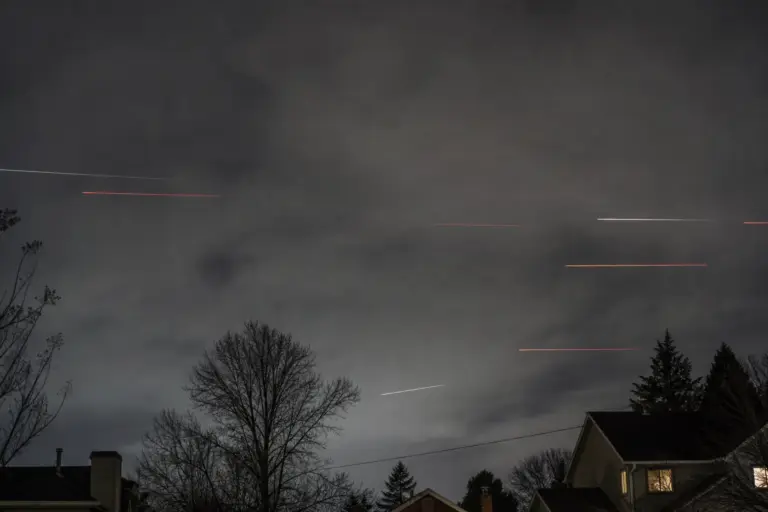
An airplane could fit the description in a general sense: an observer may see a red anti-collision light and a white strobe light more readily than the aircraft’s body, while navigation lights can be hidden by the viewing angle. From below, at an oblique angle, or through haze, separated lights can appear to belong to one oval silhouette; reflected city light or twilight can make that silhouette seem brown. That is a possible fit, not an identification, because the report supplies no flight path or flashing cadence to compare.
A helicopter is also not excluded. Its body can present an indistinct, rounded or elongated outline at distance, and its lights may be more conspicuous than its structure in darkness. Yet no reported hovering, slow movement, rotor noise, or sustained visibility distinguishes a helicopter from an airplane in this case.
A drone could produce visible red and white lights and an uncertain outline, particularly if close enough for its lights to dominate perception. The report gives no scale, proximity, maneuvering, or sound information, however, so it cannot favor a drone over a larger aircraft. A balloon is a weaker but still untestable category: it could appear oval and take on a brown tone from illumination, but the reported flashing lights would need an added light source rather than arising from the balloon’s shape alone.
An astronomical object does not naturally explain a reported brown oval with alternating-looking red and white flashes, although atmospheric shimmer, haze, and an observer’s changing line of sight can alter the apparent color and steadiness of a bright point. Without a time, direction, and elevation, that possibility cannot be meaningfully tested. The available description therefore supports several conventional explanations for initially unidentified aerial objects while establishing none of them.
Assessment: A Reported UAP, Not a Verified Extraordinary Object
The appropriate finding is unidentified in the surviving record, not identified as an extraordinary object. The oval brown appearance and red-and-white flashing lights are witness-attributed details. They describe what the observer believed was visible, but they do not independently establish an object’s physical shape, color, distance, altitude, speed, or origin.
| Item | What the record supports | Assessment consequence |
|---|---|---|
| Date and general place | A report associated with Portland and February 16, 2020 | Insufficiently precise for a time-specific comparison |
| Appearance and lights | A single reported description | Useful as an observation claim, not as a physical measurement |
| Independent corroboration | No preserved second witness, imagery, metadata, or traceable contemporaneous record | No basis to authenticate or identify the object |
An airplane or helicopter remains the strongest broad conventional category because the reported lighting can fit ordinary aviation observations, while a drone remains possible where scale and proximity are unknown. A balloon and an astronomical misperception fit less neatly, but cannot be eliminated from a description lacking time, direction, duration, and motion. None can be ranked decisively.
Calling this an unidentified aerial phenomenon therefore describes an evidentiary condition: the available account does not permit a responsible identification. It does not establish non-human intelligence, alien disclosure, a secret government program, or a government UFO cover-up. The unresolved result follows from missing discriminating information, not from evidence of anomalous performance or extraordinary origin.
What Would Strengthen the Case Record
The most valuable recovery would be the earliest unedited witness account, including its submission date and any report identifier. It would show whether the short description now circulating preserves the observer’s original words or has been condensed in retelling.
- A precise local time, viewing location, direction, and elevation would turn a citywide report into a testable line of sight.
- A separately written, contemporaneous account from another observer would be meaningful corroboration; repeated copies of one narrative would not.
- Original photo or video files would matter more than screenshots or reposts because file metadata and provenance can preserve when, where, and how the media was created.
- Time-specific weather observations could place the sighting against cloud cover, visibility, precipitation, and wind conditions.
- Aviation records for the same narrow window could test whether aircraft or helicopter traffic occupied the relevant portion of the sky.
Those records could narrow or eliminate explanations without guaranteeing an identification. Credible UAP news depends on traceable evidence that permits comparison and correction, not merely an unexplained label.
What the Portland Report Supports
A report dated to a city and day is an archival lead, not a reconstructable event without a time and vantage point. The surviving material therefore supports preserving this as a Portland UAP report: someone described an oval, brown-looking object over Portland on February 16, 2020, and its identity remains unresolved.
It does not support treating the apparent oval shape as a measured physical form, the brown color as an established surface characteristic, or the reported lights as a unique signature. Ordinary airplanes and helicopters can present red anti-collision lighting and white strobes; a nearby drone is also possible when distance and scale are unknown. Viewing angle, darkness, and haze can make a conventional object’s body and lighting appear unusual. Those are candidates, not retrospective identifications, because the record lacks details for a direct match.
The decisive distinction is between an unexplained description and evidence of an extraordinary object. No surviving material establishes a precise observation time, viewing point, heading, altitude, duration, original media file, independently written second-witness account, or traceable primary submission showing how the short account was first recorded.
For this Portland Oregon UFO sighting February 16 2020, the calibrated finding remains unidentified on the available record. Stronger provenance, independent corroboration, and time-and-location-specific comparisons could change that assessment. In their absence, the report warrants careful archival treatment, not claims about non-human technology or a confirmed anomalous craft.
Frequently Asked Questions
What was reportedly seen over Portland, Oregon on February 16, 2020?
A witness described an oval, brown-looking aerial object with flashing red and white lights over Portland, Oregon, on February 16, 2020. The surviving report does not establish its size, altitude, route, speed, or origin.
Was the Portland 2020 oval object ever identified?
No verified identification is supported by the available record. The case remains unidentified because there is no precise time, viewing location, trajectory, original media, or independently documented second witness.
What do red and white flashing lights usually indicate in the sky?
Red anti-collision lights and white strobe lights are commonly associated with aircraft. The Portland report did not preserve the flash sequence, rate, number, or placement of lights, so the pattern cannot identify a specific type of aircraft.
Can an airplane or helicopter appear oval or brown at night?
Yes. Distance, viewing angle, haze, darkness, reflected city light, and visible aviation lights can make an aircraft body appear oval, indistinct, or brown-looking. Helicopters can also present a rounded or elongated outline when their lights are more visible than their structure.
What evidence would help verify a historical UAP sighting?
The most useful evidence includes a precise local time, viewing location, direction, elevation, duration, original photo or video files with metadata, and an independently written second-witness account. Those details allow comparisons with weather records, ADS-B flight histories, airport activity, helicopter operations, and astronomical positions.