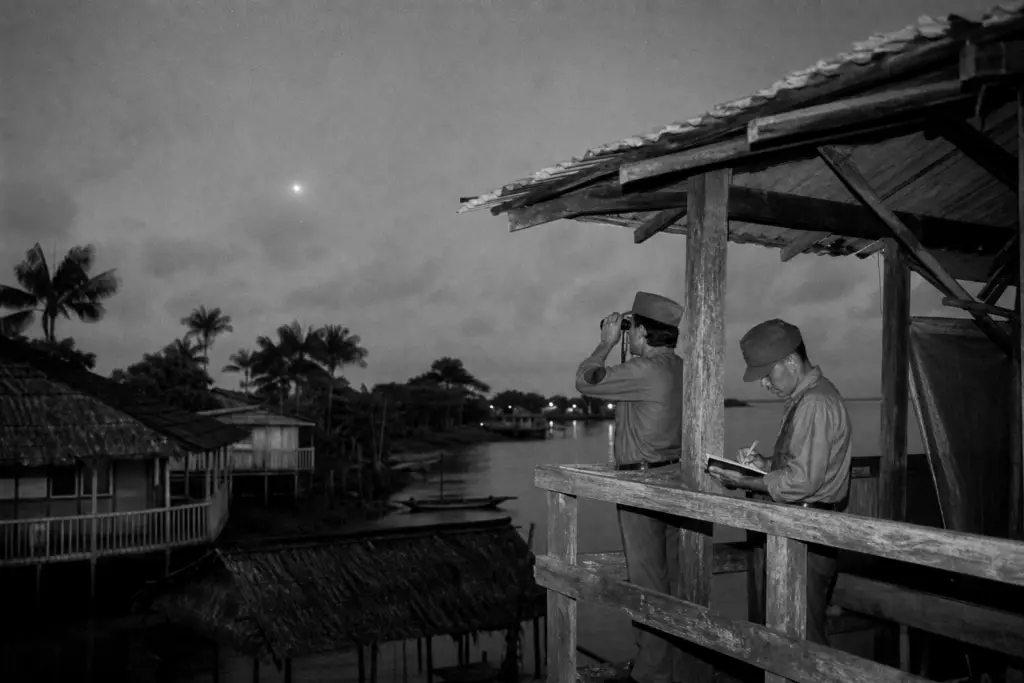
In 1977, reports of strange lights and alleged attacks in communities of Pará became serious enough to draw a formal Brazilian Air Force response. That response, known as Operation Prato, is historically significant not because it proves an extraordinary explanation, but because a military institution deployed personnel to observe, interview, record, and assess a concentrated local wave of reports.
The distinction matters. An official investigation establishes that authorities treated the situation as sufficiently persistent or alarming to examine; it does not, by itself, establish that the reported phenomena were extraterrestrial craft, directed-energy attacks, or any other specific cause. The surviving record must therefore be read in layers: military paperwork and operational activity show what was done; residents’ accounts show what people said they experienced; later testimony may add context but cannot automatically settle what happened in 1977.
This account follows that evidence trail through the Colares-area reports, the Air Force field operation, its photographs and written materials, and the unresolved questions that remain. It also separates what can be documented from interpretations attached to the case decades later, without dismissing the fear that prompted the investigation or converting disputed claims into established fact.
Operation Prato: What the Brazilian Air Force Investigated in 1977
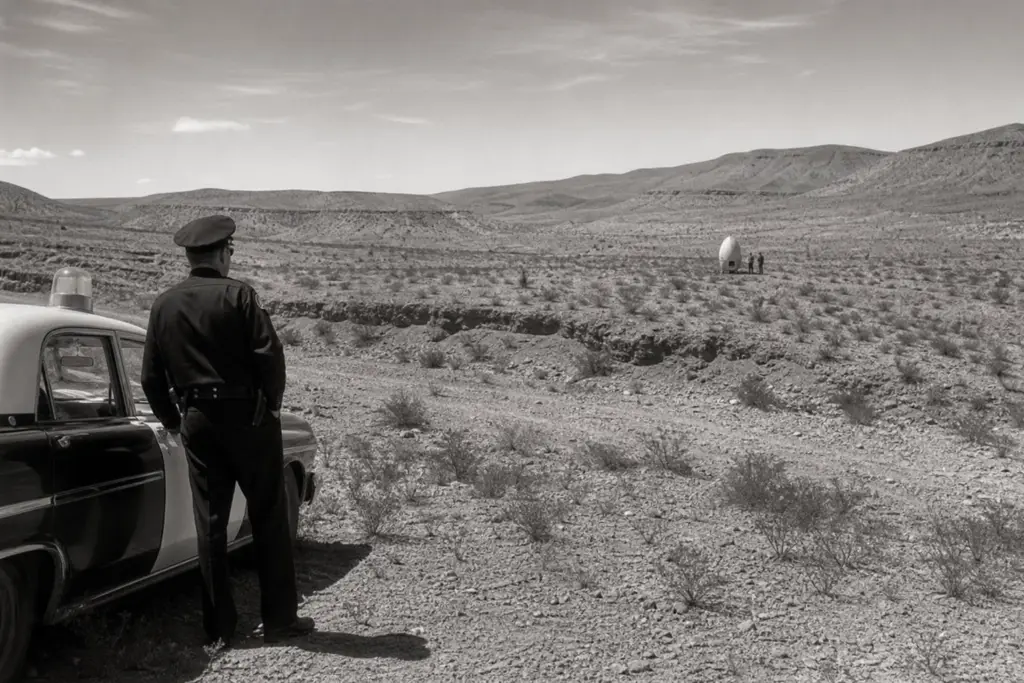
In Pará’s coastal communities, Colares became the focal point of a 1977 inquiry that extended beyond isolated sightings. Operation Prato was the Brazilian Air Force’s field response to a concentrated run of reports from Colares and nearby localities, where residents described recurring nocturnal aerial phenomena and experiences they regarded as threatening.
Its historical importance rests on the form of that response. Rather than merely receiving complaints, Air Force personnel undertook field activity: patrols and observation, interviews and written reporting, along with photographic documentation. Those actions created an institutional record of an investigation in progress, stronger evidence that officials considered the reports worth examining than an uncorroborated story told years later.
That distinction also sets the limit of what the operation can establish. A patrol log, photograph, or witness interview can document that personnel observed, recorded, or were told something; it does not independently identify the object or event described. Reports of attacks, unusual physical effects, or non-human craft remain claims requiring separate evidentiary support. The Brazil UFO investigation of 1977 is therefore best understood first as a documented military effort to investigate an unsettled local episode, not as an official finding of an extraterrestrial cause.
The Reports in Pará: Aerial Lights, Fear, and the Chupa-Chupa Phenomenon
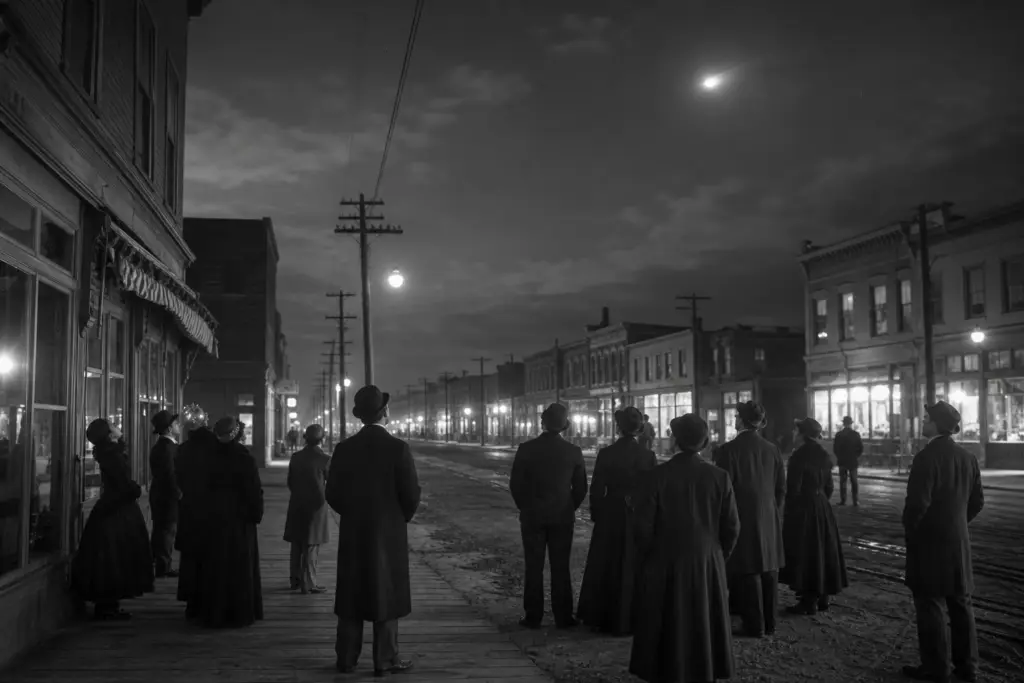
For many people in the affected communities, the immediate issue was not an abstract question about unidentified objects but a recurring sense of danger after dark. Accounts associated with the Colares UFO incident described lights in the sky, sometimes distant, sometimes apparently low or moving near homes, and unusual luminous phenomena that residents interpreted as threatening. The frequency and emotional force of those reports helped turn scattered UFO sightings in Pará into a wider community concern.
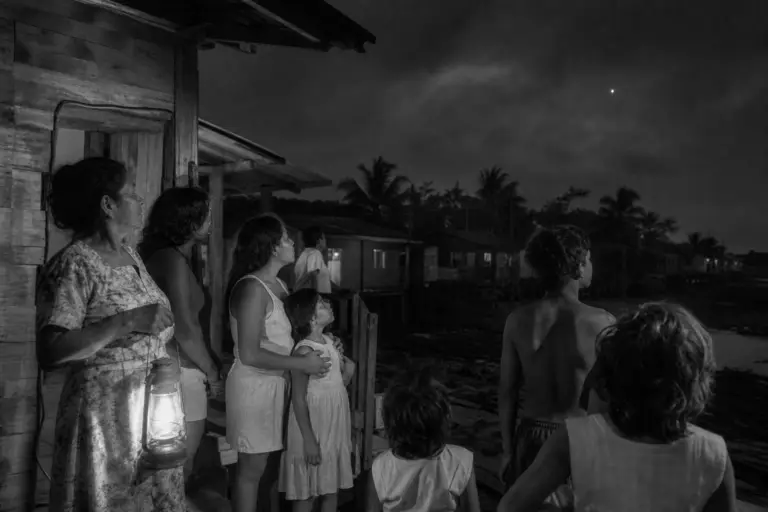
Chupa-Chupa was the local label attached to this cluster of narratives. The name conveyed an alleged draining or “sucking” effect, but it was not a scientific classification, an Air Force identification, or proof of a single physical mechanism. It grouped together reported lights, frightening close encounters, and bodily complaints under one memorable term. That distinction matters: a shared label can show how a community made sense of alarming experiences without establishing that every report had the same origin.
Residents and local witnesses relayed accounts of burns, small puncture-like marks, weakness, dizziness, and exhaustion after encounters they associated with the lights. Such symptoms should be treated as reported experiences, not as confirmed evidence of radiation, an energy weapon, or any extraterrestrial cause. In an atmosphere of fear, physical marks and illness could become central to how an event was interpreted and retold; the historical record must preserve those claims without converting them into diagnosed effects.
Community responses also reflect the seriousness with which the situation was felt locally. Night watches, collective vigilance, and protective behavior were practical attempts to regain a measure of control over an uncertain threat. Those responses do not identify what people saw, but they help explain why the reports drew official attention: the episode had become a social and public-health concern as well as a sequence of unusual aerial reports.
What the Military Did: Patrols, Observation Posts, Interviews, and Documentation
The practical value of a military field inquiry lay in turning a climate of fear into records that could be compared: where a report came from, when it occurred, who described it, and whether personnel on duty observed anything themselves.
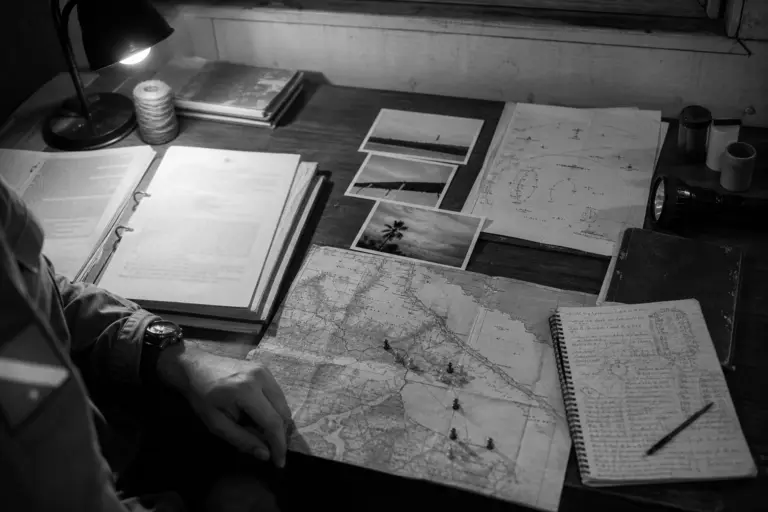
In the Operation Prato accounts, the First Regional Air Command in Belém is associated with the deployment of Brazilian Air Force personnel to the affected area. Their work was not limited to receiving reports at a distance. Field teams used observation points and nighttime patrols, placing personnel in the same hours and locations in which residents most often described luminous phenomena. An observation post is a fixed watch position, useful for noting direction, apparent movement, duration, weather, and the relation of a light to landmarks. A patrol, by contrast, moves through an area and can follow up reports from several locations, but offers less continuity at any single point.
Interviews formed another part of the collection effort. A useful interview record distinguishes a witness’s own account from details heard secondhand, preserves the sequence of events, and records practical particulars such as time, location, number of observers, sound, color, and apparent motion. Those details do not settle an identification, but they make later comparison possible and reduce the risk that a broad community narrative is mistaken for one uniform event.
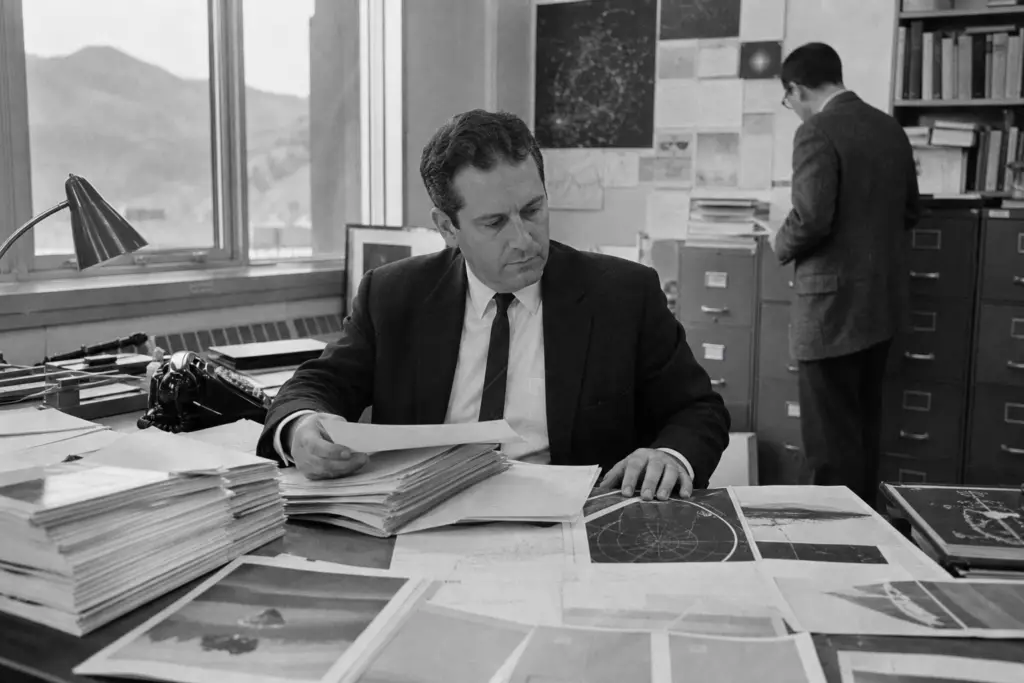
The surviving description of the Brazilian Air Force UFO investigation also includes written reports, sketches, and efforts to photograph lights or other unusual aerial appearances. Each medium has a different evidentiary function. A sketch captures a witness’s claimed shape or relative position; it is testimony rendered visually, not a measurement. A photograph can preserve an image from an observation, but without a documented time, location, camera settings, and chain of custody, it cannot by itself establish distance, size, speed, or origin.
That distinction explains the operation’s disciplined purpose. Patrols, logs, interviews, drawings, and photographs were tools for collecting and assessing reports rather than a mechanism for declaring a preselected cause. The existence of an official file demonstrates official attention and investigative activity; it does not, on its own, identify the lights as extraterrestrial craft or validate every allegation attached to them.
What the Released Brazilian Records Support, and What They Do Not
The central interpretive task is to keep the archive’s different kinds of information in their proper lanes. Publicly accessible Brazilian military files associated with Operation Prato can support the proposition that an Air Force inquiry occurred, that personnel generated records during it, and that material such as reports, images, and diagrams was retained or later made available. That is a substantial historical finding: it moves the episode beyond recollection alone.
- Documented military activity is the strongest level. A dated report, an identifiable author, an official heading, or a photograph tied to an operational file can establish that the institution recorded an observation or conducted a particular investigative task. Provenance matters: a file with a clear origin and date carries more historical weight than an isolated copy whose route into public circulation is unclear.
- Reported witness experience is a different level of evidence. Interview summaries, medical allegations relayed to investigators, and sketches preserve what a person said or drew at the time. They can demonstrate the content, consistency, and local impact of testimony; they do not independently establish the physical mechanism behind an injury or sighting.
- Unverified explanation begins when an observation is assigned a cause not demonstrated by the underlying record. A light in a photograph is not, by itself, an extraterrestrial craft. A reported beam or bodily symptom is not, by itself, evidence of a directed-energy weapon. Nor does an official inquiry demonstrate government possession of knowledge about non-human intelligence.
Low-context imagery illustrates the divide. A photograph may be genuine as an artifact from the investigation while still leaving its subject unidentified if its distance, exposure, orientation, and full chain of custody are not established. Likewise, a sketch can be valuable for comparing accounts without functioning as a technical rendering of a vehicle.
Brazil UFO documents therefore deserve neither dismissal nor inflation. Their strongest contribution is a traceable record of official attention and collected testimony. The Brazilian military UFO files do not supply a confirmed cause for every event reported in Pará, and public access to them is historical disclosure, not proof of an extraordinary conclusion.
Did Operation Prato Identify the Phenomena? Competing Explanations and Remaining Uncertainty
The surviving public record leaves no defensible final identification for the full range of events investigated in Pará. Operation Prato documented an inquiry and preserved observations, but its available materials do not demonstrate that every reported light shared one origin, or that reported symptoms arose from the same cause as an aerial observation.
That matters because “unexplained” is a classification of limited information, not a positive identification. A distant light can remain unresolved when its position, duration, weather conditions, viewing angle, and independent corroboration are inadequate. It may have involved misperception, an ordinary aircraft or astronomical source, or a phenomenon that the available record cannot distinguish. An unresolved entry becomes evidence for an extraordinary hypothesis only when the evidence positively supports that hypothesis and rules out plausible alternatives; the released files do not meet that standard for extraterrestrial craft or non-human intelligence.
Nor is a single conventional explanation adequate by default. A concentrated period of fear can shape how ambiguous events are noticed, discussed, and remembered, a social process often called contagion, without making every witness dishonest or every experience imaginary. Local environmental conditions, illness, stress, and separate aerial stimuli could also produce accounts that overlap in language while differing in cause. The sound conclusion is narrower: some 1977 UFO sightings and alleged injuries remain insufficiently explained, while the Brazilian Air Force’s interest confirms neither a uniform mechanism nor an extraordinary one.
Captain Uyrangê Hollanda’s Later Testimony: Important, but Not the Same as the 1977 File
The decisive checkpoint is whether a claim appears in material created during the 1977 Pará deployment or first surfaces years later in a television interview, documentary, or UFO publication. A patrol note, dated photograph, or interview record captures what was recorded at the time; retrospective testimony preserves a participant’s memory, but can add interpretation and details absent from the field file.
Captain Uyrangê Hollanda’s connection to the Colares-area mission gives his later testimony real historical weight. His accounts of patrols, observation posts, witness interviews, photography, and written reporting align with the documented working methods associated with Operation Prato. That correspondence supports treating him as a relevant participant in the inquiry, not treating every later assertion as a 1977 institutional conclusion.
The distinction is sharpest when later narratives introduce private conversations, precise descriptions of objects, claims about their purpose, or a settled judgment by the team. Those details may be sincere recollections, but a 1977 log, report, item of correspondence, or independently recorded witness statement is stronger support than repeated versions of one later interview.
Accounts marketed as Operation Saucer Brazil sometimes merge Hollanda’s personal recollections with the official record. His testimony is important evidence about his experience in Pará; it neither replaces the surviving 1977 material nor establishes an extraterrestrial explanation.
Why Operation Prato Still Matters in UFO Disclosure Debates
Its enduring value lies in the standard it sets for reading official interest. A military inquiry and preserved records show that an institution considered the Pará reports worth collecting and assessing; they do not, by themselves, establish why the events occurred.
That distinction is relevant to UAP disclosure debates. Transparency means that records, their dates, authorship, chain of custody, and limits can be examined. Archival release makes that scrutiny possible. Neither is equivalent to alien disclosure, proof of a cover-up, or evidence of a crash-retrieval program.
Operation Prato therefore remains a useful case study in disciplined source reading. Give greatest weight to contemporaneous primary material: signed reports, dated logs, original photographs, and identifiable archival holdings. Treat witness accounts and later interviews as meaningful context, then separate what they report from what the surviving record independently supports. The result is neither dismissal nor certainty: a documented Brazilian Air Force investigation, substantial testimony, and an unresolved cause.
Frequently Asked Questions
What was Operation Prato?
Operation Prato was a 1977 Brazilian Air Force field investigation into recurring reports of strange lights and alleged attacks in Colares and nearby communities in Pará. Personnel conducted patrols, used observation posts, interviewed witnesses, and produced written reports, sketches, and photographs.
Why did the Brazilian Air Force investigate UFO reports in Colares in 1977?
The Air Force responded because reports of nocturnal lights, frightening encounters, and alleged physical symptoms had become persistent enough to cause widespread fear in local communities. Residents organized night watches and other protective measures, making the episode a social and public-health concern as well as a series of aerial sightings.
What did Operation Prato officially find?
Operation Prato documented that the Brazilian Air Force investigated reports and collected observations, witness testimony, images, and diagrams. The available public record did not identify a confirmed cause for the lights, alleged injuries, or the full range of incidents in Pará.
Are Operation Prato documents available to the public?
Publicly accessible Brazilian military files associated with Operation Prato include reports, photographs, and diagrams from the investigation. The most useful records have identifiable dates, authorship, official headings, and a clear chain of custody, while low-context images cannot establish an object’s size, distance, speed, or origin.
Did Operation Prato prove that aliens visited Brazil?
No. The operation proves that Brazilian Air Force personnel treated the 1977 Pará reports seriously enough to investigate, but it did not establish that the phenomena were extraterrestrial craft, directed-energy attacks, or evidence of non-human intelligence. Contemporaneous signed reports, dated logs, and original photographs are stronger evidence than later interpretations or recollections.