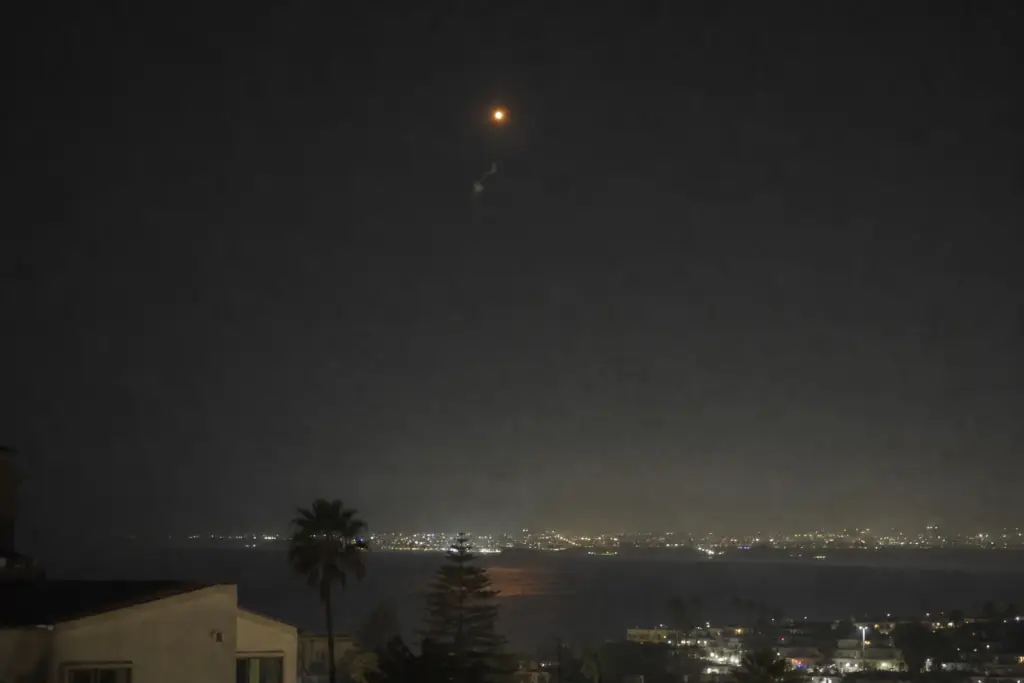

A report anchored to South Kingstown, Rhode Island, and dated January 20, 2010, describes an observer seeing and hearing an unusually low pass overhead. The South Kingstown UFO sighting January 20 2010 turns on a limited but important distinction: an impression of something jet-like may refer to its noise, apparent speed, silhouette, or the observer’s immediate interpretation; it does not identify an aircraft by itself.
This investigation keeps two tracks separate. One is the witness account: what was reportedly seen, heard, and inferred, and how closely the surviving report preserves the observer’s own words. The other is independently testable context: the date and location, weather and visibility, local geography, possible civilian or military aviation activity, and whether another witness, news record, or official record can be tied to the same event.
A match between reported direction, timing, sound, and appearance and a documented aircraft would strengthen a conventional explanation. No match would not establish anything extraordinary, since historical flight records and local reporting can be incomplete. The aim is to determine what this Rhode Island UAP report documents, what remains a single-person observation, and whether the available record supports identification or only an unresolved, insufficiently recorded event.
What Is Known About the South Kingstown Report, and What Is Not
A date and community name are the firmest details preserved in the surviving case label: January 20, 2010, and South Kingstown. The account describes an apparently low-flying object as jet-like and associates it with engine-like noise, but those descriptions do not establish a precise time, a documented flight, or even a particular aircraft category. It counts as a first-hand claim only if the available text can be traced to the observer rather than to a reposting or summary.
Three levels of information must remain separate. The witness account includes descriptions such as apparent altitude, shape, motion, sound, and the observer’s impression of what the object might have been. Contemporaneous documentation would include a dated original submission, local reporting, photographs, emergency-call records, weather observations, or aviation records tied to the same place and time. Later interpretation includes labels such as “UFO,” proposed aircraft types, and extraordinary explanations.
At this stage, the report supports neither a confirmed aircraft identification nor a conclusion that the craft was unconventional. A stronger assessment would require the original report’s publication date, exact observing location and time, duration, direction of travel, weather conditions, and independently recorded witnesses. Until those details are established, this Rhode Island UFO sighting is best classified as insufficiently documented, not explained, and not unexplainable.
The Reported Sighting: Visual Description, Sound, and Sequence of Events
The available record does not preserve a verbatim, timestamped witness narrative from which a reliable sequence can be reconstructed. The surviving description reduces the event to an observer in South Kingstown who reportedly saw and heard an apparently low-flying, jet-like craft on January 20, 2010. It does not establish whether the observer gave the account directly, whether it was relayed by another person, or when it was first published.
That limitation leaves the most important elements of a visual description unspecified. No dependable original wording is available for the object’s outline, color, number or arrangement of lights, apparent size, or whether it was visible against daylight, twilight, or darkness. “Low-flying” records a perception rather than a measured altitude; without a known viewing position, horizon reference, or angular elevation, it cannot be converted into feet above ground.
The same applies to movement. The accessible case label does not provide a time or time window, compass direction, route, speed estimate, start and end points, or duration. It therefore cannot show whether the low-flying jet-like craft South Kingstown report involved a brief overhead pass, a distant transit, or a longer observation. Later summaries that supply a particular shape, lighting pattern, trajectory, or aircraft model should not be treated as part of the original account unless they reproduce and identify the underlying witness statement.
The reported engine noise is potentially useful because sound can distinguish a silent light from an aircraft-like passage, but its character is not preserved: there is no wording on loudness, pitch, pulsing, Doppler change, or the interval between seeing and hearing the object. “Jet-like” is likewise a comparison, not an identification. A witness may mean a fast-looking silhouette, a loud engine-like sound, a swept-wing impression, or simply an immediate association with a jet. Those possibilities make the description worth testing against aviation evidence, but they do not establish that the object was a jet, or that it was anything else.
South Kingstown on January 20, 2010: Geography, Time, and Observing Conditions
South Kingstown is a large coastal municipality in Rhode Island’s South County, extending from inland neighborhoods toward the shores of Narragansett Bay and Rhode Island Sound. That setting offers sharply different observing environments: an unobstructed south-facing coastal horizon can preserve a long view of lights over water, while wooded residential areas and built-up corridors can limit a view to a short segment of sky. The surviving account gives no neighborhood, road, landmark, or viewing direction.

Its position also places South Kingstown between several aviation-relevant areas, including Quonset Point in neighboring North Kingstown, T. F. Green Airport to the north, and Westerly State Airport to the west. Those locations make ordinary aircraft traffic a possibility in the regional background, but they do not establish that an aircraft crossed the witness’s location. A usable route comparison would need an observation time and direction of travel; neither is retained in the report.
January 20, 2010, had sunset in the South Kingstown area at roughly 4:43 p.m. EST, with civil twilight ending about 30 minutes later. Thus an observation before sunset could have been made against a daylight sky, while one after twilight would depend far more on lights, contrast, and local horizon conditions. The report supplies no hour or day-versus-night indication, so neither lighting condition can be assigned to the event.
No dated National Weather Service observation, airport METAR, cloud report, visibility reading, wind measurement, or temperature entry is preserved with this case record. Such observations describe conditions at a named station and recorded time, not necessarily at a witness’s position. For this Rhode Island UFO sighting in January 2010, weather conditions can therefore set no reliable limit on sight distance or sound transmission until a time and observing point emerge; they remain context rather than corroboration.
Could a Conventional Aircraft Fit the Description?
A conventional aircraft remains a plausible category, but the surviving description is too sparse to favor a particular kind. A civilian jet, a military jet, or another powered aircraft could fit the broad “jet-like” impression only if a record places it near South Kingstown at a matching time and on a compatible track. No time, route, bearing, duration, or visual detail survives here to make that comparison.
Several forms of aviation records could narrow the question. FAA radar-derived flight data, where retained and accessible, could potentially show an aircraft’s time, track, altitude, and identification. Airport operations records from nearby airports could place arrivals, departures, or training activity in a useful window. Published airspace charts and routes establish where aircraft may normally operate; they show possibility, not proof that a particular aircraft passed over the witness.
NOTAMs, formal notices of temporary aviation conditions, could identify a closure, restriction, or unusual operating condition, but would not by themselves identify a craft. Civilian flight plans, military activity records, and publicly documented exercises would be stronger only if they aligned with the missing basics: a specific time, a location close enough to be heard, and a direction consistent with the observation.
The South Kingstown unidentified aircraft report supplies only an apparent low altitude and an engine-like sound. Those are weak discriminators without a stated loudness, changing pitch, visibility of wings or lights, or a travel direction. A documented aircraft whose track misses the community or whose timing cannot be tied to the report would be no meaningful match. Conversely, the absence of an available public track would not establish unusual activity. On the present record, a conventional aircraft cannot be confirmed or excluded.
Corroboration Check: Other Witnesses, News Coverage, and Official Records
Independent support would require more than the same short account appearing under several UFO sightings listings. Reposts, database entries, and later commentary can preserve a lead, but they remain one evidentiary thread when they trace back to the same unnamed observer or do not supply their own date, time, location, and observations.

No separately attributed witness statement matching South Kingstown on January 20, 2010 is preserved in the material available for this investigation. Nor does that material include a dated contemporaneous report from a South Kingstown or Washington County news outlet, a police or emergency-dispatch entry, an aviation incident report, or an agency statement identifying the object. That is a gap in corroboration, not evidence that no one else saw or heard anything: routine aircraft noise may never generate a call, and older local records may not be digitized, retained, or publicly searchable.
A stronger signal would be an independently created record, for example, a second resident describing a noisy passage from a different part of town at a comparable time, or a contemporaneous dispatch log recording multiple calls about an overhead aircraft. A weak signal would be multiple webpages repeating “low-flying jet-like craft” without naming distinct witnesses or showing when their accounts were submitted. Public records could still improve the case if an original timestamp permits a focused request for dispatch logs, local newsroom archives, or historical aviation data. Until such a record emerges, the January 2010 report has no demonstrated independent corroboration.
Assessment: Unidentified Observation, Identified Aircraft, or Insufficient Evidence?
The appropriate finding is an unresolved observation with insufficient evidence for identification. That label is narrower than “unexplained”: it records that a reported event has not been reliably matched to a specific cause, while acknowledging that the surviving information is too limited to test the leading possibilities.
| Category | What the record supports |
|---|---|
| Documented | A report was associated with South Kingstown and January 20, 2010. |
| Witness claim | An apparently low-flying, jet-like craft was seen and heard. |
| Not established | Exact time and place, direction, duration, appearance, altitude, a second witness, or a matching aircraft record. |
A conventional aircraft has a meaningful category-level fit because the account includes engine-like sound and a jet-like impression. It does not have a case-level fit: no identified flight can be compared against a time, route, bearing, or visual description. Conversely, the absence of such a match cannot exclude ordinary aviation when the observation itself lacks those anchors.
A formal identification requires a positive correspondence between the report and independent evidence, not merely a plausible label. This Rhode Island UAP sighting in 2010 does not meet that threshold, but neither does the record support a misidentification finding. “Unresolved observation” therefore describes the evidentiary limit, not evidence of alien disclosure, non-human intelligence, secret technology, or a government UFO cover-up.
Conclusion: How This 2010 Case Fits Into Responsible UAP Reporting
The record should remain open to revision, but only on stronger evidence. The most useful discovery would be the original timestamped submission, followed by an independently created witness account that fixes a comparable time and location. Archived South County reporting, weather observations for the relevant hour, and date-specific aviation material could then be compared against a defined sightline rather than a town-wide label. A contemporaneous report with direction of travel, duration, lights, and the changing character of the sound would be far more probative than a later retelling, consistent with careful UAP documentation.
Until such material emerges, the South Kingstown UFO sighting January 20 2010 is best retained as an insufficiently documented, unresolved observation, not an identified aircraft and not evidence for an extraordinary craft. Responsible UAP reporting preserves that boundary: it records the claim, states what cannot be independently established, and allows a conventional explanation to be tested without forcing one. UFO sightings 2025 or UFO sightings 2026 coverage concerns separate events; later news, discussion of UFO disclosure, or changing terminology cannot supply the missing time, place, and corroboration for a January 2010 report.
Frequently Asked Questions
What was reported over South Kingstown, Rhode Island, on January 20, 2010?
A witness report associated with South Kingstown on January 20, 2010 described an apparently low-flying, jet-like craft that was both seen and heard. The surviving record does not preserve its shape, color, lights, exact location, time, direction, duration, or measured altitude.
Was the low-flying jet-like craft in South Kingstown ever identified?
No specific aircraft or other object was identified. The case is classified as an unresolved observation with insufficient evidence for identification because there is no matching flight record, precise time, route, bearing, or detailed witness description.
Were military or civilian aircraft operating near South Kingstown on January 20, 2010?
The area lies near Quonset Point, T. F. Green Airport, and Westerly State Airport, so civilian and military aviation were plausible background possibilities. No available record ties a particular aircraft to South Kingstown at the unknown time of the sighting.
What aviation and weather details are needed to investigate a jet-like UFO sighting?
A useful comparison needs the observation time, exact location, travel direction, duration, and visual or sound details. FAA radar-derived data, airport operations records, weather observations, visibility reports, and wind data can then be checked against the reported sightline and timing.
What should you look for before deciding a low-flying jet-like sighting was an aircraft?
Look for a documented aircraft track that matches the witness location, time, direction, apparent altitude, and sound or visual description. A general jet-like impression and engine-like noise alone are not enough to confirm an aircraft, but they also do not support an extraordinary explanation.