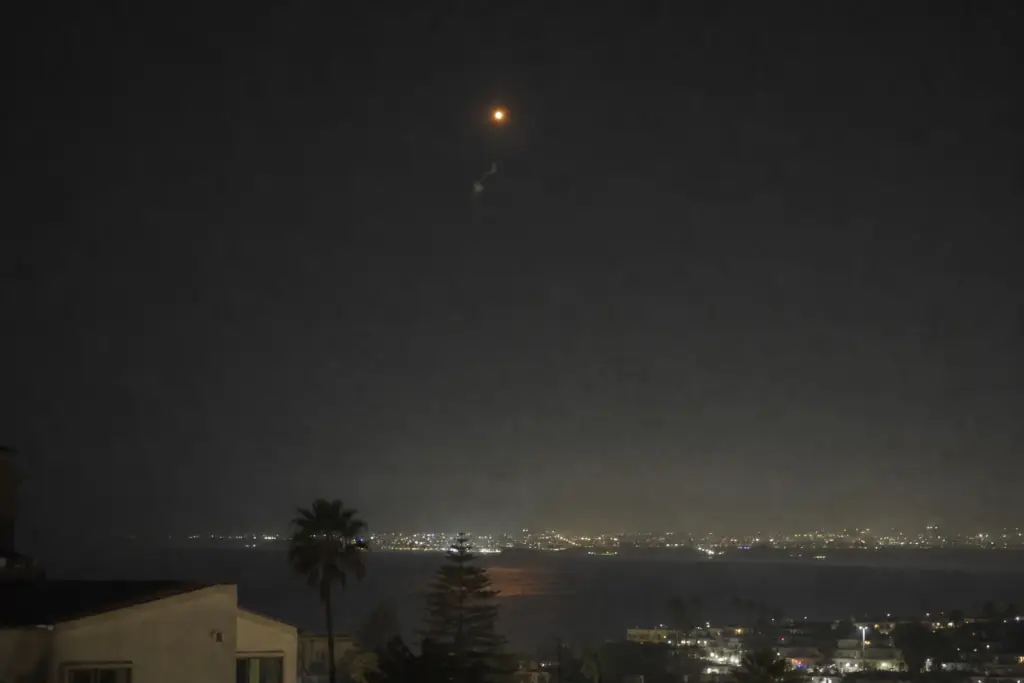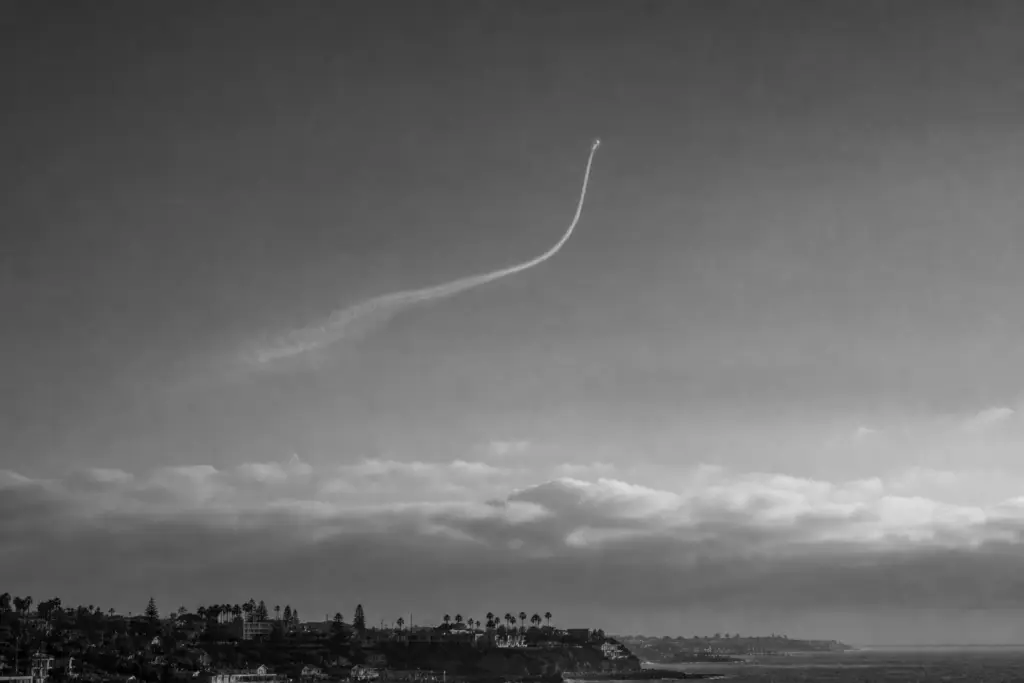
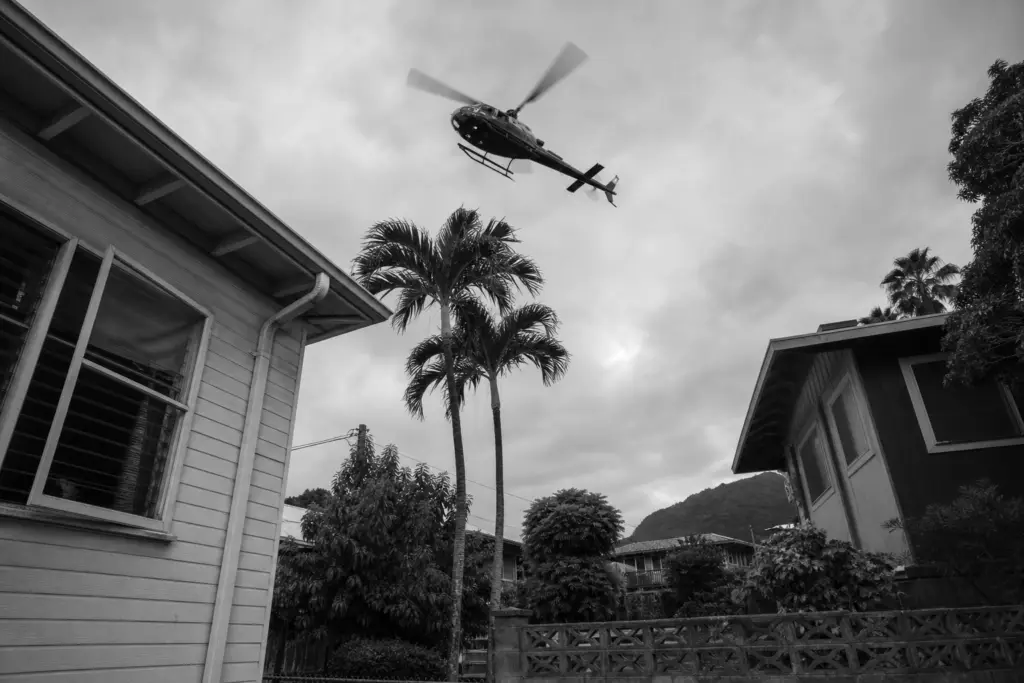
This case begins with a striking but unverified account: during a reported aerial sighting in Honolulu on January 28, 2020, a witness also described helicopters flying low enough to buzz homes and make windows shake. That combination can invite a dramatic interpretation, but it does not establish one. A loud, nearby helicopter may produce intense rotor noise and noticeable vibration; those effects alone cannot identify the aircraft, fix its altitude, or demonstrate that it was responding to another object.
This examination of the Honolulu UFO sighting January 28 2020 keeps the claims separate. The reported object, the alleged helicopter activity, and the window-shaking detail each require their own support. Direct material such as an original recording, dated photograph, flight data, or official log carries more weight than a retelling; independent witnesses are stronger than a single account; repeated online posts do not become corroboration merely through repetition.
The sections that follow reconstruct only the timeline that can be attributed, distinguish reported experience from independently established fact, and test ordinary explanations without treating them as conclusions. Where records do not identify an aircraft, confirm an altitude, or connect the helicopters to the sighting, that limitation remains central to the case.
What Was Reported in Honolulu on January 28, 2020
The report is placed in Honolulu, Hawaii, on January 28, 2020. Its central account is of an aerial object that the reporting witness could not identify, alongside an alleged disturbance from helicopters flying low over nearby homes. The available case description does not provide an original post, interview, photograph, video, precise neighborhood, or approximate time, so those particulars cannot be independently fixed here.
Two observations are embedded in that account, and they should not be merged. First, the unidentified-object claim concerns what was seen and whether its appearance, movement, direction, and duration were recorded. Second, the helicopter claim concerns what was heard and felt: aircraft reportedly buzzed houses and shook windows. A single witness can report both experiences, but that does not itself establish that the same event caused them or that the helicopters were reacting to the object.
The Honolulu UFO sighting 2020 label therefore describes a reported unexplained observation, not an identified craft or a confirmed aerial incident. At this stage, the strongest supported point is limited: someone attributed an unusual experience to Honolulu on that date. There is no supplied evidence of multiple independently reporting witnesses, an aircraft identity, altitude, or a documented link between the alleged overflights and the reported object.
Reconstructing the Reported Timeline
A usable timeline needs at least two anchored moments: when the object was observed and when the helicopter disturbance occurred. For this report, the only available anchor is the stated date, January 28, 2020. No supplied material preserves a clock time, a dated original post, a recording, or a published interview that would place either experience at a particular point that day or night.
The object observation therefore cannot be placed before, during, or after the reported overflights. The account does not retain a viewing direction, description of the object’s appearance or movement, estimated duration, or weather conditions. Those omissions matter because they prevent comparison with aircraft activity, other observers’ reports, or imagery from a defined time window.
The helicopter portion is similarly unsequenced. “Buzzing” homes and shaking windows describes the witness’s reported experience of noise and vibration, but the available wording does not establish how many passes occurred, whether the aircraft were heard before the sighting, or whether the windows shook while the object was visible. It also does not identify a neighborhood from which an aircraft route could be tested.
That leaves two possible readings, neither of which can presently be preferred: the witness account may have meant that both experiences unfolded together, or it may have grouped two unsettling events from the same night. The first would be a claimed temporal association; the second would be only a shared date. Neither is evidence that helicopters followed, pursued, or otherwise responded to an unexplained object.
- Directly time-stamped evidence: none is available in the material for this case.
- Independent corroboration: no separate witness account with matching time and location has been supplied.
- Single-account chronology: a sighting and helicopter disturbance are alleged, but their order and overlap remain unspecified.
- Repeated retellings: repetition without an original timestamp or independent witness does not repair the missing sequence.
As a result, the Honolulu UAP sighting January 28 2020 can be dated only at the calendar level. Any more detailed reconstruction would add facts the surviving witness report does not provide.
Low-Flying Helicopters and Shaking Windows: What the Claim Can and Cannot Show
Sound and movement inside a home are real observations, but they are not a measurement of an aircraft. If a helicopter passes nearby, its rotor beat can be perceived as a deep pulsing noise, and vibration or brief pressure fluctuations may make a loose pane, frame, screen, or other lightly fitted building component rattle. The same reported noise may feel much stronger in one room than another because of the building’s construction and local acoustics.

That physical possibility gives the helicopter allegation a limited meaning: the reported effects are consistent with an aircraft being heard nearby. It does not establish that a helicopter was unusually low, determine its route, identify its operator, or reveal why it was flying. Nor can window movement distinguish a helicopter from other sources of low-frequency noise and vibration without a contemporaneous recording or corroborating observation.
The available account supplies none of the details that would turn the low-flying helicopter reports into a testable flight description. A stronger account would preserve the number of passes, approximate duration, direction of travel, whether the sound grew louder or faded, the apparent location relative to nearby landmarks, and whether windows shook during each pass. A weaker signal is a later recollection that helicopters were “buzzing” the area without a time, direction, or independently matching report.
- Direct support: dated video, audio, or photographs that capture the aircraft and surrounding location.
- Independent corroboration: separate residents describing comparable noise, direction, and timing from nearby addresses.
- Single-witness experience: audible rotor noise and rattling windows, without enough detail to identify a flight.
- Unsupported inference: treating the disturbance as evidence that helicopters were responding to the reported object.
For the alleged Honolulu helicopter UFO sighting, the final category is especially important. The account preserves an unsettling claimed experience, not a demonstrated connection between aircraft activity and the unidentified aerial observation.
What Records Could Verify or Challenge the Account
The most useful next step would be to locate material created at the time rather than recollections written later. An original photo or video can preserve a file date, sequence, ambient light, landmarks, and, if retained, metadata such as creation time and device location. That information can test whether the image belongs to Honolulu and whether its timing overlaps the reported disturbance. A distant light or aircraft silhouette, however, rarely establishes size, height, speed, or distance because camera perspective compresses depth.
Unedited audio could be similarly valuable if it includes a continuous recording, identifiable surroundings, and a clear time reference. It may help compare reported rotor noise with visible passes or other sounds, but audio alone does not identify an aircraft or measure how low it flew. Clips reposted without the original file, capture time, or location have much less evidentiary weight.
- Independent contemporaneous accounts: separate reports from nearby observers are stronger when they agree on a narrow time window, direction of travel, number of aircraft, and shared landmarks. Repeated online wording or accounts that appear only after a prominent post are not independent corroboration.
- Local reporting and obtainable public-safety records: a dated news item, dispatch reference, or publicly released incident record could establish that calls or observations were made. Such a record would show that a report existed, not automatically validate the reported object or explain the helicopters.
- Flight-tracking and aviation records: a matching track could place a transmitting aircraft near the claimed area at a relevant time. It would still need to be matched against the witness’s direction and timing; it would not prove that the aircraft caused every reported effect or responded to an aerial object.
Online flight maps are best treated as a lead, not a complete inventory. A missing ADS-B track can result from incomplete receiver coverage, unavailable data, an uncertain time window, or a flight that was not visible in the particular archive. Its absence does not by itself establish unusual activity. These are common limits of sensor-track evidence.
No original recording, independently attributable witness statement, local coverage, public-safety log, or matching aviation record has been supplied for this case. Until such material is available, later retellings of the Honolulu report remain a single-source allegation rather than a verifiable event record; detailed reporting protocols can support later evaluation.
Possible Explanations, Kept Separate From Conclusions
A conventional explanation has value only if it can account for the relevant observation without silently supplying missing details. Routine helicopter traffic is one possibility for the reported noise and window movement: a nearby aircraft could produce the described disturbance, but that possibility does not identify an operator, establish a flight path, or place the helicopter at the same time as the aerial observation.
An ordinary aircraft or distant light viewed in difficult night-sky conditions is another possible conventional explanation for the unidentified object. At night, a witness may have limited reference points for judging range and motion. A light moving toward or away from an observer can appear to hover or change speed, while a distant aircraft’s apparent size, color, and direction can be altered by haze, cloud, glare, and the observer’s viewing angle. This possibility fits an unidentified visual impression, but not any specific reported shape or maneuver because those details have not been preserved.
Distance and perspective also matter when comparing the two parts of the account. A helicopter that sounds close may be farther away than it seems, while a light that appears near the helicopter’s route may be at an entirely different distance and direction. Without a clock time, neighborhood, compass bearing, duration, or recording that captures both, apparent proximity is not evidence that the events were connected.
Unrelated helicopter activity near the same period remains a plausible explanation for why both elements became associated in later retellings. It would fit a report in which aircraft noise was memorable but temporally separate from the sighting; it would fit poorly only if contemporaneous material demonstrated an overlap. No such material is available here. The record is therefore too thin to rank routine operations, a misidentified aircraft or light, and unrelated activity against one another responsibly. These remain unresolved UAP possibilities, not conclusions about this Honolulu UAP report.
Bottom Line: A Reported Event, Not a Confirmed Identification
The evidentiary finding is narrow. A report exists that places an unidentified aerial observation and claims of low helicopter overflights in Honolulu on January 28, 2020. The account’s content, including buzzing homes and shaken windows, remains a single-source allegation, not independently corroborated testimony or direct documentation.
- Supported at the report level: the date and the fact that an unusual experience was attributed to Honolulu.
- Not established: the object’s nature, size, altitude, speed, or operator; the identity, route, altitude, or even independently recorded presence of any helicopter; and a shared time or purpose for the two observations.
- Not supported: an interception, military operation, pursuit, extraterrestrial explanation, or cover-up.
An unidentified report means the observer did not reach an identification from the information available; it is not the same as a confirmed UAP case, which would require evidence sufficient to authenticate the observation and rule out an identification within defined limits. This report does not meet that threshold.
A future reassessment would need contemporaneous, attributable material: an original recording with time and location context, separate witnesses describing the same event, or aviation and public-safety records that overlap in place and time. Until then, the Honolulu UFO sighting January 28 2020 remains an unresolved report rather than evidence for UAP disclosure or UFO disclosure.
What Can Be Said About the Honolulu Report
The appropriate record is therefore a limited case entry, not an identified incident. It preserves an attributed claim that an observer experienced an unexplained aerial sighting and reported nearby helicopter noise and window shaking in Honolulu on January 28, 2020.
That distinction matters because testimony documents what a person reported, whereas corroboration tests whether key details can be independently anchored. No retained original image or video establishes the object’s appearance or location; no time-stamped audio captures the alleged overflights; and no independently attributable witness account, official log, or flight record links helicopters to the observation. Without those anchors, neither the sequence nor a relationship between the two elements can be determined.
- Strong signal: independent material that agrees on time, place, direction, and the relevant aircraft or object.
- Weak signal: later online repetition that adds no original recording, identifiable witness, or contemporaneous record.
Window vibration may be consistent with a nearby aircraft, but it cannot establish altitude, operator, or intent. The responsible conclusion is narrower than the story’s most dramatic interpretation: the Honolulu account describes a disturbing reported experience, while the available information does not support a verified aerial-object identification or a demonstrated helicopter response.
Frequently Asked Questions
What happened during the Honolulu UFO sighting on January 28, 2020?
A witness attributed an unidentified aerial observation and low helicopter activity to Honolulu on January 28, 2020. No original photo, video, interview, precise location, or clock time was supplied to independently document the events.
Were helicopters reported during the Honolulu sighting?
Yes. The witness reported helicopters buzzing homes and causing windows to shake, but the account does not identify the aircraft, their altitude, route, operator, or number of passes.
Why would low-flying helicopters make house windows shake?
Nearby helicopter rotor noise can create deep pulsing sound, vibration, and brief pressure fluctuations that rattle loose panes, frames, screens, or other building components. Window movement alone cannot measure an aircraft’s altitude or prove why it was flying.
Is there verified video or flight-tracking evidence for the Honolulu UFO sighting?
No verified original recording, time-stamped audio, independent witness statement, public-safety log, or matching aviation record has been supplied. A missing ADS-B track would not prove unusual activity because receiver coverage, archive availability, and timing can be incomplete.
What is the difference between a UFO report and a confirmed UAP case?
A UFO report records that an observer could not identify what they saw from the available information. A confirmed UAP case requires authenticated evidence that anchors the observation in time and place and supports ruling out identifiable explanations within defined limits.