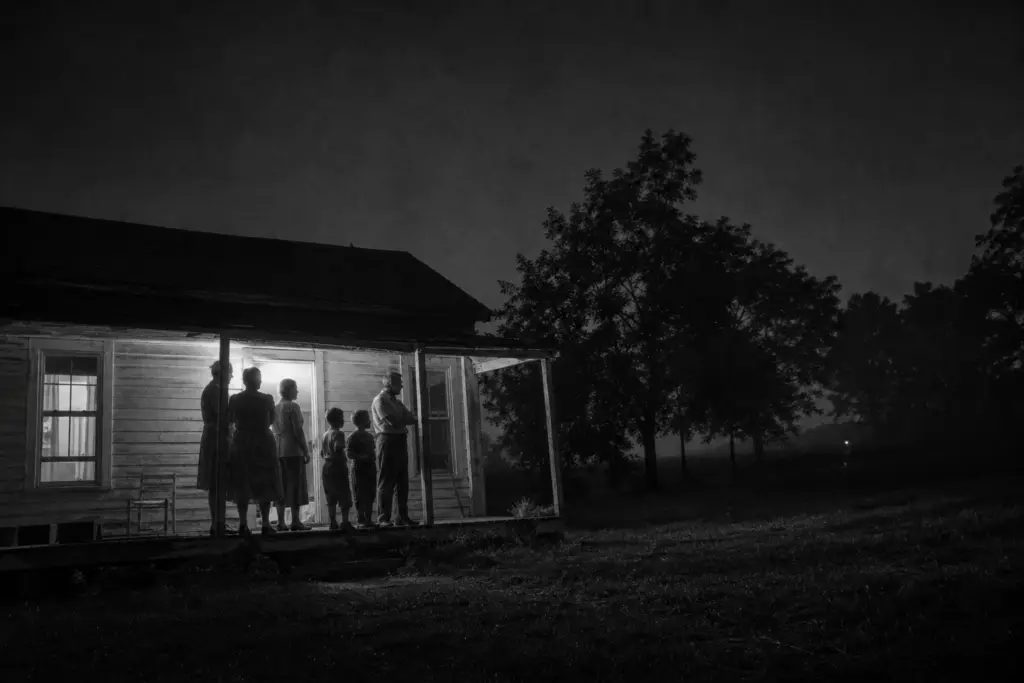
The first contemporary checkpoint is place and date: during the night of August 21–22, 1955, people at a farmhouse near Kelly, outside Hopkinsville, Kentucky, reported frightening figures around the property. It became a landmark historical UFO case not because it produced conclusive physical proof, but because several people described an unusual episode that drew a rapid law-enforcement response and early local and regional press attention.
The central claim remains an allegation: members of the Sutton family and others present said they saw strange beings near the house and reacted with fear. Their reports are evidence that witnesses made those assertions; they are not verified evidence of extraterrestrial visitation, an alien craft, or non-human intelligence.
That distinction shapes this account. Contemporary reporting and the basic chronology carry more weight than details introduced through later retellings, folklore, and the popular “Hopkinsville goblins” label. The following sections separate what participants reportedly described from what officers could observe, identify gaps in the surviving record, and weigh explanations without treating either a skeptical theory or an extraordinary one as settled fact.
Who Was at the Sutton Farmhouse?
The people at the house were not a single nuclear family, which helps explain why witness totals and rosters differ. Early newspaper accounts commonly identify the household around the rural Sutton farmhouse as including Elmer “Lucky” Sutton and his wife, Vera; Elmer’s brother John Charley Sutton and his wife, Alene; their relative Glennie Lankford; and visiting couple Billy Ray Taylor and June Taylor. Children were also present, but published lists vary over their names, ages, and whether every child should be counted as a direct witness.
That distinction matters. A person present at the Sutton farmhouse incident may have heard shouting, gunfire, or adults’ descriptions without personally seeing a figure outside. Later UFO books often compress everyone at the property into a single witness count, while the earliest accounts emphasize the adults who spoke to reporters and police. The strongest historical formulation is therefore a group of related adults, visitors, and children at a farmhouse near Kelly, Kentucky, not a fixed, uncontested roster of identical eyewitnesses.
The setting was isolated enough that the group did not have immediate assistance at hand. After the reported activity around the house, several adults drove into Hopkinsville to seek help from police. Their arrival at the police station is an important anchor in the chronology: it shows that the alarm was reported beyond the household that night, even though it does not independently establish what, if anything, had been outside the home.
How the Night Reportedly Unfolded
The account begins with Billy Ray Taylor’s reported observation of a bright, descending light near the farmhouse well after dark. In early newspaper versions, he told the others that an object had crossed the sky or landed nearby; the exact time, distance, and appearance vary among later retellings. What recurs in the earliest chronology is that the household initially treated the report as unusual but not yet as an immediate attack.
Not long afterward, adults at the house said a small figure approached from the yard. Two men reportedly fired at it, believing they had struck it, but said it did not fall. The group then described further appearances at windows, doorways, and the roofline, with gunfire repeated as figures seemed to withdraw and reappear. These are witness claims, not independently verified observations; the number of appearances, the sequence of positions around the house, and the reported duration differ sharply across accounts.
Several adults drove to Hopkinsville seeking police assistance. Their arrival at the station late that night is one of the firmer anchors of the Kelly–Hopkinsville incident: officers and a sheriff’s deputy went back to the farm after hearing the frightened report. Contemporary coverage described a search of the house and grounds, but no officer publicly reported seeing one of the alleged figures during that initial visit.
After law enforcement left, household members said the activity resumed and that they again saw shapes near the building. Reports also place the family back at the farmhouse after the police response, rather than safely removed from the episode. That broad progression, light, first sighting, defensive gunfire, trip to town, police inspection, and claimed renewed appearances, is more securely repeated than cinematic details such as exact clock times or a continuous siege lasting all night.
What the Witnesses Said They Saw
The earliest descriptions emphasized a humanlike but markedly unfamiliar figure rather than a settled creature type. August 1955 newspaper accounts reported that people at the Sutton farmhouse described figures roughly child-sized, with bright, silvery, or luminous-looking bodies; disproportionately large, shining eyes; pointed or prominent ears; thin arms; and hands that some witnesses characterized as clawlike. These were reported perceptions made at night under alarming conditions, not physical characteristics established by recovered evidence.
Movement was as memorable in the witness testimony as appearance. Participants described figures that seemed to glide, float, or move with unusual ease, including near windows and along the house. That language does not amount to a uniform account of flight: some versions stress a bobbing or hovering motion, while others emphasize quick retreats, raised arms, or an apparent resilience after shots were fired. Later recollections added color and anatomical detail, but those additions should not automatically be read back into the shorter early reports.
The differences matter because the descriptions do not produce a single, precise composite. “Glow” could describe reflected light, a pale surface, or an impression of brightness; ears, hands, eye color, and body shape also vary across tellings. The familiar phrase Hopkinsville goblins is therefore best understood as later popular shorthand for the reported small glowing beings, not as a witness-proven identity or biological classification. It is useful for locating the case in UFO folklore, but it can make a varied set of nighttime observations seem more definite than the surviving accounts support.
The Police Response and What Investigators Found
When the adults reached Hopkinsville, their alarm brought city police, county officers, and state police into the episode. Contemporaneous newspaper reports describe officers traveling back to the Sutton farmhouse, speaking with the people there, and looking over the house and surrounding yard after the reported activity had subsided. That response corroborates that a distressed group sought help and that authorities inspected the scene; it does not corroborate the identity of anything the witnesses believed they had seen.
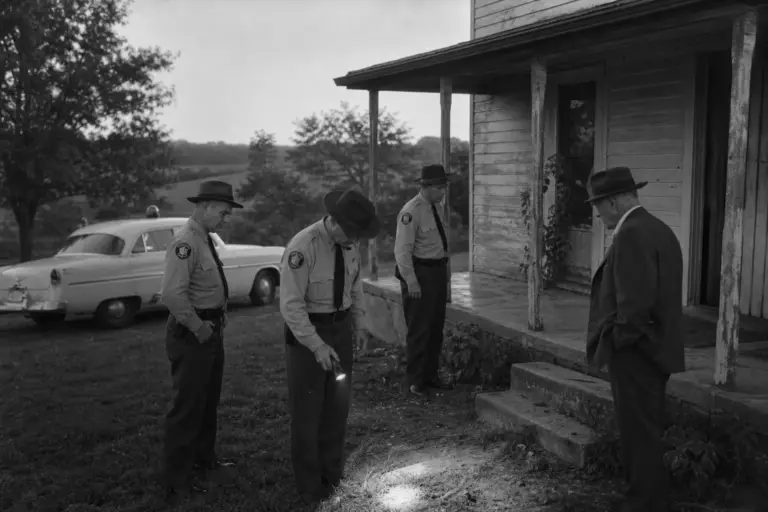
The practical findings were limited. Period accounts mention spent shell casings and damage consistent with shots having been fired, including reported marks or damage around the house. Those are two different kinds of evidence: casings can establish that ammunition was expended, while damage can show where a shot struck. Neither identifies a target, establishes that shots hit a creature, or demonstrates why the firing began. Reports of additional marks or unusual traces vary enough that they cannot be treated as a stable physical record.
Officers did not recover a being, a craft, a photograph, or a trace capable of independently resolving the account. No publicly established chain of physical evidence connects the reported figures to an object or material collected at the property. The police investigation therefore documented a real call for assistance and signs of gunfire, but it left the central observation dependent on witness testimony.
Project Blue Book is relevant chiefly as the Air Force’s wider Cold War UFO-record system, not as proof of a comprehensive on-site federal investigation of the Kelly–Hopkinsville encounter. Later discussions often enlarge that connection. The surviving historical picture supports attention from local authorities and later UFO-record interest, while the scope, findings, and completeness of any Air Force-level inquiry remain too uncertain to turn the case into a documented official resolution.
Owls, Meteors, Misperception, and Other Interpretations
One prominent naturalistic reading treats at least some of the reported figures as great horned owls seen at close range. The hypothesis has an intuitive fit with the accounts of large, bright-looking eyes, ear-like projections, a pale or reflective appearance, and abrupt movement from trees, roofs, or foliage. An owl’s silhouette can change sharply as it turns or spreads its wings. Its weakness is that it does not neatly reproduce every reported detail, particularly the witnesses’ impressions of humanlike arms, repeated approaches, and unusual reactions after shots were fired.
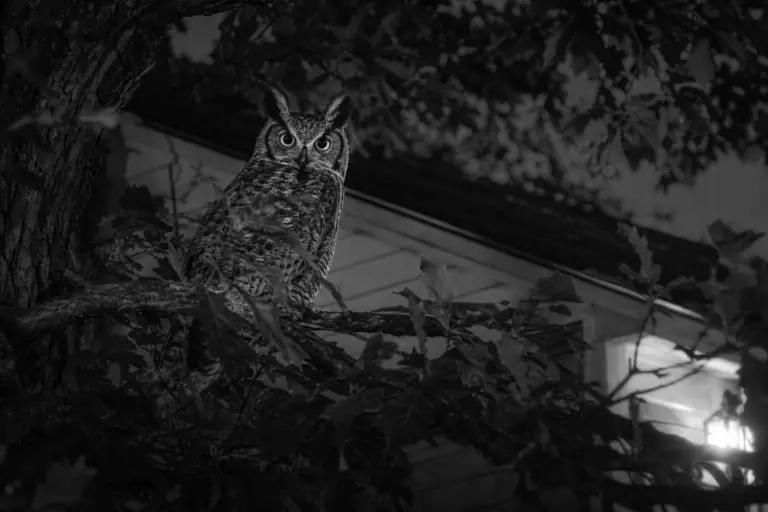
Darkness makes distance, scale, and surface color difficult to judge, especially when a viewer sees a partly obscured shape against a farmhouse, treeline, or night sky. Reflected porch or vehicle light could make eyes shine and turn a light-colored breast or wing surface into an apparent glow. Fear can also narrow attention: once several people interpret an ambiguous movement as a threat, later sightings may be filtered through that expectation. This does not mean the Sutton family invented the experience; it means a shared alarm can produce broadly similar accounts without producing identical details.
The reported aerial light has invited a separate explanation. A meteor sighting, or another ordinary light seen at an uncertain distance, could account for Billy Ray Taylor’s initial impression of something descending without establishing a connection to later figures near the house. Treating the light and the creatures as one event requires an evidentiary link the surviving testimony does not supply. Other skeptical explanations, misidentified animals, shifting shadows, and memory shaped by retelling, address particular features rather than the entire episode. Because the accounts are incomplete and variable, no single interpretation resolves every claimed sighting in the Kelly–Hopkinsville encounter.
Why the Case Endures in UFO History
Its lasting power comes from an unusually vivid combination: a rural household, a prolonged siege narrative, and figures whose reported appearance became a durable template in UFO folklore and creature imagery. Later books, illustrations, and popular accounts often make the beings more uniform, more extraterrestrial, and more certain than the early descriptions allow.
The sound historical conclusion is narrower. Several people reported an alarming experience near Kelly in 1955, and police responded, but no conclusive physical evidence established what was present. That gap does not prove deception, an owl explanation, or an extraordinary visitor; it sets the limit of what can be claimed. Modern UFO disclosure and UAP disclosure debates concern present-day government records and reported observations, not evidence that resolves this particular farmhouse episode. The Kelly–Hopkinsville encounter endures as a compelling, unresolved witness case, not as verified proof of a hidden answer.
Frequently Asked Questions
What happened during the Kelly-Hopkinsville encounter in 1955?
During the night of August 21 to 22, 1955, people at the Sutton farmhouse near Kelly, Kentucky, reported small glowing figures around their home. Several adults drove to Hopkinsville for help, and police inspected the property after reports of gunfire and frightening sightings.
Who were the witnesses in the Hopkinsville goblins case?
The household included Elmer “Lucky” Sutton and Vera Sutton, John Charley Sutton and Alene Sutton, Glennie Lankford, and visiting couple Billy Ray and June Taylor. Children were also present, although published witness lists differ on their names, ages, and whether they directly saw the figures.
What did the Sutton family say the creatures looked like?
Witnesses described figures roughly child-sized with bright, silvery, or luminous-looking bodies, large shining eyes, prominent ears, thin arms, and clawlike hands. They also reported that the figures seemed to glide, float, bob, or retreat unusually quickly near windows, doors, and the roofline.
Did police find physical evidence at the Kelly farmhouse?
Police found spent shell casings and reported damage around the house consistent with gunfire. Officers did not recover a creature, craft, photograph, or trace that could identify what the witnesses believed they saw.
Were the Hopkinsville goblins more likely owls or extraterrestrials?
Great horned owls are a leading natural explanation because their large reflective eyes, ear-like tufts, pale surfaces, and sudden movement can resemble parts of the reports in darkness. No conclusive physical evidence established either an owl explanation or an extraterrestrial origin, so the case remains unresolved.