A university study became the crucial checkpoint in whether the U.S. government would keep treating UFO reports as the subject of a permanent public investigation. Its importance was institutional more than conclusive: the University of Colorado study did not explain every reported sighting, but it gave officials a scientific basis to argue that a large, continuing inquiry was unlikely to produce meaningful new knowledge.
The committee conducted its work from 1966 through 1968; its final report appeared in January 1969. The sequence matters. It emerged amid intense public, political, and military attention to UFO reports, then assessed both individual cases and the broader value of sustained research. A subsequent National Academy of Sciences review added outside scientific weight to its central recommendation. Later that year, the Air Force used this broader institutional context in announcing the closure of Project Blue Book, its long-running public UFO-investigation program; the project ended in January 1970.
That closure changed the official posture from routine public investigation to the view that UFOs did not warrant a standing scientific program. It did not establish that all reports had mundane explanations, nor did it end every form of government interest in unusual aerial observations. Understanding that distinction is essential to judging both the report’s contested reception and its continuing relevance to later UAP disclosure debates.
Why the Air Force Turned to the University of Colorado
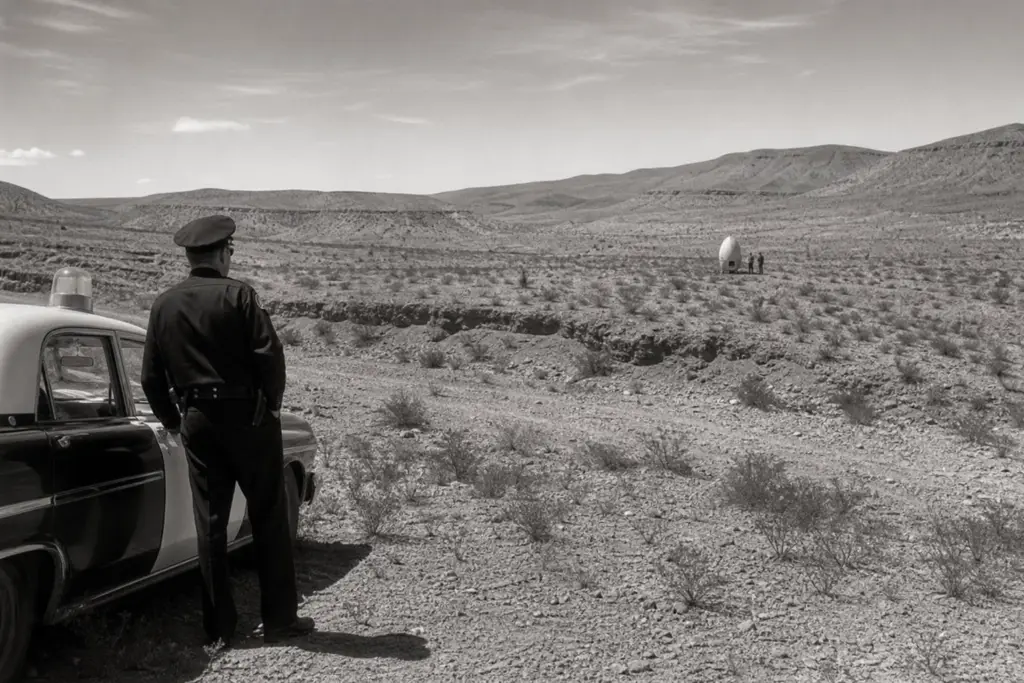
In 1966, a highly visible run of sightings turned a long-running controversy into a problem of public confidence. Reports from Michigan drew particular attention after an Air Force explanation invoking “swamp gas” was widely ridiculed, while legislators and scientists questioned whether Project Blue Book had the expertise and independence to evaluate difficult cases credibly.
The pressure was not simply to identify the object in any one headline-making report. It was to decide whether the existing pattern of UFO investigations, collecting reports, attempting explanations, and maintaining a public case file, could yield scientific knowledge worth the continuing commitment of personnel and funds. An internal Air Force review would have faced the same doubts directed at Blue Book; an external university assessment offered a more credible way to address that larger question.
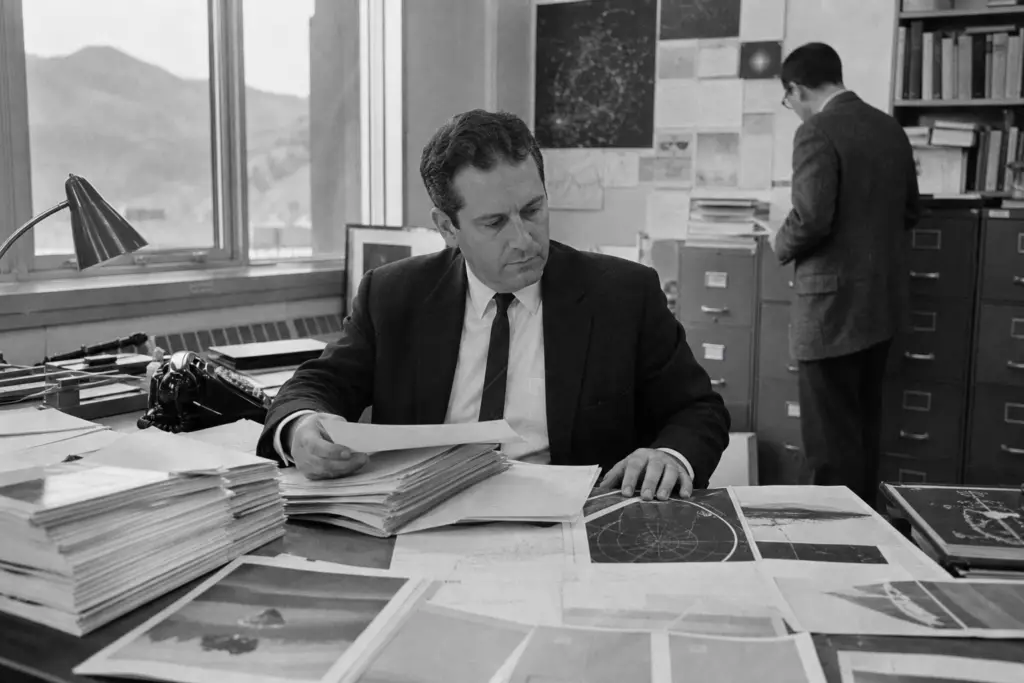
The Air Force therefore contracted with the University of Colorado in 1966, placing physicist Edward U. Condon in charge of the study that became known as the 1968 Condon Committee. Its assignment was consequentially narrower than popular debate often implied: examine UFO evidence and assess the scientific prospects of further study, not render a finding on whether extraterrestrial visitors had reached Earth. That distinction made the University of Colorado UFO study a review of research value and institutional policy, as well as of selected reports.
What the Condon Committee Was Asked to Examine
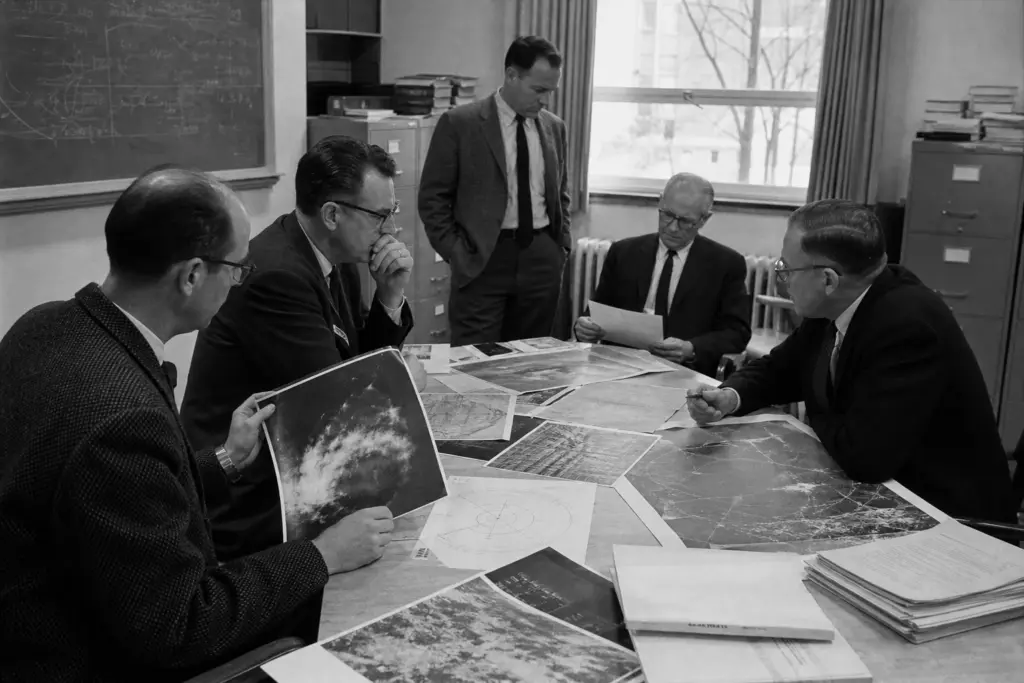
The project’s formal title, Scientific Study of Unidentified Flying Objects, signaled a broader task than adjudicating a single dramatic sighting. During its 1966–1968 work, the Colorado team’s Condon Committee study selected cases for detailed examination and considered the kinds of material a continuing program would encounter: eyewitness accounts, photographs, radar returns, aircraft observations, weather information, and records that could support conventional identifications.
That distinction mattered. An unexplained case could mean that the surviving information was too incomplete, inconsistent, or limited to permit a confident identification; it did not, by itself, establish an extraordinary cause. A strong case investigation therefore asked whether the available evidence could distinguish among possibilities. The larger Condon Committee UFO investigation asked a separate policy question: whether repeating that work across many future reports was likely to produce scientific discoveries proportionate to the resources required.
The committee’s procedures became contentious even before its final report appeared in January 1969. Critics pointed to internal disagreements, case-selection choices, and a leaked memorandum by project coordinator Robert Low as reasons to question whether the inquiry approached its subject with sufficient openness. Those disputes are historically important because they explain why the study never settled public disagreement over particular unexplained cases.
For officials, however, the usable issue was more limited: not whether every file had been resolved, but whether a standing government program had demonstrated a dependable scientific return. That framing made it possible to treat residual uncertainty in individual reports differently from a decision about sustaining an institutional investigation.
What the Final Report Concluded in January 1969
Its final judgment was framed as a forecast about scientific return. Published in January 1969, after the committee’s work through 1968, the Condon Report concluded that “further extensive study of UFOs probably cannot be justified in the expectation that science will be advanced thereby.” The operative words were “further extensive study” and “expectation”: the committee was assessing whether a continuing, large-scale research effort was likely to yield knowledge worth its cost.
That conclusion was narrower than the popular shorthand that the report had “explained UFOs.” The study did not claim to have solved every report in its files. Its case discussions included incidents left unidentified because the available testimony, records, photographs, or instrumental data could not support a secure conclusion. An unresolved file, however, was not treated as affirmative evidence for an extraordinary explanation. In the committee’s reasoning, incomplete evidence could leave a question open while still failing to establish a promising basis for a permanent research program.
The distinction changed the practical meaning of an investigation. A case inquiry asks what can responsibly be said about one observation; a research-priority decision asks whether collecting and analyzing many more such observations is likely to advance a field. The Condon Committee Report answered the second question negatively. It did not lay down a rule that unusual aerial events could never warrant attention, nor did it establish that every future sighting would be ordinary. It supplied a scientific rationale for treating routine, open-ended UFO investigation as a poor institutional investment, a conclusion officials could later translate into policy.
How the National Academy Review Strengthened the Policy Case
The National Academy of Sciences added a second, independent checkpoint before the Air Force acted. Its panel reviewed the Colorado report’s methods, evidence, and central judgment about the likely scientific return from continued work; it did not reopen every case file or undertake a new identification effort for each sighting. Its overall endorsement gave the January 1969 conclusion institutional standing beyond the committee that produced it.
That extra layer mattered because Project Blue Book had faced sustained public criticism since the 1966 controversy. Officials were no longer relying only on an Air Force operation to defend a conclusion affecting its own future. They could point to the National Academy of Sciences Condon Report review as an external assessment that a large, continuing inquiry was not scientifically warranted. In practical terms, this strengthened the case for an official UFO research policy that treated routine, open-ended investigation as a poor use of research resources.
The endorsement did not find that every report in the Colorado files had a conventional explanation. Its importance lay in separating unresolved observations from the question of whether they justified a standing program of government UFO investigations. By supporting the report’s broad recommendation, the Academy made a subsequent policy choice easier to present as scientifically reviewed rather than merely administratively convenient.
Why Project Blue Book Ended in December 1969
Secretary of the Air Force Robert C. Seamans Jr. announced on 17 December 1969 that Project Blue Book would be terminated. The announcement converted the preceding scientific assessments into an administrative decision: the program would no longer receive a standing mission to collect and evaluate public UFO reports.
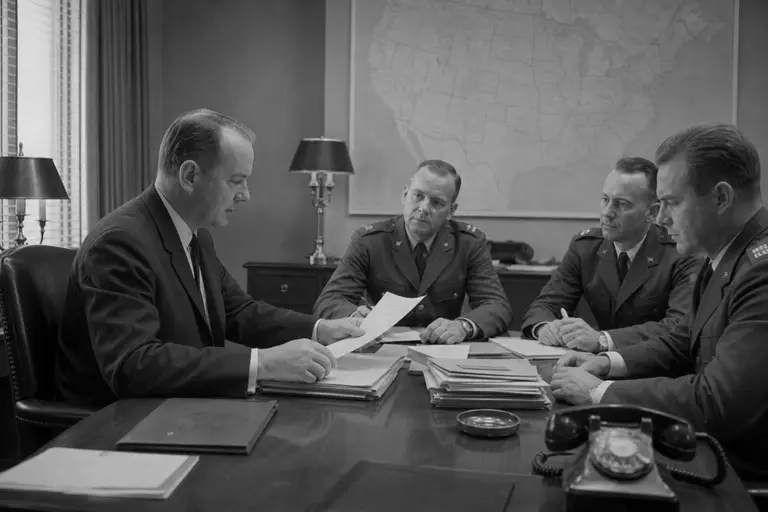
The Air Force framed its action around three distinct judgments. First, no report investigated and evaluated by the program had indicated a threat to national security. Second, none had provided evidence that the unidentified cases represented technological developments or scientific principles beyond contemporary knowledge. Third, the remaining reports were not judged to warrant continued scientific study. These were decision criteria, not a claim that every observation had been identified: a sighting could remain unresolved while still failing to demonstrate either a defense danger or a promising scientific return.
The Condon Committee Report supplied the key research-priority judgment behind that position, while the subsequent external review made it easier for the Air Force to present closure as scientifically supportable rather than merely economical. The report was not the sole cause of the decision, but Project Blue Book’s closure was its clearest immediate institutional consequence: an open-ended public investigation ceased to be treated as a worthwhile scientific undertaking.
The December announcement set a timetable rather than ending the office that day. Project Blue Book ceased operations on 31 January 1970. Its case files were retained and later transferred to the National Archives, preserving the program’s record even as the Air Force withdrew from operating an ongoing public UFO-investigation system.
What Blue Book’s Closure Did, and Did Not, Mean
A terminated public program is not the same thing as a permanent ban on noticing, recording, or assessing unusual events in the air. Blue Book had combined a recognizable public point of contact, a continuing case file, and an explicit UFO-investigation identity. Ending that structure removed the standing program; it did not make an observation irrelevant to every other official function.
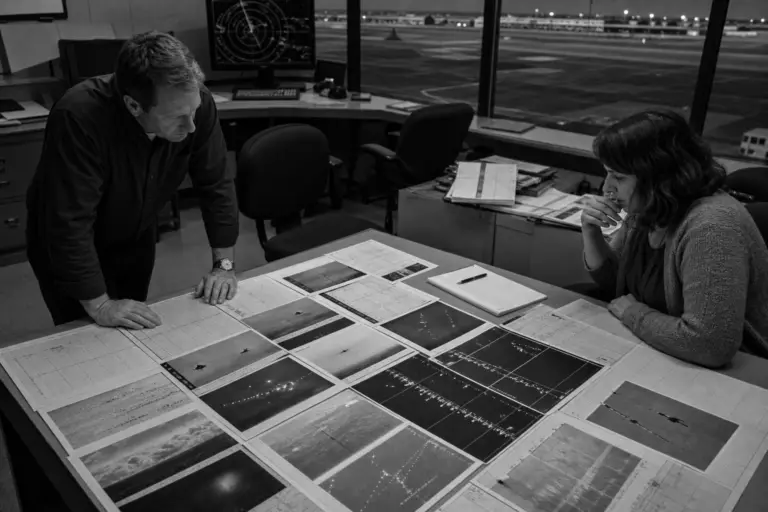
The distinction turns on purpose. A dedicated UFO inquiry asks whether reports, considered as a class, justify sustained scientific investigation. Mission-specific reporting asks a narrower operational question: could an unknown object affect an aircraft, restricted airspace, a sensor system, or an ongoing operation? The first is a research-policy commitment; the second can arise from ordinary responsibilities for public safety and national security.
Thus, a pilot’s report of an unidentified light, a radar anomaly, or an object near an installation may warrant recording or evaluation without establishing an extraordinary origin. “Unidentified” can mean that available information was insufficient for a firm identification, not that a particular explanation has been demonstrated.
This boundary is essential when reading public records. The end of Project Blue Book changed the public posture of government UFO investigations by rejecting a permanent, open-ended scientific program. It should not be read as proof that every later UAP sighting was ignored, or as evidence of a continuous secret successor program. Different offices can address aerial observations under different, limited mandates.
Why the Condon Report Still Frames UAP Disclosure Debates
Debates over UAP disclosure therefore turn less on whether an observation carries an unfamiliar label than on what government function the information serves. An airspace-safety inquiry can identify hazards to crews or operations; an intelligence inquiry can assess whether a sensor record may reveal foreign activity or a collection gap; a data-quality effort can improve timestamps, locations, sensor settings, and corroborating accounts. None of those tasks requires a conclusion about an object’s ultimate origin.
That difference separates the present policy frame from the one that governed the Colorado study. The Condon Committee Report asked whether an extensive, continuing UFO program was likely to advance science. Modern reporting and review can instead be justified by narrower operational and oversight purposes: preserving potentially relevant data, determining what systems detected, and showing whether agencies handle anomalous reports consistently. A weak public signal is a bare claim that something remains unidentified; a stronger one is a record that distinguishes the observation, the available sensor evidence, the analytic limits, and the conclusion that can, or cannot, be drawn.
Yet the earlier question has not disappeared. Sustained collection, analysis, and public reporting still demand a showing that their security, safety, or scientific value warrants the resources involved. For that reason, later UAP activity is not a simple reversal of the 1969 judgment. It reflects different evidence streams, missions, and expectations of congressional UAP scrutiny since Project Blue Book, while retaining the central policy test that shaped the post-Blue Book posture.
The Report Changed Policy More Than It Settled the Mystery
The decisive administrative sequence ran from the January 1969 final report to the Air Force’s 17 December 1969 announcement that Project Blue Book would end operations on 31 January 1970. The committee’s judgment, backed by the subsequent National Academy review, gave officials a defensible reason to discontinue a standing public program: extensive additional UFO study was unlikely to advance science enough to justify its continuation.
That rationale did not amount to a finding that every Blue Book or Colorado case had been identified. A witness account, photograph, or radar return could remain unresolved when the available record was too incomplete for a reliable conclusion. “Unidentified” marked that evidentiary limit; it did not establish an extraordinary explanation. The Condon Committee Report therefore settled a research-priority question rather than the ultimate nature of every reported object.
That distinction still disciplines UAP debates. Preserving a military sensor record, assessing a flight-safety concern, or reporting the limits of an analysis serves a defined operational or oversight purpose. Reviving an open-ended scientific investigation would require a different showing: that the resulting body of evidence is likely to produce knowledge commensurate with the resources committed. That remains the report’s lasting policy legacy.
Frequently Asked Questions
What did the Condon Committee Report conclude about UFOs?
Published in January 1969, the Condon Report concluded that further extensive UFO study was unlikely to advance science enough to justify a continuing large-scale program. It did not claim that every UFO report had been explained.
Was the Condon Report published in 1968 or 1969?
The University of Colorado committee conducted its study from 1966 through 1968, but its final report was published in January 1969. It is commonly called the 1968 Condon Committee Report because of the period of its work.
Did the Condon Report end Project Blue Book?
The report did not single-handedly end Project Blue Book, but it provided the central scientific rationale for closure. After a National Academy of Sciences review endorsed its broad conclusion, the Air Force announced termination on 17 December 1969, and Blue Book ceased operations on 31 January 1970.
Did Project Blue Book’s closure mean the government stopped investigating all UFO sightings?
No. Ending Project Blue Book terminated a standing public UFO-investigation program, not every government review of unusual aerial events. Agencies can still assess reports involving flight safety, restricted airspace, sensor anomalies, national security, or operational concerns.
What should policymakers look for when deciding whether UAP reports justify a continuing investigation program?
They should distinguish between an unresolved observation and evidence that sustained collection will produce useful scientific, safety, or security knowledge. Stronger cases include reliable sensor data, timestamps, locations, corroborating accounts, and a clear operational or research value that justifies the resources required.