Calling J. Allen Hynek a man who simply “became a believer” in 1972 misses the point of his change, and the discipline he was trying to defend. His position was not that UFO reports had conclusively established an extraterrestrial presence. It was that a residue of reports deserved better evidence gathering, clearer classification, and more serious scientific treatment than they had received.
The J. Allen Hynek UFO study story therefore begins with a skeptical astronomer working with the Air Force on Project Blue Book, the program created to assess reported unidentified flying objects. Over time, his concern shifted from whether every report could be explained conventionally to whether investigations were being conducted well enough to justify confident dismissal.
In 1972, that long reassessment became public and institutional. The UFO Experience set out Hynek’s case for treating unexplained observations as a research problem, while the Center for UFO Studies offered an independent setting for pursuing it. This article follows the evidence behind that shift: the cases he encountered, the investigative shortcomings he criticized, and the crucial distinction between advocating systematic inquiry and claiming a proven extraordinary answer.
1972 Was the Public Culmination of Hynek’s Reassessment, Not a Sudden Conversion
Hynek’s change unfolded across roughly two decades of advisory work, beginning in the Project Sign period and continuing through Project Blue Book. He initially approached reports as an astronomer expected to identify ordinary causes, misperception, astronomical objects, aircraft, or inadequate information. Repeated contact with cases that remained poorly documented or prematurely disposed of altered his concern: the central problem became the quality of inquiry, not a presumption that every unexplained observation had an extraordinary cause.
That distinction defines J. Allen Hynek’s 1972 position. In The UFO Experience, he argued for a scientific study of UFOs built on careful collection, classification, interviewing, and comparison of reports. The Center for UFO Studies gave that proposal an institutional form outside the Air Force after Blue Book’s closure. An unresolved report, in his framework, was a case lacking a satisfactory explanation on the available evidence; it was not proof of extraterrestrial visitation, non-human intelligence, or an official cover-up. Hynek’s public break was therefore methodological: weak investigation could not legitimately support confident dismissal, but uncertainty could not legitimately be converted into a claimed answer.
Hynek’s Starting Point: A Skeptical Astronomer Advising the Air Force
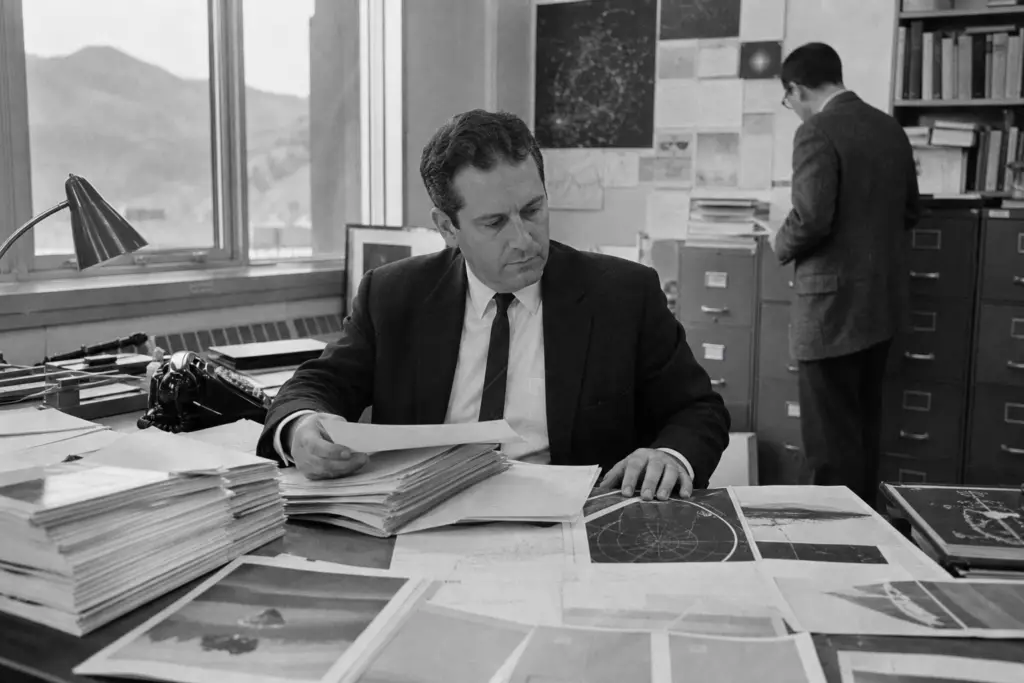
His entry into the subject came through professional astronomy, not a prior commitment to extraordinary explanations. By the time the U.S. Air Force sought his assistance in 1948, Hynek was an astronomer at Ohio State University whose relevant expertise included identifying celestial objects and separating reliable observation from visual error.
The assignment was deliberately narrow. As a scientific consultant to the Air Force‘s early UFO inquiry and later to Project Blue Book, Hynek was asked to assess whether reported lights or objects could be accounted for by familiar astronomical or natural causes. A bright planet near the horizon, a meteor, a balloon, an aircraft, an unusual cloud formation, or an observation made under poor viewing conditions were competing explanations, not afterthoughts. The practical question was whether the available time, direction, weather, witness description, and duration fit one of them.
Hynek later recalled that he initially expected this work to yield mostly routine solutions. That expectation was methodologically sound: eyewitness accounts can be incomplete, estimates of distance and speed can be unreliable, and an unfamiliar sight need not be an unfamiliar object. A report that lacks enough detail to identify is therefore different from one whose recorded details conflict with a proposed ordinary explanation.
This starting point matters because Hynek did not abandon those standards when he later criticized the Air Force program. His eventual demand for more serious investigation grew from the same premise that had made him useful to it: explanations should follow evidence, and neither a mundane answer nor an extraordinary one should be assigned merely because it is convenient.
Years of Unresolved Cases Changed the Question Hynek Thought Science Should Ask
What accumulated for Hynek was not a single decisive incident but a recurring remainder: reports that could not responsibly be folded into an ordinary explanation on the information then available. Some involved more than one witness; others came from pilots, police officers, military personnel, or other observers accustomed to describing locations and events. Radar information, repeated observations, and reported physical effects could also matter because they offered possible points of comparison beyond one person’s recollection.
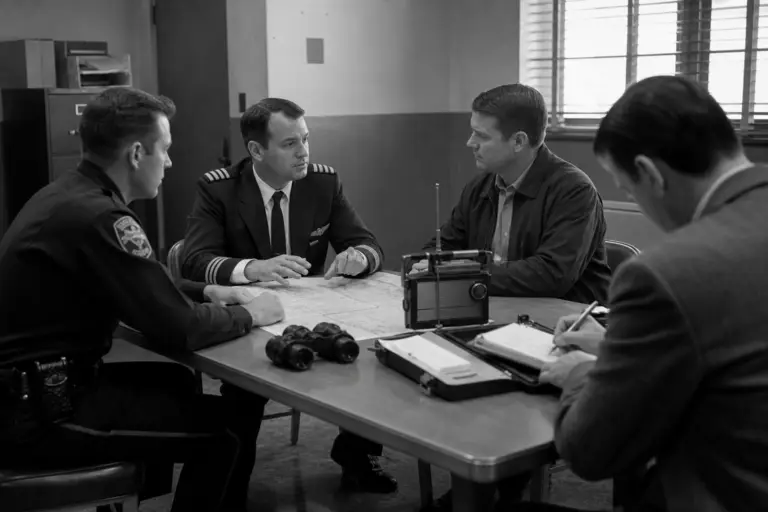
Those features did not make a report true in every detail, nor did they identify the thing observed. Their value was evidentiary. Independent witnesses might agree on timing while disagreeing about shape or distance; a radar return might support that something was detected without establishing its nature; a physical-effect claim required inspection rather than acceptance. Hynek increasingly treated such material as a reason to improve interviews, preserve records, compare observations, and test proposed explanations against the full case rather than its most convenient fragment.
That distinction sharpened his use of “unexplained.” A weak report was one with too little reliable information to assess. An unexplained case was different: the recorded facts had survived reasonable conventional hypotheses without yielding a confident identification. Neither category amounted to proof of an extraterrestrial craft. The important conclusion was procedural, some UFO sightings presented an unresolved empirical problem, and dismissing them without adequate inquiry merely converted uncertainty into a label.
This is the defensible meaning behind the shorthand “Hynek skeptic to believer.” He became convinced that a real residue of difficult cases merited systematic study, not that any particular extraordinary explanation had been established. By 1972, J. Allen Hynek’s UFO study proposal would turn that accumulated methodological concern into a public research program.
Why Hynek Lost Confidence in Project Blue Book’s Investigative Method
The weakness Hynek saw was institutional: a case-investigation system can reach a conventional answer responsibly only when it has enough trained personnel, time, records, and field inquiry to test that answer against the report as a whole. In his later account, Project Blue Book too often treated classification as an administrative endpoint rather than the beginning of an evidentiary examination. A label such as “astronomical,” “aircraft,” or “insufficient information” could be appropriate, but only if interviews, timelines, weather conditions, and corroborating observations supported it.
The Michigan sightings of March 1966 made the cost of that gap visible. After reports near Dexter and Hillsdale, Hynek publicly suggested that decaying vegetation in marshy areas, “swamp gas”, might account for at least some lights. The phrase quickly became a national symbol of official dismissal because it appeared to offer a broad explanation before the public believed the incidents had been adequately investigated. Hynek later regarded the episode as damaging: even a plausible natural mechanism becomes unpersuasive when it is presented without a sufficiently complete factual foundation.
His objection was therefore not to ordinary explanations; it was to explanations selected for convenience, incomplete files, and a public posture that seemed designed to dispose of reports rather than learn from them. Strong case investigation preserves uncertainty where the evidence is thin and identifies the observations a proposed solution actually explains. Weak investigation substitutes a reassuring label for that work.
Hynek’s dissatisfaction with Blue Book is evidence of methodological conflict, not proof that the government concealed confirmed alien craft or entities. Its significance for 1972 was narrower and more durable: he concluded that unresolved reports required an independent, better-resourced process capable of collecting and assessing evidence without the program’s pressure to close cases quickly.
Blue Book’s 1969 Closure Left the Central Scientific Problem Unresolved
The Air Force ended Project Blue Book in 1969 after the University of Colorado study led by physicist Edward U. Condon concluded that further extensive investigation of UFOs was unlikely to advance science. The Condon Report supplied the program’s policy rationale: the Air Force announced that its review had found no evidence that reported objects threatened national security, represented advanced foreign technology, or warranted continued federal investigation.
That decision resolved an administrative question, whether the Air Force should keep operating Blue Book, not the broader scientific question Hynek thought remained. A program may be closed because its mission, resources, and governing assumptions make it a poor vehicle for research; closure does not retrospectively convert every unresolved file into an adequate explanation. Hynek regarded the Blue Book closure as especially problematic because the system being judged had, in his view, too often lacked the means to collect the high-quality observations needed for a decisive judgment.
His position entering the 1972 UFO debate was therefore not that the Air Force had suppressed proof of an extraterrestrial origin. It was that the Condon-era policy conclusion should have prompted a different institutional answer: independent, scientifically organized inquiry into the remaining well-documented anomalies. The question was no longer whether Blue Book should survive, but whether a more capable research framework could preserve evidence, distinguish strong reports from weak ones, and state honestly what remained unexplained.
The UFO Experience: Hynek’s 1972 Blueprint for a Systematic Field of Study
In The UFO Experience: A Scientific Inquiry, published in 1972, Hynek translated that demand into a research design. He proposed sorting reports first by what was observed and what evidence might be tested, rather than by a preferred explanation. His aim was to turn a miscellaneous archive of anecdotes into comparable case material: records that could reveal patterns, expose weak reports, and identify the smaller set worth serious follow-up.
His basic categories separated nocturnal lights, daylight discs, and radar-visual cases. The distinction mattered because each category presented different evidentiary opportunities. A light seen at night might call for astronomical, meteorological, and aircraft checks; a radar-visual report offered two purported observation channels whose timing and locations could be compared. Classification did not make either report extraordinary. It determined what questions investigators should ask and what corroboration could reasonably be sought.
Hynek used the same practical logic in his close-encounter scale. A Close Encounter of the First Kind meant a reported observation at close range; the second added an alleged physical effect, such as marks, interference, or a physiological consequence; the third included reported occupants or entities. These were not escalating proofs of exotic origins. They were labels for the report’s content and possible evidence: a physical trace could be inspected, while an account of occupants required especially careful interviewing and separation of observation from inference.
For Hynek, systematic UFO study meant standardized reporting forms, prompt field investigation, witness interviews that preserved original testimony, and collaboration among relevant disciplines. The book’s central claim was methodological: an unexplained residue might be a meaningful scientific anomaly, but its ultimate cause remained undetermined. His framework asked researchers to improve the data before drawing conclusions, a notably different project from using sensational cases to declare that an extraterrestrial explanation had been established.
The Center for UFO Studies Turned Hynek’s Critique Into an Independent Research Model
Hynek’s next step was organizational rather than merely rhetorical. In 1972, he founded the Center for UFO Studies as a civilian venue in which reports could be retained, assessed, and compared over time rather than processed through a short-lived government program. Its independence mattered: the center was intended to make investigation a continuing research activity, not an administrative exercise shaped by the Air Force’s decision to close Project Blue Book.
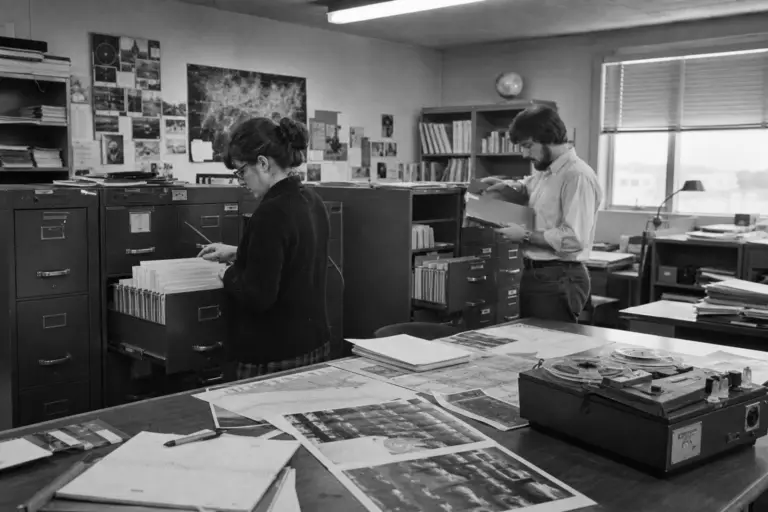
The model put practical weight on the standards Hynek had argued for. A useful file required more than a striking narrative: investigators needed dates, locations, witness accounts recorded as closely as possible to the event, relevant environmental information, and any physical or instrumental material that could be evaluated. Comparing such files could distinguish recurring patterns from reports too incomplete to support much analysis. That emphasis on records and qualified inquiry shows the direction of J. Allen Hynek UFO research in 1972: he was building capacity to examine a question patiently, including the possibility that many reports would prove ordinary or remain indeterminate.
The Center for UFO Studies therefore marked a changed priority, not a declaration that its subject had been solved. Establishing an independent research institution did not establish that UFOs were alien spacecraft. It expressed Hynek’s narrower conclusion that unexplained reports deserved a durable investigative framework capable of producing better evidence before anyone claimed to know what they were.
What Hynek’s 1972 Position Means, and Does Not Mean, Today
The useful present-day reading is not that Hynek replaced skepticism with certainty. He retained the demand for ordinary explanations where the evidence supported them, but rejected treating an unresolved case as worthless merely because an immediate explanation was unavailable. The change in 1972 was a change in scientific priority: the better documented remainder should be preserved, compared, and tested rather than rhetorically dismissed, or treated as proof of an extraordinary cause.
Hynek wrote of “unidentified flying objects,” the period’s broad label for puzzling aerial reports. Today’s term “unidentified anomalous phenomena” is a wider umbrella, and modern UAP sightings discourse should not be read backward as if it settled his question. The durable lesson is methodological: separate strong records from weak ones, pursue competing explanations, retain uncertainty when the evidence runs out, and distinguish an unidentified observation from a confirmed explanation.
Hynek’s 1972 Legacy Was a Call for Better UFO Science
Hynek’s lasting intervention was to recast the subject as a problem of research design. Years spent evaluating reports had shown him that an official label was not necessarily an explanation: a weakly investigated case could be closed without yielding dependable knowledge. His response was not to elevate every puzzling account, but to demand a process capable of distinguishing poor testimony, plausible conventional identifications, and the smaller number of cases that remained unsettled after serious inquiry.
In 1972, The UFO Experience supplied the intellectual framework for that process, while the Center for UFO Studies supplied an independent place to carry it forward. The book argued for organized categories and evidence-sensitive investigation; the center embodied continuity, record keeping, and research outside the institutional limits that had frustrated him at Project Blue Book.
That is the essential legacy of J. Allen Hynek’s UFO study: he did not claim to know what UFO phenomena ultimately were. He argued that unanswered observations should remain open to disciplined examination, with conclusions calibrated to the quality of the evidence rather than to skepticism, publicity, or speculation.
Frequently Asked Questions
Why did J. Allen Hynek change his mind about UFOs?
Hynek did not claim that UFOs were proven extraterrestrial craft. After roughly two decades advising Project Sign and Project Blue Book, he concluded that a smaller residue of well-documented, unresolved reports needed better evidence collection, classification, and scientific investigation.
What happened in 1972 that changed J. Allen Hynek’s UFO work?
In 1972, Hynek published The UFO Experience: A Scientific Inquiry and founded the Center for UFO Studies. The book provided a framework for classifying and investigating reports, while the center created an independent civilian organization for long-term research after Project Blue Book closed in 1969.
Did J. Allen Hynek believe UFOs were alien spacecraft?
No. Hynek argued that an unexplained report meant the available evidence did not support a satisfactory identification, not that it proved extraterrestrial visitation, non-human intelligence, or a cover-up.
What were J. Allen Hynek’s main UFO classification categories?
Hynek’s 1972 system grouped reports as nocturnal lights, daylight discs, and radar-visual cases. He also used close-encounter categories: first kind for a close observation, second kind for alleged physical effects, and third kind for reported occupants or entities.
What should investigators look for when evaluating UFO or UAP reports?
Investigators should preserve dates, locations, original witness accounts, weather and environmental conditions, and any physical or instrumental evidence. Stronger cases use prompt interviews, corroborating witnesses, radar or other records, and comparisons between competing conventional explanations before remaining classified as unexplained.