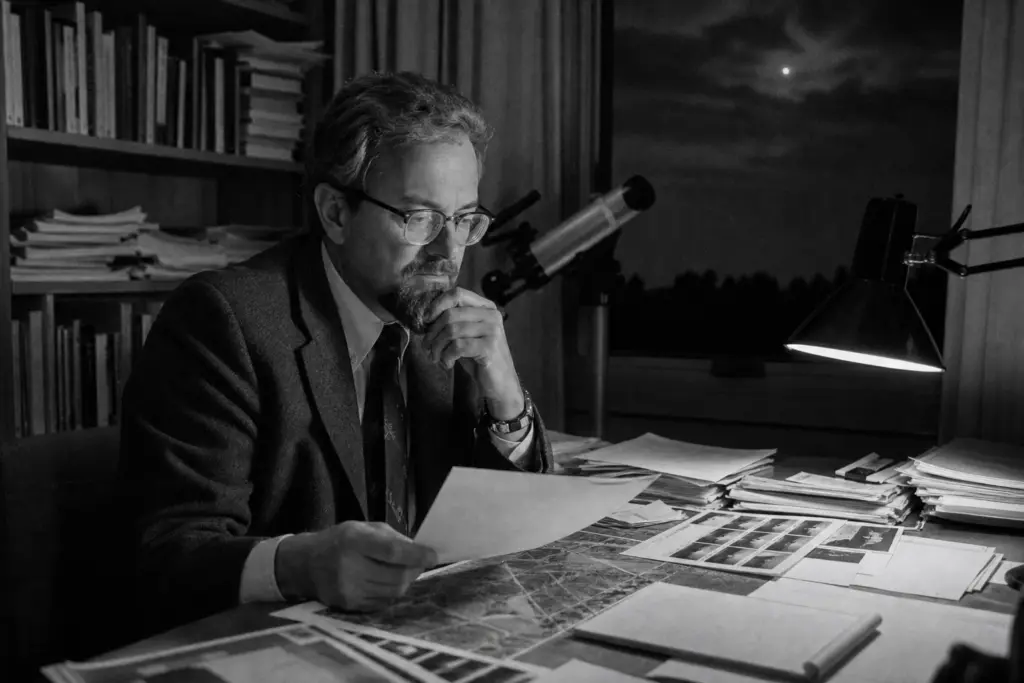
“Close encounters” remains a familiar phrase, but its lasting force came from more than a memorable label. In 1972, astronomer J. Allen Hynek used it in The UFO Experience: A Scientific Inquiry to sort UFO reports by proximity and reported effects, rather than treat every unidentified sighting as equally persuasive, or as proof of an extraordinary cause.
Hynek’s original scheme had three categories. A close encounter of the first kind was a reported sighting of an object within about 500 feet; the second kind added claimed physical effects, such as interference with machinery or marks on the ground; and the third kind involved reported occupants or entities. The distinctions made reports easier to compare and prioritize, but they did not establish that any witness account had an extraterrestrial explanation.
The J. Allen Hynek close encounters story also begins before the book: with his years as a U.S. Air Force consultant on Project Sign, Project Grudge, and Project Blue Book, which formally ended in 1969. This article follows why the post-Blue Book moment mattered, how Hynek’s 1972 framework reached a broad public, and how his move toward independent, organized investigation led to the 1973 founding of the Center for UFO Studies.
Why 1972 Was a Turning Point for J. Allen Hynek
Hynek’s practical test was whether a report contained details that could be assessed rather than merely a striking story. In 1972, he paired that standard with a concise vocabulary that let readers distinguish the circumstances of a close-range report and identify the residual cases that resisted ordinary explanation.
That was not an argument that residual cases had one extraordinary cause. A classification records features a witness reported, nearness, alleged physical traces, or claimed occupants, so investigators can compare like with like. It does not establish that the observation was accurate, that an object was artificial, or that non-human intelligence was involved. A dramatic account could therefore be preserved and tested without being treated as a conclusion.
Hynek’s intervention shifted the practical question from “What must this have been?” to “Which reports contain enough specific, assessable information to merit sustained inquiry?” That standard made room for uncertainty while resisting indiscriminate dismissal. It also gave a broad audience a usable structure for discussing unexplained UFO cases and pointed toward the more organized research effort Hynek would pursue after the book.
From Air Force Consultant to Critic of Dismissive Investigation
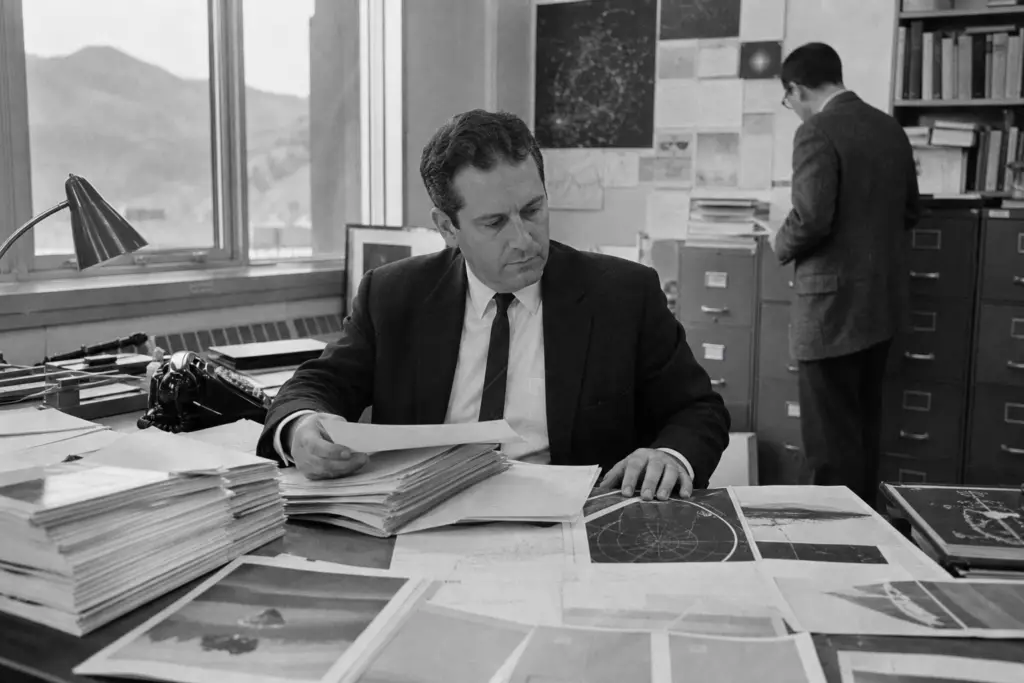
Hynek’s change in emphasis was rooted in nearly a quarter-century of official casework. The Air Force first brought the astronomer in as a consultant to Project Sign in 1948, retained him through Project Grudge in 1949, and later used his astronomical expertise during Project Blue Book, begun in 1952. His original task was practical: distinguish reports that might involve stars, planets, meteors, aircraft, or other familiar phenomena from those requiring further attention.
That assignment did not make Hynek an automatic believer in extraordinary explanations. He began as a skeptic and continued to regard many reports as mistakes, insufficiently documented observations, or events with ordinary causes. For him, scientific skepticism meant testing a claim against available evidence and accepting a conventional explanation when it fit the details; it did not mean treating an unexplained report as worthless merely because a quick answer was preferable.
Over time, he became increasingly dissatisfied with explanations he considered superficial or prematurely applied. The 1966 “swamp gas” explanation for sightings in Michigan became the most public example of the problem: whatever its merits for particular observations, the episode showed how a broad, reassuring label could eclipse the need to separate reports, reconstruct conditions, and assess witness testimony case by case.
His criticism was therefore evolutionary rather than a sudden 1972 conversion. Years with Project Blue Book exposed him to the difference between a report that could be responsibly resolved and one left with meaningful gaps in the record. Hynek’s later position was not that unresolved cases proved an extraterrestrial origin. It was that a serious J. Allen Hynek UFO study should preserve the stronger residual cases, identify what evidence was missing, and resist substituting ridicule for investigation.
Project Blue Book Ended in 1969, but the Questions Did Not
The institutional setting changed before Hynek gave his ideas their best-known public form. The Air Force announced the termination of Project Blue Book on December 17, 1969, and wound down its remaining operations in early 1970. Its stated conclusions were that no investigated UFO had posed a national-security threat, none had provided evidence of technology beyond contemporary scientific knowledge, and further Air Force investigation was not warranted.
The University of Colorado study, commonly called the Condon Report after its director Edward U. Condon, supplied important context for that decision. Published in 1968, it judged that additional extensive study was unlikely to advance science. That assessment did not mean every individual report had been fully explained; it addressed the expected value of continuing a large official program. Likewise, Blue Book Special Report No. 14 was a statistical review of case files, not a demonstration that any unidentified case had an extraordinary cause. File totals and percentages can show how reports were classified, but cannot repair thin witness accounts, missing measurements, or inconsistent investigations.
That distinction matters for the timeline: The UFO Experience arrived in 1972, roughly two years after the program’s practical end, not as its final official product. Blue Book’s closure removed the principal federal clearinghouse for UFO reports while leaving records, unresolved cases, and uneven investigative practices behind. Hynek’s question became how a non-governmental effort could retain the strongest reports, separate them from weak ones, and evaluate evidence without converting “unexplained” into a claim about what had been seen.
How Hynek’s Three Close-Encounter Categories Worked
A useful case file needs more than the catch-all label “unidentified.” In The UFO Experience, Hynek made “close encounters” a practical sorting device for reports in which a witness described an apparent UFO at relatively short range, roughly 500 feet or less in his working definition. He formalized and widely popularized this three-part scheme; he did not present himself as the originator of every earlier use of the phrase “close encounter.”
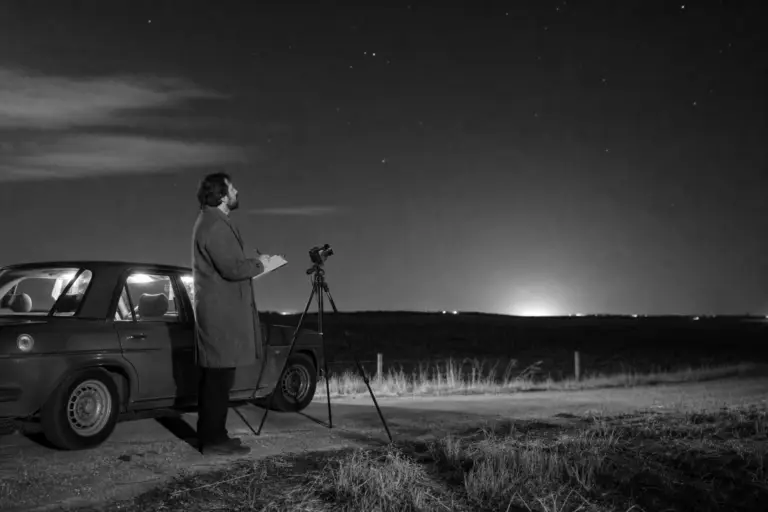
- Close encounter of the first kind: a reported visual observation of an object at close range. The category described proximity, not reliability. A detailed account of a nearby light or structured object belonged here even if investigators later found an ordinary explanation, or could not establish one.
- Close encounter of the second kind: a close-range report accompanied by alleged physical effects or traces. Witnesses might report marks on the ground, interference with a vehicle or radio, heat, animal reactions, or other environmental changes. This category mattered methodologically because a claimed trace could, in principle, be photographed, measured, sampled, or compared with alternative causes; the claim itself was not proof that an unusual object caused it.
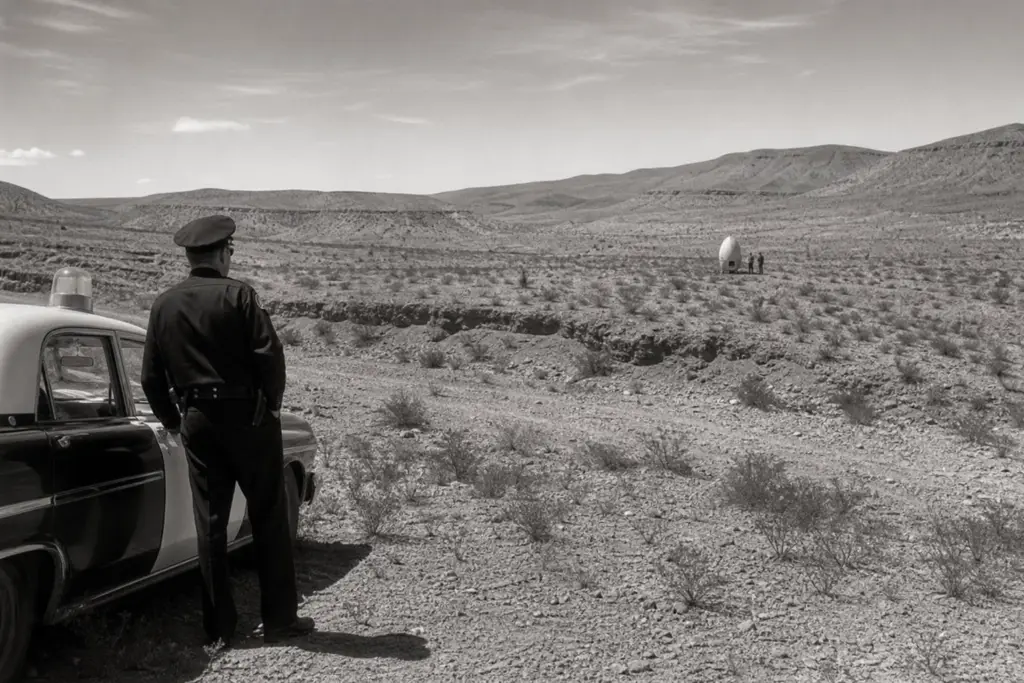
- Close encounter of the third kind: a close-range report that included purported occupants or entities associated with the object. Hynek’s label recorded what the witness said was present. It did not certify contact, establish that the entities were nonhuman, or supply an explanation for the experience.
The Hynek classification system therefore organized reports by their reported features: nearness, associated effects, and claimed occupants. It was not a ladder of truth on which a third-kind account automatically outweighed a first-kind sighting. A simple visual report with independent observers, clear timing, and corroborating records could be more investigable than an elaborate account resting on one uncorroborated recollection. Conversely, a second-kind case offered a potential evidentiary opportunity only when its alleged effects were documented promptly enough to test competing explanations.
That restraint was central to how Hynek close encounters were meant to function. The labels helped investigators decide what questions to ask and what material might still be recoverable: who observed the event, from where, under what conditions, and whether any physical claim could be independently examined. They separated the content of a report from a conclusion about its cause, an important distinction for a field in which “unexplained” often reflected incomplete information rather than a demonstrated extraordinary phenomenon.
The UFO Experience Made a Specialist Problem Publicly Understandable
The useful checkpoint was whether a short label preserved the details an investigator would need rather than merely making an account sound dramatic. Hynek’s 1972 volume combined his account of official investigation with a readable classification and an argument about standards of inquiry. In The UFO Experience: A Scientific Inquiry, “close encounter” became concise shorthand for a report that otherwise required a longer account of distance, observations, claimed effects, and available corroboration.
The book’s larger case was narrower than its reputation sometimes suggests. Hynek did not treat every UFO report as sound evidence, much less as evidence of visitors from elsewhere. Most reports, in his view, could be reduced through ordinary explanations, inadequate observation, or insufficient information. The residual cases were those left after serious conventional possibilities had been considered. Their importance was methodological: a well-recorded unresolved report identified a problem worth examining, not a conclusion already reached. That distinction made the collection of testimony, timing, environmental conditions, and physical claims intelligible as an investigative task rather than an exercise in belief.
Its clarity also made the vocabulary portable. The phrase moved readily into news coverage and public conversation, then acquired a much wider cultural afterlife in Steven Spielberg’s 1977 film Close Encounters of the Third Kind. The film shows the terminology’s diffusion, not the truth of reported phenomena or the scientific success of any particular case. Hynek’s consequential contribution in 1972 was to give a public audience language precise enough to separate an arresting story from an investigable one.
From Naming Cases to Building a Systematic UFO Investigation
That distinction between a compelling account and an investigable record shaped Hynek’s next institutional step. In 1973, he founded the Center for UFO Studies (CUFOS), creating an independent setting for sustained case investigation after the end of Project Blue Book. The point was not to certify extraordinary explanations, but to preserve and assess reports that contained enough detail to warrant more than a quick dismissal.
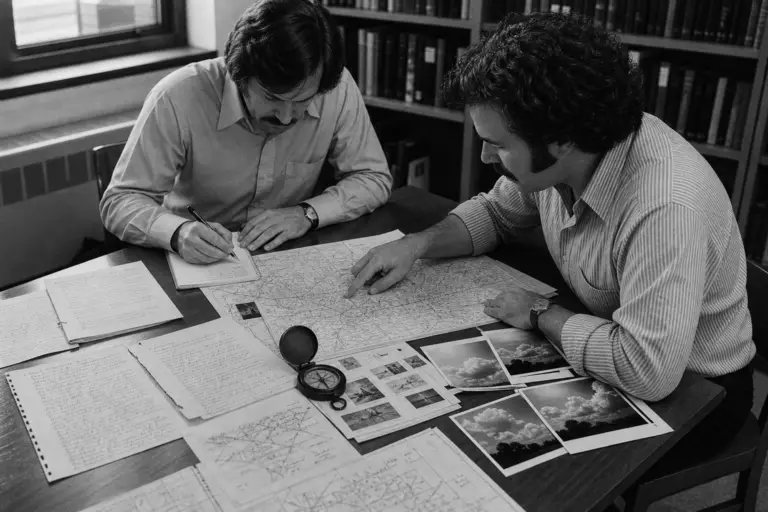
A systematic UFO investigation begins by turning a narrative into testable particulars. Interviewers should establish the witness’s location, direction of view, sequence of events, lighting and weather conditions, estimates of distance and duration, and the point at which the account was first recorded. Independent witnesses matter because accounts gathered separately can be compared for stable details as well as contradictions. A report repeated after publicity is weaker evidence than contemporaneous notes, photographs with a known provenance, time-stamped records, or testimony that can be independently checked.
Hynek’s approach also gave different kinds of claimed corroboration different jobs. A physical trace, such as marks, broken vegetation, or an alleged equipment effect, may permit inspection, but it does not identify its cause by itself. A radar record can add timing and location data, yet it too requires context about equipment performance, operators, and possible ordinary returns. The strongest files combine mutually consistent evidence; a thin file may remain unresolved simply because decisive information was never collected.
That willingness to retain “unresolved” as a result, rather than convert it into proof, is CUFOS’s most important methodological legacy. It belongs to the historical development of private UFO research, not to present-day UFO disclosure or UAP disclosure debates, and it should not be conflated with news roundups labeled “UFO sightings 2025” or “UFO sightings 2026.” Those are contemporary media categories; Hynek’s central question was whether a particular case had been investigated well enough to support any conclusion at all.
Hynek’s 1972 Legacy: A Vocabulary for Investigation
A report with a recorded time, location, viewing direction, and independently gathered witness accounts gives an investigator something to compare; a dramatic recollection without those particulars gives far less. Hynek’s years as an Air Force consultant had shown him how sparse records invited both casual dismissal and extravagant interpretation. His 1972 book offered shared vocabulary so accounts could be sorted by reported proximity, physical effects, or occupants before anyone claimed to know their cause.
In The UFO Experience: A Scientific Inquiry, that framework changed the practical purpose of “close encounter.” It was not a verdict on what witnesses had seen; it was a prompt to preserve details that might distinguish a solvable misidentification from a case left unresolved by missing evidence. Project Blue Book’s 1969 closure ended the principal Air Force program, not the need for careful evaluation. Hynek’s subsequent work, including the 1973 creation of CUFOS, carried that concern into an independent setting.
The cultural success of J. Allen Hynek close encounters, later amplified by Spielberg’s 1977 film, can obscure the more consequential legacy. Hynek argued that difficult reports deserved clearer categories, fuller records, and sustained investigation. His contribution was not proof of a single extraordinary explanation, but a case for treating unexplained cases as questions to investigate before they are either believed or dismissed.
Frequently Asked Questions
What were J. Allen Hynek’s three types of close encounters?
A close encounter of the first kind was a reported UFO sighting within about 500 feet. The second kind included claimed physical effects or traces, while the third kind included reported occupants or entities.
Did J. Allen Hynek coin the term “close encounters”?
Hynek formalized and widely popularized the three-part close-encounter classification in his 1972 book, The UFO Experience: A Scientific Inquiry. He did not claim to have originated every earlier use of the phrase “close encounter.”
What happened to Project Blue Book before Hynek published The UFO Experience?
The U.S. Air Force announced Project Blue Book’s termination on December 17, 1969, and completed its remaining shutdown work in early 1970. Hynek published The UFO Experience in 1972, roughly two years after the program’s practical end.
Why did J. Allen Hynek change his approach to UFO investigations?
Hynek remained skeptical of extraordinary explanations, but his work on Project Sign, Project Grudge, and Project Blue Book made him critical of superficial or premature explanations. He argued that well-documented unresolved cases should be preserved and investigated rather than dismissed through ridicule.
What should investigators look for when evaluating a close-encounter report?
Investigators should document the witness location, viewing direction, timing, weather, lighting, estimated distance, duration, and independently gathered testimony. Stronger cases include contemporaneous notes, verified photographs, time-stamped records, physical traces that can be tested, or radar data with operational context.