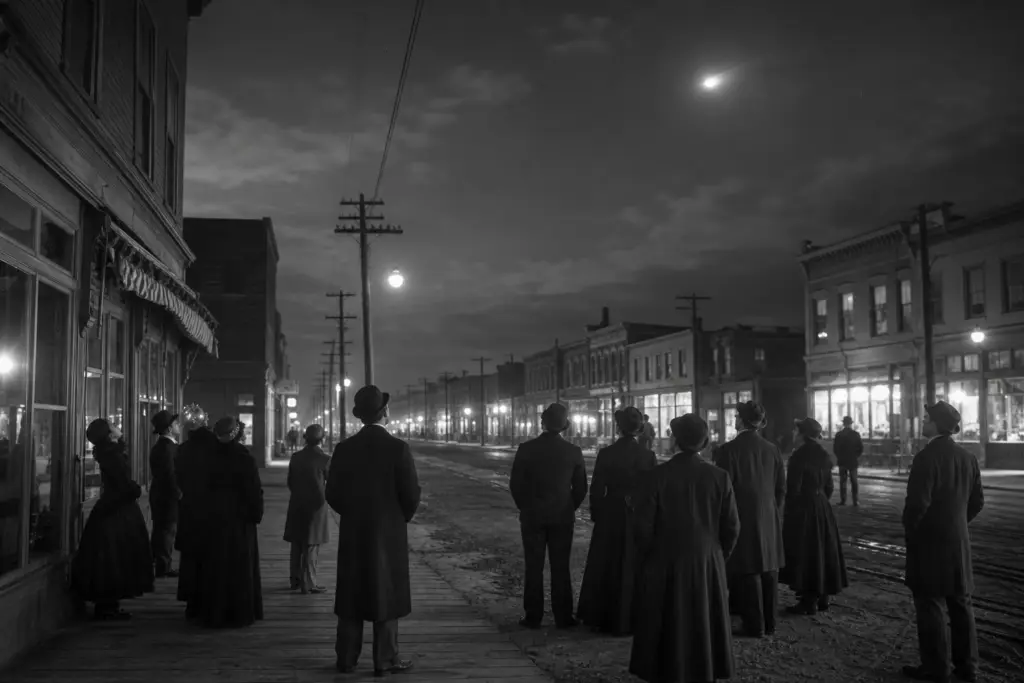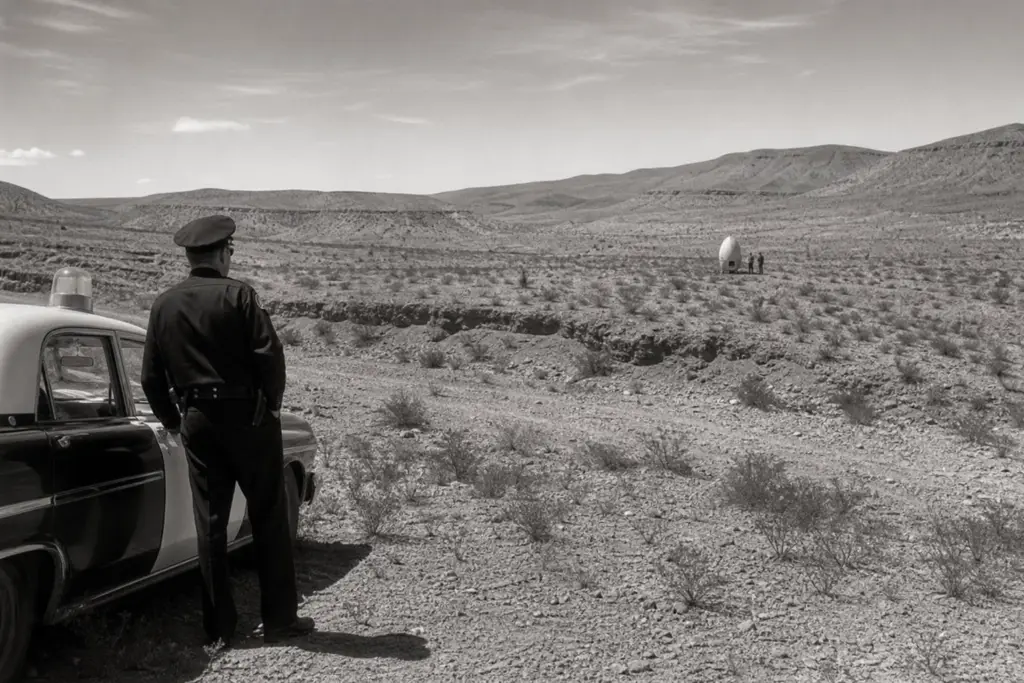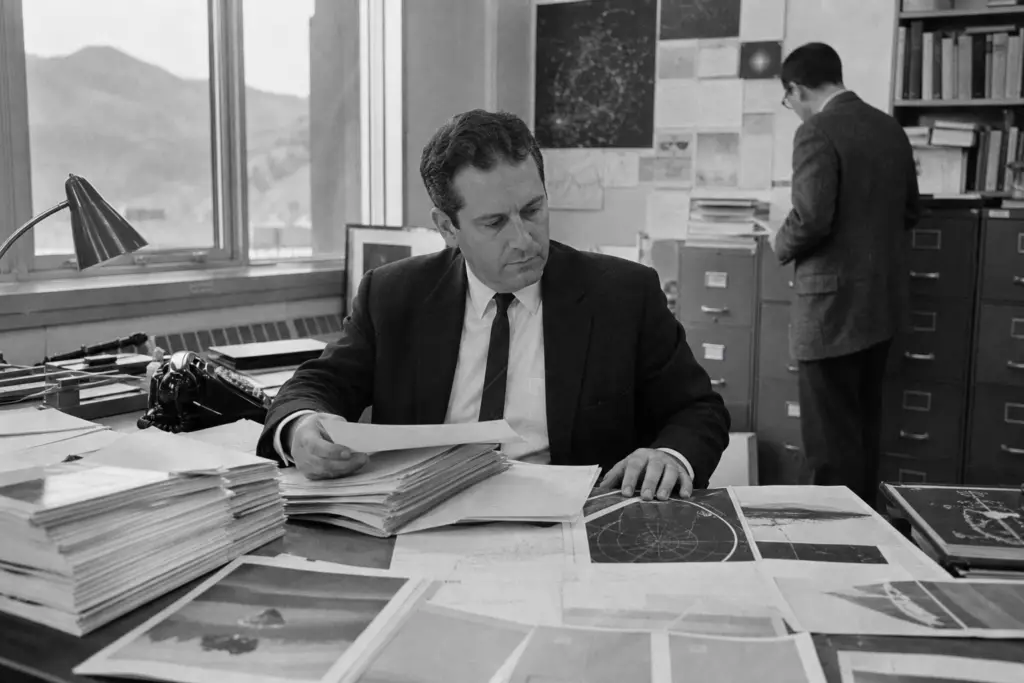
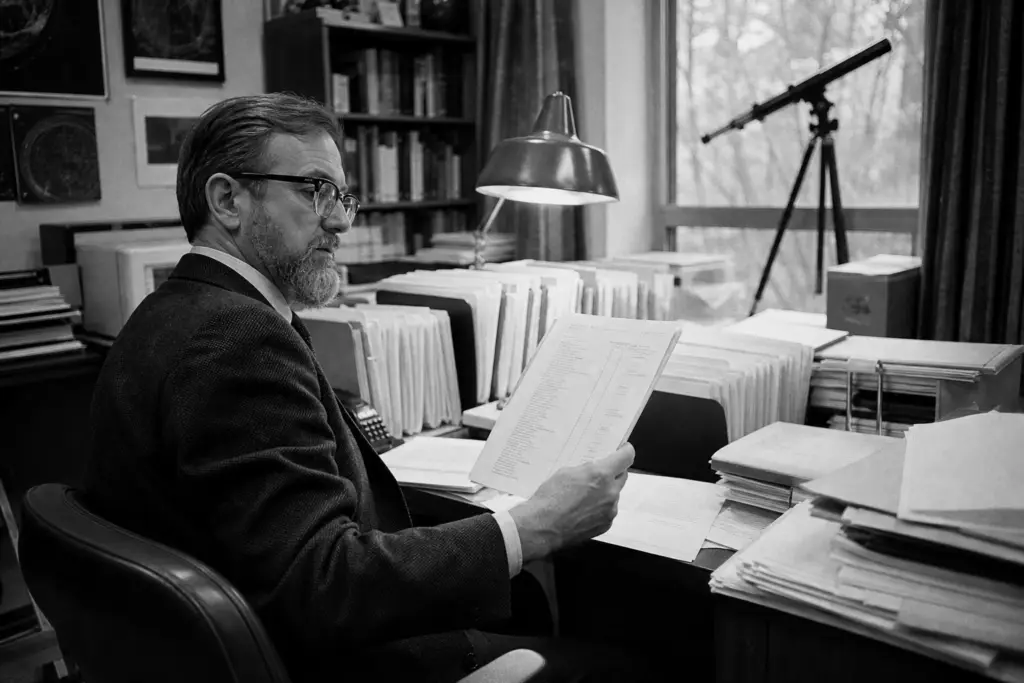
Hynek’s decisive move in 1972 was to turn a vague class of sightings into three evidence-based questions: Was an object seen at close range? Did the event leave physical effects? Were apparent occupants reported? “Close encounters” entered popular culture as a phrase of mystery, but J. Allen Hynek gave it a more disciplined purpose.
In 1972, The UFO Experience: A Scientific Inquiry gave that long evolution a clear public form. The book formally introduced and popularized Hynek’s three-part close-encounter classification: a close visual sighting; a sighting accompanied by physical effects; and a report involving apparent occupants. The categories did not decide what an object was. They separated reports by the kind of observation and evidence they contained, making them easier to compare and investigate.
That distinction is central to understanding J. Allen Hynek close encounters. An astronomer and former Project Blue Book consultant, Hynek was not arguing that every UFO report was credible, much less that each demonstrated non-human intelligence. His 1972 case was narrower and more consequential: after weak reports had been screened out, the remaining unexplained cases warranted systematic UFO study rather than reflexive dismissal. The story of that pivot begins with the institutional work that made him doubt whether existing investigations were asking enough of the evidence.
Why 1972 Was the Turning Point for J. Allen Hynek
The importance of 1972 lies in the form Hynek chose for his argument. In The UFO Experience: A Scientific Inquiry, published that year, he did not offer a revelation about the origin of UFOs; he offered a vocabulary for sorting the reports that survived ordinary explanation and a case for treating that residual problem as a legitimate subject of inquiry.
That was a meaningful public departure from the posture associated with his Air Force consultancy. Hynek’s position had become neither blanket dismissal nor blanket acceptance. A poorly observed light, a misidentified aircraft, and a detailed report with corroborating observations did not deserve equal weight. The point of a systematic UFO study was to separate such reports carefully, preserve the stronger evidence, and ask what remained unresolved.
Unexplained, in this framework, was a result of investigation rather than a conclusion about extraterrestrial visitation. It did not establish non-human intelligence, government concealment, or alleged crash retrievals. Those claims require their own evidence; Hynek’s narrower contention was that an unsolved residue should not be made to disappear merely because a quick explanation was convenient.
His 1972 intervention therefore marked the public culmination of a longer reassessment, not an overnight conversion. The next stages of that story begin with the astronomer’s early work inside the Air Force’s UFO-investigation system, and the limits he gradually found in its methods.
From Astronomer to Blue Book Consultant: Hynek’s Starting Position
Hynek entered the subject with the habits of an astronomer, not the expectations of a UFO advocate. In 1948, while directing Ohio State University’s McMillin Observatory, he was recruited as a scientific adviser to the Air Force’s first formal UFO inquiry, Project Sign. His assignment continued through Project Grudge and, from 1952, Project Blue Book, the program that collected, assessed, and attempted to explain reports from military personnel and the public.
The Air Force had a practical reason to want astronomical expertise. A bright planet low on the horizon can appear to move or hover when viewed through cloud; meteors and re-entering debris can produce striking lights; stars may seem to shift when an observer lacks a fixed visual reference. Aircraft, weather balloons, atmospheric effects, and imperfect observation supplied further ordinary possibilities. Hynek’s role as a U.S. Air Force scientific consultant was to test whether a report fit such explanations before it was treated as an unresolved observation.
That starting point was conventionally skeptical, but it was not simply dismissive. A weak report, an isolated glimpse of a light without a reliable time, direction, or reference point, could often be matched to an astronomical or atmospheric cause. A stronger report preserved more usable particulars: multiple independent observers, a clear sequence, or supporting instrumental information. As Blue Book’s special consultant, Hynek helped distinguish those evidentiary conditions rather than serving as the Air Force’s final spokesman on every case.
His later criticism therefore carried a built-in limit. He knew that many reports had mundane explanations and continued to regard careful elimination of them as essential. What eventually troubled him was not the existence of misidentifications, but the risk that an institutional preference for quick closure could obscure the smaller set of reports that had not been adequately investigated.
Why Hynek’s View Changed Gradually, Not All at Once
What accumulated over the years was less a single decisive sighting than a concern about investigative standards. Hynek encountered reports whose value did not rest solely on an observer’s confidence: some involved several witnesses who could be compared for consistency, while radar-visual cases paired a visual observation with a contemporaneous radar return. Neither condition established what an object was. They did, however, create a more demanding evidentiary problem than a lone, fleeting light in the sky.
That distinction shaped Hynek’s growing dissatisfaction with Project Blue Book. A plausible conventional explanation could be useful when it accounted for the reported time, direction, duration, weather, witnesses, and instrumental record. It was weak when it merely supplied a familiar label, planet, aircraft, balloon, or atmospheric effect, without fitting the particulars. Hynek came to argue publicly that the program too often treated an explanation as a reason to close a file rather than as a hypothesis to test against the evidence. Missing interviews, incomplete timelines, and unexamined discrepancies mattered because they made an “explained” verdict less secure than it appeared.
His position was therefore methodological, not an assertion that unexplained reports were extraterrestrial craft. “Unidentified” described the outcome when available information did not justify a confident identification; it did not identify an origin. For Hynek, a scientific anomaly was a residual case that remained after competent inquiry, worthy of better records, independent comparison, and sustained analysis. That gradual change in emphasis, from helping eliminate ordinary causes to insisting that the residue be investigated rigorously, prepared the ground for his later public program of systematic UFO study.
The UFO Experience: How Hynek Formalized “Close Encounters” in 1972
Its most consequential feature was a classification table rather than a declaration about origins. In The UFO Experience: A Scientific Inquiry, published in 1972, Hynek arranged reports so investigators could separate kinds of observations and compare like with like. Within that broader framework, “close encounters” named reports in which proximity, rather than only a distant light or an ambiguous radar trace, made the witness account especially important.
The phrase’s lasting importance lies in that formal role. Hynek divided close encounters into three kinds, distinguished by what a witness reported beyond the object itself: an observation at close range, a reported physical effect associated with it, or the reported presence of occupants. The categories did not certify a report as true or establish that its object came from elsewhere. They supplied a common set of questions: What was seen? At what distance? What effects were reported? Were there independent witnesses or physical records? The next section examines those distinctions in detail.
It is reasonable to say J. Allen Hynek coined “close encounters” in the sense most relevant to UFO research: he formally introduced the three-tier classification and made the term widely recognizable through his 1972 book. A narrower historical claim is more accurate than treating the words as unprecedented; earlier colloquial or related uses need not be erased. Steven Spielberg’s Close Encounters of the Third Kind, released in 1977, carried Hynek’s terminology much further into popular culture, but it did not originate the classification. Hynek’s achievement was to turn a memorable phrase into an organizing tool for systematic inquiry.
Hynek’s Three Types of Close Encounters, Defined
The three labels turn proximity into a more precise reporting question: did a witness only see an object, report an effect linked to it, or also report beings associated with it?
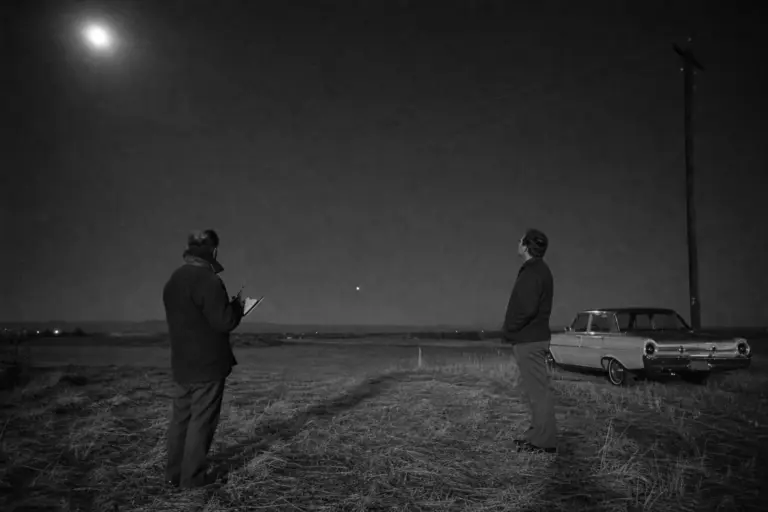
- A close encounter of the first kind was a visual observation of an unidentified object at close range. The essential feature was the sighting itself: a witness could describe the object’s shape, brightness, motion, or apparent distance without claiming that it altered anything nearby. This category preserved a distinction between a detailed observation and an inference about what the object was.
- A close encounter of the second kind added a claimed physical effect associated with the sighting. Hynek included reports of such things as vehicle or electrical interference, effects on animals, marks on the ground, or other changes said to have occurred as the object was present. The added claim gave an investigator a potential trace or comparison point; it did not automatically make the account stronger or establish its cause.
- A close encounter of the third kind involved a reported observation of occupants or entities in connection with the object. It was the most startling category in public imagination, but its place in the scheme was descriptive: it recorded what a witness said was seen, rather than identifying those figures as extraterrestrial or non-human.
Hynek’s close-encounter types were therefore not a ladder from weak evidence to proof. A first-kind report might have multiple independent witnesses, while a third-kind account might rest on a single difficult-to-test recollection. The useful question was not which label sounded most dramatic, but what observations, effects, witnesses, and records each report actually supplied.
They also occupied only one part of the wider Hynek close encounters classification. The UFO Experience: A Scientific Inquiry grouped more distant reports as nocturnal lights, daylight discs, and radar-visual cases, reports pairing a visual observation with radar detection. The close-encounter categories separated the subset in which nearness made witness detail and any associated effects central to investigation.
Why the Classification Was More Than a Memorable Label
A workable classification turns a pile of anecdotes into material that can be compared. Once reports are sorted by observation conditions, investigators can ask narrower questions: whether similar descriptions recur across independent witnesses, whether a reported effect has a measurable trace, how long the event lasted, and whether the stated time and location can be matched to weather records, aircraft activity, radar information, photographs, or other contemporaneous evidence.
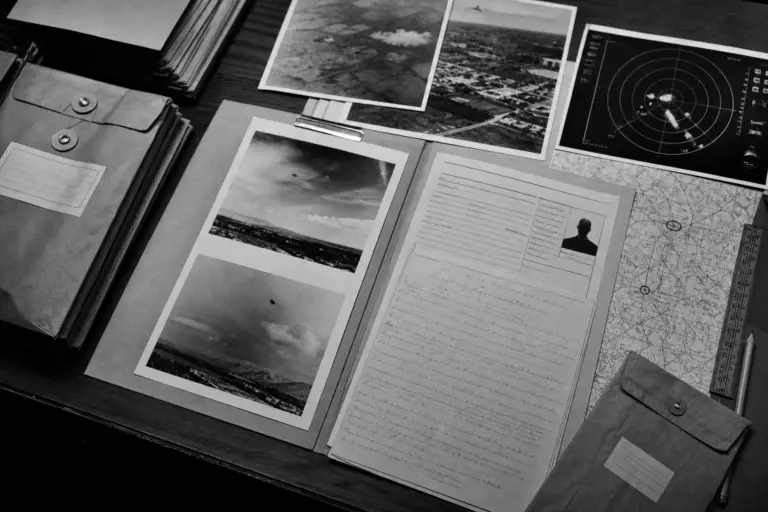
That structure also disciplines the interview. A careful case investigation separates what a witness directly observed from later interpretation; fixes the sequence of events before memories are influenced by other accounts; and records distance, lighting, direction, duration, observer position, and the presence of corroborating witnesses. A claimed engine failure or ground mark belongs in a different evidentiary column from an impression of unusual motion. The classification does not make either claim true, but it identifies what can be tested and what remains testimony.
This was the practical force of Hynek’s argument for systematic UFO study. Reflexive dismissal can discard a potentially informative report before its details are collected, while credulous acceptance mistakes a vivid description for an established explanation. Classification offers neither shortcut. It organizes an unidentified flying object report so that recurring patterns, weaknesses, and possible ordinary explanations become easier to see. Even a well-documented case may remain unidentified: the scheme describes the encounter and its available evidence, not the object’s identity, origin, or intent.
From Blue Book’s End to CUFOS: Hynek’s Lasting Research Agenda
December 17, 1969, marked the Air Force’s termination of Project Blue Book. Ending the program did not identify every case left unresolved; it ended the official project that collected and assessed the reports. Hynek’s public position in 1972 pointed instead toward a durable research practice: orderly case files, discriminating interviews, and comparison of independently available evidence.
He made that commitment institutional on October 24, 1973, by founding the Center for UFO Studies, or CUFOS. Its purpose was to support organized, scientifically minded investigation and preserve case material for later analysis. Retaining a dramatic account did not mean accepting its explanation. A useful file separated the claim from the support for it, identifying witnesses, chronology, environmental conditions, alleged physical effects, and corroborating records, so later investigators could judge both its strengths and its limits.
Readers who encounter UAP news or UFO-sighting discussions in 2025 and 2026 may meet newer official language, including unidentified anomalous phenomena. Hynek’s UFO vocabulary came from an era centered on aerial reports, while the newer umbrella term can include anomalous observations in more than one domain. The labels have changed; the research standard has not. Hynek argued for careful inquiry into cases that remained unexplained after ordinary possibilities had been tested, not for treating those cases as proof of extraterrestrial visitation.
Hynek’s 1972 Legacy: A Vocabulary for Investigation
For a case file, the decisive checkpoint was no longer simply whether a witness had seen something strange, but what was actually reported and what evidence could test it. Hynek’s years inside the Air Force investigative system had shown him both why most reports required ordinary explanations and why a smaller residue could not be responsibly handled by dismissal alone. In 1972, he gave that residual problem a common vocabulary: first-kind reports recorded a nearby sighting, second-kind reports added a claimed physical effect, and third-kind reports included reported occupants or beings. The labels did not rank claims by credibility or decide their cause; they indicated what sort of observation and corroboration a file should contain.
That was the public turn embodied by Hynek’s close-encounter classification. It connected his criticism of inadequate case handling to a practical research program later carried into CUFOS: preserve details, distinguish observation from inference, compare similar cases, and keep conclusions proportionate to the evidence. Modern UAP terminology differs in scope, but the methodological lesson endures. Hynek’s lasting contribution was not settling what UFOs were; it was giving researchers a shared framework for identifying, comparing, and investigating reports more systematically.
Frequently Asked Questions
Did J. Allen Hynek really coin the term “close encounters”?
Hynek formally introduced and popularized “close encounters” as a three-part UFO classification in his 1972 book, The UFO Experience: A Scientific Inquiry. Earlier related uses of the words may have existed, but Hynek made the term a structured investigative tool.
What were Hynek’s three types of close encounters?
A close encounter of the first kind was a close-range visual sighting of an unidentified object. The second kind added a reported physical effect, such as electrical interference, animal reactions, or ground marks, while the third kind involved reported occupants or entities.
What did J. Allen Hynek do for Project Blue Book?
Hynek served as a scientific consultant to the Air Force’s UFO investigations, beginning with Project Sign in 1948 and continuing through Project Grudge and Project Blue Book. As an astronomer, he evaluated whether sightings could be explained by planets, meteors, aircraft, balloons, weather, or other ordinary causes.
What evidence should investigators look for in a close-encounter report?
Investigators should document the time, location, distance, lighting, direction, duration, observer positions, and sequence of events. Stronger cases may include independent witnesses, radar records, photographs, weather data, physical traces, or documented effects such as vehicle or electrical interference.
What is the difference between Hynek’s UFO categories and modern UAP terminology?
Hynek’s 1972 categories sorted aerial UFO reports by observation type, including close sightings, physical effects, and reported occupants. Modern UAP, or unidentified anomalous phenomena, is a broader term that can include anomalous observations in more than one domain, but neither label proves extraterrestrial origin.