George Adamski’s 1952 Alien Contact Claim That Shaped Early UFO Culture
Explore the George Adamski alien contact claim, his 1952 Venusian encounter, skeptical evidence, and its lasting impact on UFO culture.
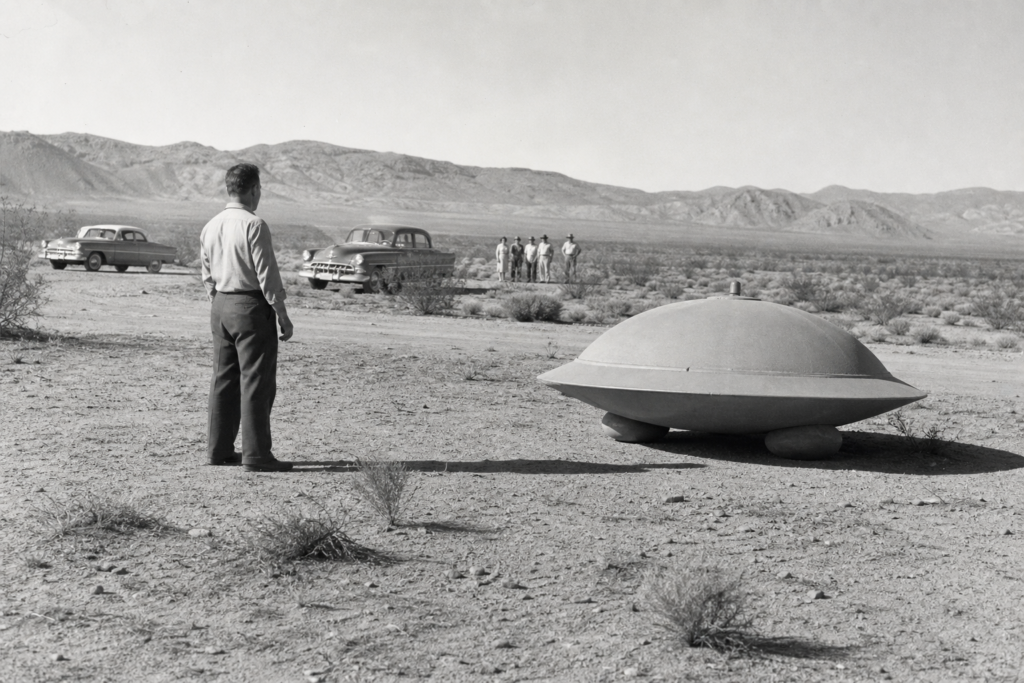
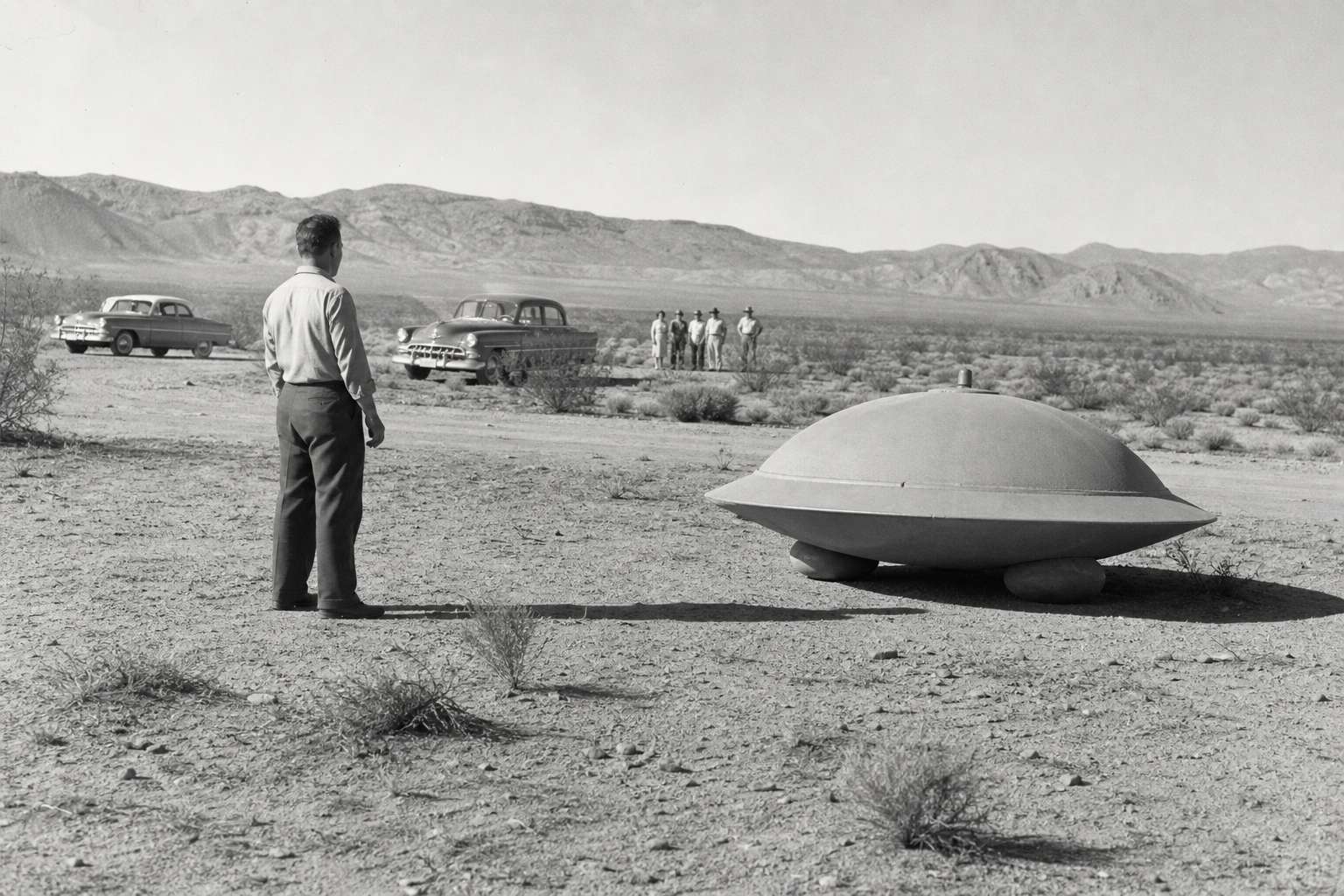
The George Adamski alien contact claim began with an extraordinary personal assertion: on November 20, 1952, near Desert Center, California, Adamski said he encountered a landed flying saucer and met a human-looking visitor from Venus. The episode was never independently verified. Yet it became vastly more consequential than an isolated desert story, helping give early UFO culture a durable cast of benevolent space people, chosen witnesses, cosmic warnings, photographs, books, lectures, and communities organized around contact.
Its timing mattered. Flying-saucer fascination had spread through postwar America, while nuclear weapons and Cold War uncertainty made messages of planetary danger and peace feel urgently relevant. Adamski’s account offered both spectacle and reassurance: advanced visitors supposedly watched humanity, but were not necessarily enemies. As his story circulated through publishing, public appearances, imagery, and contactee networks, it turned a claimed encounter into a shared cultural script.
That influence is not corroboration. Critics challenged the lack of dependable physical evidence and the reliability of the account, while later retellings enlarged its reach without supplying independent confirmation. This article separates what Adamski and his associates said from the record of how audiences received it, and from modern UAP inquiries, which concern the assessment of reported observations and data rather than retroactive proof of a 1952 Venusian meeting.
Why George Adamski’s 1952 Story Became a UFO-Culture Landmark
Years before Desert Center, George Adamski ran the Palomar Gardens café and campground near Mount Palomar, California, and used that setting to discuss extraterrestrial life with visitors. He was therefore a controversial but prepared participant in the flying-saucer boom that followed the 1947 Kenneth Arnold sighting. His November 1952 account was never independently verified, but it extended a public worldview he had already been cultivating.
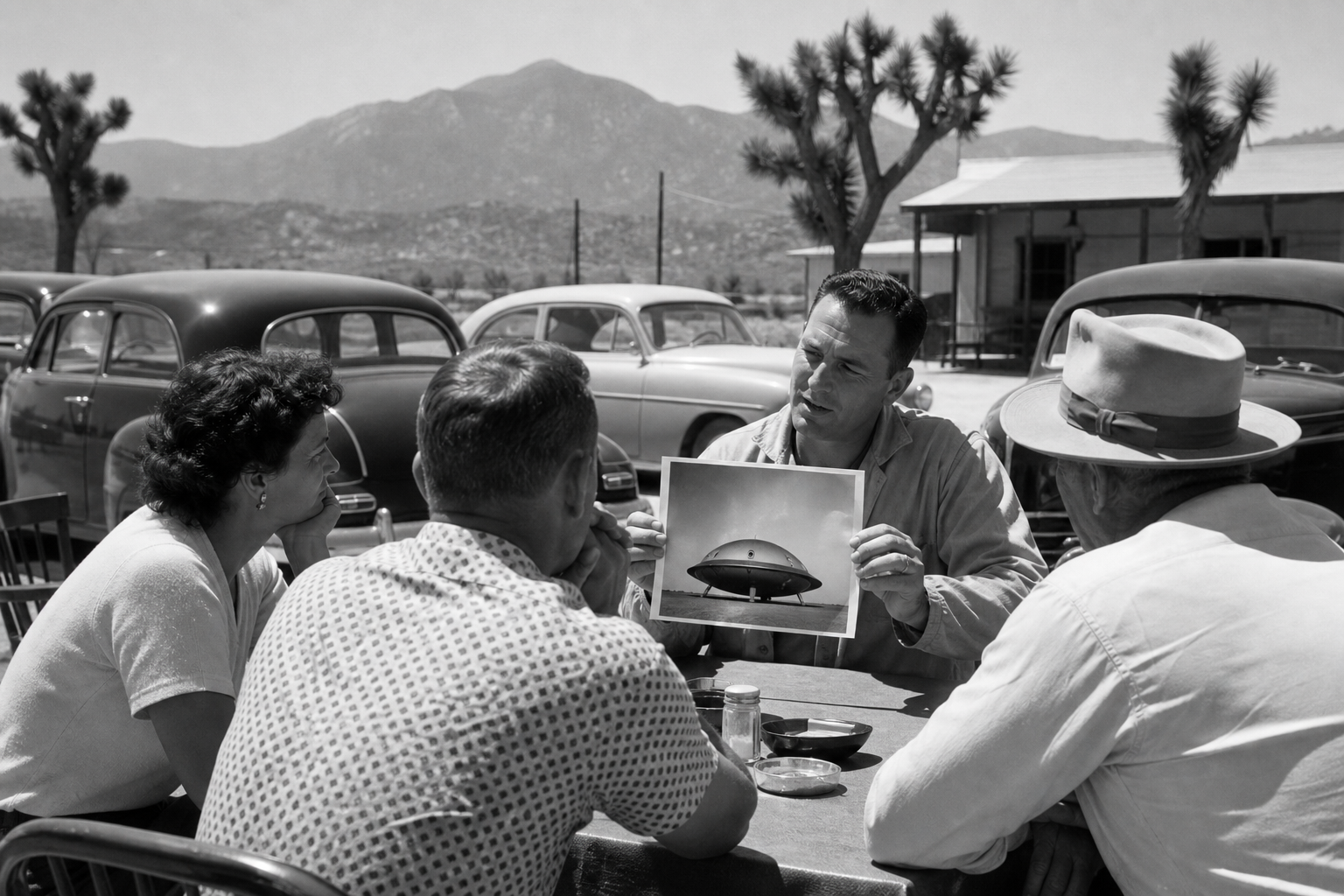
Its landmark status rests on a reproducible format: a lone claimant could describe a face-to-face meeting, identify a humanlike space visitor, attach a planetary origin, relay a warning about atomic war, and offer photographs or companions’ testimony for audiences to debate. Those components gave newspaper editors, book publishers, and lecture promoters a personal drama rather than a distant light or unexplained aerial report. They also gave listeners a message that joined Cold War fear to the promise of peaceful, technologically advanced visitors.
That combination redirected part of 1950s UFO culture toward the contactee: someone claiming communication with beings from space, rather than merely reporting an object in the sky. The distinction mattered because direct contact made the witness a messenger and allowed followers to form discussion circles around shared teachings. Skeptics, by contrast, argued that Adamski’s assertions, images, and sympathetic witnesses did not amount to dependable independent evidence. His importance lies in that durable cultural model, not in a verified encounter.
What Adamski Said Happened at Desert Center on November 20, 1952
The chronology Adamski published in Flying Saucers Have Landed begins on November 20, 1952, when he said he and several companions drove into the Colorado Desert. He identified George Hunt Williamson, Lucy McGinnis, and Alfred Bailey among the party. Their shared outing is historically distinct from the encounter narrative: Adamski and sympathetic associates described the latter, but no independent evidence established its extraordinary elements.
Adamski said the group first watched a large, cigar-shaped “mother ship” high overhead. He then walked away from the others toward a smaller craft he said had descended and landed. Because the companions remained at a distance, they could report their own observations and Adamski’s return, not independently observe the close meeting he described. His later image of the vehicle, a saucer-like craft with a raised, cupola-shaped top, became a defining visual feature of the George Adamski 1952 UFO claim.
At the landing place, Adamski claimed to have met a youthful, fair-haired man who looked human. He did not describe an ordinary English-language conversation. Rather, he presented the exchange as gestures, expressions, and an immediate mental understanding. Adamski said the visitor communicated alarm about atomic weapons and humanity’s capacity for self-destruction, while holding out a future in which people might become peaceful enough to join a wider cosmic community.
He also reported footprints and marks on the ground, and later accounts linked photographs and witness recollections to the broader episode. Those materials did not independently establish that a spacecraft landed or that an extraterrestrial visitor was present. The evidentiary line is therefore clear: named people took a desert trip; the landed craft, human-looking visitor, nonverbal communication, physical traces, and nuclear-warning message were Adamski’s allegations, reinforced by believers rather than verified by neutral observers.
Orthon, Venus, and the Contactee Message
Adamski later identified the desert visitor as Orthon, a Venusian he portrayed as outwardly human: youthful, fair-haired, calm, and morally serious rather than monstrous or incomprehensible. That choice made the encounter culturally legible. A humanlike visitor could communicate by gesture and apparent thought, offer judgment on earthly conduct, and serve as a model of an advanced civilization rather than merely an object of fear.
In Adamski’s asserted cosmology, Venus was not the hostile, cloud-shrouded planet described by astronomy but part of a populated solar system whose “space brothers” traveled between worlds. His later books expanded the claim into a spiritual hierarchy: technologically capable visitors also possessed greater ethical insight. Orthon’s warning about atomic weapons therefore functioned as instruction. Humanity’s danger was not only nuclear annihilation, but selfishness, militarism, and spiritual immaturity.
That blend spoke to a postwar public living with the bomb, Cold War confrontation, and expectations of a transformed future. Followers could read the George Adamski Venusian encounter as a hopeful alternative to catastrophe: extraterrestrials were imagined not as conquerors but as peace-minded guardians urging planetary cooperation. The message also resembled contemporary religious and millennial currents, translating salvation and moral renewal into the vocabulary of rockets, planets, and atomic power.
Its appeal did not make its premises credible. Critics noted that the inhabited-Venus claim conflicted ever more sharply with scientific knowledge of the planet’s extreme conditions, while no independent evidence established Orthon’s existence or Adamski’s alleged communication. The contrast is central: the story’s persuasive force lay in its moral and imaginative coherence for some audiences, not in verified contact.
How a Private Claim Became a Global UFO Media Story
Adamski’s message acquired reach because he supplied audiences with things they could see, buy, and debate. He circulated UFO photographs of a small, metallic-looking craft with a dome and three rounded lower supports, associated with sightings near Palomar Gardens in California. Unlike an account of distant lights, these images offered a fixed visual model that newspapers, magazines, and lecture audiences could reproduce and recognize. They did not independently establish an extraterrestrial craft, but they helped make the saucer’s silhouette part of popular UFO expectation.
In 1953, Adamski and Irish-born writer Desmond Leslie published Flying Saucers Have Landed through Werner Laurie in Britain; Abelard-Schuman issued it in the United States. Adamski’s portion set out his November 20, 1952 Desert Center allegation and the claimed Venusian visitor, while Leslie assembled earlier flying-saucer reports and ideas about visitation. The two-part structure mattered: a local testimony was presented alongside a wider catalogue of mysteries, making it easier for readers to place Adamski within an apparently international pattern.
Commercial publishing changed the story’s scale. Flying Saucers Have Landed could be stocked in bookshops, passed between readers, quoted in letters, and discussed in UFO periodicals and clubs far from Southern California. A printed narrative also fixed names, images, and scenes that supporters could repeat and critics could scrutinize, rather than leaving the episode dependent on an evening’s conversation or a single appearance.
Lectures made Adamski himself part of the product. Before audiences he could display UFO photographs, narrate the desert encounter in his own voice, and answer questions as the alleged witness. Newspaper and magazine attention amplified those appearances, while tours in Britain and continental Europe carried the story beyond the United States. Ticket sales, book sales, and publicity created obvious commercial incentives, though the opportunity to profit does not by itself prove fabrication. What those channels demonstrably produced was recognition; no independent investigation verified the encounter or the photographs’ extraordinary interpretation.
The Template Adamski Gave the Contactee Movement
What spread was less a single doctrine than a usable repertoire. The contactee could present visitors as recognizably human and fundamentally benevolent, cast himself as a selected intermediary, and translate private encounters into warnings against atomic war and political division. That structure made the claimant’s authority moral as well as sensational: the alleged message offered an explanation for Cold War danger and a hopeful alternative to it.
Adamski’s later accounts also enlarged the role. A contactee might claim voyages beyond Earth, exchanges of symbols or coded communications, and photographs that gave an audience something tangible to scrutinize and circulate. These elements worked together. Images supplied a visual token; messages supplied purpose; and the promise of privileged travel placed the witness inside an otherwise inaccessible cosmic order. None of those features independently established the underlying claims, but each made a personal narrative easier to publish, retell, and organize around.
The UFO contactee movement was never simply Adamski’s following. At Giant Rock in California’s Mojave Desert, George Van Tassel built a recurring meeting place through his conventions and lectures, linking flying-saucer enthusiasts to a broader public culture of spiritual speculation, alternative science, and desert gathering. Van Tassel’s own asserted communications differed in emphasis and presentation, but Giant Rock gave contactee ideas a physical venue where speakers, visitors, newsletters, and competing stories could meet.
Howard Menger offered another variation: he described repeated encounters and journeys with friendly space people, extending the possibility of contact from one dramatic desert meeting into an ongoing relationship. Such differences mattered. Contactees did not need to reproduce Adamski’s Venusian identity or every detail of his narrative; they could adapt the selected-messenger role, peace message, visual proof, and public performance to their own claimed experiences.
That flexibility helps explain the model’s durability. Books, mimeographed newsletters, club meetings, conventions, and lecture halls allowed believers to compare testimonies and build networks despite disagreements over who had met which visitors. The same openness also invited rivalry and doubt, since spectacular additions to a story created more claims for audiences and critics to test.
Why Adamski’s Story Was Widely Disputed
The central problem was not that every detail could be decisively disproved; it was that the extraordinary parts of the account never acquired independent support. Adamski’s companions could report what they believed they saw, but they were participants or associates rather than detached observers able to establish that a craft landed or that the man Adamski identified as Orthon came from Venus.
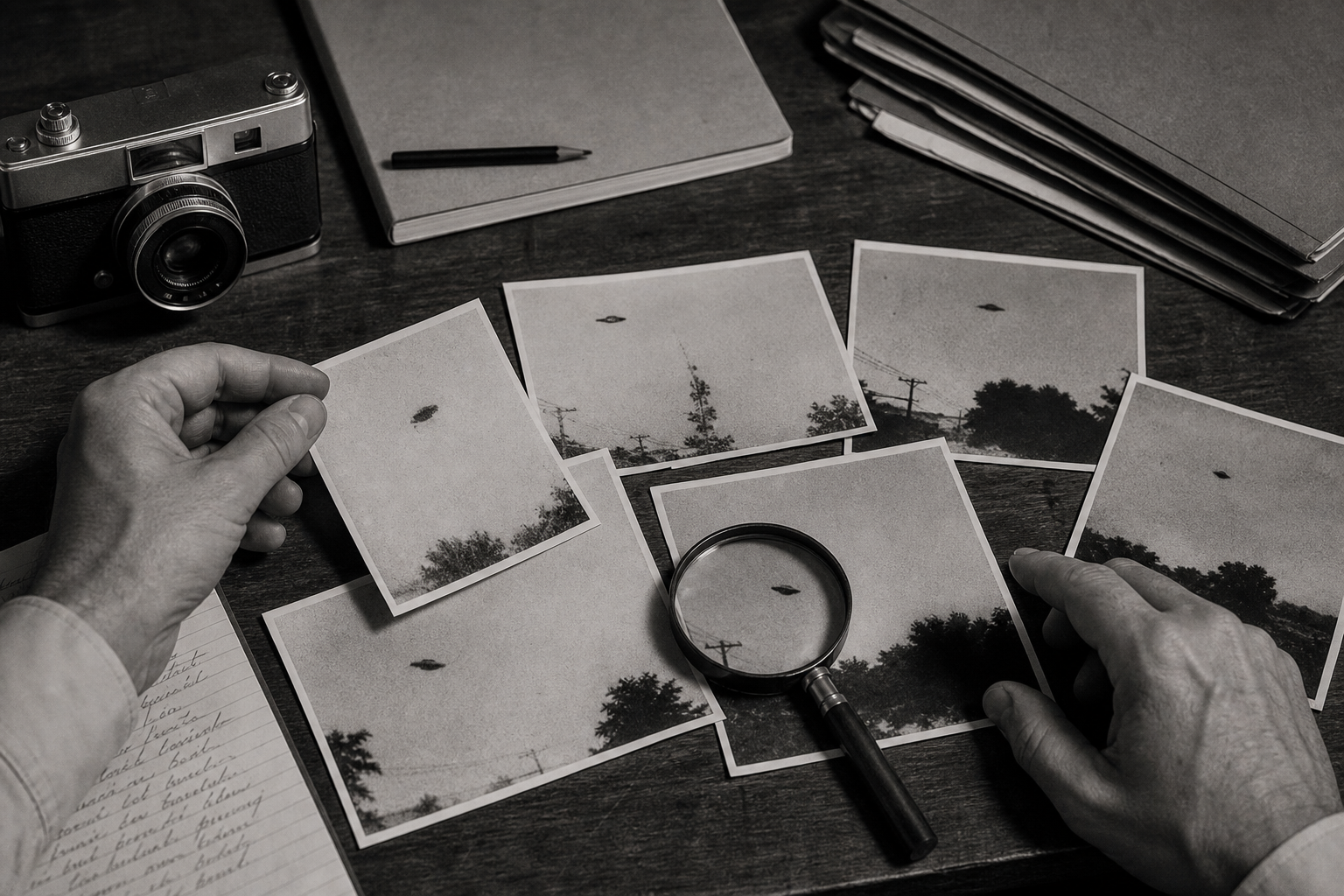
The UFO photographs invited especially close skeptical investigation. A photograph can show that an object was in front of a camera, but it does not by itself establish an object’s scale, distance, material, or origin. Critics argued that Adamski’s saucer images had technical weaknesses common to small nearby models: limited background reference, uncertain size, and no independently documented chain showing when, where, and under what controlled conditions each image was made. Reported visual similarities between the craft and ordinary manufactured objects sharpened suspicions, though resemblance alone is not conclusive proof of construction.
Physical traces posed the same difficulty. Footprints, marks, and recollections could be asserted after an event, but reliable verification would require well-recorded collection, preservation, and independent examination tied securely to the claimed landing site. No such evidentiary bridge established the extraterrestrial conclusion. Allegations of a government UFO cover-up did not fill that gap: a concealment theory may explain why evidence is said to be unavailable, but it cannot function as the missing evidence itself.
Later expansions made the original story harder, not easier, to assess. Claims of further meetings, interplanetary journeys, and increasingly elaborate space-faring knowledge created more opportunities for inconsistency and scrutiny without producing comparable independent confirmation. Books, lectures, photographs, and souvenirs also brought income, attention, and status to a successful contactee. Those incentives do not prove deliberate deception; they do explain why skeptical investigation treated a commercially publicized personal narrative differently from corroborated evidence.
Adamski’s Legacy, and Why It Is Not Evidence for Modern UAP Claims
Adamski’s more durable achievement was cultural rather than evidentiary. His domed saucer image helped establish a visual vocabulary for popular UFO media; his books and appearances modeled contactee literature built around a chosen witness; and his Venusian moral teaching helped fuse alien visitation with spiritual aspiration and peace politics. Just as consequential was the implied social role: hidden truth could be revealed not by institutions or repeatable inquiry, but by an individual granted privileged access to advanced beings.
That legacy should not be folded into modern UFO disclosure or UAP disclosure debates. A historical contact claim rests on personal testimony, supporting associates, and disputed photographs. Contemporary cases, where they are evaluated seriously, concern distinct reports and data claims, such as sensor records, imagery, provenance, and whether independent investigators can test competing explanations. The good signal is evidence whose origin and limits can be examined; a compelling witness narrative alone is weaker. Adamski remains central to the history of belief and media, but his alleged 1952 meeting near Desert Center remains unverified.
Why Adamski’s Story Endures
A domed craft balanced on three lower supports gave audiences a simple image to recognize and reproduce. Adamski’s alleged November 20, 1952 encounter supplied Orthon, the human-looking figure he later identified as a Venusian, while warnings about nuclear danger gave the story urgency. His 1953 book with Desmond Leslie packaged the visitor, image, and message into a narrative readers could carry far beyond Palomar Gardens.
Publicity gave that narrative social life. Adamski’s lectures in the United States, Britain, and continental Europe let audiences hear the alleged witness describe the encounter, view the pictures, and treat the Venusian message as an alternative to Cold War fatalism. The format also offered a practical model for the contactee movement: a claimant could publish a testimony, present images or traces, relay communications from benevolent space people, and gather followers around peace, spiritual advancement, and distrust of official institutions.
The weaknesses remained as concrete as the appeal. Adamski’s photographs were disputed; the encounter testimony came from Adamski and associates rather than detached investigators; and no reliable independent evidence established a landed craft, Orthon, or communication with Venus. The George Adamski alien contact claim endures as a formative artifact of UFO culture, but its popularity is not reliable evidence of alien visitation or a precedent for judging modern UAP claims, which require independent evaluation of their own records.
Frequently Asked Questions
-
What did George Adamski claim happened in 1952?
George Adamski claimed that on November 20, 1952, near Desert Center, California, he saw a landed flying saucer and met a human-looking visitor he later called Orthon. He said the visitor warned humanity about atomic weapons and self-destruction.
-
Who was Orthon in George Adamski’s UFO story?
Orthon was the name Adamski later gave to the alleged visitor from Venus. Adamski described him as a youthful, fair-haired, human-looking man who communicated through gestures, expressions, and apparent mental understanding.
-
Was George Adamski’s UFO encounter ever verified?
No. Adamski’s companions could confirm that they joined him on a desert trip, but they did not independently witness his close encounter, and no reliable evidence established that a spacecraft landed or that Orthon existed.
-
What book made George Adamski famous?
Flying Saucers Have Landed, published in 1953 with Irish-born writer Desmond Leslie, made Adamski internationally known. It presented his November 20, 1952 Desert Center claim alongside Leslie’s collection of earlier flying-saucer reports and visitation theories.
-
What should you look for when comparing Adamski’s claims with modern UAP evidence?
Look for documented provenance, sensor records, imagery, independently testable data, and clear limits on what the evidence can show. Adamski’s account relied on personal testimony, associates, and disputed photographs, while modern UAP cases must be evaluated on their own verifiable records.