George Adamski’s 1952 Alien Contact Claim and Its Impact on Early UFO Culture
Explore George Adamski's 1952 alien contact claim, the evidence, Cold War appeal, and how it shaped early UFO contactee culture.
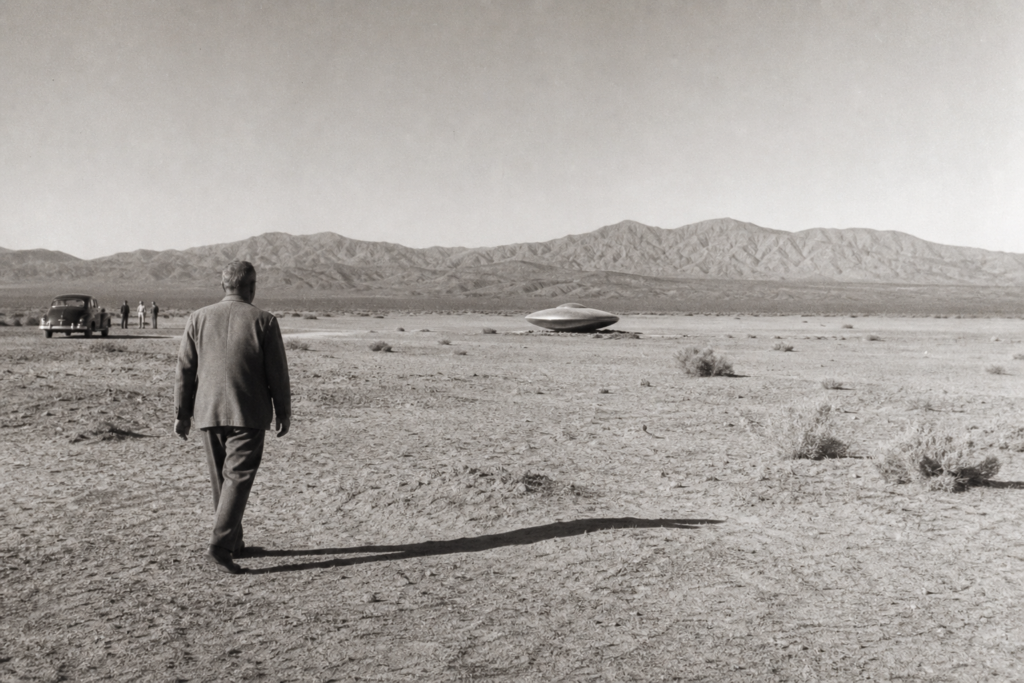
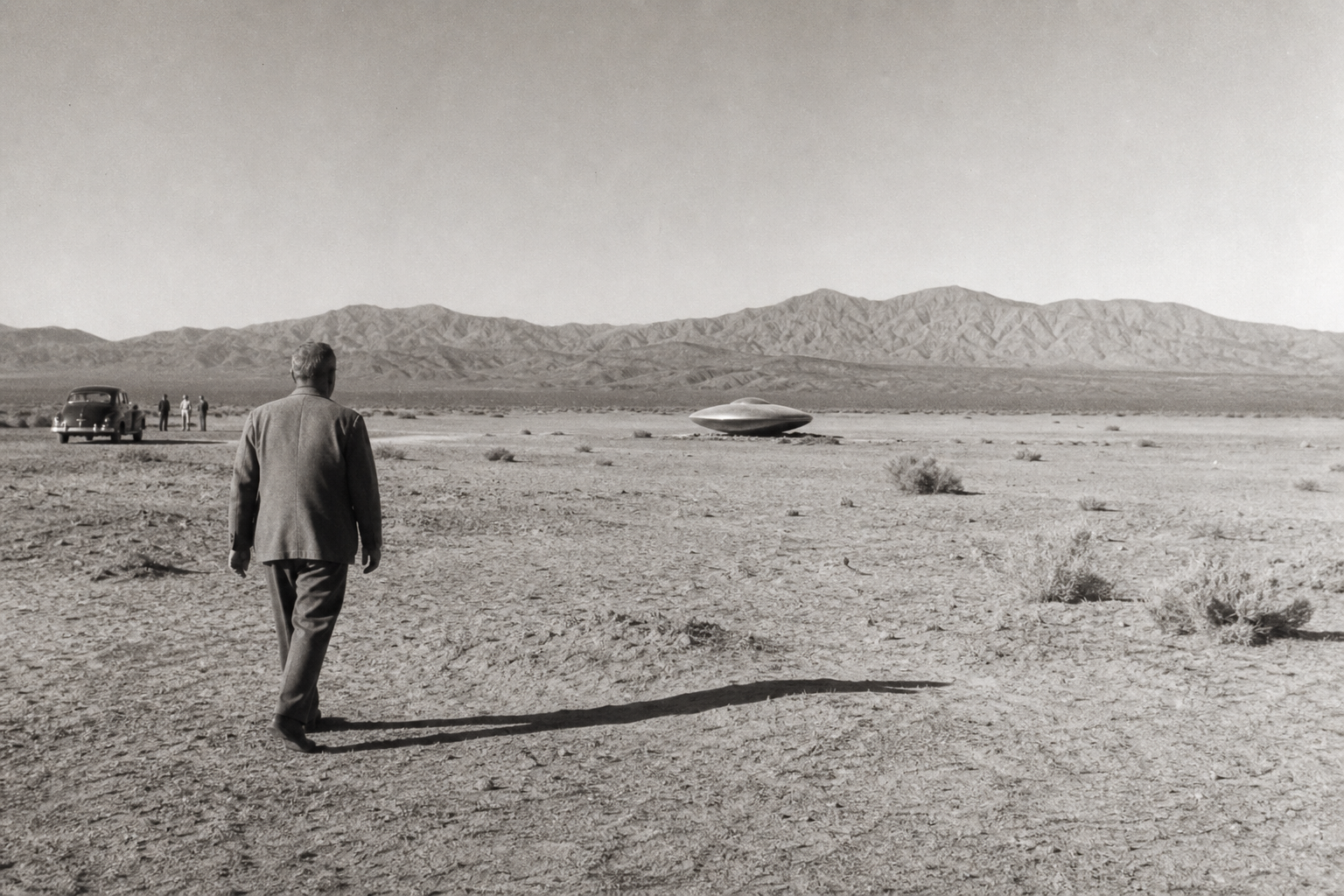
In November 1952, George Adamski said that he left companions in the California desert, approached a landed craft, and spoke with a humanlike visitor from Venus. The George Adamski alien contact claim remains unverified, but its historical force is unmistakable: it gave a vast audience a vivid encounter story at a moment when flying saucers, atomic fear, and Cold War secrecy already filled popular imagination.
Adamski became a defining UFO contactee, not simply someone who reported seeing an unexplained object, but someone who claimed direct communication with its occupants. That distinction mattered. His account joined purported witnesses, photographs, published recollections, and expansive messages about humanity’s future into a story people could debate, buy, attend lectures about, and adapt to their own beliefs.
This article treats the episode as cultural history rather than a verdict reached in advance. It reconstructs what Adamski said happened, separates testimony and images from independently verified evidence, and considers the contemporary response. It also follows the story’s wider consequences: the “Space Brothers” framework, a thriving contactee audience, and a durable template for later UFO communities.
Why Adamski’s 1952 Story Still Matters in UFO History
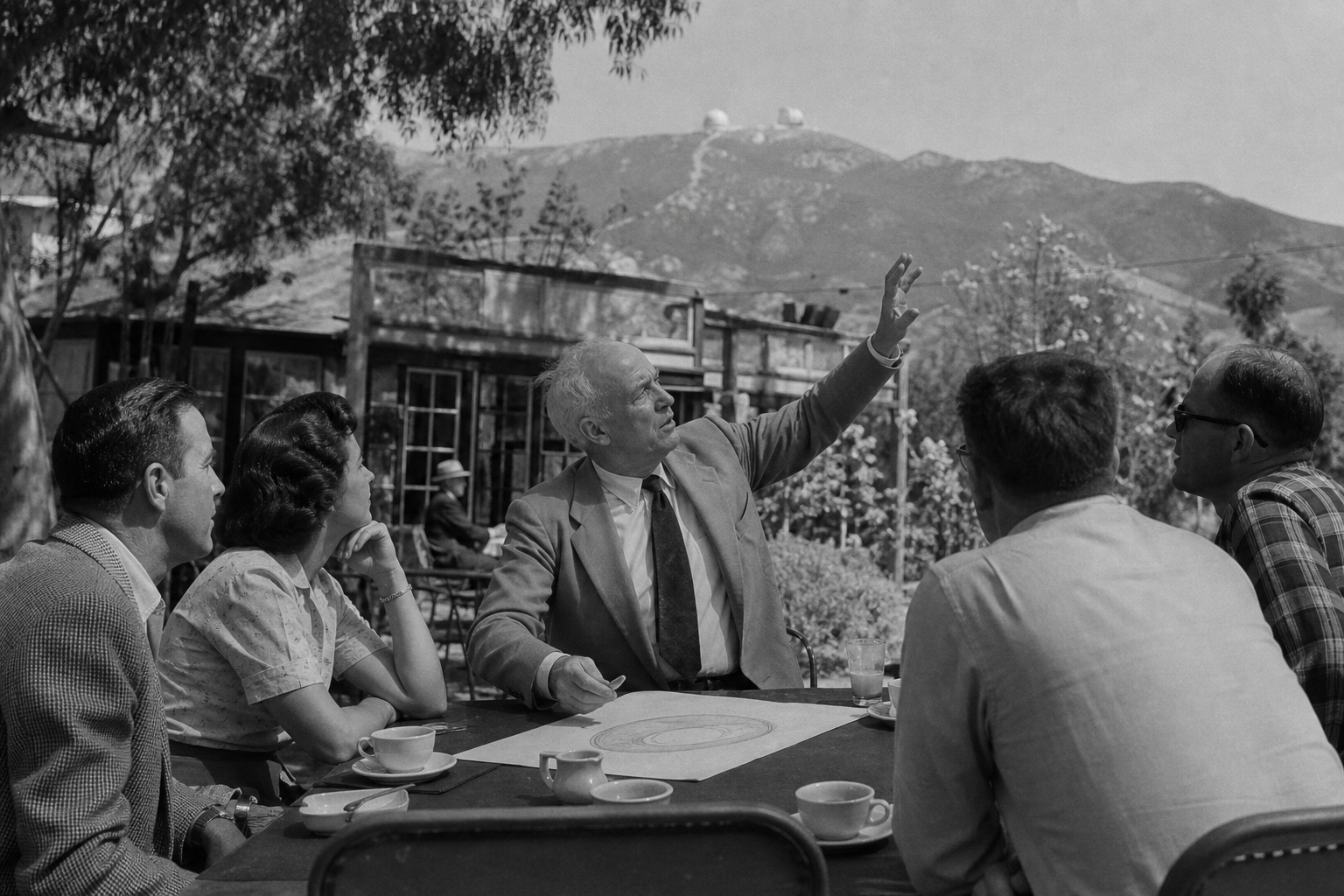
George Adamski emerged as one of the most visible figures in the early UFO contactee movement. Before his 1952 account gained national attention, he was associated with Palomar Gardens, a café and small community near Mount Palomar in California where he discussed cosmic ideas and flying saucers with visitors. That setting gave his later claims an audience already receptive to expansive explanations of life beyond Earth.
What set Adamski apart was the character of the visitors he described: not invaders or remote scientific mysteries, but humanlike “Space Brothers” who warned humanity about war, atomic weapons, and spiritual decline. This peaceful, morally instructive model changed the meaning of a UFO report for many followers. A light or object in the sky could remain an unresolved sighting; a contactee narrative supplied personalities, teachings, and a larger purpose.
The distinction remains essential. Adamski’s published testimony, the recollections of people around him, and later photographs are historical materials to assess, not independent confirmation that his encounter occurred. Modern UAP investigations address reports through evidence, provenance, and competing explanations; they do not authenticate older contact claims by resemblance alone. Adamski matters because early UFO culture absorbed his narrative form, and because its influence was far greater than its evidentiary foundation.
What Adamski Claimed Happened in the California Desert
On November 20, 1952, Adamski said he traveled to the Desert Center area of Riverside County with several companions, including George Hunt Williamson. They reported seeing a large, cigar-shaped object in the sky; Adamski’s account then separated the shared sighting from his personal testimony. He said he left the group and walked toward a smaller, silvery craft that had come down on the desert floor.
In Adamski’s retelling, a humanlike man emerged and met him at close range. Adamski later called the visitor Orthon and identified him as a Venusian, an interpretation the companions could not independently observe, since they remained at a distance. He did not describe an ordinary spoken exchange. Instead, he portrayed the encounter as communication through gestures, expressions, and an understanding conveyed without a common language. The visitor’s message, as Adamski later presented it, concerned humanity’s nuclear weapons and the danger they posed beyond Earth.
The George Adamski 1952 alien contact account also included material traces. Adamski and his companions said they found impressions in the ground associated with the visitor and marks connected to the craft’s alleged desert landing; photographs and casts of footprints became part of the story’s later presentation. Those items mattered because they shifted the narrative from a private vision to an event that appeared to leave observable effects. But the companions’ testimony chiefly concerned the distant object and the aftermath, while the identity of Orthon, the content of the warning, and the close encounter itself rested on Adamski’s own account.
What Evidence Was Offered, and Why It Was Never Verified
The crucial distinction is between a person reporting an event and evidence that permits an independent party to establish that event occurred. Witness testimony can support that Adamski and his companions described an unusual desert episode, but the companions’ vantage point did not give them direct access to every part of Adamski’s close encounter. Their accounts therefore could not independently establish the visitor’s identity, origin, message, or the alleged communication.
The reported impressions and landing marks offered a different category of evidence: physical traces, which could in principle be measured, preserved with a documented chain of custody, and compared against ordinary explanations. The published story presented photographs and casts as artifacts of the encounter, yet such objects do not identify who made the marks or when. Without secure contemporaneous collection, testing, and independent examination, they remain illustrations associated with the claim rather than verifiable physical evidence of extraterrestrial contact.
Adamski’s UFO photographs require a similarly narrow reading. A photograph can show that an image was made; it does not by itself establish the size, distance, construction, or origin of the object depicted. Critics focused on provenance, who handled the negative and under what conditions, as well as photographic interpretation, including whether a small model or familiar object could produce the same appearance. Those questions are not, by themselves, a demonstration of fabrication. They explain why photographic evidence requires independently inspectable originals and contextual records before it can bear an extraordinary conclusion.
Internal consistency also matters. A strong case would allow separate witnesses, contemporaneous records, site evidence, and images to converge on details that no single narrator controlled. The George Adamski UFO claim instead depended heavily on Adamski’s own account for its most consequential elements. That imbalance does not settle what he experienced, but it leaves no independently verifiable basis for concluding that a Venusian encounter occurred.
Why the Claim Found an Audience in the Early Cold War
Reports of strange aerial objects after 1947 had already given Americans a vocabulary for interpreting lights, disks, and unusual aircraft. The 1947 UFO wave, along with popular science and science fiction, made inhabited planets seem imaginable rather than purely fantastical. By the time Adamski’s account reached a wider public, it could be received as an elaboration of a familiar mystery rather than an entirely new kind of story.
Its emotional appeal also fit Cold War culture. Nuclear weapons, international rivalry, and the possibility that governments possessed information the public could not see encouraged both apprehension and speculation. Adamski’s reported visitors supplied a notably different plot from invasion stories: his humanlike extraterrestrials were presented as warning humanity about destructive technology and moral failure. That message turned cosmic uncertainty into a consoling premise, that a more advanced civilization was watching, judging, and potentially guiding Earth.
The expanding mass media of the flying-saucer era gave such narratives routes beyond the original witnesses. Books, lectures, fan networks, newspapers, magazines, and radio could turn an individual testimony into a shared public story, allowing interested audiences to compare it with the growing stream of 1950s UFO sightings. For sympathetic readers, Adamski’s photographs, footprints, and confident personal narrative made the account feel concrete; its spiritual dimension gave the material a larger purpose.
Contemporary skepticism formed alongside enthusiasm. Critics challenged the photographs, questioned the evidentiary value of the alleged traces, and noted that Adamski’s decisive claims depended on his own access to the visitor and message. Those objections did not prevent the story’s circulation, because its cultural power did not rest only on physical evidence. It offered a hopeful answer to anxieties many readers already felt, while critics insisted that resonance was not the same as verification.
How Adamski Helped Shape the Contactee Movement
A durable movement needs more than an arresting encounter account: it needs a form that others can recognize, repeat, and adapt. Flying Saucers Have Landed, presented as a collaboration between Adamski and Desmond Leslie, helped give that form a broad public shape. Its importance lay not in independently establishing the desert meeting, but in turning Adamski’s testimony, photographs, and larger cosmic narrative into material that readers could circulate and discuss.
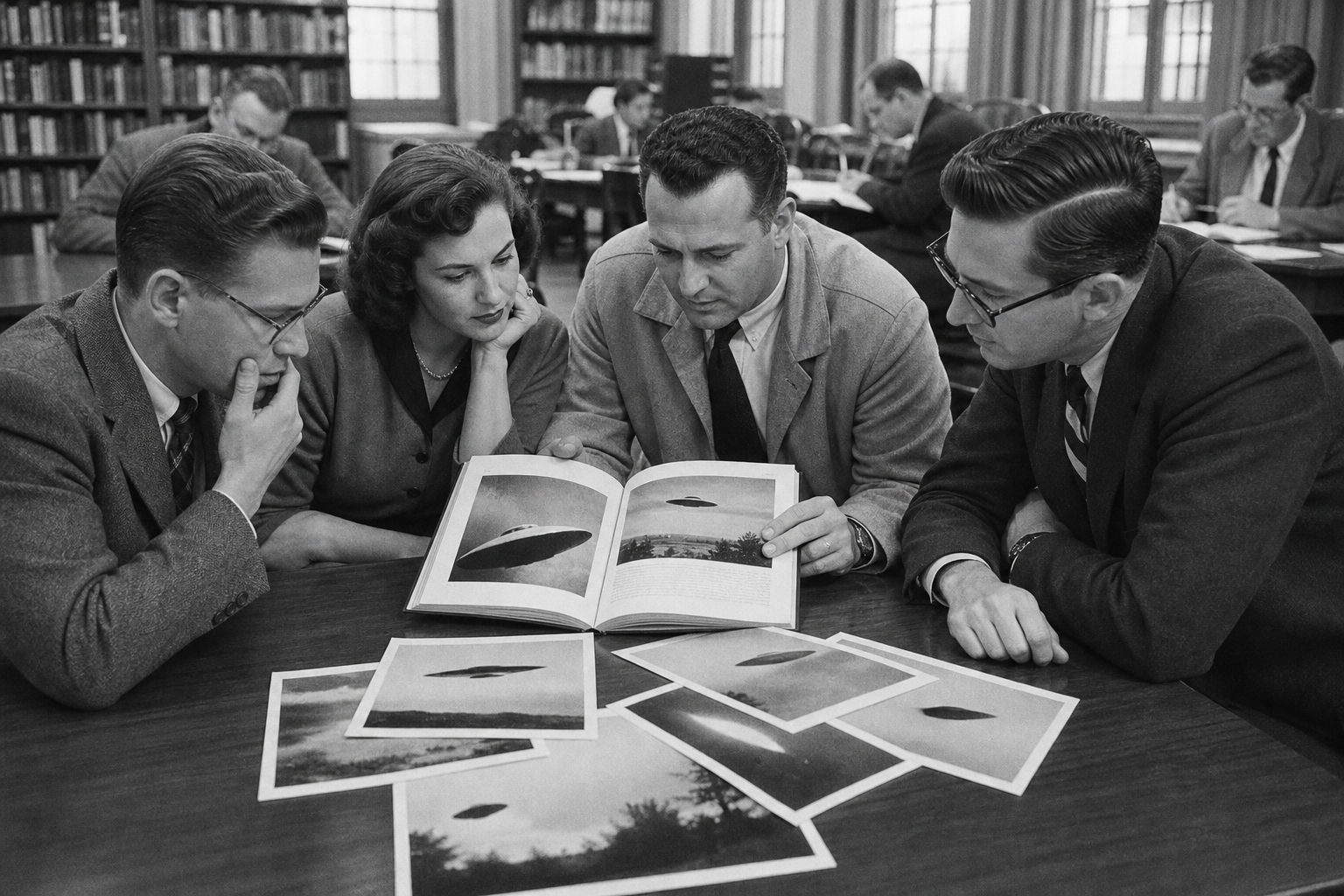
The pattern it popularized was distinctive. The visitors were humanlike rather than monstrous; their vehicles made travel between worlds imaginable; and their communications carried moral instruction, especially warnings about nuclear destruction. The human witness occupied an equally important role. He was not merely a sighting reporter but a privileged intermediary, someone said to have received knowledge unavailable to ordinary observers. That role made later claims of direct contact easier to frame: a new contactee could offer messages, cosmology, and personal authority alongside a report of a craft.
Adamski’s public persona extended the template beyond a book. Lectures, images, interviews, correspondence, and organized circles allowed adherents to treat the story as an ongoing relationship with “Space Brothers,” not a closed historical episode. A photograph or footprint image could function rhetorically as a tangible entry point, while the reported teachings supplied the framework through which followers interpreted peace, technology, spirituality, and humanity’s future.
Later mass-market paperback publishing, UFO groups, conventions, and adjacent spiritual movements carried related themes to new audiences. Resemblance does not demonstrate that every later account derived from Adamski, and followers developed his ideas in different directions. Still, the recurring combination of benevolent extraterrestrials, cosmic travel, warnings to Earth, and selected human messengers became a recognizable contactee movement model. Its cultural reach illustrates how an unverified encounter narrative could become a repeatable language for belief and community.
Adamski’s Legacy: A Cultural Precedent, Not Evidence of Disclosure
Adamski’s most enduring contribution was to make a particular kind of extraterrestrial encounter intelligible to a mass audience. His narrative joined a recognizable visual repertoire, shining disks, landed craft, humanoid visitors, with an expectation that contact would yield a message about humanity’s conduct. That combination gave later witnesses and audiences a ready-made interpretive frame: an unexplained sighting could be understood not only as a strange object in the sky, but as the beginning of a moral, spiritual, or political communication.
That precedent also helps explain why present-day debates can easily blur unlike categories of claim. UFO disclosure and UAP disclosure generally concern whether governments have collected, withheld, or publicly released information about reported aerial phenomena. A report may remain unresolved because available data cannot identify it; that is different from evidence that an object was extraterrestrial, and different again from evidence that a particular person met an extraterrestrial visitor. Claims of a government cover-up likewise require evidence of the alleged records or concealment, rather than an inference drawn from an unresolved observation.
Modern UAP reporting therefore cannot operate as retroactive confirmation of the November 1952 desert account. It may sustain public interest in aerial mysteries, but it does not independently establish Adamski’s reported meeting, the Venusian identity of the visitor, or the messages attributed to him. The appropriate historical verdict on the George Adamski alien contact claim is consequently precise: it was influential, repeatedly contested, and culturally formative, yet it remains unverified as an event.
Why Adamski Remains Central to UFO Cultural History
Historical importance does not depend on accepting an encounter as fact. Adamski showed how an extraordinary personal testimony could become a shared cultural narrative when it combined a dramatic setting, apparent witnesses, photographs, published books, and a message suited to an anxious nuclear age. The weak point remained the same throughout: the crucial meeting and its meaning rested principally on Adamski’s own testimony, while the associated traces and images did not provide independent verification.
What endured was the model. In early UFO culture, later claimants could present contact not merely as a sighting but as a relationship with purposeful visitors, often humanlike figures offering warnings, spiritual instruction, or reassurance about humanity’s future. That framework gave audiences recognizable expectations about craft, occupants, messages, and the role of the contactee as interpreter.
Adamski therefore remains central less as a resolved historical witness than as a case study in how belief, media circulation, and Cold War unease can turn an unverified account into a durable cultural reference point. His notoriety explains the influence of the story; it does not establish extraterrestrial contact, even amid ongoing public interest in UAP disclosure.
Frequently Asked Questions
-
What did George Adamski claim happened in 1952?
On November 20, 1952, George Adamski claimed he approached a landed silvery craft in California’s Desert Center area and met a humanlike visitor. He said the visitor communicated warnings about humanity’s nuclear weapons and destructive behavior.
-
Who was George Adamski’s alleged Venusian contact?
Adamski identified the humanlike visitor as Orthon, whom he said was from Venus. Adamski’s companions remained at a distance, so Orthon’s identity, origin, and message depended on Adamski’s personal testimony.
-
Was George Adamski’s UFO evidence ever verified?
No. Photographs, footprint casts, and reported landing marks were associated with the claim, but they lacked secure contemporaneous collection, documented chain of custody, testing, and independent examination.
-
Why was George Adamski important to the UFO contactee movement?
Adamski helped popularize the contactee model through his account and the book Flying Saucers Have Landed, written with Desmond Leslie. The model featured humanlike Space Brothers, interplanetary craft, warnings about nuclear war, and a selected human messenger receiving special knowledge.
-
What should you look for when evaluating UFO contact claims like Adamski’s?
Look for independently inspectable original evidence, documented provenance, contemporaneous records, secure chain of custody, and witnesses who can verify key details separately. Unresolved UAP reports or government disclosure debates do not confirm a specific claim that someone met an extraterrestrial visitor.