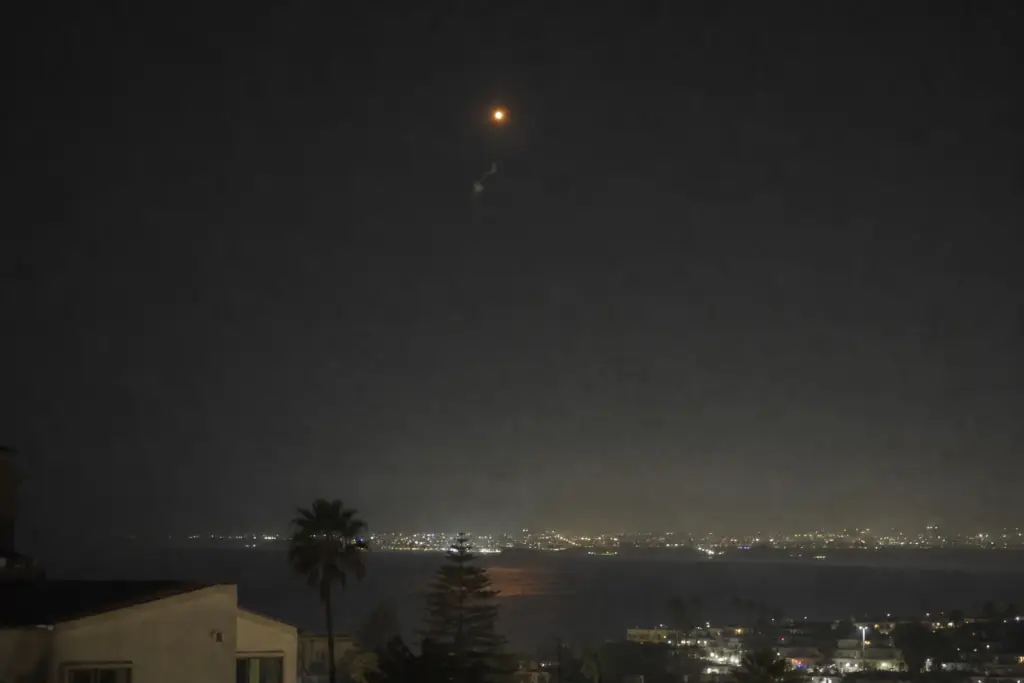
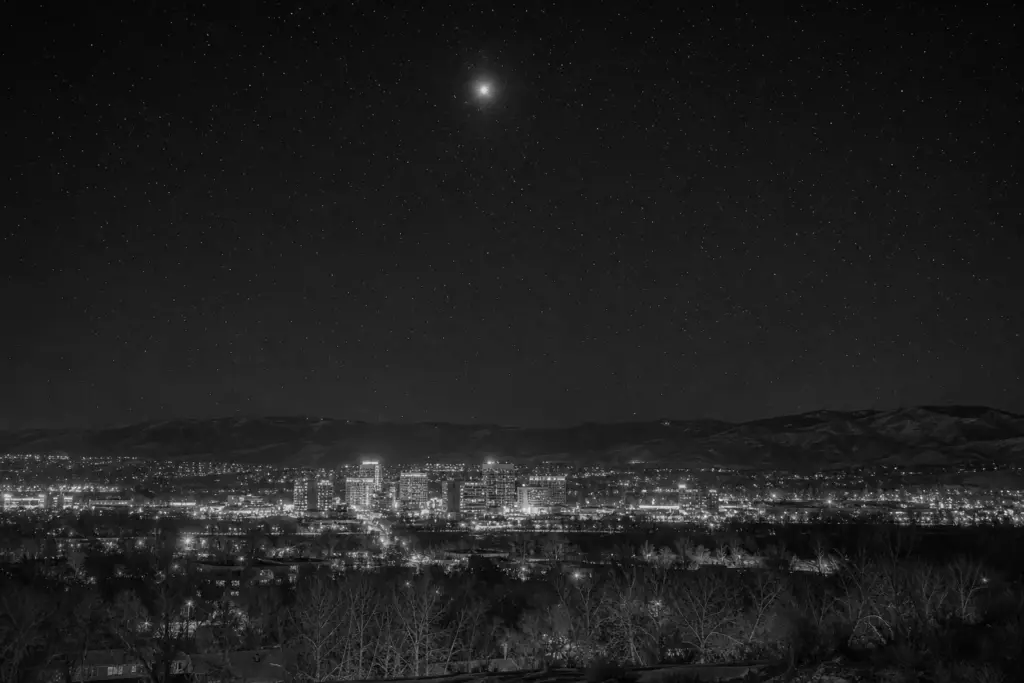
On the night of February 11, 2020, a witness reported a dazzling light over Boise, Idaho, that appeared to dance or move erratically among the stars. That description is vivid, but it records an observer’s experience of the sky, not, by itself, a measured flight path or proof of an extraordinary craft. The Boise UFO sighting February 11 2020 is therefore best approached as a historical report whose strength depends on the record behind it.
This account separates two questions that are often blurred together: what someone saw, and what physical object, if any, produced the appearance. A bright point can seem to dart when the viewer has few fixed visual references, an effect known as autokinesis; atmospheric turbulence can also make a star, planet, or distant light shimmer and shift. Aircraft, satellites, drones, and other conventional lights require their own timing and visual fit rather than being assumed from the label “UFO.”
The sections that follow trace the available source trail, distinguish witness-reported details from independently corroborated evidence, and identify the limits imposed by any missing video, additional observers, flight data, or official record. The aim is not to force an identification, but to determine whether this was a documented, plausibly explained, insufficiently recorded, or genuinely unresolved observation on the available evidence.
What Was Reported Over Boise on February 11, 2020?
The report’s usable baseline is limited but specific: it places a dazzling point of light over the Boise area on February 11, 2020, and describes its visible behavior as dancing or moving in an irregular fashion against the night sky. “Dazzling” conveys apparent brightness, while “dancing” and “erratic” describe the observer’s impression. Neither word establishes altitude, distance, speed, direction, or physical shape.
That distinction matters for this Boise, Idaho UFO sighting in 2020. A light may seem to change position without an independently established maneuver; a physical flight path would require corroborating observations or records that locate the object over time. The account supports a claimed observation, not a demonstrated airborne vehicle or an identified UAP.
The account should therefore be preserved without enlargement: one reported bright light over Boise on the stated date, seen against a starry background with apparent movement. The next question is whether the wording can be traced to an original submission or contemporaneous record, and whether any supporting material exists. Only then can ordinary night-sky, atmospheric, or aviation-related possibilities be weighed against the reported appearance; on this baseline alone, the cause remains unverified.
Reconstructing the Boise Light Report From the Available Source Trail
The surviving attribution is the central weakness of this case. The material available for this article preserves the date, Boise location, and the description of a dazzling light that seemed to move among stars, but it does not provide a traceable original submission, report URL, archive capture, case number, named publication, or contemporaneous local-news item. A best primary source for the Boise UAP sighting of February 11, 2020 therefore cannot be identified from this record.
That provenance gap matters because source types carry different weight. An original witness submission can preserve the observer’s own wording and submission date; a report-database entry may reproduce that account but can omit context or be added later; and a retelling can further compress or alter the description. Here, the available wording cannot be reliably assigned to any of those categories. Nor is there a documented distinction between the observation date and the date the account was submitted or published.
- The record supports only the reported Boise-area date and the witness characterization of a bright, apparently mobile light.
- It does not document an approximate viewing time, compass direction, elevation above the horizon, duration, color, pulsing or brightness changes, weather conditions, photographs, or video.
- It does not establish that a second observer saw the same event independently; a plural reference to witnesses would require separate accounts with matching time and location details.
- It also supplies no located law-enforcement, FAA, military, or AARO record tied to this specific report. That is a limitation of the available source trail, not evidence that any agency withheld an identification.
Those omissions prevent a meaningful comparison with sky objects or aircraft activity: both require at least a time and viewing direction. On the available record, this Boise unexplained lights report is best classified as insufficiently documented rather than independently corroborated or identified.
What Can Be Verified, and What Cannot
Physical claims require a record that fixes the light in space rather than merely describing its appearance. A single observer’s view can establish an apparent direction, but distance and altitude require either a known object, two or more separated observing locations, or instrument measurements. Speed and maneuvering likewise require timed changes in position against a reliable reference, not only an impression that a light darted among stars.
For this report, no verified photograph or video file is available to assess. Useful media would retain its original upload history, capture time, location context, and, where present, unaltered metadata; a reposted clip without those elements can illustrate a claim but cannot securely locate or date it. Even a genuine single-camera nighttime video would usually show angular motion only. It could not by itself establish range, size, or extraordinary acceleration.
Independent corroboration would materially strengthen the case. Matching accounts from separate observers could help establish a shared direction and time window. Radar, imagery, and other sensor records could potentially track a reflective target, while air-traffic records could test whether a known aircraft was in the relevant sector; dispatch logs might document related calls. No such radar return, aviation comparison, dispatch record, or independently matching witness account is publicly documented in the material available here.
Nor is there an attributable response tied to this incident from Boise law enforcement, the FAA, the military, or AARO, and no named investigator’s work can be evaluated from a traceable record. That absence is a source limitation, not evidence of institutional suppression. The report remains an insufficiently documented UAP sighting: unidentified in the limited sense that no object can be established from the surviving description, but not evidence of non-human intelligence or a government cover-up.
Why a Bright Light Can Appear to Move Erratically at Night
A dark, nearly featureless sky is especially susceptible to autokinesis: a perceptual effect in which a fixed point of light seems to drift, jump, or trace small patterns when someone stares at it. Without a roofline, tree, horizon, or other foreground feature to anchor the view, the visual system has little basis for separating minute eye movements from movement by the light itself. A bright point can therefore appear to dance among the stars even when its position has not changed.
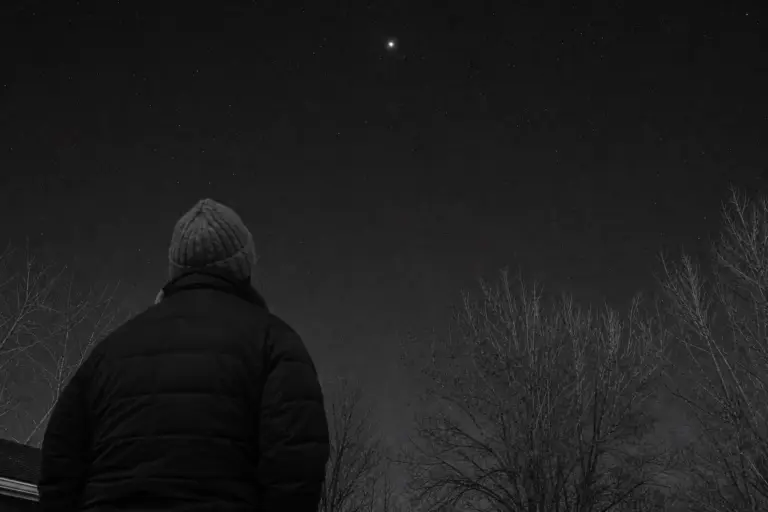
Eye movements, fatigue, and changing focus can intensify that impression. The eyes never remain perfectly still; tiny involuntary movements normally go unnoticed because nearby objects provide stable reference points. A prolonged upward gaze can make those movements more conspicuous. Refocusing between a bright light and dim surrounding stars may also alter the apparent sharpness, size, or position of the light. That is a meaningful distinction: perceived zigzags are not the same as independently measured changes in direction or speed.
The atmosphere can change a light’s appearance as well. Turbulent layers of air bend light unevenly, producing scintillation, the familiar twinkling, color flicker, and momentary brightness variation most visible in stars and other distant point-like lights. Thin cloud, haze, or shifting moisture can diffuse a light into a halo, obscure it intermittently, or make its brightness seem to pulse. These effects could be relevant to the erratic light Boise, Idaho, February 2020 description, particularly because the account gives no time, direction, or recording from which to test them.
None of these mechanisms identifies the dazzling light over Boise, Idaho, or demonstrates that it was stationary. They do establish an important evidentiary checkpoint: an impression of dramatic motion in a dark sky must be distinguished from motion measured against reliable references before it is treated as an unusual physical maneuver.
Plausible Ordinary Explanations and How to Test Them
A useful identification test begins by sorting lights by their observable pattern rather than by the intensity of the initial impression. A bright star or planet would remain in essentially the same position relative to nearby stars over a short watch, although it might shimmer, change color, or seem to wander visually. A recorded time, compass direction, elevation above the horizon, and comparison with an astronomical sky chart could support that possibility; clear, sustained travel across constellations would weaken it.
Aircraft lights are more persuasive when the light follows a steady route, changes brightness as its angle changes, or shows regular red, green, or white flashes. A head-on aircraft can initially look like a single brilliant stationary point because its landing light faces the observer; lateral motion and navigation-light flashes may become apparent later. A precise time and viewing direction would permit comparison with archived flight tracks and local approach or departure paths. Without them, aircraft lights remain possible but untested.
A satellite pass would normally produce smooth, continuous motion on a predictable line, not repeated sharp turns. It is strengthened by a duration of several minutes and travel from one star field toward another; blinking, hovering, or abrupt reversals would make that fit weaker. Drones can hover, turn, and display colored lights, but the account would need low apparent altitude, audible propulsion, nearby location context, or a defined flight path to distinguish one from a distant point of light.
Balloons and wind-borne illuminated objects are harder to assess: their movement should drift gradually with the wind rather than dart independently. Initially unidentified aerial objects can require evidence-based evaluation before identification. Haze, thin cloud, and unstable air could instead alter the appearance of a fixed celestial object or distant light. Because this report lacks a time, direction, duration, weather observation, and recording, no candidate can responsibly be ranked as a match. The appropriate result is an unresolved, insufficiently documented night-sky light observation, not a demonstrated extraordinary object.
Where This Report Fits in UFO and UAP Reporting
In reporting terms, the label should remain modest. “UFO” is the older shorthand for an unidentified flying object; “UAP” is the newer umbrella term for an unidentified anomalous phenomenon. Both labels describe an observation that has not been identified from the available information. Neither establishes that a physical craft was present, much less its origin, purpose, or technology.
The Boise account belongs in the lowest-evidence end of that category: a local historical report of an unexplained light, with the witness’s interpretation preserved but no independent basis for converting apparent motion into measured performance. “Unidentified” means the record does not support a confident identification; “unexplained” means plausible possibilities have not been tested or eliminated. An extraordinary conclusion would require affirmative evidence beyond either label.
Broader UAP news and UFO disclosure debates have made evidence standards more visible, not less necessary. A strong case has traceable source provenance, separate witnesses whose accounts can be compared, and ideally time-synchronized video, radar or other sensor data, plus transparent analysis. This Boise report has none of those materials in the available record. It is therefore a memorable but insufficiently documented observation, not demonstrated evidence of anomalous technology.
Bottom Line: A Reported Boise Observation, Not a Proven Explanation
The most defensible finding is narrow: a witness-reported account places a striking light over Boise on February 11, 2020, but the surviving record cannot establish what produced it. Its apparent erratic movement is compatible with perceptual effects, changing atmospheric conditions, or an ordinary aerial light viewed without reliable reference points; it is not a measurement of abrupt physical maneuvers.
This Idaho UFO sighting remains an unresolved observation only in the limited sense that the available description cannot be confidently matched to a specific source. It does not demonstrate a craft, unusual technology, or an official response. The absence of traceable video, flight information, or agency documentation limits the investigation rather than implying concealment, underscoring the need for transparent data and systematic analysis.
Several missing items would substantially improve the assessment:
- An original video file with intact timestamp and location metadata could show whether the light changed position against stars or foreground landmarks.
- Independent, separately recorded witness accounts could test whether observers saw the same direction, duration, color, and movement pattern.
- A precise viewing location, compass bearing, elevation, and start-and-end time could permit meaningful comparisons with aircraft routes, satellites, and astronomical objects.
- Contemporaneous dispatch, aviation, weather, or local-report records could add context without converting a reported appearance into proof.
Until such primary material emerges, the Boise report is best retained as an insufficiently documented local account: memorable to its observer, plausibly ordinary in several respects, and unresolved on the available record.
What the Boise Report Does, and Does Not, Show
The practical lesson is to preserve the observation without promoting its least-supported interpretation. The available trail supports a person having reported a brilliant light in the Boise sky on the stated date. It does not supply the independent observations, original imagery, calibrated timing, positional measurements, or attributable official record needed to show that an unknown craft was present.
“Dancing” is a useful description of the experience, not a reliable description of the light’s flight. A fixed celestial light can appear to shift through autokinesis, while turbulent air or thin cloud can make it flicker, change intensity, or seem unstable. Conversely, an aircraft light can look unusually bright or stationary when approaching nearly head-on. Those possibilities cannot be ranked decisively here because the report lacks the time, bearing, duration, and visual record that would distinguish them.
For similar reports, the strongest next step is contemporaneous capture: note the exact time and location, keep landmarks in frame, record the direction of view, and seek accounts from observers at separate locations. A light that holds its position against stars differs materially from one that crosses the sky on a steady track; either observation is more informative when independently recorded.
The Boise UFO sighting of February 11, 2020 is therefore best classified as insufficiently documented and unresolved on the available record. That conclusion respects the witness’s reported experience while withholding claims the surviving evidence cannot carry.
Frequently Asked Questions
What was reported over Boise, Idaho on February 11, 2020?
A witness reported a dazzling point of light over the Boise area that appeared to dance or move erratically among the stars. The surviving account does not establish its altitude, distance, speed, direction, shape, or physical origin.
Was the Boise light sighting ever officially identified?
No official identification is documented in the available record. There is no traceable FAA, military, AARO, law-enforcement, or named investigator record linked to the February 11, 2020 Boise report.
Is there verified video or radar evidence for the Boise UFO report?
No verified photo, video, radar return, air-traffic comparison, dispatch log, or independently matching witness account is publicly documented for this sighting. The report also lacks a precise time, viewing direction, duration, and weather details.
Can stars appear to move erratically at night?
Yes. Autokinesis can make a fixed point of light seem to drift or jump when viewed against a dark sky without stable foreground references, while atmospheric turbulence can cause twinkling, color flicker, and apparent brightness changes.
What evidence should you look for to identify a bright light dancing in the sky?
Record the exact time, location, compass bearing, elevation, duration, and any color or flashing pattern, ideally with landmarks visible in video. Those details allow comparisons with aircraft tracks, satellites, planets, weather conditions, and reports from separate observers.