More than three decades later, the reports from Ariel School in Ruwa, Zimbabwe, remain significant precisely because the children’s September 1994 accounts are vivid, widely repeated, and unresolved. Witnesses described an unusual aerial object and beings near the school; those descriptions are historical testimony, not independently verified proof of what caused the experience.
Cynthia Hind Ariel School research is often invoked as though it settled that distinction. It did not. Hind was an early Zimbabwean civilian UFO investigator who helped bring the case into a wider public record by gathering and relaying accounts soon after the reports emerged. Her importance lies in the timing and character of that work: early inquiry can preserve details before memories are reshaped by publicity, while still leaving the underlying explanation open.
This article separates three questions that are too often merged: what Hind documented, how she interpreted the material, and what later investigators could add. It traces her involvement after the reported event, examines the interviews, reports, and other material linked to her inquiry, and distinguishes her advocacy-oriented case work from later attention by John E. Mack, journalists, filmmakers, and adult witnesses reflecting on the incident years afterward.
Cynthia Hind’s Place in the Ariel School Record
A useful starting point is the date-to-record distinction: the reported encounter preceded Cynthia Hind’s involvement. In September 1994, pupils at the school described an unusual object near the grounds and figures they connected with it. These were accounts of what individual children said they saw and experienced, not independently verified evidence that an extraterrestrial craft or non-human beings were present.
Within that record, Hind’s place was as an early local civilian UFO researcher who took the reports seriously enough to gather, preserve, interpret, and circulate them. The practical distinction matters: notes, interviews, retellings, and published case material can show that witnesses made particular claims at particular times, but cannot by themselves establish what caused the event. The account that follows therefore tracks Hind’s actions and the provenance of material linked to her, rather than treating her conclusions as a resolution of the Ariel School incident.
Why Cynthia Hind Became Involved, and When
The available record for this account identifies Hind as a Zimbabwe-based civilian UFO researcher associated with the Zimbabwe UFO Society, not as a school employee, police investigator, or state-appointed examiner. That distinction explains the character of her involvement: she entered the matter as a specialist advocate and collector of UFO reports after word of the pupils’ accounts began to circulate, rather than as someone present during the reported incident.
A careful timeline needs to keep three different kinds of date separate. First is the date witnesses associated with the reported schoolyard event. Second is the date Hind learned of it or first reached Ariel School. Third is the date on which she later described, published, or repeated what she had gathered. Later retellings can compress those stages into a single story of immediate investigation, but publication dates do not establish when an interview or visit occurred.
- The event belongs in September 1994, as reported by the pupils and adults connected with Ariel School.
- Hind’s early field investigation belongs after that reported event; the available material does not support treating her as an eyewitness.
- Accounts that assign an exact first-visit date should be tied to a contemporaneous note, recording, correspondence, or publication by Hind, rather than accepted solely because a later documentary or online chronology repeats it.
This is also why John E. Mack should not be folded into Hind’s initial timeline. Mack’s later interviews were a separate inquiry with a different purpose and method. Hind’s importance at this earlier point was proximity to the developing local story and her willingness to preserve it; it was not official authority, scientific confirmation, or independent proof of the phenomenon the children described.
What Hind Documented at Ariel School
The reported encounter is generally dated to 16 September 1994, but the records now grouped under the Ariel School case were made by several people at different times. The central practical point is provenance: a note, report, or account belongs to Hind’s record only when it identifies her as the interviewer, author, recipient, or publisher; later footage and retellings may preserve the same story without being her work.
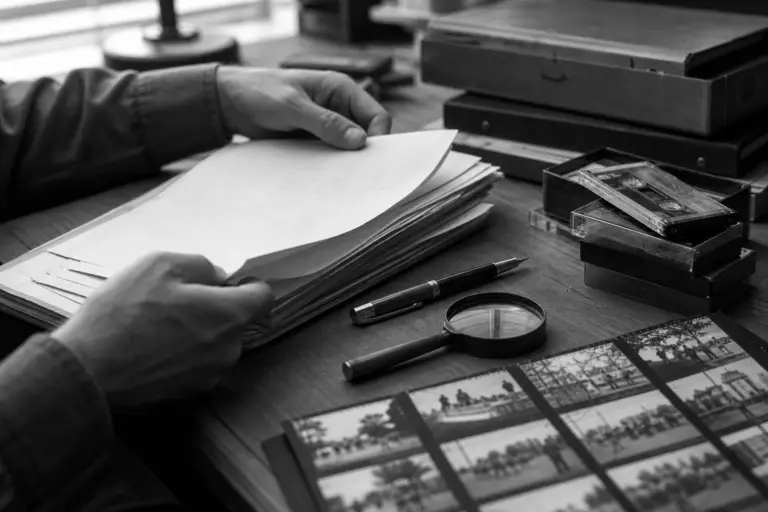
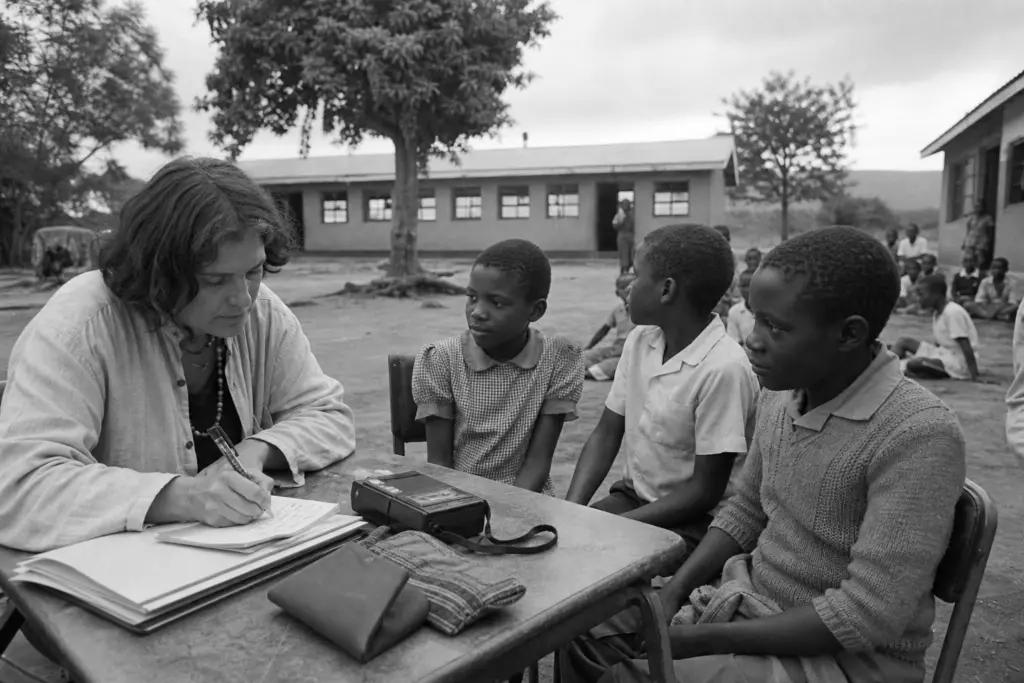
Hind’s attributable role was early civilian case documentation. She spoke with pupils and adults connected with Ariel School, relayed descriptions of an object and figures near the school grounds, and circulated those reports through UFO-research channels. Such witness interviews establish that particular children gave particular accounts after 16 September 1994. They do not supply physical evidence identifying what, if anything, was present near the school.
- Hind-created or Hind-collected material includes an interview note, report, letter, article, or case-file item that names Hind as its author, interviewer, recorder, recipient, or publisher. A dated item can show that an account had reached her record by that date; it cannot show that every later quotation preserves its original wording.
- School-connected accounts have a different evidentiary function. A pupil’s statement concerns the reported sighting, while teacher accounts or parent accounts may document children’s reactions, conversations, absences, or the school’s response. The latter can corroborate that reports were made and treated seriously by adults without corroborating the claimed object or beings.
- Later recordings are not automatically Hind interviews. John E. Mack’s subsequent conversations with Ariel witnesses formed a separate inquiry, and television footage, journalistic reports, and documentary sequences were made by their own reporters or filmmakers. Shared witnesses do not turn those materials into Hind’s archive.
- Witness drawings remain the work of individual children. A drawing can be linked to Hind only where a contemporaneous note, holding record, or publication identifies how she received or reproduced it. A drawing shown in a later film demonstrates that the image was republished; it does not, by itself, establish who first collected it.
This distinction gives readers a practical way to weigh familiar material. A strong record identifies the witness, the interviewer or recipient, an approximate date, and an original format such as notes, audio, correspondence, a drawing, or a published report. A weak record presents a quotation or image beside Hind’s name without that chain. Hind helped move Ruwa testimony into the enduring public case file; the meaning she assigned to that testimony is a separate issue.
How Hind Interpreted the Reports, and What Her Work Could Not Establish
Hind did not treat the pupils’ accounts as a neutral catalogue of unexplained statements. Her published and public-facing approach placed the Ariel reports within a UFO framework: she regarded the recurring descriptions as credible evidence that the children had experienced an unusual encounter involving the reported craft and beings. That was her interpretation of testimony, not a finding produced by an official inquiry or a demonstrated identification of the object.
The distinction matters because convergence has a limited but real evidentiary value. When accounts are recorded soon after an event and independently retain particular features, they can show that witnesses reported those features consistently enough to merit preservation and further inquiry. They do not, by themselves, establish the external cause of the experience. Similar descriptions may reflect a shared observation, but they can also be influenced by discussion among pupils, questions asked by adults, media attention, or an emerging common narrative.
Schoolchildren’s testimony deserves neither automatic dismissal nor a lower standard of proof for an extraordinary conclusion. Its strength depends on particulars: whether a statement was taken promptly; whether the child was interviewed alone or in a group; whether questions were open-ended rather than suggestive; and whether the original wording, drawings, and interview context survive. A contemporaneous individual account with a known interviewer is a stronger historical record than a later recollection shaped by repeated retelling.
Hind’s collection of accounts therefore could document that witnesses described an alarming and unusual event, and could preserve the details she found significant. It could not supply physical corroboration, such as a recoverable object, instrument record tied to the school grounds, or independently authenticated trace evidence, or eliminate ordinary and psychological alternatives. Memory can change over time, especially after conversations and repeated interviews, without implying that a witness is dishonest. The proper conclusion is narrower than Hind’s own UFO interpretation: her work made the testimony available for scrutiny, but did not resolve what generated it.
Hind’s Work Compared With Later Ariel School Investigations
The contrast is clearest in the records made after the 16 September 1994 reports at Ariel School in Ruwa. Hind’s inquiry belonged to the early civilian-investigation phase: it centred on gathering and circulating pupil and school-connected witness accounts while the episode was still recent. John E. Mack’s involvement was separate and later. A Harvard psychiatrist, Mack conducted recorded, extended interviews with children about what they recalled seeing and how they understood it, rather than building Hind’s local UFO-case file. That method could explore memory, meaning, and emotional impact; it could not independently identify the object or figures reported near the school.
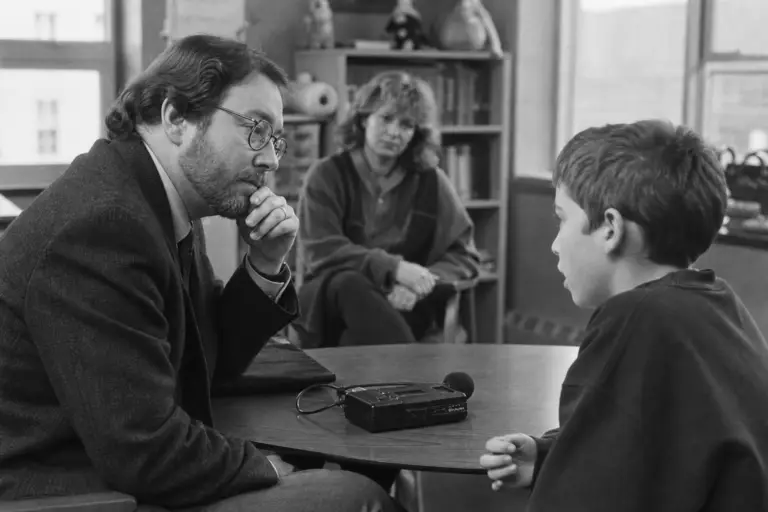
BBC journalism had a third function: producing broadcast reports for a public audience in the immediate aftermath of the Ariel School episode. Footage of pupils speaking on camera can preserve first-hand testimony, including a speaker’s words, age, setting, and visible response at the time of filming. A finished television segment, however, is an edited selection rather than a complete interview transcript. The distinction is concrete: a child’s unbroken filmed answer is direct testimony, while a presenter’s narration, a short clip reused in a later programme, or a claim relayed from Hind’s material is a different layer of source provenance.
Later documentary projects added interviews with former Ariel pupils as adults, often alongside archive material from 1994 and discussion of Mack’s interviews. Their stated aim was commonly to revisit the experience and trace its personal consequences over decades, not to recreate the conditions of the original schoolyard reports. Such films can help viewers locate older footage and compare a witness’s later recollection with an earlier drawing or interview. But an adult account recorded many years after 1994 is retrospective evidence: it may be sincere and illuminating while no longer preserving the witness’s original wording or independence from subsequent media attention.
Contemporary discussion sometimes groups Ariel with modern UAP sightings, a current umbrella label for reports of unidentified anomalous phenomena. That change in vocabulary does not alter the 1994 record or turn Hind’s interpretation into a verified finding. For readers assessing the Ariel School UFO investigation, the useful comparison is specific: distinguish Hind’s early case collection, Mack’s clinical-style interviews, BBC’s edited news footage, and later retrospective filmmaking before treating any repeated detail as corroboration.
What Cynthia Hind’s Contribution Means for the Case Today
The lasting value of Hind’s involvement is that it kept the Ariel School reports available for comparison rather than allowing them to survive only as scattered recollections. Her early interviews, case summaries, and public advocacy helped create the trail through which later journalists, researchers, filmmakers, and former pupils encountered the story. That is a substantial historical contribution: she made witness testimony part of a durable public record and argued for taking it seriously.
It also gives the case a defined place in present discussion of UFO disclosure and UAP disclosure. Disclosure concerns the release, assessment, or acknowledgement of information held by institutions; an unresolved school witness case is a different kind of record. Ariel can be relevant to debates about how unusual reports are collected and preserved, but Hind’s work does not demonstrate that a government possessed a craft, suppressed decisive evidence, or confirmed a non-human intelligence explanation.
The appropriate endpoint is therefore narrower, and stronger. Hind preserved and promoted reports that pupils and adults connected to Ariel School made after the 1994 event; she also advanced her own UFO-oriented interpretation of them. Those records support the reality of the reports and the lasting importance witnesses attached to them. They do not, by themselves, establish what produced the reported sighting. Preserving testimony makes continued scrutiny possible; it is not the same as proving an explanation.
Frequently Asked Questions
Who was Cynthia Hind in the Ariel School UFO case?
Cynthia Hind was a Zimbabwe-based civilian UFO researcher associated with the Zimbabwe UFO Society. She was not an eyewitness, school employee, police investigator, or state-appointed examiner, but she helped collect and circulate witness accounts after the September 1994 reports.
Where and when did the Ariel School UFO incident take place?
The reported incident took place at Ariel School in Ruwa, Zimbabwe, on 16 September 1994. Pupils described an unusual aerial object and figures near the school grounds.
What evidence did Cynthia Hind collect from Ariel School witnesses?
Hind collected or circulated pupil and school-connected accounts through interviews, notes, reports, letters, articles, and case-file material. These records documented that witnesses made particular claims after 16 September 1994, but did not provide physical evidence identifying an object or beings.
What should you look for when evaluating Ariel School witness material linked to Cynthia Hind?
Look for a clear provenance chain identifying the witness, interviewer or recipient, approximate date, and original format, such as notes, audio, correspondence, drawings, or a published report. A drawing or video is only attributable to Hind if a contemporaneous record identifies her as the recipient, collector, interviewer, or publisher.
How did Cynthia Hind’s investigation differ from John E. Mack’s Ariel School interviews?
Hind’s early civilian investigation focused on gathering and circulating local witness accounts within a UFO case file. John E. Mack later conducted extended recorded interviews that explored children’s memories, meaning, and emotional responses, but neither approach independently identified the reported object or figures.