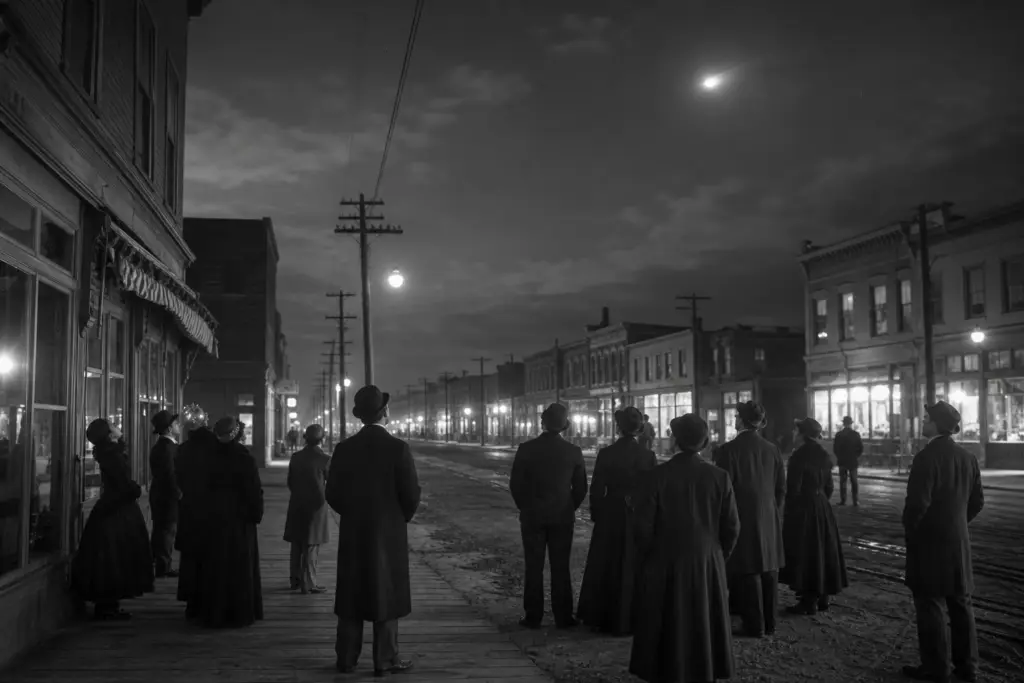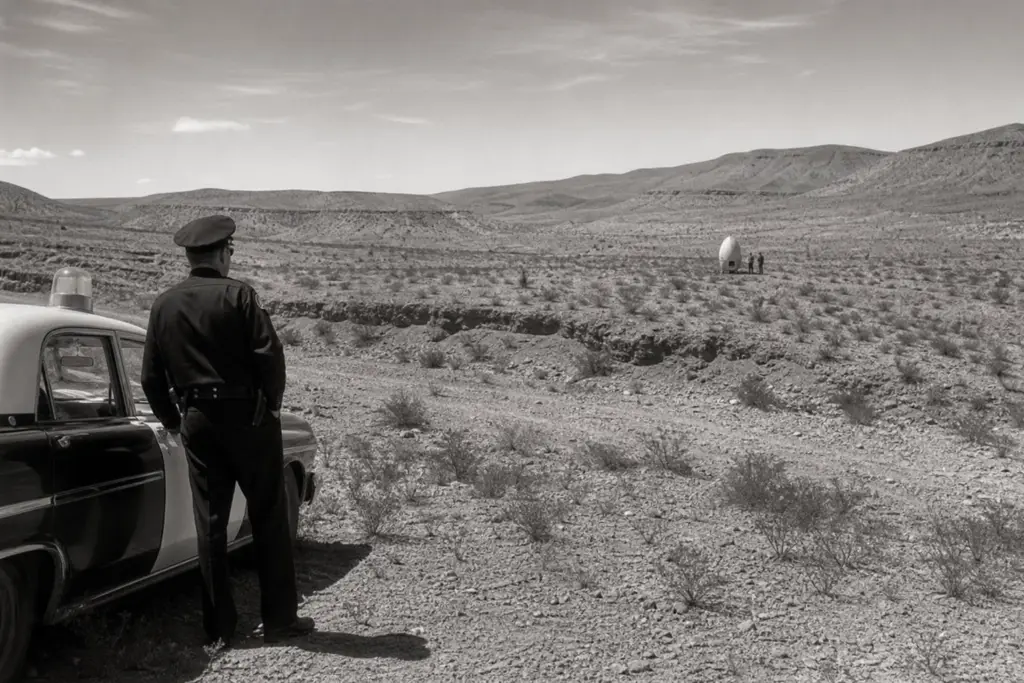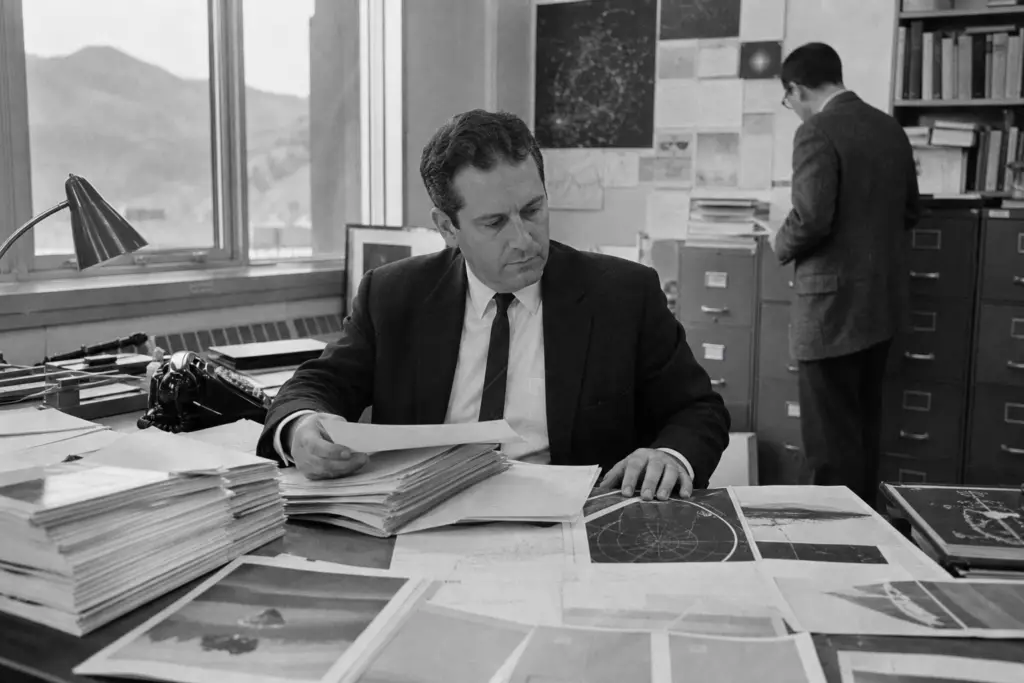
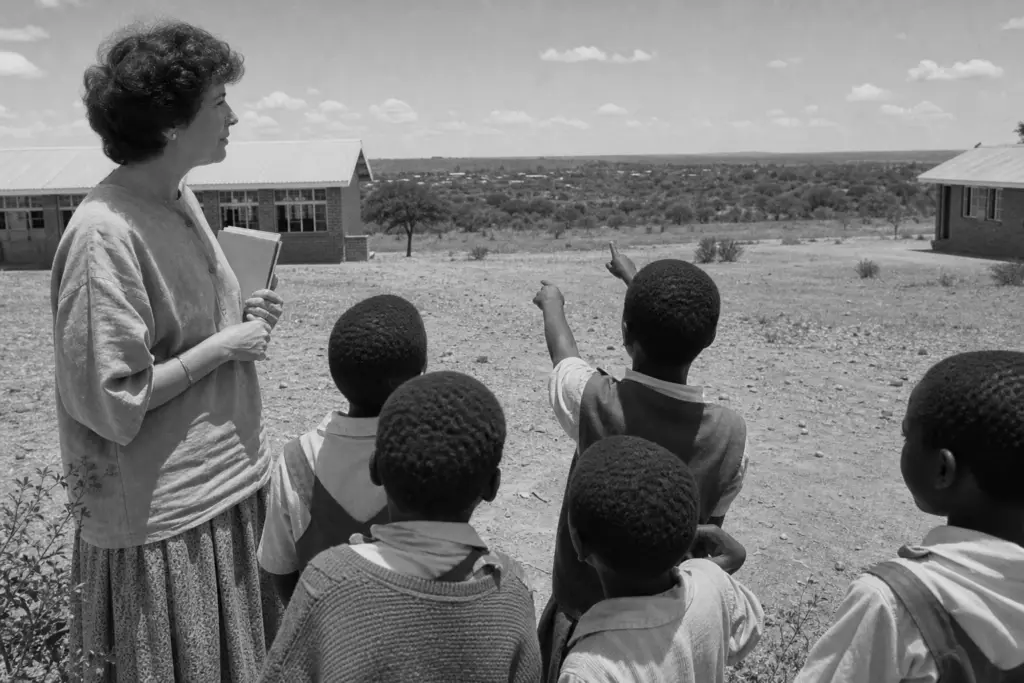
The Ariel School UFO incident is among the most frequently retold African close-encounter cases: children at a school near Ruwa, Zimbabwe, reported an unusual event on September 16, 1994. Its later life has included interviews, documentaries, skeptical commentary, and interpretations that range from misperception to an extraordinary encounter. Those layers should not be treated as interchangeable evidence.
This article narrows the question to the Cynthia Hind Ariel School investigation undertaken close to the original reports. Hind, a Zimbabwean ufologist, became an important early civilian collector and narrator of the case. The central historical issue is not whether later accounts are uninteresting, but what was recorded near the time: the children’s initial descriptions, interviews and drawings whose dates or provenance can be established, Hind’s own observations and published statements, and contemporaneous media material.
Early testimony can preserve details before decades of public discussion shape memory, yet proximity in time does not by itself establish the cause of an event. Children’s accounts require particular care: interview setting, question style, group influence, recording quality, and the completeness of surviving material all affect what can responsibly be inferred. Hind’s work is therefore examined as an investigative record with evidentiary value and clear limits, not as proof of an extraterrestrial explanation, nor as grounds to dismiss the witnesses outright.
Why Cynthia Hind’s Early Record Matters in the Ariel School Case
The crucial boundary is between material created in the days and weeks after the playground reports and narratives assembled years later. The reported event occurred at Ariel School near Ruwa on September 16, 1994, and accounts commonly describe a group of pupils discussing an unusual sighting during a school break. The precise number of children involved varies across retellings, so it should not be treated as a fixed fact without identifying the particular contemporary record behind it.
That is why the Cynthia Hind Ariel School investigation deserves separate attention. Its historical value lies in timing: an early civilian inquiry can preserve first descriptions, drawings, interview conditions, and the school’s immediate response before repeated media exposure and later interpretation become part of the witnesses’ remembered story. A dated drawing or recording is not inherently more truthful than a later recollection; it is stronger evidence of what a particular child expressed at that earlier point.
The distinction matters. Early records can establish that reports were made and show which elements recurred, but they cannot independently determine whether the children encountered a physical craft, misidentified something ordinary, influenced one another, or experienced another cause. Hind’s material is therefore examined here as a limited contemporaneous record, not as retrospective documentary drama or a claim about extraterrestrial reality.
Cynthia Hind, Ruwa, and the Start of the Field Investigation
Cynthia Hind entered the case not as a school official or a government investigator, but as a Zimbabwe-based UFO researcher with an established interest in collecting local sighting reports. Her involvement followed the circulation of the Ariel School story beyond the campus in the days after September 16. Later summaries often describe her as having been alerted through media and UFO-reporting contacts, but the surviving public record does not provide a single, fully documented chain showing who first called her or who arranged every stage of access.
Accounts generally place Hind’s first visit to Ariel School within days of the reported incident, while the children were still attending classes and the event was being discussed among pupils, parents, and staff. That proximity is important, but it should not be inflated into a guarantee of uncontaminated testimony: children had already spoken with one another, and adults had begun asking what happened.
The practical setting was a functioning primary school in Ruwa, rather than a controlled interview site. Hind encountered children in an environment where peer contact was unavoidable and where permission from school staff shaped access. A strong historical claim is therefore limited: she was able to speak with pupils close to the event and preserve material associated with those early conversations. Claims in later books, films, and online retellings about precise introductions, exact interview sequences, or private access should be treated separately unless they can be tied to a dated recording, note, broadcast, or contemporary correspondence.
That distinction also defines the value of the Cynthia Hind 1994 Ariel School investigation. It documents an early response to reports from children; it does not establish that Hind independently observed the reported object or beings, nor does her presence resolve what caused the children’s accounts.
What the Children Reported in the Early Accounts
The early accounts place the reported encounter during a school break on September 16, 1994, in Ariel School’s playground area near Ruwa, with attention directed away from the main buildings toward the surrounding bush. Children’s testimony recurrently involved an unusual object at that location and one or more figures nearby. That is a defined common core, a break-time playground sighting involving an object and figures, not a word-for-word account that every pupil gave in the same form.
Individual emphasis differed. Some children described the object as craft-like and concentrated on its shape, size, colour, position, or movement; others concentrated on the figures, including their appearance, eyes, clothing, movement, or an impression of communication. Accounts also differed on sequence: a child might describe noticing the object first, while another foregrounded seeing a figure. Those differences matter because a child who reported a figure was not necessarily reporting the same set of object details, or the same duration of observation, as a child standing elsewhere in the playground.
Nor should the later collective story be used to assume that every child personally saw every feature attached to the Ariel School episode. The early record concerns pupils who spoke about an event soon after it was reported; later films and retrospective interviews may preserve valuable memories, but they are a separate layer from the Cynthia Hind Ariel School interviews. A strong reading keeps identifiable early reports distinct from details that became more prominent years afterward.
Broad agreement and particular variation can both be informative in group testimony. Repeated references to a playground location, an unusual object, and figures suggest that pupils were describing a shared scene or shared discussion on September 16. Differences in number, colour, distance, movement, or perceived communication neither prove nor disprove a cause: they may reflect vantage point, attention, vocabulary, memory, or conversation among children after the break. The useful question is therefore specific, which features recur across early individual accounts, and which belong only to particular witnesses or later retellings?
What Hind Documented: Interviews, Drawings, and Early Media Context
The material most often linked to Hind’s early inquiry falls into three different evidentiary categories: reported conversations with pupils, drawings attributed to pupils, and media accounts that brought the story to a wider audience. They should not be treated as interchangeable. An interview can preserve a child’s wording, sequence, uncertainty, and response to a question; a drawing can preserve how that child chose to depict an image; a broadcast report can show that the account was circulating at a particular time. None, standing alone, establishes the physical cause of what was reported.
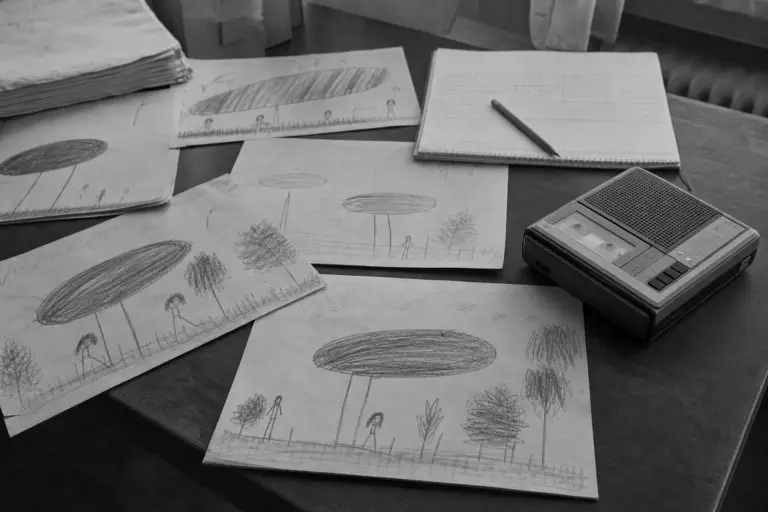
For contemporaneous interviews, the strongest form would be a complete recording or transcript identifying the interviewer, child, date, setting, questions, and any adults or peers present. An edited extract is still historically useful, but it cannot show everything omitted before or after the clip, whether prompts shaped an answer, or how consistently the same witness described the event across an interview. Later quotations attributed to Hind are weaker when the underlying recording, notes, or publication context is unavailable.
Witness drawings require the same attention to provenance. A drawing is most informative when it can be tied to a named child, a known date close to September 16, 1994, and a documented route from the school or investigator to its later reproduction. It can demonstrate that a particular visual account was made; it cannot independently verify that an object or figure was present. Undated scans, cropped images, and drawings circulated without the child’s identity or original caption may resemble early material but cannot safely be assigned the same weight.
Hind’s school visit also matters as an observational record rather than a direct observation of the reported phenomenon. What she could document was the post-event setting: children available for discussion, their accounts, their sketches, and the school environment in which reporting occurred. That establishes an early investigative encounter, not an independent sighting by Hind herself.
Local reporting and any BBC interview coverage should likewise be separated from later documentaries. Near-event coverage can corroborate that Ariel School reports had reached journalists and identify how the story was publicly framed at the time. But broadcast segments are selected, narrated, and often shortened for audiences. Without an unedited programme, transmission date, reporter identification, and archive reference, a clip shared online is best treated as an excerpt of uncertain completeness rather than a full record of the Cynthia Hind Ariel School investigation.
How Hind Approached the Children’s Testimony
The methodological question is not whether the children appeared convinced, but how an interviewer’s setting and prompts may have shaped the record that survives. The publicly available material does not support a complete reconstruction of Hind’s question-by-question practice: there is no full, authenticated transcript or unedited sequence here that establishes which children she spoke with alone, which conversations occurred after peer discussion, or which adults remained within earshot.
Those distinctions matter. An individual interview can preserve a child’s own sequence and uncertainty more clearly; a group exchange can reveal shared themes but also lets children hear, adopt, challenge, or elaborate one another’s descriptions. Neither format makes an account false. For corroboration, however, agreement reached without audible peer influence carries a different evidentiary weight from agreement expressed after a group conversation.
The same caution applies to prompt style. Open prompts, such as asking a child to describe what happened, allow unexpected detail and uncertainty to emerge. Leading prompts introduce a feature for the witness to affirm, such as asking whether a figure had a particular appearance. Without recordings or reliable transcripts that preserve both question and answer, later summaries cannot safely classify Hind’s interview methodology as consistently open or consistently leading.
Drawings were a useful part of her field investigation because they gave children a nonverbal way to represent what they wished to emphasize and made recurring imagery visible. They should be compared for both overlap and divergence, not treated as a vote on a single finished narrative. Hind’s sympathetic interest in UFO reports need not imply insincerity by the children, nor deliberate suggestion by Hind. It does mean that her selection of questions, memorable details, and apparent correspondences requires the same careful weighing applied to any investigator who approaches a case with an interpretive interest.
What Hind Could Conclude, and the Limits of the Evidence
Hind’s evidentiary contribution is therefore narrower, but more durable, than a final explanation of the event. Her early inquiry appears to have treated the recurrence of unusual descriptions, the children’s drawings, and the seriousness with which many pupils recounted the experience as significant. That is a conclusion about the existence and persistence of reports: children described something they regarded as extraordinary. It is not the same as a demonstrated identification of an unidentified aerial phenomenon, still less proof of non-human intelligence.
The strongest conclusion available from the surviving material is that a group of children gave overlapping accounts soon after the reported incident and that Hind preserved or discussed some of those accounts in an early civilian investigation. Sincerity matters because it weighs against casually treating every witness as dishonest; consistency matters because it identifies elements worth comparing across accounts. Neither quality supplies independent corroboration of the reported cause. A shared narrative can arise from a shared external event, but it can also develop through observation, conversation, rumor, and repeated retelling.
There is no publicly established physical item that ties the Ariel School reports to a craft, a being, or any other non-human source: no authenticated material specimen, instrument record, verified photograph, or independently documented trace evidence has been shown to establish such a connection. Drawings and testimony are documentary evidence of perception and report, not physical evidence of what was perceived.
The record also has clear documentary limits. It is not publicly complete enough to establish a full interview sample, a fixed sequence of every conversation, or the extent to which each child had encountered peers’ accounts or press coverage before being questioned. Those gaps matter because memory and suggestion can affect emphasis, confidence, and later agreement without implying deliberate fabrication. Media attention may preserve an early public record while simultaneously providing images and language that witnesses can absorb.
A fair skeptical interpretation is consequently methodological rather than dismissive: the case may reflect children trying to make sense of an unusual, ambiguous, or socially amplified experience under conditions that did not isolate their accounts. The competing interpretation, that their converging reports point to an extraordinary external encounter, remains an interpretation, not a causal finding established by Hind’s materials. Her investigation supports the historical reality of the reports; it does not settle what produced them or constitute evidence of any UFO disclosure program.
Separating Hind’s Early Investigation From Later Ariel School Narratives
The decisive comparison is not between more and less sympathetic investigators, but between records made at different points in the case’s life. Hind’s inquiry belongs to the days following the September 16, 1994 reports at Ariel School, when witnesses were pupils describing a playground and bush-area incident near Ruwa. John E. Mack’s subsequent interviews produced a different kind of material: later, more extended conversations after the event had been discussed among children, parents, teachers, and journalists. Hind’s near-event interviews and dated drawings are consequently strongest for establishing what was being reported in 1994; Mack’s interviews are better read as records of how individual children later described the experience’s meaning, emotion, and remembered details.
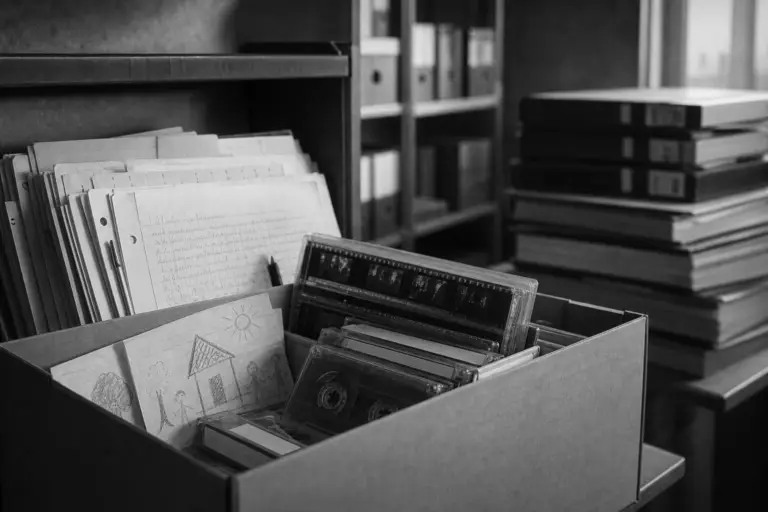
Later witness accounts add another chronological layer because the children of 1994 eventually appeared as adults in books, filmed interviews, podcasts, and documentaries. Those accounts can identify a witness, describe the personal consequences of the episode, or preserve details missing from surviving early material. They are less secure evidence for an exact sequence, a specific telepathic message, or an asserted motive for the figures when such a feature cannot be located in a dated 1994 interview, drawing, or contemporaneous news item. A strong historical claim identifies both its date and its form, for example, whether it comes from a child’s drawing or an adult recollection, rather than treating all versions as interchangeable.
That discipline matters when Ariel School is invoked in UFO news or UAP disclosure debates. A later film can assemble testimony persuasively, but editing and retrospective interpretation do not turn it into a contemporaneous record. Hind documented a notable, unresolved cluster of children’s reports close to September 16, 1994. Her material, Mack’s later interviews, and later witness accounts do not conclusively establish extraterrestrial visitation; readers should begin with the dated record before assigning that conclusion to the case.
What Cynthia Hind’s Early Record Can, and Cannot, Show
The lasting value of the early record lies in its modest but important historical function: it preserves evidence that children at Ariel School were giving unusual accounts soon after the reported event, and that Cynthia Hind regarded their statements and drawings as worthy of collection. That is stronger than relying only on memories formed after years of retelling, because it fixes part of the story in its original period.
It is nevertheless a record of testimony, not a record of the alleged object or figures themselves. Interviews and drawings can show what particular children said and chose to depict; they cannot independently establish distance, scale, identity, intention, or physical reality. Their evidentiary strength is greatest when dates, provenance, wording, and interview circumstances can be traced. It is weaker where the surviving account is summarized, selectively edited, or detached from its original context.
The Cynthia Hind Ariel School investigation should therefore be read neither as a trivial anecdote nor as a solved extraterrestrial case. It documents a serious early response to reports that many children found striking. The cause remains unresolved because the available material does not bridge the gap between corroborating that reports were made and verifying what, if anything, produced them. Keeping that distinction intact is the fairest way to preserve both the witnesses’ testimony and the limits of the evidence.
Frequently Asked Questions
Who was Cynthia Hind in the Ariel School UFO incident?
Cynthia Hind was a Zimbabwean UFO researcher who conducted an early civilian investigation after children at Ariel School near Ruwa reported an unusual event on September 16, 1994. She collected and discussed pupils’ accounts, drawings, and the school setting, but she did not witness the reported object or figures herself.
When did Cynthia Hind investigate the Ariel School children?
Hind’s first visit to Ariel School is generally placed within days of the reported September 16, 1994 incident. Her proximity to the event makes her material valuable for documenting what children reported in 1994, although pupils had already discussed the event with peers and adults.
What evidence did Cynthia Hind collect after the Ariel School incident?
Material associated with Hind’s inquiry includes conversations with pupils, children’s drawings, and early media context. The strongest records would identify the child, date, interviewer, setting, questions asked, and provenance, while undated or cropped drawings provide weaker evidence.
What should you look for when evaluating Ariel School witness drawings and interviews?
Look for a known date close to September 16, 1994, the witness’s identity, complete interview questions and answers, the setting, and whether peers or adults were present. A drawing or interview can document what a child reported, but it cannot independently verify that an object or figure was physically present.
How did Cynthia Hind’s early interviews differ from John E. Mack’s later Ariel School work?
Hind’s inquiry occurred in the days following the 1994 reports and is most useful for establishing what pupils were saying near the event. John E. Mack’s later interviews provide more extended accounts of meaning, emotion, and remembered detail after discussion among children, parents, teachers, and journalists.