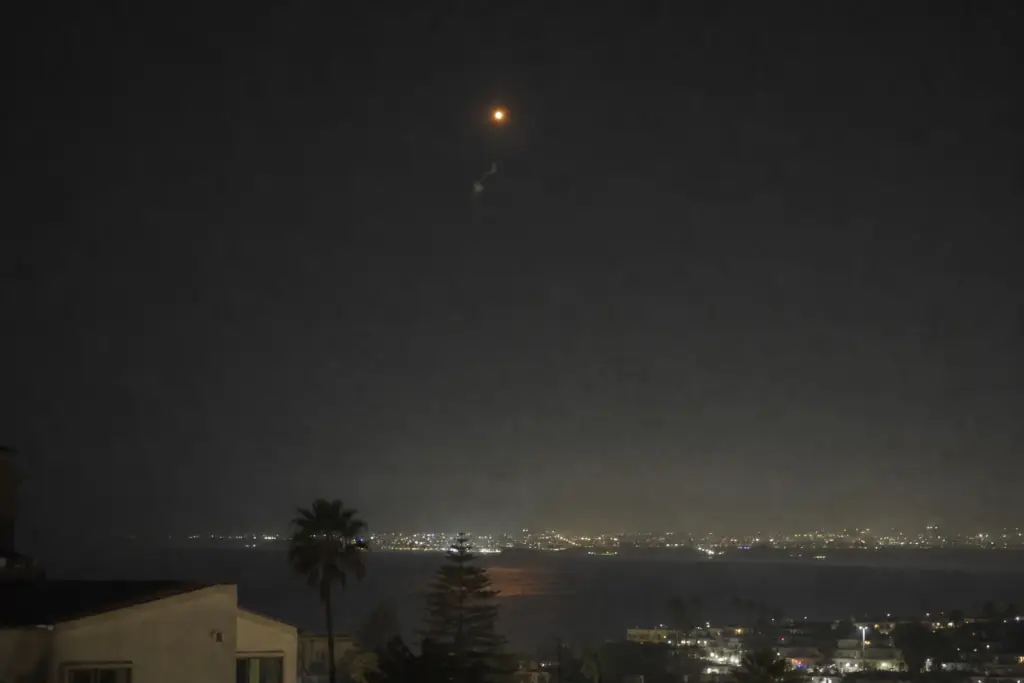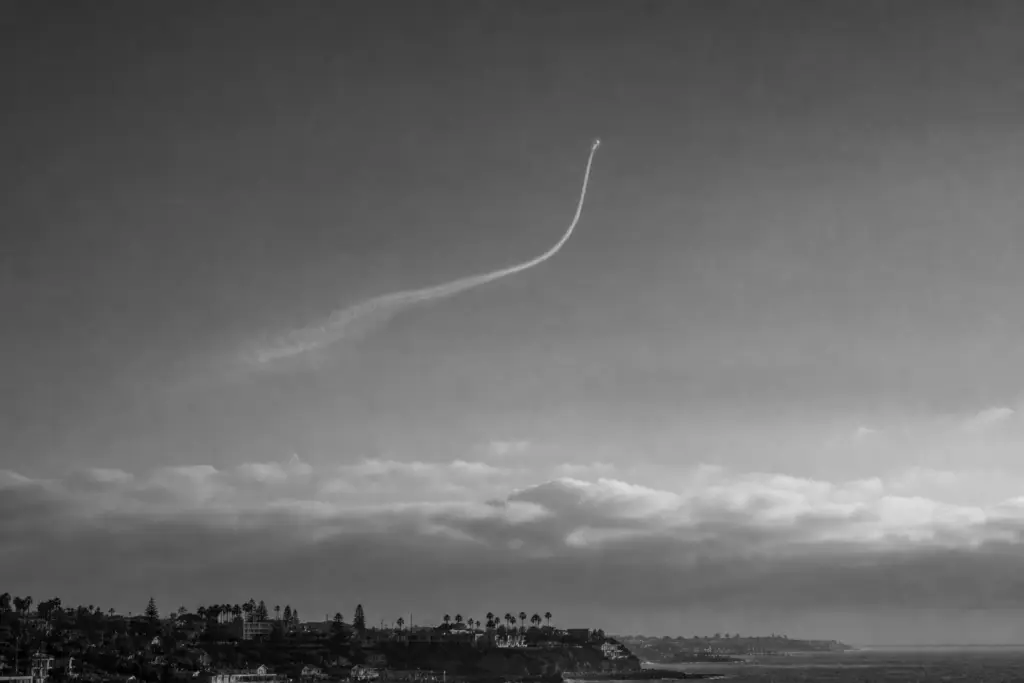
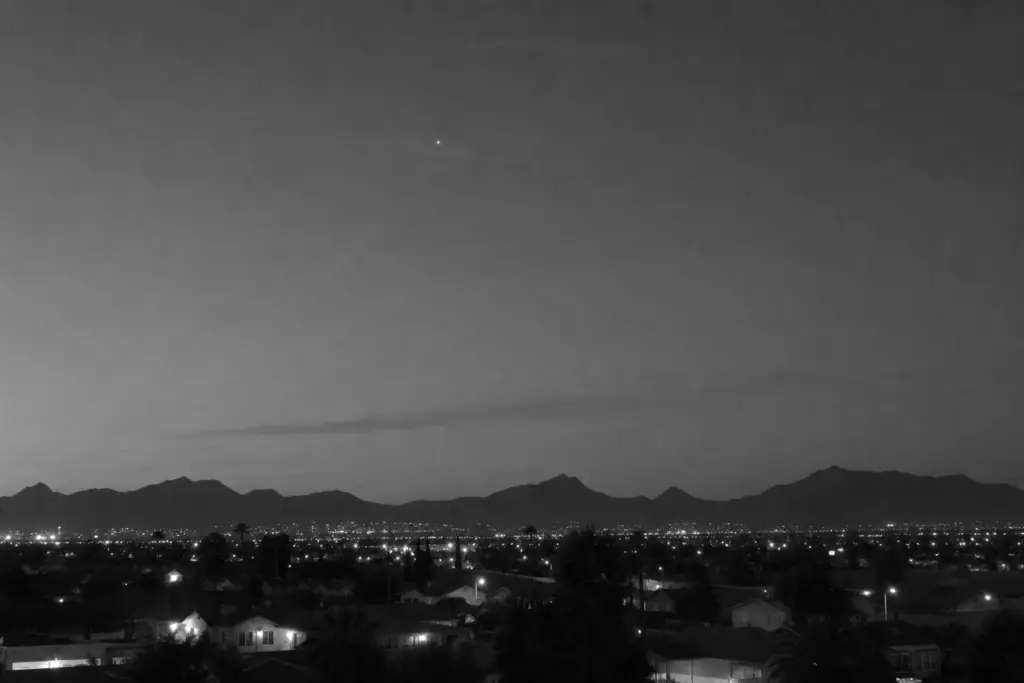
The Phoenix Arizona UFO sighting February 9 2020 begins with a striking but limited claim: a witness reported a bright white sphere moving overhead before it seemed to vanish. That description is compelling because it combines apparent motion, intense brightness, and a sudden loss of visibility, but it is an observation, not a demonstrated identification of an object or event.
This account therefore requires a narrower standard than a dramatic retelling. A sphere-like appearance can result from an object’s shape, distance, glare, or an out-of-focus point of light. Likewise, “vanishing” can describe an object passing into cloud, becoming obscured by buildings or terrain, rotating away from the Sun, moving beyond useful viewing range, or simply becoming lost against a brighter background. None of those possibilities settles this report; they explain why the wording alone cannot do so.
The sections that follow separate the witness description from independently testable evidence. They examine the available record, the precision of its reported time and place, any corroborating imagery, other witnesses, flight information, or official inquiry, and whether ordinary explanations fit the claimed behavior. The evidence-led conclusion may be an identification, a plausible explanation, or an insufficiently documented unresolved report, not a claim of extraterrestrial proof.
What Was Reported Over Phoenix on February 9, 2020
The account is presently best treated as a single witness-reported observation placed broadly in Phoenix, Arizona, on February 9, 2020. Its central description is narrow: a bright white, sphere-like object reportedly moved and then was no longer visible. “Sphere-like” records the observer’s visual impression; it does not establish physical shape, size, altitude, speed, or origin.
The date and city identify the claimed event, but they do not by themselves supply the details needed to match it confidently to a known object. An exact observing position, time, viewing direction, duration, and any original image or video would each make competing explanations easier to test. Without those particulars, an apparent change in motion or brightness cannot be converted into a measured trajectory or disappearance.
For that reason, this Phoenix report will be handled in three layers: what the witness reportedly described, what independent material can substantiate, and what ordinary mechanisms could fit the limited observation. “UFO” or “UAP” is useful only as shorthand for an object not identified in the report, not as a conclusion that the event was anomalous.
The Source Record: What Documentation Is Available
The available research file contains no retrievable original submission, archived URL, report identifier, or contemporaneous first-hand account for this February 2020 UFO sighting in Phoenix. That absence matters: a listing in a sighting database can preserve that someone made a claim, whereas an accessible witness report can reveal when it was submitted, whether the observer described events directly, and which observation fields were actually completed.

No date-stamped local-news article, public agency incident record, named second witness, photograph, video, radar record, or flight-data match has been provided for this case. Nor is there a verifiable exact time, street-level location, viewing direction, duration, or attached media file. The report therefore cannot presently be traced beyond the basic event label: Phoenix, Arizona, February 9, 2020, and a bright, apparently spherical object that moved before disappearing from view.
Those missing fields are not minor technicalities. A time and direction could test whether a sunlit balloon, aircraft, or celestial object occupied the relevant part of the sky; a continuous image or video could show whether the apparent disappearance was abrupt or simply a loss of contrast. An object may seem to vanish when it enters cloud, passes behind a structure, turns to present a less reflective surface, or becomes obscured by glare. None of those possibilities can be ranked responsibly from the surviving description alone.
The precise status is therefore insufficiently documented, rather than identified or confirmed anomalous: the account records a reported observation, but the underlying source material and independent corroboration needed for a firmer conclusion are unavailable.
Reported Appearance, Motion, Duration, and Disappearance Behavior
The surviving event label preserves only a minimal visual sequence: a bright white sphere, apparent movement, and a subsequent loss of visibility. “Bright white sphere” is an observer’s description of how the target looked from the ground; it does not establish a solid round object, its physical diameter, its distance, or the source of its brightness. In that limited sense, “bright white sphere Phoenix Arizona 2020” describes the reported appearance rather than a measured characteristic.
No accessible account supplies a clock time, whether the observation occurred in daylight or darkness, an estimated duration, compass direction, elevation above the horizon, size comparison, speed, or a stated change in brightness. It is likewise not possible to tell whether the apparent motion was steady, drifting, climbing, descending, or a change in the observer’s own viewing position. Those distinctions matter because a distant object can appear to travel across the sky even when its movement is slow or its distance is misjudged.
The record also does not preserve a detailed description of the reported “vanishing.” That word can mean an abrupt disappearance, but it can also describe a gradual loss of contrast that an observer experiences as sudden. An object may become hidden by thin cloud or haze, pass behind a roofline or other obstruction, move into glare, turn so that a reflective surface no longer catches the Sun, or become too faint or small for the eye to maintain.
Consequently, the white orb sighting Phoenix Arizona supports no more specific reconstruction of its trajectory or ending behavior. The apparent motion and disappearance are part of the reported sequence, but the missing time, direction, duration, and visual record prevent a meaningful distinction between a truly abrupt departure and an ordinary loss of visibility.
What Can and Cannot Be Corroborated
Independent corroboration requires more than another general report from the same date: a useful match would place a second observer in the Phoenix area at a comparable time and describe a target in the same part of the sky with similar movement and disappearance behavior. No such independently traceable witness account has been made available in the research file. That leaves the case supported by one reported observation rather than mutually reinforcing observations.
No contemporaneous photograph or video with recoverable original-file metadata is available here. Metadata can potentially establish when a file was created and sometimes where it was recorded; imagery without those details may still show what a camera captured, but it cannot securely connect the image to this event. There is also no public radar, airport, FAA, military, emergency-response, or official-investigation record supplied that can be matched to the report.
Weather conditions and astronomical circumstances cannot be meaningfully aligned with the sighting because the record lacks a clock time and a precise observing point. Phoenix-area METAR observations could otherwise provide a timed snapshot of visibility, cloud layers, and wind, while sunset, twilight, lunar position, and prominent planets depend on the observation time and direction. Those records can narrow possibilities only when their timing can be compared to what an observer saw.
The same limitation applies to flight-tracking and other sensor-track evidence. Public ADS-B displays can associate many transmitting aircraft with a place and time, but they do not cover every aircraft or every movement equally, and a missing track is not proof that nothing was airborne. Without a time, bearing, elevation, or trajectory, neither a positive aircraft match nor a meaningful exclusion is possible. The absence of public corroboration does not disprove the witness’s experience; it means the object’s identity, distance, and cause of its apparent disappearance remain insufficiently documented.
Could a Balloon, Aircraft, Drone, or Astronomical Object Fit?
A reflective balloon is one conditional fit for a white, round-looking target. At sufficient distance, its actual shape and size can be lost, leaving a small bright point or disk; sunlight can make it conspicuous against a darker portion of the sky. Wind-driven travel can also appear purposeful when the observer lacks fixed reference points. A gradual fade, a turn that changes the reflecting angle, or passage behind thin cloud could be perceived as a disappearance. A recorded time, viewing direction, elevation, and winds at more than one altitude would make that possibility testable; a sharply angular path, sustained high speed, or a clearly self-lit nighttime appearance would fit it less well.
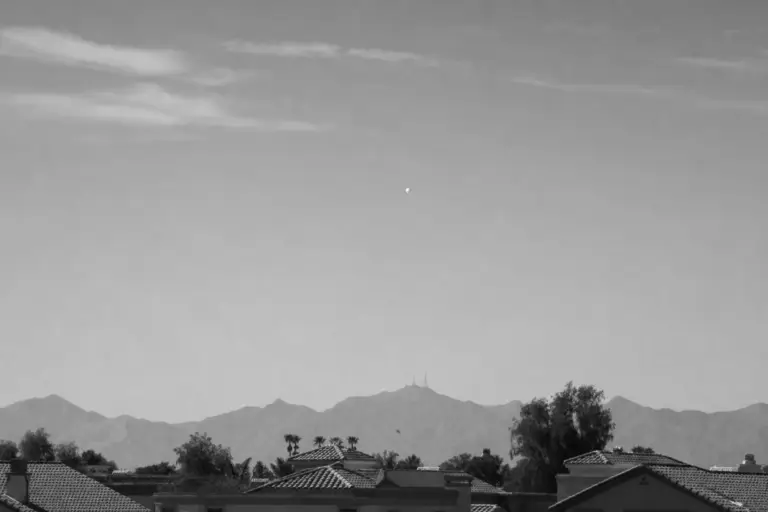
A civilian aircraft can produce misleading apparent motion when it approaches nearly head-on, recedes, or changes heading. Its position may seem almost fixed before lateral movement becomes obvious, while sunlit fuselage or landing lights can overwhelm detail and look like a single white source. Navigation lights, a blinking pattern, audible engine noise, a recognizable winged silhouette, and a flight track matching the reported direction would strengthen an aircraft interpretation. None of those discriminating features survives in the available event description.
A drone is another possible nearby source, particularly if its body is too small to resolve and its light faces the observer. Unlike a balloon, it can hover, reverse, or make abrupt controlled changes; unlike a distant aircraft, it would usually occupy a more local area of sky. Those distinctions matter because a sustained stationary phase, visible light pattern, audible rotor noise, or close-range changes in direction would supply useful clues. The preserved account does not retain them, so it cannot distinguish a drone from a more distant object.
Bright celestial objects require a different geometry. A planet, the Moon, or a bright star does not cross the sky rapidly in the way an aircraft does, but it can appear to shift relative to trees, buildings, clouds, or a moving observer. Glare, haze, cloud, or a change in viewing position can also make it seem to vanish. A stable position over several minutes would favor that category; a documented rapid traverse across the sky would weigh against it. Because no time, bearing, duration, or observing circumstances are available, these remain conditional possibilities rather than identifications.
Why the Case May Remain Unresolved
A positive identification would require observation details that can discriminate among the possibilities already considered: for example, a time and direction that permit a flight-track or astronomical comparison, or a duration and motion description that can distinguish drifting from controlled travel. The surviving record preserves none of those checkpoints. It supports only a claimed Phoenix observation on February 9, 2020, in which a white, round-appearing target seemed to move and then disappeared from view.
Unresolved here means that the available evidence cannot support a positive identification. It does not imply alien, non-human, classified, or government technology. Without a clock time, viewing direction, duration, distance estimate, original imagery, or an independently matching observation, ordinary explanations cannot be tested closely enough to select one, or ruled out responsibly.
This remains a civilian sighting report rather than a verified multi-sensor unidentified aerial phenomenon case. A multi-sensor case combines independently assessable material, such as synchronized witness accounts, authenticated imagery, radar or other sensor returns, and sufficiently precise time-and-location data to compare the records. No such material, or documented official investigation, is available in the record reviewed here. The most precise status is therefore insufficiently documented: a reported observation, but not evidence capable of establishing the object’s identity or origin.
How to Review Original Arizona Sighting Reports Responsibly
Begin with a research copy of the February 9 listing: save its URL, capture the page with the access date and time, and retain any report number, submission date, edits, or attached-media links. An archive snapshot can preserve a page that later changes or disappears, but it cannot restore details that were never recorded.
Keep testimony separate from metadata. “Bright white sphere” and “vanished” are witness descriptions; a clock time, coordinates, original-file timestamp, and camera model are metadata that can be compared against external records. If those fields emerge, compare the local time, using the correct Arizona time zone, with National Weather Service or airport observations, astronomical ephemerides, and flight-data results. A visible aircraft track may be a useful match; an absent public track is only a coverage limitation, not proof of an extraordinary object.
Other Arizona reports are meaningful comparisons only when time, place, direction, and behavior align. Following a responsible UAP reporting protocol does not turn this thin record into evidence of a cover-up.
What the Phoenix Report Does, and Does Not, Establish
A decisive identification would need a usable checkpoint, such as a time, bearing, elevation, or authenticated image, that could distinguish a drifting reflective target from controlled or apparent motion. None is preserved here. The record retains a claimed date, general location, and visual sequence, but not the material needed to establish distance, speed, altitude, physical form, or origin.
No independently traceable second witness, original image or video, radar return, flight-data correlation, official inquiry, exact time, or precise observing location is available in the record examined here. That does not demonstrate that the event did not occur; it means the reported observation cannot be independently reconstructed or tested against local conditions.
Several ordinary mechanisms remain plausible without becoming proven answers. A sunlit balloon can appear as a bright round point and fade when its reflective angle changes or it enters thin cloud. An aircraft or drone can seem to alter speed or vanish as its heading, distance, or visible light changes. A bright astronomical target can be lost to glare, haze, cloud, or foreground obstruction. Missing viewing geometry prevents a meaningful choice among these possibilities.
Accordingly, the Phoenix Arizona UFO sighting February 9 2020 does not establish an extraordinary craft or a confirmed anomalous event. Its status is unresolved because the surviving record is too limited for identification. A retrievable original submission or genuinely matching local report could sharpen that assessment; until then, the claim warrants careful preservation rather than dramatic inference.
Frequently Asked Questions
What was the bright white sphere reported over Phoenix on February 9, 2020?
A witness reportedly saw a bright white, sphere-like object moving over Phoenix, Arizona, before it disappeared from view. The record does not establish its physical shape, size, altitude, speed, or origin.
Was the Phoenix white sphere sighting ever identified?
No confirmed identification is available. The case is classified as insufficiently documented because no original report, exact time, precise location, image, video, second witness, radar data, or flight-data match is available.
Can a balloon appear to move and suddenly vanish in the sky?
Yes. A sunlit balloon can look like a bright white point or disk, drift with wind, and appear to vanish when it turns away from the Sun, enters thin cloud, or loses contrast against the sky.
What details are needed to identify a UFO sighting in Phoenix?
Useful identification details include the exact local time, observing location, compass direction, elevation, duration, estimated size, motion, and original photo or video metadata. These details allow comparison with weather observations, astronomical positions, and aircraft flight tracks.
What should you look for when comparing possible explanations for a bright object in the sky?
Look for features such as steady drifting, wind alignment, cloud entry, blinking lights, engine or rotor noise, a winged silhouette, controlled turns, or a stable position over several minutes. A balloon, aircraft, drone, and celestial object each produce different patterns, but the Phoenix report preserved none of these discriminating details.