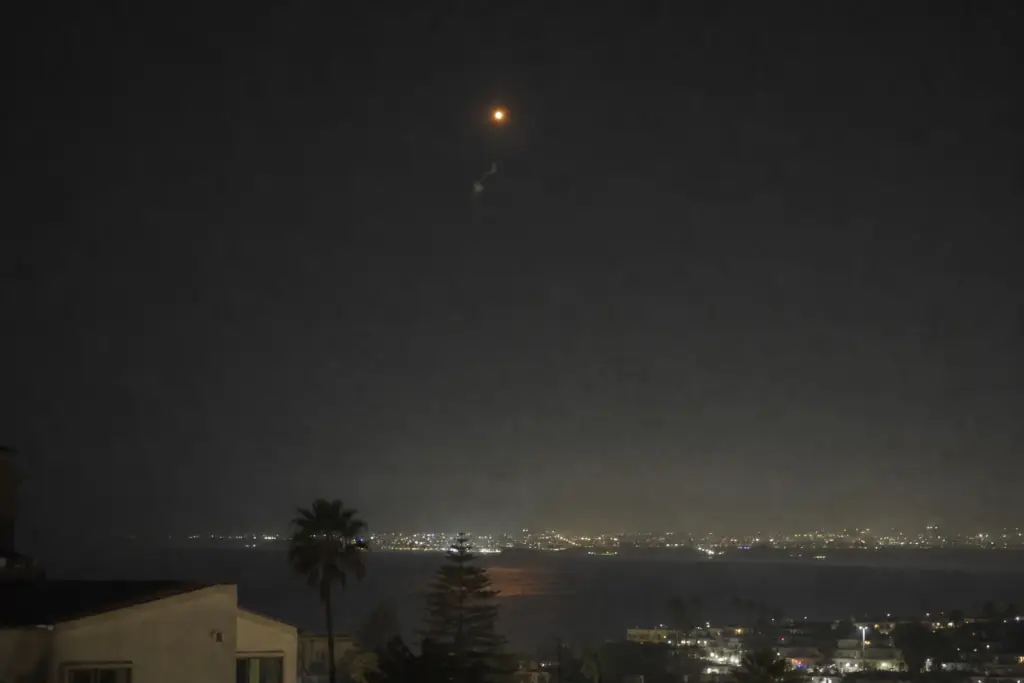
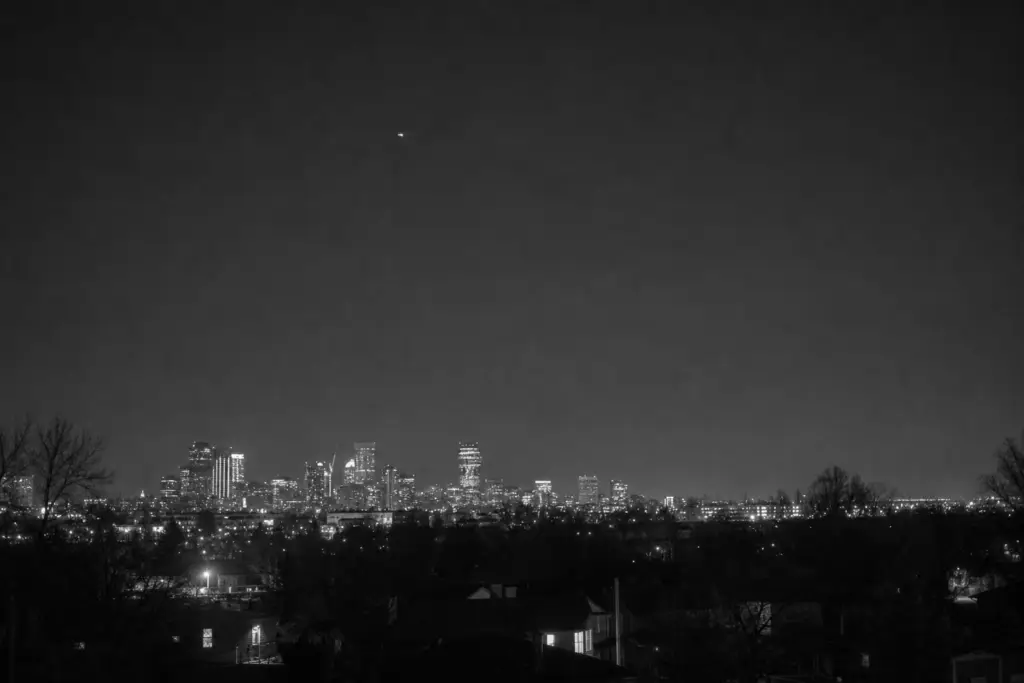
This Denver UFO sighting February 18 2020 begins with a modest but consequential ambiguity: a bright point in a sky recording was initially understood by the witness as something that might be a star or a bug. That reaction describes uncertainty at the moment of observation, not an identification of the object or evidence of an extraordinary craft.
The report places the recording in the Denver area on February 18, 2020. Its value lies in the fact that an observation was recorded; its limits depend on details that a clip may not preserve, including the original file, capture time, camera position, viewing direction, focus behavior, and unedited provenance. A luminous speck can appear to move because the camera moves, autofocus shifts, or something passes close to the lens. Conversely, apparent motion in a recording does not by itself establish distance, size, speed, or physical shape.
This examination treats the account as a case file. It separates the witness’s initial impression from what the video visibly shows, identifies which recording details are available and which are missing, and weighs ordinary explanations only against observable conditions. An unidentified image is a description of incomplete information, not a conclusion about what produced it.
What Was Reportedly Recorded Over Denver on February 18, 2020?
The case materials supplied for this assessment identify a reported Denver-area recording dated February 18, 2020. They describe footage containing a bright object that appears to move within the frame, while attributing to the witness an initial thought that it could have been “a star or a bug.”
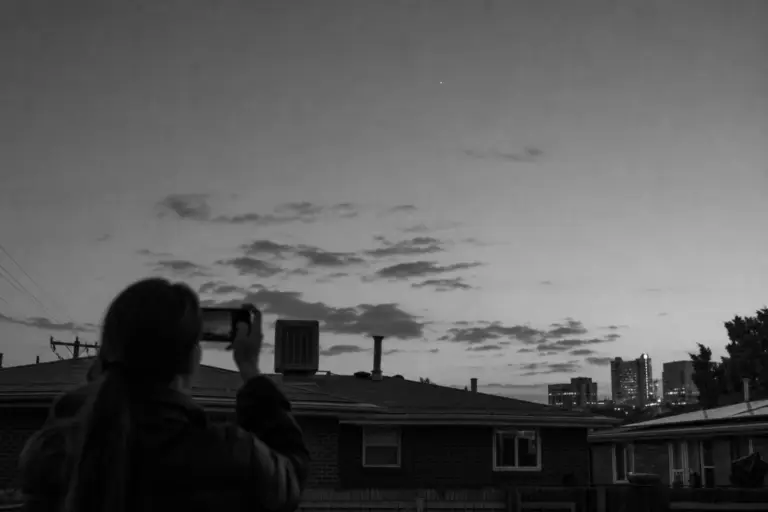
That is the full starting record available here. No earliest-post link, platform name, uploader identity, publication timestamp, original video file, embedded metadata, precise Denver-area vantage point, or observation time accompanies the material. Those omissions matter because a reposted or shortened clip can preserve an image while losing the details needed to connect it to a particular place, time, direction, and camera setup.
The reported bright object in the Denver sky on February 18, 2020 should therefore be treated as an observation claim paired with a video record, not as a confirmed physical identification. The footage may document what the camera rendered, but it does not independently establish the object’s distance, size, speed, altitude, or nature. The witness’s uncertainty is useful context for reconstructing the encounter; it is not evidence that the object was a craft or that it behaved beyond ordinary explanations.
A defensible account begins by preserving that narrow distinction: a date and general location are reported, a luminous moving point was reportedly recorded, and the available record does not yet supply the provenance or measurement details required to say more.
The Witness’s Initial ‘Star or Bug’ Interpretation
The phrase “a star or a bug” is the only witness wording preserved in the available case summary. It records an immediate, tentative comparison rather than a settled claim: a star would suggest a distant light in the sky, while a bug would suggest a small nearby subject, potentially close to the camera. Those are radically different possibilities, and the wording does not choose between them.
That uncertainty is valuable witness testimony because it captures how ambiguous the bright point seemed at the time. It cannot, however, supply the measurements that the account lacks. A person cannot derive distance, altitude, physical size, or speed from a bright point alone; apparent movement can also reflect camera movement, refocusing, zooming, or a nearby insect near the lens. The original sighting report available for this assessment does not preserve whether the witness observed the object directly with the unaided eye, encountered it only through the screen or footage, or did both.
Nor does the surviving summary provide a duration, compass direction, elevation above the horizon, distance estimate, speed estimate, device description, or filming circumstances. Each missing detail changes what can be tested: direction and time could be compared with astronomical or flight records, while stable original footage could help distinguish a distant light from a close, out-of-focus object. “Star or bug” should therefore remain exactly what it is, a candid statement of uncertainty, not an identification or evidence that something was physically traveling high over Denver.
What the Denver Sky Video Can, and Cannot, Establish
A frame-by-frame review can describe image behavior, but it cannot turn an uncalibrated bright point into a measured object. In the materials available for this case, there is no original-file record to examine for focus shifts, motion blur, exposure changes, zoom steps, camera shake, rolling-shutter distortion, or compression artifacts. Nor is there a description of fixed visual references, such as a roofline, horizon, building, cloud layer, or stars, that would allow the point’s movement to be separated from movement of the camera.
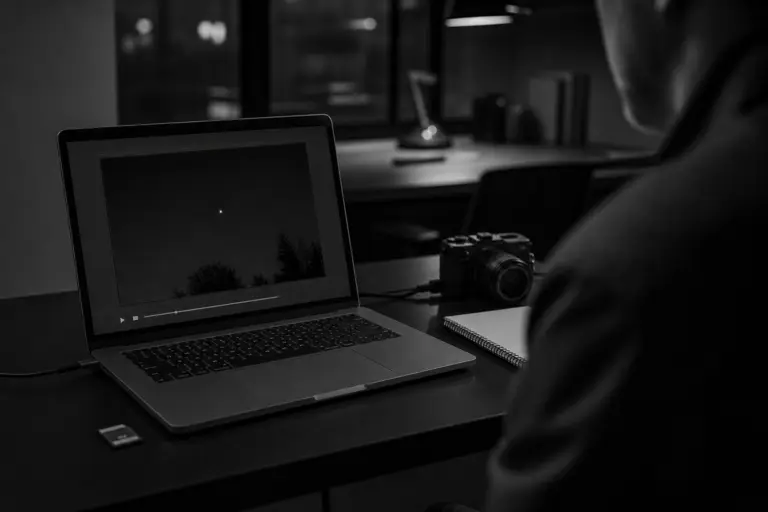
Brightness in a recording is especially limited evidence. A small nearby subject that is out of focus can become a large glowing disk or blob; a distant light can also bloom when the camera raises exposure or loses focus. Zoom enlarges pixels as well as the subject, while digital compression can smear edges and make a point of light seem to change shape or pulse. These effects are camera artifacts: image changes produced by the device or its processing rather than demonstrated changes in the filmed subject. Without the Denver sky object video 2020 in its least-recompressed form, neither apparent size nor apparent shape supports an estimate of physical dimensions.
Video metadata would add context, not automatic identification. If retained, the original file might preserve creation time, device model, frame rate, and sometimes location information; those fields can help test the reported date and place against independent records. They do not by themselves establish where the camera was pointed, the object’s distance, its altitude, or its trajectory. A useful review would compare the complete file with any reposted version, inspect individual frames for focus and exposure behavior, and look for stable landmarks. Until those materials are available, the recording establishes only that a bright image was reportedly captured, not what produced it or how it was moving in three-dimensional space.
Plausible Explanations for a Bright Moving Object
The available record does not support a positive identification, so “supported” should be reserved for an explanation that matches documented features rather than merely being common. On that standard, none of the proposed causes is supported; several remain possible but unverified because the critical observations, time of day, duration, direction, and the full video, are absent.
- Insect near the lens, possible but unverified. A nearby insect can cross the frame on an irregular path and become a bright, soft blob when it is outside the camera’s focus range. That possibility fits the witness’s own tentative “bug” comparison. It would become stronger if the point changed focus independently of the background, drifted erratically, or showed rapid changes in apparent size. None of those behaviors is preserved in the case summary.
- Star or planet, possible but unverified. A celestial object is normally steady relative to the landscape; apparent movement in handheld footage can result from panning, shake, zoom, or autofocus. A precise recording time and viewing direction would distinguish this option from a genuinely traversing bright moving object in the sky. Neither is available here, so no astronomical match can be responsibly claimed.
- Aircraft, possible but unverified. An aircraft typically follows a smooth, sustained track and may show recurring navigation-light flashes or separate colored lights. A fixed camera view, duration, and direction could be compared with flight records. The surviving account supplies none of those checkpoints, and it does not describe blinking lights.
- Satellite or meteor, poorly matched to the present record. A satellite ordinarily appears as a steady light moving smoothly across a substantial stretch of sky, while a meteor is generally a brief, fast streak or flare. These are not exclusions: the missing duration and path information prevent a firm test. But the report does not preserve the traits that would make either explanation a strong fit.
- Drone, possible but weakly grounded. A drone can hover, change direction, or carry multiple lights, unlike a satellite; unlike a distant aircraft, it may appear to stop or maneuver over a small area. No reported hovering, directional change, sound, light pattern, or scale cue links this recording to a drone.
- Camera artifact, possible but unverified. Exposure adjustment, focus hunting, digital stabilization, and compression can create apparent pulsing, motion, or shape changes in a bright point. This explanation concerns the image rather than an object in the sky. It cannot be ranked higher without the original file and stable reference points.
The practical result is deliberately limited: the report leaves several ordinary explanations open, but it supplies too little observational detail to choose among them. An unidentified bright image is not, by itself, evidence that the underlying object behaved extraordinarily.
What Evidence Would Be Needed to Identify the Object?
A usable identification record begins by anchoring the observation in space and time. Date and location verification means more than a Denver-area label: it requires a verifiable filming point or coordinates, a local timestamp with time zone, and the camera’s viewing direction and elevation above the horizon. Those details permit targeted comparisons. A light in a known direction at a known minute can be tested against the sky; a smooth track can be compared with aircraft data; and a claimed movement can be measured against a fixed skyline rather than against a moving hand-held frame.
- The original, continuous video file: an uncropped recording from before the point appears until after it leaves frame preserves context that a clip may discard. Its camera model, lens, frame rate, exposure and focus settings can reveal whether changing focus, stabilization, or exposure plausibly produced the apparent behavior. A file hash would help establish that the examined copy has not changed.
- Stable visual references: a roofline, distant building, horizon, or stars in the same frame gives the image a coordinate system. If the bright point shifts while those references remain fixed, its apparent motion is more meaningful; if all features shift together, camera movement is the simpler account.
- Independent observations and sensor-track evidence: corroborating witnesses should provide their own time, position, direction, duration, and description before comparing notes. Agreement from separated locations can help distinguish a nearby lens effect or insect from a distant aerial object, while a report from only one camera cannot do so.
An unidentified aerial phenomenon is a descriptive status: the available material does not permit a reliable identification. “Unexplained” is a higher threshold, reached only after the recording provenance, observational geometry, and relevant independent comparisons have been adequately examined. The present record falls into the first category because those inputs are absent; it does not establish that the underlying object resisted adequate investigation.
A Measured Assessment of the February 18 Denver Report
The appropriate confidence level is low, not because the reported object is inherently extraordinary, but because the surviving case record is too thin to discriminate among ordinary possibilities. It preserves a Denver-area date, a report of a bright moving point in video, and the witness’s tentative comparison to “a star or a bug.” It does not preserve the original continuous media, usable metadata, a precise filming location or time, viewing direction, camera details, or an independent observation.
Those omissions have specific consequences. A nearby insect or a camera-related effect cannot be excluded without the original footage and its surrounding frames; an astronomical object cannot be tested without a time and direction; and aircraft, satellite, drone, or meteor comparisons lack the geometry and duration needed for a meaningful match. None of those explanations is established by the available material, but neither does the material document measured speed, distance, shape, or maneuvering that would displace them.
For that reason, the Denver UAP sighting of February 18, 2020 remains an unresolved report rather than evidence of an anomalous craft. A local, ambiguous recording also does not independently substantiate UFO or UAP disclosure, alien or non-human intelligence, or a government cover-up. Claims of that scale require separate, directly relevant evidence; this case file does not supply it.
What Can Be Concluded From the Denver Recording?
The narrow conclusion turns on the difference between a record of ambiguity and a record of identification. The available account preserves a reported Denver-area date, a bright point seen moving in a recording, and the witness’s tentative description of it as “a star or a bug.” That wording is useful because it captures uncertainty rather than supplying a physical characteristic such as distance, size, speed, or shape.
The video evidence does not close that gap. Without a retained original file, reliable capture metadata, a precise time and filming position, a viewing direction, fixed background references, or another witness, the apparent movement and brightness cannot be converted into a trajectory or object measurement. A near-lens insect, camera or focus behavior, an aircraft, an astronomical light, a satellite, drone, or meteor therefore remains possible only in the limited sense that the surviving material does not rule those explanations out; none can be responsibly selected as the answer.
For the Denver UFO sighting February 18 2020, the defensible takeaway is an unresolved observation: a bright moving image was reportedly recorded, but the available record lacks the provenance and independent corroboration needed for a reliable identification. “Unidentified” describes that evidentiary limit, not evidence of an extraordinary object.
Sources
Frequently Asked Questions
What was the bright object recorded over Denver on February 18, 2020?
A video reportedly captured a bright point that appeared to move in the Denver area on February 18, 2020. The available record does not identify its distance, size, altitude, speed, shape, or physical source.
Was the Denver bright object confirmed as a UFO or UAP?
No. It remains an unresolved observation because the case lacks the original continuous video, usable metadata, a precise filming location and time, viewing direction, and independent corroboration.
Could a bug near the camera lens look like a bright object in the sky?
Yes. A nearby insect outside the camera’s focus range can appear as a bright, soft blob and may seem to move irregularly across the frame. This possibility cannot be tested without the original footage and surrounding frames.
Could a star, planet, aircraft, satellite, or drone explain the Denver sighting?
Several ordinary explanations remain possible, including a star or planet, aircraft, drone, satellite, meteor, or camera artifact. A precise recording time, compass direction, duration, and stable visual references would be needed to compare the sighting with astronomical or flight records.
What evidence would be needed to identify the Denver sky object?
Useful evidence would include the original uncropped video file, a local timestamp with time zone, filming coordinates, camera direction and elevation, plus stable references such as buildings or a horizon. Independent witnesses from separate locations and file details such as camera model, frame rate, focus, and exposure settings would help distinguish actual motion from camera effects.