Bob Lazar’s 1989 Claim of Reverse-Engineering Alien Technology Near Area 51: Disputed Yet Influential
Explore the Bob Lazar alien technology claim: assess S-4 allegations, Element 115 science, disputed records, and UAP influence.
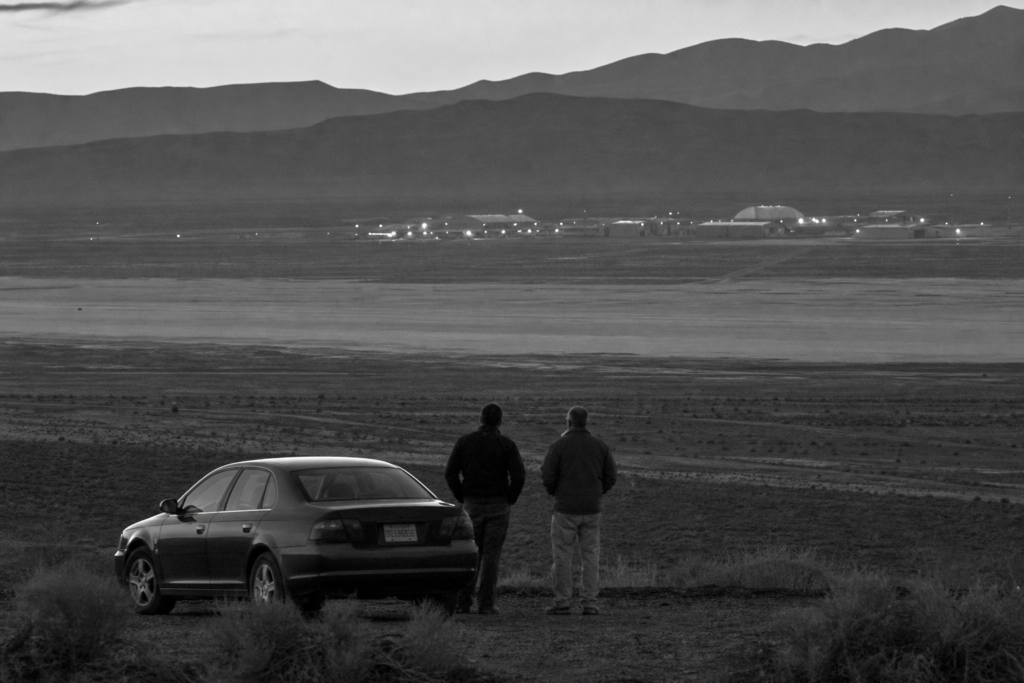
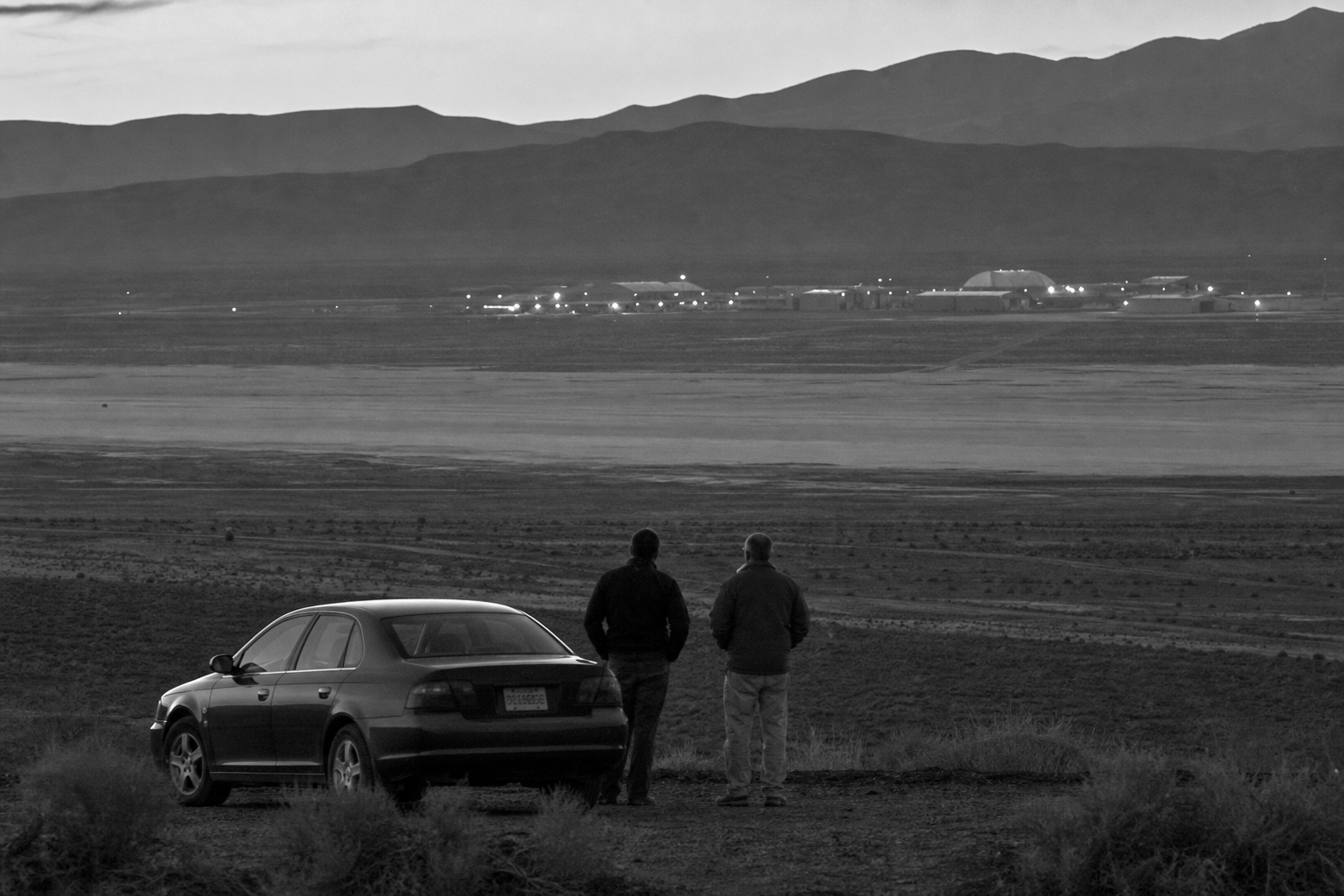
The Bob Lazar alien technology claim endures because it offers an unusually specific insider narrative while remaining outside independent verification. In 1989, Lazar alleged that he had been taken to a site he called S-4 near Area 51, where he worked on recovered nonhuman craft and efforts at reverse-engineering alien technology. He also described a propulsion system involving a supposedly stable form of element 115. Those are Lazar’s assertions, not established facts.
This article separates the story into testable parts rather than accepting or rejecting it as a single package. It examines what Lazar said at the time, what public records can and cannot establish about his background and alleged work, and whether the scientific claims comport with what is known about element 115 and propulsion. It also distinguishes limited points sometimes presented as corroboration, such as reported observations near Groom Lake, from evidence that would independently demonstrate an S-4 program, recovered craft, or Lazar’s participation in one.
The distinction matters. A detailed account can be culturally powerful without being evidentially confirmed; missing public information is neither proof of a secret program nor, by itself, conclusive disproof. Lazar’s account helped give later UFO and UAP disclosure debates a familiar vocabulary of hidden facilities, technical insiders, and government-held technology. Its influence is real. Its central claims remain disputed.
Bob Lazar’s 1989 Story: Unverified, Disputed, and Still Defining
The story entered public view through Las Vegas television interviews in 1989, in which Lazar used the name “Dennis” before identifying himself. He placed the alleged work at S-4, a location he described as near the Groom Lake test range, and said the assignment involved examining recovered craft rather than flying them. Area 51 itself was a real, long-secret defense-testing installation; that fact provides setting, not confirmation of Lazar’s separate account.
The evidentiary categories are important. Lazar’s interview is an allegation: a first-person assertion. Details that could direct further inquiry, such as a claimed site, job, colleague, or observed activity, are leads. Corroboration requires independent evidence consistent with a specific detail, while verification would require evidence capable of establishing the central proposition: that Lazar worked in the alleged program and that recovered nonhuman craft were present. Neither a compelling interview nor public fascination crosses that threshold.
His narrative remains disputed because its most consequential elements lack independent public confirmation, while questions surrounding his stated employment and educational history complicate assessment of his claimed access. Those gaps do not prove a hidden program, but neither do they turn secrecy into evidence for one. They define the limit of what can responsibly be concluded.
Yet the account became a lasting model for Area 51 UFO claims and later UFO disclosure culture: an insider describes compartmented work, advanced hardware, and institutions withholding transformative knowledge. That template has shaped public expectations of later UAP allegations, even though official interest in unidentified reports does not validate Lazar’s particular story.
What Lazar Claimed in 1989 About S-4 and Reverse Engineering
Lazar’s 1989 account is best read as a chain of distinct assertions, each carrying a different evidentiary burden. The claimed workplace was not the publicly familiar Groom Lake complex itself. He said he had been recruited for an alleged facility called S-4, built into a hillside near Papoose Lake, southwest of Groom Lake. In his description, the remote location and compartmented access explained why he regarded S-4 as separate from the better-known Area 51 installation.
| Component | What Lazar said he experienced | What went beyond firsthand observation |
|---|---|---|
| Assignment and site | He said he was brought to S-4 for technical work and shown secured underground spaces and hangar-like bays. | Its place in the larger military or intelligence structure, and the reason it had allegedly been created, were conclusions he drew from briefings and context. |
| Craft | He said he saw several purported non-human craft, including a small, disc-shaped vehicle he later called the “sport model.” | He attributed their origin and recovery history to material he said he was allowed to read, not to an event he personally witnessed. |
| Reverse engineering | His Bob Lazar reverse engineering claim was that his role involved examining the craft’s propulsion rather than operating the vehicle or participating in its recovery. | He inferred that the program sought to reproduce or understand technology whose operating principles were far beyond conventional aerospace engineering. |
| Test activity | He said he later watched lights and apparent test flights from a distance near the Groom Lake area, sometimes with friends. | A distant observation could not itself establish what vehicle was flying, who operated it, or whether it came from the alleged S-4 program. |
The propulsion account supplied the narrative’s most memorable technical detail. Lazar described a reactor-like system using element 115, which he said produced a gravitational effect that the craft could exploit for motion. At this stage of the story, that was a description of an alleged mechanism, not a demonstrated engineering result. His claimed observations concerned hardware, interiors, briefings, and tests; the larger proposition that the United States possessed recovered non-human technology depended partly on information he said was provided to him.
This distinction matters because the Bob Lazar S-4 claims are not all equally testable. A claimed work location, access arrangement, colleague, or employment relationship can potentially be checked against records and independent witnesses. The alleged origin of the craft and the history of the program are harder to assess because Lazar did not present firsthand recovery evidence. Separating those layers prevents an apparent detail in one part of the story from being treated as confirmation of every other part.
The Record Questions: Los Alamos, Credentials, S-4, and Access
Employment history is a more useful test than a dramatic sighting because it can leave several kinds of trace: payroll records, contractor rosters, staff directories, professional bylines, security-clearance paperwork, and colleagues able to describe a person’s duties. Those traces do not carry equal weight. A telephone directory entry can show that someone was reachable through an institution or assigned a number there; it does not, by itself, establish job title, direct employment, clearance level, or access to a particular project.
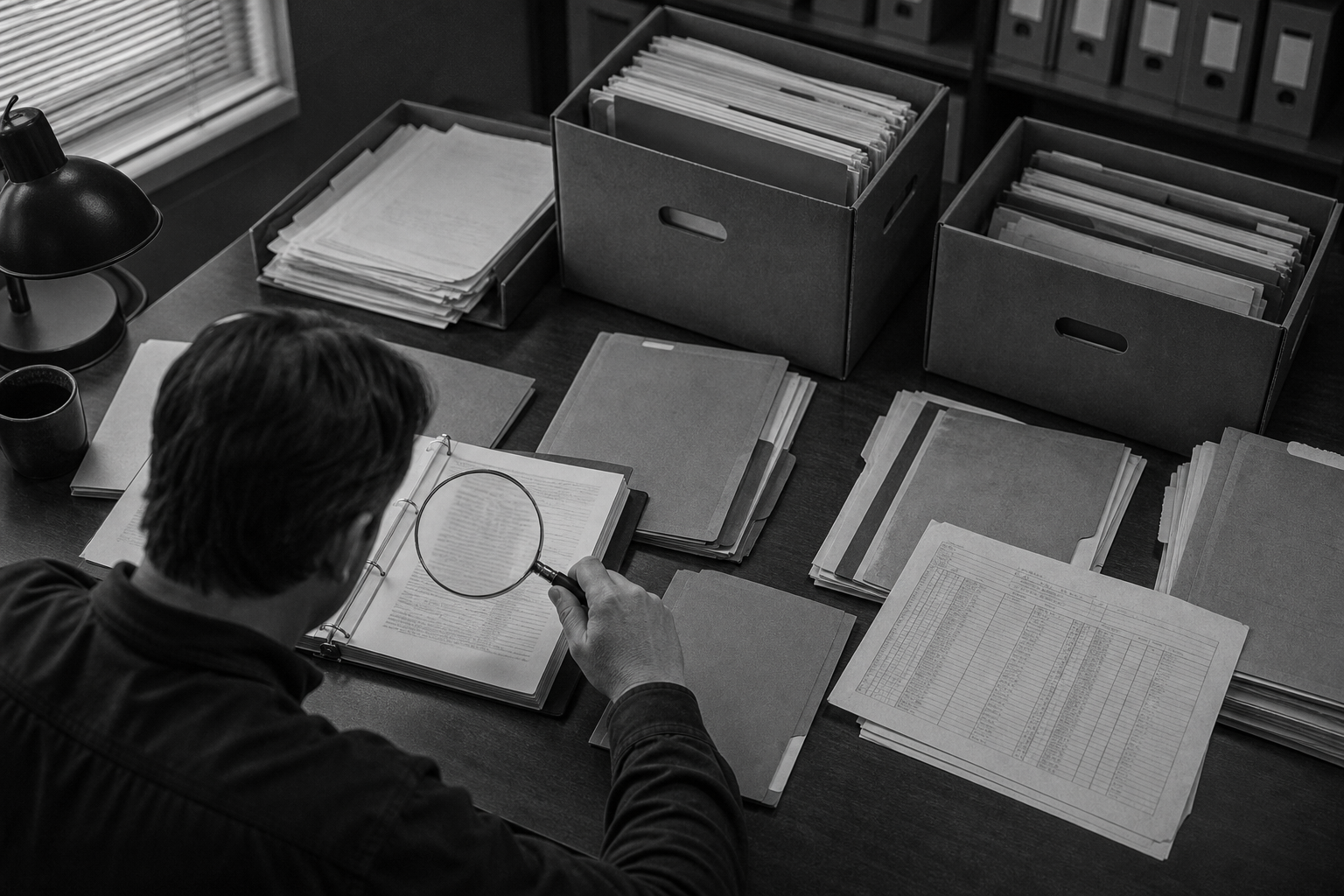
Lazar’s name has appeared in material associated with Los Alamos, including a laboratory telephone directory, and a 1982 Los Alamos Monitor article described him as a physicist at the laboratory. Supporters treat those references as corroboration that he worked in the Los Alamos environment. Los Alamos National Laboratory has disputed that he was employed by the laboratory, while reporting has raised the possibility that any association was through a contractor. That distinction matters: contractors can work at national laboratories and appear in internal directories without becoming laboratory employees, but such an arrangement still would not demonstrate the advanced role Lazar later described.
His educational claims present a separate record question. Lazar has said he attended the Massachusetts Institute of Technology and the California Institute of Technology; both institutions have said they found no record of his attendance. Missing academic records are not automatically dispositive in every historical inquiry, but the combination of institutional denials and the lack of independently established degree evidence weakens a biography that relies on elite technical training to explain access to a highly restricted assignment.
The Bob Lazar Area 51 claim faces its largest documentary gap at S-4. Declassified material and later official acknowledgment establish that secret work occurred around Groom Lake, but they do not publicly verify the hillside facility near Papoose Lake, the alleged hangars, or Lazar’s access to them. Secrecy explains why some records may be unavailable; it does not convert unavailable records into corroboration. The strongest documentary evidence would connect Lazar to a named employer, a defined role, and the asserted location. Publicly, that chain has not been established.
Alien Craft, Anti-Gravity, and Element 115: What Science Can, and Cannot, Confirm
The technical part of Lazar’s narrative makes a more specific claim than merely having seen unusual craft. He said their power source used a stable isotope of element 115 in a compact reactor, producing energy and antimatter; a “gravity amplifier” then directed gravitational effects for lift and travel. In this account, what is often called anti-gravity propulsion was not a conventional engine pushing against air or expelling propellant. It was an alleged manipulation of gravity itself, part of purported reverse-engineering claims that would require evidence far beyond an eyewitness description.
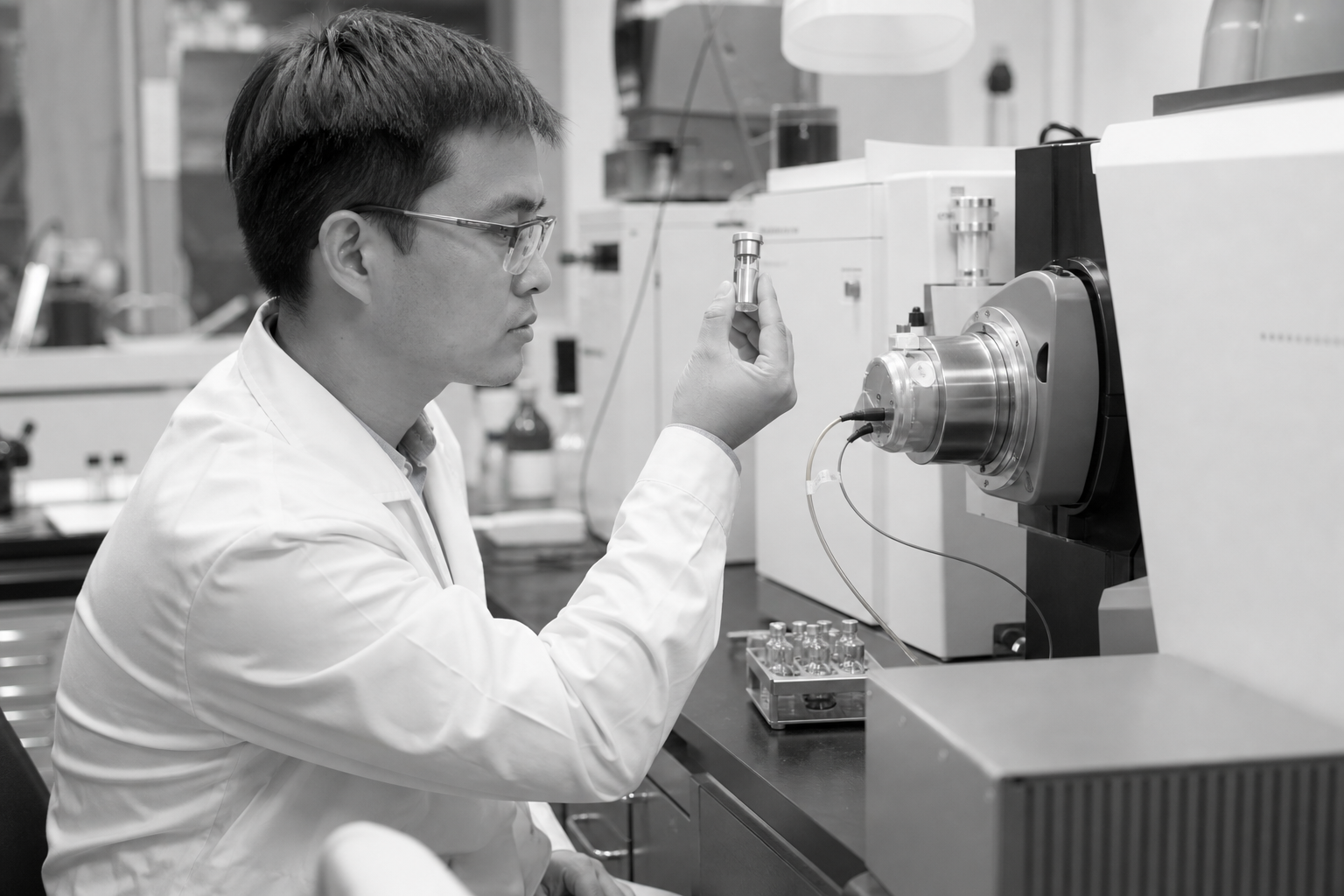
Element 115 later became a real entry on the periodic table, named moscovium after its laboratory synthesis and formal recognition. That development is sometimes presented as support for Bob Lazar alien technology claims, but it establishes only that nuclei with 115 protons can be created under controlled experimental conditions. The moscovium isotopes produced so far are highly radioactive and decay rapidly. Their creation does not show that a long-lived isotope exists, much less one that can be machined, stored as reactor fuel, or made to generate the propulsion effects Lazar described.
The distinction is fundamental. Naming an element identifies its proton number; identifying a particular isotope concerns its neutron count, mass, decay behavior, and measurable physical properties. A hypothetical stable or comparatively long-lived isotope of moscovium would be a separate scientific finding, not an implication of the short-lived isotopes already observed. Nor does nuclear instability in known moscovium samples demonstrate an exotic energy process, antimatter production, or anti-gravity propulsion.
Verification of the Bob Lazar alien technology account would require physical evidence that independent researchers could examine: a sample with a documented, secure chain of custody; measurements by multiple laboratories using appropriate instruments; results that other teams could repeat; and published analysis detailed enough for scientific scrutiny. A material that merely resembles an unusual metal, a private test, or an asserted provenance would be weak evidence. No publicly available sample meeting those standards has established Lazar’s proposed element-115 fuel or the claimed propulsion mechanism.
What About the Reported Test Flights and Other Partial Matches?
Lazar’s reported viewing trips near Groom Lake are often treated as the most tangible part of his account. He said he and others watched unusual lights or apparent test activity from public approaches to the restricted range, and supporters argue that the observations matched details he had described privately. He also spoke of security routines and Janet flights, the commuter-aircraft system associated in public discussion with personnel travel to highly restricted Nevada sites.
Those details can make an account more interesting because they place it in a setting where unusual aerospace activity and tight access controls are plausible. But contextual plausibility is not direct corroboration. A distant light, an unfamiliar flight profile, or knowledge that a classified installation uses controlled transportation does not identify a craft’s origin, establish who operated it, or demonstrate a reverse-engineering assignment.
Eyewitness testimony is strongest when timing is recorded before publicity, accounts remain consistent on consequential points, independent observers can describe the same event without coordinating, ordinary explanations are weighed, and physical or documentary evidence links the observation to the larger allegation. A good match would be a verifiable observation tied to Lazar’s claimed access or alleged S-4 work; a weak match is an unusual sighting that could fit many explanations. The reported observations therefore sustain interest in Lazar’s narrative, but do not independently establish alien craft, non-human intelligence, or a secret recovery program.
Why Lazar Became a Lasting Template for UFO and UAP Disclosure
What made Lazar’s account unusually durable was its ready-made disclosure script. It joined a concealed site, specialized language, an apparent insider, compartmented programs, and the proposition that public institutions possess consequential information they will not release. Each element gives audiences a role: the witness supplies access, technical detail signals expertise, secrecy explains missing confirmation, and public scrutiny becomes the remedy.
That structure remains recognizable in UFO news, documentaries, podcasts, and online discussion. Claims about whistleblowers, classified aerospace projects, recovered materials, and official withholding are often judged through the expectations Lazar helped popularize. In debates over UAP disclosure, the central political demand is not simply that unusual reports be acknowledged; it is that oversight bodies and the public receive enough evidence to assess what agencies know and how they reached their conclusions.
This is also where a crucial distinction can be lost. Cultural influence measures a story’s ability to frame questions and attract attention; factual corroboration requires independently testable records, witnesses, or physical evidence. A government UFO cover-up allegation may make missing information seem meaningful, but secrecy alone cannot establish the contents of a hidden program. Lazar’s continuing visibility therefore explains his importance to alien disclosure culture without resolving whether his specific allegations were true.
Modern UAP Debate Does Not Verify Lazar’s Story
Official recognition of unidentified reports establishes a narrower point: some observations have not been resolved from the information available to the government. Congressional hearings, reporting requirements, and whistleblower allegations likewise make government transparency and UAP oversight legitimate subjects of public scrutiny. They do not supply the independent records, physical material, or corroborated witnesses needed to confirm Lazar’s alleged S-4 workplace, recovered craft, element 115 reactor, or employment account.
The distinction is especially important when UAP news treats an allegation as a lead rather than a finding. An oversight inquiry can test whether an agency withheld information or followed reporting rules; it cannot turn an unverified narrative into evidence merely by considering it. Official reviews finding no extraterrestrial evidence underscore that claims of non-human technology require evidence that can be independently examined and replicated.
Lazar’s 1989 story therefore remains consequential: it helped shape the questions audiences ask about secrecy and disclosure. But influence is not verification. The central claims remain publicly unresolved and unsupported by the independently verifiable evidence required to establish them.
Frequently Asked Questions
-
What did Bob Lazar claim to have seen near Area 51?
Bob Lazar said he saw several purported nonhuman craft at an alleged site called S-4 near Papoose Lake, southwest of Groom Lake. He described one as a small disc-shaped vehicle he later called the “sport model” and said his assignment involved examining its propulsion system.
-
What is S-4 in Bob Lazar’s story?
S-4 is the name Lazar gave to an alleged secured facility built into a hillside near Papoose Lake, separate from the publicly known Groom Lake complex. No public declassified record verifies the claimed facility, its hangars, or Lazar’s access to it.
-
Is there evidence that Bob Lazar worked at Los Alamos?
Lazar’s name appeared in Los Alamos-associated material, including a laboratory telephone directory, and a 1982 Los Alamos Monitor article described him as a physicist there. Los Alamos National Laboratory disputes employing him, and a possible contractor association would not establish the advanced classified role he later claimed.
-
What is element 115, and does it validate Bob Lazar’s account?
Element 115 is moscovium, a synthetic element with 115 protons that was formally recognized after laboratory production. Known moscovium isotopes are highly radioactive and decay rapidly, and no public sample has shown a stable isotope usable as reactor fuel or capable of producing the gravity-based propulsion Lazar described.
-
What evidence should you look for to verify Bob Lazar’s alien technology claim?
Verification would require independent records linking Lazar to a named employer, defined role, and the alleged S-4 site, plus corroborated witnesses or physical evidence. A claimed element-115 sample would need a documented chain of custody, testing by multiple laboratories, repeatable results, and published analysis for scientific scrutiny.