Bob Lazar’s 1989 Claim of Reverse-Engineering Alien Technology Near Area 51 and Its Lasting Influence
Explore Bob Lazar Area 51 claims, alleged S-4 reverse engineering, element 115, disputed records, and their impact on UAP discourse.
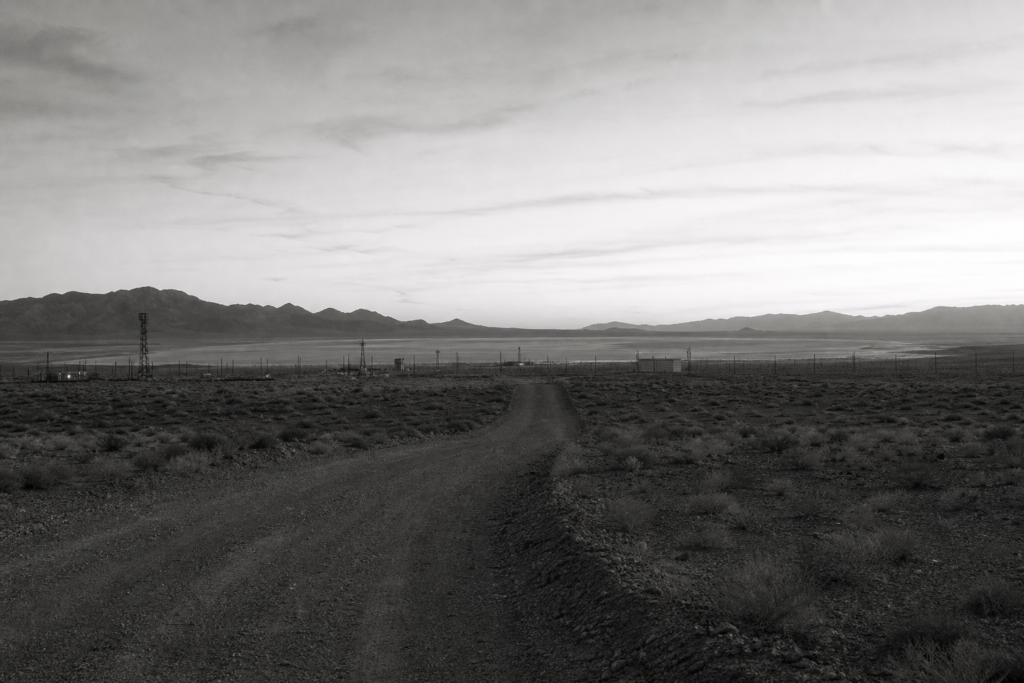
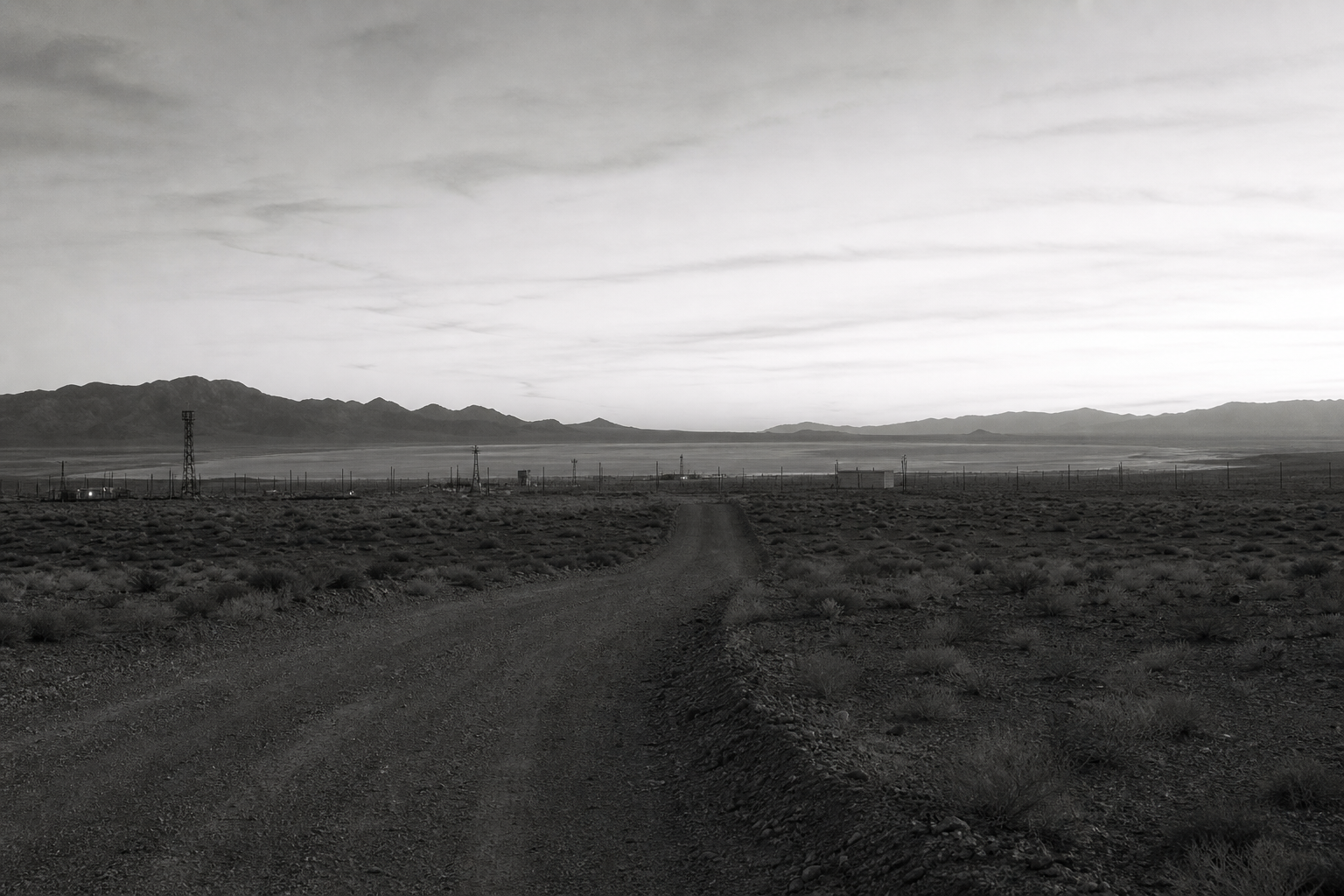
In 1989, Bob Lazar thrust a new and durable story into UFO culture: he alleged that he had been assigned to reverse-engineer recovered non-human technology at a site he called S-4, near, but not synonymous with, Area 51. His account joined an alleged hidden facility near Papoose Lake, unusual craft, a gravity-based propulsion system, and a substance he called element 115 into a narrative that still shapes how the public imagines secret aerospace programs.
Its influence, however, is not confirmation. Area 51 and classified U.S. government work are established realities; Lazar’s specific claims about S-4, recovered craft, and extraterrestrial technology are not established by the public record. This article separates those categories rather than treating secrecy as proof. It follows the 1989 media trail, weighs the limited points that can be independently situated against disputed education and employment records, and explains why later discoveries involving element 115 do not validate Lazar’s broader propulsion account. It also considers how his vocabulary of crash retrievals and reverse engineering carried into modern UAP disclosure debates, without allowing newer allegations to become retroactive evidence.
Why Bob Lazar’s 1989 Story Still Matters in UFO History
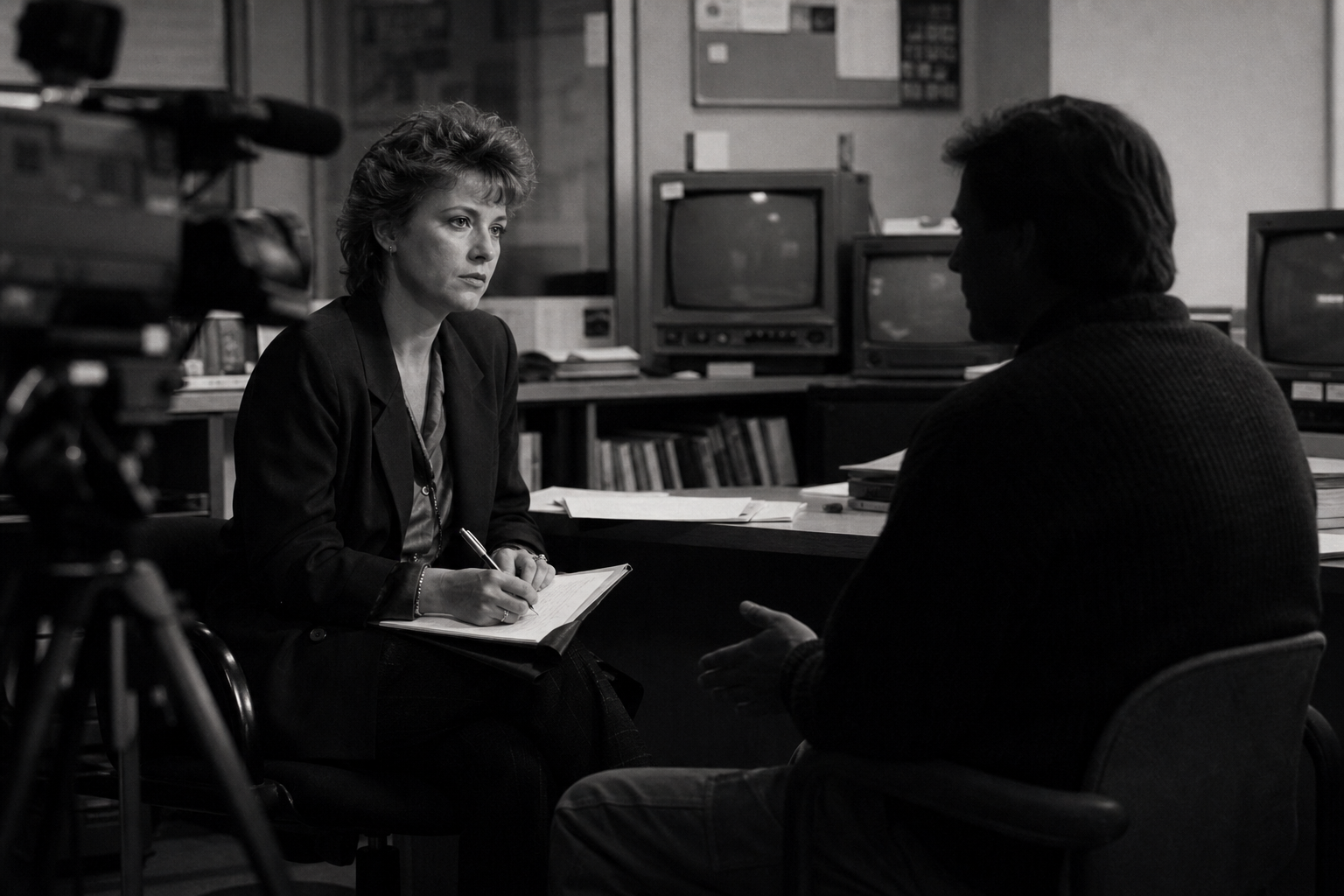
What made Lazar consequential was the way his 1989 interviews turned an opaque military landscape into a detailed public narrative. Las Vegas television reporter George Knapp gave the account a local broadcast platform, while Lazar supplied the memorable specifics: a purported S-4 site near Papoose Lake, recovered disc-shaped vehicles, propulsion research, and element 115. Those details gave later discussion of Bob Lazar Area 51 a vocabulary that was more concrete than earlier, generalized UFO rumors.
That vocabulary must not be confused with corroboration. This account treats Lazar’s interviews as testimony; the broadcasts as evidence that the testimony was made and circulated at the time; official material as evidence about documented sites and classified activity; and scientific questions as separate from either category. A real classified installation can establish a setting for secrecy without establishing an underground S-4 program or non-human hardware within it.
The distinction matters because influence travels differently from proof. Lazar’s account helped normalize the now-familiar ideas of compartmented crash-retrieval programs and reverse engineering in alien disclosure and later UAP debate. Later allegations may resemble that framework, but resemblance does not independently authenticate its origin story. The useful historical question is therefore twofold: what did Lazar publicly claim in 1989, and what evidence can actually bear the weight of each part of that claim?
What Lazar Claimed: S-4, Recovered Craft, and Reverse Engineering
In the 1989 KLAS-TV interviews conducted under the name “Dennis,” Lazar presented his story as a sequence of claimed assignments rather than a single sighting. He said he had been recruited for scientific work through contacts connected to the Los Alamos National Laboratory, then transported to a separate installation he called S-4. In his description, S-4 was near Papoose Lake, south of Groom Lake, rather than the publicly familiar Groom Lake base itself.
- Alleged facility: Lazar described S-4 as a concealed complex built into a hillside, with hangar-like doors and restricted work areas. This is Lazar’s asserted location; public records do not independently establish an S-4 facility matching his account.
- Alleged observations: He said he saw multiple unusual craft at the site, including a disc-shaped vehicle he later likened to a “sport model.” The reported number, appearance, and storage of those craft come from Lazar’s interviews and subsequent retellings.
- Purported briefing material: Lazar said he was shown documents describing recovered vehicles and their non-human origin. That assertion concerns information he said he read, not material publicly released or independently authenticated.
- Claimed assignment: His Bob Lazar reverse-engineering claim was that he worked on one craft’s propulsion system, attempting to understand its operation rather than build a complete vehicle.
That last distinction is central to the Bob Lazar S-4 claim. Lazar did not describe himself as having designed an alien craft; he described an effort to analyze an already-existing device whose principles he said were beyond conventional aerospace engineering. His accounts also linked the system to element 115, a separate technological assertion that requires its own assessment. The recruitment trail, S-4, craft inventory, briefing papers, and work assignment remain elements of Lazar’s testimony, not independently verified records.
The Technology Claims: The Alleged Propulsion System and Element 115
Lazar’s technical narrative centered on what he called a gravity-based drive: rather than pushing against air or expelling rocket exhaust, the alleged propulsion system was said to manipulate gravity so that a craft could orient toward a destination and “fall” toward it. He described a reactor-like device powered by element 115, producing energy that fed gravity amplifiers. In this account, the craft’s abrupt movement and apparent lack of conventional control surfaces followed from changing the gravitational field around it, not from known aerospace propulsion.
The crucial scientific distinction is between an element’s place on the periodic table and a particular isotope, meaning a version of that element with a particular number of neutrons. In 1989, element 115 had not yet been produced in a laboratory. It was later synthesized and formally named moscovium. That achievement established that nuclei with 115 protons can be made; it did not establish the existence of the stable, usable form Lazar described.
Known moscovium isotopes are synthetic and radioactive, decaying rapidly after production. Lazar’s account instead requires an undisclosed stable isotope available in substantial physical quantity, plus a mechanism by which it could generate or focus gravity. Those are separate propositions. Discovering a named element is a weak signal for his broader story because it neither supplies that isotope nor demonstrates the alleged propulsion system.
No publicly authenticated sample tied to Lazar’s claim, technical design record, measured reactor output, or reproducible propulsion demonstration has entered the public evidence base. The Bob Lazar alien technology claim therefore remains a description of purported technology, not an experimentally supported account of how a craft operated.
What Can Be Corroborated, and What Remains Disputed
The evidentiary picture is strongest at the level of setting, not of the alleged program. Groom Lake was a genuinely secret site for classified aviation work, and its later official acknowledgment confirms that the Nevada desert hosted sensitive aerospace testing. That context makes secrecy plausible; it does not identify an S-4 installation near Papoose Lake or establish a reverse-engineering project involving recovered non-human craft.
Direct records provide one limited point of corroboration. A 1982 Los Alamos Monitor article identified Lazar as a physicist connected with the Los Alamos Meson Physics Facility. The reference supports some Los Alamos-related professional presence, but it is not a personnel file, security clearance record, or proof of the duties and education he later described. It cannot by itself bridge the gap from an identifiable local association to employment on a deeply compartmented project.
His disputed credentials present a separate test. Lazar has said he attended MIT and the California Institute of Technology, while journalists and researchers have reported finding no public institutional records substantiating those claimed degrees. Likewise, accounts of his Los Alamos work have produced disagreement over whether he was directly employed by the laboratory or worked through a contractor. Those distinctions matter: a newspaper mention is a weak corroborating signal, whereas independently traceable degrees, employment files, named supervisors, or contemporaneous technical work would be stronger documentary evidence.
No public record has established Lazar’s employment at S-4, access to recovered craft, possession of element 115, or participation in the propulsion work he described. Nor has an independent witness produced authenticated program records or physical evidence that resolves those central assertions. Missing files can reflect ordinary record gaps, contractor arrangements, privacy limits, or classification; they do not, on their own, demonstrate either fabrication or a cover-up. Official records on proposed classified programs likewise distinguish secrecy claims from extraterrestrial evidence. For Bob Lazar Area 51 claims, the fair conclusion is narrower: real government secrecy supplies context, but not confirmation of the extraordinary allegation.
Desert Sightings, Media Coverage, and the Limits of Witness Testimony
The story gained force not only through Lazar’s interviews, but through trips to the desert arranged around his predictions. Lazar directed friends and other observers to viewing points near the Nevada Test and Training Range, where they reported seeing lights or apparent aerial activity at night. KLAS-TV’s coverage gave those observations a public record and connected them to Lazar’s broader account, turning private watch parties into part of the George Knapp UFO narrative.
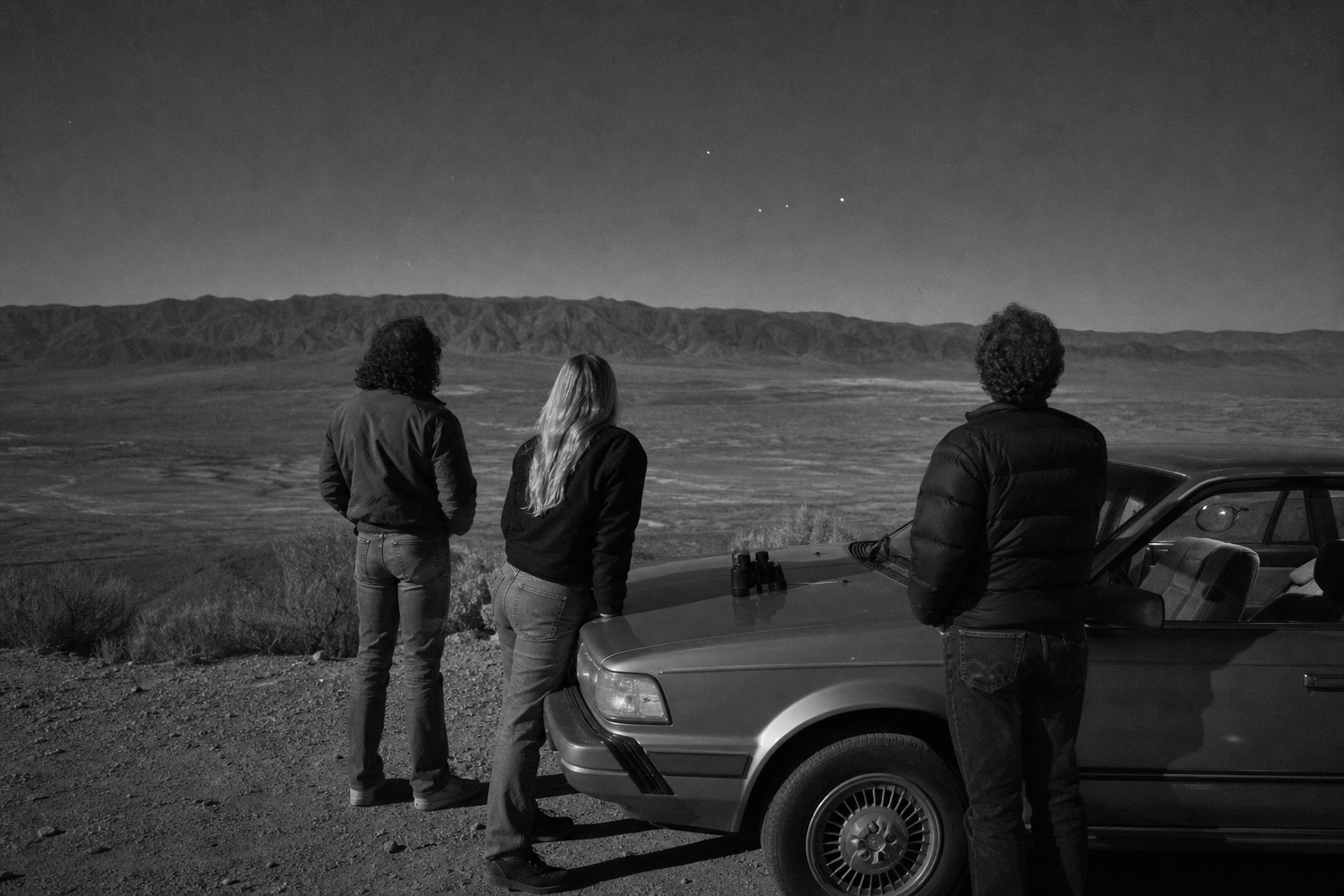
That witness testimony is meaningful in a limited sense: it can establish that people went to particular locations and described something they believed unusual in the sky. It cannot, by itself, identify the object observed. A light’s distance, size, speed, altitude, and direction are difficult to judge at night, particularly from outside a restricted range. Nor does a sighting demonstrate why an object was present, who operated it, or whether Lazar had prior access to an alleged S-4 program.
The crucial distinction is between an observation and an explanation. Multiple people describing lights is stronger than one unsupported recollection that no event occurred; it is still weaker than radar data, authenticated imagery, flight records, or physical evidence tying a particular object to an extraordinary claim. Conventional classified flight activity remains a possible explanation for unpublicly identified lights near a test range, while the available public record does not resolve the identity of each reported object. Repeat interviews preserved the accounts and broadened their audience, but they did not convert the sightings into verified alien craft or corroborate Lazar’s claimed employment.
How Lazar Shaped Today’s UAP Disclosure Vocabulary
Lazar’s most durable legacy may be the narrative template he supplied: a hidden facility, tightly compartmented access, recovered vehicles, and specialists attempting reverse engineering beyond ordinary aerospace science. Those ideas became familiar reference points in UFO media and later UAP disclosure debate, including discussion of an alleged UAP crash-retrieval program and purported non-human intelligence.
Shared vocabulary, however, is not shared evidence. Lazar described personal technical work at the alleged S-4 site, including propulsion analysis and element 115. Later whistleblower accounts generally make a different kind of assertion: that the speaker received information from officials, documents, or witnesses about concealed programs. Information received can warrant investigation, but it is not equivalent to firsthand work on a device, and neither category is equivalent to an official acknowledgment or publicly testable physical evidence.
David Grusch’s public allegations illustrate the distinction. They entered a modern institutional setting shaped by intelligence oversight, formal whistleblower processes, and congressional interest and testimony, rather than the local television interviews through which Lazar first reached a mass audience. The conceptual overlap, retrieval, compartmented projects, and attempted exploitation of unusual technology, helps explain why the two narratives are often linked. It does not independently establish S-4, Lazar’s claimed role, or the existence of recovered non-human craft.
A useful evidentiary checkpoint is therefore to ask what a claim actually supplies: a personal account, secondhand testimony, authenticated records, an official finding, or material available for independent examination. The first two can shape public questions; the latter categories would do far more to resolve them.
The Bottom Line: A Foundational Story, Not Established Proof
The appropriate conclusion is narrow but clear: Lazar’s 1989 account is foundational to the public mythology surrounding Area 51, yet the available public record does not establish that he reverse-engineered non-human technology. Its detailed claims, an S-4 facility, recovered craft, unusual propulsion, and a usable form of element 115, remain assertions rather than demonstrated facts.
That distinction offers a practical standard for assessing future UFO news or UAP sightings. Start with the observation: what did someone actually see, record, measure, or recover? Then separate it from the explanation attached to it. A video of an unidentified object may establish that a camera captured something unusual; it does not by itself establish origin, capability, or a secret program.
- Is there a contemporaneous record with a clear provenance, such as sensor data, imagery, logs, or an identifiable document?
- Can independent witnesses corroborate the same core facts without relying on one another’s account?
- Can physical material be authenticated, traced, and tested by qualified independent laboratories?
- Does the evidence support the extraordinary conclusion, rather than merely show that a question remains?
Those questions neither dismiss reports nor convert mystery into proof. They preserve the difference that the Bob Lazar UFO claims make essential: a story can permanently influence public culture while its central proposition remains unverified. This is the core of evidentiary standards for extraordinary claims.
Why the Lazar Story Endures Despite the Evidence Gap
Narratives endure when they make an inaccessible world seem legible. Lazar’s account supplied a memorable map of hidden activity: a named site, a claimed technical assignment, a purported fuel, and an explanation for extraordinary flight. That specificity gave audiences a framework for interpreting later reports about secret programs, recovered technology, and UAPs, even when those later reports offered different facts, sources, or evidentiary limits.
Its persistence should not blur the categories of support. Classified work in the Nevada desert is documented context; Lazar’s claimed S-4 workplace, recovered craft, propulsion research, and usable element 115 remain unverified allegations. Personal testimony can show what a witness says he experienced. Desert observations can show that observers reported unusual lights. Neither independently establishes the cause of those lights or the existence of the program Lazar described.
The lasting lesson of the Bob Lazar Area 51 story is therefore methodological as much as historical. Cultural influence explains why a claim is repeated and why it feels plausible to some audiences; it does not add authenticated records, traceable material, or reproducible results. Those forms of independently testable evidence, not familiarity, detail, or resemblance to later allegations, would be required to move the central claim from enduring story to established fact.
Frequently Asked Questions
-
What did Bob Lazar claim he saw at Area 51?
Bob Lazar claimed he saw multiple recovered disc-shaped craft at a site he called S-4 near Papoose Lake, south of Groom Lake. He said one vehicle, which he called a “sport model,” was being studied as part of a reverse-engineering program.
-
What is S-4 in Bob Lazar’s story?
S-4 is the name Lazar gave to an alleged concealed facility built into a hillside near Papoose Lake, separate from the Groom Lake base commonly called Area 51. Public records do not independently establish a facility there matching his description.
-
How was element 115 supposed to power Bob Lazar’s alleged alien craft?
Lazar said a reactor-like device using element 115 generated energy for gravity amplifiers, allowing the craft to manipulate gravity rather than use rocket exhaust. Moscovium, element 115, was later synthesized, but its known isotopes are radioactive and decay rapidly rather than providing a stable usable fuel.
-
What evidence supports or challenges Bob Lazar’s Area 51 claims?
A 1982 Los Alamos Monitor article identified Lazar as a physicist connected with the Los Alamos Meson Physics Facility, providing limited evidence of a Los Alamos-related professional presence. No public records establish his S-4 employment, recovered craft access, element 115 possession, or propulsion work, and his claimed MIT and Caltech degrees remain unsubstantiated by public institutional records.
-
What should you look for when evaluating claims about UAP crash-retrieval programs?
Look for contemporaneous records with clear provenance, including sensor data, authenticated imagery, logs, identifiable documents, and independently testable physical material. Similarity to Lazar’s story or later allegations, including David Grusch’s claims, does not verify S-4 or prove recovered non-human technology.