Bob Lazar’s 1989 Claim of Reverse-Engineering Alien Technology Near Area 51 and Its Lasting Controversy
Explore Bob Lazar Area 51 claims, S-4, Element 115 and reverse engineering, separating documented facts from lasting controversy.
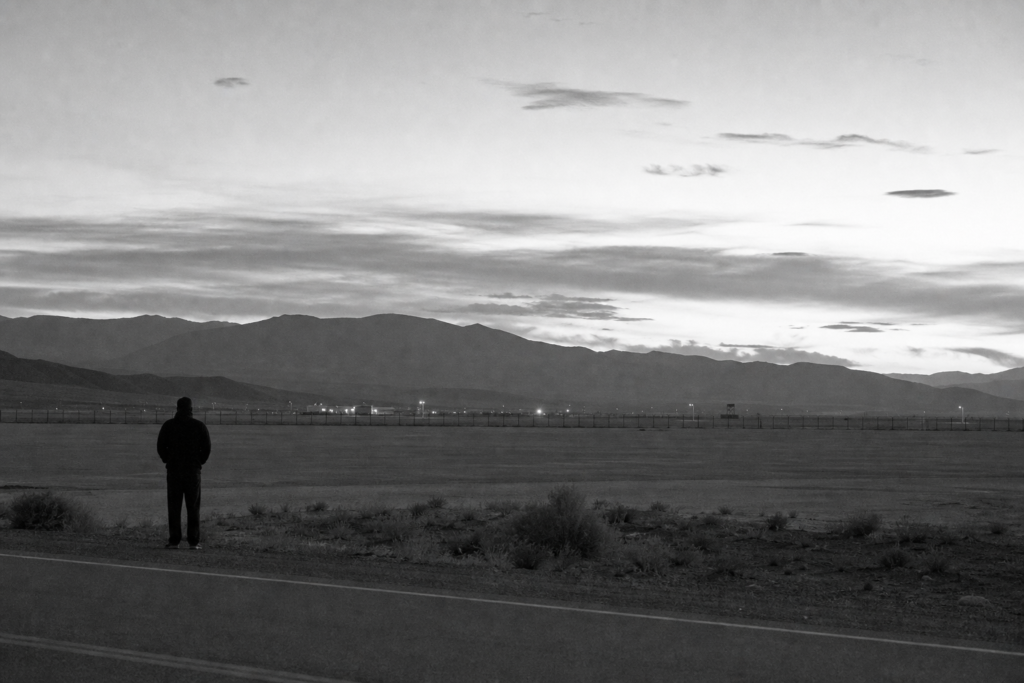
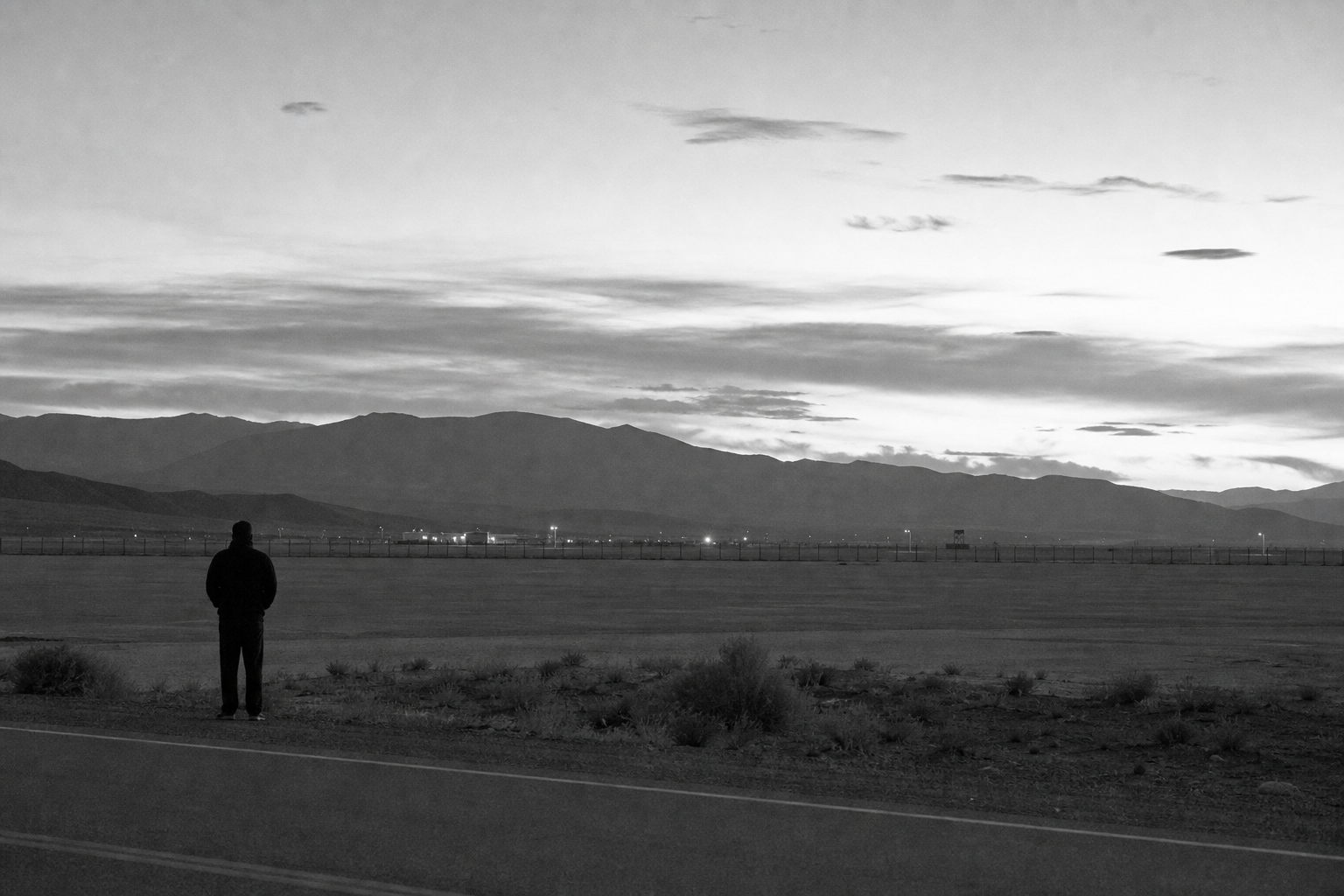
Lazar’s allegation: In 1989, Bob Lazar publicly claimed that he had been assigned to an alleged site called S-4 near Area 51, where he said personnel were attempting to reverse-engineer purported extraterrestrial craft. The Bob Lazar Area 51 story supplied a durable template for later UFO narratives: a remote military landscape, compartmented work, unfamiliar technology, and an insider who says the public has been denied the central facts.
What is established, and what is not: Area 51’s role as a secretive U.S. test location is independently established context; Lazar’s claimed S-4 assignment, recovered vehicles, and alien propulsion system are not publicly verified. That distinction matters. Classified activity can explain why records are limited without demonstrating that any particular extraordinary allegation is true. Conversely, missing public confirmation is not proof that Lazar fabricated his account or that a hidden program exists.
This examination: The sections that follow separate Lazar’s own account from contemporaneous reporting, disputed employment and education records, and the absence of independently testable evidence for alien craft or reverse engineering. They also explain why renewed UFO disclosure debates keep returning to Lazar: modern allegations about concealed programs echo parts of his narrative, but they do not by themselves corroborate his specific claims.
Why Bob Lazar’s 1989 Story Still Shapes the UFO Disclosure Debate
Why the narrative travels: In his 1989 television interviews, Lazar attached an extraordinary reverse-engineering allegation to a specific alleged facility, S-4 near Papoose Lake, and to the already real, highly restricted Nevada test range. That pairing of a recognizable location with claims of compartmented work and recovered vehicles made his account a durable reference point for later assertions about secret UAP reverse-engineering efforts, even when those assertions involve different agencies, decades, or witnesses.
An evidence-first reading: Contemporaneous report establishes that Lazar publicly presented his story in 1989, not that the events he described occurred. Independently corroborated context includes classified U.S. aerospace activity around Area 51; it does not demonstrate Lazar’s alleged S-4 assignment, nine recovered craft, or alien propulsion project. His narrative is an allegation; disputes over employment and education are contested records; and no publicly testable material has established the central conclusion.
What renewed interest changes, and does not: The 2023 congressional testimony by David Grusch renewed attention to allegations of hidden crash-retrieval programs, helping explain Lazar’s continued place in UFO disclosure debates. A strong connection would require records, materials, or corroborated firsthand evidence tied specifically to Lazar’s 1989 account. Similarity between two unverified narratives is a weak signal: it can sustain public interest, but it cannot supply confirmation.
What Bob Lazar Alleged in 1989
The public rollout began on Las Vegas television: In a May 1989 KLAS-TV report associated with journalist George Knapp, Lazar appeared under the name “Dennis” and described seeing unusual aircraft during nighttime trips near the Nevada Test Site. He later identified himself as Bob Lazar and expanded the account in further interviews. That sequence matters because the broadcasts establish that Lazar was making the story publicly at the time; they do not independently establish the events he described.
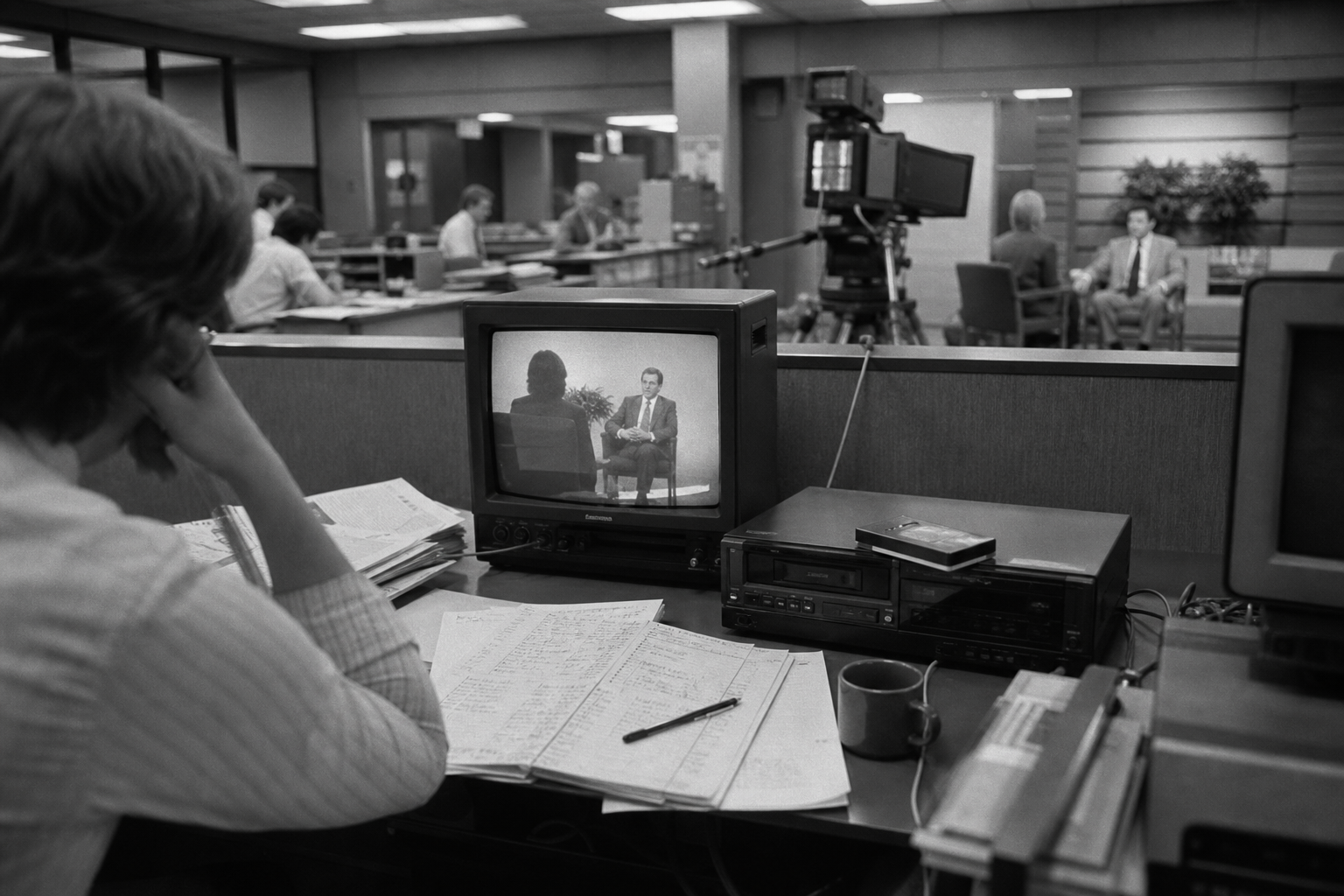
Lazar’s allegation: He said he had been recruited for a physics-related assignment at “S-4,” a purported installation near Papoose Lake and adjacent to the broader Area 51 test range. Lazar alleged that the work involved examining recovered non-human craft rather than developing ordinary classified aircraft. In his telling, the project was highly compartmented: personnel were given only narrow tasks, limiting what any one worker could know about the program as a whole.
He further alleged that multiple craft were stored at the site and that one, later called the “sport model,” had a smooth, disc-like form with no visible conventional engine or control surfaces. Lazar said his role was to help understand its propulsion system, which he portrayed as operating through principles beyond known aerospace engineering. These are the central Bob Lazar claims, not findings established by the television reports.
The immediate distinction is therefore straightforward. Knapp’s 1989 Las Vegas television interview documents a public allegation and its early circulation; Lazar’s asserted recruitment, S-4 workplace, recovered vehicles, and reverse-engineering assignment remain his own account. The next issue is how the specific location, craft description, and technical narrative fit, or fail to fit, against independently available evidence.
S-4, the “Sport Model,” and the Reverse-Engineering Claim
The location is the first evidentiary dividing line. Lazar placed S-4 on the Papoose Lake side of the Nevada Test and Training Range, rather than at Groom Lake itself. He described a concealed facility built into a hillside, with hangar-like doors blending into the terrain. Groom Lake and the larger Area 51 complex are real sites associated with highly classified U.S. aircraft testing; that established context makes secrecy unsurprising, but it does not identify an S-4 installation or establish Lazar’s asserted workplace.
Lazar’s own allegation: Inside S-4, he said, several recovered craft were housed for study. The “sport model” was his label for the vehicle he portrayed as a compact, sleek disc: no wings, exhaust, visible seams, conventional cockpit, or control surfaces. Those details matter because they distinguish his claim from an account of a secret aircraft. He was not saying he saw an unfamiliar prototype; he was saying the vehicle’s design and operation fell outside known human aerospace engineering.
The proposed work was reverse engineering, not routine operation. Lazar said personnel were trying to infer how the craft worked from its components, especially a propulsion system he believed manipulated gravity. His description of compartmentalization served an important role in the narrative: a worker might handle a limited technical problem without access to the craft’s acquisition, origin, or full program history. Such restricted access is plausible as a general feature of classified work, but it also makes the specific Bob Lazar reverse-engineering account difficult to test through his claimed firsthand knowledge alone.
The missing corroboration is equally specific. Publicly available imagery and acknowledged information about the broader test range do not independently establish the buried S-4 complex, stored nonhuman vehicles, or a program to analyze them. That absence does not prove either a concealment effort or fabrication. It means the real, secretive history of Groom Lake cannot carry the evidentiary weight of Lazar’s separate claims about Papoose Lake, the sport model, and purported recovered technology.
Element 115 and Gravity Propulsion: What Was Claimed and What Was Not Proven
Lazar’s own allegation: the key material was a stable isotope of Element 115, which he said was used as fuel in the craft’s reactor. In his description, the reactor converted the material’s nuclear energy into a force that amplified or directed gravity. That alleged gravity propulsion would account for the vehicle’s lack of visible engines, wings, exhaust, or ordinary flight controls: it was said to move by altering its gravitational relationship to a destination rather than by pushing against air.
Independently established scientific fact: an element is defined by its number of protons, while isotopes of that element differ in neutron number. Scientists later synthesized element 115 and the International Union of Pure and Applied Chemistry named it moscovium. That development established that nuclei with 115 protons can be created under laboratory conditions; it did not establish the particular long-lived isotope Lazar described.
The crucial difference is stability and function. The synthesized moscovium isotopes reported publicly are highly radioactive and decay rapidly. Lazar’s account requires a stable, or at least practically usable, form of Element 115, plus extraordinary physical behavior that could power a gravity-based system. Neither follows from the element’s placement on the periodic table or from the later production of a few short-lived atoms.
What was not proven: no independently testable sample of Lazar’s proposed isotope, reactor, or gravity-propulsion mechanism has entered the public scientific record. The existence of synthetic moscovium therefore does not validate the Bob Lazar alien technology claim; it matches only the broad atomic-number label, not the asserted isotope, properties, or recovered-craft application.
The Credibility Disputes: Employment, Education, and Corroboration
Contemporaneous report: the most substantial piece of employment-related evidence in the Bob Lazar controversy is a 1982 Los Alamos Monitor article that identified “Robert Lazar” as a physicist at Los Alamos National Laboratory. His name has also been reported in a laboratory telephone directory. Those items support a limited conclusion: Lazar had some identifiable connection to the Los Alamos workplace before his Area 51 allegations became public.
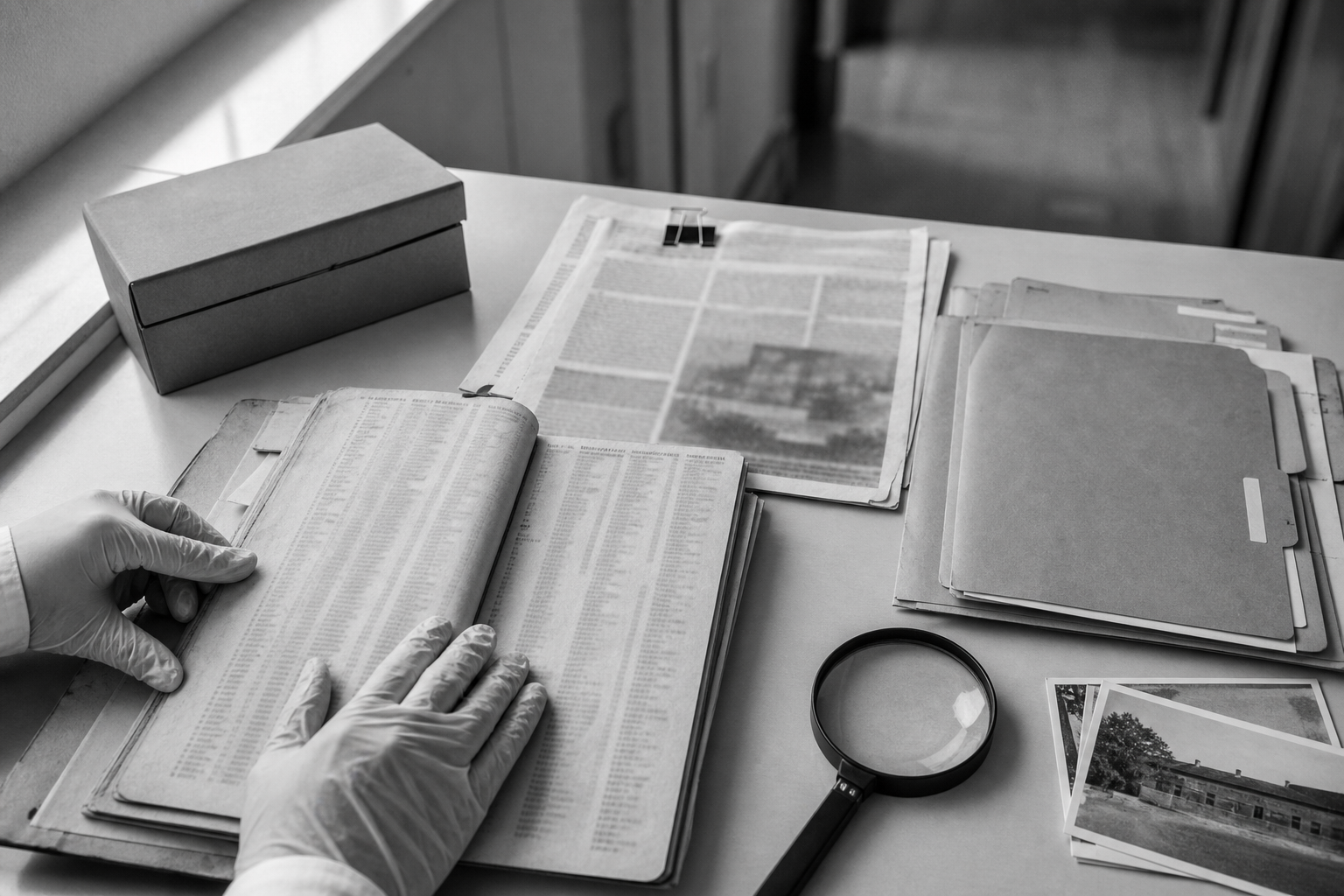
Disputed claim: that connection does not, by itself, establish the position, clearance level, scientific responsibilities, or educational credentials Lazar later described. A laboratory directory can show that a person was reachable through an institution; it is weaker evidence for the nature of that person’s work than payroll, personnel, academic, or project records. Accounts have further reported that Lazar worked through Kirk-Mayer, a technical-services contractor, rather than as a direct laboratory employee. Contractor work would still place someone in the Los Alamos environment, but it is not equivalent to proof of a laboratory staff-scientist role.
Lazar’s own allegation: he has attributed advanced education to institutions including the California Institute of Technology and MIT, while versions of his background have also involved Moscow State University. The central problem is not simply that public searches have failed to produce a complete academic trail. It is that the claimed institutions have not publicly supplied records that independently substantiate the degrees, attendance, or chronology associated with his account.
Missing record: absent transcripts, registrar confirmation, named instructors, contemporaneous student material, or a consistent educational timeline, the academic claims remain uncorroborated. That gap matters because advanced technical credentials would help evaluate the account’s asserted recruitment and role; it cannot determine whether alleged craft existed.
What the evidence can and cannot establish: missing files alone prove neither an official effort to erase Lazar’s history nor deliberate fabrication. Strong corroboration would connect independently verifiable employment, education, access, and firsthand witnesses to the same specific S-4 assignment. The available fragments establish a disputed biographical record, not independent confirmation of the reverse-engineering claim.
Why Modern UAP Claims Revived the Lazar Comparison
Congressional testimony changed the setting for the debate. In 2023, former intelligence officer David Grusch told a House subcommittee that he had been informed of a long-running U.S. UAP crash-retrieval and reverse-engineering effort. His account revived comparisons with Lazar because both narratives allege compartmented programs, recovered material, and information withheld from normal public oversight.
The comparison has firm limits. Lazar presented himself as a firsthand participant at the alleged S-4 site near Papoose Lake and offered distinctive claims about craft design and Element 115. In David Grusch’s UFO testimony, he said his allegations were based on information provided by other current or former officials and on material he had supplied through oversight channels; he did not claim personal observation of alien craft. That difference matters: a firsthand account can be tested against a claimed location, job history, and technical description, while a secondhand allegation depends heavily on identifiable sources, records, and their ability to substantiate the underlying events.
Official finding: AARO’s historical review has not publicly confirmed a UFO crash retrieval program, Lazar’s alleged S-4 facility, or his Element 115 propulsion account. Its lack of confirmation does not, by itself, prove either a cover-up or fabrication. It does establish the evidentiary boundary: broader modern allegations about hidden UAP programs do not independently validate Bob Lazar’s specific 1989 story.
What the Evidence Supports, and Why the Story Endures
The durable value of this case is the distinction it forces. Contemporaneous reporting documents that Lazar took his account public in 1989; independently established context shows that Area 51 was a genuinely secretive test environment; and the narrative became culturally influential. Those facts do not establish his alleged S-4 employment, contact with extraterrestrial craft, possession of Element 115, or participation in reverse engineering. Each remains unproven in publicly available, independently testable evidence.
That boundary is why the story persists. Reports labeled UFO sightings 2025 or UFO sightings 2026 may renew interest, but a sighting, allegation, or classified-setting association is a weak signal for Lazar’s specific account. A stronger signal would be verifiable records, materials, or corroborated firsthand evidence that can be independently assessed.
The Lasting Legacy of an Unverified Area 51 Claim
Cultural influence is not the same thing as factual confirmation. Lazar’s narrative supplied enduring imagery for public ideas about Area 51: concealed facilities, recovered discs, compartmented research, and a rare material capable of extraordinary flight. Contemporaneous report: his 1989 television appearances establish when that account entered public view. Lazar’s own allegation: S-4, stored craft, reverse engineering, and a stable Element 115 fuel source were its central claims. Those details remain influential precisely because they form a coherent and memorable story, not because they have been independently demonstrated.
Missing record and disputed claim: public evidence still does not resolve the contested employment and education history or substantiate the alleged assignment, facility, material, or technology. Modern UAP claims can make the broader possibility of hidden programs a subject of renewed debate; they do not convert earlier allegations into confirmation. The lasting lesson of the Bob Lazar Area 51 controversy is methodological: weigh a compelling account by the quality of its records, transparent provenance, testable materials, and independent corroboration, and keep its cultural reach separate from what the evidence can establish.
Frequently Asked Questions
-
What did Bob Lazar claim to see near Area 51?
Bob Lazar claimed in 1989 that he saw and worked around recovered non-human craft at an alleged facility called S-4 near Papoose Lake. He described one vehicle, the “sport model,” as a smooth disc with no wings, exhaust, visible engine, or conventional control surfaces.
-
What is S-4 in Bob Lazar’s story?
S-4 is the purported hidden installation near Papoose Lake where Lazar said personnel were reverse-engineering recovered extraterrestrial vehicles. Area 51 and the wider Nevada test range are established classified testing locations, but no publicly available evidence independently confirms Lazar’s S-4 facility or assignment.
-
Has Bob Lazar’s Element 115 claim been proven?
No. Scientists synthesized element 115, now named moscovium, but its publicly reported isotopes are highly radioactive and decay rapidly. No independently testable stable isotope, reactor, or gravity-propulsion system matching Lazar’s claim has been made public.
-
Is there evidence that Bob Lazar reverse-engineered alien technology?
No publicly testable evidence confirms that Lazar reverse-engineered alien technology, worked at S-4, or had access to recovered craft. A 1982 Los Alamos Monitor article and a laboratory directory support some connection to Los Alamos, but they do not verify his claimed Area 51 role, clearances, or technical assignment.
-
How should you evaluate Bob Lazar’s claims compared with David Grusch’s UFO testimony?
Treat both as unverified allegations unless they are supported by identifiable records, independently testable materials, and corroborated firsthand witnesses. Lazar claimed firsthand involvement at S-4, while David Grusch’s 2023 testimony relied on information from other current or former officials; neither account has been publicly confirmed by AARO.