
The enduring force of the Betty and Barney Hill UFO sighting lies in the gap between a real 1961 report and the extraordinary meaning later attached to it. During a nighttime drive through rural New Hampshire, the Hills reported watching an unusual aerial object; afterward, they came to believe that part of the journey could not be accounted for. Their account would become one of the most influential alleged alien abduction narratives in modern UFO history, but it did not establish that an extraterrestrial event occurred.
This distinction matters. Contemporaneous material can show that the Hills described a troubling encounter and sought help. Later testimony, including recollections produced during psychiatric hypnosis, introduced the better-known claims of beings, an examination, and time aboard a craft. Hypnosis records preserve what the couple said in those sessions; they do not independently prove the events recalled.
The chronology that follows separates the September 1961 drive from the reports, dreams, hypnosis sessions, publicity, and interpretations that followed. It also examines disputed items such as physical claims and Betty Hill’s star map, while explaining why this detailed, widely publicized story left such a durable mark on abduction lore.
The Betty and Barney Hill Report: Why This 1961 Case Still Matters
What makes this account historically distinctive is the sequence in which its elements entered the record: a roadside observation in New Hampshire in September 1961, troubling recollections afterward, psychiatric hypnosis years later, and then books and press coverage. That progression turned a private report into a reference point for later alleged-abduction stories.
Those layers are not interchangeable. A report made near the time of the drive can establish that the couple described an unsettling experience; a later hypnotic account records what each person recalled in that clinical setting. Neither category, by itself, demonstrates that a craft, nonhuman beings, or an onboard examination existed. The useful checkpoint is timing: identify whether a detail appears in early reports, later dreams, hypnosis recordings, or subsequent retellings before deciding what weight it can bear.
The case reached a broad audience while UFO sightings were already a public subject, and the pair’s visibility as an interracial married couple gave its reception an additional social context. Its detailed narrative, preserved hypnosis material, and later publicity made it foundational to abduction lore. The sections ahead follow the drive, ensuing reports, hypnosis, and surviving records while leaving the extraterrestrial interpretation unresolved.
What Betty and Barney Hill Said Happened on Route 3
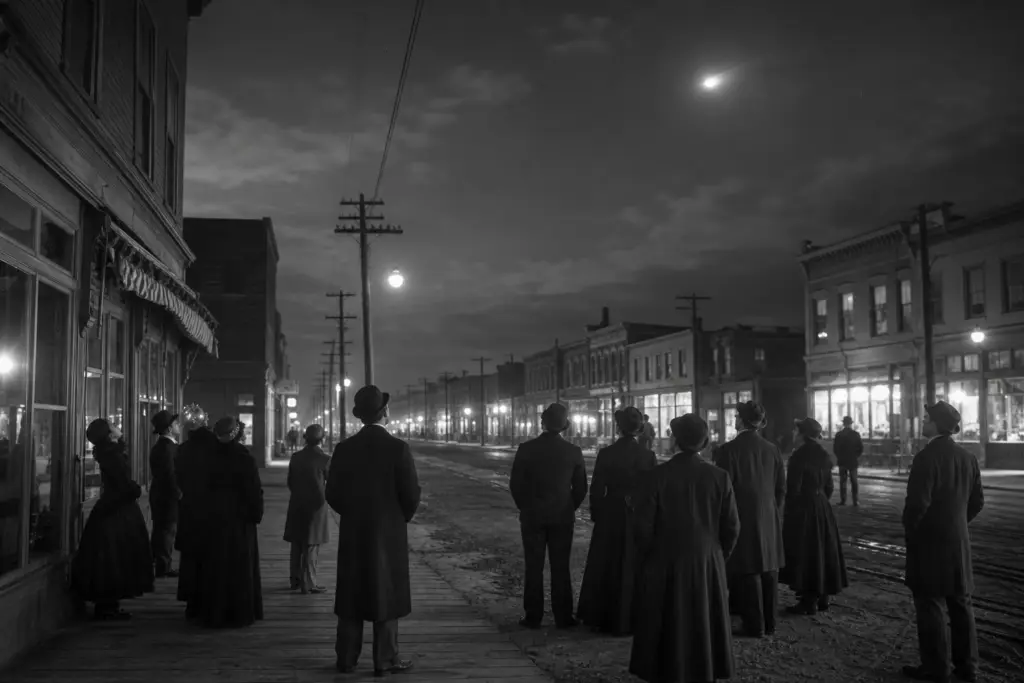
Late on September 19, 1961, the couple drove south on Route 3 through New Hampshire’s White Mountains after a vacation in Canada. In their earliest accounts, they described noticing a light in the sky that appeared to move in ways they found unusual. They stopped more than once to watch it, and Barney used binoculars as the object seemed to draw nearer.
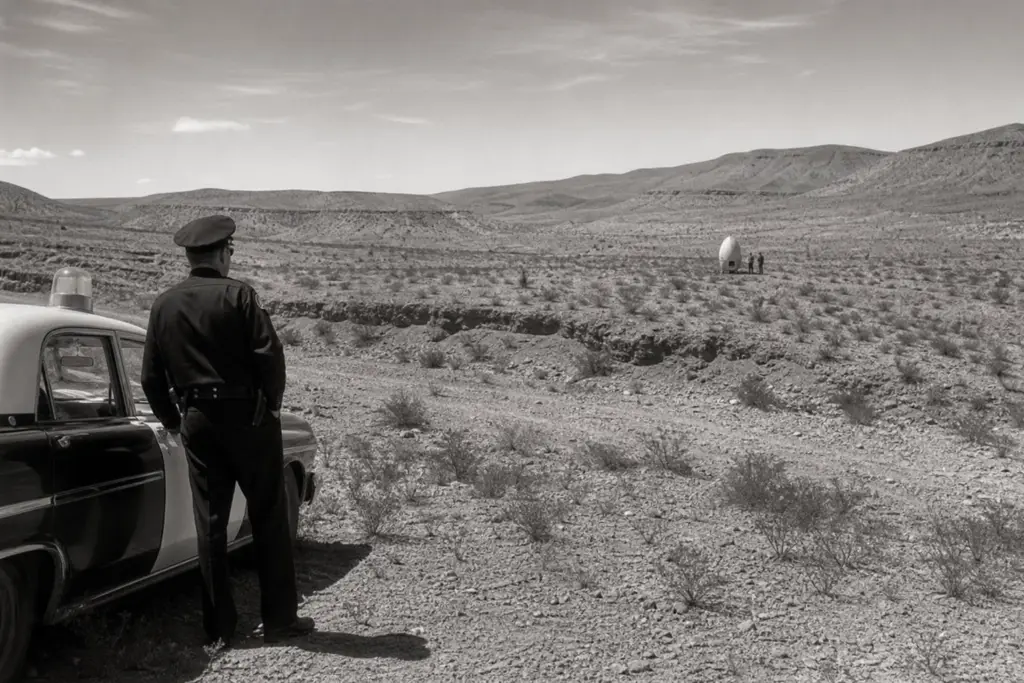
Their account of the drive is clearest on one point: they became frightened and tried to leave the area. They later placed the most alarming part of the encounter near the Lincoln–Franconia area, where they said the object appeared close to the road. Details beyond the observed light, especially a roadside stop, figures near the object, and what followed, belong chiefly to recollections recorded later rather than to a contemporaneous, independently verified record.
After reaching home in Portsmouth, the couple believed their journey had taken roughly two hours longer than expected. That interval is often called “missing time,” but the phrase describes their perceived unexplained gap, not a measured absence established by outside evidence. They also described arriving distressed and exhausted; later accounts mention damaged clothing, dirt on the car, and other unsettling physical details.
The distinction matters when assessing the 1961 New Hampshire UFO sighting. The initial narrative supports that they reported an unusual aerial observation, fear during their drive, and a troubling sense that part of the night was unaccounted for. The more elaborate alleged-abduction narrative emerged in stages afterward, rather than appearing all at once in the first retellings of the Route 3 journey.
Early Reports, Betty Hill’s Dreams, and the Air Force Record
In the days after the drive, the Hills spoke with relatives and began seeking an explanation beyond their own recollections. Betty Hill contacted the civilian National Investigations Committee on Aerial Phenomena (NICAP), an independent UFO-research organization that collected witness reports rather than a government investigative body. That contact preserved an early account of an unusual object and the couple’s anxiety, but it did not independently establish what the object was or what occurred during the unaccounted-for portion of the trip.
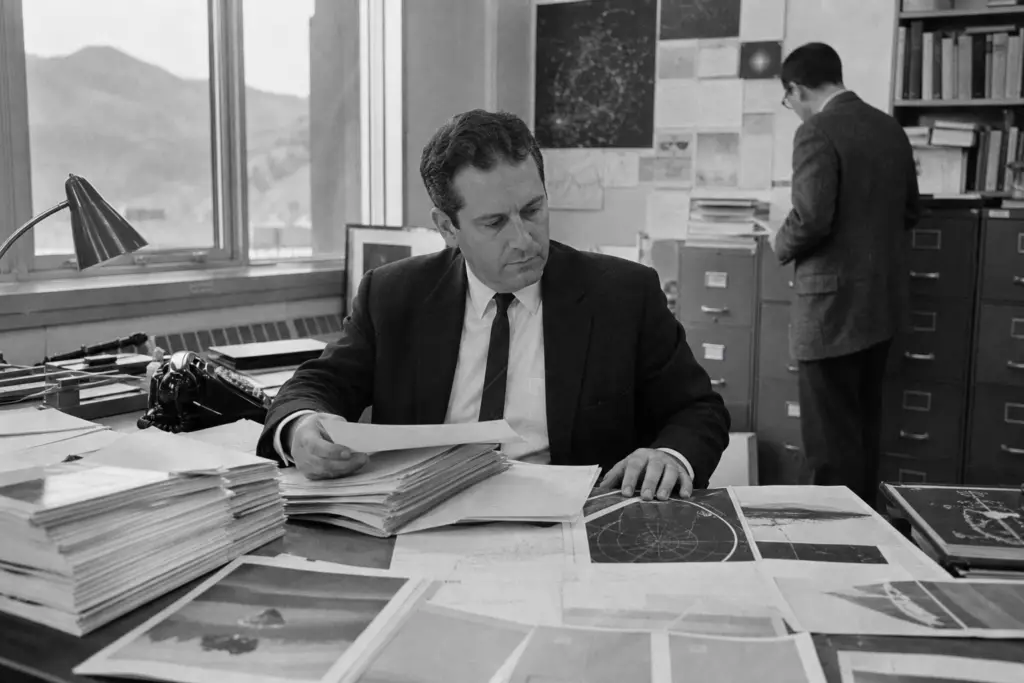
An Air Force officer, Major Paul W. Henderson, later interviewed the Hills in connection with the report. This was an Air Force UFO investigation in the limited sense that an officer recorded and assessed a civilian sighting claim. It was not an official finding that the Hills had encountered extraterrestrials. Project Blue Book, the Air Force program that catalogued and evaluated UFO reports, could document that a report was received, summarize witness statements, and assign a disposition; such a file could not turn an uncorroborated account into proof of its cause.
Betty’s most vivid abduction-like material emerged before the later psychiatric hypnosis sessions. She described a series of intense dreams, beginning soon after the incident, in which she and Barney were taken aboard a craft and examined. Dreams are important historically because they show that parts of the later narrative had entered Betty’s account early; they are not corroborating evidence that the events occurred as dreamed.
The record therefore has distinct layers: a civilian report and Air Force contact close to 1961, Betty Hill’s private dream narratives shortly afterward, and the much later recollections that would make the case famous. Keeping those layers separate is essential to understanding what official files recorded, and what they left unresolved.
How Hypnosis Shaped the Alleged Abduction Narrative
By early 1964, the strain attached to the experience had become a clinical concern. The Hills entered treatment with Boston psychiatrist Dr. Benjamin Simon, seeking help for anxiety, disturbed sleep, and related distress rather than asking him to authenticate a UFO event. Simon used hypnosis as part of psychotherapy: a technique intended to help patients speak more freely about troubling material, not a scientific instrument capable of establishing that a recalled event happened.
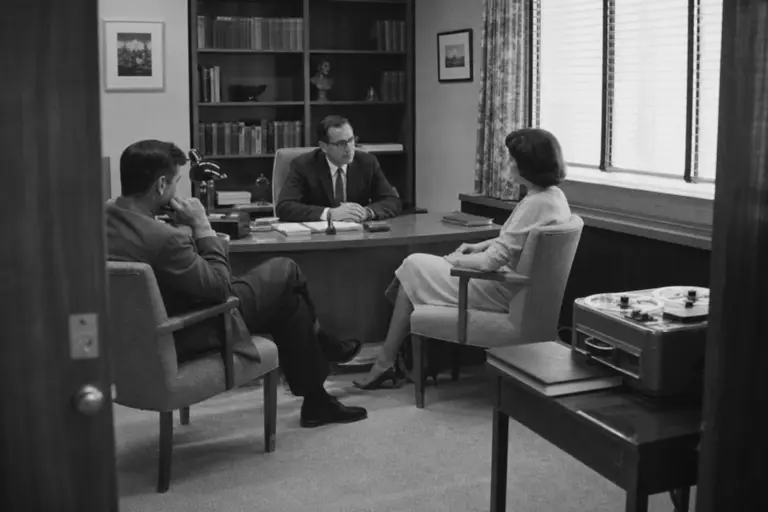
The sessions occurred more than two years after the September 1961 drive, and Simon interviewed Betty and Barney separately. That separation matters because it preserved meaningful differences in their accounts. Under hypnosis, Betty described being stopped by alleged non-human beings, taken inside a craft, and subjected to a physical examination. Her account had precedents in the vivid dreams she had reported soon after the incident, though the treatment sessions supplied a fuller narrative.
Barney’s hypnotically elicited recollections were more fearful and reluctant. He described figures approaching their car, being led aboard an alleged craft, and an examination that included bodily procedures. The two narratives overlapped on captivity, beings, and examination, but did not match in every scene or detail. These were recovered accounts from 1964, not contemporaneous testimony recorded during or immediately after the drive; that distinction is central to evaluating the Betty and Barney Hill abduction story.
Modern memory research gives hypnosis limited evidentiary value for this purpose. A hypnotized person may become highly focused and willing to report images or impressions, but the process can also increase suggestibility, blend dreams or later information with memory, and produce confabulation, details sincerely experienced as recollection without an independent basis in fact. Increased confidence after hypnosis does not demonstrate increased accuracy.
Simon did not have physical evidence that could independently verify an alleged abduction, and the recordings document what the Hills said during treatment rather than what occurred on Route 3. They remain historically important because they transformed a troubling sighting report into the detailed narrative that later audiences recognized, while leaving the claimed onboard events unverified.
The Star Map, Physical Claims, and What the Evidence Can Actually Support
Betty Hill’s drawing of a star map became the case’s most ambitious piece of interpretive evidence. Made after she recalled being shown a three-dimensional display during hypnosis, it consisted of larger and smaller circles connected by lines. The drawing records an image Betty said she remembered; it does not record an independently observed astronomical chart or identify its stars on its face.
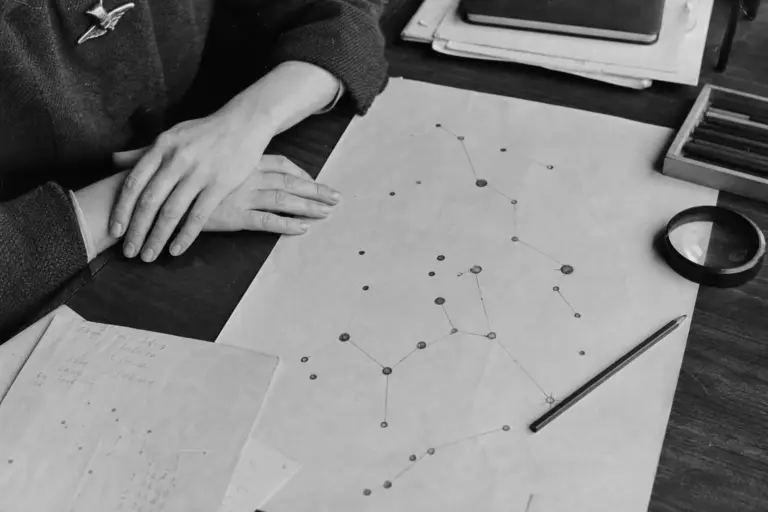
Marjorie Fish later proposed that the pattern represented nearby stars seen from the Zeta Reticuli system, with Zeta Reticuli portrayed as the alleged visitors’ home system and linked stars representing travel routes. That proposal gave the Hill narrative a specific extraterrestrial geography, but a resemblance between a simplified, retrospectively interpreted drawing and a selected stellar arrangement is not a unique identification. Different choices about viewpoint, which stars to include, distance, and line significance can produce different candidate matches. The Zeta Reticuli reading is therefore a later hypothesis, not an established result of the 1961 event.
The other frequently repeated items are physical claims: Betty’s damaged dress, scuffed shoes, Barney’s account of a shiny mark on the car, and both Hills’ reports of anxiety, sleep disturbance, and bodily concerns. These matter as part of the history because they show that the experience was troubling to them. They do not, by themselves, establish a cause. A garment can be examined for material condition, for example, but its value as event evidence depends on a clear chain of custody, testing records, and a demonstrated connection between the condition and a particular occurrence. Those links are not supplied merely by the object’s survival or by a compelling story about it.
Contemporaneous records are strongest for the couple’s report of an unusual object, their fear, and their efforts to make sense of the night. The hypnosis recordings preserve later, detailed recollections that can be considered alongside recurring abduction-story motifs; the star-map interpretation and claims of a government UFO cover-up belong to a further layer of inference. What remains unresolved is the ordinary but important question at the center of the Betty and Barney Hill UFO sighting: what they saw and why they experienced the journey as so disturbing. The available record supports that they reported a frightening experience, not a verified visit by non-human beings.
Why the Hill Case Became Exceptionally Famous
Publicity turned an intensely personal account into a national UFO story. Details from the Hills’ psychiatric sessions entered the press in 1965, bringing the reported interruption in their journey, the beings, and the alleged examination to readers who had not encountered the couple’s earlier private reports. Their status as an interracial married couple also gave the story a social visibility unusual for popular UFO coverage of the period.
John G. Fuller’s 1966 book The Interrupted Journey gave the case its most durable form. Drawing on interviews, Simon’s hypnosis material, and the earlier reporting history, Fuller arranged disparate records into a dramatic chronological narrative. That format made the Hills’ experience easy to retell: an ordinary nighttime drive, an unsettling encounter, an apparent gap in memory, and later recovered detail. It also meant that later audiences often met the completed public narrative before encountering the distinctions between the 1961 reports and the 1964 hypnosis sessions, a pattern echoed in later media-driven abduction narratives.
“Foundational” is best understood as a description of influence, not priority. Earlier contact and abduction-like claims existed, including 1950s contactee accounts and Antonio Villas Boas’s reported 1957 experience in Brazil. The Hills became exceptional because their account had a documented pre-publicity history, recorded therapeutic material, sustained press attention, and a bestselling retelling that helped establish a template for later alleged-abduction cases.
Renewed interest in UFO disclosure and UAP disclosure can make the case feel newly relevant, but modern government discussion of unidentified reports does not retroactively establish what happened on Route 3. The Hills’ lasting importance is historical: their story shows how testimony, treatment records, publication, and popular culture can transform an unresolved report into a defining modern legend.
What the Betty and Barney Hill Case Ultimately Shows
The most useful way to read the Hills’ story is as a record with different evidentiary strengths. The September 1961 Route 3 episode supports that two people reported an unusual aerial sighting, fear, and a journey they found difficult to explain. Their later accounts of beings, an examination, and time aboard a craft are consequential testimony, but they were reconstructed through dreams, therapeutic discussion, and 1964 hypnosis rather than observed and independently recorded on the night itself.
That distinction neither trivializes their distress nor turns recollection into proof. Hypnosis can produce detailed, emotionally persuasive narratives, yet detail and sincerity do not establish historical accuracy. Likewise, the dress, car mark, and star map preserve reported experiences or later interpretations; none supplies a physical chain of evidence tying the event to extraterrestrial visitors.
The Betty and Barney Hill UFO sighting therefore remains central to UFO history because it showed how an unresolved encounter could acquire meaning through personal memory, clinical records, publication, and mass attention. It helped furnish the narrative vocabulary through which later alleged abductions were understood. Its historical and cultural impact is well documented, including its relevance to current disclosure debates. Its proposed extraterrestrial cause remains unproven.
Frequently Asked Questions
What happened to Betty and Barney Hill in 1961?
On September 19, 1961, Betty and Barney Hill reported seeing an unusual aerial object while driving on Route 3 through New Hampshire’s White Mountains. They said they became frightened, arrived home about two hours later than expected, and felt that part of the journey was unaccounted for.
Where did the Betty and Barney Hill UFO sighting occur?
The reported sighting occurred on Route 3 in rural New Hampshire, during the Hills’ return trip from Canada. They placed the most alarming portion of the encounter near the Lincoln and Franconia area in the White Mountains.
What did Project Blue Book say about the Betty and Barney Hill case?
Project Blue Book recorded and evaluated the Hills’ civilian UFO sighting report after an Air Force officer interviewed them. The file documented their claims but did not conclude that they encountered extraterrestrials or verify an abduction.
Did Betty Hill’s star map identify a real star system?
Betty Hill drew the star map after recalling a three-dimensional display during hypnosis in 1964. Marjorie Fish later proposed it matched the Zeta Reticuli system, but the match was not unique or established as evidence of an extraterrestrial origin.
Was the Betty and Barney Hill abduction ever proven?
No, the alleged abduction was never independently proven. The strongest contemporaneous evidence supports that the Hills reported an unusual object, fear, and an unexplained perceived time gap, while the beings and examination claims emerged through dreams and hypnosis more than two years later.