What’s in the National Archives UAP Records Collection?
Explore the National Archives UAP Records Collection: learn what records it holds, how to search them, and why access limits matter.
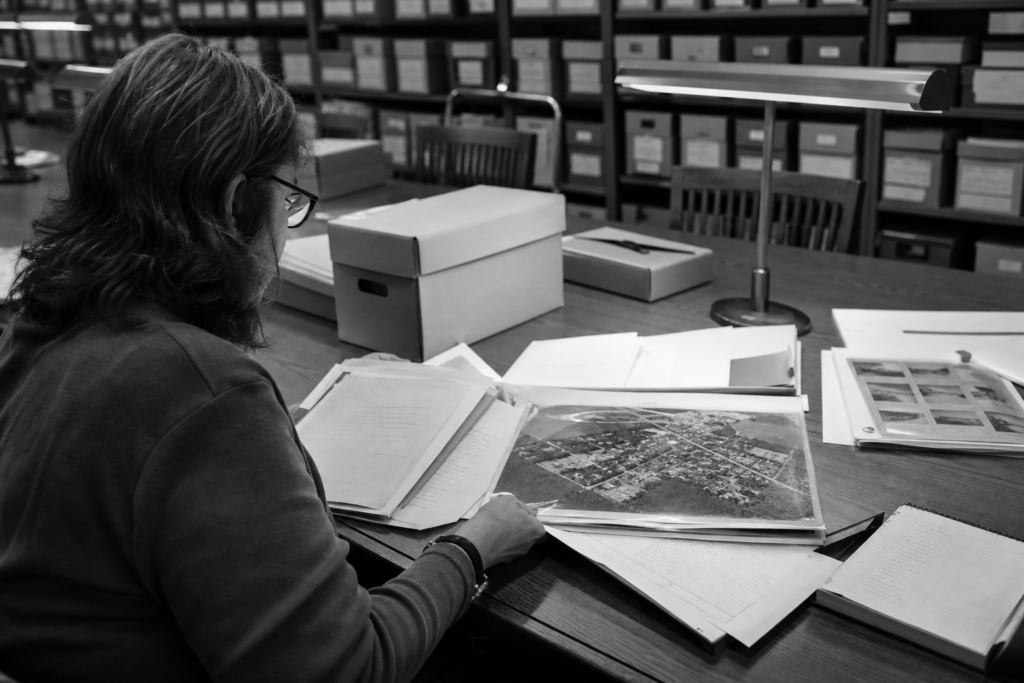
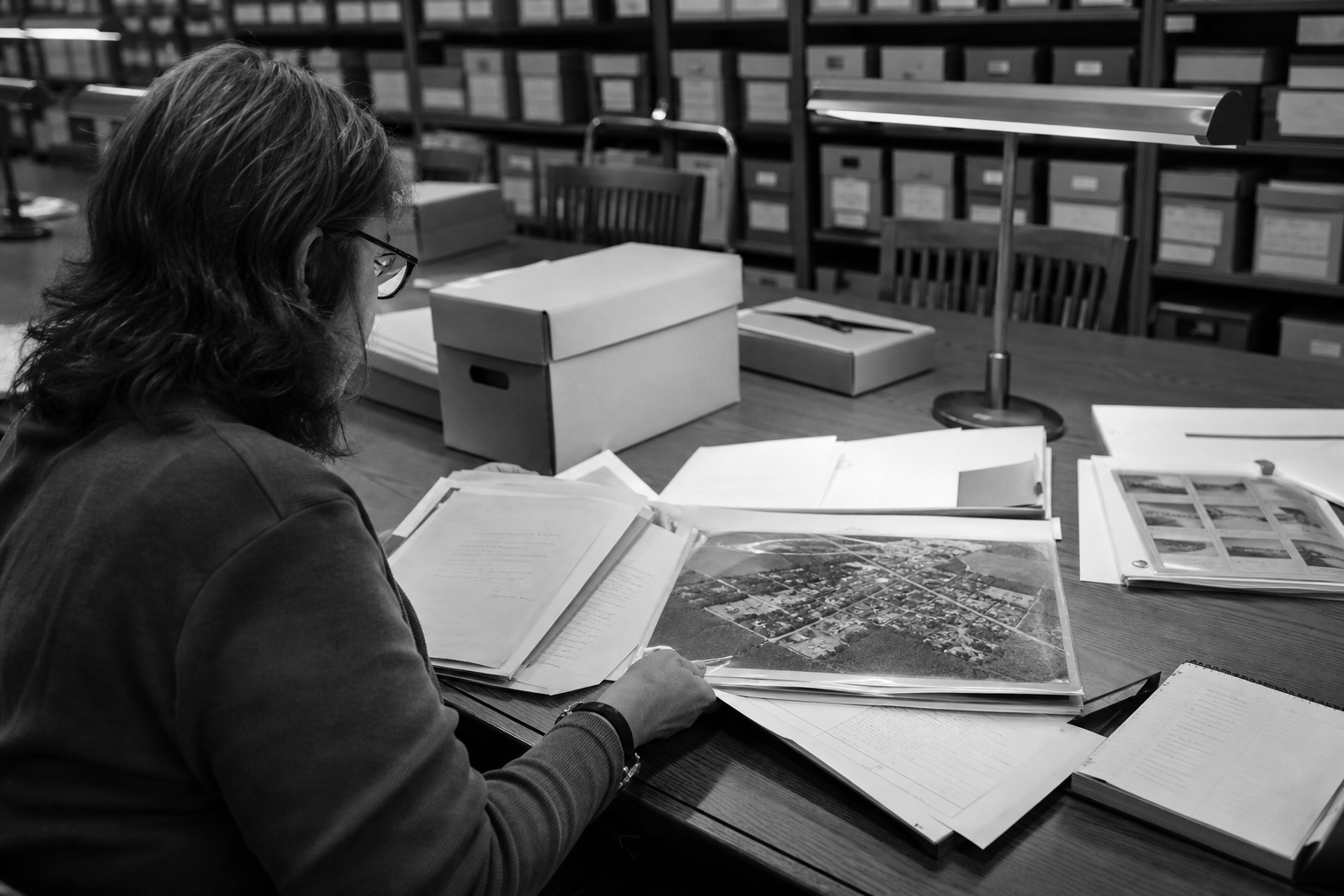
The useful starting point is not a search for one conclusive “UAP file,” but for a federal records collection with uneven formats, origins, and levels of access. The UAP Records Collection National Archives is a congressionally directed repository for federal records responsive to the government’s unidentified anomalous phenomena framework. It is an archival resource: a place to locate and assess records, not a finding that every report in those records is accurate or that any one document resolves what an event was.
Readers may encounter digitized historical case files, correspondence, military or intelligence-related documentation, photographs and film, congressional material, transfer descriptions, and records carrying redactions or access restrictions. A catalog result with downloadable scans is publicly searchable evidence; a catalog description without scans establishes that an item is described, not that its contents are online. Other responsive material may remain under review, restricted, or absent from a public search.
This guide separates the collection from related but non-identical bodies of material, including Project Blue Book holdings, AARO publications, and the wider universe of U.S. government UAP records. It explains what each record type can show, how to search it, and why provenance, date, originating agency, and access status matter more than dramatic wording alone.
What’s Actually in the National Archives UAP Records Collection?
In practical terms, treat the collection as a growing archival pathway rather than a finished master index. Its contents can include records formally placed in the UAP collection, older UAP-related holdings that NARA already preserves, and agency material whose transfer, review, or digitization is still incomplete.
Those categories matter. A formally designated record is part of the collection’s organized disclosure effort; a legacy holding may be relevant without having originated under that effort; and a document mentioned in testimony, news coverage, or an agency statement is not necessarily available in the collection at all. Project Blue Book files, for example, are historical Air Force investigative records, while AARO publications are modern office outputs, neither label makes the two bodies of material interchangeable.
The most useful evidence is a record’s catalog entry, originating office, date, and available scan. An archival description can establish that NARA identifies an item, but it cannot establish the accuracy of a report inside it, explain every redaction, or prove that no related records remain elsewhere. That distinction keeps UFO disclosure grounded in public documentation rather than inference.
Why the Collection Exists, and What It Is Not
Congress created the statutory collection through the FY2024 National Defense Authorization Act to bring eligible federal UAP records into a centralized National Archives and Records Administration framework. The law directs government offices to identify, organize, and transmit responsive records to the Archivist, while allowing postponement of public disclosure when release would meet specified grounds for continued protection. “Government office” reaches beyond one military program: it can include executive departments, independent agencies, intelligence components, and offices that created, received, or obtained relevant agency records.
That mandate changes the reader’s starting point. A record formally processed for the collection has a defined disclosure-and-review path; it does not mean every UAP-related file held anywhere in government has already arrived, been digitized, or become public. Nor does the collection replace NARA’s wider holdings, which remain organized by provenance, the agency or office that created and maintained them, and may be discoverable through separate catalog descriptions or record groups.
AARO is also distinct. Its mission involves receiving, analyzing, and resolving reports of unidentified anomalous phenomena, so its operational files and case-management material concern current governmental work; only material transferred or otherwise made available through archival processes belongs in the National Archives collection. Project Blue Book is different again: it is a historical U.S. Air Force investigation, conducted from 1947 to 1969, whose surviving records have their own archival origin. A Blue Book case file can illuminate that program’s inquiry, but it is neither an AARO case record nor proof that all later UAP material is in the statutory collection.
The Main Types of Records You May Encounter
Expect the material to vary as much in evidentiary weight as it does in format. Historical investigative files and correspondence may contain witness accounts, field-office memoranda, questionnaires, sightings logs, and officials’ replies. They reveal what an office received and how it handled a report; they do not, by themselves, establish that the reported object or event was identified correctly.
- Military, intelligence, and aviation documentation can include operational messages, technical assessments, radar or flight-related records, briefing papers, and administrative files. Such material may place an observation in a time, location, mission, or analytical process, but a fragment without its surrounding operational record can be misleading.
- Photographs, film, and other audiovisual items preserve an image, recording, or associated caption and metadata. A scan can show what was captured or presented, while provenance, date, original format, and any accompanying analysis determine how much the item can support beyond that.
- Congressional records include hearing transcripts, submitted statements, correspondence, and committee material. They document oversight and what witnesses or agencies told Congress; testimony is not automatically a validated finding.
- Presidential records, where responsive material exists, may include White House correspondence, memoranda, scheduling material, and national-security files created or received during an administration. Their presence can show presidential-level handling or awareness, not presidential knowledge of an event’s ultimate explanation.
- Transfer notices, accession descriptions, and inventories are especially useful orientation tools. They identify a transferring office, series, date span, and sometimes a box or item count. They establish archival custody and scope, but not that every described record is digitized or publicly open.
UAP records at the National Archives may also appear as partially released pages, redacted copies, or entries described in metadata while the underlying item remains under review. Redactions can protect information within an otherwise available record; they are not an inference about what the concealed text proves. Likewise, digitized records are convenient access copies, whereas a catalog description without a scan may point to material that is preserved but not yet available online.
Notable Examples: What Specific Records Can Illustrate
Three records show how provenance changes what an item can establish.
- Project Blue Book case files (U.S. Air Force, 1947–1969) are legacy holdings rather than the newer statutory collection itself. NARA catalogs the series in Record Group 341, Records of the Office of the Secretary of the Air Force, as “Project Blue Book Case Files, 1947–1969.” Individual investigative folders may contain questionnaires, correspondence, photographs, maps, and an Air Force disposition. They document how the Air Force handled reported UFO sightings; an “unidentified” disposition means Blue Book lacked enough information for an explanation, not that it established an event’s origin. Search the NARA Catalog by series title, place, or date.
- The FLIR1, GIMBAL, and GOFAST videos originated with U.S. Navy aircraft systems and were officially released by the Department of Defense on April 27, 2020. These unclassified audiovisual clips preserve sensor imagery from naval aviation encounters; DoD described them as previously authorized releases, not newly declassified discoveries. The recordings show what the systems captured, but clips without the full sensor, aircraft, timing, and analytic record cannot independently establish an object’s size, speed, distance, or origin. They are official DoD releases, not evidence that all related operational records are publicly housed at NARA.
- The May 17, 2022 House Intelligence Subcommittee hearing is an oversight record, not an incident investigation. The committee heard public testimony from Ronald Moultrie, then Under Secretary of Defense for Intelligence and Security, and Scott Bray, then Deputy Director of Naval Intelligence; its official event page preserves video and witness materials. Those materials document what Defense officials told Congress about reporting and analysis at that time, not a congressional determination about any particular UAP case.
A NARA-held Air Force file, a Defense Department video release, and a congressional hearing record therefore answer different questions. Their shared value is evidentiary context: who created or presented the material, when, and for what purpose, not proof that the reported event occurred as described.
How to Search the Collection and Find Related Records
Begin on NARA’s UAP collection page, then use its links as a map rather than relying on a single keyword search. In the NARA Catalog, try “unidentified anomalous phenomena,” “unidentified flying objects,” “UFO,” and the names of likely creating bodies, such as the Department of the Air Force, Navy, Department of Defense, or a named office. Terminology changes over time, so an agency-and-date search can surface records that a modern UAP query misses.

- Open the catalog description before drawing conclusions from its title. The metadata identifies the creating office, dates, record group, series, scope note, access restrictions, and, where present, a digital-object link. A catalog hit establishes that NARA describes a record; it does not necessarily mean the document is online.
- Follow the record-group and series links. A series groups records created or maintained together, while a record group connects them to the federal organization responsible for them. Those links can reveal neighboring case files, correspondence, indexes, or administrative material absent from a narrow item search.
- Use a finding aid when one is available. A finding aid is a more detailed guide to a collection or series, often listing box, folder, or file-level locations. It is especially useful when the catalog provides only a broad series description.
- Distinguish a scanned item from an onsite lead. A thumbnail, PDF, or “digital object” link permits online reading; a description without one may require a visit or a reproduction request through the relevant National Archives facility.
FOIA is a request process for records held by executive-branch agencies, not a shortcut for material already accessioned and publicly available at NARA. Mandatory declassification review can be relevant to specific classified federal records, but it is a request for review of identified material and can result in release, partial release, continued withholding, or a determination that the agency cannot locate the record. Neither process guarantees disclosure, so preserve catalog identifiers, dates, offices, and series names when pursuing related records.
Why Some UAP Records Are Redacted, Restricted, or Missing From Online Search
A catalog search is an index, not a census of every responsive federal file. A record can be absent from online results because it has not yet been transferred into the collection, has been transferred but not processed or digitized, or is described only at a broad series or box level. Older descriptions may use obsolete office names, inconsistent dates, or terminology unrelated to “UAP,” while newly created metadata can change as material is arranged and reviewed.
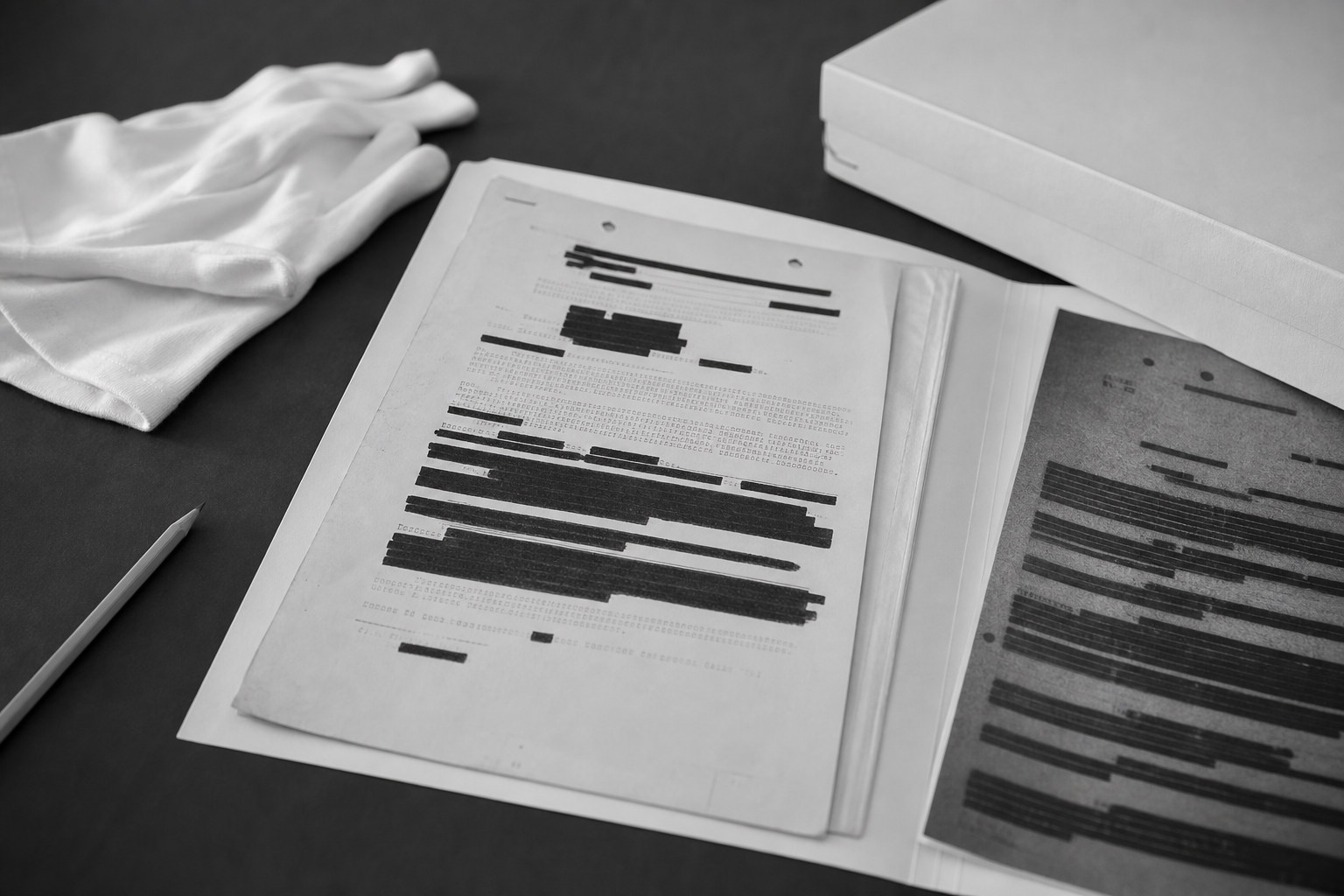
- Classified national-security information may be withheld or redacted when a document contains protected operational details. The practical result can range from a released page with blacked-out passages to no public copy at all.
- Intelligence sources and methods concern how information was obtained, who or what supplied it, and capabilities that could be exposed by disclosure. Those protections can affect otherwise mundane reports, attachments, routing information, and technical context.
- Privacy protections can remove names, contact details, medical information, or other personal data. A redaction may therefore protect an individual rather than conceal the subject of a sighting.
- Review for disclosure can produce partial release, continued restriction, or later revision as agencies assess individual passages. A pending status is not a finding about the underlying event.
Incomplete record transfer, nondigitized holdings, imperfect metadata, and lawful restrictions can all produce the same visible result: no useful search hit. That absence alone is neither proof of a government UFO cover-up nor proof that a record never existed. The stronger inference comes only after comparing catalog descriptions, series context, originating-office records, and any stated access status.
What the Collection Does Not Establish
Archival presence is evidence of a record’s provenance, not a verdict on the event it describes. It can show that an agency created, received, retained, or transferred a document; it does not make a witness account, internal allegation, or unresolved observation true.
- Provenance: Who created the item, and was that person reporting firsthand knowledge or repeating a claim?
- Date and context: Was it written during the event, years later, or for a different administrative purpose?
- Corroboration: Do independent records, sensor data, or contemporaneous accounts support its central details?
- Later assessment: Did subsequent analysis identify an explanation, narrow the uncertainty, or leave only the observation unresolved?
Neither an unexplained case nor a historical allegation independently establishes alien disclosure, non-human intelligence, crash retrievals, or a coordinated concealment program. The collection is a research resource, not a verdict on extraordinary claims.
The Best Way to Read the UAP Records Collection
Read each search result as a chain of custody: the catalog description identifies the holding, the creator identifies whose activity it records, and the document itself shows what was known, claimed, or withheld at a particular time. A contemporaneous memorandum with an attached photograph is stronger evidence of an office’s handling of an observation than a later summary that merely repeats it; neither automatically identifies the observed object.
Use the UAP Records Collection National Archives page and the NARA Catalog together. Save the catalog identifier and archival citation, open the digitized item where available, and distinguish the visible text from redactions, missing attachments, and descriptive metadata. A redacted page can support limited conclusions about the unredacted portions and the record’s existence, not about the concealed material.
Keep related bodies of material in their proper lanes. Project Blue Book files document a historical Air Force investigative program; AARO publications reflect a modern analytical office; congressional records preserve oversight activity. Each can illuminate federal attention to a subject without establishing that every allegation or unresolved report is correct.
The most durable conclusion is therefore modest and useful: the collection offers an expanding route into federal documentation. Follow the record back to its originating office, date, purpose, and corroborating material, and let the available evidence set the limits of the claim.
Sources
Frequently Asked Questions
-
What is the National Archives UAP Records Collection?
The National Archives UAP Records Collection is a congressionally directed repository for federal records responsive to the government’s unidentified anomalous phenomena framework. Created through the FY2024 National Defense Authorization Act, it centralizes eligible records while allowing lawful postponement of public disclosure.
-
What types of records are in the National Archives UAP Records Collection?
The collection can include historical case files, correspondence, military and intelligence documentation, photographs, film, congressional records, presidential materials, and transfer inventories. Records may be fully digitized, partially released with redactions, described only in catalog metadata, or still under review.
-
Can the public search National Archives UAP records online?
The public can search NARA Catalog entries using terms such as “unidentified anomalous phenomena,” “UFO,” agency names, locations, and dates. A digital-object link, PDF, or thumbnail indicates an item can be viewed online, while a catalog description without a scan may require an onsite visit or reproduction request.
-
Why are some UAP records redacted or missing from online searches?
Records may be redacted or unavailable because of classified national-security information, intelligence sources and methods, privacy protections, incomplete transfer, or lack of digitization. No online search result does not prove that a record never existed or that it is being concealed.
-
How is the UAP Records Collection different from Project Blue Book and AARO records?
Project Blue Book consists of U.S. Air Force investigative case files from 1947 to 1969, including Record Group 341 holdings, while AARO produces modern UAP reporting and analysis materials. AARO operational records and Blue Book files are not automatically part of the statutory National Archives collection unless they are transferred or otherwise made available through archival processes.