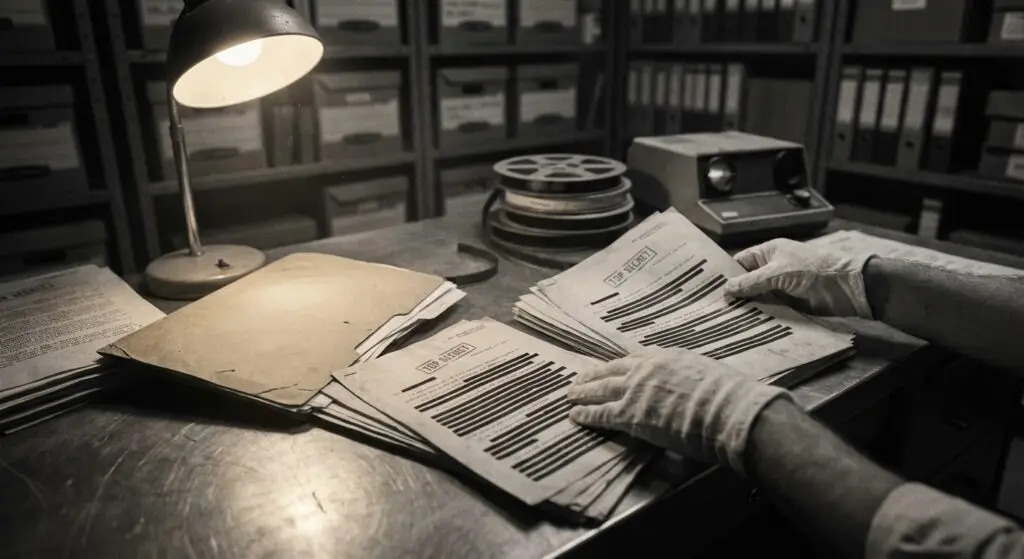
Every few months, the same headline spikes across your feed: “newly released CIA UFO files.” One thread insists the documents confirm an alien cover-up; another claims they prove nothing at all. The whiplash is the point. In 2016, the CIA made a large tranche of declassified records far easier to access online, and that single accessibility shift moved today’s “disclosure” arguments from rumor and retellings to something people can actually quote, screenshot, and circulate.
The BBC described the CIA posting as roughly 13 million pages of declassified documents made available online, and noted that the material includes records of UFO sightings. That scale matters because it changed the mechanics of debate: anyone could point to page numbers, letterheads, and memo language, then build a narrative around it. It also created a new problem. Raw archives are not curated explanations. They are working records, mixed in quality and intent, that reward cherry-picking and punish context.
Local and national reporting captured the historical skew. ABC7 characterized much of the UFO-related material as spanning decades, with many documents tied to late-1940s and 1950s-era investigations. Space.com reported the CIA also turned over 2,700 pages of UFO-related material to The Black Vault. Those facts anchor what you are really reading: administrative traffic, intelligence-era framing, and period assumptions preserved on paper. “Unidentified flying object (UFO)” is a legacy label for something observed but not identified at the time, which is exactly why these files contain uncertainty without resolving it.
The language shift adds another layer. The Department of Defense has documented a progression in official usage away from “UFO” toward “Unidentified Aerial Phenomena (UAP),” a term that describes observations without implying an origin. The goal here is not to turn archives into verdicts, but to show what the 2016 posting changed, what it did not change, and how to separate primary-source documentation from hype as modern UFO and UAP “disclosure” claims surge.
That separation starts with the mechanics of what the CIA actually put online-and what an online archive can and cannot tell you on its own.
What The CIA Actually Published
The 2016 to 2017 moment people remember was not the CIA “opening one UFO file.” It was the CIA making it easier to find, search, and download records that already lived inside its public-facing archives, alongside many unrelated historical collections. Treat it like walking into a warehouse where the lights got turned on and the aisles got labeled, not like a brand-new investigative conclusion.
That distinction matters because the public narrative quickly drifted into “the CIA declassified all its UFO records,” a claim that spread widely on social platforms. The more accurate frame is: the CIA posted and surfaced material in a way that dramatically increased reach, and people inferred meaning from volume and formatting that the archive itself does not assert.
CREST, the CIA Records Search Tool (CREST), is the agency’s searchable archive system for many declassified records and historical collections. For years, CREST access was associated with on-site terminals; the 2016 to 2017 window is when the practical experience changed for the public because the records became broadly searchable and retrievable online.
Media coverage characterized this as roughly 12 to 13 million pages of declassified documents made searchable online, with the major online push landing in January 2017. “Millions of pages” sounds like a single coordinated “release,” but in practice it means you are querying a large, uneven archive: different offices, decades, subjects, and document types, surfaced through the same search interface.
When you click into UFO-related results, a lot of what you actually encounter reads like raw reporting: cables and short items that relay unverified sightings or secondhand claims. That is not a weakness of the archive; it is a clue about provenance. Intelligence repositories preserve what was received and circulated, not only what was proven true.
You will also see internal snippets that function more like assessment than evidence, including at least one reported memo line that frames UFOs as “not of direct intelligence” interest. In other words, some pages are not “the CIA investigating aliens”; they are the CIA deciding how much attention a topic deserves.
And some of the most viral PDFs are best read as compiled claims rather than first-hand casework, such as the document frequently highlighted in news coverage for describing an alleged UFO incident involving Soviet troops. The practical takeaway is simple: the presence of a dramatic narrative in a CIA-hosted PDF does not tell you whether the CIA verified it, endorsed it, or merely archived it.
Finally, expect administrative material mixed in with “content”: routing slips, cover sheets, distribution lists, indexing pages, and attachment-only scans. Those pages look bureaucratic because they are; they show how paper moved, not what was true.
Two timestamps routinely get conflated: the document date (when something was written or circulated) and the release or posting date (when you were allowed to see it online). A 1950s memo uploaded in 2017 is not “a 2017 event.” It is a 1950s artifact made more discoverable in 2017.
The same caution applies to foldering and labels. A “UFO” tag or a collection label can indicate relevance to a search term, a cross-reference, or an attachment chain, not an agency verdict. If you want to know what the CIA itself is saying, prioritize the first page’s header, the “to/from” lines, and any explicit analytic judgments, then verify whether the PDF is complete or an excerpt.
FOIA, the Freedom of Information Act, is the U.S. law that lets the public request federal records, subject to exemptions. CIA releases can be partial or fragmented because withheld material is treated as properly classified under Executive Order authority in the interest of national defense or foreign policy, and the agency processes requests under the procedures in 32 CFR Part 1900.
On the page, this shows up as redaction, meaning specific text is removed or withheld in the released copy, usually labeled with a code that indicates the legal or classification basis for withholding. Those exemption codes exist precisely because agencies withhold sensitive topics by category; a black bar is a process artifact, not a content signal.
You will also see classification markings, specifically banner markings and portion markings. The banner marking is the overall classification for the document, while portion markings classify individual paragraphs or sections; documents are classified at the level of their most highly classified portion. Those markings exist because classification decisions are tied to expected national-security damage from unauthorized disclosure, not because a document contains extraordinary biology or technology.
One more control against overreading: the CIA Reading Room hosts many historical collections beyond UFO material, including a sampling of National Intelligence Daily articles. The same declassification formatting repeats across topics because it is a standardized record-keeping system, not a UFO-specific tell.
- Separate document date from release/posting date before you interpret anything.
- Identify the document type in the first 10 seconds: memo, cable, summary, clipping, analytical note, or admin page. Weight your confidence accordingly.
- Trace provenance: “to/from,” subject line, and attachments tell you whether this is first-hand reporting, hearsay, or a forwarded item.
- Treat routing slips, cover sheets, and distribution lists as workflow evidence, not event evidence.
- Assume partiality: redactions and missing pages reflect FOIA and classification rules, not confirmation of non-human intelligence.
- Read classification markings functionally: banner equals overall level; portion markings equal paragraph-level sensitivity, not “degree of truth.”
Once you accept that the 2016 shift was about access rather than conclusion, the next question is why so much of the material reads the way it does. The answer sits in the period that produced the bulk of the most-cited documents.
Cold War Roots Of The X Files
These files exist because UFO (later called UAP) reports were treated as potential national-security indicators, not because agencies set out to adjudicate alien disclosure. In the Cold War, an ambiguous light in the sky competed with real air-defense work: it could be an early warning, a false alarm that clogged reporting channels, or a story that spooked the public into seeing threats everywhere. That security triage shaped what got collected, how it was summarized, and why so many documents read like risk management rather than mystery solving.
Airspace was a sensor field, not a blank canvas. Radar returns, pilot sightings, and civilian calls could signal an intrusion, a malfunction, or a misread of perfectly normal activity, and the stakes were highest over restricted areas. The summer 1952 Washington, D.C. flap sits in the record for that reason: it combined radar and visual reports over sensitive airspace and generated major public and media attention, creating pressure for official attention and explanation.
The other driver was the collision between secrecy and observation. Declassified CIA records tie surges in UFO reporting to classified flight testing: U-2 operations produced a noticeable rise in reports because the aircraft and its performance profile were not public, and later programs such as OXCART, associated with Area 51, were also repeatedly misidentified as UFOs. When the most capable aircraft in the sky cannot be acknowledged, uncertainty does not just persist; it becomes an operational constraint that agencies have to work around.
The dominant institutional pattern was triage: collect what people report, evaluate it fast, resolve what can be resolved, and prevent the remaining noise from consuming scarce analytic attention. CIA records show the 1953-era effort included reviewing individual case histories in a structured way, and declassified documents also indicate the Agency ceased its direct UFO research operations in 1953. That combination signals the priority: understand whether reports pointed to an air-defense or foreign-aerospace problem, then keep the topic from becoming a self-sustaining distraction.
First is the 1952 Washington, D.C. flap. It appears in historical summaries and references because it put radar, pilots, and the public narrative on the same stage at the same time, and it did so over restricted airspace. That mix is exactly what turns a curiosity into a security issue.
Second is January 1953, when CIA records describe an expert panel convened at the direction of the Director of Central Intelligence to examine UFO reports, commonly called the Robertson Panel. It is repeatedly referenced because it formalized the posture that runs through many documents: sightings were treated as possible signals of air-defense or foreign-technology issues, and the system needed a way to separate signal from noise.
When you open a memo from this era, ignore the temptation to score it as proof or disproof of extraordinary claims. Read it like a security artifact and ask a tighter question: what risk is the author trying to manage right now, airspace intrusion, sensor reliability, foreign aerospace capability, or public attention that could degrade reporting discipline? That single lens explains both the volume of collection and the stubborn ambiguity that follows when the best explanatory data sits behind secrecy.
That lens also clarifies why modern readers misfire: they often approach Cold War paperwork as if it were written for public persuasion, when it was written for internal sorting under time pressure.
Patterns, Highlights, And Common Misreads
The CIA UFO archive contains signal, noise, and paperwork, and the paperwork is where most misreads happen. A lot of “CIA UFO file” hype collapses because readers treat a dramatic subject line, a blacked-out paragraph, or a classification banner as evidence of non-human intelligence. Most of the time, those elements prove something narrower: the agency handled information, protected sources and methods, or filed third-party reporting in a retrievable way.
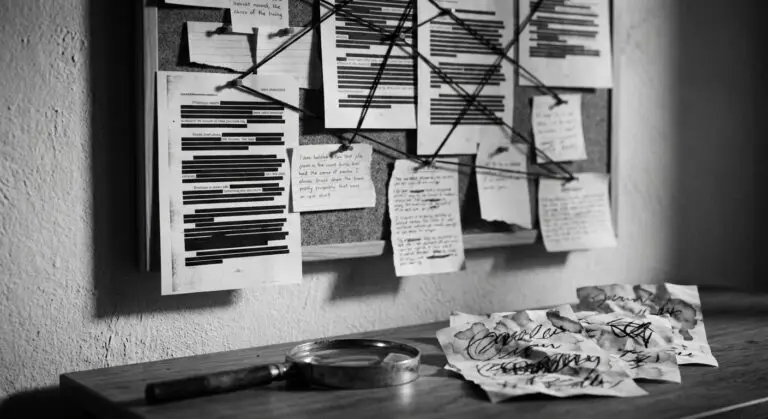
The first recurring category is straightforward: sightings reports and short summaries. These are frequently written as “someone said they saw X” records, not “we verified X” determinations. Their value is real, but bounded: they document what was reported, when it was reported, and sometimes who received it, which is useful for reconstructing information flow.
The second category is analytical or compilation documents, where an author aggregates multiple items and tries to impose structure: timelines, comparisons, or an intelligence judgment. The CIA listing itself signals this variety. One entry is titled “UFO PHENOMENON IN CHINA ANALYSIS” and is listed as “5 PP,” which tells you you’re looking at an analysis-format item, not a single raw sighting. Another is “COMLIST: MOSCOW CONSOLIDATED 12 JUN 91,” which reads like a consolidated communications list, not a narrative “UFO report.” Treat titles as filing labels, not conclusions.
The third theme is foreign aerospace and strategic concern. In Cold War-era intelligence work, “UFO” often overlaps with air defense, adversary testing, misidentification risk, and the speed of rumor propagation. In that environment, classification primarily reflects sensitivity and potential national-security harm from disclosure, not whether a claim is extraordinary.
The fourth category is third-party clippings and attachments: foreign press items, translated articles, memos with appended material, and interagency forwarding. These show what the CIA collected and circulated, which is not the same as what it endorsed.
The fifth category is “oddities” that get memed because they are real, strange, and adjacent: declassified CIA records include references to psychic experiments from the Stargate programme. That is not alien confirmation. It is a reminder that declassified collections are broad and include exploratory programs, dead ends, and historically interesting but evidentially limited material.
Online, screenshots reward anything that looks like a reveal: a bold title, a “CIA” header, a block of redaction, a “CONFIDENTIAL” banner. Context gets stripped because it slows the post down. A clipping attachment becomes “CIA document says,” a routing slip becomes “CIA admits,” and a compilation becomes “CIA report concludes,” even when the underlying text is just forwarding, summarizing, or quoting someone else.
The most common error is treating classification as a truth stamp. It isn’t. As described earlier, a document’s overall classification can be driven by its most sensitive portion, which means one paragraph can raise the banner level without changing what the rest of the page actually establishes.
The same goes for marking formats: banner markings and portion markings are administrative controls for handling and protection, and screenshots that crop out the internal structure make ordinary paperwork look like a coded reveal.
Redactions amplify the effect. Redaction codes are attached to redactions to state why something is withheld, and those codes often point to standard sensitive topics like war plans, cryptography, WMDs, or diplomatically damaging information. A black box is usually a protection mechanism, not a hidden confession.
Foreign-origin reporting creates another trap: foreign-source information can default to Confidential unless the foreign source specifies tighter controls. That frequently reflects liaison rules and source protection, not extraordinary content.
- Identify the source type: Is it a raw sighting report, an analysis/compilation, a routing memo, or a press clipping attachment? Weight it accordingly.
- Check chain of custody: Who authored it, who received it, and is the CIA the originator or just the collector/forwarder?
- Separate reporting from analysis: Reporting records claims; analysis evaluates them. Do not quote a reported claim as an agency conclusion.
- Read classification markings correctly: Banner marking is overall. Portion markings show what paragraphs are actually sensitive and who set the classification authority.
- Apply the “highest portion governs” rule: One highly classified segment can classify the whole document; it does not elevate every line to the same evidentiary status.
- Ask what the document literally asserts: Does it claim direct observation, confirmation, or just that someone reported an event?
- Account for what redaction removes: What is missing: sources, locations, capabilities, or evaluative judgments? Use the redaction rationale, not the empty space, to infer sensitivity.
If you use that checklist every time a “UFO disclosure” or “UAP disclosure” post goes viral, the signal separates fast: you stop mistaking classification formatting for confirmation, you stop treating attachments as admissions, and you can say precisely what a CIA-hosted document does and does not establish.
That discipline becomes even more important once the conversation moves away from Cold War archives and toward today’s reporting infrastructure, where the headline is often the process itself.
From Archives To Today’s UAP Push
The CIA’s declassified archive still gets recycled in headlines, but it no longer drives the center of gravity of the U.S. conversation. Post-2017 attention re-centered the issue around standardized reporting, shared terminology, and offices built to intake and adjudicate reports across government systems. In practice, “what’s new” in UAP news is usually procedural: who collected the data, which office received it, what got assessed, and what was formally reported, not whether an older document exists in a public reading room.
Government communications moved from “UFO” to “UAP” (a deliberate institutional label choice) because the modern problem statement is operational and data-driven: observations from pilots, sensors, and intelligence streams that require consistent categorization and triage. That framing matters because it changes what counts as an “official” touchpoint, less about one dramatic sighting and more about whether an observation enters a controlled reporting channel and gets handled under a defined mandate.
The post-2017 wave pushed the Department of Defense toward repeatable collection and coordination. The office lineage typically cited in public discussions reflects that shift in function: UAPTF, then AOIMSG, then the current AARO. Read that progression as a bureaucratic answer to the same friction point: multiple services and agencies were seeing reports, but there was no single place responsible for consolidating them, applying analytic standards, and producing consistent reporting outputs that leadership could act on.
ODNI-associated public reporting cycles reinforced this institutional posture by turning UAP into a recurring reporting problem with defined release artifacts, rather than a sporadic media event. The practical effect is that modern UAP discourse increasingly treats primary releases, briefings, and office statements as the “clock” of the story, with archives and anecdotes used as supporting material or rhetorical fuel.
All-domain Anomaly Resolution Office (AARO) is a U.S. Department of Defense office tasked with receiving, analyzing, and reporting on UAP-related data and claims within its mandate, which is exactly why “officially reported” now has a narrower, process-based meaning. AARO also accepts reports of U.S. Government programs or activities related to UAP from current or former U.S. Government employees, service members, or contractors. Intake is an assessment function, not a validation stamp: accepting a report means it entered a controlled channel for triage and analysis, not that the underlying claim was confirmed, endorsed, or substantiated.
High-profile testimony moves fast because it is quotable, but it still needs clean attribution. David Grusch testified under oath before a House Oversight subcommittee and under the House Committee on Oversight and Accountability; coverage describes him as a former intelligence officer and U.S. Air Force veteran. Treat his statements as two categories: (1) firsthand claims about what he personally did, saw, or handled in an official capacity, and (2) secondhand claims, what he reports others told him, which remain allegations until corroborated by documents, named programs, or independently verifiable records.
- Classify the source: separate an office statement (DoD, AARO, ODNI) from a media characterization and from sworn testimony.
- Identify the claim type: distinguish sensor-backed incident reporting from claims about hidden programs or materials.
- Demand primary artifacts: look for an official release, a written statement, a transcript, or a referenced reporting product, not a screenshot of an archive link.
- Track corroboration signals: prioritize claims that come with documents, defined jurisdictions, and auditable timelines, and demote claims that remain attribution-only.
Process is the connective tissue here: modern UAP claims rise or fall on what reporting channels require and what the law makes publishable.
Transparency Laws And The Disclosure Fight
The real disclosure fight is procedural: who must report what, to whom, on what schedule, and what portion of it is publishable versus locked behind classification. A one-off archive posting can change the conversation, but it does not force a durable pipeline of collection, review, and recurring public outputs.
NDAA-driven requirements turn UAP transparency into a compliance problem for the Defense Department, not a communications choice. Statutes have required formal reporting structures with split lanes for public versus classified reporting, so summaries can be released while sensitive sources and methods stay protected. The practical effect is predictable deliverables: recurring reports, standardized inputs, and named offices responsible for consolidating information rather than letting it remain scattered across commands and agencies.
A key example is classification discipline. The NDAA requires AARO (All-domain Anomaly Resolution Office) to account for all security classification guides that govern UAP-related reporting and investigations. That matters because classification guides are the rulebooks that decide what can be written down, shared, and published. When Congress forces an inventory of those rulebooks, it creates a paper trail for overclassification claims and an audit target for oversight.
These requirements also push collection and coordination. DoD components are required to collect UAP reports across agencies and then present summaries and analysis in annual public and classified reports. The public version is not the whole story, but it is a mandated product with a cadence, which is exactly what ad hoc releases lack.
As introduced, the Schumer UAP Disclosure Act stated its purpose plainly: expeditious disclosure of unidentified anomalous phenomena records. Its mechanism was structural, not symbolic: a proposed approach to collect UAP-related records across government and route them through a defined review pathway geared toward declassification and release. Introduced text and final NDAA outcomes are not the same thing, and negotiated end products routinely omit or narrow proposed mechanisms.
Congress also uses hearings to create visibility that statutes alone cannot. Congress.gov logs the House hearing titled “Unidentified Anomalous Phenomena: Implications on National Security, Public Safety, and Government Transparency” (118th Congress). Hearings matter because testimony becomes part of the official record, members can demand documents, and agencies face public questioning that is difficult to ignore in internal decision-making.
Even the negotiation fights are informative. Media reporting, including The Hill, has described disputes over whether UAP-related amendments were included or excluded during NDAA negotiations, underscoring that disclosure policy is contested and often decided in closed-door bargaining.
- Track mandated deliverables: annual public UAP reports, companion classified annexes, and any required notifications tied to oversight.
- Look for process artifacts: classification-guide accounting, reporting templates, and cross-component collection directives that make reporting repeatable.
- Use hearing records: posted witness lists, written statements, transcripts, and follow-up questions that reveal what Congress is pressing agencies to produce.
- Measure declassification outputs: releases that follow a formal review pathway carry more signal than isolated document drops.
Those procedural signals are also the cleanest way to set expectations for 2025-2026, because they define what evidence can realistically surface and in what form.
What To Watch Next In 2025 2026
The CIA’s 2016 UFO posting is worth treating as access, not adjudication. It meaningfully expands the public’s ability to read what was released, at scale, and it shows how agencies processed reports under real operational pressure. It does not, by itself, convert archival material into automatic confirmation of non-human intelligence. That gap between availability and interpretation is the entire point of the release, and it is also where most 2025-2026 misinformation will try to live.
The historical-context lens matters because the record shows institutional triage, not a standing “alien” program: declassified CIA documents place the agency’s direct UFO research ending in 1953, and the Robertson Panel process emphasized reviewing specific case histories and assessing the broader “UFO situation,” contributing to the arc that culminated in Project Blue Book’s termination in 1969.
Carry the same source-type discipline from the patterns-and-misreads problem into everything you read next. High-grade support looks like corroborated sensor and radar data tied to a clear provenance trail (who collected it, when, under what controls). Low-grade support is isolated snippets, screenshots, reposted PDFs, and unattributed “insider” summaries that cannot be traced back to an official chain of custody.
Modern-uap-era reporting lives or dies on institutional pipelines, and policy-and-transparency expectations should be set by mandated deliverables and repeatable reporting cadences, not one-off leaks. Monitor official publication hubs (AARO, ODNI, and DoD pages) and congressional hearing repositories first. Use trackers like the UAP Disclosure Tracker, and archives that label source types (alien-contact.me’s “Official/Testimony/Culture” approach), as navigation tools for traceability, not arbiters of truth.
- Identify the source type (official record, testimony, or culture).
- Demand corroboration (multi-sensor, radar, independent logs).
- Verify provenance (original host, document metadata, custody trail).
- Separate interpretation from the underlying artifact.
- Wait for adjudication signals (briefings, reports, formal updates), not viral clips.
If you want fewer dead ends, bookmark the official hubs and hearing repositories, and only subscribe to updates that label what is verified versus what is merely claimed.
Sources
Frequently Asked Questions
Did the CIA release new UFO files in 2016, or just make existing records easier to access?
The 2016-2017 change was primarily about access: the CIA made its declassified archive (CREST) broadly searchable and downloadable online. It was not a single new “UFO file release,” but a visibility shift for records that already existed in the archive.
How many pages did the CIA put online, and when did the big online push happen?
Media coverage described roughly 12-13 million pages of declassified documents being made searchable online. The major online push is commonly cited as landing in January 2017.
What kinds of UFO documents are actually in the CIA archive (memos, cables, reports, etc.)?
UFO-related search results often include raw reporting like cables and short summaries that relay unverified sightings or secondhand claims. The archive also contains analytical/compilation items and a lot of administrative pages such as routing slips, cover sheets, and distribution lists.
How can I tell if a CIA “UFO document” is a CIA conclusion or just forwarded third-party reporting?
Check the first page for the header, the “to/from” lines, the subject line, and whether the CIA is the originator or just the collector/forwarder. The article also warns that dramatic attachments (including viral PDFs) may be compiled claims and do not indicate CIA verification or endorsement.
What do redactions and classification markings in CIA UFO files actually mean?
Redactions reflect FOIA and classification rules, with exemption codes indicating the legal or classification basis for withholding, not “hidden confessions.” Classification markings include overall banner markings and paragraph-level portion markings, and one highly classified portion can drive the classification level for the whole document.
Why are so many CIA UFO records from the late 1940s and 1950s, and what changed in 1953?
Reporting was heavily shaped by Cold War air-defense concerns, where ambiguous sightings could indicate intrusions, sensor issues, or foreign aerospace activity. The article states CIA records indicate the Agency ceased its direct UFO research operations in 1953, and it references the January 1953 Robertson Panel convened to examine UFO reports.
If I’m evaluating UFO/UAP disclosure claims in 2025-2026, what sources should I prioritize over viral CIA PDFs?
Prioritize official reporting pipelines and artifacts such as AARO, ODNI, and DoD publication hubs, plus congressional hearing records (witness lists, written statements, transcripts). The article says higher-grade support looks like corroborated multi-sensor or radar data with clear provenance, while low-grade support is screenshots, reposted PDFs, and unattributed summaries.