The History of U.S. Government UFO Programs: Project Blue Book to AARO
Trace U.S. government UFO programs from Project Blue Book to AARO, including key investigations, findings, unresolved cases, and oversight.
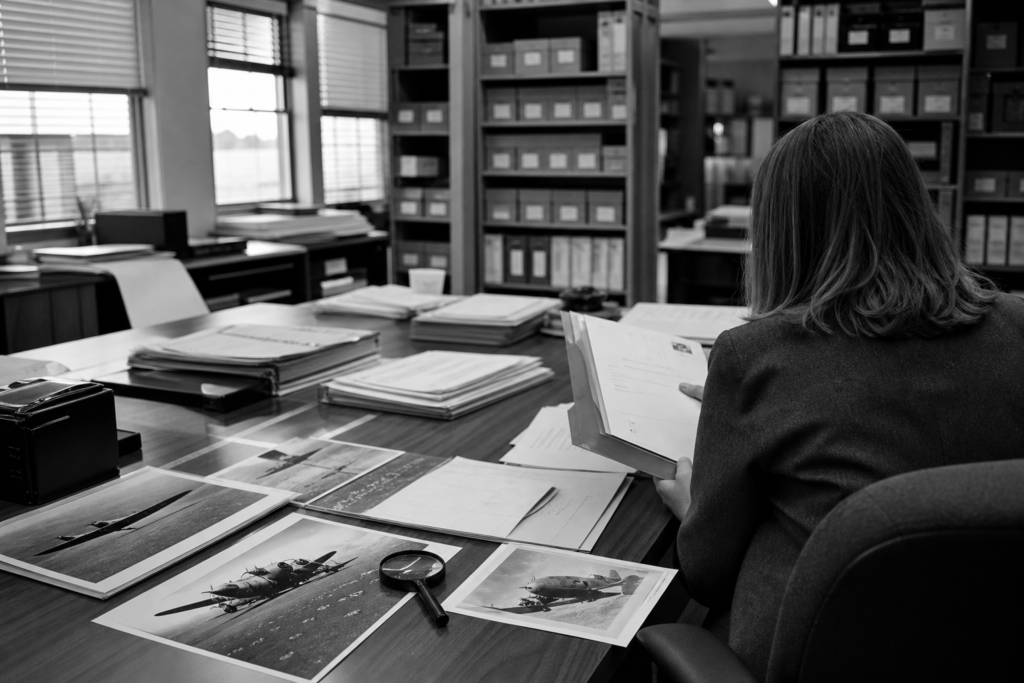
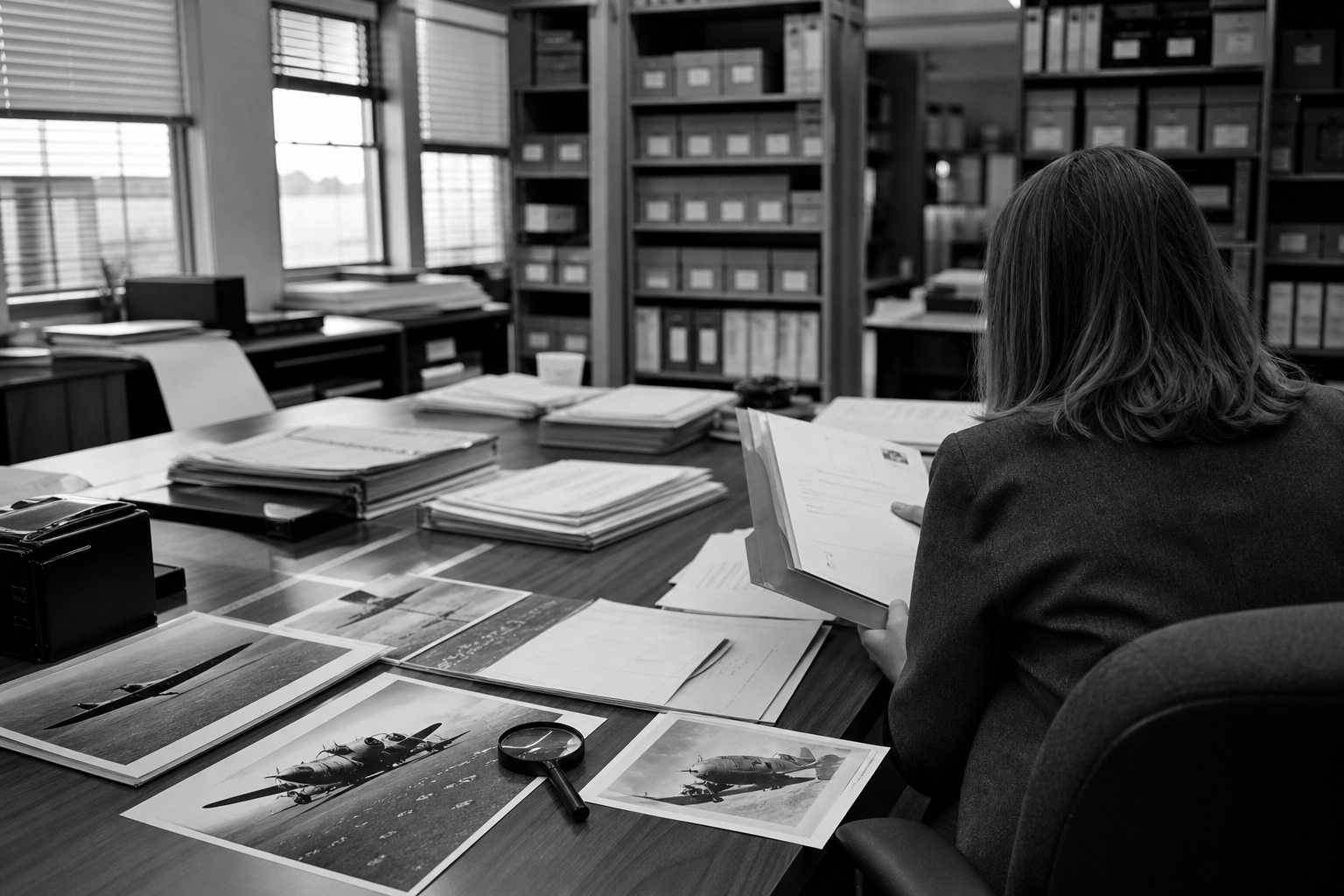
U.S. government UFO programs began as recurring efforts to reduce uncertainty: an unusual aerial report might matter because it reflected a mistaken observation, a foreign capability, a flight-safety problem, or an intelligence gap. The label describes what had not yet been identified; it does not establish what the object or event ultimately was.
This history follows the institutional response rather than the most dramatic individual accounts. It moves from the Air Force’s early Cold War projects and Project Blue Book to later Pentagon reviews, formal intelligence reporting, congressional direction, and the All-domain Anomaly Resolution Office (AARO). Along the way, the language shifted from unidentified flying objects to unidentified anomalous phenomena. The newer term broadens the frame beyond airborne sightings to observations in, from, or across multiple domains, while placing greater emphasis on defense and intelligence risks.
The public record can document that offices were created, what missions they received, and what conclusions their reports reached. It can also preserve cases left unresolved because available data were inadequate. Neither condition turns an unresolved report into proof of an extraterrestrial explanation, nor does it settle later allegations that extend beyond the documented record. That distinction is essential to understanding why these investigations repeatedly ended, reappeared, and changed form.
From UFOs to UAP: Why the Government’s Approach Kept Changing
A shift in vocabulary also marked a change in administrative purpose. “UFO” belonged chiefly to an era of reported aerial sightings and Air Force investigation; “UAP” became the Defense Department and intelligence community’s term for reports that may require analysis across air, sea, space, and other operational settings. The practical question broadened from “what was seen?” to whether an event exposed a gap in sensing, reporting, aviation safety, or national defense.
That shift makes the history of government UFO programs easier to follow. Project Blue Book, active from 1952 to 1969, organized Cold War-era Air Force inquiries. Later Pentagon efforts revived attention to military encounters; the UAP Task Force in 2020 formalized an intelligence-reporting function; and AARO, established in 2022, consolidated a wider all-domain mission. Each transition changed who collected reports, who assessed them, and how much of the resulting record could be made public.
The evidence must be read in layers. A verified record can establish that personnel made an observation or that a sensor registered an object; an unresolved case means the available information did not support a reliable identification. A confirmed origin requires additional evidence connecting the observation to a specific source. Public allegations may warrant scrutiny or oversight, but they are not equivalent to an official finding. The chronology that follows keeps those categories separate while tracing why the government repeatedly rebuilt its investigative machinery.
Cold War Origins: Project Sign, Project Grudge, and Project Blue Book
The first Air Force inquiries were shaped by a basic Cold War problem: an unexplained report near U.S. airspace could reflect a misidentification, a novel aircraft, a sensor limitation, or a potential hostile capability. In 1948, the U.S. Air Force established Project Sign at the Air Technical Intelligence Center at Wright-Patterson Air Force Base to collect and analyze such reports. Its purpose was intelligence assessment rather than a determination that any extraordinary explanation had been established.
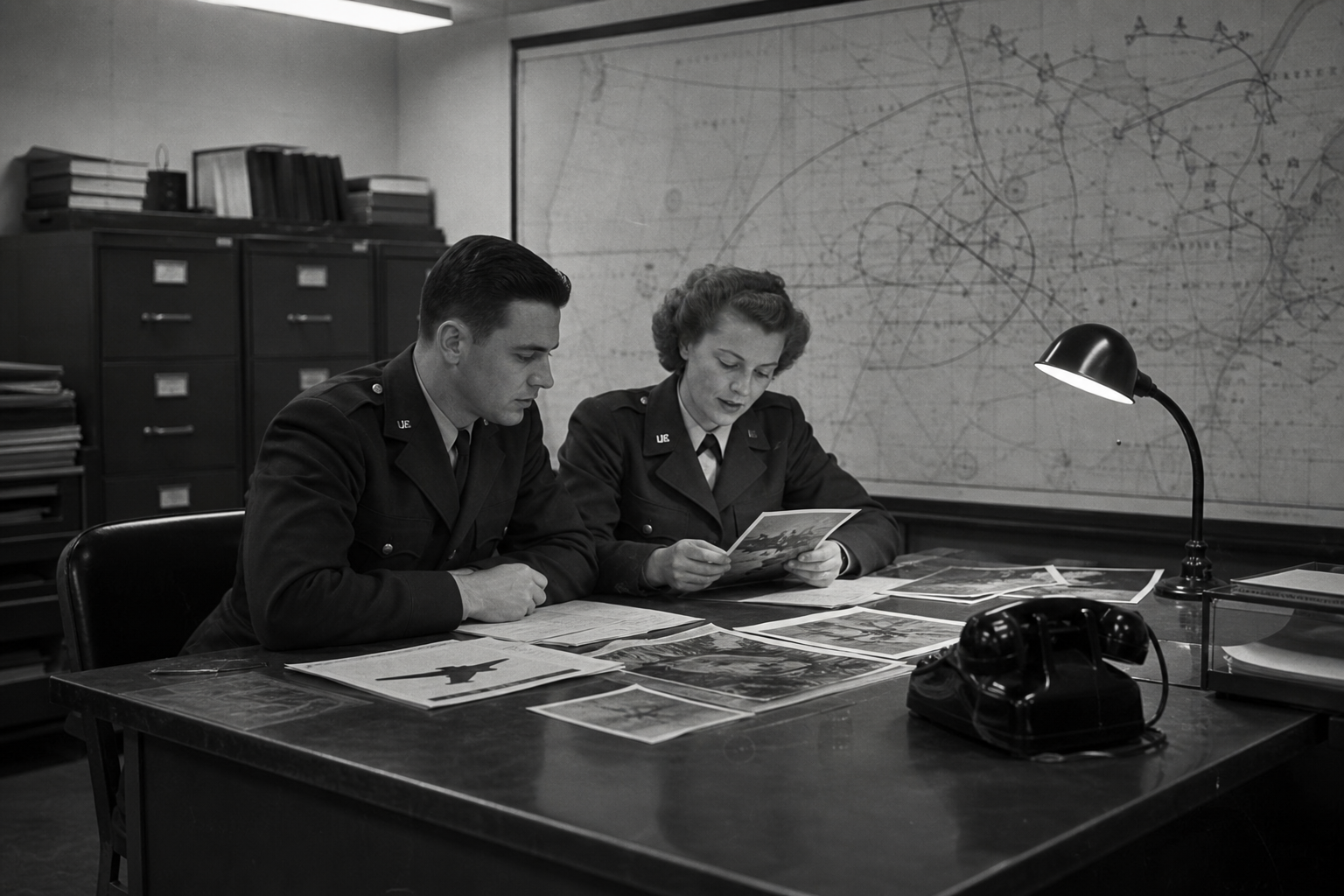
Project Sign was replaced in 1949 by Project Grudge, another Air Force effort based at the same intelligence organization. Grudge continued to examine reported objects but adopted a more skeptical institutional posture, emphasizing explanations such as aircraft, balloons, astronomical objects, weather phenomena, and errors in observation. The important distinction is not that one program was open-minded and the other was dismissive; both existed because the Air Force needed a way to decide whether reports indicated an air-defense concern. Their records could identify many cases, but incomplete reports and limited technical data also left some unresolved.
A new wave of sightings in 1952 prompted the Air Force to launch Project Blue Book, again under the Air Force intelligence structure. Blue Book became the best-known of the early U.S. government UFO programs because it combined case investigation with a more visible public-facing role. It received reports, sought explanations, and tracked whether any incident suggested a threat to national security. That arrangement reflected the era’s practical constraint: a large volume of public observations could consume military attention even when most did not indicate an adversary’s activity.
The 1953 Robertson Panel, convened by the CIA and staffed by scientists, reinforced that concern. Its review did not establish a hidden explanation for sightings. Instead, it warned that mass public interest and reporting could create noise, strain communications and analysis channels, and offer opportunities for an adversary to exploit confusion. The panel recommended reducing public fascination through educational and media-oriented measures and improving the handling of reports. Those recommendations influenced the government’s public posture, but they do not by themselves prove a coordinated cover-up.
These early programs created a durable institutional pattern: unexplained aerial reports were treated first as an intelligence and air-defense sorting problem. Project Blue Book would carry that framework forward while accumulating the public record later used to judge its limits and its closure.
Why Project Blue Book Ended in 1969, and What Its Record Actually Shows
By the late 1960s, the Air Force sought an external assessment of whether continued case-by-case investigation was likely to produce important scientific results. The University of Colorado study, led by physicist Edward U. Condon and published in 1968 as the Condon Report, reviewed selected reports and the broader investigative problem. Its central conclusion was that further extensive study was unlikely to advance science.
On December 17, 1969, the Air Force announced that Project Blue Book would end on January 30, 1970. Its stated position rested on three findings: no investigated report had shown a threat to national security; none had provided evidence of technology beyond contemporary scientific knowledge; and none had established an extraterrestrial vehicle. Those were institutional conclusions about the evidence reviewed, not a claim that every reported observation had been fully explained.
The distinction matters when reading the program’s statistics. Blue Book received 12,618 reports and classified 701 as unidentified. “Unidentified” was a file category: the information available did not permit a reliable match to an aircraft, balloon, astronomical object, weather effect, or another known explanation. It did not identify a positive alternative, extraterrestrial or otherwise. The National Archives preserves the case files, allowing readers to see how report quality, witness accounts, photographs, and technical data varied from case to case.
The closure therefore ended a visible Air Force reporting and investigation program, rather than demonstrating that all later government interest had ceased. Claims that the announcement concealed a broader conclusion require evidence beyond Blue Book’s public record. In institutional terms, 1969 marks a break in the public-facing structure, one followed decades later by different defense and intelligence efforts with different missions.
The Pentagon Era: AAWSAP, AATIP, and Renewed Attention to Military Encounters
Nearly four decades later, the Defense Intelligence Agency sponsored the Advanced Aerospace Weapon System Applications Program (AAWSAP), a contract effort that ran from 2008 to 2012. Its work examined prospective aerospace threats and included studies of unusual aerial phenomena. The $22 million contract went to Bigelow Aerospace Advanced Space Studies; it was not a revival of the Air Force’s public, case-by-case Blue Book system.
The Advanced Aerospace Threat Identification Program, or AATIP, became publicly prominent after The New York Times reported on it in December 2017. Public descriptions have not always drawn a clean boundary between AATIP and AAWSAP. Early Pentagon statements treated AATIP as the Defense Department effort associated with the same funding period, while later accounts and AARO’s historical review described AAWSAP as the formal DIA program and characterized AATIP as a smaller, less formally constituted follow-on activity led within the Office of the Under Secretary of Defense for Intelligence. The important distinction is institutional: a funded contract program has a defined sponsor and procurement record; an internal effort can continue analytical work without being a separately authorized program of the same scale.
The 2017 reporting also published Navy cockpit videos later known as FLIR, GIMBAL, and GOFAST. In 2020, the Department of Defense formally released the videos and confirmed that they had been recorded by Navy personnel. Authenticity established the footage’s military provenance; it did not, by itself, establish the identity, performance characteristics, or origin of every object or apparent object depicted.
These Pentagon UFO programs therefore renewed official attention to military encounters and the limits of available sensor data. They supplied evidence that defense personnel recorded and analyzed anomalous incidents, not public proof of an extraordinary explanation. That distinction would shape the more formal reporting structures created in the following years.
The UAP Task Force: From Ad Hoc Reviews to Formal Intelligence Reporting
In August 2020, the Deputy Secretary of Defense directed the creation of the UAP Task Force, placing it under Navy leadership with Defense Department intelligence oversight. Its mission was more structured than the earlier, loosely defined efforts: standardize the collection and reporting of military encounters, then detect, analyze, and catalog events that could pose a threat to U.S. personnel, facilities, or operations. The practical change was a reporting pipeline designed to turn scattered operational observations into an intelligence record.
Congress helped make that record public. The Intelligence Authorization Act for Fiscal Year 2021 required the Director of National Intelligence, working with the Secretary of Defense, to provide an unclassified assessment and a classified annex within 180 days. The resulting June 2021 preliminary assessment from the Office of the Director of National Intelligence examined 144 reports, mostly from 2004 through 2021. It was a limited dataset, drawn largely from Navy reporting after new guidance encouraged personnel to report encounters.
The assessment organized possible explanations into five categories: airborne clutter; natural atmospheric phenomena; U.S. government or industry developmental programs; foreign adversary systems; and an “other” category for cases needing additional scientific knowledge. It identified one report as a large, deflating balloon, but found that the remaining 143 lacked sufficient information for firm conclusions. Some reports described unusual movement or flight characteristics, yet the assessment treated those observations as leads for further analysis, not proof of a particular origin.
This was a consequential shift in UAP disclosure: a defense reporting issue had become a congressionally mandated, publicly visible intelligence-reporting obligation. Subsequent structures would inherit both the task force’s casework and the expectation of recurring oversight.
AARO: The Modern All-Domain Office and the Limits of What It Has Found
Congress’s next step was to turn that reporting obligation into a standing, all-domain office. The Fiscal Year 2022 National Defense Authorization Act directed the Defense Department to create a successor organization; in July 2022, the department established the All-domain Anomaly Resolution Office (AARO). Later legislation gave the office its present name and reinforced its reporting and historical-review duties.
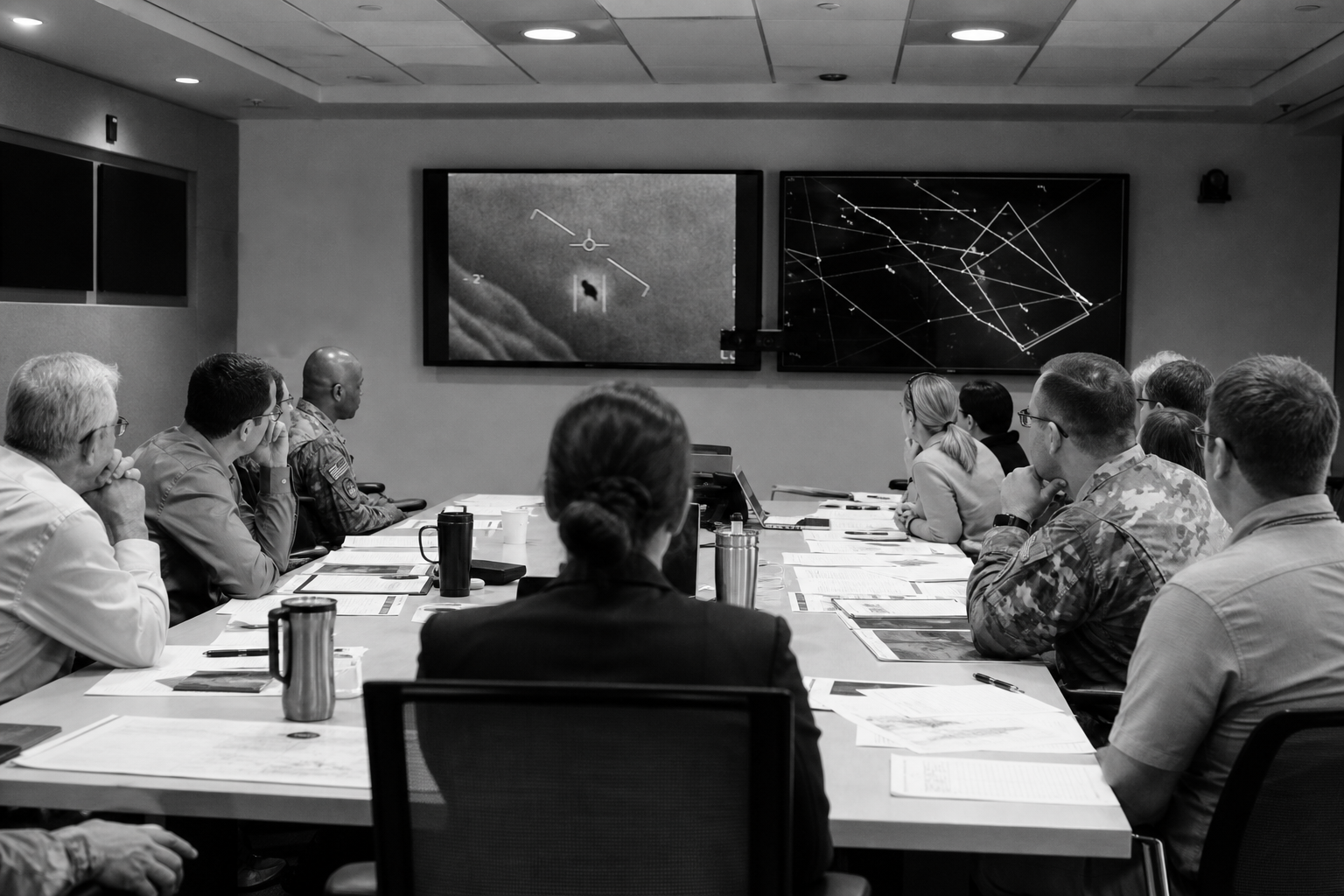
AARO’s remit is broader than an air-sighting desk. It receives and analyzes reports involving objects or events in air, sea, space, and transmedium settings, meaning observations apparently moving between domains. The office coordinates relevant Defense Department and intelligence-community elements, assesses whether a case may indicate a flight-safety, operational, intelligence, or national-security concern, and releases unclassified reports, case material, and imagery when classification rules permit. A report can therefore be significant as a sensor or security problem even when its origin remains unknown.
AARO findings: its annual reports have recorded a growing body of submissions, while separating cases resolved as ordinary objects or phenomena from those lacking enough data for identification. In March 2024, AARO’s Report on the Historical Record of U.S. Government Involvement with Unidentified Anomalous Phenomena, Volume I, reviewed claims of secret recovery and reverse-engineering programs. It reported no verifiable evidence that the government had confirmed extraterrestrial technology or operated a verified non-human intelligence program. That conclusion describes the evidence AARO reviewed; it does not convert every unresolved report into a resolved one.
Congressional testimony and allegations: at a July 26, 2023 House hearing, former intelligence officer David Grusch alleged that the government possessed recovered craft and biological material. Those were sworn allegations, not findings established by the hearing or verified by AARO’s historical review.
Legislative proposals and archival policy: the proposed UAP Disclosure Act would have created a review-board process modeled in part on the JFK records framework. Its strongest proposed disclosure provisions were not enacted as originally introduced, but the Fiscal Year 2024 NDAA established a UAP records collection at the National Archives. That distinction matters: an archival-access requirement preserves and organizes records; it does not authenticate every claim contained within them.
What the Public Record Supports, and Where to Read It
The best starting point is the underlying record: AARO reports and case material, ODNI assessments, Defense Department releases, NASA study materials, congressional legislation and hearings, and National Archives holdings for Project Blue Book and the UAP Records Collection. These sources establish investigations, reporting systems, and some unresolved incidents, not confirmed extraterrestrial visitation.
Read a primary document for what it actually records, then separate that record from commentary or breaking UFO disclosure claims. Across U.S. government UAP investigations, institutions and labels changed with security, aviation, intelligence, and transparency demands; incomplete observations remained difficult to identify with confidence.
What the History of Government UFO Investigations Reveals
A useful checkpoint is the difference between an unresolved file and a verified finding. The succession from Blue Book to later Pentagon efforts and AARO reflects changing demands for air defense, operational reporting, intelligence analysis, and congressional accountability, not a single continuous investigation operating under a new name.
That distinction explains why unresolved reports require disciplined reading. A case may remain open because observers lacked context, sensors captured too little information, records were incomplete, or analysts could not reach a reliable identification. Those are limits on the available evidence; they do not, by themselves, establish a foreign system, a secret domestic program, or an extraterrestrial origin. A stronger conclusion requires independently corroborated data connecting an observation to a specific explanation.
The lasting value of U.S. government UFO programs lies less in a final answer to every report than in the record of how agencies organized uncertainty, revised reporting channels, and opened more of their work to oversight. For the current record, follow AARO’s published reports and case disclosures alongside underlying Defense Department, ODNI, congressional, and archival materials.
Sources
Frequently Asked Questions
-
What was Project Blue Book and why did it end?
Project Blue Book was a U.S. Air Force UFO investigation program active from 1952 to 1969 that collected reports, sought explanations, and assessed national-security risks. The Air Force ended it on January 30, 1970 after concluding that no investigated case showed a national-security threat, technology beyond contemporary science, or an extraterrestrial vehicle.
-
What came after Project Blue Book?
Later efforts included the DIA’s AAWSAP contract from 2008 to 2012, the smaller AATIP analytical effort, the UAP Task Force created in 2020, and AARO, established in 2022. These programs focused more on military reporting, intelligence analysis, flight safety, and potential defense risks than Blue Book’s public-facing case system.
-
What is AARO and what does it investigate?
AARO is the Department of Defense’s All-domain Anomaly Resolution Office, established in July 2022. It analyzes unidentified reports involving air, sea, space, and transmedium settings to assess possible flight-safety, operational, intelligence, and national-security concerns.
-
Did the U.S. government confirm extraterrestrial UFOs?
No. Project Blue Book found no evidence establishing an extraterrestrial vehicle, and AARO’s March 2024 historical review found no verifiable evidence of confirmed extraterrestrial technology or a verified non-human intelligence program. Unresolved cases mean available data were insufficient for identification, not that an extraterrestrial origin was confirmed.
-
How should I evaluate UAP claims and find government records?
Separate verified observations, sensor data, official findings, and unresolved cases from public allegations that have not been independently corroborated. Review AARO reports and case materials, ODNI assessments, Defense Department releases, congressional records, National Archives Project Blue Book files, and the UAP Records Collection.