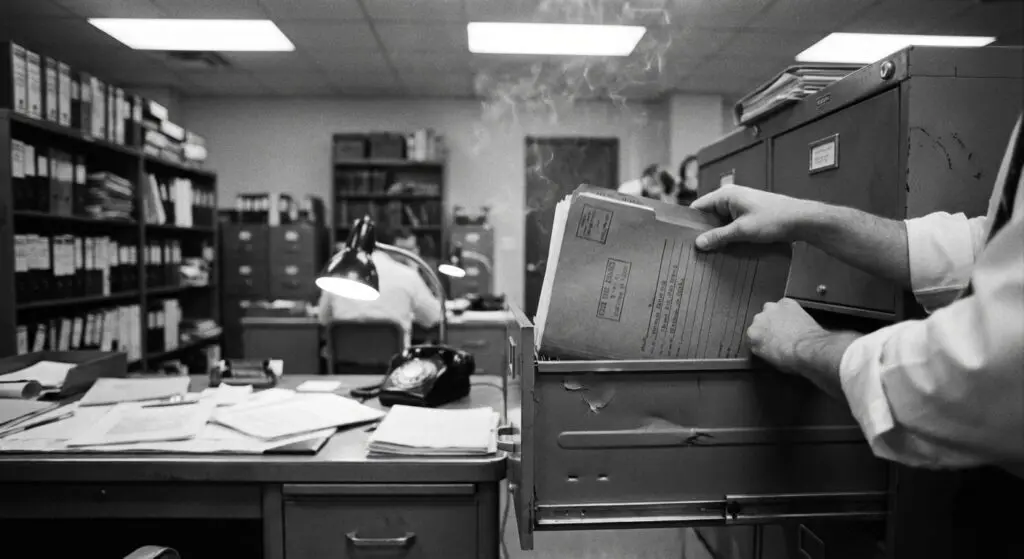
You keep seeing the same pattern: an official statement declares a UFO effort “closed,” then a new cluster of sightings, leaks, or “disclosure” claims drags the story back into your feed. The whiplash is the point. Governments can end a public-facing program on paper, but they cannot terminate the public’s demand for answers, and you need a stable way to judge which part of the message is governance and which part is narrative.
Your frustration comes from what didn’t change. The late 1960s were already a credibility stress test: the Vietnam War and Cold War competition kept national-security fears front and center, while scientific and technical achievement commanded public attention. Apollo 11 put that contrast in one frame on July 20, 1969, when Neil Armstrong, Buzz Aldrin, and Michael Collins flew the mission that ended with humans on the Moon. When institutions project certainty in an era like that, audiences learn to listen for what is being closed, and what is being left open.
Project Blue Book’s termination is the template. The U.S. Air Force announced the end on Dec. 17, 1969, and it backed the decision with a governance signal, rescinding the regulation that had established and controlled the program. The public framing was reassurance: the issue did not warrant continued public investigation. The file totals created the tension the headlines rarely hold in the same sentence: 12,618 reports received from 1947 to 1969, with 701 remained categorized as “unidentified” at termination. Closure delivered institutional finality, but the record preserved unresolved residue.
This is why modern UFO news and UAP disclosure cycles read the way they do. Once you recognize the 1969 playbook, you stop treating “terminated,” “no further investigation,” and “nothing to see” as the same claim. You learn to separate an official communication strategy from what the underlying case totals and unresolved categories actually show, and that skill holds up the next time a “final” statement meets another wave of reports.
To see that playbook clearly, you have to start with what Blue Book was designed to do, then follow how the Air Force justified ending it-and what mechanisms continued after the public desk was gone.
What Blue Book actually investigated
The files didn’t go quiet because the Air Force “gave up on aliens.” Project Blue Book was the Air Force’s public-facing investigative program for handling reported UFOs, meaning observations the witness could not immediately identify, and it issued public summaries of what could be explained while reducing uncertainty for commanders and the public until it was terminated in 1969.

“Investigated” in this context means something narrower than pop culture suggests: reports came in, the Air Force attempted to identify what was seen using available information, and the program communicated outcomes in a way that kept routine misidentifications from turning into chronic alarm. The operational objective was clarity, not extraordinary validation. If a case stayed unexplained, that result reflected the limits of the data, not an implied conclusion about the object’s origin.
That framing matters because it sets expectations. A public program like Blue Book is built to manage volume credibly, separate common causes from genuine unknowns, and keep attention on practical consequences like airspace safety and readiness, not to run an open-ended search for a single sensational answer.
Blue Book did not appear out of nowhere. It was the third step in a fast-moving lineage created to cope with postwar sighting volume and uncertainty. Project Sign ran from December 1947 to February 1949 and investigated 243 sightings. It was then scaled down to become Project Grudge, which operated approximately 1949 to 1952.
The arc from Sign to Grudge to Blue Book is institutional triage in real time: early attention, followed by retrenchment, followed by a steadier public-facing posture. The key takeaway is continuity of purpose. The Air Force kept a mechanism for receiving claims, attempting identification, and managing the residual “unknown” category because even mundane misidentifications can become an operational problem when they spread through flight lines, newsrooms, and allied channels.
Public reassurance and internal risk management overlap, but they are not the same job. Public messaging prioritizes stability: explain what can be explained, avoid amplifying rumors, and show that reports are not being ignored. Internally, the priority is decision support: protect aviation safety, prevent friendly forces from misidentifying ordinary aircraft or astronomical phenomena, and ensure that genuinely anomalous reports are evaluated for foreign-technology concern.
The friction is built in. The public wants a single definitive narrative, while an institution responsible for air defense needs a workable filter. Even when nothing exotic is involved, misidentification still carries real costs, wasted sorties, disrupted training, and attention diverted from known threats. Blue Book’s practical value sat in that gap: it imposed a process for reducing uncertainty without promising certainty.
Words shape what an agency can responsibly claim. “UFO” labels the observer’s uncertainty, not the object’s nature, which is why it fits a system focused on identification and error-correction. The modern term “UAP” widens the umbrella to “unidentified anomalous phenomena,” emphasizing unresolved observations that can cross domains and sensors, a policy-friendly framing that aligns with how governments manage reports as risk, data, and airspace awareness rather than as a single category of craft.
The actionable rule of thumb is simple: treat any statement that a case was “investigated” as a spectrum, from quick triage to deeper analysis, unless the underlying procedures are disclosed. When an agency says it investigated, ask three questions: what data did they collect, what identifications were possible from that data, and what remained unresolved, and why?
That same institutional logic also explains how an Air Force program could be closed without resolving every last case: the end state would be justified as a question of priority and governance, not as a verdict on every report.
Why the Pentagon pulled the plug
By the late Blue Book years, the Air Force needed an exit that looked like scientific closure, not bureaucratic retreat. Public interest spikes pulled the program into the spotlight, criticism sharpened around the quality and value of repeated investigations, and the institution wanted to stop carrying a public burden that never seemed to end cleanly. The pressures converged into a simple operational problem: end the public-facing project without looking like you were dodging the topic.
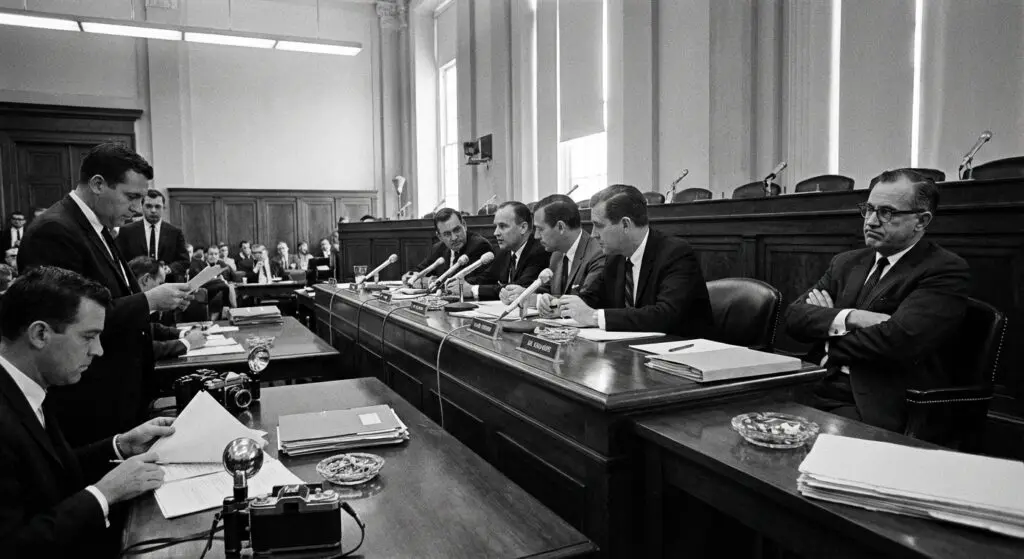
The Air Force found that off-ramp in an external academic review. The “Condon Committee” was the informal name of the University of Colorado UFO Project, and the point of using an Air Force funded academic project was not just to collect data, but to create a policy lever that could withstand political and media scrutiny. It was funded and sponsored by the U.S. Air Force, it ran 1966 to 1968, and the University of Colorado undertook the study at the urging of the Air Force. That structure matters because an outside university conclusion carries a different kind of legitimacy than an internal Air Force memo ever could.
The University of Colorado project produced a published set of conclusions commonly referred to as the “Condon Report,” and those published conclusions functioned as the rationale to stop a visible, public investigation: not “we have answers,” but “we have no scientific reason to keep spending effort this way.” That is exactly the kind of language a large organization needs when it wants to shut down a controversial program while preserving room to focus on other priorities.
The Air Force did not have to argue that every case was solved. It only had to argue that continuing the public-facing effort was not producing returns commensurate with the attention and overhead it created. When the Secretary of the Air Force announced the termination of Project Blue Book, the decision read as an administrative conclusion rather than a dramatic revelation, and that framing is the tell: the institution wanted an orderly end that sounded professionally justified, not emotionally reactive.
On the policy side, rescinding the program’s governing regulation reinforced the same message in administrative form: this was the end of a defined public obligation, not a promise to answer every lingering question in public.
Strip away the surrounding politics and the Condon Report’s bottom line is straightforward and specific. It concluded that nothing from 21 years of UFO study had added to scientific knowledge, and it concluded that UFOs did not warrant further investigation. Those are not claims that “everything was explained.” They are claims about scientific yield and investigative priority, which is why the report worked as a closing tool.
The report has been criticized in public discourse, and that criticism is part of the historical record of how people reacted to the closure. But for understanding why Blue Book ended, the key point is not adjudicating every critique. The key point is recognizing how an institution uses a credible-seeming external assessment to convert messy, never-ending casework into a clean policy statement: further public investigation is not justified.
Blue Book did not end because one last case broke the system. It ended because the Air Force acquired a scientific off-ramp that let it resolve a management problem: high attention, rising scrutiny, and institutional fatigue, all without needing to claim metaphysical certainty about what people saw.
- Separate what the external review actually states (for the Condon Report: no added scientific knowledge in 21 years; no further investigation warranted). https://apps.dtic.mil/sti/tr/pdf/AD0680975.pdf
- Identify what the agency needed operationally (a defensible way to end a public burden and reduce friction).
- List what the closure does not answer (it is a priority decision, not a proof that all cases were explained).
What ended and what continued
Project Blue Book ended as an Air Force office and as a public front door for UFO reports, not as the military’s underlying need to capture odd, fast-moving observations that might signal a safety hazard or an intelligence problem. Blue Book was headquartered at Wright-Patterson Air Force Base, Ohio, and it ran until its termination in 1969.
In practical terms, the Air Force shut down a program it no longer wanted to operate in the open. What did not disappear is the operational reality that pilots, radar operators, and air defense personnel still see things they cannot immediately identify, and those “unknowns” still have to move through a disciplined reporting chain if they might involve foreign aircraft, missiles, electronic warfare, or a midair collision risk.
This is where people get misled. They treat “Blue Book ended” as “the government stopped looking.” In practice, ending a public-facing investigative desk changes who answers the phone and what gets said to reporters. It does not erase incentives to collect and triage ambiguous observations inside intelligence and safety systems.
The cleanest documented example of “continued” collection is CIRVIS (JANAP 146), a reporting framework that existed to move urgent, uncertain aerial and maritime observations quickly to the right authorities. CIRVIS (JANAP 146) provided uniform instructions for reporting “vital intelligence sightings.” That phrasing matters because it frames the event as potentially actionable information, even if the observer cannot name what they saw. JANAP 146 (CIRVIS) editions date to the 1950s and were used to route time-sensitive reports from aircraft and vessels to military communications centers, which supports the claim that operational reporting channels persisted after the public-facing Blue Book office closed. https://www.nsa.gov/portals/75/documents/news-features/declassified-documents/ufo/janap_146.pdf
The friction is that “unidentified” is not a conclusion, it is a status. In an operational chain, an unclear sighting can be treated as time-sensitive because delay is costly: a misidentified aircraft can trigger misallocation of intercept assets, a hazard to flight can persist, and a genuine intelligence indicator can be lost. None of that requires a public UFO program, and none of it implies an extraordinary explanation.
Classification and compartmentalization fit naturally here. A report can be restricted because it reveals sensor capabilities, patrol patterns, communications procedures, or ongoing intelligence priorities. That is standard handling for uncertain but possibly sensitive observations. It is not evidence of “alien programs”; it is how militaries keep ambiguous inputs from turning into public noise or adversary insight.
Paper does not vanish when a program ends; it changes custody. In the mid-1970s, the National Archives prepared to absorb records of Project Blue Book and predecessor projects. That practical detail is a transparency anchor: it tells you where historians, journalists, and the public can verify what was recorded, what was withheld, and what was later released. https://www.archives.gov/research/military/air-force/ufos
The nuance is that custody and access are different things. Archival preparation and transfer preserve the record set, while classification rules and later declassification reviews govern what you can read today. The important point is procedural: if someone claims “the government stopped looking,” you can test the claim by following the recordkeeping and reporting pathways, not by guessing motives.
- Ask which office actually stopped (a public desk, an intel shop, or a safety channel).
- Identify what channel replaced public intake (for example, CIRVIS (JANAP 146) reporting).
- Locate where the records are held (for Blue Book-era files, the National Archives after mid-1970s preparation).
From Blue Book to today’s UAP era
Project Blue Book ended with a public posture that implied closure: investigate, explain, move on. The modern UAP era restarted the public conversation by doing almost the opposite. The Department of Defense authorized the release of three unclassified Navy videos and, in doing so, attached official metadata that kept the question open instead of shutting it down: one incident occurred in November 2004 (the Nimitz-related event), and two additional videos were recorded in January 2015 (East Coast encounters). Those dates matter because they place the most visible modern “UAP (unresolved observations)” artifacts inside normal military operations, not fringe civilian reporting. The clips had circulated publicly in 2017, but the Department of Defense officially authorized their release on April 27, 2020. https://en.wikipedia.org/wiki/Pentagon_UFO_videos https://www.war.gov/News/Releases/Release/Article/2165713/statement-by-the-department-of-defense-on-the-release-of-historical-navy-videos/
The real shift was not the existence of odd clips, but the government’s willingness to publish them under an official release decision while still not offering a single, definitive public explanation that ends the story. That combination is the spark that keeps UAP in the headlines: acknowledged as real reports from military contexts, treated as a security and safety problem, and still not fully adjudicated in the public record.
Blue Book was a named public project with a defined endpoint. Today’s structure is closer to managed risk and triage across domains: collect reports, standardize analysis, protect sensitive sources, then publish periodic summaries. The predecessor program most often cited in official histories is AATIP, commonly reported as operating roughly from the late 2000s through 2012; sources vary and the Defense Intelligence Agency’s AAWSAP contract activity beginning in 2008 is often cited alongside AATIP references. https://media.defense.gov/2024/Mar/08/2003409233/-1/-1/0/DOPSR-2024-0263-AARO-HISTORICAL-RECORD-REPORT-VOLUME-1-2024.PDF https://www.dia.mil/FOIA/FOIA-Electronic-Reading-Room/FileId/170018/
The current center of gravity is AARO, the All-domain Anomaly Resolution Office, a Department of Defense office that collects, tracks, and analyzes UAP reports submitted by current or former U.S. government personnel. The point of AARO is process maturity: a known inbox, a known analytic owner, and a known route for information to move from raw sighting reports to categorized outcomes.
Modern reporting is more formal than Blue Book’s late-stage “nothing to see here” posture, but it is also more careful about what public summaries can support. In the FY2024 ODNI and DoD Consolidated Annual Report, the 174 cases referenced were finalized as resolved to prosaic objects, including examples like balloons, birds, and unmanned aircraft systems (UAS). That statement is drawn from the FY2024 consolidated report. https://www.dni.gov/index.php/newsroom/reports-publications/reports-publications-2024/4020-uap-2024 https://www.war.gov/News/Releases/Release/Article/3964824/department-of-defense-releases-the-annual-report-on-unidentified-anomalous-phen/
The scale also signals a different operating model. As of June 1, 2024, AARO had been reviewing over 1,600 cases. That number functions as a workload indicator and a governance signal: the government is building an intake-to-resolution pipeline, then publishing periodic snapshots of what that pipeline is producing. It is neither proof of alien technology nor proof of a cover-up. It is evidence of an administrative system designed to keep ambiguity managed instead of ignored. https://www.war.gov/News/Transcripts/Transcript/Article/3965734/dr-jon-kosloski-director-aaro-media-roundtable-on-the-fy24-consolidated-annual/ https://www.aaro.mil/
Blue Book’s era ended with “case closed” rhetoric. The modern era runs on “unresolved but managed.” That is a narrative machine: each public release, annual report, or hearing-adjacent claim can be interpreted as either progress or obstruction, depending on what someone wants the story to be. Unresolved cases do not have to be exotic to fuel disclosure expectations; they only have to remain open in public, while being handled inside a classified environment that limits what can be shown.
Use a simple reading strategy whenever a new clip or personality-driven claim trends:
- Verify whether the Department of Defense has authorized the release or authenticated the material, versus it being a leak or media repost.
- Locate which office owns the reporting and analysis pathway, specifically AARO (DoD UAP reporting).
- Classify what you are looking at: a raw case report, an analytic assessment, or an official conclusion. Only the last one closes a case, and modern practice often stops short of that in public.
Congress, laws, and the disclosure push
Modern “disclosure” fights rise or fall on boring mechanics: who controls the records, who can review them, and what rules decide release versus continued protection. Congress is not writing laws that “demand aliens.” It is trying to shrink a trust gap by forcing durable record-handling structures, clearer reporting pathways, and constraints around how secrecy is applied.
The through-line from the Blue Book era is not the debate over conclusions; it is the mismatch between public messaging and back-office reality. When the government’s public posture gets ahead of its document controls, the result is predictable: leaks, selective quotations, and a permanent suspicion that the real story lives in a file nobody can see.
One legislative approach attacks the problem at the choke point: custody and review. Legislative language proposed an UAP Records Review board proposal, a centralized mechanism meant to pull scattered UAP records into a common process, apply consistent release standards, and force documented decisions instead of ad hoc discretion.
That same legislative language also included eminent-domain references regarding UAP-related material controlled by private persons or entities. The point of that clause is process integrity, not a claim about what exists. If sensitive UAP-related material can sit outside federal reach, oversight collapses, because Congress can subpoena testimony but still lose the paper trail and physical custody needed for verification.
The practical takeaway is simple: a review board is only as effective as its ability to locate records, compel cooperation, and produce a written rationale for what stays classified and why. The entire design is aimed at repeatability, so disclosure depends less on personalities and more on enforced procedure.
Even when officials want to share, classification rules decide what is legally discussable. NDAA-driven AARO requirements include accounting for security classification guides governing UAP reporting and investigations. Those guides are operational control documents: they determine what details can move between offices, what can be briefed to Congress, what can be shared with investigators, and what must be locked behind compartments.
This is where transparency efforts stall in real life. A reporting pipeline can be “open” on paper and still be functionally closed if the classification guide is overly broad, inconsistently applied, or written to treat basic context as protected. Requiring an accounting of the guides forces the oversight conversation to focus on the real bottleneck: not whether a report exists, but whether the system allows that report to be evaluated and discussed without triggering violations.
Hearings are Congress’s most visible accountability tool, but the durable value is documentary. A 2025 news report described a House Oversight and Government Reform Committee task force hearing as a “first UAP-focused hearing,” which is a media characterization that can be useful for context but is not the evidentiary core. More precisely, the 2025 session was the first UAP-focused hearing convened by that specific House Oversight Task Force; earlier congressional public hearings on UAP include the May 17, 2022 House Intelligence Subcommittee hearing and a July 2023 House Oversight Subcommittee hearing, all of which have public transcripts and records on Congress.gov and committee sites. https://oversight.house.gov/release/hearing-wrap-up-government-must-be-more-transparent-about-uaps/ https://www.congress.gov/117/meeting/house/114761/documents/HHRG-117-IG05-Transcript-20220517.pdf https://www.congress.gov/118/meeting/house/116282/documents/HHRG-118-GO06-Transcript-20230726.pdf
Follow disclosure responsibly by tracking mechanisms, not viral interpretations:
- Verify the mechanism by checking whether the text actually creates a records review board or imposes a classification-guide accounting requirement.
- Verify the packet by confirming the hearing has a public record entry with meeting details and witness materials, not just clips and summaries.
- Classify the claim by labeling it correctly: sworn testimony, unsworn staff commentary, or media framing.
What 1969 still teaches us
1969 matters because an official closure is a messaging event, not the end of a subject. The durable record is what survives the press line: what got counted, what got labeled, what stayed classified, and what incentives remained for reporting and triage.
Project Blue Book’s shutdown put a clean public endpoint on a messy dataset: 12,618 reports from 1947 to 1969, with 701 remained categorized as “unidentified” at termination. https://www.archives.gov/research/military/air-force/ufos https://www.secretsdeclassified.af.mil/Fact-Sheets/Display/Article/459832/project-blue-book/ The Condon-driven logic functioned as a repeatable off-ramp: frame the marginal value of further public investigation as low, then convert that judgment into “no further investigation warranted” language that institutions can reuse without resolving every residue case. Termination also did not eliminate the operational need to route observations; reporting channels can persist after a public-facing office ends, and CIRVIS-style pathways illustrate how bureaucracies keep collecting safety-relevant inputs even when the public program is over. That same pattern shows up in modern summaries: recent DoD/ODNI public reporting in 2024 stated they did not find evidence of extraterrestrial technology or adversarial technological breakthroughs in UAP cases, even as some incidents remain data-limited. One limitation in the sources summarized here is that they do not include Blue Book final-year statistics tables or Special Report No. 14 tables, and readers should consult primary document repositories for verification.
Follow the topic responsibly by using a repeatable evidence protocol-the stable method the opening sections call for when official governance language collides with narrative claims:
- Trace every claim to a primary document (memo, report, exhibit) and save the citation, version, and release date.
- Separate “unidentified” (insufficient data for a firm label) from “extraordinary” (a proven non-prosaic cause).
- Check scope and classification limits before treating “no evidence found” as “nothing exists.”
- Demand a documented chain of custody, sensor context, and competing explanations before believing the next “UFO sightings 2025” or “UFO sightings 2026” spike is disclosure rather than reporting noise.
Frequently Asked Questions
What was Project Blue Book?
Project Blue Book was the U.S. Air Force’s public-facing program for receiving and investigating UFO reports and issuing public summaries. It focused on identifying what witnesses saw to reduce uncertainty for commanders and the public, not on proving extraordinary origins.
When did the Air Force terminate Project Blue Book?
The U.S. Air Force announced the end of Project Blue Book on Dec. 17, 1969. It also rescinded the regulation that had established and governed the program.
How many UFO reports did Project Blue Book investigate, and how many were still “unidentified” when it ended?
Project Blue Book received 12,618 reports from 1947 to 1969. At termination, 701 cases were still classified as “unidentified.”
Why did the Pentagon end Project Blue Book in 1969?
The Air Force used the University of Colorado’s 1966-1968 study (the “Condon Committee” project) as its policy off-ramp. The published “Condon Report” concluded that 21 years of UFO study added nothing to scientific knowledge and that UFOs did not warrant further investigation.
Did the government stop collecting UFO/UAP reports after Project Blue Book ended?
Blue Book ended as a public Air Force office, but the operational need to report and triage unknown observations continued. The article cites CIRVIS (JANAP 146) as a uniform reporting framework for “vital intelligence sightings” that could route urgent unidentified aerial or maritime observations.
What’s the difference between “UFO” and “UAP” in government reporting?
The article describes “UFO” as labeling the observer’s uncertainty rather than the object’s nature. “UAP” (“unidentified anomalous phenomena”) is a broader umbrella that aligns with treating unresolved observations as risk, data, and airspace awareness across domains and sensors.
How can you evaluate new UAP disclosure claims or videos more reliably?
Use the article’s checklist: verify whether the DoD authorized/authenticated the material (versus a leak), identify which office owns analysis (AARO), and determine whether it’s a raw report, an assessment, or an official conclusion. This helps separate “unidentified” (data-limited) from “extraordinary” (proven non-prosaic cause).