NASA Launches Independent UAP Study Team in 2022 Under Astrophysicist Spergel
Explore the NASA UAP study team 2022: David Spergel's role, its data-focused mandate, and differences from Pentagon UAP efforts.
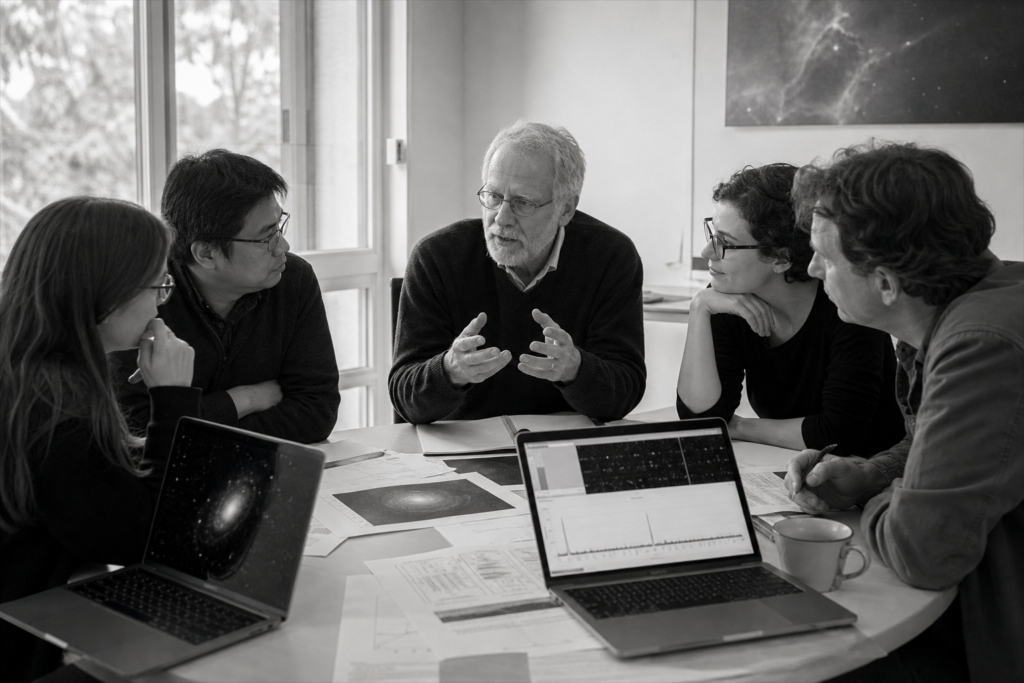
When NASA entered the UAP conversation publicly in June 2022, it brought a civilian scientific institution into a subject more often associated with military reporting and public speculation. The NASA UAP study team 2022 was not created to validate extraordinary explanations for unidentified anomalous phenomena. Announced on June 9 and chaired by astrophysicist David Spergel, the independent group was asked a narrower, practical question: how could NASA’s scientific tools, expertise, and data practices help produce more useful observations?
That distinction matters. An unexplained report can reflect incomplete or low-quality information; it is not, by itself, evidence of extraterrestrial or non-human activity. NASA’s study was not a crash-retrieval inquiry and was not designed to resolve every individual sighting. Its public, civilian-science orientation also differed from Pentagon and intelligence efforts, including the UAP Task Force and the office later known as AARO, which addressed defense and national-security concerns.
The sections that follow trace the announcement, the team’s membership and mandate, and the limits built into its work. They also follow the study through its September 2023 final report, which emphasized a data-first approach rather than a definitive explanation for UAP.
What NASA Announced in June 2022
On June 9, 2022, NASA formally announced a nine-month independent study of unidentified anomalous phenomena, using its term for observations in the sky that cannot be identified as aircraft or known natural phenomena. The agency appointed astrophysicist David Spergel to chair the effort and framed the work as an assessment of what a civilian scientific agency could contribute.
The practical subject was data: which observations, analytical tools, scientific expertise, and data-collection practices could make future UAP reports more useful for study. That is different from assigning an explanation to a particular incident. A report may remain unidentified because its imagery is limited, its sensors lack context, or its available data cannot support a reliable conclusion; “unidentified” describes that evidentiary condition, not a demonstrated origin.
NASA’s June announcement therefore did not present evidence of extraterrestrial visitors, announce a classified-material release, or create a program to investigate alleged recovered craft. The NASA independent UAP study was a bounded recommendation effort: identify a scientifically credible path toward better observations and analysis. Its significance lay in NASA publicly applying a data-centered framework to a subject often discussed through claims that could not be tested on the available record.
Why NASA Created an Independent UAP Study
Scientific progress depends less on the number of reports than on whether the underlying observations can be compared, tested, and independently analyzed. A brief video without a precise time, location, sensor settings, environmental conditions, or corroborating measurements may be intriguing, but it gives researchers little basis for separating an unusual object from an imaging artifact, a conventional aircraft, a weather effect, or a misread of distance and motion.
That problem made data quality, not the drama of an individual sighting, the central rationale for NASA’s involvement. Useful sensor data are calibrated: researchers know how an instrument responds, what its uncertainties are, and which conditions can distort its output. Consistent collection also matters. Reports gathered through different systems, with different metadata and access rules, cannot readily be combined into a reliable scientific record.
NASA was positioned to consider how public data, observation practices, analytical methods, and scientific expertise could improve that record. Its civilian role offered a different contribution from intelligence collection: open research can describe methods, expose assumptions to outside scrutiny, and let other researchers assess whether an interpretation follows from the evidence.
The practical takeaway was deliberately modest. Better instruments and better reporting standards might reduce the number of unresolved observations over time; they would not predetermine what any particular unidentified anomalous phenomenon must be. Threat assessment, classified collection, and operational attribution belonged to defense and intelligence institutions, while NASA’s independent study focused on the conditions needed for credible scientific inquiry.
Who Led the Team and Who Participated?
NASA selected David Spergel to chair the independent study. At the time, Spergel was president of the Simons Foundation and the Charles A. Young Professor of Astronomy at Princeton University. His research in theoretical astrophysics and cosmology, including work on the universe’s large-scale structure and the cosmic microwave background, made him a fitting choice to lead a group concerned with extracting reliable conclusions from incomplete observations.
The David Spergel NASA UAP study was deliberately interdisciplinary rather than a panel of astronomers alone. Its members brought together expertise in astrophysics, astrobiology, Earth and ocean science, atmospheric and sensor research, aviation and aerospace operations, data science, communications, and science journalism. That mix mattered because a strong UAP record may require several kinds of judgment: whether an instrument was functioning properly, how an object’s apparent motion could be affected by viewing geometry, what environmental conditions were present, and how results can be communicated and independently assessed.
Among the participants were aerospace engineer Wanda Austin; computational social scientist Anamaria Berea; astrophysicist and data scientist Federico Bianco; biological oceanographer Paula Bontempi; astrobiologist David Grinspoon; former astronaut Scott Kelly; astronomer Matt Mountain; electrical engineer Joshua Semeter; and aerospace executive Walter Scott. The roster also included science journalist Nadia Drake, reflecting NASA’s interest in clear public communication alongside technical analysis.
The independent members were not the same as NASA personnel assigned to support the effort. Daniel Evans of NASA’s Science Mission Directorate served as the agency official coordinating the study, providing institutional support rather than acting as its chair or directing a case-by-case investigation. That separation preserved the panel’s role as an outside, multidisciplinary assessment group while giving it access to NASA’s scientific and administrative resources.
What the NASA UAP Team Was Asked to Examine
The panel’s assignment was prospective: identify a practical framework for applying NASA’s scientific capabilities to better UAP observations and data collection. Its job was to assess potentially useful tools, datasets, analytical approaches, and institutional partnerships, not to issue a final explanation for the reports already in public circulation.
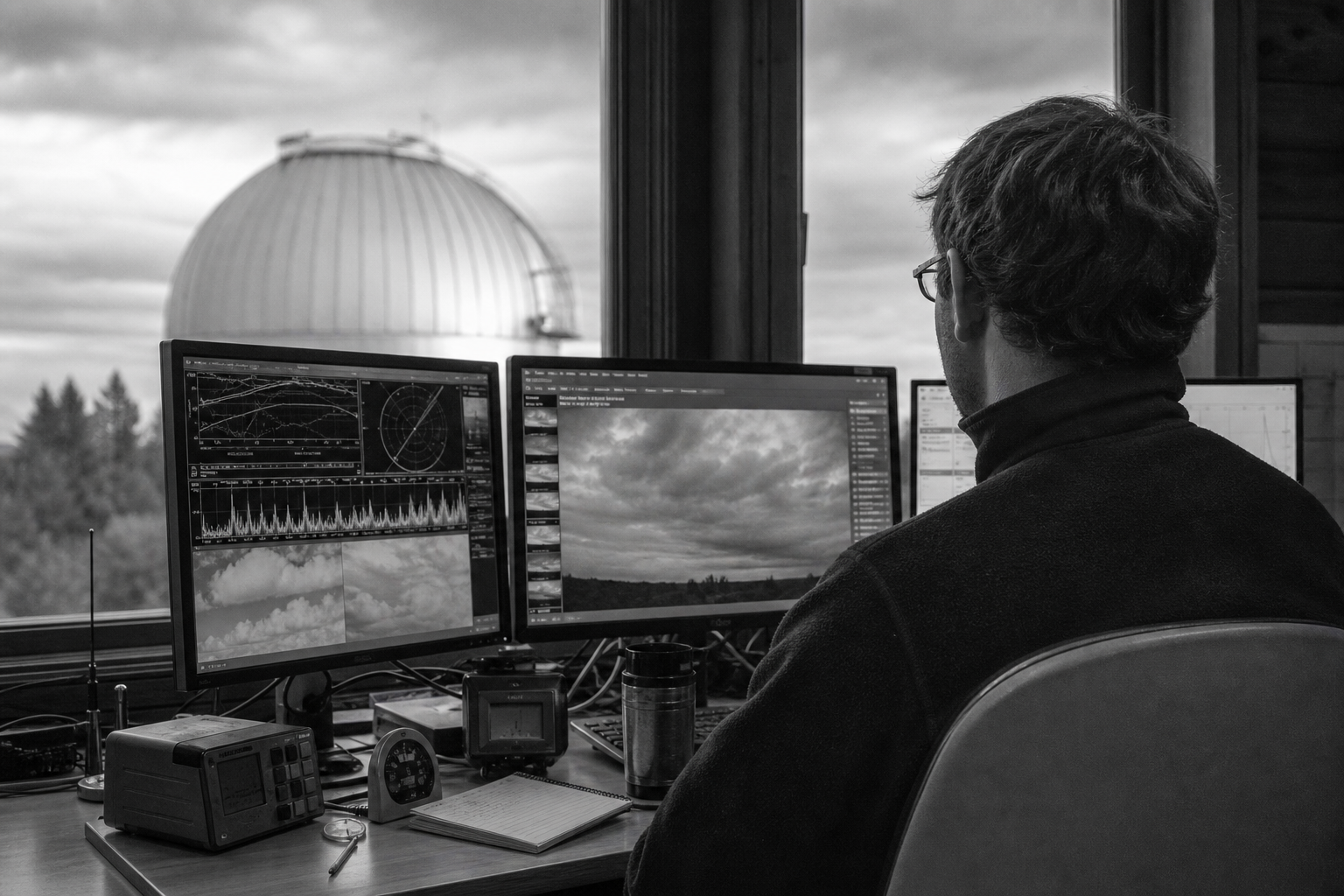
That framework depended on the difference between an image and a scientific observation. A video clip can show an apparent anomaly, but a research-quality record also needs metadata: the time and location, the observing platform, sensor type and settings, calibration status, weather and atmospheric context, viewing geometry, and any corroborating measurements. Those details allow analysts to test mundane possibilities such as instrument artifacts, parallax, distant aircraft, balloons, or environmental effects rather than relying on visual impressions alone.
The NASA unidentified anomalous phenomena study was therefore positioned to recommend stronger standards for future reporting and ways to combine observations from appropriate civilian sources. Potentially useful inputs could include Earth-observing instruments, satellite and atmospheric data, astronomical survey methods, sensor expertise, and modern data-analysis techniques. The practical aim was not simply to gather more reports, but to create records that can be compared across instruments and independently evaluated.
- Useful signal: a report tied to calibrated sensors, complete metadata, and multiple measurements that can be reconciled in time and location.
- Weak signal: an isolated clip or eyewitness account lacking the information needed to establish scale, speed, distance, or sensor performance.
These limits also define what the NASA UAP study team 2022 was not asked to do. It was not a case-solving body for individual sightings, a validator of viral footage, an examination of alleged recovered materials, or a process for determining whether non-human intelligence exists. Its deliverable was a scientific path forward: what better observations should look like, which data sources may help, and how NASA could make future analysis more rigorous.
How NASA’s Study Differed From AARO and Earlier Pentagon UAP Efforts
The crucial dividing line was operational responsibility. NASA’s panel considered how a civilian science agency could improve future observations; it did not receive a mandate to investigate incidents that might involve military operations, foreign surveillance, or threats to U.S. forces.
| Program | Primary purpose | What that meant in practice |
|---|---|---|
| NASA independent study | Develop a science-oriented framework for better UAP data and analysis. | Its work emphasized civilian datasets, measurement standards, analytical tools, and public-facing recommendations, not adjudicating particular military encounters. |
| UAP Task Force (UAPTF) | Support Defense Department and intelligence assessment of reported UAP. | The former Pentagon-led task force drew on operational reporting and contributed to the separate intelligence reporting ecosystem that included the Office of the Director of National Intelligence. |
| AARO | Coordinate Defense Department and wider federal efforts involving UAP. | The AARO UAP office handles reports and analysis with potential defense, intelligence, aviation-safety, or counterintelligence implications, including information that cannot be publicly released. |
Data access followed from those roles. AARO and its Pentagon predecessors could work with reports from military personnel and sensitive sensors, where the source, capability, location, or collection method may be classified. NASA’s study was not built to possess or declassify that operational record. Its value instead lay in asking how scientifically usable observations could be collected and assessed without compromising national-security systems.
Public output also differed. NASA conducted an independent, openly discussed recommendation exercise; the Defense Department’s UAP work necessarily combines public reporting with classified assessment. That distinction prevents a common category error: NASA’s 2022 study was neither a replacement for AARO nor a Pentagon UFO office under another name.
What the 2022 Launch Did, and Did Not, Mean for UFO Disclosure
NASA made the study’s boundaries visible from the start: its June 9, 2022 announcement named David Spergel as chair, described a nine-month independent effort, and said the agency would hold public meetings before issuing a public report. That was a concrete commitment to scientific transparency. People could examine the panel’s stated question, how NASA could apply its tools and expertise to UAP data, rather than infer a hidden conclusion from the announcement itself.
It was not UFO disclosure in the stronger popular sense. NASA said in June 2022 that it had found no evidence that UAP were extraterrestrial, and the launch did not confirm alien craft, non-human intelligence, secret retrieval programs, or a government cover-up. Spergel’s group had no authority to compel testimony, inspect alleged recovered materials, obtain classified defense files, or declassify records. A public recommendation report on improving observations is materially different from an investigation that determines what a particular object was.
The distinction also separates the 2022 initiative from later congressional disclosure and declassification debates. Proposals such as the UAP Disclosure Act focused on identifying, reviewing, and potentially releasing government-held records; NASA’s panel focused on improving the quality of future scientific observations. Public participation and published findings therefore meant openness about method and recommendations, not alien disclosure. The useful test is straightforward: transparency shows the public how an agency framed and conducted its work; disclosure would require evidence or records that NASA’s study was neither designed nor empowered to establish.
From the 2022 Launch to the Final Report: A Clear Timeline
A short sequence of dated events helps keep the original decision separate from its aftermath.
- On June 9, 2022, NASA announced the nine-month independent study and named David Spergel as chair. The launch defined a forward-looking assignment: assess how the agency’s scientific expertise, instruments, and data practices could strengthen UAP research.
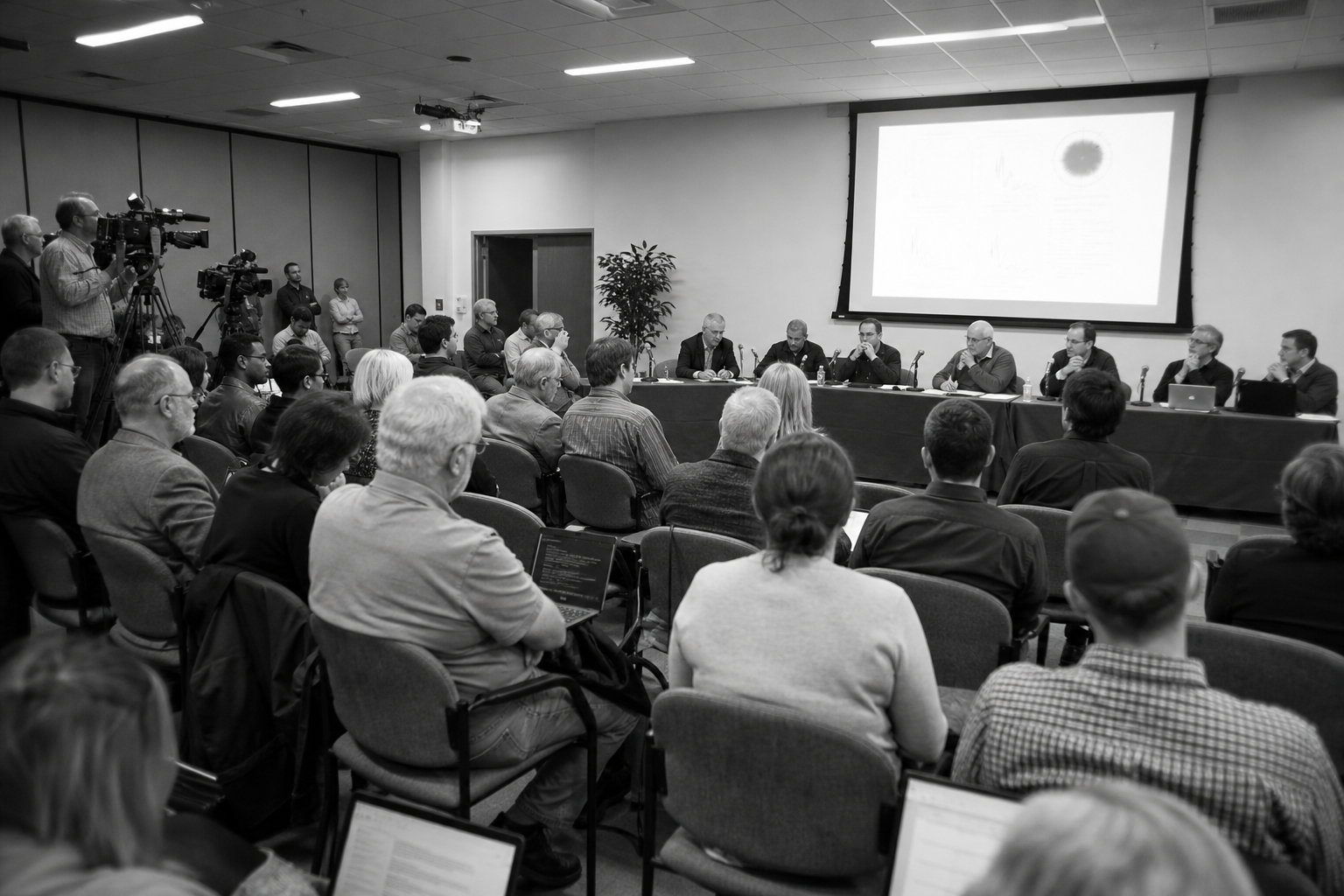
- During the study period, the panel gathered information and held a public meeting on May 31, 2023. That public-facing session allowed observers to hear the group discuss data quality, potential analytical methods, and the obstacles created by incomplete observations; it was not a hearing to resolve individual reports.
- On September 14, 2023, well after the 2022 announcement, NASA released the UAP Independent Study Report. Its recommendations emphasized improved, calibrated data collection and more systematic analysis, along with broader use of NASA’s scientific capabilities.
- NASA also announced a Director of UAP Research to develop and oversee the agency’s follow-on research vision, while protecting the official’s identity because of threats directed at panel members.
The later report and organizational follow-through show what the initiative became in practice: a continuing scientific-data effort. They do not retroactively convert the 2022 launch into confirmation of extraordinary origins, a crash-retrieval inquiry, or a disclosure program.
NASA’s 2022 UAP Study Was a Data-First Turning Point
Its lasting importance is methodological rather than declarative. By placing an independent panel under David Spergel’s chairmanship around a defined scientific question, NASA shifted attention from compelling but isolated accounts toward the conditions that make an observation testable: known sensor performance, usable metadata, corroborating measurements, and analysis that others can scrutinize.
That distinction is decisive. An unresolved report is a limit on the available evidence, not proof of a particular explanation. The study was designed to identify potentially useful data sources and analytical methods for future work; it was not designed to establish extraterrestrial or non-human origins, investigate alleged recovered materials, or resolve claims about a hidden government program.
The September 2023 report reinforced that practical direction. Its value was not a final answer to what every UAP might be, but a framework for producing better-quality observations and treating uncertainty openly. In that sense, the NASA UAP study remains a useful model: transparency means making the question, methods, limitations, and conclusions visible, not converting incomplete data into certainty.
Frequently Asked Questions
-
When did NASA launch its independent UAP study team?
NASA announced its nine-month independent UAP study on June 9, 2022. The agency appointed astrophysicist David Spergel to chair the civilian scientific panel.
-
What was NASA’s 2022 UAP study team asked to investigate?
The team was asked to identify how NASA’s scientific tools, datasets, expertise, and data practices could improve future UAP observations. It was not tasked with solving individual sightings, investigating recovered craft, or determining whether non-human intelligence exists.
-
What data should a scientifically useful UAP report include?
A useful UAP record should include calibrated sensor data, time and location, observing platform, sensor type and settings, weather conditions, viewing geometry, and corroborating measurements. These details help analysts test explanations such as parallax, aircraft, balloons, atmospheric effects, or sensor artifacts.
-
Did NASA’s UAP study find evidence of extraterrestrial life?
No. NASA said it had found no evidence that UAP were extraterrestrial, and the September 14, 2023 final report focused on improved data collection and systematic analysis rather than extraordinary explanations.
-
How was NASA’s UAP study different from AARO?
NASA’s study was a public, civilian recommendation effort focused on scientific data standards, analytical methods, and future observations. AARO handles UAP reports with possible defense, intelligence, aviation-safety, and counterintelligence implications, including classified military sensor information.