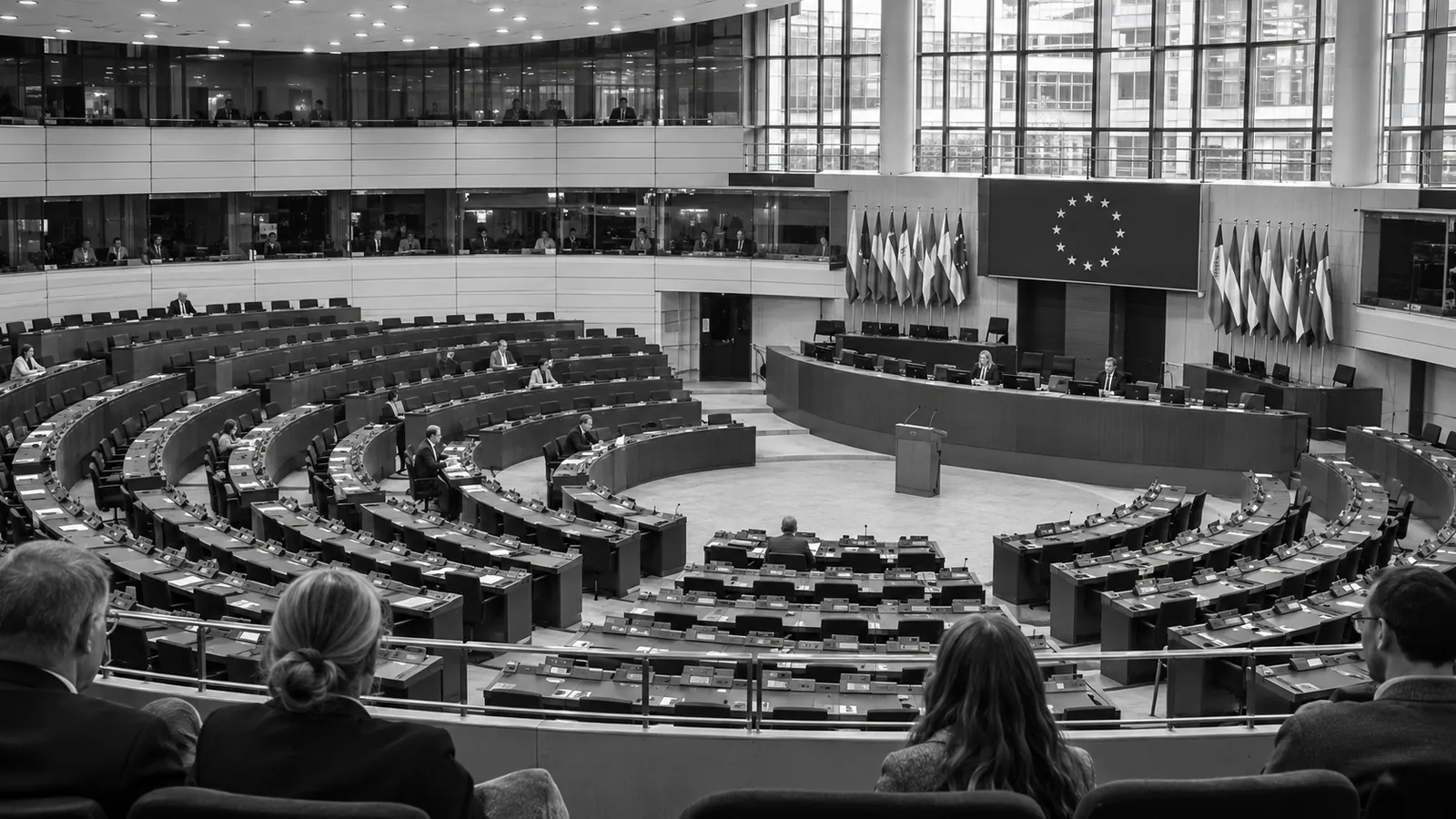
B9-0194/2024 was Francisco Guerreiro’s motion to broaden EU aviation reporting of unidentified anomalous phenomena (UAP). Dated 11 March 2024, it called for reporting and analysis even where an observation presented no apparent immediate aircraft-safety risk. Later that month, Guerreiro co-organised a UAP conference inside the European Parliament. These were related initiatives, not the enactment of a new EU reporting duty.
What did the motion propose?
The motion’s two operative paragraphs proposed a common methodology for reporting and analysing sightings, potentially leading to an EU database and repository for exchanging information between Member States. It also called on the Commission to propose updating Regulation 376/2014 to support consistent, transparent and stigma-free UAP reporting, including observations without an apparent immediate safety risk.
Its reasoning was that stigma inhibited scientific data collection and that observations by pilots and crews could go unreported. Those were Guerreiro’s arguments for changing the framework, not findings from a parliamentary investigation.

What was its parliamentary status?
Guerreiro submitted the text under Rule 143. Parliament’s member activity record lists it on 12 March 2024, distinct from the document’s 11 March date. The official record of documents received records referral to the Committee on Transport and Tourism (TRAN).
A referral is not adoption of the proposed text. The document cited here is a member’s motion requesting action, not an amendment to Regulation 376/2014.
How did the Commission respond on aviation reporting?
The Commission addressed the same policy issue in its 11 April 2024 answer to written question E-000314/2024. It said an amendment was unnecessary: UAP or other unidentified objects presenting a civil-aviation safety risk could already be reported as “Unknown Airborne Objects,” stored in the central repository and analysed for safety purposes.
The answer described mandatory and voluntary reporting systems and an aviation reporting portal with common forms. It was a response to a written question, rather than a decision implementing the motion.
This left a clear difference in scope. Guerreiro wanted a mechanism explicitly covering observations without an apparent immediate risk; the Commission described the existing safety-focused system. EASA’s legal framework overview explains that Regulation 376/2014 governs reporting and the handling of safety information, complemented by Regulation 2015/1018’s list of mandatorily reportable occurrences.
How did EASA and the space-law question fit?
The motion did not assign the European Union Aviation Safety Agency (EASA) a new UAP programme or refer to EU Space Law. Its legislative request was directed at the Commission.
Space policy appeared in Guerreiro’s separate written question E-000318/2024, submitted on 31 January 2024. It asked why preparatory work for an EU Space Law did not include UAP monitoring and reporting, and whether space-surveillance services and a research programme should address UAP.
Parliament’s written-question listing dates both E-000318/2024 and the aviation question E-000314/2024 to 31 January. The questions and motion should therefore be read as separate documents, with different requests.

What happened at the 20 March conference?
According to co-organiser UAP Coalition Netherlands, it and Guerreiro held the conference at Parliament on 20 March 2024 under the title “Unidentified Anomalous Phenomena (UAP) – EU Airspace: Reporting and Scientific Assessment.”
Guerreiro’s published event recording lists contributions from Edoardo Russo, Ryan Graves, André Jol, Beatriz Villarroel and pilot Christiaan van Heijst. The programme covered historical context, US developments, scientific assessment and testimony. Hosting presentations at Parliament did not make their contents an institutional endorsement.
For comparative coverage, see Japan’s 2024 parliamentary UFO research group. More international material is collected in the site’s global UAP topic cluster.
Frequently Asked Questions
Did the motion create a UAP database?
No. The motion proposed a common reporting methodology that could lead to a harmonised database and repository; it did not establish one.
Was the conference a vote on the motion?
No. The organisers described an informational conference, while B9-0194/2024 was a separate parliamentary document.