AARO’s 2023 Five Eyes UAP Caucus: Allied Intelligence Sharing Begins
Explore the AARO Five Eyes UAP caucus, what public records confirm about allied intelligence sharing, and what the 2023 meeting did not prove.
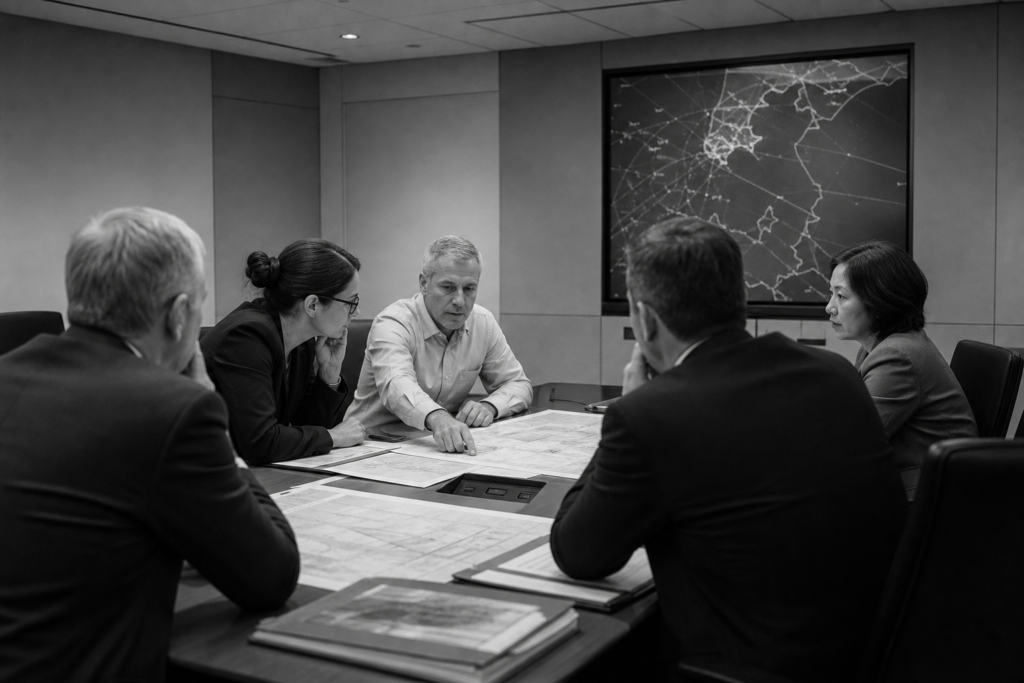
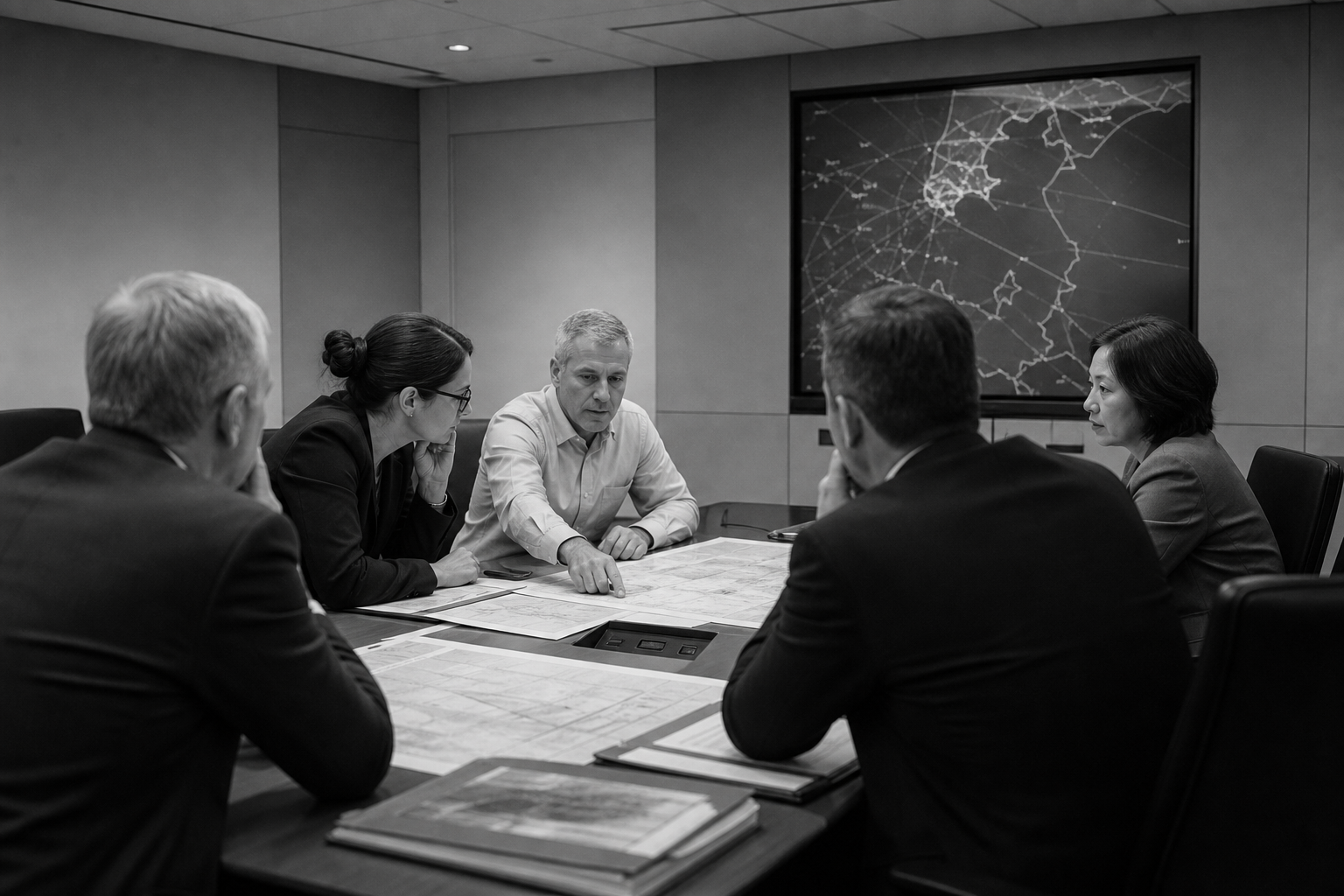
The first checkpoint for reports of AARO convening allied officials in 2023 is simple: did they describe a discussion, or a durable mechanism for exchanging UAP data? The distinction matters because unusual reports can raise shared questions about airspace awareness, sensor interpretation, intelligence context, and how governments compare incomplete information. A meeting alone is not proof of a standing program, common database, or agreed allied account of what UAP represent.
This article treats that distinction as essential. Public discussion can establish that officials met, exchanged views, or identified common concerns; it does not automatically reveal what was said in closed sessions, which records changed hands, or whether any classified liaison arrangement followed. Strong evidence names the event, date, participants, and stated purpose. Weak evidence turns the mere existence of contact into claims of comprehensive allied UAP information sharing.
The sections that follow separate reported details from primary public material and unanswered questions. They examine what participation by Five Eyes partners could mean operationally, such as aligning report formats or comparing sensor context, while refusing to convert coordination into confirmation of extraordinary explanations, secret recoveries, or a unified disclosure project.
What AARO’s Reported 2023 Five Eyes UAP Caucus Was
The available record supports a narrow description: the reported 2023 caucus was an AARO-linked engagement among Five Eyes counterparts, not a publicly documented launch of a permanent multinational UAP program. A caucus is a discussion and coordination forum. It can allow officials to compare how they receive reports, assess incidents, and route questions to the appropriate national offices; it does not itself create shared authorities, databases, collection rules, or disclosure obligations.
Its apparent connection to AARO’s work within the U.S. defense and intelligence environment is therefore functional rather than transformational. Contact with allied counterparts could help place an observation in wider operational context, for example, distinguishing a report seen near one country’s airspace from an event that also generated relevant sensor or flight-safety information elsewhere. That is a useful coordination purpose, but it is different from publicly proving that records or classified holdings were exchanged.
The key evidentiary limitation is equally important. No primary public material supplied here identifies a formal charter, standing membership, meeting agenda, venue, named delegates, common reporting system, or follow-on intelligence-sharing arrangement for the reported gathering. Those omissions do not establish that no further cooperation occurred; they mean the public claim should remain confined to a reported meeting or liaison setting.
A strong account of the event therefore separates two levels of meaning: allied officials may have begun discussing a common problem, while a comprehensive Five Eyes UAP intelligence architecture remains unproven on the public record.
Who Participated: The Five Eyes Countries and Likely Institutional Roles
The country-level label is more definite than the identity of the people in the room. The Five Eyes intelligence alliance comprises Australia, Canada, New Zealand, the United Kingdom, and the United States. In the reported AARO Five Eyes UAP meeting, that identifies the governments represented in principle; it does not identify a particular intelligence service, military command, aviation regulator, or named official as an attendee.
The United States is the only participant for which the institutional connection is inherent in the description: AARO was the U.S.-side office linked to the engagement. Publicly available material does not name its delegates or establish whether other U.S. bodies attended alongside it.
- Australia, Canada, New Zealand, and the United Kingdom: their inclusion denotes Five Eyes partner governments, not confirmation that each sent a defense official, intelligence officer, air-safety specialist, or diplomatic liaison.
- Defense and intelligence counterparts: these are plausible institutional categories for a UAP-focused exchange because unusual observations can bear on security, collection, and operational context. That functional fit is context, not an attendance list.
- Aviation authorities and military air organizations: they may hold reporting or flight-safety information relevant to an incident, but no public caucus record establishes their presence or a direct reporting role.
This distinction changes how the event should be read. A strong participation claim names a person, office, date, and role. A weaker claim merely expands “Five Eyes” into every national agency that could have had an interest. The public record supports the former only at the level of the five governments and AARO’s reported U.S. connection; broader institutional involvement remains unconfirmed.
What Was Publicly Disclosed About Allied UAP Information Exchange
The critical gap is between an allied conversation and a documented exchange system. In the public material available for this article, the reported caucus is not accompanied by a joint communiqué, an AARO or Defense Department readout describing transferred incident files, or an allied-government statement setting out a UAP-specific intelligence arrangement.
That leaves the strongest supported characterization at the level of discussion and coordination. Officials could compare how reports are received, what details make an observation analytically useful, and which national office is positioned to answer a follow-up question. Those activities help participants interpret similar reports without requiring that every government place its raw data into a common pool.
- Reporting-practice coordination would mean comparing fields such as time, location, platform, sensor type, and witness account. Its practical value is greater consistency; it does not demonstrate that underlying records were exchanged.
- Analytical collaboration would mean testing whether separate observations share relevant context, such as known aircraft activity or sensor limitations. It can produce a better assessment while leaving the underlying material under national control.
- Intelligence liaison would mean routing a question or request through authorized counterparts. Liaison is a channel for possible exchange, not public proof that classified UAP intelligence was transferred in this instance.
A stronger claim, Five Eyes UAP intelligence sharing through a new program, would require more specific public evidence: a named dataset or collection system, stated access rules, a standing agreement, defined classification procedures, or an announced operational result. None is identified in the material describing the reported engagement.
The appropriate conclusion is therefore narrow. AARO allied UAP cooperation was publicly visible as an apparent point of contact, but the record does not establish a shared database, common reporting pipeline, or comprehensive multinational assessment process. Officially released UAP case information likewise does not establish those broader arrangements. Treating those possibilities as outcomes rather than unproven implications would turn a limited disclosure into a larger claim than the available information supports.
Why a Five Eyes UAP Discussion Mattered for International UAP Policy
The policy value lies in making separate national reports more comparable before analysts decide whether they describe the same problem. A sighting near an international flight route, for example, can acquire different significance if another partner holds relevant context about weather, commercial traffic, military activity, or a known source of sensor interference. Contact among counterparts creates a route for asking that narrower question without presuming a shared conclusion about the object or event.

Common reporting fields are especially useful for this purpose. Time references, geographic coordinates, altitude, platform type, sensor mode, duration, and the distinction between a pilot observation and an instrument record determine whether separate accounts can be meaningfully compared. A detailed report with sensor settings and contemporaneous air-traffic context is a stronger analytical starting point than an isolated description of unusual lights. Aligning such practices could improve the handling of UAP sightings while leaving each country in control of its own records.
- Aviation-safety coordination can help identify what information a flight crew, controller, or defense office needs to preserve when an event may affect airspace awareness. Its benefit is faster, more complete incident context, not a determination of what was observed.
- Sensor-data comparison can test whether apparent anomalies arise from differing equipment, viewing geometry, processing settings, or incomplete coverage. The practical gain is better error discrimination; the tradeoff is that raw technical data may remain restricted.
- Analytical interoperability means using sufficiently compatible descriptions and assessment questions that partners can compare findings. It does not require identical national rules, a common classification system, or a multinational case file.
That is why the reported AARO Five Eyes UAP caucus could matter even without evidence of a unified allied program. It points to a plausible policy venue for improving the quality and context of difficult reports across borders. It does not establish a single authority directing collection, adjudicating cases, or issuing a common public account. Claims in UFO news should be judged against that distinction: practical liaison can be consequential, but it is not proof of an integrated Five Eyes UAP enterprise.
UAP Cooperation Is Not the Same as UFO Disclosure
Transparency and cooperation operate on different tracks. Officials can compare incident descriptions, analytical methods, or material held at restricted classification levels without creating any obligation to publish the underlying records. Public release, by contrast, requires a decision about what can be described without exposing sources, capabilities, personal information, or another government’s equities. Public-transparency measures and limited public detail about a meeting are therefore compatible with operational contact; they are not, on their own, evidence that nothing was discussed.
The reverse inference is equally weak. A public UAP report, briefing, or congressional hearing can make a domestic agency’s work more visible, but it does not demonstrate that every Five Eyes partner received the same files, sensor data, or assessments. Congressional activity is an oversight mechanism: it can seek explanations, records, and accountability from U.S. executive-branch officials. It does not itself create an allied intelligence agreement or establish reciprocal access to another country’s classified holdings.
This distinction keeps the reported AARO Five Eyes UAP caucus separate from congressional efforts aimed at declassification and public disclosure. A strong signal of a disclosure commitment would be a published release policy, declassification decision, shared public archive, or joint statement specifying what material will be made public. A meeting notice or second-hand account of coordination is a much weaker signal: it indicates contact, not a public-transparency program.
For the same reason, the event cannot establish a government UFO cover-up. That claim would require direct, independently assessable evidence of a concealed program or deliberate withholding of particular information, not merely the ordinary fact that governments handle some security, intelligence, and technical material outside public view. The caucus is best read as a reported policy engagement whose public record remains narrow, rather than as proof either of broad UFO disclosure or of its opposite.
What the Caucus Did Not Confirm
Extraordinary explanations require evidence that identifies more than an unresolved report. Confirmation of non-human intelligence or extraterrestrial craft would require an authoritative finding tied to inspectable underlying data, such as validated sensor records, physical-material analysis with a clear chain of custody, and conclusions that withstand independent technical scrutiny. Testimony or an allegation may justify investigation, but it does not independently establish the claim.

The same threshold applies to assertions of crash-retrieval or reverse-engineering programs. A credible confirmation would identify the responsible entity, the material or program at issue, relevant dates and authorities, and corroborating records or witnesses whose accounts can be tested against each other. A reported caucus supplies none of those elements; it cannot turn claims made elsewhere into established fact.
Institutional claims need institutional evidence. A jointly managed Five Eyes UAP archive would be shown by a named repository, participating custodians, access and retention rules, or a formal agreement. A new alien disclosure initiative would require a public policy, release schedule, declassification action, or joint announcement. In the absence of such evidence, the gathering supports neither proposition. That absence does not prove classified information does not exist; it means the caucus itself is not verification of it.
How to Read the 2023 Event in Today’s UAP News Cycle
Later headlines should be sorted by the kind of evidence they provide. A named bilateral liaison, published joint assessment, declassified exchange protocol, or agreement identifying data custodians would materially strengthen the case for an enduring allied UAP mechanism. By contrast, a new account of UFO sightings in 2025 or UFO sightings in 2026 does not establish what occurred at a 2023 meeting.
The durable conclusion is narrower: the reported AARO Five Eyes UAP caucus indicates international engagement, not demonstrated all-source intelligence pooling or an extraordinary finding. Treat recycled claims without new records as commentary; treat dated official statements and releaseable underlying material as meaningful updates.
What the Reported Caucus Means, and What It Does Not
Its enduring significance is procedural rather than revelatory. A reported Five Eyes discussion suggests that UAP reports can be treated as a cross-border information problem: events may involve shared airspace, overlapping sensor coverage, or security context held by more than one government. That attention can improve the questions officials ask of a report without supplying an answer to what the reported object was.
It also leaves a firm boundary. Multinational coordination is not public disclosure, and neither coordination nor restricted information exchange independently demonstrates non-human technology, extraterrestrial activity, recovered material, or a jointly run allied program. Those are separate propositions that require direct evidence proportionate to the claim.
Use a simple test for future assertions about the AARO Five Eyes UAP caucus and wider UAP cooperation:
- Prefer a dated primary record over an unattributed account or recycled headline.
- Identify the participants, purpose, and whether the release describes discussion, transferred data, a standing arrangement, or an assessed result.
- Separate the observable record from interpretation: an unresolved incident remains unresolved unless the underlying evidence supports a conclusion.
That standard preserves the event’s policy importance while preventing routine allied contact from being turned into proof of an extraordinary discovery.
Frequently Asked Questions
-
What was AARO’s 2023 Five Eyes UAP caucus?
It was a reported AARO-linked discussion among counterparts from the Five Eyes alliance about UAP-related coordination. Public material does not document it as the launch of a permanent multinational UAP program, shared database, or common intelligence system.
-
Which countries are in the Five Eyes alliance?
The Five Eyes alliance includes Australia, Canada, New Zealand, the United Kingdom, and the United States. AARO was the U.S. office linked to the reported 2023 UAP engagement.
-
Did Five Eyes countries agree to share UAP intelligence through a new program?
No public evidence identifies a new Five Eyes UAP intelligence-sharing program, shared dataset, standing agreement, or common reporting pipeline. The publicly supported description is discussion and liaison, not demonstrated all-source intelligence pooling.
-
What UAP report details should countries standardize for cross-border analysis?
Useful reporting fields include time, geographic coordinates, altitude, platform type, sensor mode, duration, and whether the report came from a witness or an instrument. These details help analysts compare separate sightings while allowing each country to retain control of its underlying records.
-
How can you tell whether a Five Eyes UAP cooperation claim is credible?
Look for a dated primary record that identifies participants, purpose, and whether data was transferred or a standing arrangement was created. Strong evidence includes a named repository, access rules, exchange protocol, joint assessment, or formal agreement rather than an unattributed account of a meeting.