Latest Briefings
Recent reporting, explainers, profiles, and archival context from the editorial desk.
The briefing archive brings together reporting, explainers, profiles, source reviews, and historical context. Each briefing is an editorial work: it should identify who made a claim, link to the closest available records, distinguish observation from explanation, and say when the public evidence cannot support a firm conclusion.
What a briefing covers
Briefings may examine a reported encounter, an official investigation, a hearing or legislative proposal, a public figure’s documented statements, a released image or dataset, or the history of a recurring claim. The archive includes both unresolved cases and claims for which ordinary explanations, contradictory evidence, or provenance problems are material. Inclusion is not endorsement, and the words unidentified or declassified do not establish origin.
How the archive is organized
Cards are presented by the site’s publication timestamp, with newer publications first, and the archive continues across numbered pages. That order is editorial chronology, not event chronology: an article published recently may concern a decades-old record. The date on a card is the publication date. A briefing can later be corrected or expanded, so use the updated date on the article itself when deciding which version you read. Pagination should preserve its own canonical URL; this full introduction belongs on page one, while later pages should use a short archive label rather than repeat the entire block.
Sources and uncertainty
Start with the links inside a briefing, not its headline alone. The site prefers legislation, hearing records, agency publications, archival files, court records, datasets, original media, and full on-record statements. A government file can document that an allegation was received without validating it. A witness can accurately describe an experience while the cause remains uncertain. The Editorial Policy explains the standards for attribution, headlines, corrections, automation, and conflicts.
Other ways to explore
Use the chronological timeline to move by event date, the Topic Clusters directory to follow a durable theme across years, and the Primary Sources desk to find official repositories and original records. When a single statement is driving your search, work through the claim-evaluation guide before comparing briefings. These routes narrow the question without implying that an archive card, category, or unresolved label settles it.
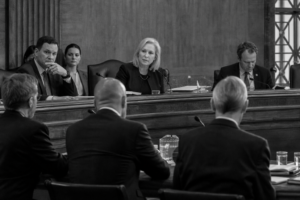
Gillibrand’s 2023 Call to Investigate Alleged Rogue SAPs After the April UAP Hearing
Explore a possible Senate UAP hearing led by Kirsten Gillibrand, the April 2023 session, Grusch claims, rogue SAP oversight and what is...
NASA’s 2022 Independent UAP Study Team
NASA Launches Independent UAP Study Team in 2022 Under Astrophysicist Spergel If you've been following the nonstop UFO or UAP news cycle,...
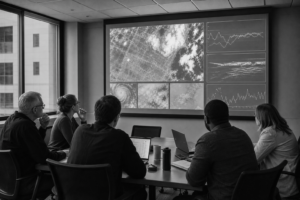
NASA UAP Report 2023: No ET Evidence, Spergel Panel Urges AI Tools
NASA UAP report 2023: Learn why NASA found no ET evidence and how better data, transparency and AI can strengthen UAP analysis.

David Grusch’s Public UAP Claims: A Sourced Guide
Explore David Grusch claims, from alleged UAP crash retrievals and non-human biologics to testimony, oversight concerns and public evidence.
UAP Disclosure Act 2023: The Schumer-Rounds Proposal
UAP Disclosure Act 2023: Schumer-Rounds Bill Seeks JFK-Style Declassification If you've been following UFO disclosure or UAP news for more than five...
Schumer-Rounds UAP Disclosure Act Returns for FY2026 NDAA Again
Track the Schumer UAP Disclosure Act in the FY2026 NDAA: learn its provisions, status, key changes, and what must happen next.
Ryan Graves’s 2023 Congressional Testimony on UAP and Aviation Safety
What former Navy pilot Ryan Graves told Congress about aviator reports, stigma, reporting systems, and flight safety, with direct and second-hand claims...
2023 UAP Hearing: Grusch, Fravor, and Graves Testify Under Oath
Explore the 2023 UAP hearing: separate Fravor and Graves’s firsthand accounts from Grusch’s allegations, and see what Congress did not prove.
Schumer-Rounds UAP Disclosure Act Returns in 2024 with Review Board Proposal
Learn how the Schumer UAP Disclosure Act sought a Review Board, what changed in the FY2024 NDAA, and why its status matters.
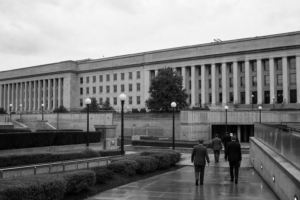
AARO Formally Established in 2022: Pentagon’s Broadest UAP Mandate Ever
Explore AARO UAP history: learn how the Pentagon formally established AARO in 2022, its all-domain mandate, and how it compared with predecessors.