Latest Briefings
Recent reporting, explainers, profiles, and archival context from the editorial desk.
The briefing archive brings together reporting, explainers, profiles, source reviews, and historical context. Each briefing is an editorial work: it should identify who made a claim, link to the closest available records, distinguish observation from explanation, and say when the public evidence cannot support a firm conclusion.
What a briefing covers
Briefings may examine a reported encounter, an official investigation, a hearing or legislative proposal, a public figure’s documented statements, a released image or dataset, or the history of a recurring claim. The archive includes both unresolved cases and claims for which ordinary explanations, contradictory evidence, or provenance problems are material. Inclusion is not endorsement, and the words unidentified or declassified do not establish origin.
How the archive is organized
Cards are presented by the site’s publication timestamp, with newer publications first, and the archive continues across numbered pages. That order is editorial chronology, not event chronology: an article published recently may concern a decades-old record. The date on a card is the publication date. A briefing can later be corrected or expanded, so use the updated date on the article itself when deciding which version you read. Pagination should preserve its own canonical URL; this full introduction belongs on page one, while later pages should use a short archive label rather than repeat the entire block.
Sources and uncertainty
Start with the links inside a briefing, not its headline alone. The site prefers legislation, hearing records, agency publications, archival files, court records, datasets, original media, and full on-record statements. A government file can document that an allegation was received without validating it. A witness can accurately describe an experience while the cause remains uncertain. The Editorial Policy explains the standards for attribution, headlines, corrections, automation, and conflicts.
Other ways to explore
Use the chronological timeline to move by event date, the Topic Clusters directory to follow a durable theme across years, and the Primary Sources desk to find official repositories and original records. When a single statement is driving your search, work through the claim-evaluation guide before comparing briefings. These routes narrow the question without implying that an archive card, category, or unresolved label settles it.

Petrozavodsk Phenomenon (1977): What Soviet Media Actually Acknowledged
Petrozavodsk Phenomenon 1977: Soviet State Media Confirms Giant UFO Sighting When Soviet state-controlled media prints an "unidentified phenomenon" story, th...

France Launches GEPAN (1977): A Pioneering Government UFO Science Unit
France Launches GEPAN 1977: World's First Government UFO Science Agency If you follow UFO news or UAP news for more than a...

Kaikoura Lights (1978): Film, Radar Reports, and Open Questions
Kaikoura Lights 1978: Film Crew Captures UFOs Tracked by New Zealand Air Traffic You are trying to sort real, evidence-led UFO news...

Val Johnson UFO Incident 1979: Deputy Sheriff’s Car Damaged by Mystery Flash
Val Johnson UFO Incident 1979: Deputy Sheriff's Car Damaged by Mystery Flash If you follow UFO news or UAP news long enough,...

Peru Air Force UFO Battle 1980: Pilot Fires 64 Rounds at Sphere With No Effect
Peru Air Force UFO Battle 1980: Pilot Fires 64 Rounds at Sphere With No Effect You keep seeing UFO news and UAP...
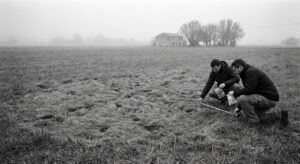
Trans-en-Provence (1981): A Rare UAP Case With Documented Physical Trace Analyses
Trans-en-Provence 1981: Scientists Confirm UFO Landing Left Physical Traces Most UAP stories collapse at the evidence step. They start with a dramatic...

Todmorden UFO Encounter 1980: Examining the 25-Minute “Missing Time” Claim
Todmorden UFO Encounter 1980: Police Officer Reports 25 Minutes of Missing Time A routine night patrol is supposed to produce paperwork, not...

Soviet Nuclear Incident 1982: The Disputed ICBM Activation Claim
Soviet Nuclear UFO Incident 1982: Saucer Activates ICBM Launch Codes You keep seeing the same UAP news headline recycled: a "mysterious craft"...

Twining’s 1947 Classified Memo: UFOs Are Real, Not Fictitious
Twining's 1947 Classified Memo: UFOs Are Real, Not Fictitious UFO news and UAP news keeps swinging between two extremes: "nothing to see"...

Project Sign’s Destroyed 1948 Report: ETs Were the Best Explanation
Project Sign's Destroyed 1948 Report: ETs Were the Best Explanation You are trying to separate credible UFO disclosure and UAP disclosure claims...