You are trying to sort real, evidence-led UFO news and UAP news from recycled claims dressed up as fresh revelations. The noise is familiar: dramatic retellings, anonymous hints, and the evergreen promise of a “government UFO cover-up” that never comes with inspectable records. What you need is a case that forces the discussion back onto verifiable details.
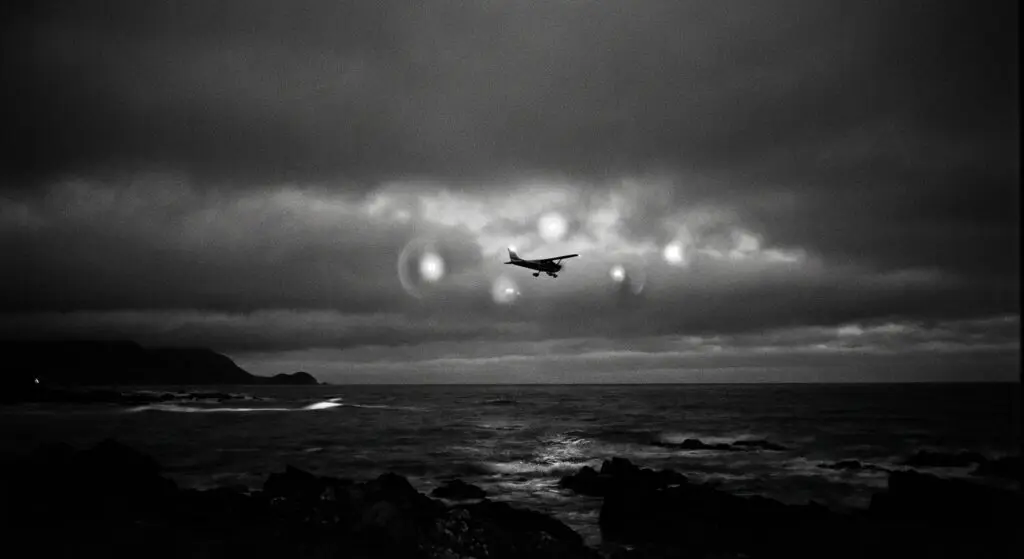
Kaikoura 1978 triggers the hard decision fast: do you treat it as signal, or file it with modern mythmaking that survives on repetition? The case stays in circulation for one reason that matters: it is routinely described as a moment when filmed lights and contemporaneous claims of radar correlation converged. Two independent channels rarely align in UFO reporting, and that is why Kaikoura keeps getting invoked as a benchmark.
The tradeoff is built into the same headline. Film plus “tracked on radar” reads like corroboration. Decades later, the friction is documentation: “radar tracked” is only a testable claim when the radar type and radar site are specified, along with what records survive and what they actually show. In many historical UAP (Unidentified Anomalous Phenomena) disputes, the story remains vivid while the instrumentation trail turns thin, incomplete, or contested.
The first widely cited incident is placed on 21 December 1978, sometime after about 2am. It is commonly described as involving a Safe Air Ltd Argosy turboprop freight aircraft on a Wellington-to-Christchurch run carrying newspapers. Those anchor points matter because they fix the claim to a particular platform, a particular window of time, and a particular operational context where logs, tapes, and reporting chains either existed or did not.
The reconstruction here treats every component as a separate evidentiary object: the film as physical media with provenance, the radar narrative as a specific system claim tied to a site and surviving records, and later retellings as secondary layers that must be traced, not trusted.
You walk away with a disciplined account of what happened, what was documented, how the evidence has been argued, and how to evaluate the next “film plus radar” story before it turns into folklore.
To do that responsibly, the case has to be grounded in the practical realities of where the aircraft flew, what the crews could actually perceive, and what air traffic systems could plausibly record in real time.
Kaikoura, flights, and key witnesses
Operationally, the Kaikōura setting drives both detection and confusion. Kaikōura sits on the east coast near the top of New Zealand’s South Island, where the shoreline runs hard against rising terrain. From an aircraft, that geometry produces two radically different backdrops within the same windshield scan: open sea to one side and dark mountain mass to the other. Over water, a bright point source can look stationary because there are few reference cues for closure rate or altitude. Against mountains, the same light can appear to “move” simply because the aircraft’s own track is changing relative to a fixed ridgeline.
A simple mental map used in local travel discussions is the Christchurch to Blenheim corridor: it is routinely framed as a coastal route versus an inland route. That matters because coastal sightlines are long and low-contrast at night, while inland sightlines are broken up by terrain and nearer ground lights. The corridor’s mixed backdrops make distance judgments fragile, and fragile distance judgments are where misidentification starts.
Flights working this corridor give crews sustained time looking out into darkness while maintaining disciplined headings, altitudes, and radio procedures. Late-night operations amplify the reporting effect: fewer visual distractions, fewer competing radio calls, and a higher chance that any unusual light becomes the dominant external cue. Crews also tend to cross-check what they see with navigation references and, when available, airborne sensors, which turns “I saw a light” into a structured observation: bearing, relative motion, and whether it stays consistent across maneuvers.
ATC (air traffic control) sits at the other end of that structure. Separation and traffic management require controllers to log and communicate what matters to aircraft safety, so any reported anomaly that appears to affect routing, altitude changes, or crew workload is more likely to be discussed on frequency and preserved in operational records than a casual sighting would be.
Flight crew (pilots): Pilots can correlate outside lights with instrument references and aircraft attitude. They can credibly report relative bearing changes, whether a light holds position through turns, and whether it aligns with known ground lighting patterns. What they cannot do from a cockpit at night is reliably estimate range and size without an independent reference, especially over water.
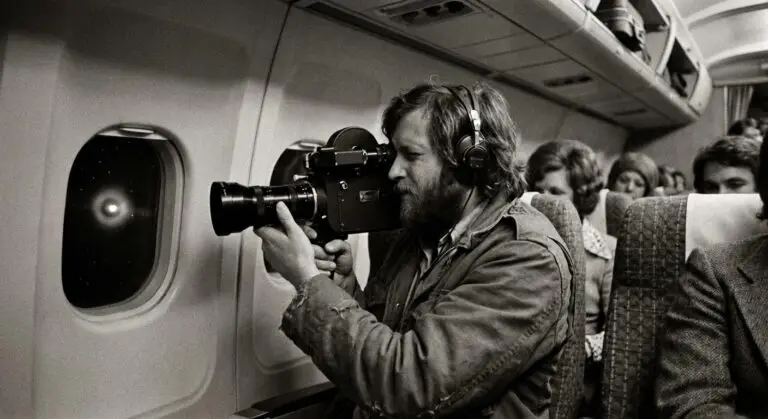
Film crew: A camera can preserve what the human eye cannot replay: exact framing, apparent brightness, and how the scene changes as the aircraft moves. The same camera can also misrepresent what mattered to the observer: a two-dimensional image collapses depth, bright points can bloom and saturate, and exposure choices can erase the horizon that provides scale. The provided research set does not supply program edit timestamps, shot-level lens or exposure metadata, or other production notes that would normally anchor those limitations in hard parameters.
The provided research set does not verify film crew names or credits, and it does not identify specific ATC personnel; those identities should be treated as reported in later accounts unless primary credits or transcripts are produced.
Audit any UAP case the same way professionals audit an incident: map the corridor, then lock down each vantage point. Decide what each role could record with high fidelity (bearing changes, relative motion, radio coordination) and what each role is structurally bad at (range, size, altitude over water). Only then does debating intent or origin become a disciplined conversation instead of a reaction to compelling footage.
That role-by-role map also clarifies what the Kaikoura dispute is really about: not whether witnesses were sincere, but whether the remaining artifacts can carry the weight the story places on them.
Film, radar, and official records
The Kaikoura case stands or falls on artifacts, not anecdotes, and the filmed material is the easiest artifact to audit because it is physically copyable and frame-countable. At a standard 24 frames per second for motion-picture film, you can turn “it lasted a while” into a hard duration, and you can measure relative geometry inside the frame (light-to-horizon, light-to-wing, and light-to-camera-pan) without trusting anyone’s memory.
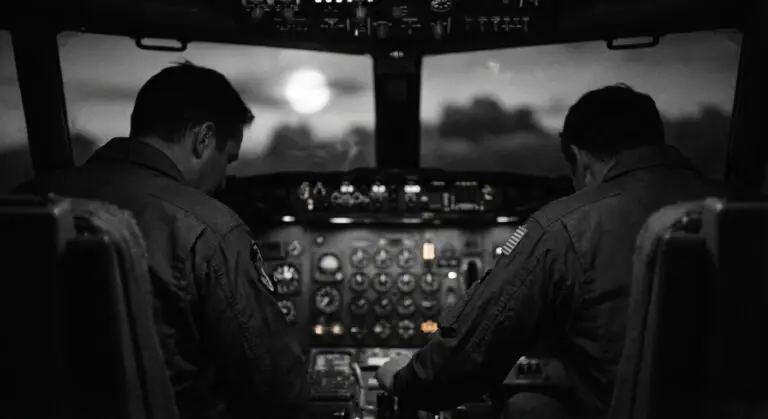
The friction is that the camera is a lossy sensor for range and size. Bright point sources bloom when exposure clips, reflections off cockpit glass can double an image, and lens flare can manufacture structure that is not in the scene. Those are not exotic objections; they are baseline failure modes for night shooting, so the film’s strongest probative value stays narrow: timing, framing, and whether a light’s apparent motion is independent of camera motion.
Where the film becomes decisive is provenance, not spectacle. Archival practice treats the original element as the gold standard because every generation of copying bakes in contrast changes and cropping. Two concrete benchmarks show what “good provenance” looks like: the U.S. National Archives requires transferring an entire reel or item for preservation rather than isolated clips, and the U.S. Library of Congress has handled transfers on the scale of hundreds of reels (an inventoried transfer included 527 reels of 16mm film). For Kaikoura, the audit question is simple and binary: do the highest-generation elements exist (original reels, camera originals, or first-generation broadcast masters), and can you document who held them at each handoff?
“Radar tracked” is not one claim; it is two different sensor categories that get conflated. A single statement can refer to primary radar (a skin-paint return that does not require cooperation) or secondary surveillance radar (SSR) (a transponder reply that can carry identity and altitude), and those two capabilities have different failure modes and different evidentiary weight when you are reconstructing what a controller actually had on a scope sweep after sweep.
The complication is that public retellings routinely slide from “a return was observed on a display that night” to “a retrievable radar record exists now.” Those are different propositions. A contemporaneous observation can be meaningful, but without preserved plots, recorded radar video, or archived raw data, you cannot replay, re-measure, or independently re-correlate the target decades later.
A second, more technical trap is treating all radar returns as equally literal. Anomalous propagation is a known limitation class: refractive conditions can bend the beam, extend apparent range, and displace targets. That does not resolve Kaikoura by itself; it raises the documentation bar. You need the radar type, operating mode, and enough contemporaneous meteorology to test whether the scope picture supports a stable target or a propagation artifact.
The actionable standard is to force every radar claim to name the artifact type. Is the only surviving support a verbal report, a controller log entry, a printed plot, a recorded display, or an exportable data file? If no replayable artifact exists, the radar portion of the case stays testimonial, not independently measurable.
The non-obvious reality in Kaikoura-style cases is that “sensor corroboration” can disappear on a schedule. ATC voice recordings and recorded radar displays can be recorded over after defined retention periods, commonly cited around 15 days, so missing raw artifacts decades later is a predictable outcome of routine operations, not evidence that someone had to intervene.
Formal investigation guidance treats that retention window as an urgency problem, not a mystery: investigators are explicitly directed to collect all available ATC tapes, including radar and voice, for review. If that collection does not happen quickly, later reviewers are forced to rely on summaries, recollections, and second-generation copies, none of which can substitute for original recordings when the dispute is “what was actually displayed and said in real time.”
Communications also fragment across systems even on an ordinary shift: multiple frequencies, multiple positions, and telephone coordination can all be relevant, and written material depends on whether the event was elevated into an occurrence report versus left as an operational oddity. In practical terms, the audit target is a bundle, not a single tape: position audio, coordination calls, unit logs, and any incident reporting created close to the flight context being discussed.
Even when a copy exists, its probative value is capped by integrity controls. Chain of custody is the documented trail of who handled an artifact, when, and under what safeguards, and information-protection doctrine is explicit about preventing loss, improper use, or integrity breaches as the price of later review. A compelling recording with unclear handling history is weaker evidence than a less dramatic recording with documented storage, transfer, and access controls.
This is where “cover-up” narratives usually overreach. Missing artifacts can be the routine product of retention limits and ordinary records management; without durable, accessible records, argument replaces analysis, and the case stops being scientifically correctable.
Kaikoura sits inside a broader New Zealand paper trail that is real and publicly documented: New Zealand’s declassified New Zealand UFO files cover 1952 to 2009, and the New Zealand Defence Force has declassified holdings as well, including a referenced released set of 36 files. That matters because it proves institutional collection and retention existed as a practice, not merely as folklore.
The friction is specificity. A national file series is not the same thing as Kaikoura-specific technical annexes, and it is easy to launder assumptions into “officially documented” without ever naming a file reference. The correct evidentiary posture is strict: only assert Kaikoura material is present if you can point to a catalog entry, file number, or scanned document page that can be checked; otherwise, treat Kaikoura-in-the-files as a verification task.
The resolution is a targeted file audit, not more narrative. You are looking for: contemporaneous correspondence (dated close to the flight context), investigative conclusions and their stated limitations, and attachments that would actually move the needle (radar plots, transcripts, meteorological assessments, or explicit disposition notes explaining what was retained versus overwritten). New Zealand’s civil aviation investigation practices also changed following an independent review commissioned by the Director of Aviation, which makes “what did the system do with this kind of report at the time” a concrete records question, not a vibe.
Evidence checklist takeaway
- Locate the highest-generation visuals: original reels or first-generation broadcast masters, not just edited broadcast copies.
- Document handling history: who held each copy, when it was duplicated, and what integrity controls existed.
- Separate observation from retrievability: “a return was seen” is weaker than “a replayable radar record exists.”
- Confirm retention realities: if ATC audio or radar recordings were overwritten on an approximately 15-day cycle, identify whether anyone preserved them inside that window.
- Request file-level identifiers: for the declassified New Zealand UFO file series and the NZDF declassified holdings (including the referenced 36-file set), capture exact file numbers and scan citations before claiming Kaikoura coverage.
- Prioritize technical annexes: transcripts, plots, and meteorological notes carry more probative weight than narrative summaries.
Once you separate what can be measured from what is merely asserted, the remaining debate is less about belief and more about which explanation best fits the constraints the surviving record actually imposes.
Debunking claims and unresolved questions
The controversy persists because several explanations can account for parts of the record, but no single explanation wins by rhetoric. It wins by fit to the documented constraints, especially the coupling problem: matching what witnesses said they saw to what radar operators reported, when the most decisive raw records and operational context are not fully available.
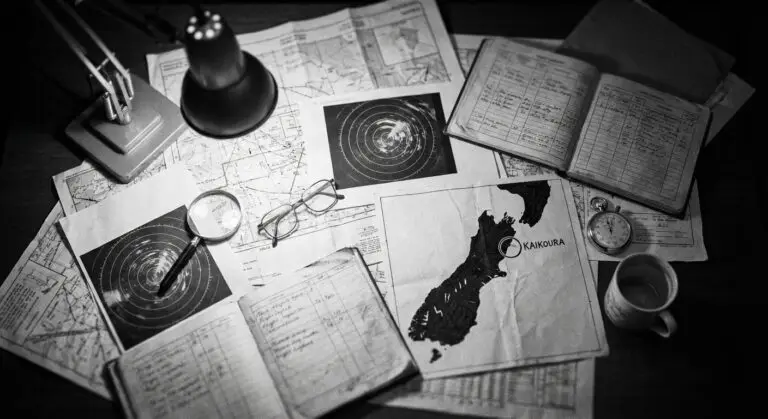
Astronomical bodies fit cleanly whenever the visual description is dominated by steady brightness, slow apparent motion, and ambiguous range cues. Night filming compresses depth information; a bright point source can look like a nearby object, and small camera movements can create perceived motion without any target motion. The friction is specificity: once a report asserts distinct, changing geometry or responsive movement relative to an aircraft, a fixed astronomical source stops being a complete model unless the “maneuvering” reduces to observer motion and camera parallax.
The maritime-lighting hypothesis also explains a lot with very little machinery: horizon-adjacent lights, intermittent intensities (occlusion by swell), and apparent “formations” that are actually multiple vessels. The limitation inside this article’s sourcing is explicit: the provided sources contain no information about fishing fleets or boat locations off the Kaikoura coast on the relevant nights. That makes “boats” plausible but under-documented here, because plausibility is not the same thing as a verified match to bearings and timing.
Reflections and camera artifacts can also reproduce the core visual features that make people confident: bright blobs, internal flares, ghost images, and apparent tracking that follows lens angle rather than a target. These explanations handle the film side efficiently, but they struggle when proponents claim independent observers described the same objects without relying on the camera viewfinder.
Atmospheric effects sit between “real lights” and “camera tricks.” They can change apparent brightness, apparent size, and even apparent position near the horizon. The catch is discriminating atmosphere-driven appearance changes from claims of structured movement. Without contemporaneous meteorological context tied to the observation geometry, “atmosphere” remains a category, not a specific tested mechanism.
Radar anomalies are the strongest mundane competitor to any radar-visual correlation claim because they can generate convincing returns without a discrete aircraft-like target. The same anomalous propagation and clutter limitations described earlier are especially relevant in coastal environments, where ground and sea clutter can mask or mimic targets. The decisive nuance is that clutter is not an untestable hand-wave: methods exist to predict anomalous clutter amplitude using site-specific radar parameters, terrain, and atmospheric conditions, which means the “radar did it” hypothesis can be constrained if the right technical records exist.
Proponents lean on multi-witness consistency and repeated observations because those features punish single-point failure modes. A one-off reflection story weakens if people in different positions report similar shapes, timing, and directional behavior. The counter-pressure is shared context: witnesses on the same aircraft can influence each other, and a crew reacting to a radar call can converge on the same patch of sky. Consistency matters, but independence matters more.
The sharper proponent claim is radar-visual correlation, because it turns two weak signals into one stronger one. If radar returns and visual lights co-occur and appear to move together, “star” and “lens flare” stop being universal answers. The coupling problem remains: correlation requires raw radar plots, processing settings, and contemporaneous logs to show that the radar return was not clutter, interference, or processing artifacts that happened to align with where people were already looking.
- Release raw radar plots and system configuration details for the relevant periods (processing modes, clutter suppression, calibration notes) to test anomalous propagation and clutter mechanisms against the actual return structure.
- Authenticate first-generation film elements and camera metadata so analysts can separate external lights from internal reflections, lens artifacts, and exposure-driven bloom.
- Produce contemporaneous ATC logs and operational notes that document when radar contacts were called, how they were described, and whether the reporting changed with operator workload or settings changes.
- Obtain verifiable maritime records (vessel locations, fleet activity, lighting practices) for the relevant nights to convert “boats” from a generic possibility into a testable match or mismatch.
Modern disclosure expectations increasingly default to “show the data,” because data access is what makes later re-analysis and scientific self-correction possible.
The actionable way to argue cases like Kaikoura without smuggling assumptions is simple: state what would falsify your preferred model. If you favor radar anomalies, commit to changing your mind if raw plots show coherent target behavior inconsistent with clutter predictions; if you favor structured objects, commit to changing your mind if authenticated film analysis demonstrates internal reflections or if vessel records match the lights’ bearings and persistence.
Those falsifiability commitments are exactly what modern audiences bring to legacy cases-and they help explain why Kaikoura keeps resurfacing whenever standards shift toward auditable sensor corroboration.
Why Kaikoura matters in 2025
Kaikoura matters more in 2025 than it did for decades afterward because disclosure-era audiences grade cases on corroboration quality, not narrative strength. A compelling witness account, even a multi-witness account, no longer closes the gap between “interesting” and “resolved.” The new baseline is hard artifacts: sensor data you can timestamp and cross-check, retention you can verify, and methods you can trace from raw capture through analysis. Kaikoura functions as a measuring stick for that shift because it sits at the boundary between an era that produced memorable testimony and an era that demands durable, auditable records.
U.S. institutions have effectively codified those expectations in public. The House Oversight hearing titled “Restoring Public Trust Through UAP Transparency and Whistleblower Protection” framed the modern problem as one of process: transparency, documentation, and protected pathways for reporting. In the same evidentiary spirit, the Pentagon’s All-domain Anomaly Resolution Office (AARO) has described evaluating multiple major UAP reports with a focus on triage, debunking, and data quality, and its leadership has testified that the office was able to disprove evidence of any “transmedium objects” in some cases. The point is not what any given case “means,” but what the adjudication standard looks like: claims are treated as hypotheses, and sensor-derived claims live or die on provenance, calibration, and reproducibility.
That is why legacy cases keep getting re-litigated. They predate today’s retention norms, routine digital archiving, and standardized release pipelines, so even well-known incidents can be stuck with partial custody trails and non-ideal metadata. Policy language centered on transparency and whistleblower protection increases pressure to reopen old files, and high-profile allegations amplify the demand for receipts: David Grusch publicly accused the Pentagon of a secret UFO retrieval program and filed an Intelligence Community Inspector General complaint alleging retaliation after going to Congress. If Kaikoura happened today, “disclosure-era quality” would mean retained raw sensor outputs, publishable calibration and timing metadata, documented chain of custody, and an auditable analysis trail that an independent team could rerun end-to-end.
A benchmark case, still contested
This is the rare case that looks overdetermined on paper and still refuses to close because the strongest-looking signals do not come with the strongest surviving documentation.
The benchmark feature remains intact: multiple witnesses, filmed lights, and reported radar correlation, paired with gaps that stop the record from functioning like a complete evidentiary package as detailed above. The key anchor is still 21 Dec 1978, after roughly 2am, with a Safe Air Argosy freight flight at the center of the reporting. Film persists as a tangible artifact category, and radar and ATC correlation claims persist as claims, but decisive reconstruction depends on materials that are not reliably available decades later.
The structural obstacle is mundane and unforgiving: ATC communications and radar recordings are routinely overwritten within the kind of short retention window described earlier, which makes the missing-records problem a non-obvious reason the debate persists.
What changes the conclusion is straightforward and ranked: authenticated raw film elements first, then ATC logs, then radar plots, followed by independent re-analysis using a traceable methodology tied to chain of custody (evidence handling record) and open data access.
Meaningful transparency for historic UAP cases looks like accessible archives, retained raw data, and consistent investigative standards.
If you can point to primary-source holdings or custody records for the raw materials, submit them for the next evidence audit.
Sources
- Radio New Zealand report based on declassified documents
- National Library NZDF UFO files catalog
- National Library Kaikoura review catalog
Frequently Asked Questions
What are the Kaikoura Lights (1978) and why are they still discussed in UFO/UAP reporting?
The Kaikoura Lights are a late-1978 New Zealand case described as filmed lights seen from an aircraft alongside contemporaneous claims of radar correlation. It remains a benchmark because “film plus radar” is a rare combination in UFO reporting, even though the surviving documentation is incomplete.
What flight and date are most commonly tied to the Kaikoura Lights incident?
The first widely cited incident is placed on 21 December 1978, sometime after about 2am. It is commonly described as a Safe Air Ltd Argosy turboprop freight aircraft on a Wellington-to-Christchurch run carrying newspapers.
Why is night flying near Kaikoura prone to misidentifying lights?
Kaikōura’s coastal geometry gives crews two different backdrops-open sea on one side and dark mountains on the other-which makes distance and motion judgments fragile at night. Over water, a bright point can look stationary due to few reference cues, and against mountains the same light can seem to “move” as the aircraft’s track changes relative to ridgelines.
At 24 fps film, what measurable information can analysts extract from the Kaikoura footage?
At a standard 24 frames per second, analysts can turn the footage into a hard duration and measure relative geometry in-frame (for example light-to-horizon and light-to-wing relationships). The film’s probative value is strongest for timing, framing, and whether apparent motion is independent of camera motion.
What’s the difference between primary radar and secondary surveillance radar (SSR) in Kaikoura-style “radar tracked” claims?
Primary radar is a “skin-paint” return that doesn’t require cooperation from the target, while SSR depends on a transponder reply that can include identity and altitude. The article stresses that these have different failure modes and different evidentiary weight when reconstructing what was actually on a controller’s scope.
Why might there be no surviving ATC audio or radar recordings for the Kaikoura Lights decades later?
ATC voice recordings and recorded radar displays can be overwritten after defined retention periods commonly cited around 15 days. The article treats missing raw artifacts as a predictable records-management outcome unless someone preserved them within that window.
What evidence should you ask for before accepting a new “film plus radar” UFO story like Kaikoura?
Request the highest-generation visuals (original reels or first-generation broadcast masters) with documented chain of custody, plus contemporaneous ATC logs and any replayable radar artifacts (plots/recorded display/exportable data). The article also recommends separating “a return was seen” from “a retrievable radar record exists,” and prioritizing technical annexes like transcripts, plots, and meteorological notes.