UAP National Security 101: The Real Reasons Governments Care (Even Without Aliens)
Learn why UAP national security concerns focus on airspace safety, foreign surveillance, sensor gaps, and military readiness.
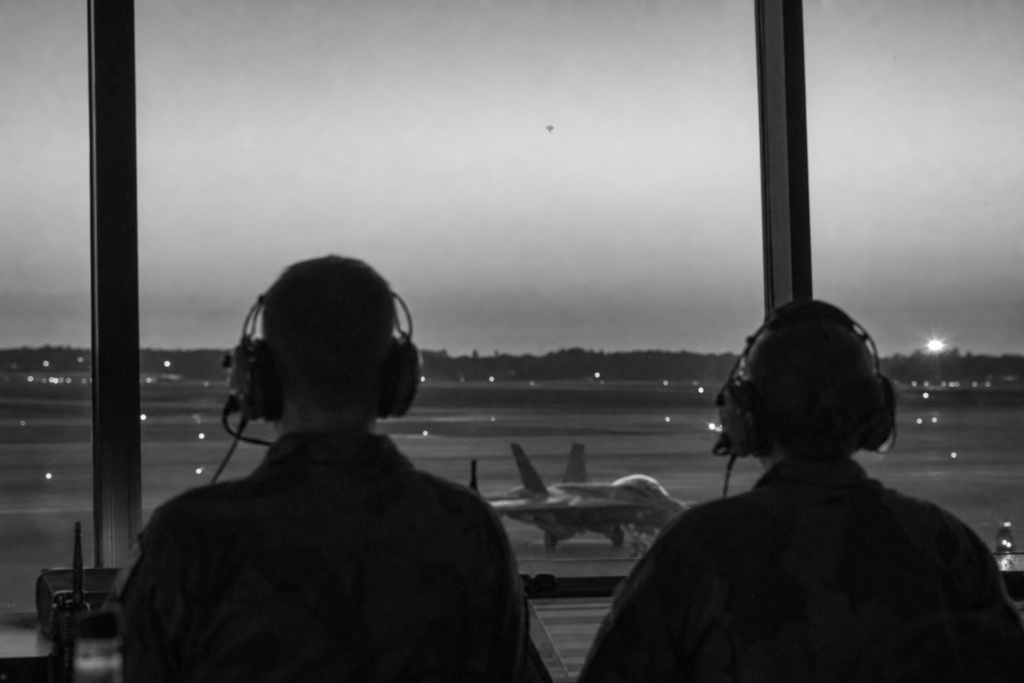
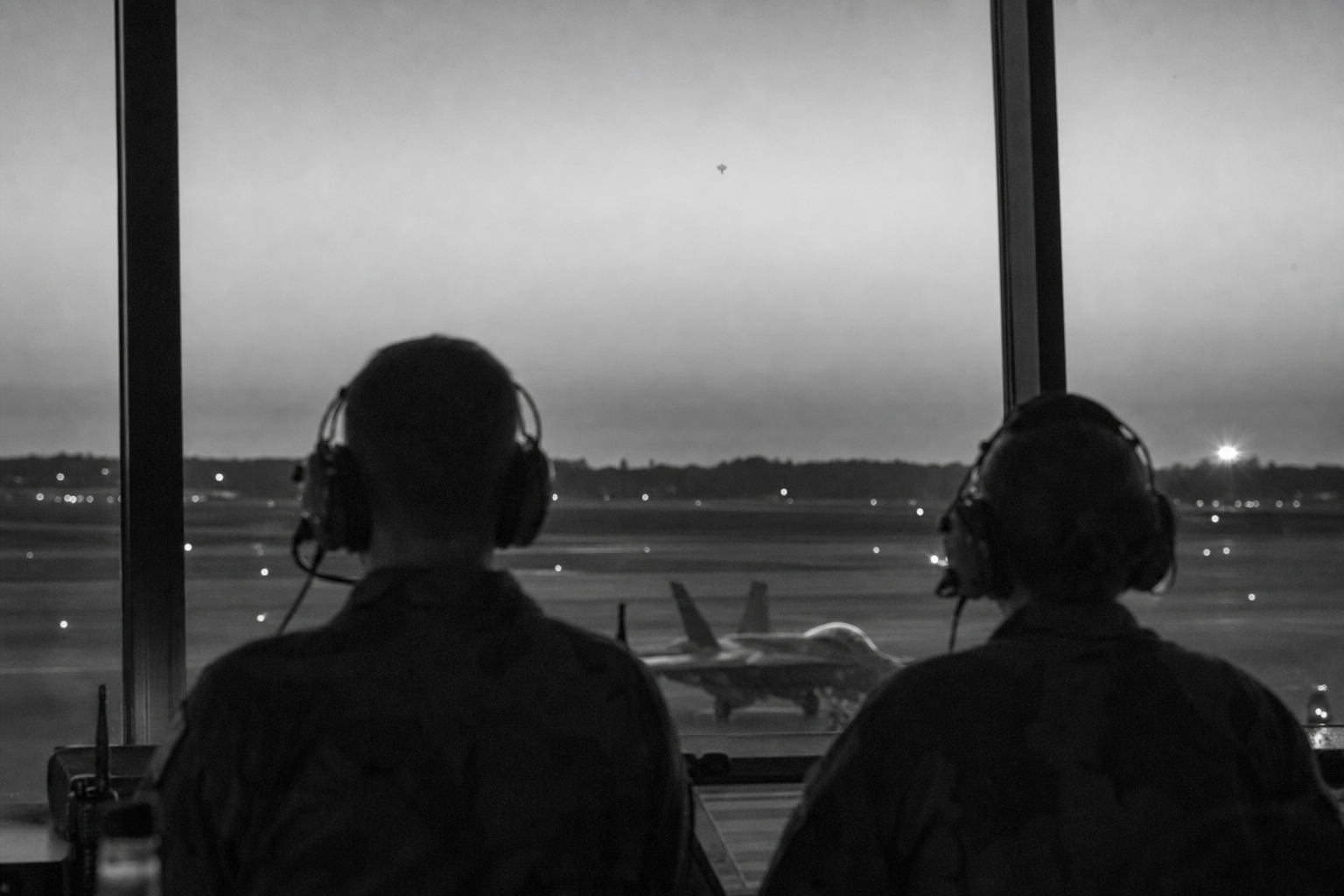
UAP national security begins with a simpler question than “Is it alien?”: what is operating, appearing, or being detected where it should not be, and can officials determine whether it creates a risk? An unidentified anomalous phenomenon is an observation that has not yet been resolved, not a confirmed advanced craft, adversary system, or non-human intelligence. That distinction matters. “Unidentified” describes the state of the available information; it does not establish an extraordinary explanation.
Governments must still act under that uncertainty. A report near aircraft can raise an immediate flight-safety concern. A presence near a military installation, test range, or other sensitive site can suggest possible surveillance or intrusion. An unusual radar, infrared, visual, or other sensor signature can expose a gap in equipment, data fusion, or operator interpretation. And an event that cannot be attributed promptly can leave an intelligence question unanswered: was it a mundane object, a foreign collection platform, a drone, a balloon, a sensor artifact, or something else?
This is therefore a risk-management issue, not a presumption of extraterrestrial origin. The practical task is to collect reliable details, compare competing explanations, protect sensitive operations, and preserve accountable records while investigators determine what the report does, and does not, show.
Why “Unidentified” Is Enough to Create a National-Security Problem
The threshold for attention is lower than the threshold for attribution. Officials do not need to establish an alien or non-human origin before treating a report as consequential; they need enough uncertainty, in a consequential setting, to decide whether protective action or further collection is warranted.
An unresolved observation is a gap in knowledge, not a finding about what produced it. A confirmed craft requires reliable evidence that a physical vehicle was present; a hostile actor requires evidence of intent, control, or attribution. Until then, an unusual track, image, signal, or pilot report may reflect incomplete data, a misread sensor, an ordinary object seen under difficult conditions, or an as-yet-unmatched activity. Each possibility calls for different follow-up.
That distinction explains why governments care about UAP: uncertainty can complicate aircraft safety decisions, interrupt operations, obscure a possible intelligence-collection effort, reveal weak detection or identification processes, and force commanders to make time-sensitive choices with an incomplete picture. The responsible question is not “what extraordinary conclusion does this prove?” It is “what information is missing, what risk follows from that gap, and what must be resolved first?”
1. Airspace Safety: Unknown Objects Can Endanger Pilots Before Their Origin Is Known
For a pilot, the first problem is separation, not explanation. An object reported near a military training route, a commercial corridor, a test range, or restricted airspace may require crews and controllers to assess whether its position, altitude, and direction create an immediate conflict with aircraft operations. That airspace safety decision cannot wait for a final identification.
The initial report may describe very different things: an observed object, meaning someone saw something; a detected track, meaning a sensor registered a location or movement; or a collision risk, meaning available information suggests aircraft could converge too closely. These are not interchangeable. A drone, balloon, conventional aircraft, weather effect, or sensor artifact can produce an unresolved report, but each calls for a different operational response, from gathering more observations to changing a route or pausing activity in a confined area.
That is why UAP sightings near active aviation matter even when they are later resolved as ordinary causes. Useful hazard reporting preserves the practical details: time, location, altitude, speed estimate, weather, aircraft sensors involved, and whether visual and instrument information agree. A near encounter establishes that a crew perceived a possible hazard; it does not establish that an object was a physical craft, that it maneuvered extraordinarily, or that it was under hostile control. Treating those conclusions as separate keeps investigation tied to the actual risk.
2. Foreign Surveillance: An Unidentified Intrusion Could Be an Intelligence Problem
An object that lingers near a sensitive activity can raise a different concern from an immediate flight conflict: it may be observing rather than merely passing through. A small surveillance drone could potentially carry a camera or radio receiver; a balloon could remain aloft for extended observation; and a conventional aircraft might collect information from farther away. Those possibilities do not make every unresolved report an act of foreign surveillance. They make foreign origin a hypothesis worth testing when the location, timing, and behavior warrant it.
For UAP and national security, the relevant question is not simply whether something looked unusual. Analysts need to establish a usable account of the event:
- What was present? They distinguish an actual vehicle from a misleading sensor return, atmospheric effect, or misidentified ordinary object.
- Where did it operate? Proximity to a training event, facility, exercise, or restricted area can affect what information might have been available to observe.
- What could it collect? Optical imagery, radio-frequency signals, and patterns of activity are different intelligence targets and require different equipment and access.
- Was it coordinated? Repeated appearances, common routes, or activity synchronized with operations may be more informative than a single isolated observation.
- Can it be attributed? Attribution means linking activity to an actor with corroborating evidence, not assigning blame from an unusual visual account.
A lone witness description is a weak basis for attribution. A stronger assessment might combine independent sensor tracks, imagery, recovered material, communications indicators, and a pattern that matches known operating methods. Even then, analysts must separate what the evidence establishes, such as an intrusion or collection opportunity, from what remains uncertain about control, purpose, or national origin. That discipline lets governments pursue a possible intelligence-collection problem without turning an unresolved report into a claim of an adversary platform.
3. Sensor Limits Are a Security Issue: Governments Need to Know What Their Systems Miss or Misread
The same event can look different to every system that records it. That does not mean a witness is unreliable or that an instrument is useless; it means each channel captures only part of the scene. Radar estimates range and motion from reflected radio energy. Electro-optical cameras record visible light. Infrared systems register heat contrast. Weather data describes conditions that may affect propagation and visibility. Human observers add context, but their estimates of distance, size, and speed can be distorted when reference points are absent.
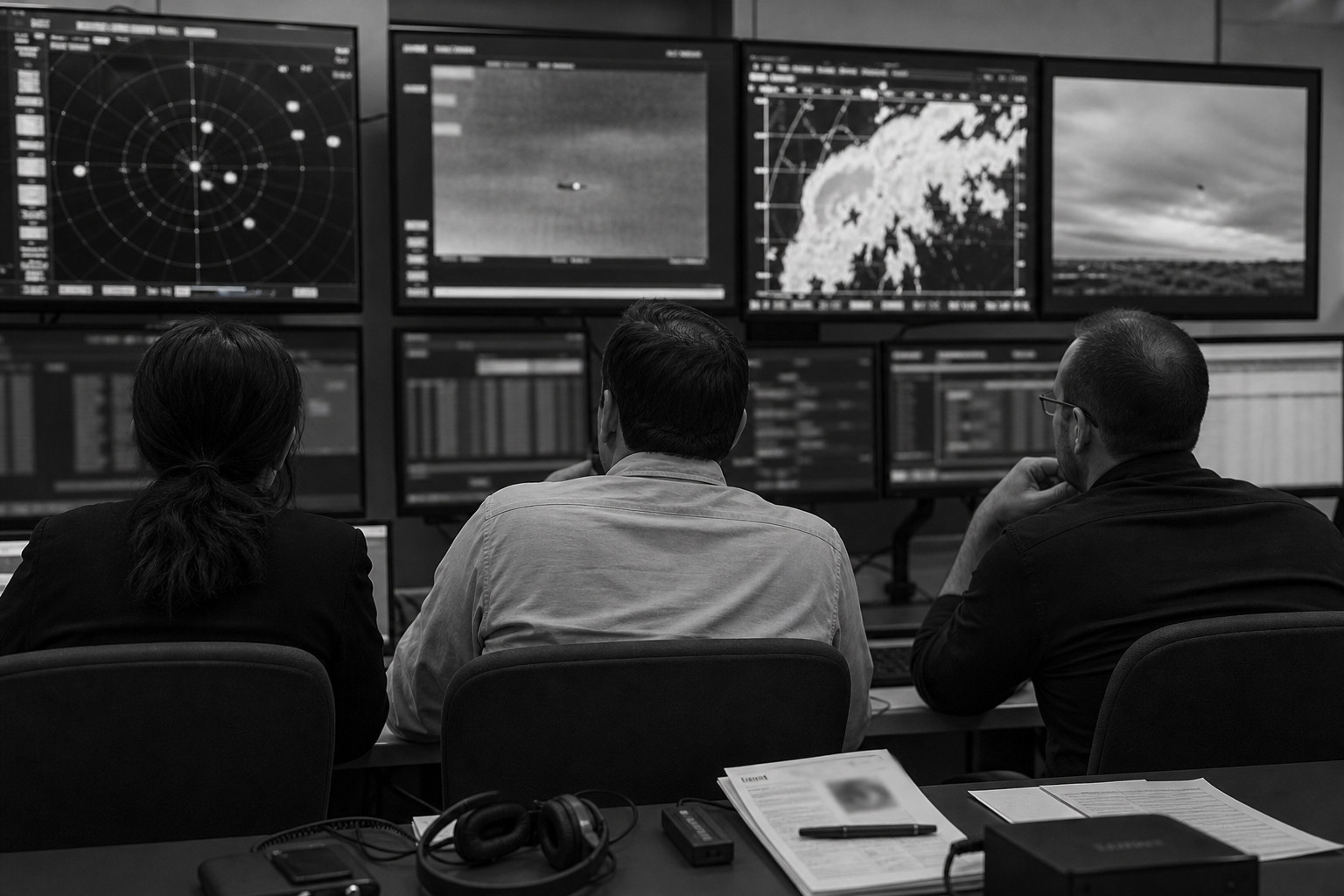
Sensor limitations become consequential when those partial views are treated as a complete account. A distant object viewed at an oblique angle can appear to move rapidly against a background. Atmospheric layers can bend, scatter, or attenuate signals. Calibration settings, tracking software, glare, zoom, and missing timing or location data can also change an apparent trajectory. A radar track without imagery, or imagery without reliable range information, may be insufficient to determine what was present.
Sensor fusion is the effort to align those separate records by time, position, geometry, and system status. A strong case has independently consistent measurements and enough surrounding context to test ordinary explanations. A weak case may have compelling footage but lack range, metadata, weather conditions, or a corroborating track. Either result is useful: resolution improves identification, while persistent gaps in data quality expose where collection and analysis need improvement.
For defense readiness, that distinction matters as much as the final label. Bad or incomplete data can generate false alarms, conceal a real incursion, or push commanders toward decisions based on an inaccurate picture. Investigating unresolved reports therefore tests not only what may have been in the air, but also whether the systems intended to detect, identify, and share information are working together when it counts.
4. Sensitive Sites and Military Readiness: Even Small Incursions Can Carry Outsized Risk
Location changes the decision calculus. A faint track at the edge of ordinary airspace may call for additional observation; the same track near a weapons range, command facility, power installation, or major exercise can require an immediate protective posture. The concern is not that every report signals a grave UAP security threat. It is that high-value sites concentrate people, equipment, communications, and sensitive activity, making the consequences of misidentification higher.
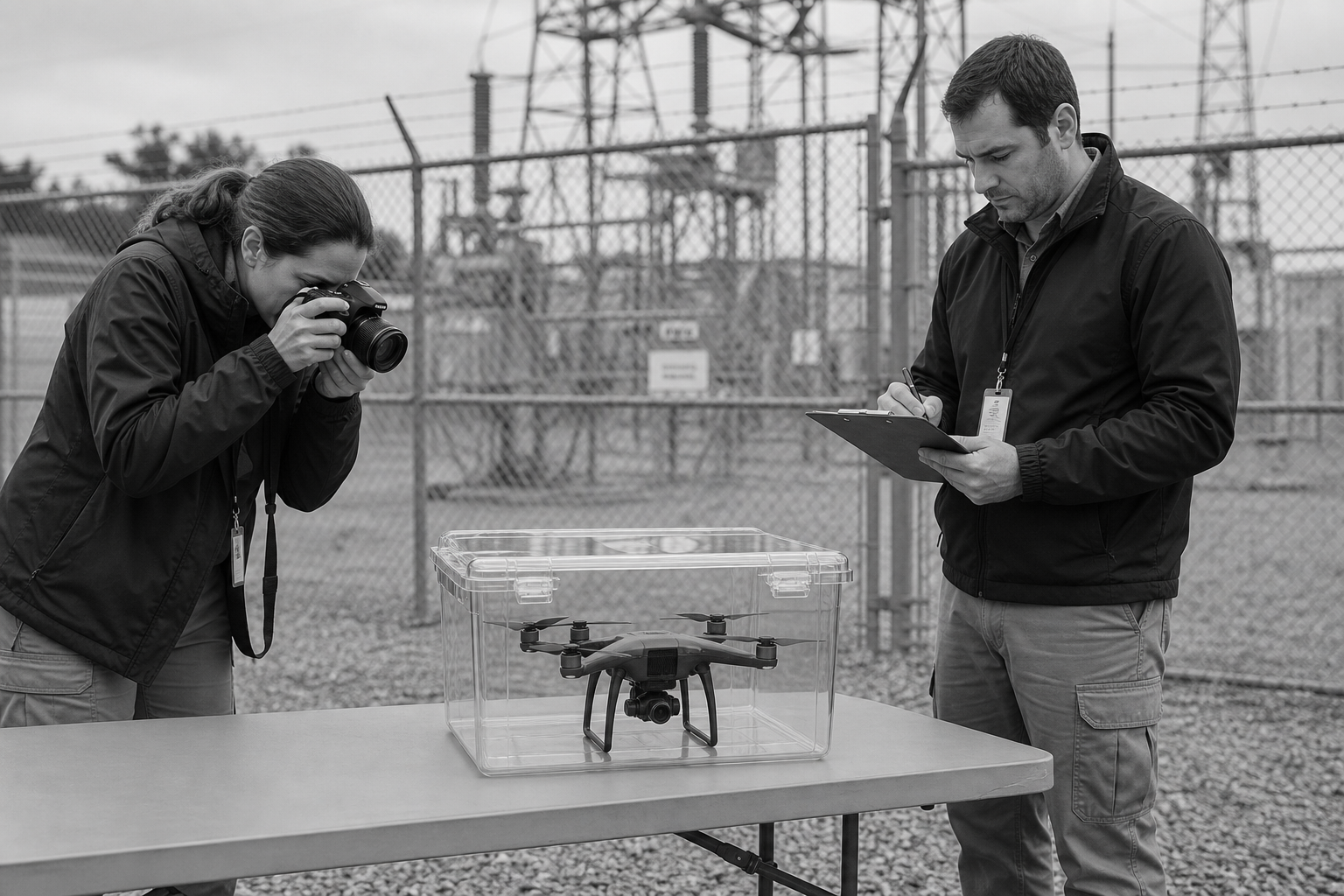
A small drone, unidentified aircraft, or anomalous track can create several distinct problems at once: collision or interference with operations; possible visual, electronic, or signals collection; uncertainty over whether a perimeter has been breached; disruption of a test or exercise; and a gap in the site’s detection and response picture. Duration, distance, altitude, direction of travel, and whether the object appears to return are more informative than an unusual appearance alone. A brief transit outside a boundary is not equivalent to repeated hovering near an active range or within sensitive operational airspace.
Proportionate responses need not assume hostile intent. Personnel may preserve sensor data, increase monitoring, alert security teams, adjust flight activity, pause a vulnerable event, or alter procedures for later operations. Those measures protect military readiness and critical infrastructure while investigators work toward identification. In this setting, the cost of being wrong is not limited to an unexplained sighting; it can include avoidable exposure of capabilities, interrupted training, or an unaddressed weakness in site security.
How Governments Investigate UAP, and Why Some Details Remain Classified
Investigation begins by turning a fleeting report into a record that can be tested. A useful submission fixes the time and place, the observer’s platform and activity, weather and lighting, sensor settings where available, and the original imagery or track data. Analysts can then compare the event against known aircraft, drones, balloons, satellites, astronomical objects, weather effects, and sensor artifacts rather than treating a striking description as a conclusion.
In the United States, the Defense Department’s UAP investigation mandate is carried out by the All-domain Anomaly Resolution Office, or AARO UAP office, which serves as the focal point for receiving, analyzing, and helping resolve information within its mandate. Its work is not simply to label individual cases. It can bring together operational reporting, intelligence holdings, technical expertise, and records from other relevant organizations, then look for recurring locations, times, signatures, or behaviors. A single report with little contextual data may remain unresolved; a pattern across independent reports can justify more focused collection or a change in procedures.
Resolution also has levels. Matching an observation to a conventional object is a stronger outcome than merely finding that the available data are insufficient. “Unresolved” means the record does not support a confident identification, not that it establishes an anomalous craft, an adversary platform, or non-human intelligence.
Public accounts may omit details because the underlying material can reveal classified capabilities: how well a radar or infrared system detects an object, the collection method that produced an image, the location and schedule of military activity, or an ongoing counterintelligence inquiry. Releasing such information can help an adversary evade detection or map a protected site. Classification therefore protects operational advantage; it is not, by itself, evidence of a government UFO cover-up or confirmation of extraordinary claims.
UAP Disclosure Is About Accountability and Data Access, Not Automatic Proof of Non-Human Intelligence
Disclosure has three separate jobs that are too often collapsed into one. Releasing records gives the public access to material that can be shared without exposing protected operations. Acknowledging unresolved reports shows that an agency has not reached a defensible identification. Proving non-human intelligence would require a far higher evidentiary showing: reliable provenance, independently testable data, and analysis that rules out ordinary, foreign-made, and sensor-based explanations. Neither records access nor an unresolved case supplies that proof.
Responsible UAP disclosure can still be consequential. Public versions of reports, case summaries, and declassified imagery can show what information exists, what remains missing, and how conclusions were reached. That creates a basis for accountability: oversight bodies and the public can assess whether reports are being preserved, whether reporting channels are usable, and whether agencies explain their limits rather than overstating certainty. It also improves the distinction between a weak signal, an account without enough context to assess, and a stronger one supported by corroborating data.
There is an operational tradeoff. Full release may expose sensor performance, collection techniques, facility activity, or investigative leads; withholding everything prevents meaningful scrutiny. UAP disclosure is most useful when it releases as much as possible while clearly identifying what cannot yet be shared and why. That is different from alien disclosure or a promise that every UFO file contains an extraordinary answer.
The takeaway is straightforward: governments must manage uncertainty around airspace, intelligence, and readiness whether the eventual explanation is ordinary, foreign-made, or unresolved.
The Security Question Is What Governments Need to Know, and Act On
A sound final judgment begins with disciplined separation: a report can be unresolved without describing a craft; a craft can be unverified without being adversary-operated; and an adversary possibility is not evidence of non-human intelligence.
The practical UAP national security standard is therefore risk-based. A report may merit action if it could affect aircraft separation, indicate observation of sensitive activity, interrupt training or other operations, expose a weakness in detection, or leave decision-makers without enough reliable information to attribute an event. Each possibility calls for a different response, protecting a flight path, preserving data, assessing a potential intrusion, adjusting operations, or testing the accuracy of the sensor picture, but none requires an extraordinary conclusion.
Good governance keeps the chain intact: personnel report without stigma, analysts retain original data and competing explanations, leaders protect genuinely sensitive details, and oversight can examine whether the process is working. Public release strengthens accountability when it clarifies the record and its limits; it does not convert missing information into proof.
The enduring task is straightforward: investigate the evidence, reduce blind spots, act proportionately to credible risk, and distinguish confirmed facts from questions that remain open.
Sources
Frequently Asked Questions
-
Why are UAP considered a national security issue?
UAP reports can affect aircraft safety, reveal possible surveillance near sensitive sites, disrupt military operations, and expose gaps in detection systems. An unresolved observation is a data gap, not proof of an alien craft or hostile platform.
-
Does the U.S. government say UAP are aliens?
No. “Unidentified” means available information does not support a confident identification, not that an event involves non-human intelligence. Proof of non-human intelligence would require reliable provenance, independently testable data, and analysis ruling out ordinary, foreign-made, and sensor-based explanations.
-
What does AARO do with UAP reports?
The All-domain Anomaly Resolution Office, or AARO, receives, analyzes, and helps resolve UAP information within its mandate. It combines operational reports, intelligence holdings, technical expertise, and records to identify recurring locations, times, signatures, or behaviors.
-
What information should investigators look for when evaluating a UAP report?
Investigators need the time, location, altitude, speed estimate, weather, lighting, sensor settings, original imagery or track data, and whether visual and instrument reports agree. Stronger cases align radar, infrared, visual, and weather records by time, position, geometry, and system status.
-
How should officials respond to an unidentified object near a military site or flight route?
Officials should act proportionately to the credible risk by preserving sensor data, increasing monitoring, alerting security teams, adjusting flight activity, or pausing vulnerable operations. Repeated hovering, proximity to sensitive activity, altitude, direction of travel, and return patterns matter more than an unusual appearance alone.