You keep seeing Tehran 1976 recycled in UFO news and UAP news, usually as a clean talking point: Iranian fighters close on a strange object, then their systems die. Tehran 1976 stays a benchmark military UAP (unidentified aerial phenomena) case for a simple reason: it pairs an intercept narrative with reported near-target electronics and weapons anomalies, the exact combination modern disclosure arguments lean on. The catch is that the early-style summaries people cite in serious discussions read more restrained than the viral retellings, especially on how confidently they describe “failures” versus momentary disruptions.
The friction shows up in the story’s internal seams, and you do not have to litigate motives to see them. One official-style summary uses limiting language, stating there was “no permanent evidence” of electronic control-system failure, which matters because transient loss of function and lasting damage are not the same claim. The paragraph below separates the reporting levels so later claims can be evaluated against what contemporaneous material actually supports.
The only way to keep Tehran 1976 useful as evidence is to separate three layers without smoothing the rough edges: (i) what contemporaneous-style summaries explicitly state, (ii) the recurring claims that get repeated as a standard package, and (iii) later narrative drift that turns qualified language into certainty. That source discipline follows the basic historical reality that different kinds of sources offer different leverage, and definitive single answers get rarer as accounts are recopied. It also forces precision in wording because none of the provided source excerpts name the F-4 aircraft by name, so claims have to be anchored to roles, sequences, and which jet a given statement is actually describing.
The outcome is simple: you will be able to separate confirmed facts, contested claims, and later reinterpretations, and treat “systems failure near the object” as a reported claim that must be pinned to which aircraft, what system, and which generation of sourcing.
Cold War Iran and a tense sky
The Tehran incident’s staying power starts with a simple operational reality: in 1976, Iran treated an unknown track over the capital as an air-defense problem first because it had a real command structure and real intercept assets ready to move. In that environment, a bright object is not just something civilians talk about; it is a potential intruder that can force a decision cycle.
The escalation path is built into how a networked defense posture works. Civilian calls hit a switchboard and the airport tower, the tower relays what it is seeing and hearing, radar and air-defense command elements correlate reports, and a commander decides whether the track justifies a scramble. An integrated air defense system (IADS) matters here because the combination of sensors, command links, and fighters turns scattered observations into a single, actionable picture, and that picture drives rapid authorization rather than idle curiosity.
The contemporaneous U.S. defense-attache report describes telephone reports to the Iranian Air Force command post, consultation with Mehrabad Tower, and the decision to scramble an F-4. That record supports a command-and-control response without requiring an unsourced radar-station count. See the released report.
The released defense-attache report identifies the intercepting aircraft as F-4s. That case-specific record is sufficient for the narrative; unsupported fleet-total figures are unnecessary.
The F-4 was a supersonic interceptor and fighter-bomber. Its general performance is background context, but the Tehran case turns on what the contemporaneous report says the crews observed and experienced, not on generic range figures.
The F-4E configuration details also anchor expectations. It added an internal 20 mm gun and carried avionics and radar improvements over earlier variants, reflecting a mature intercept platform: a radar-equipped nose for finding and sorting targets, plus an internal weapon for close-range contingencies.
The non-obvious friction is that Cold War threat perception and a secrecy culture change what gets written down, what gets shared upward, and what ever becomes public. A capital-city air-defense alert creates incentives to log the minimum necessary for accountability, keep technical details inside the chain of command, and avoid distributing raw cockpit and radar data widely, even when nothing hostile is confirmed.
The practical takeaway is straightforward: evaluate Tehran 1976 as an operational event shaped by command-and-control realities. Ask what an IADS-era report would reliably capture, such as timelines, vectors, and decisions, and what it would omit, such as full sensor fidelity and internal deliberations. That gap, more than any folklore, is why later retellings inflate a “mystery light” into something bigger than the air-defense problem it started as.
Those institutional constraints set the stage for why the next part of the case matters: if the public record is inherently partial, the sequence of actions has to do most of the evidentiary work. That is why retellings lean so hard on the minute-by-minute shape of the intercept, even when they disagree on the fine print.
Minute-by-minute encounter timeline
The Tehran story endures because its bones are an intercept timeline, not a single anecdote. Across the most-cited versions, the sequence holds its intercept shape: reports from the ground, a command response, one or more intercept attempts, a close approach, reported anomalies, then disengagement and landing. What drifts are the details that make headlines: the exact minute marks, the ranges and altitudes, whether anything separated from the main light, and how “radar” is described.
Attribution standard for the timeline below is strict: accounts commonly report the core beats; some retellings add extra events (especially “projectiles” or smaller objects); official-material references are often summarized in secondary sources, including a document often cited as “Tehran 8376” that functions as provenance shorthand. That label is used in U.S. government-related secondary materials, but the exact originating office, document type, and date vary across declassified collections, so treat the identifier as a shorthand rather than a fully specified citation. Declassified U.S. government compilations and secondary summaries that discuss the incident are publicly available for review, for example in NSA declassified materials and Department of Defense collections [NSA compilation] [DoD archive] [overview]. That reference trail signals documentation exists, but it does not, by itself, validate any specific technical claim inside later retellings.
Common retellings start with civilians in Tehran reporting an unusually bright, luminous object in the night sky. The descriptions converge on “very bright” and attention-grabbing, bright enough that multiple people call authorities rather than treating it as an ordinary aircraft light. The friction is that early calls are usually paraphrased, not quoted, so you get agreement on the presence of calls, but not on exactly how many callers, what they said verbatim, or how quickly the reports escalated.
The practical takeaway: treat the early phase as “multiple public reports of a bright aerial light,” not as a precision log of times and witnesses.
After the first wave of calls, accounts commonly move the report into a formal channel: air traffic control and or air-defense command are notified and begin treating the object as an unknown track of interest. This is where many versions introduce the combined radar-and-visual framing: the object is described as being seen visually and also detected on radar, with the radar specifics varying by source and often relayed secondhand.
The complication is that “radar” can mean different things depending on who is telling the story: a controller scope, a military radar picture, or a later summary that collapses several sensors into one claim. The action point is to hold onto the stable claim (the incident is commonly described as both visual and radar) while refusing to overcommit to any single radar narrative unless it is tied to contemporaneous documentation.
Most versions converge on a clear decision: commanders order a fighter intercept, framing the situation as an air-defense problem rather than a curiosity. This is the moment the story becomes an intercept case study: the objective shifts from “what are people seeing?” to “identify and, if necessary, engage.”
The friction is timing. Many tellings compress the decision cycle, implying a fast scramble, while others imply more back-and-forth before committing jets. Readers should treat the scramble as a reported response to an unknown aerial report, not as a stopwatch-accurate alert timeline.
The first aircraft is commonly described as being vectored toward the object and gaining visual contact with a bright light ahead. Retellings often pair that with a radar context (either onboard radar, ground radar, or both), reinforcing the dual-sensor theme.
This is also where the first “systems anomaly” beat often appears: as the jet approaches, some accounts claim avionics disturbances that push the pilot to break off. The non-obvious part is how loosely this segment is sometimes told: the closer the jet gets in the story, the more likely the narrative slides from “intercept geometry” into “something strange happened to the jet.” The clean way to carry it forward is to treat the first pass as an incomplete intercept that ends without identification, with the anomaly claim recorded as part of the reported sequence.
After the first attempt, versions that keep a coherent command-and-control thread describe continued tracking and continued interest from controllers or commanders, followed by new vectors and another attempt to resolve the target. The story’s stability here is structural: regardless of whether you believe the sensor claims, the narrative keeps behaving like an intercept problem that did not go away after one pass.
The divergence is what, exactly, remains “on scope” during this phase. Some summaries portray a steady track; others suggest intermittent detection. The actionable reading is to treat persistence as a reported feature, with the continuity of radar contact treated as variable.
A second fighter enters the narrative in most popular reconstructions, either as a replacement for the first jet, a second attempt after an abort, or an additional aircraft launched to ensure visual ID. This is where the incident gains the “two-ship” feel that makes it memorable: not a lone pilot’s story, but a repeated attempt under command direction.
The friction is coordination detail. Some versions describe crisp vectoring and handoffs; others jump straight to the next close approach. The decision-relevant point is simple: multiple intercept attempts are a convergent element, even when the choreography changes between tellings.
Many reconstructions pin the most dramatic moment to an approximate anchor near 1:50 a.m., while also disagreeing on how precise that timestamp is. In this close-in window, accounts converge on three “headline” claims: a luminous main object, a close approach by the fighter, and reported anomalies that peak as the jet prepares to engage.
At least one account explicitly includes a weapons or firing failure at the moment the pilot is preparing to shoot. Presented correctly, this is a reported claim, not verified telemetry: the story says the pilot attempts to arm or fire and the system does not behave as expected in the engagement setup.
Some retellings add a second layer of drama here: smaller objects separating from the main light, sometimes described as “projectiles,” with the implication of an attack or at least an aggressive maneuver. This is a major divergence point. Plenty of summaries omit “projectiles” entirely and stick to “bright object, close approach, system issues.” The actionable way to handle the window is two-layered: the stable layer is the close approach plus reported system or weapon anomalies; the embellishment layer is the “separation/projectile” motif, which demands contemporaneous documentation before it carries weight.
The end of the encounter usually resolves the same way: the aircraft disengages, returns to base, and lands, followed by reporting up the chain. Many tellings also include the detail that systems returned to normal after separation, which functions narratively as a clean “on/off” pattern tied to proximity. As with the other technical beats, treat that as part of the reported sequence unless it is backed by maintenance records or contemporaneous logs.
References to a document often cited as “Tehran 8376” frequently appear in descriptions of what happened afterward, usually as a marker that official channels circulated paperwork about the incident. That shorthand supports the narrow claim that documentation moved through a reference trail; it does not certify the most sensational technical interpretations. Public declassified compilations and analyses that discuss the incident and related cables are available in U.S. government declassified document collections and defense archives [NSA compilation] [DoD archive] [overview].
-
Accounts agree: the story is structured as a military intercept, not a single witness claim.
-
Accounts agree: it is commonly summarized as a combined visual and radar case, while the radar specifics differ and are often secondhand.
-
Accounts agree: at least one close approach is central to the narrative.
-
Accounts agree: system and or weapons anomalies are reported during the intercept, including a reported firing failure as the pilot prepared to engage.
-
Accounts drift: exact timing, including how firm the approximate ~1:50 a.m. close-encounter anchor is.
-
Accounts drift: ranges, altitudes, and closure geometry, which are often asserted without shared underlying logs.
-
Accounts drift: whether “projectiles” or smaller objects occurred, and what those objects did.
-
Accounts drift: what “radar confirmed” means in practice, and which radar source is being implied.
Carry forward a two-layer model. Layer one is the stable intercept sequence: reports, command response, intercept attempts, close approach, reported anomalies, disengagement, landing. Layer two is the variable embellishment layer, where the most sensational beats belong until they are tied to contemporaneous documentation rather than later repetition.
That division also clarifies what comes next: once you isolate the stable claim-reported anomalies clustered around a close approach-you can evaluate it like an engineering problem. The headline phrase “lost weapons systems” only gets sharper when it is translated into the specific cockpit systems that could plausibly fail together.
Weapons lockouts and avionics anomalies
“Lost weapons systems” is only meaningful once you translate it into concrete subsystems. In an F-4 cockpit, the phrase can describe anything from a hard weapon-release lockout to a chain of smaller degradations that, together, make the jet feel “unarmed” even if the airframe is still flying normally.
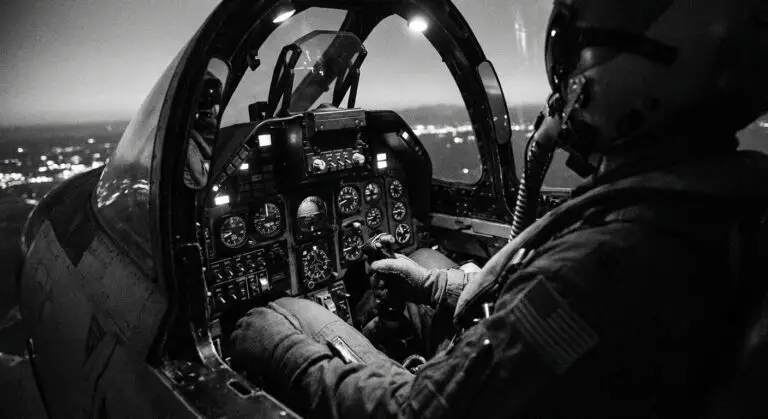
The most F-4-relevant buckets are straightforward at the pilot-experience level:
Weapons control and firing enablement is the “can I legally and electrically release” layer: arming logic, interlocks, and the cues that tell the crew the system is ready. A failure here presents as a weapon that will not fire, a mode that will not engage, or a protection behavior that blocks release.
Radar tracking and lock is the “can I build and hold a solution” layer. From the crew’s perspective, this is loss of acquisition, unstable tracks, broken locks, or a display that becomes unreliable at the moment lock should be easiest.
Radios and communications is the “can I talk and be heard” layer. Dropouts, unreadable audio, or loss of contact can look like a targeted effect because it removes external confirmation right when decisions tighten.
Navigation anomalies is the “can I trust my position and steering” layer. Any drift, flags, or inconsistent indications add confusion and slow down cross-checking during an intercept.
Electrical power and bus stability is the “is everyone getting clean power” layer. Brownouts, bus switching transients, or generator/regulator problems can create scattered symptoms that feel unrelated until you treat the electrical system as the common dependency.
The key detail from the reported close-in window is not one isolated fault; accounts describe instrument failures coincident with the attempted intercept, which is exactly the pattern that pushes you to think in “shared dependencies,” not single-box malfunctions.
One non-exotic mechanism often raised in discussions is electromagnetic interference (EMI): unwanted electromagnetic energy that degrades or disrupts equipment performance. In aircraft, EMI can affect multiple receivers and signal paths at the same time, especially radios and other high-gain front ends. Authoritative sources document aerospace EMC practices and real-world interference concerns: RTCA/DO-160 standards govern environmental and EMC testing of airborne equipment [DO-160 overview], the FAA maintains a High Energy Electromagnetic Effects discipline that addresses susceptibility of aircraft systems [FAA HEEM], and NASA/FAA cooperative research has examined radiated EMI impacts on navigation and communication systems [NASA/FAA study]. These sources show EMI is a real engineering risk to radios, radar front ends, and some navigation sensors when coupling paths and signal strengths align, but they do not by themselves establish that a specific historical intercept involved intentional or external EMI.
Be explicit about system types plausibly affected: VHF/UHF voice radios and military UHF links, airborne radar trackers and their display/lock subsystems, and sensitive high-gain receivers (including early airborne navigation aids) are plausible EMI victims in the right conditions. Modern GNSS/GPS reception is also known to be fragile and is commonly referenced for analogy, but GPS systems were not in wide civil/military use in 1976 the way they are today; use GPS/5G/phone examples only as analogies for how weak or vulnerable received signals can be, not as direct evidence for the 1976 F-4 behavior. For modern GNSS interference and its operational impact, see FAA guidance on GPS and GNSS interference [FAA GNSS interference guide].
Another conventional frame is electronic countermeasures (ECM), the operational category of techniques used to degrade an opponent’s sensors and communications, typically by jamming or deception. The relevance here is perception: if an aircraft experiences radar and comms problems during a close approach, ECM provides a complete alternative explanation to “the object did it,” without proving any particular actor was present.
Environmental propagation is another non-exotic lever. Space weather and ionospheric conditions are documented to affect radar systems and radio communications, with HF links especially sensitive to ionospheric variability. If propagation collapses or noise rises, crews can experience “everything got worse at once” even though nothing physically touched the jet.
Reliability engineering already has a name for “many symptoms, one trigger”: common-cause failures (CCF). A single initiating condition, such as a power-generation problem or bus instability, can knock multiple systems off-nominal simultaneously. Generator failures can produce complete power loss or low-voltage brownouts, and brownouts are notorious for creating confusing, intermittent behavior instead of a clean shutdown.
Human factors can intensify the illusion of a single external cause. A high-workload, night intercept compresses time for cross-checks, increases susceptibility to expectation effects, and makes partial information feel like a coherent pattern.
Treat “systems failures near UAP” as an engineering claim, not a headline. Demand (1) fault logs and post-flight maintenance write-ups tied to specific boxes and buses, (2) generator and bus-voltage evidence consistent with brownout or transient events, (3) corroborated comms recordings and frequency/channel details, (4) radar products or scope film plus operator notes, (5) any known ECM activity in the area, and (6) space-weather and ionospheric conditions for the window. Without that package, “lost weapons systems” stays descriptive, not diagnostic.
That evidence checklist also points directly at the next bottleneck in the Tehran file: what the public can actually inspect versus what is often asserted to exist. The case rises or falls on the paper trail and the accessibility of the underlying artifacts.
Radar, reports, and the paper trail
Tehran is famous because it sits at the intersection of military reporting and public retelling, but its public-facing evidence stack is thinner than the confidence with which the story is often repeated. The most common signpost is a document often cited as “Tehran 8376”, which appears in secondary Department of State-related references and declassified compilations. The label functions mainly as provenance shorthand: it signals that U.S. government channels were at least aware of a report and tracked it through a reference trail, but the exact originating office, precise date, and the document’s administrative metadata vary across declassified materials. Primary scans and government summaries discussing the incident are available in public declassified collections such as the NSA declassified compilation and Department of Defense archives [NSA compilation] [DoD archive] and secondary overviews summarize those materials [overview]. Used properly, that supports the narrow claim that documentation moved through a reference trail; it does not certify the most sensational interpretations.
From there, most summaries frame the 1976 Tehran incident as a multi-sensor case, typically described as involving both visual observation and some form of radar interest. That framing is exactly why the case endures in UFO news and UAP news, even though the specific details vary across tellings: which radar displayed what, at what range, under what conditions, and how those details were captured and preserved.
Radar is also where public narrative tends to outrun what outsiders can actually inspect. A lot of write-ups treat “radar confirmation” as a settled fact, but what readers can typically access are secondhand summaries, not raw returns, original plots, or authenticated printouts that can be independently reviewed.
Many accounts assert the existence of tower logs, tapes, and after-action documentation, plus maintenance records that would show what failed and what was repaired. Those artifacts are the right kind of evidence for tightening confidence, but they are also the least publicly verifiable pieces of the file: they are frequently referenced, rarely produced in inspectable form, and often circulate as unattributed excerpts or scans with no visible administrative context.
That gap is where chain of custody matters: serious investigations privilege records you can trace from creation to archiving to release, because a log or tape with no documented handling history is not just “missing context,” it is evidence you cannot authenticate to the standard the claim demands.
The same problem shows up in the weapons and avionics narrative. Multiple tellings assert weapons or avionics anomalies during the encounter, but provided excerpts often do not name specific F-4 subsystems, which forces careful phrasing. “The crew reported a weapons failure” is a different claim than “a specific fire-control component failed,” and the public record people circulate often supports the former more cleanly than the latter.
Finally, the broader information environment adds noise. Conspiracy-themed framing exists in public discourse, and some sources treat “aliens” alongside unrelated conspiracies, which encourages certainty-by-association rather than evidence-by-provenance.
If you want a repeatable way to grade Tehran references, use a simple reliability test that rewards contemporaneous, corroborated material and penalizes orphaned quotes.
- Contemporaneous vs. retrospective: Was the detail recorded at the time, or added years later in an interview or book?
- Independent corroboration: Do separate channels line up without borrowing from the same retelling (pilot report vs. tower record vs. radar archive)?
- Missing artifacts that would move the needle: Raw radar data or plots, authenticated comms recordings, and maintenance write-ups tied to specific work orders.
- Subsystem specificity: Does the claim name the exact system, or does it stay at the level of “weapons/avionics issues”?
- Narrative drift: Do later versions add cinematic detail that earlier documentation does not contain?
The actionable takeaway is simple: when you see “Tehran 8376”, “radar confirmed”, or “jet systems shut down” in future UFO disclosure or UAP disclosure coverage, treat it as a prompt to ask what is directly reviewable, what is asserted to exist, and what cannot be evaluated without chain-of-custody documentation. That keeps you anchored to the record instead of being pulled into certainty that the public file cannot support.
That standard matters beyond Tehran. In disclosure debates, legacy cases often do the rhetorical work of standing in for a broader evidentiary picture, so the discipline you apply here is the same discipline you should apply to any modern claim packaged as “military confirmed.”
Why Tehran matters in UAP disclosure
Tehran matters now because disclosure debates run on legacy cases with military trappings: one episode that bundles command decisions, sensor assertions, and alleged technical effects into a single, repeatable narrative. That compression is exactly why the case keeps getting recycled in UFO disclosure and UAP disclosure cycles, especially when institutional trust is low and public expectations for transparency are high. The friction is that “great story density” is not the same thing as “great documentation.” A rhetorically powerful historical case can dominate UFO news for weeks without producing the modern basics: standardized metadata, preserved primary artifacts, and a clear chain from collection to analysis. The practical takeaway is simple: legacy cases remain useful as stress tests for reporting standards, not as standalone proof of anything like non-human intelligence or a government UFO cover-up.
AARO (All-domain Anomaly Resolution Office) exists to turn ad hoc anecdotes into a standardized intake, investigation, and reporting pipeline, including historical submissions from past incidents. In that posture, process matters as much as any single case narrative: the Department of Defense launched a new reporting tool to collect information for a congressionally directed report on historical anomalous events, and the information is being collected by AARO. AARO also maintains a system of records describing how it collects, uses, and maintains correspondence and reports submitted from current or former U.S. government personnel, which is the administrative backbone for handling sensitive submissions at scale. Whistleblower momentum fits into the same accountability frame: the final defense authorization bill included provisions enhancing whistleblower protections, and proposals exist to codify distinct UAP whistleblower protections. Evidence discipline still applies: none of the provided source URLs are AARO public reports, so this section does not attribute any specific Tehran findings or conclusions to AARO.
For readers tracking UFO sightings 2025 and UFO sightings 2026, treat “Tehran-like” narratives as a checklist problem, not a belief problem. Serious disclosure signals look like (1) a standardized case file with time, location, platform, sensor types, and handling path; (2) release of primary artifacts where possible, including original logs, radar data products, audio, and maintenance records; and (3) clearly scoped conclusions tied to what the data can actually support, plus an explicit accounting of what remains unknown. Viral repetition looks different: recycled summaries, missing attachments, and conclusions that outrun the accessible record. The reliable way to track UAP sightings is to follow the paperwork, not the rhetoric.
A lasting case with unanswered questions
Tehran 1976 remains a lasting reference point because it combines an intercept narrative and reported system anomalies, yet it still cannot bear the weight of definitive “alien disclosure” or “non-human intelligence” conclusions on the public record alone. The core sequence stays intercept-shaped in most retellings: scramble, approach, visual and radar interest, then reported weapons and firing failures as claims rather than verifiable telemetry. Even the early summary language that gets repeated most often points in the same direction: “no permanent evidence” of an electronic control-system failure, which is compelling precisely because it implies something transient and situational. The catch is that credible non-exotic pathways exist, including EMI, ECM, environmental factors, and cascading cockpit workload, and none of those can be ruled in or out without testable artifacts.
Primary documents anchor narratives; later accounts add texture but can add drift, and confidence should track evidence quality. Here the structural gaps are decisive: missing or unverifiable primary logs (raw radar returns, tower tapes, maintenance write-ups) and inconsistent timing detail across decades of retellings. What would materially strengthen the case is contemporaneous records with clear provenance (chain of custody, documented handling), plus technical artifacts such as maintenance discrepancies, recorded fault codes, and radar plots that independent analysts can test. Modern reporting structures exist, including official UAP records releases, but readers should demand public, citable outputs and avoid treating recycled anecdotes as “new disclosure.”
Sources
- NSA-hosted U.S. defense attache report
- NSA routing and transmittal record
- Museum of Aviation F-4D fact sheet
Frequently Asked Questions
What happened in the Tehran UFO incident in 1976?
The case is commonly described as a military intercept over Tehran after multiple civilian reports of a very bright aerial light. Accounts converge on at least one close approach by Iranian F-4 jets and reported avionics or weapons anomalies during the intercept, followed by disengagement and landing.
Did Iranian F-4 jets permanently lose their weapons systems near the UFO in 1976?
One official-style summary uses limiting language, stating there was “no permanent evidence” of electronic control-system failure. Many retellings still report a weapons or firing failure as the pilot prepared to engage, but the article treats this as a reported claim rather than verified telemetry.
What time did the main close-encounter moment happen in the Tehran 1976 case?
Many reconstructions pin the most dramatic close-in window to around 1:50 a.m. during a chase south of Tehran. The article notes the timestamp shifts in precision across retellings, so it’s best treated as an approximate anchor rather than a fixed minute mark.
How many radar stations and F-4 aircraft are cited for Iran’s air-defense posture in 1976?
The article cites an integrated air-defense network described as 19 radar stations. It also reports an Imperial Iranian Air Force Phantom inventory of 32 F-4D, 177 F-4E, and 16 RF-4E airframes.
What are the key F-4E specs mentioned that made it suitable for an intercept over Tehran?
The article describes the F-4 as a long-range supersonic interceptor and lists a published combat radius of 786 miles. It also notes the F-4E added an internal 20 mm gun and had an elongated nose with a more compact radar installation than earlier variants.
What specific aircraft systems could “lost weapons systems” mean on an F-4?
The article breaks it into subsystems: weapons control and firing enablement, radar tracking and lock, radios/communications, navigation indications, and electrical power/bus stability. It emphasizes that multiple instrument failures reported together point to shared dependencies rather than a single-box issue.
What evidence should you look for to evaluate claims of avionics or weapons failures in the Tehran 1976 incident?
The article says stronger evaluation requires inspectable primary artifacts like post-flight maintenance write-ups tied to specific systems and buses, generator/bus-voltage evidence, corroborated comms recordings with frequency details, radar products or scope film plus operator notes, and context like known ECM activity and space-weather/ionospheric conditions. It also highlights that references like “Tehran 8376” mainly indicate a documentation trail exists, not that sensational technical claims are proven.