If you’re burned out on sensational UFO news but still want one case you can interrogate like evidence, the 1957 RB-47 incident keeps forcing its way back onto the short list. It persists because it’s repeatedly described as a long-duration event observed by trained military personnel and framed with multi-sensor corroboration, meaning independent operators and instruments were reported to line up in time and geometry in ways that resist a single, easy dismissal.
The real decision isn’t “Do you believe in UFOs?” It’s whether this specific 1957 episode deserves serious attention because it moved through official channels and left a paper trail. One concrete anchor is bureaucratic, not dramatic: Project Blue Book received summary information from Air Defense Command (ADC) on October 25, 1957, indicating the encounter was formalized into the Air Force’s reporting pipeline rather than living only as rumor. See the Project Blue Book intake summary and scan of the RB-47 materials and related investigator notes for the case here: Project Blue Book RB-47 file scan and a researcher account and file notes here: McDonald notes and Project Blue Book records (http://kirkmcd.princeton.edu/JEMcDonald/mcdonald_aa_9_7_66_71.pdf).
Accounts in Project Blue Book and related ADC summaries describe the RB-47 encountering two objects over Mississippi and Texas, though the sources vary on whether “two” refers to two radar or direction-finding targets, two visual lights, or separate segments of the flight report. The contemporaneous summaries and later investigator discussions do not present a single, uniform characterization of “two” without ambiguity; see the Project Blue Book RB-47 case material for the primary summaries and investigator commentary cited above.
The friction is that 1957 is also peak Cold War: recordkeeping existed, but it was fragmented across commands, often summarized after the fact, and frequently shaped by classification. That mix creates a paradox, strong documentation by the standards of the era, yet persistent gaps that keep interpretations contested.
The central tension the case represents is this: an early, well-documented UAP sighting presented as disciplined military observation versus the possibility that Cold War radar, astronomy, and signal interpretation produced convincing but misunderstood patterns. Modern UAP disclosure interest keeps returning to cases like this for a reason: they test process and evidence, not personalities. The goal in what follows is to evaluate the RB-47 record evidence-first, not belief-first, using the sensors, timeline, and documentation the case actually rests on.
Cold War Recon and Sensor Reality
That evaluation starts with the aircraft itself, because the RB-47 report only makes sense in the context of what the crew was trained to notice and what their systems could plausibly misread.
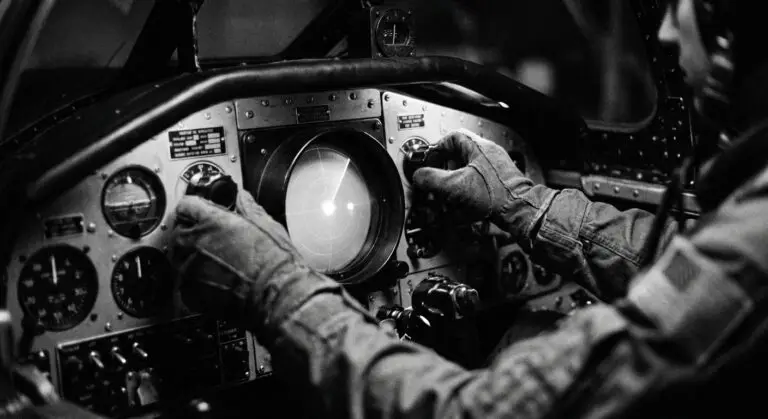
You cannot judge the RB-47 report without understanding what this platform and mission profile were built to detect and where they are vulnerable to misreads. The RB-47H was not a routine bomber with a couple of add-on boxes; it was a purpose-built RB-47H, meaning the electronic reconnaissance and countermeasures version of the B-47E, and it first entered service in August 1955. See the USAF museum fact sheet for the RB-47H service entry and role: Boeing RB-47H Fact Sheet.
ELINT/ECM mattered because it framed the mission around signals: ELINT (electronic intelligence) is the collection and characterization of other people’s radar and communications emissions, while ECM (electronic countermeasures) is the set of techniques used to degrade or deceive those emissions. That focus is a strength in a Cold War environment saturated with radars, but it also means the aircraft’s success depended on interpreting imperfect sensor cues under time pressure, not on getting a single, unambiguous “aircraft target” return.
By 1957, RB-47H crews were trained to be disciplined because the job punished improvisation. The 55th Strategic Reconnaissance Wing crews who operated these aircraft flew significant numbers of reconnaissance missions over the Cold War period, and that pace produces a culture of checklists, cross-checks, and standardized callouts. The official 55th Wing history and fact sheet describe the wing’s long reconnaissance mission and operational tempo; see the 55th Wing history for context: 55th Wing history and fact sheet.
The operational consequence is simple: when an RB-47H crew describes correlated indications, it is usually the product of a practiced workflow, not a casual “that looked weird” anecdote.
The friction is that procedure does not eliminate ambiguity; it just manages it. A well-drilled crew can rapidly separate “my display is doing something” from “multiple stations are seeing a consistent pattern,” but they cannot force atmospheric physics or electromagnetic clutter to behave. The right way to read the incident is to respect the crew’s competence while still testing every reported cue against known sensor failure modes.
At a high level, three sensing categories matter here: airborne radar (returns on the scope), electronic receivers (what was emitting and from what direction), and communications and crew coordination (how quickly separate stations could compare what they were seeing). One key tool in the receivers category is direction finding (DF), which provides a line of bearing to an emitter but does not intrinsically provide range; that limitation is operationally decisive because two bearings that seem to “track” can still be artifacts if propagation is bending the signal path.
The known radar failure modes relevant to later evaluation are specific: anomalous propagation (ducting), side-lobe effects, interference, and radar angels. Ducting is anomalous propagation where a tropospheric layer traps energy and carries it farther than expected, creating apparent targets or displacing real ones on radar and complicating DF bearings. Side-lobe effects generate misleading echoes from energy outside the main antenna beam, so a “contact” can be off-axis clutter masquerading as a track. Interference can paint false structure across receivers and scopes when multiple emitters overlap or when onboard systems interact. Radar angels are short-duration or spurious radar returns, often from biological or atmospheric causes, which can be coherent enough to look target-like on a display but typically lack stable behavior over time.
The actionable takeaway: treat any later “correlated indications” as a question of sensor geometry and failure modes first. The RB-47H crew could confidently report what their stations indicated and how those indications related in time, but the platform’s own strengths and vulnerabilities define how much physical reality you can infer from those indications alone.
Timeline of the Four-State Pursuit
Once the sensor context is clear, the next constraint is sequence. The RB-47 story rises or falls on a disciplined, time-ordered reconstruction that separates what accounts actually state from what later writers infer. If you let the narrative float, every theory fits. If you lock it to sequence, you get hard check-points: what was detected first, when separate indications lined up, when contact dropped and returned, which maneuvers changed the geometry, how long the pattern persisted, and what ended it.
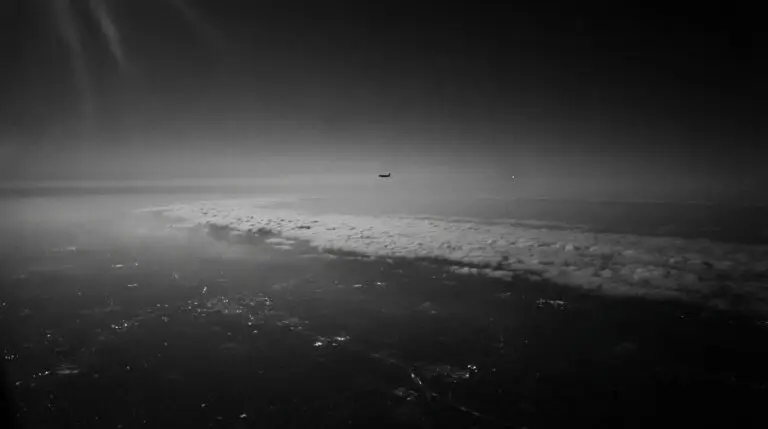
That discipline matters here because the crew’s working context was instrument-driven and emitter-focused rather than purely visual storytelling.
Accounts open with a detection that was not purely visual and included radar and ECM-style sensor reporting. The clean way to record this beat is generic: an onboard electronic indication (bearing, signal presence, or threat-type cue) appears and triggers crew attention. Known vs. Uncertain: it is known the initiating cue is described as instrumented, but primary documents available publicly do not include specific readouts, exact frequencies, or a quoted operator display in the publicly released Blue Book summary material; see the Project Blue Book RB-47 materials and McDonald notes cited above for the summaries that exist.
Treat that first cue as “emitter activity information” in the broad sense: in real operations, different sensors produce different outputs, and ELINT is specifically about documenting emitter activity rather than relying on a single channel of perception.
The second beat is escalation by cross-checking. The accounts describe repeated confirmations across people and instruments, which is the inflection point between “a weird blip” and “a trackable problem.” Instead of treating each station as independent drama, capture the operational logic: multiple crew members compare timing, direction, and persistence, looking for agreement or contradiction.
Known vs. Uncertain: it is known the narrative emphasizes multi-sensor indications and crew cross-talk, but publicly available documents do not pin down the exact sensor models or the cockpit procedures used in each verification.
This is also where bearing discipline becomes measurable in principle: some ELINT and ESM receivers are supplied with 0.5-degree bearing resolution as a standard capability, so when an account claims meaningful bearing movement over time, the question becomes whether the described swings are coarse “left-right” impressions or consistent, instrument-like changes.
Most weak sightings stay monotonous: one signal, one sight, one fade. RB-47 is described differently, with reacquisitions after losses of contact and fresh correlations after those returns. That matters because reacquisition is where errors usually show up. A one-time misinterpretation can survive, but a repeating loss-and-return cycle forces the story to answer basic questions: did the bearing return from a consistent direction, did it track relative motion, and did separate indications re-align at the same moments?
Known vs. Uncertain: it is known the accounts emphasize multiple reacquisitions; it is uncertain, in the absence of an instrument log available publicly, exactly how long each loss lasted and whether the reacquisition was abrupt (step change) or gradual (growing signal).
The most valuable moments in any chase narrative are the maneuver points, because they create testable geometry. Accounts describe changes in relative position and behavior that the crew interpreted as responsive, including shifts that read as closing, opening, or sliding around the aircraft. You do not need the theory to see why these are decisive: an aircraft turn, a heading change, or any deliberate geometry change should produce predictable effects in bearing-only indications, radar presentation, and time-to-contact expectations.
Known vs. Uncertain: it is known maneuvering and geometry changes are claimed; it is uncertain which specific turns, headings, or altitude changes were executed at which minutes unless you anchor the story to a sourced flight reconstruction. Primary documents available publicly do not include a complete instrument-log reconstruction with minute-by-minute maneuver details in a way that can be presented here.
For later hypothesis testing, treat each maneuver as a numbered check: “Before the maneuver, what direction and behavior were reported; after the maneuver, did the reported indications change in a way that matches the new geometry?” A narrative that cannot survive that before-and-after discipline is not a chase, it is a collage.
The label “four-state pursuit” communicates scale: this was described as extended, not momentary, and large enough to be summarized as crossing multiple state-sized regions. But the geography has to be handled with restraint because publicly available primary documents do not supply an explicit route or waypoint track that can be treated as an authoritative state-by-state reconstruction. Contemporary Blue Book summaries and later researcher notes describe the flight track as touching or passing through multiple southern states, including Mississippi, Louisiana, Texas, and Oklahoma in some reconstructions, but they do not provide a single, verified waypoint-by-waypoint flight log in the declassified record that can be plotted without further archival work; see the Project Blue Book RB-47 materials and McDonald notes cited above.
The correct way to visualize geography from incomplete primary detail is methodology, not proclamation. Published navigation charts, including Jeppesen navigation charts, can be used to correlate reported positions or place names to actual geography and to sanity-check whether claimed headings and regions fit plausible airways and distances. That workflow can produce an approximate, source-attributed reconstruction, but it does not become primary proof unless the underlying position reports and times are themselves sourced.
Accounts close with a termination of contact, meaning the indications stop being reliable or stop appearing at all. Treat that ending as a data point, not an anticlimax: a fade-out after a particular maneuver, after leaving a region, or after a time interval constrains explanations in a way that “it followed us forever” never does.
Known vs. Uncertain: it is known the narrative includes an end of contact; it is uncertain here whether termination is described as a clean break (instant loss) versus a taper (weakening, intermittent hits) without a timestamped source record available in the public summaries.
Three moments in this timeline do the most work later: the first multi-sensor correlation (because it tests whether the story is more than a single-channel misread), the maneuver-driven geometry shifts (because they create before-and-after predictions for bearings and relative motion), and the termination (because it sets a boundary condition on duration and location). Lock those moments to the strongest sourced claims you have, and every later theory is forced to answer the same sequence instead of rewriting it.
Evidence, Corroboration, and Official Handling
The timeline tells you what must be explained; the evidentiary record determines what can actually be tested. That gap between what accounts describe and what documents preserve is where RB-47 becomes either a model case or a cautionary one.
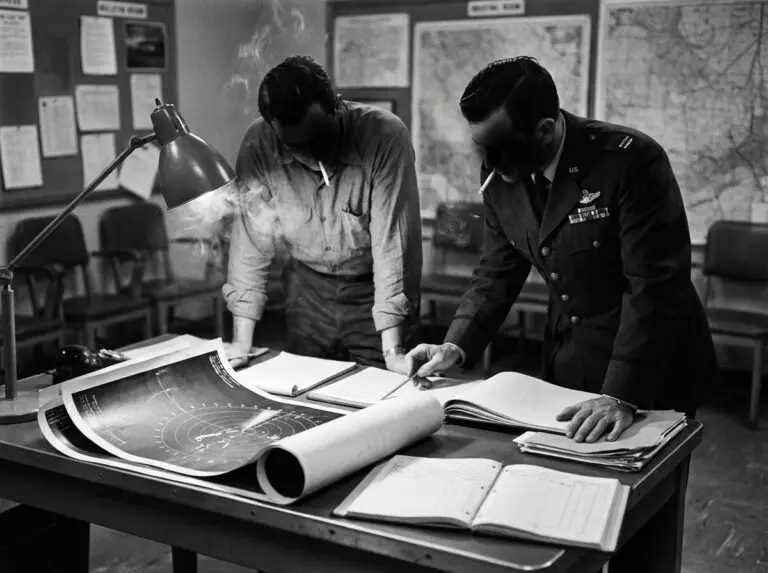
What makes RB-47 durable in UFO news is not just what was reported, but what was preserved, summarized, and routed through official channels, and what was not.
The RB-47 record, as it is typically handled in serious research, is built around human observation plus contemporaneous military documentation, not around a single decisive artifact. The forms of evidence realistically in play are: crew testimony (what multiple crewmembers said they saw and when), written summaries that condense that testimony for command use, and references to mission paperwork such as logs or notes that situate the event inside a normal operational sortie rather than a standalone “UFO report.” Because the aircraft was an electronic-intelligence platform, secondary accounts also treat instrument indications and operator calls as part of the evidentiary package, alongside any mentions of radar or electronic countermeasure related notes that were captured in narrative form.
Primary documents available publicly do not confirm the existence or present availability of raw sensor recordings for the case, such as scope films, tapes, or equivalent recorded displays. In other words: the public-facing RB-47 file trail is strongest where it preserves human statements and official summaries, and weakest where readers assume there must be retrievable raw data because instruments were involved.
Ground radar tie-ins sit in the same “mentioned, but not pinned down here” bucket. The case is often described as having air defense awareness beyond the aircraft itself, but the declassified/public record available to researchers does not establish specific radar sites, named networks, or an accessible confirmation document that can be cleanly cited at that level of detail; see the Project Blue Book RB-47 materials and McDonald notes cited above.
Provenance starts with a single, checkable routing fact: Project Blue Book received summary information on the RB-47 incident from Air Defense Command (ADC) on October 25, 1957. That matters because Project Blue Book case materials, the Air Force program (1947-1969) that collected and investigated UFO reports, is where many legacy UAP claims either gain documentary weight or collapse into rumor. A Blue Book intake does not certify an extraordinary explanation; it certifies that someone in the chain treated the report as worth forwarding, in writing, into the Air Force’s central UFO collection mechanism. See the Blue Book RB-47 intake and the scanned materials here: Project Blue Book RB-47 file scan and researcher notes: McDonald Project Blue Book records (http://kirkmcd.princeton.edu/JEMcDonald/mcdonald_aa_9_7_66_71.pdf).
Researchers cite RB-47 so often because, on paper, it looks like a convergence case: multiple trained operators, multiple vantage points inside one crewed aircraft, and instrument indications discussed over a span of time rather than a single instant. That combination raises the evidentiary floor above a lone-witness light in the sky, even when the underlying documentation is summary-level.
“Cover-up” claims need the same provenance discipline. Cold War classification and compartmentalization routinely restricted dissemination of sensor capabilities, intercept procedures, and mission details, and that alone can explain why a case file contains summaries instead of raw materials. Claims of concealment of non-human intelligence evidence are a different allegation entirely, and the declassified/public record does not supply the kind of primary-source chain (raw recordings, authenticated custody, explicit suppression directives) required to support it.
Data gaps also need clean labeling. “Unavailable” means a record is known but access is restricted; “not located” means it might exist but has not been found in the accessible record; “never recorded” means no recording was made in the first place. From the declassified/public record available to researchers, the raw sensor recording question cannot be resolved into any one of those categories.
The actionable takeaway is simple: treat the October 25, 1957 ADC to Blue Book routing as a strong claim because it’s a dated, institutional handoff, and treat assumptions about recoverable scope films or tapes as weak claims unless and until a specific, located record is produced.
Mundane Theories Versus UAP Hypotheses
With the timeline test points and the documentation limits in view, explanations can be judged by what they predict about the same few moments rather than by how well they flatter a preferred story. The RB-47 case is best assessed by testing explanation buckets against specific timeline test points, not by choosing a favorite narrative and bending every detail to fit. The cleanest way to discriminate is to ask what each theory predicts about a small set of high-value moments: repeated loss and reacquisition, apparent tracking or geometry changes, and near-simultaneous radar and onboard electronic indications.
This bucket has real, documented mechanisms that manufacture targets, including the radar and propagation failure modes already relevant to evaluating the sensor picture. Where it fits is the timeline’s stop-start behavior: any sequence that repeatedly drops and then snaps back can be consistent with propagation variability, side-lobe pickup, or interference bursts. Where it strains is when the best correlations cluster: reacquisitions that appear to respect the aircraft’s changing geometry, contacts that seem to “track” rather than drift, and radar indications that align in time with onboard electronic cues. Artifact explanations predict sensitivity to radar geometry and weather, but they also predict incoherence across independent sensors. If the strongest test points show multi-sensor compatibility instead of independent weirdness, “just artifacts” stops being a complete account and becomes, at most, a partial contributor.
A bright planet or star explains one thing extremely well: a stable-looking light that seems to “pace” an aircraft when the aircraft is actually moving under a fixed sky reference. Where this bucket fails is when the timeline implies rapid geometry changes, close-in motion, or repeated position shifts that cannot be produced by a fixed celestial source.
The validation standard here is straightforward and strict. Astronomy tools can compute altitude and azimuth for bright objects, but the check only counts if it is tied to verified times and verified locations, and those anchors are not fully established in the declassified record available here. Without that, celestial claims are guesswork dressed as math.
The aircraft was built for ELINT and electronic reconnaissance and countermeasures work, flown by crews trained to treat the RF environment as operationally meaningful. That makes “they confused everything” an overreach, but it does not make misattribution impossible, especially when multiple emitters overlap and when operator workload is high.
The hard constraint is research completeness: publicly available documents do not include detailed ECM signal characteristics for the case, including frequency bands or bearing behavior. Emitter-matching therefore has to stay conditional. This bucket can plausibly explain a sensor cue that is real but misidentified, yet it cannot, on its own, explain radar track behavior unless you also specify a radar-side mechanism that produces the timeline’s strongest radar test points.
Classified activity is plausible in 1957 because aircraft technology and operations were, by contemporary accounts, secret in many ways, and later government commentary has explicitly acknowledged that classified programs can generate signatures that resemble UAP reports. Plausibility is not proof, so the only disciplined use of this bucket is predictive: it should leave fingerprints like consistent performance bounds, repeatable behavior under similar conditions, and some operational reason to be in the same airspace and timeframe.
Where it strains is the same place every secret-tech claim strains: absent documentation, it competes with simpler explanations that require fewer hidden assumptions. If this bucket is invoked, it should be treated as a hypothesis that demands additional discriminators, not as an answer.
“Unknown” is not a claim about aliens. It is the remainder after the best mundane buckets are stress-tested and still cannot satisfy the strongest correlations: repeated reacquisitions that behave like tracking, geometry changes that cohere with maneuvering, and multi-sensor indications that line up in time. If those test points survive every conventional mechanism you can specify, unknown becomes the correct label until better data arrives.
- Check sensor compatibility: Do radar, visual, and electronic cues behave like one event or like unrelated noise?
- Check geometry and timing: Do reacquisitions and position shifts follow the platform’s turns, speed, and line of sight?
- Check operator competence: What was the crew trained to do, and what sensors were they built to interpret?
- Check data completeness: Do you have verified times, locations, and signal specifics, or only narrative summaries?
Why 1957 Still Shapes Disclosure
The same strengths and gaps that make RB-47 hard to settle instrumented claims paired with incomplete recoverable data are also why it keeps reappearing in policy arguments about how UAP reporting should work. Legacy cases like RB-47 still shape UAP disclosure because they expose the same institutional bottlenecks modern programs are trying to fix: data retention, sensor fusion, classification boundaries, and credible reporting channels. RB-47 is not “proof” of non-human intelligence. It is a stress test for process.
RB-47’s staying power in modern debate comes from its “multi-sensor, military observer” profile: an RB-47H crew built for electronic intelligence work, flying a mission set that included monitoring radar systems, layered instrumented observations on top of trained testimony. That combination is exactly what current policymakers say they want more of: instrumented events that can be reconstructed, not campfire stories that cannot.
The friction is that an instrumented case still fails if the records cannot be located later, if datasets cannot be fused across stovepiped systems, or if classification rules block analysts from seeing the full picture. RB-47 functions as a reminder that the hardest part of UAP work is administrative and technical, not rhetorical.
Schumer and Rounds linked UAP disclosure language was introduced as an NDAA amendment effort aimed at creating structured review and release requirements for UAP-related government records. See the Senate amendment text referenced in congressional action: Senate Amendment 797 text (UAP provisions).
AARO’s April 2024 unclassified report illustrates the current official posture: treat UAP sightings as an analysis problem, not a single-theory contest, and prioritize more data and tighter analytic methods over definitive storytelling. See the AARO Historical Record Report, Volume I (February 2024) PDF: AARO Historical Record Report, Volume I (PDF).
Rep. Eric Burlison’s “UAP Disclosure Act 2025” amendment effort is described in his office press release and reflects continuing legislative interest in structured inventories and releases of UAP records: Rep. Burlison press release on UAP Disclosure Act 2025.
RB-47 implies a practical standard for 2025 to 2026 UAP news coverage: stop rewarding anecdotes over instrumented, documented reporting. Demand the minimum dataset:
- Time and location: precise timestamps and coordinates, not “last night near a base.”
- Sensor context: what systems were used, in what modes, with what limitations.
- Data custody: who holds the raw files, logs, and chain of access.
- Fusion status: whether radar, EW, IR, visual, and comms data were compared, and by whom.
- Uncertainty labeling: what is known, inferred, and unknown, stated explicitly.
What the RB-47 Case Teaches
That standard is the direct through-line from 1957 to today: a case can be serious, instrumented, and still remain contested if the record cannot support reconstruction. The RB-47 encounter’s lasting value is that it demonstrates how “credible” can still mean “not fully resolvable” when data custody and sensor records are incomplete. The core strength of the case was never a single dramatic moment; it was the repeated reacquisition and correlation that kept multiple operators treating the contact as persistent. But the platform reality cuts both ways: Cold War airborne radar and electronic surveillance were powerful, and they also had documented failure modes, including clear-air “angels” and spurious returns driven by timing or code-train mismatches that generate ghosts and related artifacts. That is exactly why FAA advisory circular practices such as AC 00-74 emphasize structured design and evaluation of avionics human factors and disciplined instrument and data handling: complex displays interpreted under workload are only as reliable as the records that preserve what the crew actually saw. See the FAA advisory circular description for AC 00-74: AC 00-74, Avionics Human Factors Considerations for Design and Evaluation.
What remains unknown is not the debate’s menu of explanations; it is the provenance of the underlying record. The key anchor remains the documented handling trail in the case file, including Blue Book receiving an Air Defense Command summary on Oct 25, 1957. The hard limit is equally concrete: based on the declassified and publicly available record, specific RB-47 raw data artifacts (tapes, scope films, mission logs) cannot be confidently enumerated as “missing” versus merely “unlocated.” Closing that gap requires locating original sensor outputs and the documentation that ties them to time, configuration, and custody, potentially in National Archives Project Blue Book collections and related microfilm holdings.
Use RB-47 as a rubric for every future UAP claim: insist on preserved raw data, documented sensor settings, an auditable chain-of-custody, and reconstructions that an independent team can reproduce from released materials. Support transparency that has teeth, including clear data preservation requirements, consistent release standards, and independent review authority within ongoing directed declassification and reporting reform. If those conditions are met, RB-47-like controversies stop being permanent arguments and become solvable technical questions.
Frequently Asked Questions
What was the 1957 RB-47 UFO encounter?
It was a long-duration UAP/UFO incident involving a USAF RB-47H reconnaissance jet, described as being observed by trained military crew with multi-sensor indications. The report was routed through official channels and later summarized as a four-state pursuit.
What kind of aircraft was involved in the RB-47 case, and when did it enter service?
The aircraft was an RB-47H, the electronic reconnaissance and countermeasures version of the B-47E. The RB-47H first entered service in August 1955.
What does ELINT/ECM mean in the RB-47 incident, and why does it matter?
ELINT is electronic intelligence (collecting and characterizing radar/communications emissions), and ECM is electronic countermeasures (degrading or deceiving those emissions). It matters because the RB-47H crew’s mission was signal- and bearing-driven, not purely visual, making instrument interpretation central to the case.
What sensors and methods are described as part of the RB-47 multi-sensor corroboration?
The article frames the evidence around airborne radar returns, electronic receivers, and crew communications/cross-checking across stations. It specifically highlights direction finding (DF) as a key tool that provides a line of bearing to an emitter but does not provide range.
What radar failure modes could explain parts of the RB-47 UFO report?
The article lists anomalous propagation (ducting), side-lobe effects, interference, and “radar angels” as known mechanisms that can create misleading radar/receiver indications. Ducting can extend or bend signal paths, and side-lobes and interference can generate target-like returns that complicate tracking.
What is the key official paper-trail date for the RB-47 incident?
Project Blue Book received summary information from Air Defense Command (ADC) on October 25, 1957. The article treats this dated ADC-to-Blue-Book routing as a strong, checkable provenance anchor.
What should you look for to judge whether the RB-47 case is more than radar/visual confusion?
The article says to test whether radar, visual, and electronic cues behave like one event, and whether reacquisitions and geometry shifts match the aircraft’s maneuvers. It also emphasizes verifying data completeness-timestamps, locations, sensor context, and data custody-because the article does not confirm publicly available raw sensor recordings.