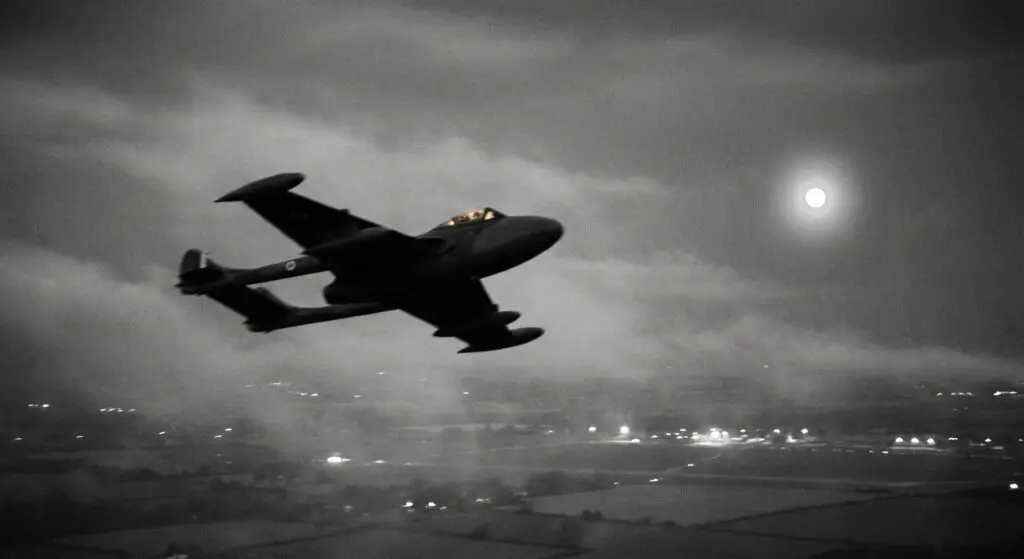
You keep seeing UFO disclosure and UAP disclosure headlines, and you want one hard historical case that is not just a single person’s story.
Note: Lakenheath and Bentwaters were RAF stations in 1956 that were used and tenanted by United States Air Force units and personnel during the Cold War; this article preserves the distinction between the RAF station name and the USAF units and aircraft operating from those sites. See public archival guides for UK and US holdings on these 1950s cases for how the sites are cataloged and described in official records (UK National Archives, MoD UFO files) and for Project Blue Book holdings (U.S. National Archives, Project Blue Book guidance).
The decision problem is simple: official language stays noncommittal, with recent government UAP reporting explicitly neither confirming nor ruling out alien activity, and high-profile hearings failing to change the baseline official posture. So when a famous Cold War incident gets cited as “the one with military-grade data,” the sourcing has to carry the weight. See the ODNI Preliminary Assessment and related congressional hearings for the modern posture (ODNI Preliminary Assessment, 25 June 2021) and the House Intelligence subcommittee hearing transcript (17 May 2022 hearing transcript). For commentary that the basic posture has not materially changed, see analysis reporting on post-hearing assessments (PBS analysis).
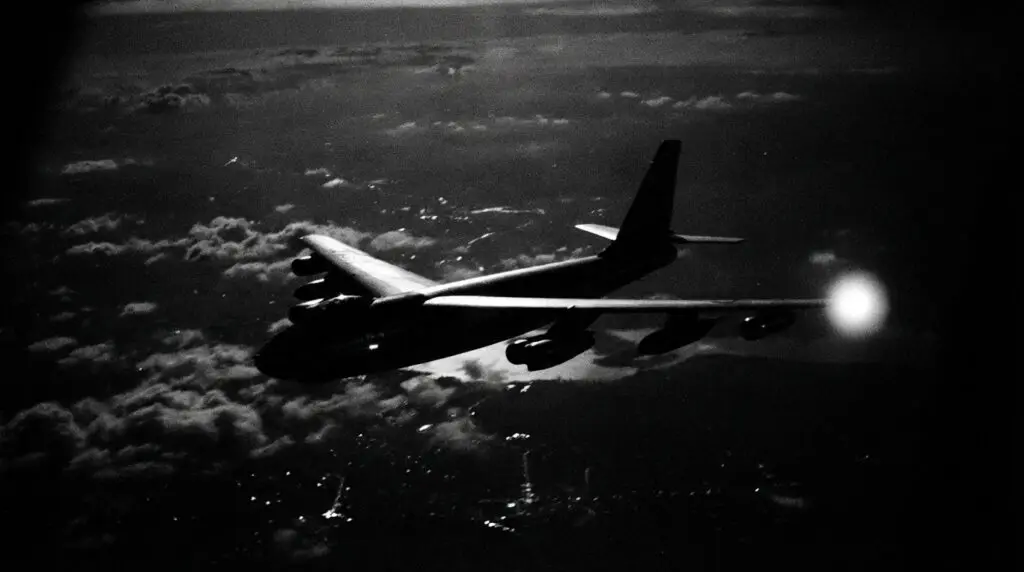
The Lakenheath-Bentwaters incident remains a benchmark because multiple military channels appeared to converge on an unknown target during a scramble. The incident is generally dated to the night of 13-14 August 1956, with some accounts placing the start on the evening of 13 August. In its most durable outline, the story includes ground radar reporting, an airborne radar contact associated with an interceptor, and some visual observations, all folded into a single “multi-sensor” narrative tied back to Project Blue Book and ATIC case file summaries (CIA Reading Room collection) and the U.S. National Archives guidance for Project Blue Book records (NARA, Project Blue Book).
The catch is that the record stays confusing for structural reasons, not just internet noise: popular retellings routinely compress the sequence and blur which station, unit, or role reported what, and 1950s reporting and data retention do not preserve every intermediate plot, log, or tape that modern readers expect. Even so, legacy archives continue to circulate the case because it sits inside broader government UFO and UAP collections, including UK MoD files cataloged at The National Archives (DEFE 24 series overview) and U.S. holdings linked to Project Blue Book and ATIC material (CIA Reading Room).
The takeaway is a disciplined way to read Lakenheath-Bentwaters like an investigator: separate each evidence stream, test what each sensor or observer claim can actually support, and identify exactly what missing documentation would settle the strongest version of the story.
Cold War air defense backdrop
By 1956, UK air defense treated an unexpected track as a command-and-control problem, not a curiosity. Once a scope showed something that looked operationally relevant, the system’s default behavior was to create a record, assign responsibility, and push the information toward an intercept decision. That Cold War posture is why RAF Lakenheath and RAF Bentwaters generated logs, controller actions, and fighter launches instead of a loose “sighting” narrative; see descriptions of USAF occupancy of RAF stations and base usage in postwar sources (incident overview) and station histories (48 FW heritage pamphlet).
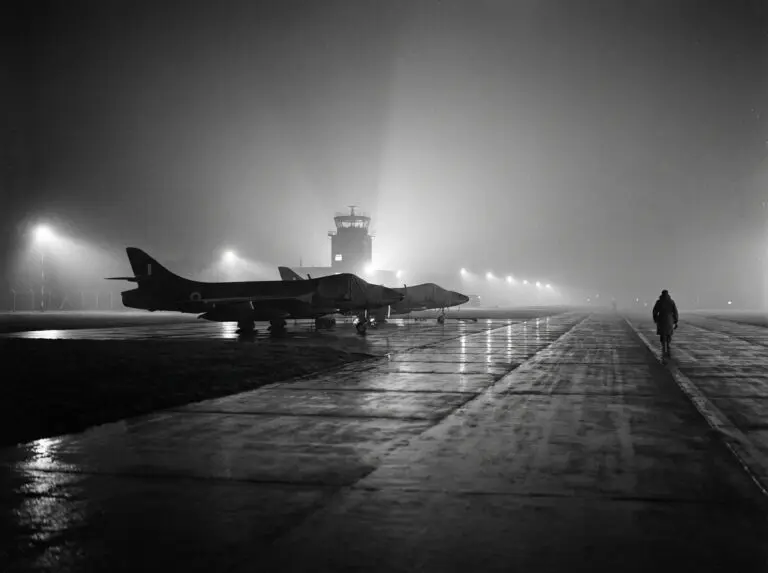
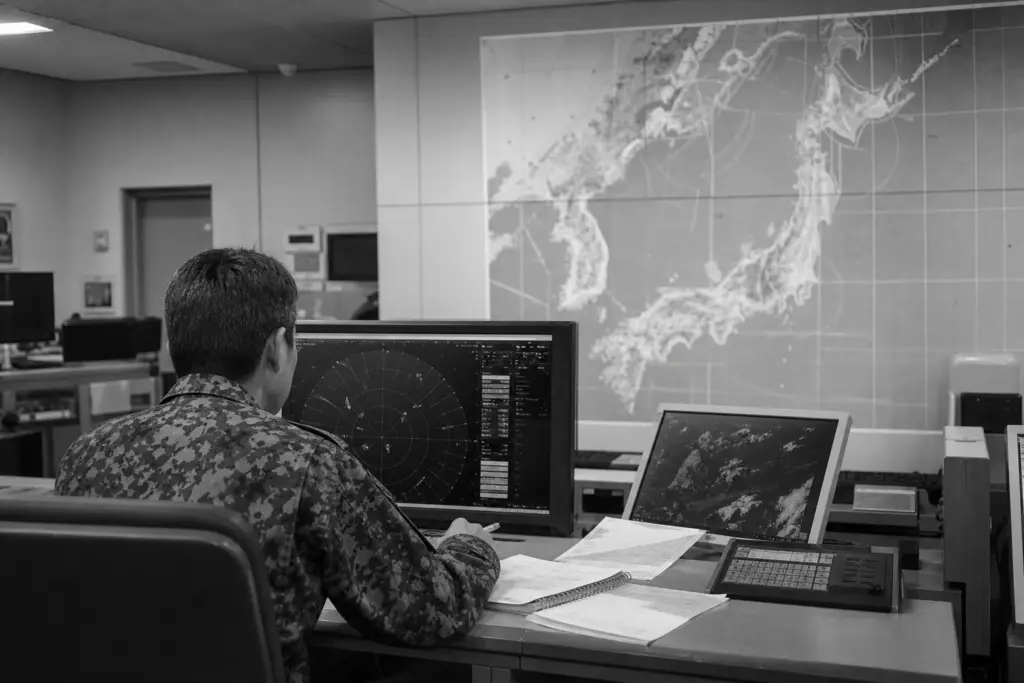
ROTOR-era air defense and its ground-controlled intercept (GCI) network were built to keep a recognized air picture and drive a timely response to air attack, including controlling aircraft. “Recognized air picture” meant more than dots on a screen: it was the continuously updated, correlated track set that commanders and controllers used to decide what deserved attention and what could be ignored. Under that model, speed mattered. An uncorrelated track that persisted, maneuvered, or entered sensitive airspace created a practical requirement to either identify it, intercept it, or dismiss it with defensible reasons.
That requirement also explains why paperwork accumulates fast. The network’s job was to turn sensor data into decisions, and decisions into auditable actions: track numbers, plots, voice procedures, and handoffs between facilities. The tradeoff is that “official-looking” artifacts can read like a single coherent story later, even though the system was designed as a relay race of partial views and time-pressured judgments.
Those roles-operator, controller, pilot, and base staff-are where the evidentiary differences begin, because each one sees a different slice of the same event.
Radar operators are the first filter. They watch for a radar return, meaning an echo the radar displays as a contact, which can represent a real object, weather, or an artifact of the system. Operators log what the display shows and when it changes; they do not “see” intent, identity, or airworthiness. Their strongest contribution is disciplined plotting and repeat checks; their biggest vulnerability is assuming a consistent return must equal a consistent object.
Controllers sit on top of those plots and run the fight. In GCI, controllers vector interceptors to a track using headings, altitudes, and timing, effectively translating a radar picture into cockpit-friendly instructions. Their logs capture clearances, vectors, and handoffs, not the underlying physics of the sensor. Controllers can also over-trust correlation: once a track has a number and continuity, it can feel more certain than it is.
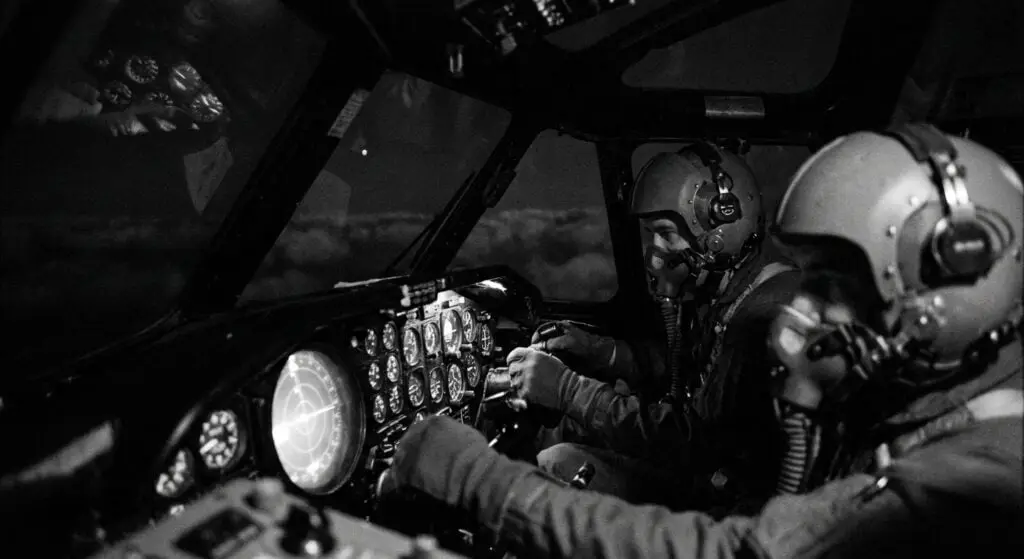
Pilots contribute direct aircraft handling and onboard sensors, but they operate inside narrow windows of fuel, weather, and geometry. Their reports are strongest on what their instruments and eyes presented at a given moment, and weakest on what the ground picture “meant.” IFF (identification friend or foe), a transponder-based identification system used to distinguish friendly aircraft when properly equipped and cooperating, helps sort known friendlies from unknowns, but it does not magically identify non-cooperative traffic and it does not validate that a radar return corresponds to a conventional aircraft.
Base operations and intelligence add context: scheduled launches, alerts, restricted areas, and what was supposed to be airborne. Their products often become the later summaries people quote, even though those summaries depend on upstream logs they did not personally witness.
The shorthand “the RAF saw” often appears in retellings because the events unfolded at RAF stations and worked inside a mixed RAF-USAF air defense architecture, but careful reading distinguishes the station name from the USAF unit, aircraft, and personnel that produced many of the operational records. For example, station histories and unit publications document USAF wings and squadrons operating from RAF Lakenheath in the 1950s and USAF tenancy at RAF Bentwaters during the same period (Lakenheath 48 FW heritage) and (Bentwaters station history).
Later official-style discussions also amplify the attribution problem. The Condon Committee’s final report explicitly discussed the Lakenheath-Bentwaters case; the committee’s wording included the assessment that the probability that at least one genuine UFO was involved “appears to be fairly high” in its discussion of the case (Condon Committee, Scientific Study of Unidentified Flying Objects, 1969, see pages 9-17 on Lakenheath/Bentwaters) and copies of relevant excerpts appear in government FOIA collections (CIA Reading Room document).
The communications chain was equally procedural. Ground radar and direction functions passed vectors and ident tasks to fighters over dedicated radio links; GATR sites served as the ground-to-air transmit/receive bridge between radar or direction centers and interceptor aircraft. In plain English: a track on a scope became a controller’s instruction, and that instruction reached the cockpit through a designed relay, not through ad hoc shouting across channels.
- Ask “who said it”: operator, controller, pilot, or intelligence summary.
- Ask “from what system”: radar return, IFF status, or visual report.
- Ask “what was logged”: plot/track data, vectors and clearances, or a narrative brief.
- Ask “what handoffs occurred”: which facility owned the track at the time and who merely repeated it.
- Refuse umbrella phrasing: when a retelling says “the RAF saw”, translate it into a specific role and record type before you decide what it means.
Radar lock, returns, and failure modes
Those distinctions matter most when you reach the phrase that drives the case’s reputation: an interceptor “got a radar lock.”
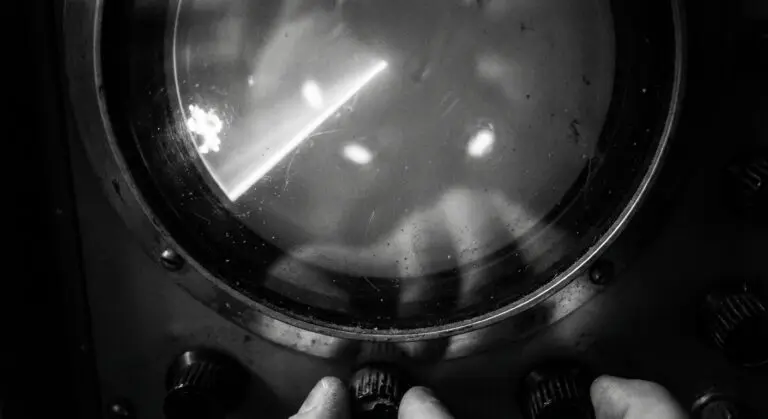
A reported radar lock is strong evidence that a radar system had a stable, trackable return, but it is not evidence of what the return was. In period terms, a radar lock meant the fire-control radar’s automatic tracking loop had captured a return and was continuously adjusting its tracking gates to follow it, which is exactly why operators treated it as persuasive. Those same circuits were designed to obtain “lock-on” and track targets automatically, and a set could even lock to the strongest return in the beam, which is tracking behavior, not identification.
The discussion below is general guidance about mid-1950s interceptor and ground radar behavior rather than a definitive technical diagnosis of any single radar in the Lakenheath-Bentwaters record. Performance and failure modes varied considerably by radar and fire-control set, and later analysis of this incident is constrained by the absence of complete raw technical logs. For background on mid-1950s air defense radar operational characteristics and common issues, see technical reviews of the era’s radar systems and AC&W program histories (mid-1950s AC&W analysis) and radar primer material (radartutorial radar reference).
By the mid-century air interception workflow, “lock” mattered because it shifted work from manual interpretation to machine-stabilized tracking. Automatic tracking was used in gunnery control and air interception radar systems, and demonstrations showed that automatic tracking and lock-on could be obtained immediately under the right conditions. Operationally, that meant the radar was no longer just painting intermittent blips; it was producing a continuous track suitable for steering an intercept and for building controller confidence that the system was following one coherent target.
The critical nuance is that the automation was engineered to hold continuity and suppress obvious nonsense. Automatic tracking circuits incorporated monitoring devices and were explicitly designed to eliminate false returns, including by tying tracking behavior to stable reference timing inside the receiver chain. That design goal makes a reported lock more meaningful than a single “hit,” but it also creates a trap for later readers: a lock says the system found a return that behaved consistently enough for the tracker, not that the return must correspond to an aircraft with a known type, size, or intent.
Interpreting that return means understanding the ways radar can mislead without anyone behaving irrationally.
A “radar return” is simply reflected energy that falls inside the radar’s detection and tracking logic. Sometimes that reflection is an aircraft. Sometimes it is clutter or propagation that the system has no way to label correctly in real time. Two error sources dominate practical interpretation of 1950s era reports: clutter and anomalous propagation.
Clutter is the straightforward one: ground or sea returns can leak into target detection through side lobes, imperfect filtering, or geometry that puts strong reflectors near the line of sight. Once a strong reflector is inside the tracking gates, the tracker can behave “correctly” while tracking the wrong thing. This is why “it held a steady return” is a weaker statement near coastlines, over water, or along low-elevation look angles where sea and ground clutter are strongest.
Anomalous propagation (ducting) is the atmospheric mechanism that makes a convincing track possible at a plotted range without a conventional target at that range. It occurs when refraction in a stable layer, often associated with a temperature inversion, traps part of the radar beam in an atmospheric duct so the energy travels farther than normal and can produce extended-range or spurious echoes. Temperature inversions are also a known aviation hazard, which makes their presence operationally plausible in the same environments where air-defense radars were working, but inversion conditions alone do not prove ducting occurred on any specific night.
Multi-sensor correlation raises the value of a radar claim because independent sensors and operators converging on the same geometry reduces single-point failure risk. When summaries say the interceptor achieved a lock while ground controllers were also tracking something in the same general area, that convergence is harder to dismiss than a lone scope trace. The key limitation is that correlation still does not equal identification: two radars can be jointly misled by the same propagation conditions, and two people can share the same plotting assumptions.
The other hard limit is evidentiary. Without raw radar logs, scope recordings, precise radar modes and settings, and matched meteorological data (especially vertical temperature structure), later analysis can rank explanations, but it cannot conclusively label the target. A “lock” upgrades the report from “someone saw a blip” to “a tracker held continuity,” and it stops there.
Use a checklist, not a headline. Ask: what radar (airborne fire-control, ground search, height-finder), what mode (search vs auto-track, look angle, range scale), what corroboration (independent radar site, visual, radio intercept timing), and what weather data exists (surface observations plus upper-air profiles that can confirm or rule out inversion structure relevant to ducting). Finally, ask whether any raw records exist, because secondhand summaries preserve conclusions, not the technical context that makes a lock persuasive or explainable.
Competing explanations and sticking points
Once you separate who reported what, the debate becomes less about “belief” and more about which hypothesis can absorb the case’s stubborn features without collapsing.
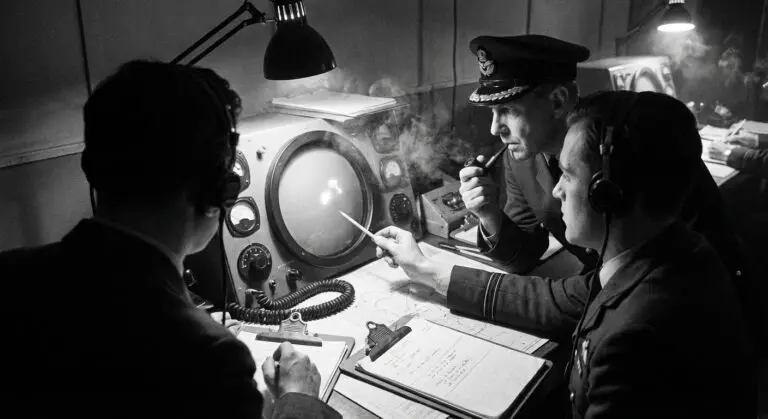
The Lakenheath-Bentwaters incident stays alive because it is documented as an institutional air-defense problem, not a single anecdote. The UK Ministry of Defence’s UFO files are cataloged in The National Archives (DEFE 24 series) (National Archives, DEFE 24), and CIA archival holdings list the Lakenheath and Bentwaters incident among collected UFO/UAP materials in their FOIA reading room (CIA Reading Room document). That paper trail narrows the argument to interpretation of a shared record, not reinvention of the basic claims.
- SP1: Two-site control context. The record is framed as a ground-controlled interception problem, with ground radar reporting tracks in the Lakenheath and Bentwaters orbit of responsibility rather than a lone observer story.
- SP2: Airborne radar lock claim. An interceptor report includes an airborne radar lock (intercept radar track), which is a higher-commitment statement than “a blip on scope.”
- SP3: Visual versus vector friction. Pilot visual calls (light position, relative motion) do not stay cleanly synchronized with controller vectoring, which forces you to decide which stream drove which decision.
- SP4: Identity did not close. The case narrative hinges on unresolved identification, including the practical limits of IFF and procedural identification during a live control problem.
Aircraft explains SP1 and SP4 cleanly because GCI rooms routinely worked unknown tracks that later resolved into ordinary traffic, and “no firm ID” is a normal operational outcome when codes, altitudes, and controller picture do not line up. The difficulty is SP2 and SP3: if an interceptor crew reports an intercept-radar lock and also struggles to reconcile that with what they can see, an aircraft theory has to explain both the radar commitment and the visual confusion inside the same control sequence, not as two unrelated mistakes.
Astronomical candidates explain SP3 best when the visual element behaves like a bright point light: stable, hard to range, and easy to “move” with aircraft motion and head turns (cockpit parallax). The operational misread is predictable: controllers issue turns, the pilot searches where told, and a bright sky reference can feel like it is reacting to the intercept. The disciplined way to test this is sky reconstruction: take the original timestamps, airfield location, reported look directions, and altitude band, then compute azimuth and elevation for the brightest candidates and compare them to where the crew said the light sat relative to the horizon. This method can clear the visual stream without claiming a specific planet or star for that night unless the timestamps and bearings actually match.
Weather and propagation effects explain SP1 when the ground picture includes tracks that appear, fade, or shift in ways that are operationally meaningful to controllers but not obviously tied to a single aircraft. The friction is SP2 and SP3: atmospherics can complicate ground radar, but they do not automatically produce an interceptor’s intercept-radar lock claim, and they do not automatically generate pilot visual cues that feel coordinated with vectors. A weather-first reading works only if it treats the radar behavior and the visual element as potentially separate problems that were merged by the tempo of an active intercept.
Artifact models handle SP1 because control rooms can couple perception across positions: once one scope is “talking a target,” everyone else searches for confirming structure. They also give a specific mechanism for why SP2 can be claimed without a straightforward physical target: automatic tracking was used in air interception radar systems, and demonstrations showed lock-on could be obtained immediately in defense applications. The hard part is SP3; an artifact-only explanation still has to account for why a pilot reported a visual element in an intercept context instead of reporting nothing at all.
“Unknown craft” remains the cleanest fit to SP1 plus SP2 because it treats the ground picture and the interceptor’s lock claim as observations of a real target, not two independent errors that happened to coincide during a live GCI problem. That is also the posture reflected in later official assessment language: the Condon Committee’s final report discussed Lakenheath-Bentwaters and judged that the probability at least one genuine UFO was involved “appears to be fairly high” (Condon Committee, Scientific Study of Unidentified Flying Objects, 1969; see the committee discussion on Lakenheath/Bentwaters, pages 9-17). Read that as an assessment of the record’s stubborn features, not a resolution of what the object was.
The cost of the unknown-craft camp is closure. It explains SP2 without gymnastics, but it struggles with SP4 because “unidentified” is not an identity; it does not tell you whether the unresolved ID came from a truly novel object, ordinary traffic under imperfect conditions, or multiple phenomena welded together by control-room urgency.
Edward J. Ruppelt’s The Report on Unidentified Flying Objects (1956) and the Condon Committee’s later wording are best treated as competing evaluations of the same underlying package of claims: ground radar reports, an interceptor lock statement, and pilot visual narrative under GCI pressure. They add weight to the debate because they are explicit judgments about credibility, but they do not replace the work of mapping each hypothesis to SP1 through SP4 without borrowing certainty from premature ET conclusions.
Why the case resurfaces today
The same structural features that keep the case contested-multi-source reporting, imperfect retention, and heavy reliance on summaries-also explain why it keeps getting pulled into modern UAP arguments.
This case resurfaces because modern records policy and archive access routes make it possible for researchers to retrieve the original documentary trail, if they know where to look. Relevant UK material is arranged under the MoD UFO files series at The National Archives (DEFE 24) and can be searched via the National Archives catalog and guides (National Archives, DEFE 24 overview). U.S. holdings relating to Project Blue Book and Air Force UFO investigations are described in National Archives guidance and the Project Blue Book record series (NARA case series T1206) (NARA Project Blue Book guidance). CIA FOIA and CREST-derived documents relevant to the Lakenheath-Bentwaters episode are available through the CIA FOIA Electronic Reading Room (CIA FOIA doc). For modern UAP reporting, ODNI and AARO publish unclassified assessments and records pages that describe contemporary release pathways and procedural changes for UAP material (ODNI Preliminary Assessment) and (AARO UAP Records). These resources show readers how to file specific requests and where to start searching for case files and related technical material.
Public congressional oversight became visibly mainstream after the 17 May 2022 U.S. House Intelligence subcommittee session relating to UFOs and UAPs, widely cited as a turning point for public visibility (hearing transcript). Visibility, however, is not validation: analyses of hearings and post-hearing reporting indicate the public posture remained focused on record access and assessment rather than a concluded identification of any particular historical case (ODNI Preliminary Assessment) and commentary on the post-hearing environment (PBS analysis).
- Separate “often cited” from “confirmed,” especially when claims of a government UFO cover-up rely on repetition instead of records.
- Track every strong claim back to primary documentation, archival catalog entries, or official releases.
- Avoid implying modern offices or hearings validated a 1950s file just because it’s circulating in UFO news or UAP news.
What we can responsibly conclude
The strongest public-facing conclusion is procedural: Lakenheath-Bentwaters is a historically important, multi-source military case with unresolved gaps, and the public record does not prove non-human intelligence.
That conclusion matches the standard set in the introduction: treat the case as an evidentiary package, not a slogan, and keep official noncommittal language in view while you weigh what the surviving record can actually support. The timeline discipline matters: separating ground radar, airborne radar, and visual reports keeps attribution honest, while later summaries that compress those streams into a single narrative inflate certainty and blur who observed what. The reported radar lock raises confidence that an interceptor was tracking a real target, but it still does not identify the target. The case persists because every proposed explanation hits at least one sticking point it cannot fully absorb without leaving residue.
To resolve it to modern standards, investigators would need raw radar logs and plots, radio transcripts, contemporaneous weather data (soundings), and flight logs, because retaining raw data enables reprocessing to correct known artifacts. U.S. Project Blue Book records and ATIC/USAF discussion of the event are located in National Archives and FOIA-released CIA holdings; see NARA guidance on Project Blue Book holdings and CIA Reading Room material for leads (NARA Project Blue Book) and (CIA FOIA document).
Relevant records may exist in CIA archival collections that include material referencing Lakenheath and Bentwaters, and in UK Ministry of Defence UFO report records catalogued by UK National Archives UFO files (National Archives DEFE 24).
Demand higher release standards, support transparent oversight, and keep extraordinary claims bounded by what the available records actually support.
Frequently Asked Questions
What was the Lakenheath-Bentwaters UFO incident in 1956?
It was a Cold War air-defense event dated to the night of 13-14 August 1956 in which multiple military channels converged on an unknown target during a scramble. The durable outline includes ground radar tracking, an interceptor’s airborne radar contact, and some visual observations tied to Project Blue Book and ATIC case-file summaries.
Were Lakenheath and Bentwaters RAF bases or USAF bases in England?
They were USAF bases in England, even though many retellings shorthand the incident as “RAF.” The article notes the label persists due to location/era phrasing and an RAF-led air-defense mental model, but attribution matters because operator, controller, pilot, and intelligence records are different products.
What does it mean when a fighter “got a radar lock” on a UFO in this case?
A radar lock meant the interceptor’s fire-control radar achieved automatic tracking, continuously adjusting its tracking gates to follow a stable return. It is evidence of a trackable radar return, not identification of what the return was.
What are the main radar failure modes discussed for 1950s UFO-style radar tracks?
The article highlights clutter and anomalous propagation (ducting) as dominant error sources. Clutter can pull strong ground/sea reflectors into tracking gates, and ducting from temperature inversions can extend range or create spurious echoes that look like real targets.
Why is Lakenheath-Bentwaters often called a “multi-sensor” UFO case?
It is described as combining ground radar reporting, an airborne intercept-radar lock claim, and visual observations within a ground-controlled interception workflow. That convergence raises evidentiary value versus a single witness report, even though correlation still does not equal identification.
What records would be needed to analyze Lakenheath-Bentwaters to modern standards?
The article says investigators would need raw radar logs and plots, radio transcripts, contemporaneous weather data (including upper-air soundings/vertical temperature structure), and flight logs. Without those, later analysis can rank explanations but cannot conclusively label the target.
What should you look for when deciding whether the Lakenheath-Bentwaters UFO claims are strong or overstated?
Use a checklist: identify who said it (operator/controller/pilot/intelligence), what system produced it (ground radar, airborne radar, IFF, or visual), what was actually logged (plots vs narrative summaries), and what handoffs occurred between facilities. The article also recommends verifying radar mode/settings and matching meteorological data to evaluate ducting and clutter risks.