Overview
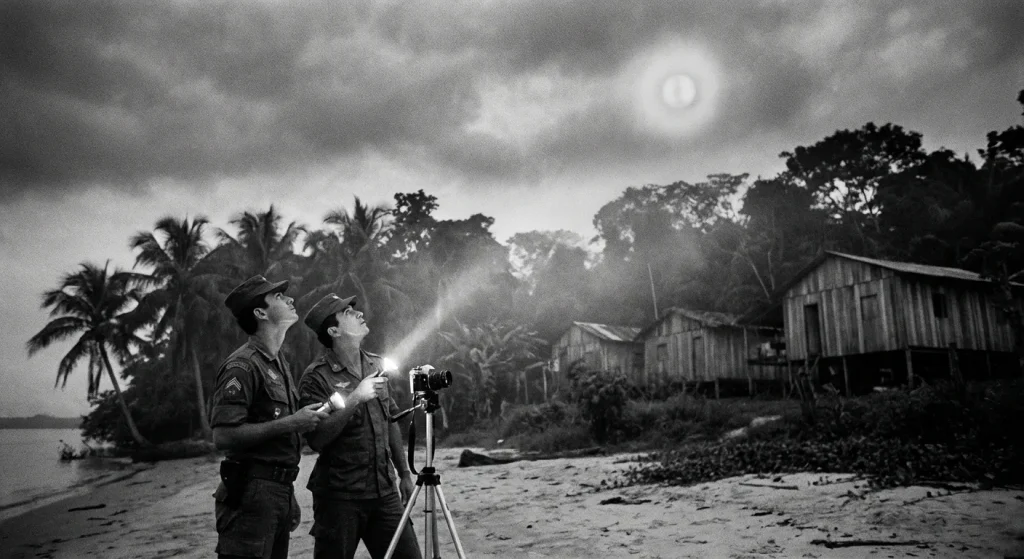
Operation Prato (Portuguese: Operação Prato) is the name commonly used for a Brazilian Air Force–linked investigation carried out in 1977 in Pará, in northern Brazil, after an outbreak of reports of unusual aerial lights and related incidents in riverside communities. The case is frequently cited in modern UFO/UAP discussions because it is associated with a military presence in the area and because portions of documentation were later made public through Brazil’s transparency and archival processes.
Core points that are broadly supported by public reporting and archival releases include: (1) the operation occurred in 1977; (2) it was tied to the Brazilian Air Force (Força Aérea Brasileira, FAB); and (3) the focus was Pará, especially areas around the island municipality of Colares and nearby towns. Interpretations of what the incidents were—unusual natural phenomena, misidentifications, social contagion, deliberate hoaxes, or something unknown—remain disputed and should be treated as contested.
Background in Pará (1977): the “Chupa-Chupa” wave
In 1977, communities in Pará reported recurring nocturnal lights and aerial objects. Local accounts, later widely summarized under the nickname “Chupa-Chupa,” described bright beams or luminous phenomena said to approach homes and boats and, in some testimonies, to cause fear, minor injuries, or marks. Many of these details come from witness statements and later interviews; the consistency and causes of the reports are debated, and descriptions vary by witness and retelling.
What is less disputed is that the volume of reports in parts of Pará drew attention beyond local authorities and became significant enough to be associated with a formal fact-finding effort connected to the Air Force.
How the investigation was organized
Open-source summaries and later journalistic accounts describe the effort as involving Air Force personnel traveling to affected locations to document reports. The operation is widely associated with then-Captain Uyrangê Hollanda, who is frequently named in accounts as a key figure connected to the field work. Specific internal command structures and full operational orders are not uniformly available in public, and many details about staffing and scope are reconstructed from released documents and later interviews rather than a complete, comprehensive official narrative.
Locations central to the reports
Operation Prato is most often linked to the following areas in Pará:
- Colares (often cited as the epicenter in popular accounts)
- Vigia and nearby coastal/riverside communities
- Belém (as a regional hub frequently mentioned in reporting about the episode)
Different sources emphasize different municipalities, and some accounts extend the broader wave beyond these locations. When evaluating claims, it helps to distinguish between (a) the wider 1977 regional flap and (b) the specific materials attributed to Operation Prato.
What was reported or collected (testimony, photos, documents)
Public discussions of Operation Prato commonly mention three categories of material:
- Witness testimony: statements from residents describing lights, objects, and alleged close approaches.
- Photographs: images said to show lights or objects in the night sky. The evidentiary value of these photographs is debated because provenance, camera settings, and chain of custody are not always clear in public copies.
- Official paperwork: memoranda, reports, and attachments attributed to the investigation and later released through archival channels.
Because much of the public debate relies on secondary retellings, the most reliable way to assess what was collected is to consult the released documents themselves and compare them to subsequent journalistic summaries.
What is confirmed vs. disputed
More firmly supported by documentation and mainstream reporting
- Operation Prato took place in 1977 and is linked to Pará.
- The effort is associated with the Brazilian Air Force (FAB), as reflected in how the case is described in reporting and in the way the archival materials are framed and disseminated.
- Documents and images have been released publicly through Brazilian archival/transparency channels, enabling direct review of at least part of the file.
Contested or interpretation-dependent claims
- Whether any photographed objects represent extraordinary technology: Many interpretations are possible, including misidentification, camera artifacts, and conventional aerial or astronomical sources.
- Whether injuries or “attacks” were caused by an external phenomenon: Accounts exist, but causal attribution is uncertain and varies by source.
- Claims of definitive official conclusions: Some narratives suggest implied conclusions, but clear, universally accepted official statements settling the nature of the phenomenon are not consistently documented in publicly available materials.
Public releases and where to read them
Several reputable starting points exist for reading about Operation Prato and locating primary materials:
- Brazil’s National Archives / Arquivo Nacional (AN) — Repository for many Brazilian historical records; Operation Prato materials are commonly discussed as part of Brazil’s broader archival and transparency ecosystem. (Search within AN holdings for Operação Prato and related 1977 Pará case files.)
- Lei de Acesso à Informação (LAI) portal (Brazil) — Brazil’s access-to-information framework that underpins many disclosures and document releases relevant to historical government activity.
- Wikipedia: Operação Prato — A navigational overview with references that can help identify document titles, dates, and names to cross-check against archival sources. Use as a directory rather than a final authority.
- BBC News — BBC reporting has covered Brazilian UFO cases historically; searching BBC’s archive for “Operation Prato” / “Operação Prato” and “Colares” can provide context and journalistic sourcing. (Availability varies by region and date.)
Some documents circulate as scans on third-party sites and forums. When possible, prioritize copies that can be traced back to official archival sources or reputable journalistic reproductions.
Why Operation Prato is cited in modern UAP discussions
Operation Prato is frequently referenced in contemporary UAP conversations for three reasons:
- Government involvement: The case is widely characterized as Air Force-linked, which elevates interest compared to purely civilian reports.
- Specific place and time: Pará in 1977 provides a concrete historical anchor for researchers and journalists.
- Document trail: The existence of released documents and photos enables direct scrutiny rather than reliance solely on anecdote.
At the same time, the case is often used rhetorically to support broader claims about disclosure. A careful approach separates verifiable claims (dates, locations, existence of documents) from speculative inferences about what the phenomena “must” have been.
FAQ: Operation Prato
-
What was Operation Prato?
Operation Prato was a 1977 investigation linked to the Brazilian Air Force into reports of unusual aerial lights and related incidents in Pará, Brazil, often associated with the “Chupa-Chupa” wave described by residents of riverside communities.
-
When did Operation Prato take place?
Operation Prato is widely reported as occurring in 1977, during a concentrated period of reports in Pará.
-
Where did the UFO/UAP reports investigated in Operation Prato occur?
The reports most commonly associated with Operation Prato come from Pará State, especially around Colares and nearby municipalities such as Vigia, with Belém often mentioned as a regional reference point in accounts.
-
Which government organization conducted Operation Prato?
Operation Prato is broadly described as being conducted under the umbrella of the Brazilian Air Force (FAB). Publicly available documentation and later reporting commonly frame it as an Air Force–linked field investigation rather than a purely civilian inquiry.
-
What prompted Operation Prato?
According to widely cited summaries, the operation was prompted by a surge of local reports of recurring aerial lights and frightening close encounters in Pará communities in 1977, which drew the attention of authorities and led to a structured effort to document what residents were reporting.
-
Who led Operation Prato?
Many accounts name then-Captain Uyrangê Hollanda as a principal figure associated with the investigation. The exact chain of command and the full roster of participants are not consistently available in complete form in public sources.
-
What evidence from Operation Prato exists publicly?
Material described as part of Operation Prato includes written reports, witness statements, and photographs. Portions of documentation have been made accessible through Brazil’s archival/transparency environment; researchers often cross-check circulating scans against official repositories when possible.
-
Did Operation Prato reach an official conclusion about what the phenomena were?
No single, universally accepted official conclusion is clearly established in public releases. Some interpretations are drawn from later interviews and secondary reporting, but many claims about definitive determinations remain disputed or not conclusively documented in publicly accessible files.
-
What are the main skeptical or alternative explanations?
Skeptical interpretations commonly include misidentification of conventional lights or aircraft, astronomical sources, atmospheric or optical effects, camera artifacts, and the possibility of rumor amplification or hoaxes during a period of heightened fear. These explanations do not require a single cause and may differ case-by-case.
-
Is Operation Prato about UFOs or UAPs?
Historically, the case is usually discussed using “UFO” terminology. In modern writing it is often grouped under “UAP” (unidentified anomalous phenomena). Both labels refer to reports of aerial phenomena not identified at the time of the incidents.
-
What should I look for when judging claims about Operation Prato?
Start with verifiable anchors—Pará, 1977, Air Force involvement, and the existence of released documents—then evaluate any extraordinary claims by checking whether they are directly supported by primary documents or by careful, attributed reporting rather than unsupported summaries.
