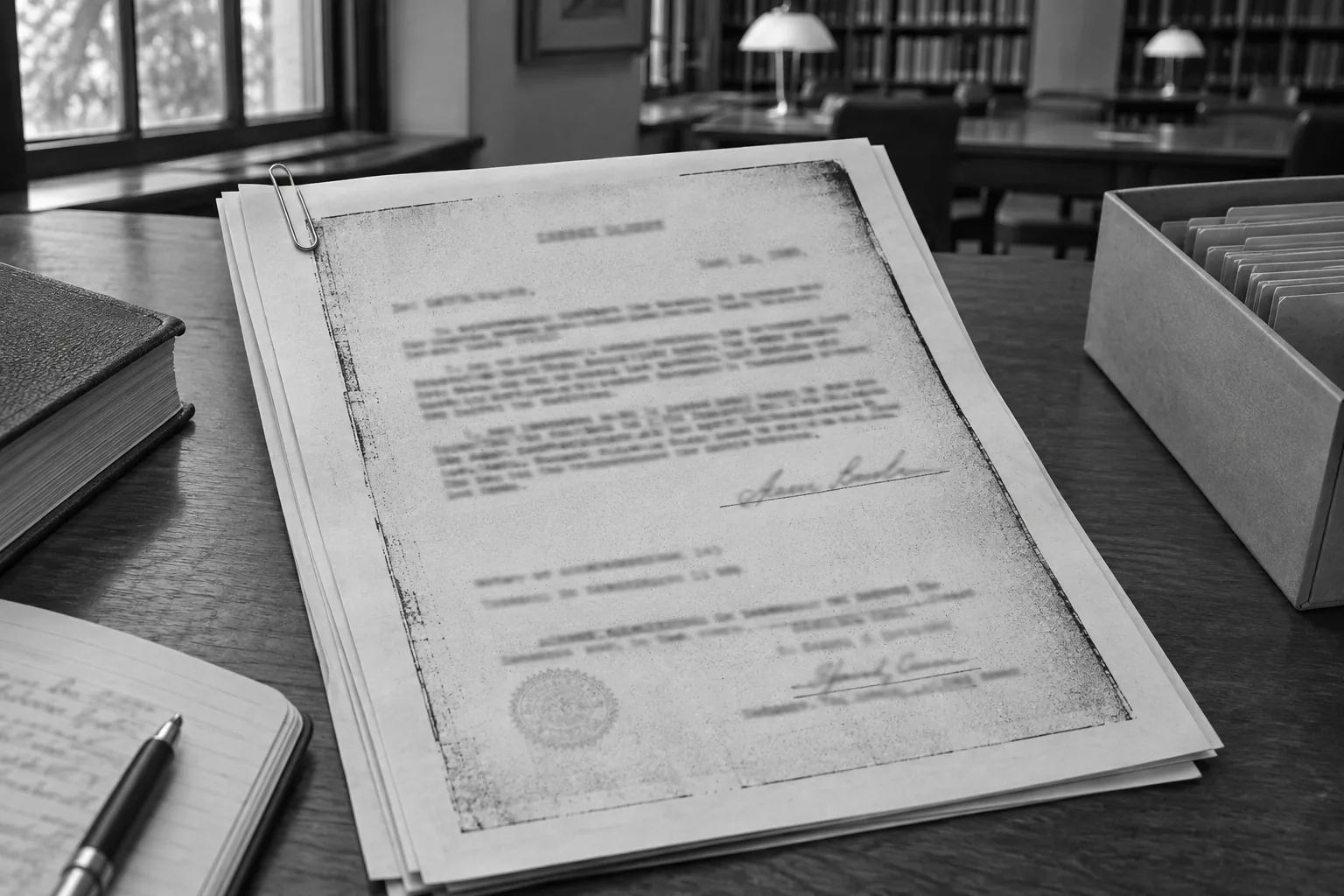
The Walter Haut affidavit Pentagon-release story concerns republication of an old witness account, not a new government finding about Roswell. UAPgrade’s release tracker identifies the statement as an appendix in a BAASS project-management plan included in the Pentagon’s October 23, 2026, release. That is a more specific publication trail than a claim that an affidavit simply appeared online.
The distinction is between releasing a record and endorsing its contents. A witness statement inside a contractor document remains that witness’s account; publication does not by itself establish the events described.
Which released document reportedly contains it?
UAPgrade identifies the parent document as DOW-UAP-D168, the December 2008 BAASS Project Management Plan. Its account places the Haut text in Appendix 2, on PDF pages 45–46, with names redacted, and says it checked the appendix on November 5, 2026.
The corresponding official links are the BAASS plan PDF and the seventh-release announcement. Their contents were not accessible for this briefing, so the appendix identification and release date are attributed to UAPgrade rather than presented as an independently checked page-by-page comparison.
This identifies a concrete parent file and appendix to consult. It also changes the framing: the reported release is of a document containing an older statement, not necessarily a standalone affidavit newly obtained from Haut.
What does the older statement say?
The circulating transcription is headed as Walter G. Haut’s sealed affidavit and dated December 26, 2002. It has typed signature, witness and notary information, not an image of an authenticated signed original.
In that text, Haut says he learned of a report of a downed vehicle. Separately, he claims to have observed an object inside a hangar and heads extending from beneath a covering, from a distance. He says he could not distinguish their features. His conclusion that he had seen a craft and crew from outer space is his interpretation, not a government determination.
Those passages should not be compressed into a claim that Haut witnessed a crash. The text distinguishes information he says he received from things he says he personally observed.

How do the dates fit together?
Three dates describe different stages of the record’s history:
- 2002: The date printed on the attributed statement.
- 2007: The transcription credits Tom Carey and Donald Schmitt’s Witness to Roswell. The Google Books publication record independently lists that book as published by New Page Books in 2007.
- 2026: UAPgrade reports the statement’s inclusion in the October release through the BAASS plan.
The book credit points to an earlier publication, but does not date the transcription’s upload or establish the exact first public appearance. Likewise, the date of the parent contractor plan should not be substituted for the date of the affidavit.
For broader chronology, see the site’s disclosure timeline. Our sources and methodology explains the approach to distinguishing records from the claims they contain.
What should a comparison establish?
A useful comparison would match the appendix against the older transcription: paragraph order, date, signature wording, omissions and redactions. Shared language can help identify a reproduced statement; differences need to be recorded rather than silently filled in.
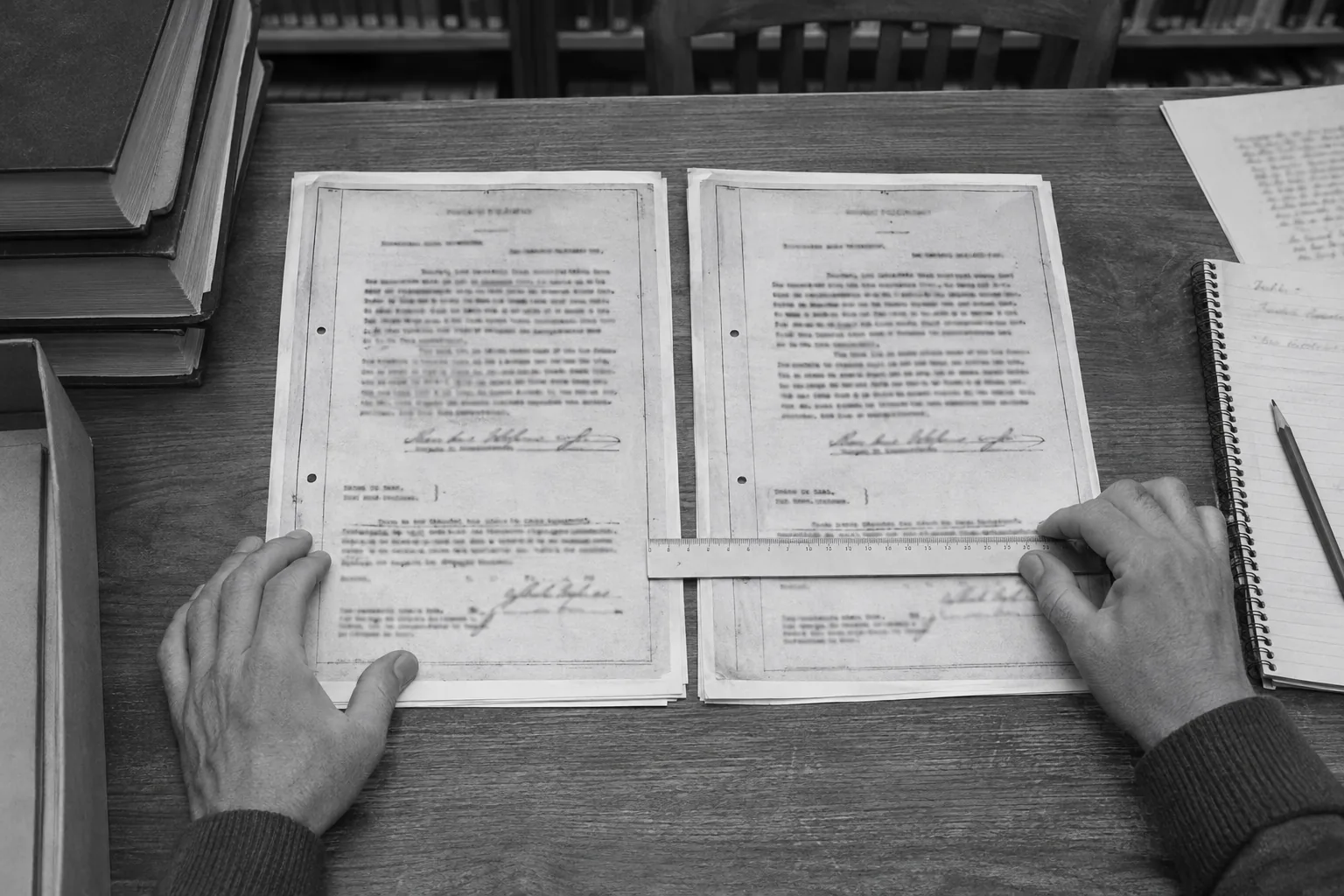
An unredacted transcription should not be quoted as though its words were visible in a redacted government copy. Keep each quotation attached to the version actually consulted.
Frequently Asked Questions
Is this a newly made affidavit?
No. The accessible transcription carries a 2002 date and credits a 2007 book. The reported 2026 release concerns its later inclusion in a published record.
Does publication confirm an extraterrestrial recovery?
No. Publication and corroboration answer different questions. The former concerns access to a document; the latter requires evidence supporting its assertions.