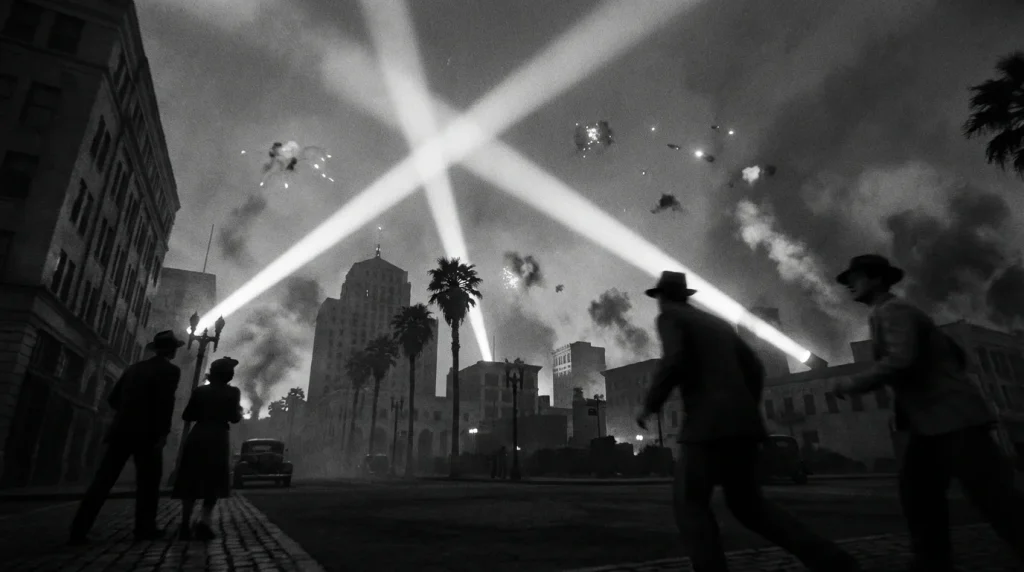
If you have tried to track “disclosure-era signal” through the constant churn of UFO headlines, you know the feeling: every week brings a new claim, and half of them trace back to the same handful of stories told a little louder each time. The Cape Girardeau, Missouri crash legend is the cleanest example because it is simple, personal, and built around a single dramatic premise: a local pastor gets pulled into something he cannot explain, then carries it to the grave.
In modern retellings, the pastor is often identified, in later accounts, as Rev. William Huffman. The core claim is consistent across versions: he was allegedly summoned to a crash scene in the early 1940s to pray over victims, and he later privately recounted what he saw to family members as a kind of guarded, deathbed confession that then circulated outward into UFO culture.
You are not deciding whether the story is entertaining. You are deciding what weight to give it: meaningful evidence of a pre-Roswell crash retrieval claim, local folklore that grew legs, or something in between that preserves a real event but loses its details in the retelling.
The timeline is part of the problem. The date is commonly given as 1941, but versions vary. In print and online, it is also reported with other early 1940s dates, which is a warning sign when a claim hinges on a specific night and a specific response by authorities.
The tension is obvious once you name it. A clergy member’s alleged private confession feels unusually credible because it is intimate, moral, and human. Yet the evidentiary foundation most readers encounter is largely later testimony and retellings rather than clearly documented contemporaneous records, which is the premise this article will test section by section. Even as modern politics teases more releases and more hearings, this story still rises or falls on the record it can actually support.
You will leave with a disciplined way to weigh the Cape Girardeau claim without swallowing it whole or dismissing it on vibe, and you will be able to apply the same standard to the next viral “crash” that hits your feed.
To do that, it helps to separate the story’s stable backbone from the details that shift between tellings. Start with what the legend says happened at the scene, then follow how that account supposedly traveled from one household memory into public UFO culture.
What allegedly happened in 1941
The most stable spine in this case is procedural: retellings put local authorities at the front of the response, then place a pastor inside the event because someone on scene wants prayer before anything else happens. The call is described as urgent but not explained in detail, and the pastor is treated as a practical addition to an already active response, not the person who “discovers” anything.
Where versions start to split is the summons itself. Some tellings describe a direct request from police or sheriff’s personnel. Others put firefighters or ambulance staff in the role of caller, framing it as a request for spiritual support at what looked like a fatal accident. A third variation keeps the requester vague: “authorities” contact a local minister and ask him to come quickly, without specifying who placed the call. The constant is the motive as reported: the pastor is allegedly asked to pray over the dead or to offer comfort at a scene already being managed by first responders.
Across the story’s versions, the pastor arrives to a secured area with local responders already present. The scene is described as rural and dark, with vehicles parked along a road or field edge and responders clustered around a central object. The consistent allegation is that what looked like an ordinary crash at first glance becomes “not ordinary” once people see the object up close.
Retellings converge on two claimed observations: a damaged craft and unusual bodies. The craft is typically described as compact rather than airplane-sized, with damage that suggests impact or forced landing. Details about its surface vary, but the recurring claim is that it does not look like a conventional aircraft component that local police or fire personnel would recognize on sight.
The bodies are presented as the second shock. Versions that include them describe small, humanlike forms removed from the craft or lying near it. The reported oddness is physical: proportions, facial features, and the absence of familiar clothing or gear are commonly cited as the reason responders supposedly treated the bodies as extraordinary rather than simply injured passengers. In the story as told, these observations are not framed as a long examination. They are framed as a brief, visceral look, followed quickly by control of access tightening around the scene.
The “pastor moment” is the narrative hinge: in most versions, the minister is brought close enough to the bodies to offer a prayer, then moved back as the response becomes more restrictive. The prayer itself is typically described in plain terms, not as a ritual tailored to the event. The pastor allegedly prays over the dead at the request of responders who, in the moment, treat it like any other fatal scene that suddenly carries a heavy moral weight.
Immediately after the prayer, retellings move into the aftermath claim that keeps the spine intact: officials instruct secrecy. The warning is framed as direct and personal, not bureaucratic. In some versions, the pastor is told explicitly not to repeat what he saw. In others, the warning is conveyed as a harder line: statements about consequences for talking, or an order delivered in the presence of multiple responders to ensure the message lands.
That alleged warning functions as the story’s explanation for why the event does not generate a normal public paper trail in the narrative. It also sets up the later “confession” framework: the pastor carries the memory privately, then eventually shares it with family members as something he was instructed to keep quiet.
The reason this story stays slippery is simple: the same spine survives even as the identifiers change. Retellings disagree on the exact date and on the specific location, sometimes anchoring it to a particular place-name and other times treating “near Cape Girardeau” as sufficient. For anyone trying to pin the story to a single night, the shifting window and shifting map matter because they determine what local logs, newspapers, and agency records would even be relevant.
Body count is another variable. Some tellings describe multiple bodies; others compress the claim into fewer. The “unusual bodies” element persists, but the number changes, which also changes the implied scale of the response and the plausibility of how many people could have had direct visual contact.
Agency presence is the most consequential divergence because it drives the alleged escalation. Versions agree that local authorities are first on scene. They differ on whether a second layer arrives and what it is called: “military,” “federal,” or simply “men who took over.” In some retellings, uniformed personnel appear quickly and assume control. In others, the takeover is described without clear insignia or branch identification, leaving the impression of authority without a specific agency label.
The craft description also slides. Some versions keep it minimal: a damaged object that is plainly not a standard aircraft. Others add more specificity about shape, markings, or materials. The more elaborate the craft description becomes, the more it tends to vary between tellings, which matters because those details are often repeated as if they are fixed.
A frequently repeated add-on is the alleged “photo of a body.” In these tellings, someone at the scene supposedly took a photograph of one of the bodies, and the image later existed in private hands. The claim is usually paired with an assertion about custody: that the photo was kept by a family member, shown selectively to a small circle, or retained as a guarded keepsake rather than released publicly.
What is not established inside the story itself is the photograph’s provenance. Retellings rarely agree on who took the picture, what camera was used, when it was developed, who possessed it at each step, or why it never emerged in a verifiable way. The result is a claim that functions as a rhetorical “proof token” in conversation but remains unanchored: its alleged existence is part of the legend, while authentication, chain of custody, and an original print’s location are not consistently reported.
If you want a disciplined way to track any retelling before you accept it, write down the version variables first and do not let the spine blur them:
- Fix the date-window: what exact night is being claimed, and how wide is the margin in that version?
- Pin the location radius: is the scene described as a specific site or only “near” a town?
- List who was present: which local responders are named by role, and is any “military” presence described as identified or just implied?
- Record what was physically observed: damaged craft only, craft plus bodies, and the stated body count.
- Inventory claimed artifacts: photo, debris, documents, or nothing tangible beyond memory, and who allegedly held each item.
Those variables are not side details; they are the handles you need to test whether two accounts are even describing the same event. Once you have them written down, the next question is straightforward: who, exactly, is the story coming from, and how far is it from the original teller?
Tracing the confession and its sources
This story’s staying power comes from transmission, not documentation: it persists because it moves cleanly through people, not because it sits anchored to an early, checkable record. In the version that circulates, a pastor confides details late in life to someone in his family circle, that relative repeats it to another family member, and the account eventually reaches a non-family audience through UFO writers, podcasts, forums, and reposted summaries.
The friction is that once a family account enters UFO literature, repetition starts to mimic evidence. A later author cites an earlier retelling, a website cites the author, a video cites the website, and the citation stack looks like “many sources” even if they all trace back to the same household memory. Without knowing who heard the confession directly, when it was first written down, and what words were used, you are not evaluating independent corroboration. You are evaluating the reach of a single narrative.
A source ladder belongs in this case because the controversy is less about what people can imagine and more about what can be traced: contemporaneous documents outrank direct witness statements, which outrank family recollections, which outrank later retellings. Applied to the Cape Girardeau “deathbed confession” claim, most publicly available versions sit low on that ladder.
Here is how the story’s main components typically classify:
- Contemporaneous documents: anything dated to the period of the alleged events or the pastor’s lifetime, such as letters, diary entries, church records, a contemporaneous newspaper item, or an investigator’s dated notes created at the time of an interview. This is where a primary (contemporaneous) source would sit, and it is the tier that actually settles disputes about wording, timing, and who said what.
- Direct witness statements: a signed or recorded statement from the person who personally heard the confession, preserved with a clear date and context.
- Family recollections: secondhand or thirdhand tellings inside a family chain, especially when written down long after the fact. These can be sincere and still drift in details.
- Later retellings: books, articles, websites, and social posts that summarize earlier tellings. At this tier, “provenance” matters most: a quote, photo, or alleged artifact loses investigative value fast when its chain of custody is undocumented, even if the item itself looks compelling.
Transparency matters here: Publicly available sourcing does not yet establish an earliest written or recorded version of this specific Cape Girardeau confession story. The earliest publication date and earliest wording still need documentation.
That missing anchor point creates three practical problems. First, you cannot measure drift because you do not know the baseline phrasing. Second, you cannot separate what the first family teller claimed from what later narrators embellished. Third, you cannot test independence: two retellings that look separate might simply share a common ancestor text that no one is citing correctly.
Professional genealogical work treats names and relationships as claims that must survive cross-checking across multiple records. That standard is the antidote to the most common failure mode in this story: confidently attaching the confession to specific people because a website, a screenshot, or an online tree said so.
Use the Genealogical Proof Standard as your discipline: conduct a reasonably exhaustive search, evaluate sources, resolve conflicts, and document conclusions. In practice, that means you do not “confirm” the family chain until dates, residences, and relationships line up across independent records.
Treat family papers and published family histories as leads worth pursuing, then label each identity link as verified, presumed, or hypothesis until records support it. When you encounter online trees or reposted biographies, fact-check them the same way you would any other unattributed claim: follow citations back to original documents, and keep notes tight enough that another researcher can reproduce your trail.
- Name the direct listener: who, specifically, heard the confession firsthand?
- Date the first capture: when was it first written down or recorded?
- Locate the earliest text: where can you read or hear that earliest version?
- Compare wording across tellings: what changed, and when did it change?
- Document provenance: who held the notes, audio, photos, or artifacts at each step?
Once you can place the confession on a source ladder, the remaining work is less glamorous but more decisive: can any of the story’s moving parts be pinned to records that should exist if an emergency response actually occurred?
Evidence, inconsistencies, and missing records
The biggest obstacle here is not belief or disbelief. It is that the story’s variable details make targeted verification hard: shift the date by a few days, move the site from “near Cape” to a specific road outside town, swap “police” for “sheriff,” and you multiply the number of separate archives that would need to align to produce a clean hit.
For a genuine 1941 emergency response, higher-weight contemporaneous records should exist in multiple, independent lanes: local press describing a crash, fire, road closure, or unusual military activity; official run documentation from the responding agencies; and downstream administrative traces such as hospital intake or death/coroner paperwork if injuries or fatalities occurred. When those lanes fail to intersect, the correct conclusion is not automatically “nothing happened.” The correct conclusion is that corroboration is not established in the surviving, searchable record.
A responsible verification attempt starts with contemporaneous local media searches (newspaper and radio) for crash, fire, or emergency-response reporting in the alleged window, and it documents both hits and null results. “Not found” after a defined search is meaningful. “Not searchable” because the archive is missing, unindexed, or inaccessible is a different category. “Does not exist” is rarer and needs proof of non-existence, not inference.
Media: Local dailies and weeklies, plus wire-service pickups in nearby towns, are the fastest way to constrain the date window. The key is method: list which issues or reels were examined, which keywords were used, and what neighboring publications were checked to reduce false negatives. Radio is harder because many broadcasts were not systematically preserved; researchers should treat “no radio record located” as “not searchable” unless a station’s logs or program archives are known to survive.
Incident documentation: The second track is the paperwork gravity of an emergency: police or sheriff records, fire runs, dispatch notes, coroner or death records, and local hospital intake logs. Retention policies and access routes matter. Modern systems show how these channels can exist even when they are not public-facing: Southeast Missouri State University publishes a Daily Crime & Fire Log with incident date and time ranges and print dates, demonstrating how institutions can maintain time-bounded incident series even today.
Cape Girardeau Police Department’s Records Unit provides a defined path to request incident and crash reports, including in-person access during stated business hours and an online request route. That modern access model is not evidence of what was kept in 1941, but it is a practical reminder that “records exist” and “records are easily retrievable decades later” are separate questions.
Medical and death records: If the story includes fatalities, expect administrative traces: death certificates, burial records, coroner files, or hospital admissions. Name-identity verification is often constrained by missing archives, redactions, or incomplete rosters; that limitation is uncertainty, not a cover-up conclusion.
Aviation and military: If an aircraft, training flight, or military involvement is alleged, the search widens to accident summaries, base logs, and federal correspondence. The more the story’s versions disagree on jurisdiction and geography, the more likely you are to search the wrong record series and report a false negative.
| Status | Specific item | What it means for corroboration |
|---|---|---|
| Supports | Multiple versions agree an “emergency response” occurred (police/fire/officials). | Creates testable expectations: press, run logs, and downstream admin traces should converge if the details can be pinned down. |
| Unclear | Contemporaneous local media coverage in the alleged window. | Until searches are documented issue-by-issue (including null results and archive gaps), absence of articles cannot be weighed confidently. |
| Unclear | Agency incident records (police/sheriff/fire) for the specific date and location. | “Not found” is only meaningful if the correct jurisdiction, record series, and retention status are confirmed. |
| Unclear | Coroner/death and hospital intake traces tied to named individuals. | Missing, redacted, or incomplete rosters constrain identity verification; that constraint does not establish a cover-up. |
| Contradicts | Internal inconsistencies across retellings (date, site, responding agencies, number of bodies). | These conflicts make clean archival matches less likely and increase the chance that researchers search the wrong place and conclude “nothing exists.” |
Ordinary explanations are boring and common: retention schedules that never contemplated 80-year research horizons; indexing that was never granular (filed under “vehicle accident” or “brush fire” with no keyword hook); local reporting norms that treated a small crash as routine; wartime constraints that reduced detail or encouraged discretion; and simple clerical loss, including misfiled folders, damaged microfilm, or gaps created during moves and consolidations. None of that requires a conspiracy, and each mechanism can produce the same researcher experience: you look, you find nothing, and you cannot tell whether “nothing” is real.
Extraordinary explanations, like a government UFO cover-up, require extraordinary documentation: specific suppression directives, consistent cross-agency deletion patterns, or surviving references to removed files. Without that, the disciplined position is narrower: missing archives, redactions, and incomplete rosters constrain name and event verification, but they do not prove intentional concealment by themselves.
- Tighten the date window to the smallest defensible range and log every version’s claimed timeframe.
- Lock a location radius and jurisdiction map (city, county, state, federal) so you query the right custodians.
- Query specific record series in priority order: local media, police or sheriff runs, fire runs, coroner/death, hospital intake, aviation or military logs.
- Document both hits and null results, separating “not found” from “not searchable” and from “confirmed non-existent.”
This verification posture also clarifies why the story feels so familiar: its structure matches a broader pattern of pre-Roswell crash lore, and that pattern can spread even when a particular case remains thin on records.
Pre-Roswell crash lore and patterns
The Cape Girardeau story feels familiar because it follows a template that UFO culture has reinforced for decades: a startling local incident, a sudden handoff to higher authority, and a narrative that survives mostly through people who heard it from someone else. That familiarity creates friction. Recognizing the template can sharpen your analysis, but it can also trick you into treating repeated story beats as corroboration when they can spread on their own.
Across pre-1947 crash and retrieval lore, the same motifs recur with remarkable consistency:
- Local authorities first: the initial response is framed as sheriffs, firefighters, medics, or other nearby officials arriving before anyone else has context.
- Quick escalation to military control: control shifts rapidly to a military unit or federal authority, often described as taking over the scene and the narrative.
- Warnings about secrecy: witnesses are told to keep quiet, sometimes with explicit threats, sometimes with implied consequences.
- Clergy involvement: a pastor, priest, or chaplain appears as a moral witness, a comfort figure, or a recorder of last words.
- Later secondhand testimony: the account reaches the public through retellings, family stories, and “I heard it from” chains, including the classic deathbed-confession framing.
“Deathbed confession” is not a neutral evidentiary label; it is also a recognized literary device, which helps explain why it recurs in stories that aim to communicate sincerity under constraint.
Clergy and secrecy cues persist because they solve two storytelling problems at once: credibility and silence. A clergy figure carries built-in authority signals (perceived honesty, pastoral duty, proximity to intimate admissions). Secrecy warnings explain why documentation is missing and why witnesses did not speak earlier. The result is a compact, memorable chain of meaning that people can retell without technical details.
Clergy involvement should be treated as a motif to track with citations, not as validation of the Cape Girardeau account.
Motif overlap is a folklore and storytelling concept: repeated narrative elements can arise through retelling incentives, media templates, and memory reconstruction, and these motifs can propagate without requiring a shared underlying event. Overlap can tell you that a story is participating in a stable cultural script. It cannot, by itself, tell you that the script is describing the same incident across locations or decades.
Reader rule: treat motif matches as a prompt to demand stronger documentation, not as confirmation.
That demand for stronger documentation becomes even more important during high-attention news cycles, when older legends get promoted as if they are newly supported. The Cape Girardeau story resurfaces for the same reason many pre-Roswell claims do: it fits the moment, regardless of whether the underlying record has changed.
Why the story resurfaces in 2025
The current disclosure cycle rewards origin stories, so a thinly documented 1940s “crash retrieval” legend gets re-packaged as fresh context every time official language or policy shifts. Governments now often use UAP (unidentified anomalous phenomena) as an umbrella term for unresolved aerial/space/sea observations, while UFO (unidentified flying object) remains the older popular label that dominates historical indexing and media habits; that split in vocabulary shapes search terms, headlines, and what audiences interpret as official attention.
AARO (All-domain Anomaly Resolution Office) is the U.S. Department of Defense office tasked with collecting and analyzing UAP reports and issuing public updates, and those updates set expectations for what “serious” looks like without retroactively documenting a local 1941 allegation. The Office of the Director of National Intelligence published the 2024 Consolidated Annual Report on Unidentified Anomalous Phenomena on November 14, 2024 (ODNI), which, with contributions from the Department of Defense All-Domain Anomaly Resolution Office, reports 757 new UAP case reports received between May 1, 2023 and June 1, 2024 (2024 Consolidated Annual Report on Unidentified Anomalous Phenomena, PDF), and states that, as of the report’s publication date, 174 cases had been finalized as resolved to prosaic objects such as balloons, birds, unmanned aircraft systems, and satellites (2024 Consolidated Annual Report on Unidentified Anomalous Phenomena, PDF). That dual signal creates predictable audience friction: one side reads the existence of an office and a running case count as institutional validation of the topic, while the other side treats the steady stream of prosaic resolutions as the baseline explanation for any story with weak documentation. Neither reaction adds a new contemporaneous record to an old legend; it only changes the volume of attention.
Policy language keeps the backstory demand constant. UAP-related legislative language, including a proposed UAP Disclosure Act tied to the FY2025 NDAA process and continuing proposals discussed for later defense bills, keeps “historical crash retrieval” narratives in the public conversation even when a specific case’s historical record remains thin. Proposals described in public reporting emphasize collecting UAP-related records, creating a review process aimed at declassification, and even directing the U.S. Secretary of State to contact foreign governments that may hold relevant material. Institutional activity continues on the analysis side too: AARO sponsored a workshop on UAP narrative data, infrastructures, and analysis at Associated Universities, Inc. (AUI) headquarters in August 2025, and a report summarizing the workshop’s key findings was published in coordination with AUI (AUI) and is reflected in AARO public materials (AARO), which signals ongoing attention without serving as evidence for any particular 1940s claim.
The disciplined way to consume UFO and UAP news is simple: separate institutional updates from historical documentation, and track what changed in the source record versus what only changed in attention.
That discipline is the same standard set in the opening tension of this story: a compelling, intimate confession is not the same thing as a checkable record. If you keep the version variables visible, insist on an identifiable source ladder, and treat missing archives as uncertainty rather than automatic proof of suppression, you can give the Cape Girardeau legend exactly the weight its documentation earns-and apply that same method to whatever headline comes next.
Frequently Asked Questions
-
What is the 1941 Cape Girardeau UFO crash story about?
It’s a legend that a pastor-often later identified as Rev. William Huffman-was summoned to a crash scene near Cape Girardeau, Missouri in the early 1940s to pray over victims. He allegedly kept silent after being warned by officials, then later shared what he saw privately with family as a deathbed-type confession.
-
Who allegedly called the pastor to the Cape Girardeau crash scene?
Retellings vary on the caller: some say police or sheriff personnel, others say firefighters or ambulance staff, and some only say “authorities.” The consistent claim is that he was requested for prayer or spiritual support at what initially appeared to be a fatal accident.
-
What did witnesses claim was at the crash site near Cape Girardeau?
Across versions, the two recurring observations are a damaged craft described as compact and “not a conventional aircraft,” and “unusual bodies” described as small, humanlike forms. The story frames the pastor’s view as brief before access was tightened by officials.
-
What are the biggest inconsistencies in the Cape Girardeau 1941 crash accounts?
The article flags shifts in the exact date (often “1941” but with other early-1940s dates), the specific location (a named site vs. “near Cape Girardeau”), and the number of bodies. Retellings also diverge on whether a clearly identified military/federal unit took over or whether it was just “men who took over.”
-
What is the alleged Cape Girardeau UFO “photo of a body,” and why isn’t it considered verified?
Some versions claim someone at the scene took a photograph of a body that later stayed in private hands and was only shown selectively. The article says key provenance details are not consistently documented, including who took it, what camera was used, when it was developed, and a verifiable chain of custody.
-
What records should exist if a real 1941 emergency response happened near Cape Girardeau?
The article says stronger corroboration would come from multiple independent lanes such as local newspaper coverage of a crash/fire/road closure, police or sheriff and fire run documentation, and downstream traces like hospital intake or coroner/death paperwork if fatalities occurred. It emphasizes documenting both “hits” and “null results,” and separating “not found” from “not searchable.”
-
How do you evaluate whether the Cape Girardeau crash story is credible or just folklore?
The article recommends writing down version variables-date window, location radius, who was present, what was observed (craft only vs. craft plus bodies and body count), and any claimed artifacts-before comparing accounts. It also advises placing each claim on a “source ladder,” where contemporaneous documents outrank direct witness statements, which outrank family recollections and later retellings.
