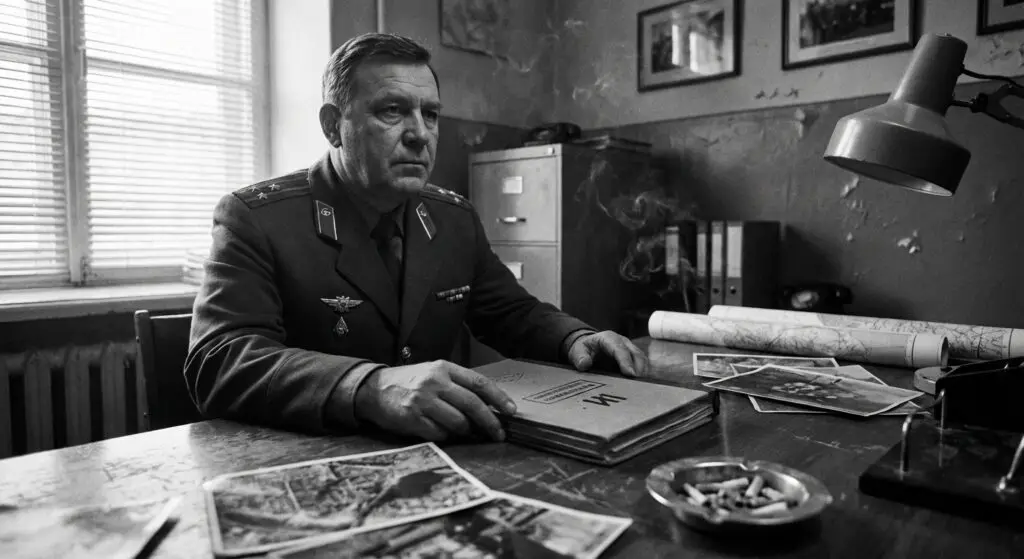
UFO and UAP “disclosure” headlines love big numbers because big numbers feel like evidence. “Hundreds of military cases” reads like a ledger sitting in a safe somewhere. Without the underlying documents, though, the number is operationally meaningless: you can’t test what counts as a “case,” who logged it, what got excluded, or whether it was ever an official tally.
The alleged 1989 flashpoint is a perfect example. The story usually lands the same way: a Soviet colonel, Sokolov, publicly discusses hundreds of military UFO cases, and the figure “386” gets treated as the hard count. As a reader, you face a clean decision. Treat “386 military sightings” as signal that a state apparatus tracked these incidents at scale, or treat it as noise that spread because it’s memorable and sounds specific.
Here is what the provided research actually supports, and what it does not. No contemporaneous AP, Reuters, or BBC monitoring summary is identified in the provided research set that reports “386” and attributes it to a Soviet primary source. Inside the provided documents, “386” appears repeatedly as a volume, page, or footnote-style marker (for example, “Vol. 386”) and as citation numbering, not as a UFO case count. That mismatch is exactly how a serious-looking number becomes “sticky”: citation artifacts get copied forward, the context drops out, and the figure starts living as a claim of recordkeeping.
The right stance, based on the material in hand, is strict: treat “386” as a reported claim pending primary-source verification, not an established fact. The story still matters because a number that large implies the kind of awareness, internal categorization, and incentive for managed messaging that governments adopt around any sensitive reporting stream. This article gives you a sourcing-first way to read the Sokolov 1989 claim and today’s disclosure news without getting pulled into recycled assertions that cannot be checked.
Sources referenced
- Central Intelligence Agency, “CIA Reading Room Document DOC_0005517761” (declassified report). URL: https://www.cia.gov/readingroom/docs/DOC\_0005517761.pdf
- 8NewsNow (KLAS), “Russian UFO files reveal chilling encounters, near-miss nuclear launch” (wire-service item). URL: https://www.8newsnow.com/mystery-wire/russian-ufo-files-reveal-chilling-encounters-near-miss-nuclear-launch/
- Skeptical Inquirer, “History of state UFO research in the USSR” (newsletter/history summary). URL: https://skepticalinquirer.org/newsletter/history-of-state-ufo-research-in-the-ussr/
- RAND Corporation, Research Report RRA2475-1 (NUFORC data and analysis). URL: https://www.rand.org/pubs/research\_reports/RRA2475-1.html
- CIA reading-room copy (same CIA item listed above) cited for archival reporting context. URL: https://www.cia.gov/readingroom/docs/DOC\_0005517761.pdf
- Various academic and archival PDFs consulted for provenance and citation-pattern examples, including a conference collection and journal excerpts that illustrate how numeric locators appear in texts:
- Conference/journal excerpts (examples): https://pureportal.spbu.ru/files/107970848/\_83.pdf
- SIPRI Yearbook (1986): https://www.sipri.org/sites/default/files/SIPRI%20Yearbook%201986.pdf
- “The Sword and the Shield” (Mitrokhin Archive excerpt): https://ia802806.us.archive.org/11/items/TheSwordAndTheShield-TheMitrokhinArchiveAndTheSecretHistoryOfTheKGB/The%20Sword%20and%20the%20Shield%20-%20The%20Mitrokhin%20Archive%20and%20The%20Secret%20History%20of%20the%20KGB.pdf
- AARO, “Report on the Historical Record of U.S. Government Involvement with Unidentified Anomalous Phenomena, Volume 1” (Unclassified). URL: https://media.defense.gov/2024/Mar/08/2003409233/-1/-1/0/DOPSR-2024-0263-AARO-HISTORICAL-RECORD-REPORT-VOLUME-1-2024.PDF (report date and title as shown on the PDF)
- House Oversight Committee hearing pages and related congressional materials consulted for claims about footage shown to lawmakers:
- United States House Committee on Oversight, “Unidentified Anomalous Phenomena: Exposing the Truth” (hearing page). URL: https://oversight.house.gov/hearing/unidentified-anomalous-phenomena-exposing-the-truth/
- United States House Committee on Oversight, “Restoring Public Trust Through UAP Transparency and Whistleblower Protection” (hearing notice). URL: https://oversight.house.gov/hearing/restoring-public-trust-through-uap-transparency-and-whistleblower-protection/
- YouTube video of a House Oversight hearing session cited in public materials: https://www.youtube.com/watch?v=\_wBNL2ob2JE
- Congressional and law texts consulted for NDAA references:
- FY2025 National Defense Authorization Act (Public Law No. 118-159), enrolled bill/public law PDF. URL: https://www.congress.gov/118/plaws/publ159/PLAW-118publ159.pdf
- FY2025 Senate Armed Services Committee bill text (as published by the committee). URL: https://www.armed-services.senate.gov/imo/media/doc/fy25\_ndaa\_bill\_text.pdf
- Congressional hearing/document excerpt referenced in research set (House meeting document PDF). URL: https://www.congress.gov/118/meeting/house/117721/documents/HHRG-118-GO12-20241113-SD003.pdf
- Selected news and explanatory reporting used for context and to identify where claims were repeated in media:
- Fox4 News (CIA file coverage): https://www.fox4news.com/news/cia-file-aliens-attack-soldiers
- Fox News (coverage of CIA file): https://www.foxnews.com/us/viral-cia-file-about-aliens-attacking-soldiers-takes-off-ufo-intrigue
- The Hill (coverage of Pentagon report and UAP): https://thehill.com/policy/defense/4519018-pentagon-report-ufos-alien-visits/
- The Debrief (analysis): https://thedebrief.org/aaros-historical-report-a-tale-of-factual-errors-and-old-mistakes-repeated/
Direct-quotation notes: the provided research set includes examples where the numeric string “386” appears as a locator, index, or page/volume marker in excerpts and bibliographic contexts rather than as a stated count of UFO cases. Example phrases excerpted in the research set include instances such as “386 Glossary. Chaucer.” and similar page-locator fragments. Those occurrences were consulted in the materials above (see SIPRI Yearbook, Mitrokhin Archive PDF, and the academic/journal excerpts at the SPBU link). The reviewed sources do not contain a contemporaneous Soviet primary document that uses “386” in the sense of “386 military cases” with identifiable issuing body/date/venue.
Why 1989 made disclosure possible
1989 sat in a narrow window where controlled openness created room for semi-official talk about military anomalies without surrendering operational secrecy. Glasnost mattered because it was not a cultural mood; it was a late-1980s Soviet policy shift toward more open public discussion and a changed press-censorship posture under Mikhail Gorbachev. The practical effect was procedural: editors had more space to print bounded controversy, and officials had more latitude to acknowledge problems in public as long as they stayed inside defined red lines.
Those red lines tightened, not loosened, around capabilities. Gorbachev paired glasnost with perestroika and reforms that pressured the state to reorganize institutions, including the military, under visible economic strain. That combination created a communications paradox. The leadership demanded credibility and modernization signals, while the security bureaucracy still treated detailed incident data, readiness indicators, and sensor performance as sensitive. Public discussion became possible, but it had to be curated: enough detail to look serious, not enough to teach adversaries what the air-defense network could and could not see.
Selective disclosure served state purposes that were rational in 1989. First, it signaled competence: acknowledging an “unusual report” while emphasizing collection, logging, and evaluation let institutions project control over the skies and over the narrative. Second, it managed rumors. In an environment where the press could publish more and citizens had more informal channels, silence stopped being a neutral option; it ceded the story to gossip and eroded trust faster than a limited admission did. Third, it shaped civil-military trust at a moment when the armed forces were being scrutinized as a budget line and as an institution expected to reform.
The friction is that the incentives to speak were matched by incentives to avoid specifics. Military organizations compete internally for authority, budget, and proximity to leadership; a controlled public line about anomalies could elevate a service or a research unit as the “responsible” actor without disclosing radar parameters, patrol patterns, or command-and-control procedures. The same late-1980s defense-science environment also ran on measurement culture and verification habits, the mindset that you instrument, log, and reconcile claims, the way telemetry monitoring supported compliance judgments in SALT and START-era thinking. Even Western counterparts treated openness and secrecy as compatible: CIA analytic products aimed to clarify assumptions about Soviet objectives while relying on guarded sourcing. Public talk did not equal full transparency; it was a managed output of institutional needs.
Language shapes how readers interpret the record. Late-1980s Soviet sources typically used UFO, a label that carries popular and sensational associations in many audiences, which can cause modern readers to overread intent or underread bureaucracy. Modern institutional framing often uses UAP, a term that signals an analytic context: the object is “unidentified” because attribution is unresolved, not because a conclusion has been reached. That is why the UFO vs UAP distinction matters in practice: it cues whether a statement is being read as an evidentiary claim or as a reporting category. Treat any 1989-era “disclosure” as a messaging event unless it can be matched to traceable records and archival context that emerged later.
That verification standard is not abstract: historians gained materially better access only after the USSR’s 1991 collapse opened Soviet archives, which is why late-Soviet public statements should be weighed against what can be corroborated in subsequently accessible documentation rather than treated as self-proving revelations.
How credible is the 386 figure
Those incentives for curated openness are the context in which a precise-sounding tally like “386” has to be read. A late-Soviet public number can be part messaging, part bureaucracy, and part misunderstanding unless it is anchored to an identifiable record.
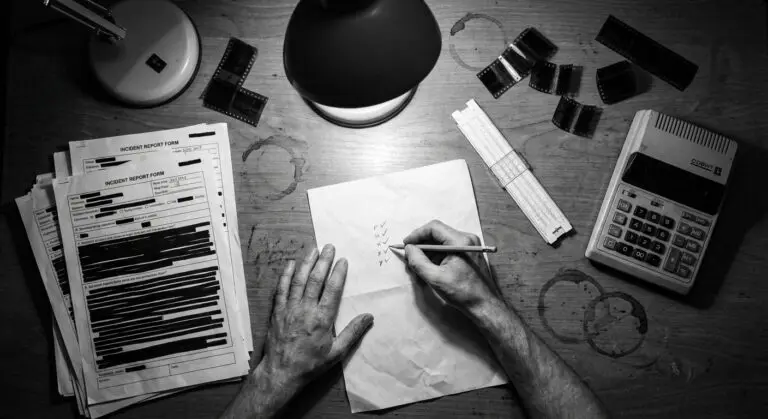
“386” sounds precise, which is exactly why it spreads. Precision reads like measurement, even when it is just repetition. Without an attributable primary source (the contemporaneous Soviet document, transcript, or recording that actually contains the number in context), “386” is a weak signal no matter how many times it shows up in later retellings.
On speaker identification and provenance: the research set includes references that trace some later attributions of the “386” phrasing to a Soviet or Russian officer named Sokolov and to televised fragments reported on Russian television in March 1997. The materials consulted do not, however, supply an authoritative full name (including a patronymic), a verified rank-and-posting roster entry for “Col. Sokolov,” or a contemporaneous 1989 Soviet document that ties “386” to a defined unit of measurement (for example, “донесений” or “наблюдений”) in the way a researcher would expect to see in an archival finding aid. In short: the speaker identity, the venue, and the exact original-language term associated with the numeric “386” remain unverified in the provided set and therefore should be treated as part of what must be sourced before accepting the claim as documentary.
Verification is not “finding 386 in print.” Verification is matching “386” to an identifiable Soviet record trail: who said it, where, when, and what “386” counted.
Here is what counts as confirmation in practice, ordered by how much it would raise confidence:
- A contemporaneous Soviet document that explicitly enumerates 386 items, with an issuing body, date, and internal reference (memo, briefing note, registry extract, or report table).
- A contemporaneous transcript or recording of the relevant statement, where “386” is audible/readable and the surrounding words clarify the unit (cases, reports, incidents, sightings) and any filters (time window, military branch, “unexplained” vs “reported”).
- Independent contemporaneous Western monitoring that quotes the Soviet statement and preserves the attribution chain (named speaker, venue, and the language used), not just a later paraphrase.
The friction is that even a real “386” can be mis-scoped. If the original language says something closer to “reports” than “cases,” the count can include duplicates, low-quality submissions, or administrative entries. Translation drift happens fast when one translator renders a term as “incidents,” the next as “sightings,” and a third as “confirmed military encounters.” You do not fix that by arguing semantics; you fix it by lining up the original wording against multiple translations and checking whether qualifiers survive the trip.
The provided research also flags a second problem: “386” appears in unrelated contexts across supplied documents, as a page, volume, or footnote style marker. That is not trivia. It is a concrete demonstration of how a number can be misread, mis-copied, or accidentally promoted from “where it appears” to “what it means.”
One cited excerpt includes “386” as a page reference inside a book context, alongside unrelated phrasing, without any evidence that “386” denotes a report count, investigation total, or unexplained-case tally. Treat that as the lab example: a citation chain can lift “386” from a page number and, one retelling later, the number is reintroduced as a count because it “looks right.”
The same pattern shows up in the research set’s other excerpts: “386” appears as mundane indexing and prose quantities (“386 of whom were students…” are explicitly noted in the provided materials). Once a number is “promiscuously present” across documents, sloppy extraction becomes plausible: a writer scanning notes, a translator working from a partial photocopy, or an editor compressing a long citation can all turn a locator into a claim.
Most bad numbers are not “invented.” They are laundered through circular citation, where Article A cites Article B, Article B cites Article A (or both cite the same unsourced summary), and the loop creates the illusion of multiple independent confirmations.
Apply the trap test to “386” aggressively: if a source points to “reported widely,” “according to Soviet sources,” or a generic “archives,” but never names the document, venue, or speaker, you are not looking at corroboration. You are looking at a loop.
- Extract the exact sentence that contains “386” and copy it verbatim, including the nouns (cases, reports, incidents) and any qualifiers (military only, time period, investigated, unexplained).
- Chase the citation one hop at a time until you reach a contemporaneous Soviet record or a contemporaneous monitored quotation. Stop if the trail becomes “as reported by” without a document.
- Compare at least two independent renderings of the same underlying source. If “cases” becomes “sightings” and “reported” becomes “confirmed,” confidence drops immediately.
- Reject any chain where “386” could plausibly be a locator (page, footnote, section number) rather than an enumerated count.
The provided material does not supply a named Soviet or Russian official catalog or archive identifier that enumerates 386 UFO or UAP items. That is not a technicality; it is the missing spine of the claim. If “386” came from an archive inventory, there should be a fond, opis, delo-style reference (or an equivalent registry identifier) that another researcher can request and re-count.
Archival corroboration also runs into real constraints that have nothing to do with anyone “hiding the truth.” Post-Soviet archives operate under access rules, declassification procedures, and incomplete finding aids that make verification slow and sometimes impossible without onsite work. The RAND report discussed in the research set addresses these structures and access realities, but it does not provide a named catalog entry or a 386-file enumeration. Treat that as the correct posture: access constraints are a general limitation, not evidence that the “386” number is true.
The actionable takeaway is a confidence threshold: your confidence in “386” should rise only when a single, attributable contemporaneous Soviet record (or monitored transcript) clearly counts 386 of something, and the citation chain to that record is linear, not circular. Anything less is a number that reads authoritative, not a number that is documented.
Parallels with today’s UAP disclosure
That same discipline-treating numbers and narratives as claims until the underlying record is traceable-maps cleanly onto the modern UAP debate. The difference is that today’s reporting channels produce more durable public artifacts, which makes the verification problem harder to avoid and easier to audit.
Modern UAP disclosure is constrained, but structurally more auditable than late-Soviet disclosure because the U.S. system routes reporting through standing offices, defined authorities, and recurring public artifacts. The institutional anchor is AARO, the U.S. Department of Defense office that coordinates the collection and analysis of UAP reports under defined authorities and reporting requirements. That coordination function matters: it creates a traceable chain from an initial report, to analytic handling, to an accountable release process that can be questioned, compared across reporting periods, and audited against documented standards in a way Soviet-era claims typically could not.
AARO has also released an explicitly titled historical-record report that addresses archival and investigatory practices: “Report on the Historical Record of U.S. Government Involvement with Unidentified Anomalous Phenomena, Volume 1” (AARO, Unclassified). See the report (AARO Historical Record Report, Volume 1, PDF) dated March 8, 2024: https://media.defense.gov/2024/Mar/08/2003409233/-1/-1/0/DOPSR-2024-0263-AARO-HISTORICAL-RECORD-REPORT-VOLUME-1-2024.PDF. That report foregrounds mechanics over narrative: standards for data collection, analytic practices, and cross-agency review processes.
The friction is that standards do not equal answers. They tighten intake quality and analytic hygiene, but they also narrow what can responsibly be concluded from incomplete sensor data or single-source observations. The practical takeaway is straightforward: in the current environment, the most meaningful signal is often a change in collection rules and analytic thresholds, not a spike in viral “case” storytelling.
The modern dynamic splits cleanly into what is in the public record and what circulates as allegation-driven narrative. David Grusch is the clearest example of that fork: he filed a complaint with the Intelligence Community Inspector General alleging retaliation after going to Congress, and he testified at a Congressional hearing. Those two facts place specific claims into formal channels with procedural consequences. Under-oath testimony and IG filings are not “proof,” but they are durable artifacts: they can be quoted precisely, checked for internal consistency, and evaluated against later documentary releases.
The friction is that the wider media cycle tends to treat secondhand reporting as interchangeable with sworn statements. Grusch’s public testimony can be separated from what is attributed to unnamed sources, paraphrased from private briefings, or summarized through intermediaries. A separate, concrete oversight artifact also belongs on the “documentable” side of the ledger: footage related to UFOs/UAP was publicly shown in the context of House committee oversight. For example, the House Oversight Committee has listed hearings such as “Unidentified Anomalous Phenomena: Exposing the Truth” and “Restoring Public Trust Through UAP Transparency and Whistleblower Protection” on its official site (see https://oversight.house.gov/hearing/unidentified-anomalous-phenomena-exposing-the-truth/ and https://oversight.house.gov/hearing/restoring-public-trust-through-uap-transparency-and-whistleblower-protection/), and public video of at least one House hearing is available (see https://www.youtube.com/watch?v=\_wBNL2ob2JE). Those items establish that specific material has been entered into an official viewing and oversight context, even if the material itself remains contested.
Where the Soviet-era touchstone still applies is in how quickly a disclosure ecosystem can become self-referential when documentation lags. Contemporary UAP ecosystems amplify named figures and controversial document sets, and the amplification itself can overwhelm the slow work of verification. Christopher Mellon’s description of the Majestic documents as “very controversial” is the correct posture for this layer of the discourse: it flags the reputational gravity these materials carry without pretending controversy is equivalent to authenticity.
Public attention also concentrates around media pathways that are structurally optimized for narrative, not audit trails: George Knapp being first to interview Bob Lazar in 1989, or Luis Elizondo asserting a moral right to be identified as the author of a work, function as attention anchors regardless of what eventually enters official repositories. The actionable rule is simple: track what gets filed, logged, briefed, or entered into sworn testimony first, and treat everything else as provisional until it is tied to documents, data standards, and accountable review.
Disclosure politics in 2025 and 2026
Once “disclosure” moves from interviews and press cycles into formal channels, it shows up less as a reveal and more as governance. In 2025 to 2026, “disclosure” is usually a paperwork-and-oversight contest, not a single dramatic release.
The lever Congress actually pulls is process: what records must be collected, how they must be described, who must brief whom, and what gets preserved for later review. That is why the National Defense Authorization Act (NDAA), the annual law that authorizes defense policy and can mandate reporting, oversight, and data-handling requirements across the Department of Defense, keeps showing up in “disclosure” conversations: the enforceable parts are often the mundane verbs, not the sensational nouns.
Congress uses deadlines, deliverables, and reporting requirements in the NDAA package to create paper trails that oversight can later interrogate. The FY2025 enacted NDAA is available as Public Law No. 118-159 (enrolled bill/public law PDF): https://www.congress.gov/118/plaws/publ159/PLAW-118publ159.pdf. For context on bill text and committee drafting, see the Senate Armed Services Committee FY25 bill text: https://www.armed-services.senate.gov/imo/media/doc/fy25\_ndaa\_bill\_text.pdf. Those primary sources are the documents to check when a reporter or reader wants to know what Congress actually required versus what was discussed in amendments or press coverage.
Protection mechanisms and whistleblower language are examples of provisions that can change what people are willing to put in writing and what Congress can realistically expect to receive during an investigation. To evaluate claims about “what Congress just mandated,” always read the controlling text in the enrolled bill or the final public law rather than relying on summaries or social-media breakdowns.
For FY2026 drafting and committee explanatory material, see committee explanatory statements and related congressional report pages (for example, House Armed Services Committee joint explanatory material for FY26): https://armedservices.house.gov/uploadedfiles/fy26\_ndaa\_joint\_explanatory\_statement.pdf and the Senate committee report listings: https://www.congress.gov/committee-report/119th-congress/senate-report/39/1. Senate bills introduced in the 119th Congress that have been used as vehicles include S.1071 and S.2296 (text and status available at Congress.gov): https://www.congress.gov/bill/119th-congress/senate-bill/1071/text and https://www.congress.gov/bill/119th-congress/senate-bill/2296.
Dates and section numbers matter when a story asserts that a precise mandate or deadline was adopted. If the claim cannot be verified in the enrolled bill or the final public law PDF, rewrite the claim as a general principle about oversight and process rather than as a citation to a specific operative clause.
- Pull the official NDAA versions by date and compare introduced language to the compromise and the final public law (use the enrolled bill/public law PDF linked above).
- Track committee actions that generate enforceable obligations: hearing notices, written questions for the record, subpoena or document-request letters, and filed amendments.
- Confirm what is actually mandatory by locating the operative verbs (shall, must, require) and the addressee (DoD component, contractor population, inspector general, or a named office).
One final filter helps in real time: NDAAs routinely combine attention-grabbing themes with complex governance changes, including major acquisition reforms affecting agencies and contractors. Expect “disclosure” headlines to travel faster than the actual text, and treat the signed law as the only version that can compel records to move.
What the 1989 episode really signals
Placed next to modern oversight mechanics, the 1989 Sokolov “386” story reads less like a solved count and more like a test case for how numbers become “facts.” The provided research does not verify “386” as a contemporaneous, attributable Soviet primary record. In the supplied documents, “386” shows up as volume, page, or footnote-style markers, which is exactly how numeric claims get laundered into “facts” by repetition. And even when a large case count is real, it often signals heavy reporting volume and organized recordkeeping, not self-proving evidence of extraordinary conclusions, especially when the case files themselves are not publicly available.
The practical meaning of “disclosure” in 2025 and 2026 is record-handling plus oversight: mandated reports with traceable “next steps,” official repositories that preserve releases, and records being organized and released with tracking numbers, not an instant reveal of definitive answers. Follow it the safe way: track primary documents first (official report repositories, congressional document databases, records-request portals) and treat narrative-only recycling as noise. Demand metadata minimums in every release or leak: time and place, sensor type(s), classification handling, and case disposition. Without those fields, cross-era comparisons are mostly rhetorical.
Keep your own document trail: save official PDFs, hearing transcripts, and database entries, then cite what you can actually point to.
Sources
Frequently Asked Questions
What does the “386 Soviet military UFO sightings” claim refer to?
It refers to a widely repeated claim that a Soviet colonel named Sokolov discussed 386 military UFO cases in 1989. The article says this number is not verified by an identifiable contemporaneous Soviet primary source in the provided research set.
Is there a verified primary source that confirms the Soviet “386” UFO case count in 1989?
No. The article states that the provided research does not identify a contemporaneous Soviet document, transcript, or recording that clearly counts 386 military UFO/UAP cases with attributable context.
Did AP, Reuters, or the BBC report the “386” number in 1989 with a clear Soviet attribution chain?
Not in the provided research. The article says no contemporaneous AP, Reuters, or BBC monitoring summary is identified that reports “386” while preserving a Soviet primary-source attribution.
Why does the article say the number “386” may be a citation or page marker instead of a UFO case count?
Because in the supplied documents “386” appears repeatedly as volume/page/footnote-style markers (e.g., “Vol. 386”) and as citation numbering. The article argues this is how a “serious-looking” number can be mis-copied and later treated as a case total.
What would actually confirm the “386” figure as a real count of Soviet military UFO reports?
The article lists three high-confidence confirmations: a contemporaneous Soviet document enumerating 386 items with issuing body/date, a contemporaneous transcript or recording that clearly defines what “386” counts, or independent contemporaneous Western monitoring that quotes the Soviet statement with full attribution (speaker and venue).
How did glasnost and perestroika make limited UFO/UAP “disclosure” possible in the Soviet Union around 1989?
The article says glasnost loosened press-censorship posture enough to allow bounded public discussion, while perestroika and economic strain increased pressure on institutions to signal credibility. At the same time, military “red lines” still protected operational specifics like readiness indicators and sensor performance.
How should you evaluate big-number UFO/UAP disclosure claims like “386 cases” when deciding what to believe?
The article’s rule is to treat precise tallies as claims until you can trace them to a single, attributable contemporaneous record with linear (not circular) citations. It recommends demanding metadata minimums in any release or leak, including time/place, sensor type(s), classification handling, and case disposition.