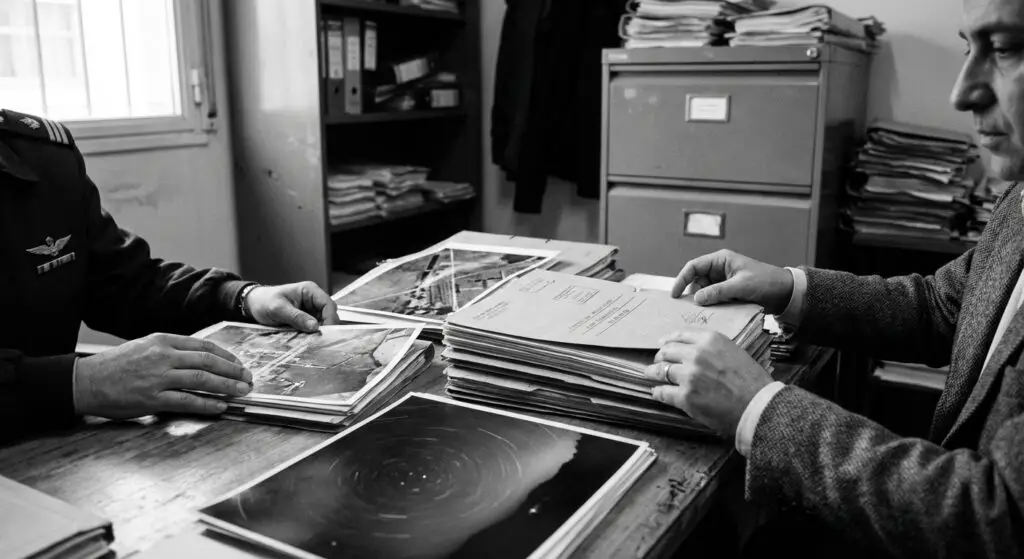
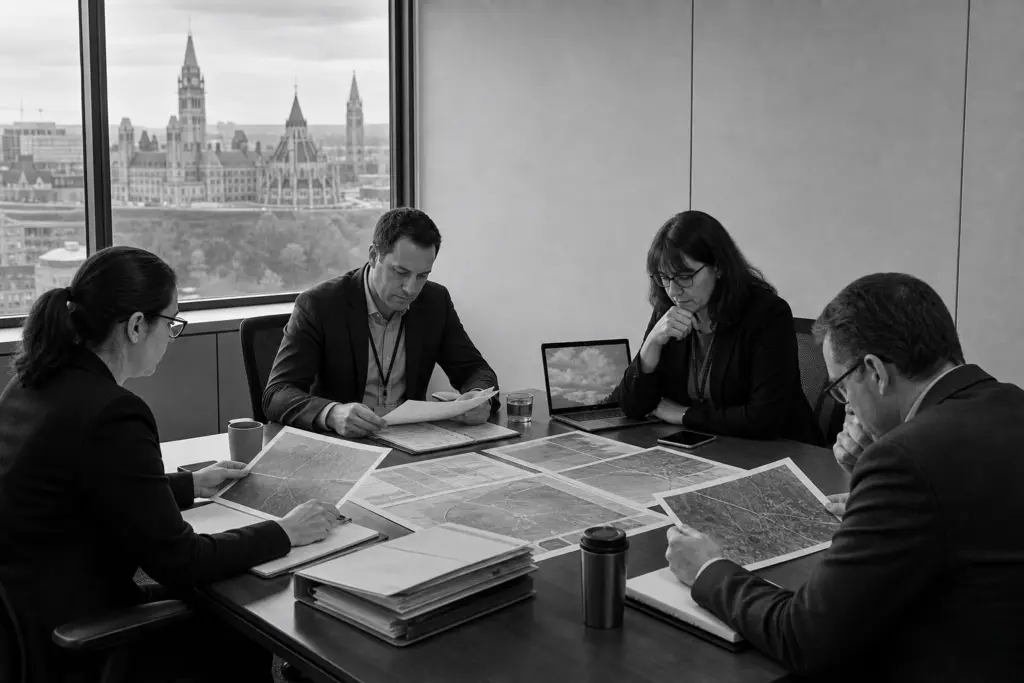
The Sky Canada Report 2025 puts a practical question before Ottawa: should Canada treat unidentified aerial phenomena as scattered reports, or build a durable public capability to receive, assess and preserve them? The issue is responsible governance, not a finding that unusual observations have an extraordinary origin.
Produced through the Sky Canada Project, the report urges a coordinated federal investigation function with clearer reporting routes, analysis, interdepartmental coordination, records handling and public-facing transparency. That could matter when an observation touches aviation safety, national-security awareness or scientific data quality: an unidentified report is a case requiring assessment, not evidence in itself of non-human intelligence.
The recommendation is not the same as a new agency already operating. It is a policy proposal that would still require Ottawa to choose a mandate, institutional home, access to relevant data, privacy and classification rules, funding, and a method for communicating results. The sections that follow examine what the report recommends, why it sees a gap in Canadian UAP policy, and how its proposed capability compares with emerging international approaches.
What the Sky Canada Project Report Is, and What It Does Not Claim
A policy report and a government decision are different instruments. The report’s Canadian policy context belongs to the first category: it is a case for a particular federal capability, intended to shape how decision-makers organize information and responsibility. Its publication gives the issue a defined policy proposal; it does not, by itself, create staff, authorities, a budget or an office.
“Unidentified anomalous phenomena” is best understood here as an assessment label. It applies when available information does not yet support a confident identification, not when an observation has been shown to involve alien technology, non-human intelligence or any other extraordinary cause. A strong system treats that uncertainty as a reason to preserve evidence and test explanations; a weak one treats the label as an explanation in its own right.
That distinction sets the proper reading of the Sky Canada Report 2025. The report addresses the public-sector mechanics of receiving reports, connecting relevant information, retaining records and communicating responsibly about unresolved cases. It does not purport to settle the origin of every unusual observation, nor should a recommendation for an investigation function be mistaken for confirmation that Ottawa has adopted it. Turning the proposal into an operational institution would require subsequent government choices about mandate, authority, resources and accountability.
What the 2025 Sky Canada Report Recommends
The report organizes its case around an institutional gap: information about unusual aerial observations may reach different public bodies, but no single Canadian function is designed to bring reports, relevant records and assessments into one accountable process.
Its principal recommendation is therefore a dedicated federal UAP capability, described in practical terms as an Ottawa UAP investigation body, rather than as a conclusion about what any particular case represents. The proposed function would give witnesses and officials a clearer route for submitting information, apply a consistent initial review, and direct cases to the departments or specialists able to assess them.
- Centralized intake: the report envisions a recognizable reporting path instead of leaving people to guess whether an observation belongs with aviation, defence, science or another institution. A common intake point does not mean every report receives the same level of investigation; it allows basic details and supporting material to be captured consistently before triage.
- Assessment and coordination: the proposed capability would connect relevant expertise and information across government. That differs from merely collecting sightings: an investigation function needs a way to compare accounts, preserve available evidence, identify ordinary explanations where possible, and record why some cases remain unresolved.
- Records and public communication: the report links better case handling to durable records and clearer public-facing information. The practical distinction is between a report that disappears into an isolated file and one that can be retained, reviewed and summarized without disclosing protected operational or personal information.
Supporting observations about fragmented reporting, uneven handling, hard-to-locate records and limited public communication explain why the Canadian scientific and governmental context behind the Canada UAP report 2025 proposes this structure. They are not, by themselves, findings of non-human intelligence or proof that every unexplained observation has an extraordinary cause.
Most importantly, the report recommends a capability; it does not establish one. An operational body would still depend on later decisions about its home in government, authority, staffing, access to information, safeguards and public-accountability model.
Why the Report Urges Ottawa to Build a Coherent UAP Capability
A pilot, air-traffic professional, police officer or member of the public may each encounter the same kind of uncertain observation through a different reporting route. That matters because aviation safety requires timely separation of possible hazards from routine misidentifications; national-security work may require protected handling; and scientific analysis depends on observations being recorded in forms that can be compared rather than reduced to anecdote.
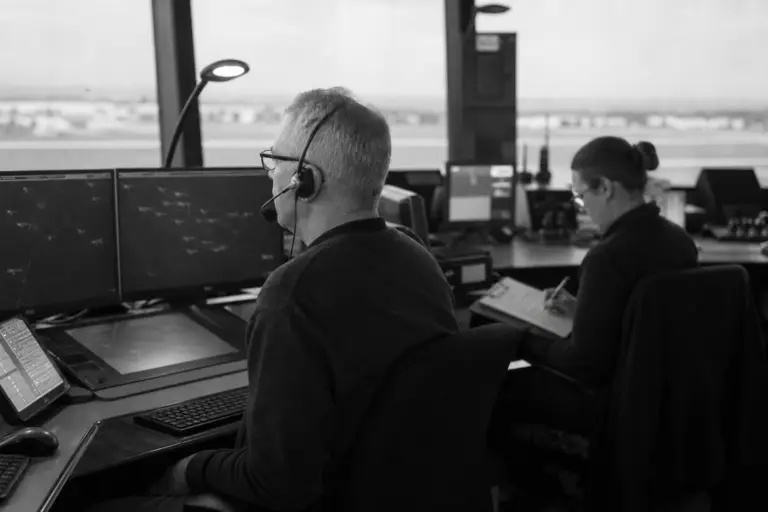
The Sky Canada Report 2025 treats those needs as connected but not interchangeable. A safety report asks whether there was a risk to aircraft or airspace. A security assessment asks whether available information indicates a threat, intrusion or activity requiring further attention. A scientific record asks whether time, location, weather, sensor data and witness accounts can support testing of explanations. One report can raise all three questions, but no single question supplies the answer to the others.
Fragmentation weakens that chain of inquiry. If accounts are stored in separate systems, use different fields, or are closed without a shared case history, analysts cannot readily identify recurring locations, compare sensor and eyewitness information, or distinguish a well-supported unresolved case from one lacking basic details. Durable records also make later reassessment possible when new data or improved analytical methods become available.
There is a public-confidence dimension as well. People reporting UAP sightings need a credible indication that information will be received, handled proportionately and, where possible, explained without exposing personal information or sensitive operations. Clear aggregate reporting can show the difference between a case resolved as a conventional object or phenomenon, an insufficient-data report, and a case that remains unresolved. That is more accountable than allowing uncertainty to be mistaken for concealment.
Better collection does not make UFO sightings 2025 evidence of extraordinary technology, nor does an unresolved file establish a non-human origin. The report’s policy case is narrower and more durable: Canada can make uncertain aerial observations safer to report, easier to assess and more useful to preserve without prejudging what any individual case will prove.
What a Canadian UAP Investigation Body Would Be Expected to Do
The practical value of a Canadian UAP investigation body would lie in turning an observation into a usable case file rather than merely adding another place to submit a sighting. A centralized federal reporting mechanism could accept accounts from the public while directing aviation, defence, policing and other professional reports through routes that preserve the information each system needs.

Intake is not investigation. Receiving a report means logging who observed what, where and when, along with available photographs, video, radar references or other supporting material. Triage is the next step: sorting reports by urgency, completeness and likely relevance. A report involving an immediate air-safety concern or a possible protected-area intrusion could be referred quickly to the responsible operational authority, while an account with little identifying information might remain a record without becoming a full inquiry.
Selected cases would benefit from a standard collection format: precise time and location, direction and duration, weather and visibility, observer position, equipment used, and the original file rather than a reposted image. Those fields make comparisons possible. A weak file is a narrative with no time, location or retained media; a stronger one can be matched against flight activity, astronomical conditions, weather data or sensor records.
A Canadian UAP investigation body would also need a defined coordination role. It would not replace the mandates of departments that hold aviation, security, scientific or law-enforcement information. Instead, it could establish a case identifier, request relevant material through agreed channels, record which organization assessed which question, and preserve the resulting history for later review.
That arrangement requires two forms of handling at once: secure treatment for personal details, operational methods and legitimately sensitive material, and a retention process that prevents records from disappearing once a case is closed. Where material can be separated from protected details, declassification review or redacted release could support public accountability without publishing identities, capabilities or active-security information.
A public reporting portal would therefore be only one visible part of the proposal. Periodic summaries could describe report volumes, broad categories of resolution, data-quality limits and unresolved cases. They would communicate what was received and assessed; they would not convert an unidentified report into a finding about its origin.
How Canada’s Proposal Fits the International UAP Policy Picture
International experience is most useful here as a set of design questions, not as a template Canada could simply import. The United States’ AARO UAP model illustrates the value of a designated coordinating office: it can bring together reports and relevant holdings from defence, intelligence, aviation and other bodies that otherwise work through separate systems. For Canada, the comparable lesson is about accountable access, who can request material, who decides what is relevant, and who records the reasons for an assessment, not about copying an American mandate.
Formal reporting processes also matter. A central office can set common fields for a report, assign a case number and distinguish an operational referral from a record retained for later analysis. That is stronger than a public tip line alone, but it also creates a practical constraint: an office cannot resolve a case if it lacks authority to obtain sensor data, preserve original files or ask contributing institutions follow-up questions.
Classification is the principal limit on easy comparisons. The Pentagon UFO office operates within US defence and intelligence structures, whereas any Canadian body would require its own authorities, information-sharing arrangements and public-release rules. Similar institutional features would not establish similar evidence, legal obligations or policy outcomes in the two countries.
The US UAP Records Collection at the National Archives offers a separate lesson about archival transparency. A records collection is not an investigative finding; it is a mechanism for identifying, preserving and releasing eligible material through an organized process. Canada could draw on that distinction by separating protected operational details from records that can be retained, reviewed and, where appropriate, released in a form the public can assess. The Sky Canada proposal is therefore best understood as a Canadian governance choice informed by broader administrative problems, fragmented information, constrained access and uneven disclosure, rather than an extension of the US system.
What the Recommendation Means for Canada Now
The practical test is whether Ottawa turns the proposal into an identifiable federal program with named responsibility and resources. The recommendation is not a binding commitment, and discussion of a Canada UFO investigation body is not evidence that one has already been created.
A meaningful official government response would identify a lead department or office and set out its remit: whether it can receive reports, request information from participating institutions, preserve case material and publish aggregate findings. Those choices determine whether the function is an intake desk, a coordinating unit or a genuinely resourced investigative capability.
- A mandate and budget: Named responsibility, staff and sustained funding are stronger signals than a general expression of interest. A mandate defines what the body may do; funding determines whether it can do more than collect submissions.
- Data-sharing rules: Arrangements would need to specify which departments may contribute information, what can be retained, and how privacy-protected or operationally sensitive material is handled. Without those rules, relevant records can remain separated even if a new office exists.
- Reporting guidance: Clear routes should distinguish urgent aviation or public-safety reports from non-urgent public submissions and explain what information makes a report usable. That distinction directs time-sensitive hazards to existing operational channels rather than treating every observation as a later research case.
- Public-records practice: Regular, intelligible summaries of report volumes, assessments and unresolved files would provide more accountability than isolated releases, while allowing protected details to remain withheld where necessary.
Departmental coordination is the decisive operational checkpoint. A new portal without access to relevant records or a process for referrals would add visibility without necessarily improving assessment. Conversely, better collection, preservation and public release of records may resolve some reports as further information becomes available while leaving others indeterminate.
That outcome would show a more disciplined public process, not alien disclosure. The report does not confirm non-human intelligence; it proposes clearer responsibility and transparency for handling uncertainty.
A Policy Blueprint, Not a Final Government Decision
The proposal’s strongest feature is its insistence that uncertain observations be managed as information problems: reports need a reliable route in, supporting material needs to remain attached to the case, and assessments need enough common structure to be compared over time.
That approach would serve several public purposes at once. Aviation personnel could distinguish immediate operational concerns from later analytical review; security institutions could contribute relevant protected information through defined channels; and scientific expertise could help test ordinary explanations without treating an unresolved file as proof of an extraordinary one. Public summaries would make the process more legible by showing how reports are handled, where evidence is limited and what remains indeterminate.
In that sense, the Sky Canada Report 2025 is a policy blueprint: centralize responsibility, standardize procedures and make cross-agency work accountable. Its premise is that credible reports can be risk-management inputs and potentially useful data, even when their cause cannot be established.
It remains a recommendation, not a final government decision. Ottawa would still have to choose the institutional home, legal authority, funding level, information-access rules, privacy safeguards, public-reporting standard and implementation timetable that would determine whether this proposed capability becomes operational.
Frequently Asked Questions
What is the Sky Canada Project report?
The Sky Canada Report is a policy blueprint urging Ottawa to create a coordinated federal capability for receiving, assessing, preserving and publicly summarizing UAP reports. It is a recommendation, not an existing government program, agency or budget.
What did the Sky Canada report recommend?
It recommends a dedicated federal UAP function with centralized intake, consistent triage, cross-department coordination, durable records handling and public-facing reporting. The proposed body would assign case identifiers, preserve supporting files and refer urgent aviation or security concerns to responsible authorities.
Does Canada currently have a UAP investigation office?
No Canadian UAP investigation office has been created by the report itself. Ottawa would still need to choose a lead department, legal authority, funding, data-sharing rules, privacy safeguards and public-reporting standards before such a capability could operate.
What information should Canadians include when reporting a UFO or UAP sighting?
A useful report should include the precise time and location, direction, duration, weather, visibility, observer position and equipment used. Original photos, video, radar references or other supporting material are more valuable than reposted media because they can be compared with flight, weather, astronomical and sensor records.
How would a Canadian UAP investigation body differ from the US AARO model?
A Canadian body would need its own mandate, information-sharing authority, classification rules and public-release process rather than copying the US Pentagon structure. The key design test is whether it can obtain relevant records, preserve original evidence, coordinate contributing departments and publish aggregate findings while protecting sensitive information.