You keep seeing the same pattern: breathless “UFO disclosure” headlines, viral cockpit clips, and official language that keeps shifting between UFO, UAP, and “unidentified.” The harder you try to pin down what’s actually been admitted, the more it feels like the story is being steered, with certainty sold in every direction and documentation treated as optional.
You’re not deciding whether the topic is real. You’re deciding whether today’s public debate reflects genuinely new facts, or the continuation of an older, deliberate strategy.
The tradeoff is baked into the record. Governments can expand transparency by formalizing channels for reporting, while still shaping how those reports are interpreted in public. You can see the institutional side plainly: FAA Order 7210.3EE Change 2 (dated 1-22-26) adds an AARO website link that ATC facilities may refer others to for reporting. That is UAP reporting with an official pathway. The tension is that more channels do not automatically produce more trust, because credibility lives in framing: what gets emphasized, what gets dismissed, and what the public is trained to treat as unserious.
The core claim here is simple: the Robertson Panel era marks a documented inflection point where government-backed messaging strategy shifted toward reducing public interest and perceived credibility around UFO reports. This isn’t a folklore-only argument; it has checkable, declassified handles. The CIA Reading Room hosts a document with Document ID 06935701 whose text includes the phrase “ROBERTSON PANEL REPORT.” Separately, CIA FOIA case file F-2001-00216 includes a reference to the “Robertson Panel Report” in its field listing, which gives you a second administrative breadcrumb that the term exists inside the FOIA machinery, not just on forums.
You’ll leave with a document-first lens that separates what the paper trail actually shows from what gets inferred when people argue “government UFO cover-up” in the daily churn of UFO news and UAP news.
Cold War fears behind the panel
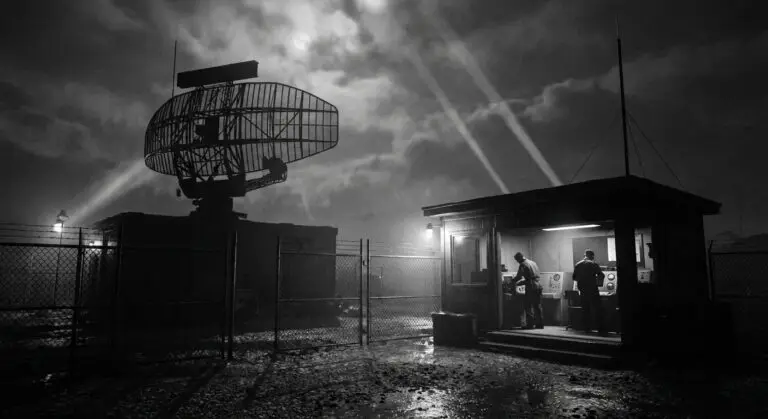
By 1952 to 1953, UFO reporting was treated as a Cold War operational risk before it was treated as a mystery. The urgent question inside U.S. national-security channels was not “What are they?” but “What do they do to warning systems and public behavior?” CIA documentation tied the reporting wave to “mass psychological considerations” and to concern about U.S. vulnerability to air attack, because any noise injected into alert and reporting pipelines degrades decision speed at the moment it matters most.
Two excerpts from the declassified panel record illustrate the record’s framing:
- “mass psychological considerations” (Report of Scientific Advisory Panel on Unidentified Flying Objects, Office of Scientific Intelligence, CIA, January 14-18, 1953; see report text at CIA Reading Room).
- “emergency reporting channels could be overloaded” (Report of Scientific Advisory Panel on Unidentified Flying Objects, Office of Scientific Intelligence, CIA, January 14-18, 1953; see report text at CIA Reading Room).
- “could be exploited as a means of hostile psychological warfare” (Report of Scientific Advisory Panel on Unidentified Flying Objects, Office of Scientific Intelligence, CIA, January 14-18, 1953; see report text at CIA Reading Room).
The friction point was throughput. A surge of reports forces controllers, intelligence staff, and commanders to spend time sorting weak signals from clutter, even when no hostile aircraft are present. Uncertain observations also propagate fast: a single ambiguous radar return or misidentified light can trigger follow-on calls, secondary sightings, and rumors that feel like confirmation. In a Cold War setting, that feedback loop is not just inconvenient; it is a direct attack on confidence in the air-defense picture.
UFO reporting also created an adversary opportunity. CIA materials explicitly tracked the angle of foreign exploitation, including intelligence attention to U.S.S.R. interest in American sightings and the fear that an enemy could weaponize the topic as “possible enemy psychological warfare.” The operational logic is straightforward: if an opponent can stimulate false alarms, saturate communications, or provoke public panic, they reduce U.S. capacity to recognize and respond to a real air attack.
The U.S. Air Force responded by formalizing intake and evaluation. Project Blue Book was established in 1952 as the USAF’s collection-and-evaluation pipeline for UFO reports, turning ad hoc phone calls and scattered memos into a structured flow of case files. That structure did not magically close every file: Blue Book’s 1952 records, including the Washington, D.C. episode, include cases that remained classified as “unknown,” which is exactly the kind of unresolved ambiguity that keeps anxiety and workload high inside an air-defense system.
Once the problem is framed as system strain plus national vulnerability, escalation is predictable. CIA records show the agency convened a group of scientists to assess whether unknown aerial phenomena posed a national-security threat. In a climate defined by air-attack fear, communications overload, and adversary manipulation, a scientific review was not an academic detour; it was the only credible way to decide what could be dismissed quickly and what demanded continued attention.
That context matters because it explains why a scientific panel could become more than a technical exercise. In this environment, a review that carried institutional authority could also shape how the entire topic was handled afterward.
What the Robertson Panel reviewed
This wasn’t folklore; it was a convened scientific review designed to inform policy posture. The Robertson Panel (Durant Report) mattered because it turned UFO case review into policy leverage: a credentialed, CIA-convened process that could generate recommendations and then be used to steer official messaging and internal priorities.
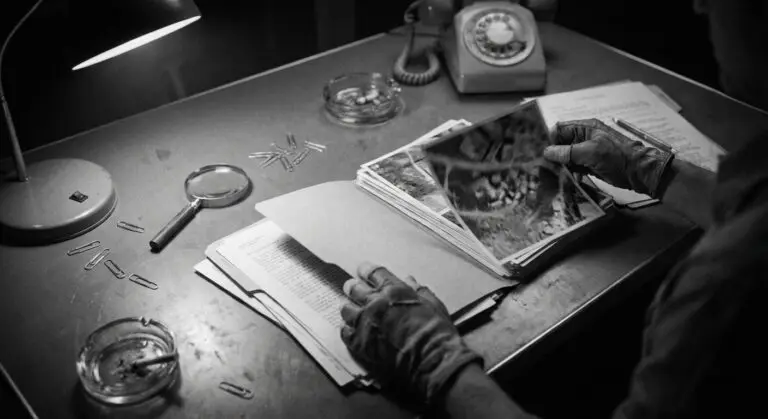
Administratively, the Robertson Panel was a CIA-convened scientific review tasked with assessing the UFO case materials already moving through an existing USAF pipeline. Its remit was not to start a new collection program from scratch, but to evaluate what the government already had in hand, including cases from Project Blue Book (USAF UFO case program). The panel was asked to assess Blue Book cases and supporting media, including films and photographs (Report of Scientific Advisory Panel on Unidentified Flying Objects, Office of Scientific Intelligence, CIA, January 14-18, 1953; see CIA Reading Room copy).
The report most people cite is the declassified artifact commonly referred to as the Robertson Panel Report, and it is also referred to as the “Durant Report.” Treat that naming detail as a filing clue: it tells you you’re dealing with an internal government document lineage, not a single stand-alone pamphlet produced for public consumption.
The disciplined boundary is straightforward. A declassified report anchors what can be said with confidence about what was written, recommended, and formally transmitted. It does not automatically disclose every underlying exhibit, case file, photo set, or film reel that may have been shown in-session, nor does it prove that every supporting document has been released. That gap is where overreach happens: readers import conclusions about “everything the panel saw” from a document that, by design, summarizes and directs rather than publishing a complete evidentiary archive.
For a primary-source handle on what is actually declassified, the CIA Reading Room file referenced earlier functions as the audit point for distinguishing quotation and paraphrase from inference (see CIA Reading Room PDF copy of the report).
The practical rule is simple: treat the declassified report as the anchor document, and treat claims beyond it as hypotheses that require corroboration in the underlying files, logs, and associated correspondence before you promote them to “documented history.”
Once you treat the report as an anchor rather than a legend, the next question becomes operational: what kind of approach did it normalize? That is where the Robertson-era posture starts to look like a template.
The debunking playbook takes shape
The lever was credibility, not physics. The lasting impact of the Robertson-era posture (Robertson Panel, Durant Report) was a repeatable playbook for reducing attention and perceived reliability around reports, not a method for conclusively disproving the underlying incidents.
That distinction matters because institutions can “win” the public narrative without ever resolving the data. If you lower the perceived seriousness of a topic, you cut reporting, you shrink media oxygen, and you make remaining claims easier to dismiss as fringe, even when some cases remain unexplained.
Credibility management works because it treats belief as the controllable variable: a policy-and-communications approach that lowers perceived reliability and importance without adjudicating ultimate truth. In practice, the mechanics look mundane, not cinematic, and they show up in how organizations talk, prioritize, and route information.
First, agenda-setting happens through “public education” style messaging that frames what responsible people should think is worth their time. The friction is that this does not need to argue the facts case-by-case; it just needs to establish a default posture of skepticism and low priority. The payoff is bureaucratic efficiency: fewer escalations, fewer leadership briefings, fewer reputational risks.
The Robertson Panel’s published recommendations explicitly endorse several of these tools. The report recommends training measures “intended to produce a marked reduction in reports caused by misidentification and resultant confusion” and supports an “education and debunking” aim to reduce public interest in flying-saucer reports (Report of Scientific Advisory Panel on Unidentified Flying Objects, Office of Scientific Intelligence, CIA, January 14-18, 1953; see report text). The report also suggests relying on credible intermediaries and media outlets to convey explanations and reduce rumor propagation, language that investigators and later commentators have linked directly to subsequent public-information strategies.
Second, partnerships with credible intermediaries move the message farther than an agency press office ever could. When a claim is repeated by institutions the public already trusts, the audience experiences it as independent confirmation, even if everyone is relying on the same thin set of talking points.
Third, amplification and silencing operate through incentives, not censorship. Officials who publicly minimize a topic get rewarded as “serious,” while officials who validate witnesses or uncertainties risk being labeled “credulous.” Over time, internal reputations steer external messaging, and the narrative narrows.
Finally, official-sounding closure narratives are created by repeating tidy summaries: “nothing to see,” “misidentifications,” “no national security issue.” These summaries function like an endpoint, even when the record still contains unresolved residue.
Vocabulary is a policy tool because it changes the emotional temperature of the room. The phrase “unidentified flying object” was popularized within USAF usage in the 1950s, notably in Edward J. Ruppelt’s account of Air Force investigations; Ruppelt’s 1956 book The Report on Unidentified Flying Objects helped normalize the term in official and public discourse (Edward J. Ruppelt, The Report on Unidentified Flying Objects, 1956; see archived edition).
Project Blue Book’s public-facing posture reinforced this cooler framing: investigation as administration, not mystery as emergency.
The cleanest way to end a loud controversy is to route it through “science” as an institution, then treat the resulting product as a stopping point. The U.S. Air Force commissioned the 1968 Condon Report (The Scientific Study of Unidentified Flying Objects), a concrete example of how an official review can settle the public argument regardless of whether every case is explained to everyone’s satisfaction.
Read this pattern the way you would read any contested-policy debate: when institutions focus on witness reliability, tone, and terminology more than measurements, chain-of-custody, and what remains unknown, you are watching credibility management at work, not the resolution of the underlying data.
From Blue Book to AARO parallels
The name changed; the institutional problem stayed familiar. Washington keeps building offices that set the scope of what counts as a reportable mystery and then message the public about what the government concluded, while the practical reality keeps shifting underneath: better sensors, more complex bureaucratic lanes, and tighter oversight demands that did not exist in earlier eras.
Project Blue Book functioned as an institutional collection and evaluation program with public-facing conclusions, built around the idea that reports should be gathered, examined, and framed in official language rather than left to rumor. Research records document Blue Book’s scale: it documented and scrutinized roughly 12,000 UFO sightings from 1952 to 1969, and Project Blue Book Special Report No. 14 analyzed roughly 3,200 cases during that period (USAF Project Blue Book records and analyses).
The modern umbrella term is UAP (Unidentified Aerial Phenomena), a terminology shift that tracks an institutional preference for broader, platform-agnostic reporting rather than a single “object” label.
AARO states that its reporting guidance restricts use of its form to current or former U.S. government employees and forbids general sighting reports; see the AARO “UAP Program Report User Guide” (2023-12-11) for details on scope and intended users.
In government usage, “unidentified” is a disposition label: the office cannot match a report to a known object or explanation based on the information available at that time. It is not a certification of extraordinary origin. The practical complication is that the same label can cover everything from “insufficient data” to “classification constraints,” which is why official summaries can be accurate in wording while still unsatisfying in substance.
The reader rule is simple: treat official UAP statements as evidence of collection and triage capacity, not as proof of origin. When you see “unidentified,” ask what data was available, what scope the office claims, and what was actually released, then separate process claims from conclusions about what the phenomenon is.
That unresolved tension-real collection on one side, controlled framing on the other-is exactly why Congress keeps trying to move the fight from messaging to records. If the dispute is about what exists and who has it, hearings alone are not enough.
Congress tries to force transparency
Disclosure is being engineered as a records problem. Congress’s disclosure push is an attempt to force a records-and-oversight architecture precisely because executive-branch messaging has historically been able to close debates without releasing verifiable data.
Modern disclosure proposals aim at systems design, not storytelling. The Schumer/Rounds UAP Disclosure Act proposal, for example, included creating an “Unidentified Anomalous Phenomena Records Collection” at the National Archives. Centralization matters because scattered files let agencies treat disclosure as an internal messaging choice; a single collection treats it as a records-management obligation, where the default question becomes “what exists, where is it, and who controls it,” not “what is the current public line.”
At the operational level, these proposals try to do four things that matter more than any single headline: (1) establish presumptions about disclosure versus withholding, (2) set timelines and deadlines so “ongoing review” stops being a permanent state, (3) define who must search and produce records so responsibility cannot be bounced across components, and (4) create oversight pathways so failures generate consequences or follow-up demands. The friction is obvious: the government can accommodate hearings indefinitely; it cannot comply with centralized record obligations without generating auditable paper trails.
Congressional hearings are a primary formal mechanism committees use to gather and analyze information for policymaking, but the product is a source type, not a verdict. A transcript is a fixed record of what was said. Sworn testimony is a legal commitment by a witness, but it is still a claim until corroborated. A document demand, by contrast, is the lever that can convert oversight from narrative into evidence, because it can force production of emails, memos, contracts, tasking orders, and chain-of-custody records.
The most concrete anchor for how UAP allegations enter the official record is the July 26, 2023 House Oversight Committee hearing, held at 10:00 am in room 2154 Rayburn, with the transcript published on congress.gov.
Whistleblower activity is part of the same pipeline and needs the same discipline. David Grusch filed a complaint alleging reprisals by his superiors; that is a documented process and an allegation of retaliation. It is not proof of his underlying UAP claims. Conflating “a complaint exists” with “the substance is verified” is exactly how public debate gets loud while the evidentiary record stays thin.
The practical tradeoff is simple: more testimony and more oversight does not automatically equal more evidence. Transparency mechanisms matter because they can compel documents, not just stories. Treat congressional activity as a pipeline that can produce records, and judge progress by what becomes verifiable: centralized collections, enforceable search duties, published transcripts, and disclosed or lawfully withheld documents with clear reasons.
That same discipline applies outside Congress, too. The daily news cycle produces plenty of claims; the question is how to sort them without getting pulled into the churn.
How to judge UAP claims today
Evidence quality, not volume of claims, decides credibility. Most UFO news and UAP news controversy persists because people argue from clips and anecdotes, while the decisive layer is provenance: who recorded the data, what sensors were involved, what the full context was, and whether the files stayed intact through a documented chain-of-custody.
Use this ladder to triage the next headline fast, then decide whether it deserves real time.
- Rank the source: official documents and signed correspondence beat contemporaneous operational logs, which beat named expert analysis, which beats anonymous claims. Oversight testimony is useful only when it points to retrievable records.
- Check sensor count: multi-sensor corroboration (for example, radar plus EO/IR plus timestamps) outranks a single witness report. “Multiple witnesses” is still single-mode if everyone saw the same light with naked eyes.
- Demand metadata: time (with time zone), location, platform, sensor type, and capture settings are the minimum. A dramatic video without provenance is entertainment, not evidence.
- Ask what is raw vs. processed: stabilized, cropped, contrast-adjusted, or screen-recorded media destroys interpretability. If the original file cannot be produced, treat every interpretation as provisional.
- Verify chain-of-custody: who held the data, when it was copied, and whether the handling was official matters because it determines whether tampering and context-loss are realistic failure modes.
- Map incentives: virality rewards speed over accuracy, politics rewards ambiguity, and career risk can push officials toward careful language. Incentives do not prove a claim false; they explain why confident narratives often outrun the underlying record.
Classification complicates all of this: “not public” is not the same as “doesn’t exist,” and it is also not evidence of an extraordinary origin. It only tells you the government has decided the details are not releasable.
Administrative plumbing matters because it determines whether sightings produce durable documentation. The FAA order referenced earlier routes more narratives into a standardized intake instead of phone-call lore by adding an AARO website link that ATC facilities may refer others to for reporting. Standardized intake improves traceability, not truth: a form submission can be well documented and still misinterpreted.
AARO’s “UAP Program Report User Guide” (dated 2023-12-11) draws a hard line between military operational reporting guidance (via GENADMIN DTG: 191452Z MAY 2023) and civilian reporting guidance. That distinction predicts the data you will see in public: civilian reports trend toward descriptions and media; military reporting can include operational context that stays classified. As UFO sightings 2025 and UFO sightings 2026 generate more attention, formal channels should increase the number of trackable records, even when the public-facing details stay thin.
FOIA (Freedom of Information Act) is a records-access law: it provides public access to releasable executive-branch records, including documents, emails, photos, and videos. FOIA does not require agencies to perform research or analysis, compile datasets, or answer questions, so it will not deliver “the truth about this case” on demand. It can produce the paper trail if it exists and is releasable; it cannot manufacture conclusions.
A UAP claim becomes meaningfully stronger tomorrow when it comes with an identifiable originating record (document or log), intact original data with metadata, multi-sensor context, and a documented chain-of-custody that survives independent scrutiny.
Those criteria are not new; they are what the official record keeps circling without fully satisfying. That loop is why the Robertson Panel still matters as more than a historical curiosity.
The Robertson legacy and the next test
The enduring pattern is scientific review followed by a messaging posture, and the Robertson legacy is that attention and credibility became policy variables that officials tried to manage, not just measurements to report. The documentary anchor remains the Robertson Panel Report, also referred to as the Durant Report, and available in a text file format via the CIA Reading Room and archival mirrors; it is checkable, quotable, and stable across retellings. What matters for the conclusion is what happened after that posture was established: the cycle did not end. Official re-reviews kept recurring without resolving the credibility dispute. A USAF Scientific Advisory Board Ad Hoc Committee produced a Special Report to review Project Blue Book at the request of a Major General, and a CIA Study Group reviewed prior findings with Air Force officials; these iterations illustrate the pattern of review followed by controlled interpretive risk management.
Meaningful disclosure is not a promise, a posture shift, or another closed-door review. It is a set of verifiable outputs that let independent experts reproduce the core judgments:
- Release primary sensor data where feasible, at full resolution, with timestamps, platform context, and enough metadata to validate what the sensor was capable of detecting.
- Publish calibration and configuration records that bound the error bars, so “unresolved” means “insufficient signal,” not “insufficient access.”
- State clear disposition criteria for case outcomes (insufficient data, misidentification, instrument artifact, etc.) and apply them consistently across releases.
- Establish independent auditing or oversight of case triage, including sampling rules, so outsiders can test whether the “hard cases” are being handled differently.
- Document chain-of-custody for key files and data extracts, so disputes about missing context can be resolved with records, not insinuation.
Here is the next test standard for the next year of UAP news: reward releases that include raw data plus metadata plus chain-of-custody documentation, and ignore coverage that substitutes unnamed sources, re-labeled summaries, or conclusions without artifacts. If the next disclosure drop contains a small number of fully documented cases with reproducible sensor evidence and audited triage records, the credibility dispute collapses. Track primary documents, keep copies, and compare versions; the cycle ends only when the evidence becomes portable.
Sources
- Report of Scientific Advisory Panel on Unidentified Flying Objects, convened by Office of Scientific Intelligence, CIA, January 14-18, 1953. CIA Reading Room PDF: https://www.cia.gov/readingroom/docs/CIA-RDP79B00752A000300100010-4.pdf
- CIA FOIA case listing: F-2001-00216 (reference to “Robertson Panel Report”) — listing entry (URL not located in research results): [URL NOT FOUND]
- FAA Order JO 7210.3EE (Basic) and related change notices (FAA document library; referenced for FAA Order 7210.3EE): https://www.faa.gov/documentLibrary/media/Order/7210.3EE_Basic_dtd_2-20-25.pdf
- AARO, “UAP Program Report User Guide,” dated 2023-12-11: https://www.aaro.mil/Portals/136/PDFs/AARO_UAP_Program_Report_User_Guide-20231211.pdf?ver=dJtqTlbDr3HqkIVDW8MP4Q%3D%3D
- GENADMIN reference cited in article (GENADMIN DTG 191452Z MAY 2023) — document URL not located in research results: [URL NOT FOUND]
- House Oversight and Accountability Committee hearing transcript, July 26, 2023 (Congress.gov transcript PDF): https://www.congress.gov/118/meeting/house/116282/documents/HHRG-118-GO06-Transcript-20230726.pdf
- Archived Edward J. Ruppelt, The Report on Unidentified Flying Objects (1956) — cited for popularization of “unidentified flying object”: https://ia800501.us.archive.org/20/items/FritjofCapraTheTurningPoint/Edward%20J%20Ruppelt%20-%20The%20Report%20on%20Unidentified%20Flying%20Objects.pdf
Frequently Asked Questions
What is the Robertson Panel Report (Durant Report) in the UFO/UAP context?
It was a CIA-convened scientific review (1952-1953 era) tasked with evaluating UFO case materials already in the U.S. Air Force pipeline, including Project Blue Book cases and supporting media like films and photographs. The declassified document is commonly referred to as the “Robertson Panel Report” and also as the “Durant Report.”
Why did the CIA treat UFO reports as a Cold War national-security problem in 1952-1953?
CIA documentation framed the reporting wave as an operational risk tied to “mass psychological considerations” and concerns about vulnerability to air attack. The core issue was system throughput: surges of ambiguous reports could clog warning and reporting pipelines and slow decisions.
What did Project Blue Book do, and how many UFO sightings did it investigate?
Project Blue Book was the U.S. Air Force’s formal collection-and-evaluation program for UFO reports, established in 1952 to structure intake and case files. The article states Blue Book documented and scrutinized about 12,000 sightings from 1952 to 1969.
What was the Robertson-era “debunking playbook” described in the article?
The article says the lever was credibility, not physics: reduce attention and perceived reliability around reports rather than conclusively disprove incidents. It describes tools like “public education” messaging, using credible intermediaries, incentive-driven minimization, and repeating closure narratives such as “misidentifications” or “no national security issue.”
Where can I find a declassified CIA reference to the Robertson Panel Report?
The article cites the CIA Reading Room hosting a document with Document ID 06935701 whose text includes “ROBERTSON PANEL REPORT.” It also notes CIA FOIA case file F-2001-00216 references “Robertson Panel Report” in its field listing.
What does “unidentified” mean in official UAP reporting, and what does it not mean?
The article says “unidentified” is a disposition label meaning an office cannot match a report to a known object or explanation based on the information available at that time. It explicitly says this is not a certification of extraordinary origin.
What should I look for to judge whether a UAP claim is credible (raw data, metadata, and chain-of-custody)?
The article’s checklist prioritizes identifiable originating records, multi-sensor corroboration, and minimum metadata like time (with time zone), location, platform, sensor type, and capture settings. It also says credibility increases when the original file is available (not cropped/processed) and a documented chain-of-custody shows who held and copied the data and when.