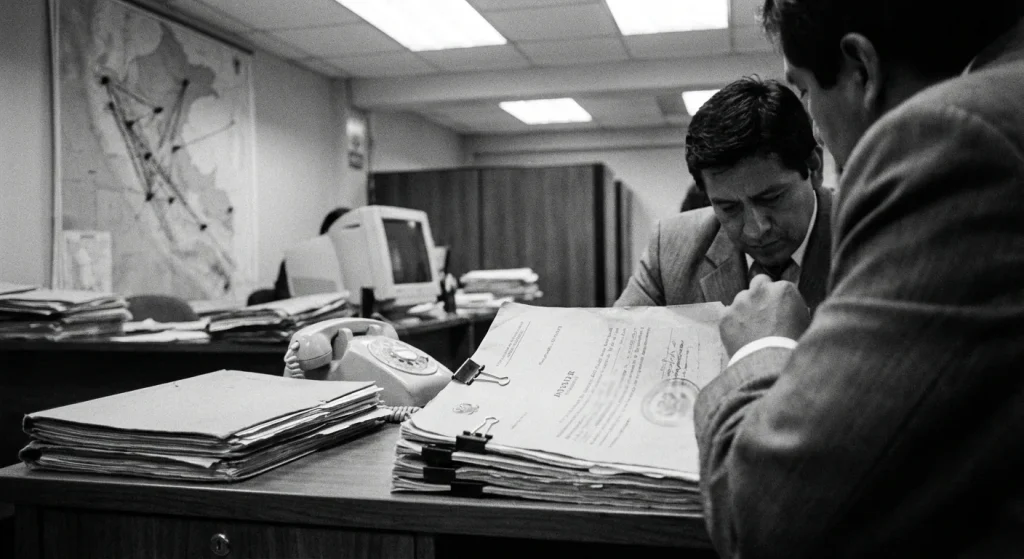
If you are trying to track “UFO/UAP disclosure,” the hardest part is separating institutional movement from recycled headlines. The loudest claims rarely come with durable paperwork, repeatable standards, or any mechanism that outlasts a news cycle. Peru’s 2013 step is easy to miss for that exact reason: it is administrative, not theatrical.
Transparency fights uncertainty on two fronts. First, governments cannot promise answers about what an object “is” when the only honest status is “unidentified.” Second, they can promise something else that actually matters: a consistent way to receive reports, evaluate them, and publish what can be responsibly shared. That is why Unidentified Anomalous Phenomena (UAP) being “unidentified after initial review” is not a dead end, it is the whole point of institutionalization. A formal office turns ambiguity into a managed category instead of a permanent rumor.
Peru’s concrete signal is the 2013 reactivation of OIFAA, a Peruvian Air Force-associated office built to face UAP reports as an ongoing administrative reality rather than an occasional curiosity. This move does not imply any conclusion about origin. It does something more measurable: it normalizes the act of reporting and creates an expectation that the state will treat sightings as inputs to be handled, not stories to be ignored or sensationalized.
The non-obvious complication is that “disclosure” debates get dominated by personalities, leaked clips, and absolutist narratives. Normalization happens through boring choices: offices that exist year after year, a mandate that survives leadership changes, and public-facing posture that treats UAP as an information-management problem. Once a government stands up a standing channel, the public starts judging it on process and transparency, and public trust becomes the real stake.
This article reads Peru’s 2013 reactivation through that institutional lens: what an office like OIFAA is built to do, why reactivation matters as governance, and what a credible workflow looks like when sources do not publish detailed procedures. It then situates Peru’s posture against the modern U.S. environment, where AARO and congressional attention have made “institutionalization” legible at scale.
What OIFAA Is And Why It Exists
OIFAA matters for a simple governance reason: it turns ambiguous aerial reports into institutional records that can be assessed. Peru did not treat “UFO cases” as a side topic for hobbyists or one-off commissions; it established a standing unit inside its military aviation ecosystem. The name is explicit about intent: the Office of Investigations of Anomalous Aerial Phenomena (OIFAA) exists to receive, document, and investigate reports of anomalous aerial phenomena as an administrative responsibility, not a personality-driven project.
That permanence changes the outcome even before a single case is analyzed. A continuing office implies continuity of files, continuity of authority, and continuity of accountability, which are the three things informal “UFO groups” rarely sustain across years, leadership changes, and shifting public interest.
Peru’s air force is the Fuerza Aérea del Perú (FAP), the air branch of Peru’s armed forces. OIFAA is not positioned as an external advisory committee or a private research effort operating near the military; it is an internal office. OIFAA was officially opened in December 2001 under the Peruvian Air Force’s Directorate of Aerospace, which places it within the FAP’s own institutional structure rather than outside it.
That placement is the point. When a reporting channel lives inside the air force, it inherits a chain of responsibility and a built-in expectation of documentation. Even without knowing any specific standard operating procedures, you can confidently infer the administrative difference between a unit that answers within a directorate and a volunteer network that answers to no one.
The timing signals design, not improvisation: this was established as an office with an official opening, not as an episodic task force spun up for a single incident. The core purpose is straightforward at the institutional level: provide an official mechanism for receiving reports, investigating them, and producing documentation that can be retained, compared, and referenced.
Notice what that framing avoids. It does not require you to accept any particular explanation for any sighting. It only requires you to recognize the administrative choice to treat anomalous aerial reports as inputs that deserve structured handling inside the FAP environment.
Ad hoc investigations fail in predictable ways: cases fragment across units, records are kept inconsistently, and the “standard” for what counts as credible shifts with whoever happens to be in charge. The result is not just weaker analysis; it is weaker comparability. When each inquiry starts from scratch, you cannot reliably tell whether you are seeing repeat patterns, repeat misunderstandings, or repeat paperwork errors.
A standing office solves that baseline problem by existing. It creates a consistent destination for reports and a consistent expectation that claims become files. The actionable takeaway is practical: when evaluating any “UAP disclosure” claim, the first question is not what the headline says happened in the sky. The first question is whether an official channel exists, and whether it is built for continuity rather than moments of attention.
Why Peru Reactivated The Office
Reactivating a UAP office is a governance decision: it changes how uncertainty gets processed inside the state. Read plainly, “reactivation” is an institutional recommitment, not a symbolic headline. It means staffed desks instead of an empty organizational chart, resourced work instead of informal side tasks, and reopened channels so reports move somewhere official rather than dying in inboxes.
In practical government terms, reactivation implies capacity restored and made usable: reports can be received and logged consistently, information can be handled in a standardized way, and the state can adopt a clearer public-facing posture that treats incoming cases as something to be managed, not dismissed by default. None of that is a claim about what any given report “really is.” It is a claim about process discipline, and process discipline is what institutions can actually control.
The provided sources do not supply a primary, citable Peruvian or FAP reactivation announcement with exact 2013 language, and they do not provide decree text, verbatim quotes, or an itemized list of newly assigned duties tied to that reactivation. That documentation gap sets the boundary for responsible analysis here: interpret “reactivation” through observable institutional implications, and avoid inventing the missing words.
Aviation-safety incentives sit at the top of the non-sensational drivers. A standing intake function creates a single place to route pilot, radar, and ground reports, which reduces the chance that operationally relevant anomalies get scattered across units with incompatible logging and follow-up practices. Standardized handling also improves internal trend visibility, even when individual cases remain unresolved.
Public reporting pressure is the second driver, and it tends to intensify as transparency norms mature. Peru’s transparency and access-to-information framework imposes compliance expectations on public authorities and officials, which pushes agencies toward clearer records practices and more defensible public responses when questions arrive.
In that broader governance trajectory-where progress on access to public information and citizen participation is part of the public record-a reactivated office fits because it gives the state a repeatable way to receive allegations, track them, and answer follow-up without improvising each time.
Broader open-government framing and integrity-system analysis also reinforce the same institutional logic: legitimacy is easier to defend when processes are explicit, responsibilities are assigned, and coordination is not ad hoc. A formal investigative posture protects credibility better than reflexive dismissal because it creates a record of how conclusions were reached, even when the conclusion is “insufficient data.”
None of the provided excerpts explicitly enumerate new responsibilities tied to the 2013 reactivation, and the excerpts that use the phrase “broader mandate” do so in unrelated contexts without listing operational duties.
Given that limitation, this article uses “broader mandate” as a practical interpretation, not as a claim about published orders: expanded scope across intake, coordination, and communication. Intake means a clearly defined place to submit reports and a standardized way to record them. Coordination means an identified mechanism to route cases to the right operational or technical stakeholders when warranted. Communication means a more coherent public posture, where the state can acknowledge receipt, describe process, and close out cases with a documented rationale.
That is the actionable way to read “reactivation”: watch for staffing, budget signals, and reporting-channel clarity. Treat it as a change in institutional capacity, not as evidence about what is in the sky.
Inside The Mandate And Workflow
“Reactivation” only matters to the public if it shows up in how reports are handled day to day. The real test is whether an office can move cases from anecdote to file, and from file to disposition, without letting ambiguity collapse into either sensationalism or silence.
A UAP-facing office earns trust by being better at handling uncertainty than the public internet is. The credibility rises or falls on process: how reports are collected, filtered, tested, stored, and communicated when the underlying data is ambiguous. A name like Office of Investigations of Anomalous Aerial Phenomena (OIFAA) signals investigation and documentation, not entertainment, and the workflow has to match that implied standard.
The constraint: the provided sources do not contain published OIFAA procedures for submission channels, triage criteria, investigation steps, or archiving. What follows is a framework for how an office with OIFAA’s label should run if the goal is aviation safety, data quality, and durable public confidence, not a description of OIFAA’s actual SOPs.
Most UAP reports lose their highest-value information in the first hour, not during analysis. Intake has to capture raw context before memory shifts, metadata gets stripped, and supporting records roll off retention windows in aviation systems. If you only capture a narrative, you lock the office into “he said, she said” forever.
At report time, the minimum viable capture is operational, not rhetorical: exact time with timezone, location, altitude (if known), direction of travel, duration, observer platform (aircraft type or ground), viewing conditions, and whether the observer was in contact with air traffic services. If media exists, the office should request the original file, not a forwarded copy, because originals preserve metadata that helps separate a bright planet from a high-speed object on a zoomed phone lens.
Triage is where a serious office proves it is serving aviation safety rather than chasing the most sensational story. Most reports resolve to mundane causes: astronomical objects, balloons, conventional aircraft, re-entering debris, atmospheric effects, camera artifacts, and simple misperception under stress. The office should treat “resolved as ordinary” as a success condition, because it improves safety knowledge and protects investigative capacity.
The friction is that low-quality reports arrive in high volume, and high-risk reports are time-sensitive. Prioritization logic should weight two signals heavily: immediate safety implications (near-miss, cockpit distraction, airspace incursion) and credibility markers (multiple independent witnesses, sensor corroboration, precise timing that aligns with external records). A disciplined office escalates because the risk is real or the data is strong, not because the story is loud.
Anecdotes can be sincere and still be non-actionable. What counts as actionable evidence is anything that can be cross-checked: original photos or video with intact metadata, radar or ADS-B context, air traffic recordings where available, flight track data, meteorology, satellite re-entry predictions, and consistent multi-witness timelines. The office’s job is to convert a report into a testable claim or close it as non-testable, not to “believe” or “debunk” by vibe.
Set a written bar for what qualifies as “unresolved” versus “insufficient data.” Unresolved means the office has enough structured information to rule out common explanations but still cannot identify a cause. Insufficient data means the report cannot be responsibly tested. Publishing that distinction is a process signal the public can audit.
Investigation resolves cases by reducing uncertainty with practical checks, not by amplifying mystery. The catch is that many of the best checks are boring: log requests, timeline reconstruction, and metadata validation. That is exactly why they work.
- Reconstruct a precise timeline and geometry (observer position, line of sight, motion cues).
- Corroborate against available records (weather, known traffic, scheduled operations, astronomical context).
- Validate media integrity (original files, compression history, sensor artifacts, lens zoom effects).
- Interview for consistency, separating observation from interpretation in the written record.
- Conclude with a classification: resolved, unresolved, or insufficient data, plus the reasoning trail.
This is the point where aviation safety stays central: if the report describes a hazard, the office treats mitigation and reporting pathways as the outcome, even if identification remains uncertain.
Serious UAP work is records management with an investigative spine. Every case file needs immutable originals, a chain of custody for digital media, and version control for analyst notes so later reviews can see what changed and why. Without that discipline, the office cannot defend its conclusions, and it cannot learn across cases because fields and categories drift over time.
A strong archiving posture also supports process transparency norms. Many agencies in FOIA-administering environments publish annual reporting and maintain electronic reading rooms for frequently requested materials; the analogy is not about any single jurisdiction’s law, but about the expectation that mature public-facing offices show their work through repeatable, inspectable routines.
Opaque messaging is not neutral. Mishandled communication intensifies “government UFO cover-up” narratives even when the real constraint is uncertainty, classification, or privacy. Silence gets interpreted as concealment; vague statements get interpreted as signals; inconsistent terminology gets interpreted as deception.
A credible posture is structured transparency: publish intake guidance, publish evidence standards, publish how “resolved” differs from “unresolved,” and publish a cadence for updates. When a case cannot be released, say why in plain categories (ongoing inquiry, personal data, classified sources) and say what can be disclosed (date range, general location band, whether records were checked). Readers should judge official UAP efforts by process signals, not by promises of extraordinary conclusions.
How Peru Compares To Washington
Those process signals do not exist in a vacuum. Once another government makes UAP administration visible and repeatable, it changes what international audiences expect from any office that claims to be doing serious intake and investigation.
Washington’s UAP ecosystem functions as a global norm-setter for one simple reason: U.S. oversight pressure, recurring public reporting, and high-amplification media coverage turn “UAP governance” into a visible performance standard. Once the U.S. system normalizes routine updates, quantified caseloads, and public-facing terminology, smaller countries’ UAP offices inherit a new incentive landscape. If they stay quiet, the comparison is immediate and unfavorable; if they speak, they are judged against U.S.-shaped expectations for cadence, documentation, and clarity.
The catch is that this norm-setting does not require Washington to “prove” anything extraordinary. It only requires Washington to keep producing institutional signals: hearings that create questions, reports that create baselines, and public records that create a reference point. That baseline tightens the space for smaller offices, including Peru’s reactivated office, to manage public attention without being pulled into a U.S.-defined disclosure debate.
The All-domain Anomaly Resolution Office (AARO) is the U.S. office that receives, tracks, and publicly reports on unidentified anomalous phenomena as an institutional matter, not as entertainment. That alone changes global expectations: an identifiable office with recurring outputs makes UAP administration look like a durable government function rather than an ad hoc response to viral incidents.
AARO’s public snapshot numbers signal scale and throughput without proving any particular explanation for the reports. During the 2024 annual report period, AARO received 757 UAP reports. At publication of that 2024 annual report, 292 cases had been resolved to a determinate status. Read those figures as capacity markers: volume in, decisions out, and a visible gap between intake and determinate outcomes that any serious office must explain and manage in public.
For Peru, that U.S. baseline raises the bar in a practical way. A reactivated office can no longer rely on occasional statements or isolated case commentary if the public is watching U.S. reporting rhythms. Even if Peru’s caseload is smaller, the expectation shifts toward counted intakes, categorized dispositions, and repeatable public updates because the U.S. system has made those elements legible to non-experts.
In this ecosystem, disclosure is not a promise to reveal everything; it is a structured public release of UAP-related information under binding limits like classification, operational security, and privacy. That framing matters because it explains the persistent friction in U.S. discourse: oversight and transparency demands rise, while the content that would satisfy many skeptics or believers often sits behind restrictions that do not disappear on command.
This push-pull creates a permanent credibility gap. Public audiences interpret redactions and omissions as evasions; institutions treat them as compliance with security and legal constraints. The result is a high-noise environment where “more disclosure” becomes a political and cultural demand, but the supply of releasable specifics is structurally throttled. Smaller offices, including Peru’s, feel that same pressure once they are compared to Washington, but they have fewer tools to absorb it: less staffing depth, less tolerance for missteps, and less room for prolonged ambiguity without trust costs.
Washington’s norm-setting does not come only from report counts. It also comes from visible standards-building activity that looks and feels like institutionalization. AARO released a report based on a workshop conducted at AUI headquarters in August 2025. Regardless of the workshop’s specific content, the existence of a workshop-based report functions as a credibility signal: it tells outside observers that the U.S. system is investing in shared methods and evaluative standards, not just reacting to sightings.
That matters for Peru because a reactivated office is judged not only on what it says about incidents, but on whether it can show disciplined process artifacts: consistent categories, repeatable criteria, and documentation that stands up under scrutiny. When the U.S. publishes method-oriented material, it implicitly shifts the global conversation from “What do you believe?” to “What standard did you use?”
U.S. attention also has media gravity: it turns procedural events into global reference points. C‑SPAN posted a video titled “David Grusch Opening Statement at Unidentified Anomalous Phenomena (UAP) Hearing,” and the posting itself operates as an attention marker. It signals that UAP discourse has a durable place in a mainstream public record, and it invites international audiences to treat U.S. testimony as inherently consequential.
Discipline requires separating what was claimed from what is verified. Testimony and opening statements can contain allegations, characterizations, and secondhand assertions; a video title and view counts do not authenticate underlying claims. The verified element, for readers assessing UAP news, is narrower: a public hearing occurred, an opening statement was delivered, and a major public archive preserved it. Everything beyond that must be tested against documentation and corroboration, not repeated as settled fact.
Peru’s reactivated office operates in the shadow of this U.S. disclosure environment, and the main impact is incentives, not policy copying. The incentive is to communicate in ways that look “serious” by Washington’s now-familiar cues: quantified reporting, clear dispositions, and transparent boundaries about what cannot be released. The complication is trust management: if Peru communicates too little, it looks evasive by comparison; if it communicates too much without tight standards, it risks amplifying weak cases and eroding credibility.
The actionable rule for readers is straightforward. Separate (1) institutional capacity signals, such as report volumes, determinate-resolution counts, and visible methods-building activity, from (2) unverified testimony and viral summaries that travel faster than documentation. That distinction keeps Peru’s posture, and the U.S. ecosystem shaping it, in the realm of governance and incentives rather than speculation.
What This Signals For 2025 And 2026
Those incentives land in the same place everywhere: higher volume, higher noise, and a sharper need for disciplined intake. That is why Peru’s 2013 reactivation still matters in 2025 and 2026, even when the public conversation is dominated by whatever is trending this week.
Peru’s 2013 reactivation matters in 2025 and 2026 for a blunt reason: as “UFO sightings 2025,” “UFO sightings 2026,” and other UAP sightings surge across social feeds and local news, reporting quality becomes the limiting factor. Attention inflates volume, not reliability. A formal government channel reduces noise by standardizing what gets captured and what gets discarded, without promising “alien disclosure” or any definitive origin story.
The friction is predictable. Most high-velocity “UFO sightings” content arrives data-poor: no time standard, no calibrated location, no weather context, no persistence checks, no chain of custody for images. When the inputs are inconsistent, even good analysts end up arguing about the same missing fields instead of learning from patterns.
Canada’s UAP reporting landscape study, previewed in January 2025, examines the current UAP reporting landscape, identifies gaps, and recommends improvements to transparency and scientific inquiry. That focus is the point. Governments are treating UAP as a reporting and data-governance problem: who collects what, how it is categorized, what gets published, and how the public can distinguish a logged report from a verified outcome.
The nuance is that transparency is not the same thing as confirmation. A better pipeline can produce better public accountability while still concluding that many cases are mundane, misidentified, or insufficiently documented.
A Nature study stands out as one of the few national-scale investigations of UAP sighting reports. Its value is methodological discipline: it forces the conversation away from anecdote and toward population-level bias, reporting incentives, and uneven observation conditions.
The catch is that national-scale does not mean ground truth. Sighting databases are shaped by who reports, when they report, and what they think counts as unusual. Structure matters because it is the only practical way to separate “we received a claim” from “we have usable data.”
Other safety-critical domains already treat structured reporting as the backbone of learning. Health care treats serious incident reporting as a core mechanism for patient safety and organizational learning, precisely because narratives alone do not fix systemic risk.
Aviation runs on the same logic. ICAO’s 2025 Edition Safety Report documents 95 accidents involving scheduled commercial flights, and the industry response is process, not punditry: aviation organizations are increasingly introducing safety management systems (SMS) that extend beyond mere legal compliance. The parallel for UAP offices is straightforward: standard inputs, consistent triage, and publishable outputs create learning even when the underlying phenomena remain uncertain.
- Separate “reported” from “resolved.” Trust coverage that distinguishes intake volume from investigated outcomes and explains what qualifies as closed.
- Look for schema, not slogans. Serious programs publish categories, required data fields, and error-checking rules that make reports comparable.
- Reward transparency with constraints. The strongest signal is a commitment to release methods, limitations, and datasets suitable for scientific inquiry, not sweeping claims about origins.
The Takeaway From Peru’s Reboot
Peru’s OIFAA reboot reads as an accountability move aimed at institutional credibility: it builds a place where uncertainty is processed and documented, not a promise of extraordinary revelation. That framing matches a disciplined reading of “reactivation” as renewed capacity and recommitment under real sourcing limits.
What an office like OIFAA can improve quickly is process and data handling: intake discipline, chain-of-custody for reports, and clear communication that prevents “cover-up” narratives from filling silence. What it cannot do on command is “prove” extraordinary claims; credibility comes from repeatable workflow, not sensational outputs. Publication is also structurally constrained by Peru’s personal data protection regime, which applies to private and state entities and is enforced through the ANPD, ARCO rights, and penalties, limiting what can be released about witnesses and case files. Neither provided source document offers concrete post-2013 examples naming OIFAA investigations or reorganizations.
Watch for three governance signals, not headlines: measurable transparency practices (what gets logged and published, and on what cadence), explicit privacy or classification constraints (what must stay redacted and why), and visible interagency coordination (shared channels, consistent messaging, and aligned records). Future official releases are what will clarify whether those signals are present.
Frequently Asked Questions
-
What is OIFAA in Peru?
OIFAA is the Office of Investigations of Anomalous Aerial Phenomena, an internal Peruvian Air Force-associated unit that receives, documents, and investigates anomalous aerial reports as an administrative responsibility. The article frames it as a standing channel that turns sightings into institutional records rather than informal stories.
-
When was OIFAA officially opened and where does it sit inside Peru’s military structure?
OIFAA was officially opened in December 2001 under the Peruvian Air Force (FAP) Directorate of Aerospace. The article emphasizes that it is an internal office within the FAP structure, not an external advisory group.
-
What did Peru’s 2013 reactivation of OIFAA actually change?
The 2013 reactivation is described as restoring usable capacity-staffed desks, resourced work, and reopened channels so reports can be received and logged consistently. The article treats it as a governance and process move, not a conclusion about what any UAP “is.”
-
What information should a UAP report include to be useful to an office like OIFAA?
The article says minimum viable intake should capture exact time (with timezone), location, altitude (if known), direction of travel, duration, observer platform, viewing conditions, and whether air traffic services were involved. If media exists, it should be the original file to preserve metadata.
-
How should a UAP office classify cases as resolved, unresolved, or insufficient data?
The article recommends a clear bar: “unresolved” means enough structured information exists to rule out common explanations but the object still can’t be identified, while “insufficient data” means the report can’t be responsibly tested. It also lists an investigation sequence: reconstruct timeline/geometry, corroborate against records, validate media integrity, interview for consistency, then conclude with reasoning.
-
How does Peru’s OIFAA compare to the U.S. AARO in public reporting expectations?
The article says U.S. visibility sets a global baseline because AARO publishes recurring outputs and quantified caseloads, including 757 UAP reports received in the 2024 annual report period and 292 cases resolved at publication. That increases pressure on Peru to communicate with counted intakes, clear dispositions, and transparent limits rather than occasional statements.
-
What should readers look for to judge whether a country’s UAP “disclosure” is credible?
The article’s decision rules are: separate “reported” from “resolved,” look for published schemas (categories and required data fields) rather than slogans, and reward transparency that states constraints like privacy/classification. It also says to watch for measurable transparency cadence, explicit redaction reasons, and visible interagency coordination.
